

P2127 on 2017-2022 Honda CR-V: Accelerator Pedal Sensor 'E' Circuit Low Causes and Fixes
This code almost always points to a failed Accelerator Pedal Position (APP) sensor, which is part of the gas pedal assembly. Replacing the entire pedal assembly is the common fix, costing around $60-$125 for an OEM part. It's a straightforward DIY repair for most owners, often taking less than 30 minutes with basic tools.
- P2127 on a 2017-2022 CR-V almost certainly means the accelerator pedal sensor has failed.
- The vehicle is not safe to drive as it may have no throttle response or enter a low-power limp mode.
- The fix is to replace the entire gas pedal assembly, which is a simple DIY job requiring basic tools (like a 10mm socket) and about 30 minutes.
- Always confirm the part number for your specific vehicle before ordering, but the most likely OEM part is 17800-TLA-A04, which supersedes 17800-TLA-A03.
What's Unique About the 2017-2022 Honda CR-V
For the fifth-generation Honda CR-V (2017-2022), this code, often paired with P2138, is a relatively common and well-documented issue. The failure is almost always internal to the accelerator pedal assembly itself rather than a wiring or computer problem. Unlike some codes that can have many possible causes, the diagnostic path for P2127 on this specific vehicle is typically very direct, leading straight to the pedal assembly. The issue is also seen on platform mates like the Honda Civic and Accord.
Symptoms You May Notice
- Check Engine Light is on
- Multiple warning lights activating at once (e.g., Vehicle Stability Assist (VSA), Collision Mitigation)
- Vehicle enters 'limp mode' with severely reduced engine power
- Poor, delayed, or no throttle response
- Unresponsive accelerator pedal
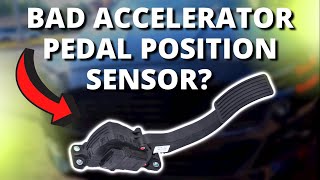
- Vehicle may stall intermittently or have a rough idle 🎬 Watch: Common symptoms of a failing accelerator pedal position sensor.
- Replacing the throttle body or Throttle Position Sensor (TPS). P2127 specifically refers to the sensor circuit on the accelerator pedal inside the cabin, not the components on the engine's throttle body.
Most Likely Causes
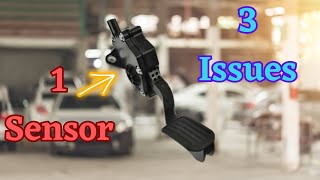
- Failed Accelerator Pedal Position (APP) Sensor 🔴 High Probability → Shop Accelerator Pedal Assembly The APP sensor is integrated into the accelerator pedal assembly and is a known failure point on this platform due to internal electronic faults.
How to confirm: Use an OBD-II scanner to monitor the live data for 'APP Sensor B' or 'TP Sensor E'. If the voltage reads below ~0.2V with the key on and does not change when the pedal is pressed, the sensor has failed. This is often accompanied by code P2138 (APP Sensor A/B Incorrect Voltage Correlation).
Typical fix: Replace the entire accelerator pedal assembly. The sensor is not sold separately.
Est. part cost: $60-$125 - Wiring or Connector Issue ⚪ Low Probability While less common than sensor failure, damage to the wiring harness or corrosion in the connector at the pedal can occur, though it's not a widespread issue for this model.
How to confirm: Visually inspect the wiring harness and the 6-pin connector at the accelerator pedal for any signs of damage, corrosion, or loose pins. Use a multimeter to check for a stable 5-volt reference and a good ground at the connector with the key on.
Typical fix: Repair the damaged section of the wiring harness or clean/replace the connector.
Est. part cost: $5-$50
Rare But Worth Checking
- Powertrain Control Module (PCM) Failure: → Shop Engine Control Module (ECM) This is very uncommon. Before condemning the PCM, all other possibilities, especially the APP sensor and its wiring, must be exhaustively ruled out. A PCM failure would likely be accompanied by other trouble codes and more widespread issues.
Diagnosis Steps
- Connect an OBD-II scanner and confirm P2127 is the active code. Note any other codes present, especially P2138, which strongly points to the pedal assembly.
- View the live data stream on the scanner. Monitor the voltage for APP Sensor B (sometimes labeled TP Sensor E). With the ignition on (engine off), the reading should be very low (under 0.2V) and unresponsive to pedal movement, confirming the fault. 🎬 Watch: Diagnostic steps to confirm a P2127 sensor circuit fault.
- Turn the ignition off. Visually inspect the electrical connector and wiring harness at the top of the accelerator pedal for any visible damage, corrosion, or loose connections.
- If the wiring looks good, the most probable cause is a failed APP sensor. Replacement of the accelerator pedal assembly is the next step. The repair typically requires only a 10mm socket and takes less than 30 minutes. 🎬 See this walkthrough on how to replace the pedal assembly.
- For advanced diagnosis: Disconnect the APP sensor connector. With the ignition on, use a multimeter to verify there is a 5-volt reference and a good ground being supplied to the connector from the PCM. If either is missing, the wiring between the PCM and the pedal is faulty.
- After replacing the pedal, clear the codes with the scanner. Some vehicles may require an accelerator pedal sensor reset procedure, which often involves turning the ignition on, waiting, pressing and holding the pedal for a set time, and then turning the ignition off. An idle relearn procedure may also be beneficial.
Parts You'll Likely Need
- Accelerator Pedal Assembly
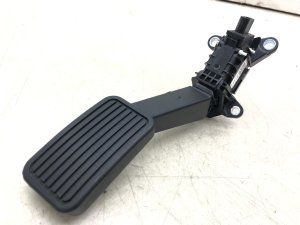
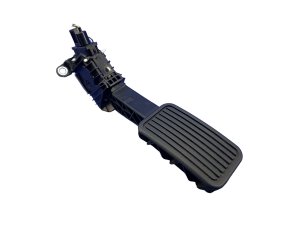
(OEM #17800-TLA-A04, 17800-TLA-S01)— This is the most common failure point for code P2127. The Accelerator Pedal Position (APP) sensor is integrated into this assembly and is not available as a separate part. Part number 17800-TLA-A04 is a confirmed replacement for the original part 17800-TLA-A03.
Trusted brands: Honda (OEM)
OEM price range: $60-$125
Aftermarket price range: $50-$90
Related Codes That Often Appear With This One
- P2138 — This code indicates 'APP Sensor A/B Incorrect Voltage Correlation'. It is the most common companion code and means the signals from the two sensors inside the pedal assembly do not agree with each other, pointing directly to a faulty pedal assembly.
- P2122 — This code indicates 'APP Sensor 'D' Circuit Low Voltage'. Since the pedal assembly has two sensors (often labeled A/B or D/E), a failure can sometimes trigger faults for both circuits simultaneously.
Platform-Specific Known Issues
- Real-world owner experiences frequently cite the sudden appearance of multiple dashboard lights ('Christmas tree' effect) and the car entering 'limp mode' as the first sign of trouble.
- On forums like CR-V Owners Club, members confirm that replacing the entire pedal assembly with an OEM part (like 17800-TLA-A04) is the definitive fix, often performed by owners themselves in their driveways.
- Some owners have successfully used used/salvage OEM pedal assemblies as a cost-effective repair, given the high reliability of a working unit.
Mechanic-Grade Diagnostic Values
- APP Sensor B (TP Sensor E) Voltage via HDS (Honda Diagnostic System) or capable scanner — expected: > 0.2V. Failure: A reading of less than 0.2V confirms the fault condition for P2127.
- Voltage between APP Sensor 6P connector terminals 1 and 2 (with connector unplugged, key ON) — expected: Approximately 5.0V. Failure: If voltage is not present, it indicates a problem with the VCC5 power supply wire from the PCM.
- Continuity between APP Sensor 6P connector terminal #3 and body ground (with connector unplugged, key OFF) — expected: No continuity. Failure: Continuity indicates a short to ground in the APS2 signal wire.
- Continuity between PCM connector A (pin 34) and body ground (with PCM and APP connectors unplugged, key OFF) — expected: Continuity should exist. Failure: No continuity indicates an open in the ground wire between the PCM and the APP sensor.
Scan Tool Commands That Help
- Honda HDS (or professional bidirectional scanner): Reset the PCM — After replacing the APP sensor or repairing wiring, this command should be used to clear adaptations.
- Honda HDS (or professional bidirectional scanner): PCM IDLE LEARN PROCEDURE — Required after replacing the APP sensor or resetting the PCM to allow the computer to relearn idle characteristics.
- Professional bidirectional scanner (e.g., Snap-on, Autel): TPS CALIBRATION — If a new pedal assembly is installed and an idle or throttle response issue persists, a specific TPS calibration function may be needed to align the new sensor values with the PCM. This is sometimes required when a simple idle relearn is not sufficient.
Wiring & Ground Locations
- APP Sensor 6P Connector — At the top of the accelerator pedal assembly in the driver's side footwell.. This is the primary connection point for the sensor. All voltage and signal tests for the pedal sensor start here. A loose connection or damaged pin at this connector is a potential cause of the code.
- PCM Connector A (49P or 51P) — At the Powertrain Control Module (PCM), typically located in the engine bay.. This connector contains the pins for the APP sensor's power, ground, and signal wires. Advanced diagnostics require checking for continuity and shorts between this connector and the APP sensor connector to rule out a wiring harness fault.
- Pin 34 (PCM Connector A) — On the main PCM harness connector.. This is the specific pin for the APP Sensor 2 (APS2) signal wire. Testing for a short to ground or an open circuit on this wire is a key diagnostic step.
- Pin 35 (PCM Connector A) — On the main PCM harness connector.. This is the specific pin for the 5-volt reference (VCC5) supplied to the APP sensor. A fault on this circuit would affect the sensor's operation.
OEM Part Supersession History
17800-TLA-A03→17800-TLA-A04— Standard part revision by the manufacturer. The new part is a direct, improved replacement.
Diagnostic Flowchart
Other Known Issues on This Vehicle
Issues unrelated to this code that are worth knowing about as an owner of this generation:
- Fuel Dilution of Engine Oil (1.5T Engine) 🔴 High — Common, especially in 2017-2018 models operated in cold climates with short trip durations. Can lead to premature engine wear. (Ref: Honda issued software updates (e.g., TSB 19-032), and a warranty extension for affected models to cover repairs.)
- Parasitic Battery Drain 🟠 Medium → Shop Vehicle Battery — A well-documented issue where the battery dies after the vehicle sits for a few days. Affects multiple model years. (Ref: TSB 17-032 points to VSA modulator software logic causing a 350mA draw on 2017 models. TSB A19-039 addresses a similar PCM software issue on 2019 models.)
- Infotainment System Glitches 🟡 Low — Common on 2017-2019 models. Symptoms include the screen going dark, beeping sounds, or channels changing on their own. (Ref: No specific TSB, but dealer software updates are the common remedy.)
- CVT Judder / Shudder 🟠 Medium — Some 2015-2020 models can experience a shuddering sensation during low-speed acceleration (15-35 mph). (Ref: NHTSA Investigation PE17023 was opened. Honda addressed this with TSBs (e.g., TSB 17-050) and extended warranties for some vehicles.)
- Fuel Pump Failure 🔴 High — Affects a wide range of Honda models, including the 2017-2022 CR-V. Can cause engine stalling while driving. (Ref: Subject to multiple recalls (e.g., NHTSA 21V-215, 20V-314) where dealers replace the fuel pump module free of charge.)
Used vs. New Parts: Buying Guide for This Vehicle
When a used part is the smart pick: A used OEM accelerator pedal assembly from a reputable salvage yard can be a very smart and cost-effective repair. Since the failure is electronic and not due to mechanical wear, a working unit from a low-mileage donor vehicle is likely to have a long service life.
Donor-vehicle mileage cap: roughly under 60000 miles for the part to have meaningful remaining life.
What to inspect on the donor part:
- Verify the part number on the used unit matches the required part for your vehicle.
- Inspect the 6-pin electrical connector for any signs of corrosion, bent pins, or damage.
- Check the pedal's physical movement to ensure it is smooth and returns properly.
- If possible, choose a part from a vehicle that was in a rear or side collision, reducing the chance of frontal impact damage to the firewall area where the pedal is mounted.
OEM-only on this vehicle (don't cheap out):
- For this specific repair, an OEM part (either new or used) is highly recommended over aftermarket options. The electronic tolerances are precise, and forum experiences consistently show that OEM parts provide a reliable, long-term fix without compatibility issues.
Brands owners have reported issues with on this vehicle:
- While no specific brands are consistently cited as problematic for this CR-V part, caution is generally advised for non-OEM electronic sensors like the APP. Past recalls on aftermarket APP sensors for other Honda models (e.g., Dorman for older CR-Vs) highlight the potential for issues.
Real Owner Stories
Aggregated from forums and TSBs cited above. Mileages and costs reflect what owners reported in those sources.
2018 Honda CR-V 1.5T
Symptoms: Out of nowhere, the dashboard lit up like a Christmas tree with multiple warning lights and the car went into 'limp mode' with almost no power.
What fixed it: Replaced the entire accelerator pedal assembly with a new OEM part (17800-TLA-A04) in the driveway.
Source hint: CRVOWNERSCLUB.COM
2019 Honda CR-V
Symptoms: The check engine light came on and the accelerator pedal was completely unresponsive.
What fixed it: Confirmed the issue was the accelerator pedal assembly and replaced it. The repair was a simple DIY job.
Source hint: Go-Parts: 2017-2022 Honda CR-V Accelerator Pedal Failure
2017 Honda CR-V
Symptoms: The vehicle stalled intermittently and had severely delayed throttle response, along with the Check Engine Light.
What fixed it: Diagnosed by viewing live data on a scanner, which showed APP Sensor B voltage was below 0.2V and didn't change with pedal movement. The fix was replacing the complete accelerator pedal assembly.
Source hint: YouTube: DTC P2127: APP Sensor B Circuit Low Voltage - Honda CRV 2017-2022
Related OBD-II Codes
Frequently Asked Questions
My 2019 CR-V suddenly has multiple warning lights on (VSA, Collision Mitigation) and no power. Is this related to code P2127?
Can I just replace the small sensor on the accelerator pedal, or do I need the whole assembly?
My scanner shows both P2127 and P2138. What does this combination mean?
How difficult is it to replace the accelerator pedal assembly myself?
Is there a specific OEM part number I should look for to fix this on my CR-V?
Is it a good idea to buy a used accelerator pedal from a salvage yard to save money?
After I install the new pedal, do I need to perform any special computer resets?
Helpful Videos
We Have This Part in Stock

The information in this article is provided for general reference and educational purposes only. Vehicle specifications, procedures, and part compatibility can vary by production date, trim level, and region. Always consult your vehicle's factory service manual and verify part numbers before purchasing or performing repairs. Safety-critical components such as airbags, seat belts, and braking systems should be installed by a qualified professional.
- Honda CR-V:
- 🧭 Diagnostic Flowchart
- 🎬 Helpful Videos
- 🛍️ Shop This Part
- What's Unique About the 2017-2022 Honda CR-V
- Symptoms You May Notice
- Most Likely Causes
- Rare But Worth Checking
- Diagnosis Steps
- Parts You'll Likely Need
- Related Codes That Often Appear With This One
- Platform-Specific Known Issues
- Mechanic-Grade Diagnostic Values
- Scan Tool Commands That Help
- Wiring & Ground Locations
- OEM Part Supersession History
- Other Known Issues on This Vehicle
- Used vs. New Parts: Buying Guide for This Vehicle
- Real Owner Stories
- 2018 Honda CR-V 1.5T
- 2019 Honda CR-V
- 2017 Honda CR-V
- Related OBD-II Codes
- Frequently Asked Questions
- 🎟️ Get 5% Off