

P2135 on 2008-2016 Audi A4 2.0L TFSI: Throttle Correlation Fault Causes and Fixes
P2135 on a B8 Audi A4 usually means the throttle body assembly is failing or there's a wiring issue at its connector. Before replacing the expensive throttle body, thoroughly inspect the 6-pin connector and harness for damage, a very common issue covered by an Audi TSB. A new throttle body costs $200-$500, and a mandatory throttle body adaptation (TBA) is required after any repair or replacement.
- P2135 on your A4 means the throttle sensors disagree, forcing the car into a safe but very low-power 'limp mode'.
- Before buying a new throttle body (the most common fix), you MUST inspect the wiring and connector at the throttle body for damage, as this is a known weak point and a much cheaper repair.
- The most likely part to fail is the entire throttle body assembly, which contains the non-serviceable sensors.
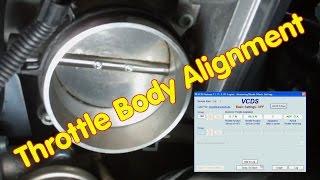
- After cleaning or replacing the throttle body, a 'Throttle Body Adaptation' (TBA) with a proper scan tool is mandatory for the car to run correctly.
What's Unique About the 2008-2016 Audi A4
For the B8 generation Audi A4, this code is most frequently linked to an internal failure of the throttle body assembly itself, as the position sensors are integrated and not sold separately. However, a critical and often overlooked issue on this platform is high resistance or damage in the wiring connector at the throttle body. Audi Technical Service Bulletin (TSB) 2018260 (also listed as 97-08-25) for a related code (P0121/P0123) on the same FSI engines explicitly details a repair for high contact resistance in the throttle body connector, confirming this as a known failure point. This makes it a very common and costly misdiagnosis to replace the throttle body when only a wiring repair was needed.
Generation note: The 2008-2016 year range covers the entire 'B8' generation of the Audi A4, including the 2013-2016 facelift (often called 'B8.5'). The causes, symptoms, and repair procedures for code P2135 are consistent across this entire generation for the 2.0L TFSI engine, as the core throttle body design (part 06F133062T and its successors) and wiring harness layout are shared.
Symptoms You May Notice
- Drastic reduction in engine power (EPC light on and vehicle in 'limp mode')
- Hesitation, bucking, or surging during acceleration
- Check Engine Light is illuminated
- Engine may stall, especially when coming to a stop
- Unstable or high engine idle
- Poor or delayed throttle response
- Replacing the throttle body without first thoroughly inspecting the wiring harness and connector. The connector is a known failure point documented by a TSB and is a much cheaper fix.
- Replacing the accelerator pedal assembly when the fault is clearly located at the throttle body or its wiring.
- Cleaning a dirty throttle body but failing to perform the mandatory Throttle Body Adaptation (TBA) afterward, leading to continued idle or performance issues.
Most Likely Causes
- Failing Throttle Body Assembly 🔴 High Probability → Shop Fuel Injection Throttle Body The two throttle position sensors (TPS) are integrated into the throttle body and are not serviceable. The internal resistive tracks or electronic components for the sensors wear out or fail over time, creating 'dead spots' and causing the voltage signals to become erratic or disagree.
How to confirm: Using a scan tool (like VCDS), graph the live data for 'Throttle Position Sensor 1 (G187)' and 'Throttle Position Sensor 2 (G188)'. Slowly press the accelerator pedal with the engine off. The voltage graphs should be smooth and mirror each other (one ascending, one descending, and their sum should be constant). A sudden drop, spike, or glitch in one signal indicates a faulty sensor within the throttle body. 🎬 Watch: How to test and diagnose throttle body sensor faults
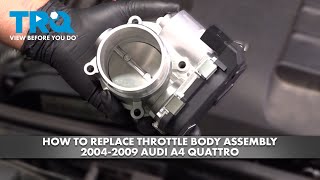
Typical fix: Replace the entire throttle body assembly. A Throttle Body Adaptation (TBA) must be performed with a scan tool immediately after installation to calibrate the new part.
Est. part cost: $200-$500 - Damaged Wiring or Connector at Throttle Body 🟡 Medium Probability → Shop Fuel Injection Throttle Body The 6-pin wiring harness connector at the throttle body is a known weak point. Engine heat and vibration cause the pin contacts to develop high resistance or the wires to chafe. This is documented in Audi TSB 2018260 / 97-08-25, which recommends a specific wiring repair.
How to confirm: Visually inspect the 6-pin connector (part number may be 4H0-973-713) for corrosion, backed-out pins, or damaged wires. Perform a 'wiggle test': with the ignition on and scan tool monitoring live sensor data, gently move the connector and harness. If the voltage signal cuts out or jumps, a wiring fault is confirmed.
Typical fix: Repair the damaged section of the wiring harness or replace the connector pigtail. The TSB advises against soldering and recommends using specific wire repair kits (e.g., part number 000979025E). If the connector housing is damaged, it should be replaced.
Est. part cost: $20-$85 - Heavy Carbon Buildup in Throttle Body ⚪ Low Probability → Shop Fuel Injection Throttle Body Direct injection engines like the 2.0L TFSI are prone to carbon buildup on all intake components. While less common to cause a pure electrical correlation code, severe buildup can cause the throttle plate to stick or move slowly, which might cause a temporary mismatch in sensor readings as the actuator fights the restriction.
How to confirm: Remove the intake pipe from the throttle body and visually inspect the throttle plate and bore for thick, black carbon deposits.
Typical fix: Clean the throttle body bore and plate thoroughly with a dedicated throttle body cleaner and a soft brush, being careful not to damage the coating. A Throttle Body Adaptation (TBA) must be performed after cleaning.
Est. part cost: $10-$20
Rare But Worth Checking
- Faulty Accelerator Pedal Position (APP) Sensor: → Shop Accelerator Pedal Assembly While P2135 can be caused by the pedal sensor, it's much less common than the throttle body side. The pedal assembly also has redundant sensors. It would typically set other specific codes like P2138, but it's worth checking its live data if all throttle body diagnostics show no issues.
- Faulty Engine Control Module (ECM): → Shop Engine Control Module (ECM) This is extremely rare and should only be considered after all other possibilities, including the entire wiring harness between the ECM and throttle body, have been definitively ruled out by a professional.
Diagnosis Steps
- Connect a diagnostic scan tool (VCDS is preferred for VW/Audi) and confirm P2135 is the primary code. Note any other codes present.
- With the ignition on and engine off, access live data on the scan tool.
- Monitor the voltage or percentage readings for both 'Throttle Position Sensor 1 (G187)' and 'Throttle Position Sensor 2 (G188)'.
- Slowly press the accelerator pedal to the floor and release it. Watch the sensor readings. They should change smoothly and in tandem (one increasing, one decreasing). Look for any glitches, spikes, or dropouts from either sensor.
- Turn the ignition off. Disconnect the 6-pin electrical connector at the throttle body. Inspect the pins on both the harness side and the throttle body side for corrosion, moisture, bent pins, or damage.
- Perform a 'wiggle test': with the connector plugged in and the scan tool monitoring live data (engine off, ignition on), gently wiggle the connector and the nearby wiring harness. If the voltage readings jump or drop out, a wiring fault is the cause.
- If the wiring and connector are confirmed to be good but the sensor data is erratic, the throttle body assembly is faulty and needs replacement.
- If the throttle body and its wiring test good, perform the same live data and wiggle tests on the accelerator pedal position sensor as a final check.
- After any repair (cleaning, wiring fix, or replacement), a Throttle Body Adaptation (TBA) is mandatory. This can be done using a scan tool's 'Basic Settings' function.
Parts You'll Likely Need
- Throttle Body Assembly
(OEM #06F133062T)— This is the most common fix if wiring is ruled out, as the internal throttle position sensors fail and are not serviceable separately. This part number has several supersessions, including 06F133062Q, 06F133062J, and 06F133062AG. Always verify with VIN.
Trusted brands: Bosch, VDO (Continental)
OEM price range: $450-$550
Aftermarket price range: $200-$350 - Throttle Body Connector Pigtail
(OEM #4H0973713)— If a wiring inspection reveals corrosion or damage at the connector, replacing the pigtail is the proper repair. The TSB specifies a repair procedure for this connector housing. Aftermarket pigtails like Standard Motor Products S-1419 are also available.
Trusted brands: Audi Genuine Parts, Standard Motor Products, Dorman
OEM price range: $30-$60
Aftermarket price range: $20-$40
Related Codes That Often Appear With This One
- P2101 — This code relates to 'Throttle Actuator Control Motor Range/Performance', which can be triggered if the ECU detects a problem with the motor that moves the throttle plate, often in conjunction with a sensor correlation fault.
- P0121, P0122, P0123, P0221, P0222 — These are all specific codes for throttle position sensor circuit range, low input, or high input. They often accompany P2135 as the ECU tries to pinpoint the exact nature of the throttle system failure.
Technical Service Bulletins (TSBs) & Recalls
- Audi TSB 2018260 / 97-08-25
Platform-Specific Known Issues
- A known issue with the wiring harness connector at the throttle body can cause high resistance, leading to codes like P2135. This is covered by Audi TSB 2018260 / 97-08-25 and should always be investigated before replacing parts.
- Owner experiences on forums like Ross-Tech and Audizine frequently highlight the wiring issue as a common cause, with many users successfully fixing the problem by repairing the connector harness rather than replacing the entire throttle body.
Mechanic-Grade Diagnostic Values
- Throttle Position Sensor 1 (G187) Percentage — expected: Should sweep smoothly from ~3% to ~93% as the pedal is pressed.. Failure: Sudden jumps, drops, or non-linear movement in the percentage value.
- Throttle Position Sensor 2 (G188) Percentage — expected: Should sweep smoothly and inversely to Sensor 1, from ~97% to ~3%.. Failure: Signal does not mirror Sensor 1 or shows erratic behavior.
- Voltage difference between TPS1 and TPS2 — expected: The difference between the two sensor voltage signals should be less than 0.2V.. Failure: A voltage difference greater than 0.2V-0.3V for more than a fraction of a second will trigger the fault code.
- Engine-to-Chassis Ground Voltage Drop — expected: Less than 0.15 volts at idle.. Failure: A reading higher than 0.15V indicates a degraded main engine ground strap, which can cause floating grounds and erratic sensor readings.
Scan Tool Commands That Help
- VCDS (VAG-COM): Basic Settings - Group 060 — This is the specific command to perform a Throttle Body Adaptation (TBA) on most KWP-2000 protocol Audi engines, including the B8 A4. It must be run after cleaning or replacing the throttle body.
- VCDS (VAG-COM): Basic Settings - Drop-down menu: 'Checking throttle valve adaptation' — For newer UDS protocol controllers within the B8.5 generation, the TBA function is not in Group 060 but is selected from a drop-down list in Basic Settings.
- OBDeleven: Basic Settings - Group 60 — Similar to VCDS, this function is used to initiate the Throttle Body Adaptation. The process involves turning the ignition on (engine off), navigating to Engine -> Basic Settings, selecting Group 60, and activating it.
Wiring & Ground Locations
- Throttle Body Connector (6-Pin) — Directly on the throttle body assembly, where the engine wiring harness connects.. This connector is the primary failure point for wiring-related P2135 codes. The pins for the two sensors (G187/G188), 5V reference, and sensor ground are all located here. High resistance or damage is common.
- Main Engine Ground Strap — Typically connects the engine block or transmission bellhousing to the chassis frame rail in the engine bay.. A corroded or loose main ground can cause a 'floating ground' for the ECM, leading to incorrect and unstable sensor voltage readings system-wide, potentially triggering a correlation fault like P2135.
- ECM Ground Point — A primary ground point for the Engine Control Module (ECM) is often located at the center of the firewall in the engine bay.. A poor connection at this specific ground can directly impact the ECM's ability to accurately read the low-voltage signals from the throttle position sensors.
- Ground Point 12 — In the engine compartment, on the left side.. This is a key chassis ground point in the engine bay that serves multiple components. Verifying its integrity is part of a thorough electrical diagnosis.
Real Owner Repair Stories
- AudiWorld Forums user 'vegg' (2013 Audi A4 2.0 TFSI Quattro (CFKA engine)) — EPC light and limp mode, VCDS showed 'implausible signal' for the throttle body.
❌ Tried (didn't work) Cleaning the original throttle body., Replacing the throttle body with a new one.
✅ What actually fixed it The user reported that even with a new throttle body, the VCDS adaptation procedure would abort for 'safety reasons'. While the final fix was not posted in the thread, this story is critical because it highlights a scenario where a new part does not solve the problem, pointing strongly towards a persistent wiring, ground, or ECM issue that prevents the new part from being calibrated. - Reddit user 'Much_Badger1654' (Audi (model not specified, but EPC issue)) — EPC light and limp mode.
❌ Tried (didn't work) Shop replaced wiring harness., Shop replaced ECU.
✅ What actually fixed it After two years at a shop, the owner found the issue themselves. The solenoid on the High-Pressure Fuel Pump (HPFP) was shorting out and blowing a fuse related to the ECU. Replacing the HPFP and the fuse resolved the EPC light. This is an edge case where a seemingly unrelated component caused the power control fault.
OEM Part Supersession History
06F133062J, 06F133062Q→06F133062T, which was later superseded by 06F133062AG— Incremental updates for durability, material composition, and internal sensor tolerances.
Heads up: All these part numbers are physically and electrically interchangeable for the B8/B8.5 2.0T engine. No incompatibilities are known.
Model Year Variations Within This Range
- 2013-2016 (B8.5 Facelift): Some later B8.5 models use the UDS protocol for diagnostics. On these cars, the Throttle Body Adaptation (TBA) in VCDS is not found under 'Group 060' but must be selected from a drop-down menu in 'Basic Settings'. The function is named 'Checking throttle valve adaptation' or similar.
Diagnostic Flowchart
Other Known Issues on This Vehicle
Issues unrelated to this code that are worth knowing about as an owner of this generation:
- Excessive Oil Consumption 🔴 High — Very common on early B8 models (2009-2011) with the CAEB engine code. Often starts around 40k-60k miles. Caused by faulty piston ring design. (Ref: Subject of a class-action lawsuit which resulted in an extended warranty and reimbursement for repairs for many owners.)
- Timing Chain Tensioner Failure 🔴 High — Common on 2008-2012 models with the original tensioner design. Failure can occur without warning, typically between 60k-100k miles, and can lead to catastrophic engine damage. (Ref: No official recall, but multiple TSBs exist. An updated tensioner part was released. Visual inspection through a port on the lower timing cover is recommended.)
- Water Pump / Thermostat Failure 🟠 Medium — The plastic housing of the water pump is prone to cracking and leaking, typically after 60,000 miles. Often replaced as a unit with the thermostat.
- PCV Valve Failure 🟠 Medium — The diaphragm inside the Positive Crankcase Ventilation (PCV) valve can tear, leading to a loud whistling noise, rough idle, and high oil consumption. A common failure item.
- Intake Manifold Flap Malfunction 🟡 Low — The runner flaps inside the intake manifold can get stuck due to carbon buildup or actuator failure, leading to fault codes (like P2004) and a slight loss of performance. (Ref: TSB 2017248/5 addresses issues with the intake flap motor and sensor.)
Used vs. New Parts: Buying Guide for This Vehicle
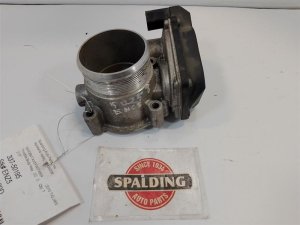
When a used part is the smart pick: A used throttle body from a low-mileage donor vehicle can be a cost-effective option, as this part is often replaced due to electronic failure rather than mechanical wear. Given the high cost of a new OEM unit, a used part from a reputable salvage yard with a warranty is a reasonable choice if the wiring has been confirmed as good.
Donor-vehicle mileage cap: roughly under 70000 miles for the part to have meaningful remaining life.
What to inspect on the donor part:
- Verify the part number (06F133062T or a compatible successor) matches.
- Inspect the 6-pin electrical connector for any signs of corrosion, bent pins, or damage to the plastic housing.
- Look at the throttle plate and bore. While some carbon is normal, avoid units that are excessively coated in thick, oily residue, as this may indicate other engine issues on the donor car.
- Ask for the donor vehicle's VIN to check its history and confirm mileage if possible.
OEM-only on this vehicle (don't cheap out):
- While the throttle body itself can be sourced used or from a quality aftermarket brand, the specialized wiring repair terminals and connectors mentioned in the TSB should be sourced from Audi/VW to ensure proper fit and conductivity.
Aftermarket brands forum-validated for this vehicle:
- Bosch (often the original OEM supplier)
- VDO (Continental)
Brands owners have reported issues with on this vehicle:
- Unbranded, no-name throttle bodies from online marketplaces should be avoided. These often have poorly calibrated internal sensors that can fail to adapt or may have a very short service life, causing the P2135 code to return.
Real Owner Stories
Aggregated from forums and TSBs cited above. Mileages and costs reflect what owners reported in those sources.
2008-2012 Audi A4 2.0L TFSI
Symptoms: High revs and no power (limp mode).
What fixed it: Cleaning the throttle body was discussed as a starting point, though the community notes the wiring harness is a frequent culprit.
Source hint: Reddit thread titled 'P2135 obdii code throttlepedal position'
Audi B7 A4 2.0T
Symptoms: P2135-related codes with erratic live data graphs for G187 and G188 sensors.
What fixed it: Troubleshooting process involving adaptation attempts and monitoring live sensor data to confirm signal glitches.
Source hint: Ross-Tech forum thread 33387
2008-2016 Audi A4 2.0L TFSI
Symptoms: EPC light on, vehicle in 'limp mode', and high resistance at the throttle body connector.
What fixed it: Repairing the connector harness rather than replacing the entire throttle body.
Source hint: Audi TSB 2018260 / 97-08-25 and owner experiences on Ross-Tech and Audizine
Related OBD-II Codes
Frequently Asked Questions
Does Audi TSB 2018260 / 97-08-25 apply to my A4's P2135 code?
Can I just clean the throttle body on my 2.0L TFSI to fix this code?
Is there a specific scan tool I should use for diagnosing P2135 on an Audi?
Why can't I just replace the sensors inside the throttle body?
Are there any other common engine issues I should look out for while fixing this?
Do I need to do anything special after installing a new throttle body?
Helpful Videos

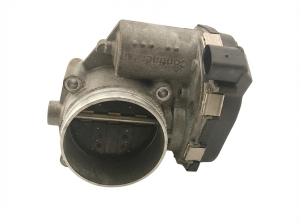
Used OEM Parts in Stock
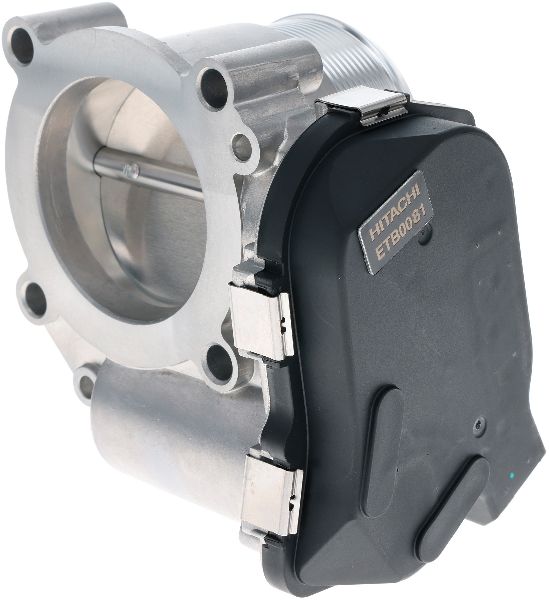
New Aftermarket Parts Available

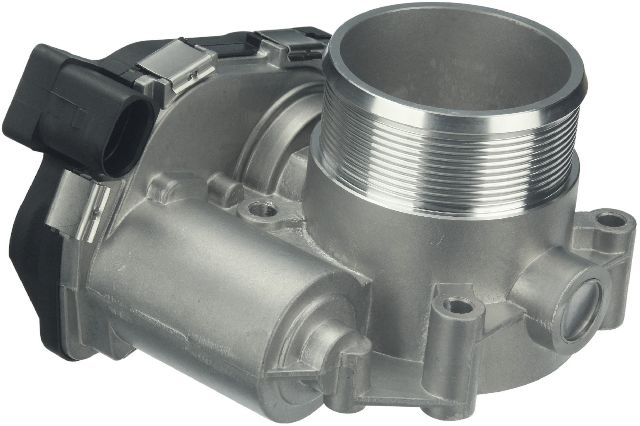



The information in this article is provided for general reference and educational purposes only. Vehicle specifications, procedures, and part compatibility can vary by production date, trim level, and region. Always consult your vehicle's factory service manual and verify part numbers before purchasing or performing repairs. Safety-critical components such as airbags, seat belts, and braking systems should be installed by a qualified professional.
- Audi A4:
- 🧭 Diagnostic Flowchart
- 🎬 Helpful Videos
- 🛍️ Shop This Part
- What's Unique About the 2008-2016 Audi A4
- Symptoms You May Notice
- Most Likely Causes
- Rare But Worth Checking
- Diagnosis Steps
- Parts You'll Likely Need
- Related Codes That Often Appear With This One
- Technical Service Bulletins (TSBs) & Recalls
- Platform-Specific Known Issues
- Mechanic-Grade Diagnostic Values
- Scan Tool Commands That Help
- Wiring & Ground Locations
- Real Owner Repair Stories
- OEM Part Supersession History
- Model Year Variations Within This Range
- Other Known Issues on This Vehicle
- Used vs. New Parts: Buying Guide for This Vehicle
- Real Owner Stories
- 2008-2012 Audi A4 2.0L TFSI
- Audi B7 A4 2.0T
- 2008-2016 Audi A4 2.0L TFSI
- Related OBD-II Codes
- Frequently Asked Questions
- 🎟️ Get 5% Off