

P2135 on 2008-2011 Cadillac CTS: Reduced Power, Causes, and Fixes
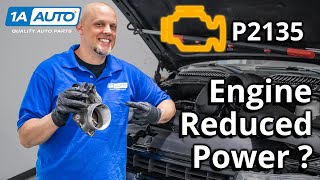
If your 2008-2011 Cadillac CTS displays 'Reduced Engine Power' with code P2135, the throttle body assembly has almost certainly failed. This is a very common issue acknowledged by GM's Special Coverage Adjustment 14582. The fix is to replace the throttle body, which costs between $400 and $700 at a shop, or around $150-$300 for the part to do it yourself. After replacement, a throttle relearn procedure is mandatory.
- P2135 on a 2008-2011 CTS is almost always caused by a failed throttle body.
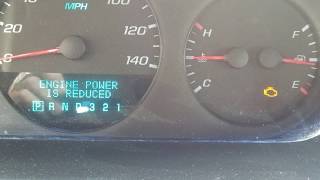
- The primary symptom is a 'Reduced Engine Power' message, which severely limits vehicle speed.
- This is a well-known issue acknowledged by a GM Special Coverage program (14582A).
- The correct repair is to replace the entire throttle body assembly and perform a throttle relearn procedure. An ECM reprogram is also mandated by GM's TSB.
What's Unique About the 2008-2011 Cadillac CTS
This is a notoriously common problem on 2008-2011 Cadillac CTS models, along with many other GM vehicles from the same era that use the same 3.6L V6 (LLT) engine and throttle body design. The issue was so widespread that General Motors issued a Special Coverage Adjustment (No. 14582A) that extended the warranty on the throttle body to 10 years or 120,000 miles. While this warranty has likely expired for most owners due to age, it serves as official confirmation of a high failure rate for the original part. The TSB associated with this issue, 11-06-04-007B, specifically outlines the diagnostic and repair procedure, emphasizing the need for an ECM reprogram on 2008-2011 models after replacement.
Symptoms You May Notice
- "Reduced Engine Power" message on the dashboard
- Check Engine Light is on
- Vehicle has very limited acceleration (limp mode)
- Hesitation or stumbling when pressing the gas pedal
- Rough or unstable idle
- Engine may stall, especially when coming to a stop
- Harsh or erratic shifting with an automatic transmission
- "Service Stabilitrak" or "Service Traction Control" message may also appear
- Replacing only the accelerator pedal sensor without diagnosing the throttle body sensors.
- Replacing oxygen sensors or other unrelated parts before properly diagnosing the throttle control system.
- Cleaning a dirty throttle body when the internal electronics have failed. Cleaning will not fix the P2135 code in most cases.
Most Likely Causes
- Failed Throttle Body Assembly 🔴 High Probability → Shop Fuel Injection Throttle Body The internal throttle position sensors (TPS) are a known high-failure item, as acknowledged by GM's Special Coverage Adjustment #14582A. The sensors are integrated into the throttle body and are not typically serviced separately. The electronic components within the sensor simply wear out or fail over time.
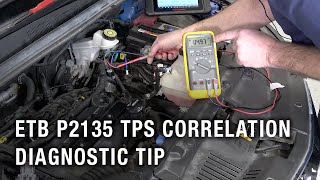
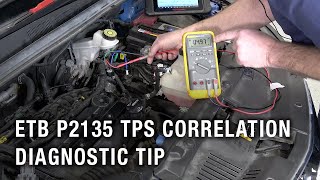
How to confirm: Use a scan tool to monitor the live data for TP Sensor 1 and TP Sensor 2. With the key on and engine off, slowly press the accelerator pedal to the floor and back. The voltage readings should change smoothly and inversely (one rises as the other falls). Any jumps, dropouts, or erratic readings confirm a faulty sensor within the throttle body. This is the definitive diagnostic step. 🎬 See: How to diagnose P2135 TPS correlation issues
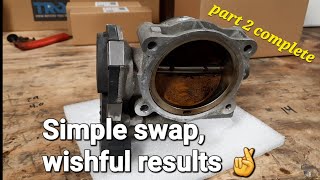
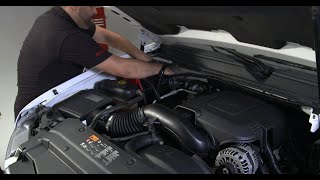
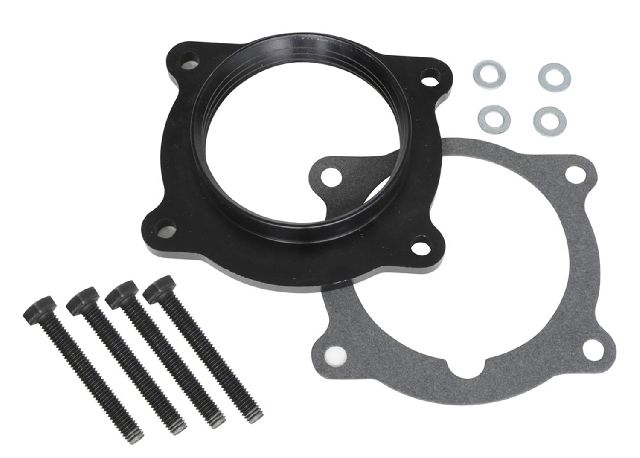
Typical fix: Replace the entire throttle body assembly with a new gasket. 🎬 Watch: Step-by-step Cadillac CTS throttle body replacement guide After replacement, an ECM reprogram and/or a throttle relearn procedure is required for the computer to recognize the new part. The relearn procedure often involves letting the engine idle for a few minutes, turning it off, and then idling again, but following the service manual procedure is critical.
Est. part cost: $150-$300 - Wiring or Connector Issue ⚪ Low Probability While less common than throttle body failure, the wiring harness connector at the throttle body can become corroded or wires can break internally from vibration and heat cycles.
How to confirm: Visually inspect the wiring harness and 6-pin connector going to the throttle body. Look for any signs of corrosion, backed-out pins, or damaged wires. With the engine running, carefully wiggle the connector and wiring to see if it causes the engine to stumble or the code to appear. A more thorough check involves using a multimeter to test for proper voltage (5V reference) and ground at the connector terminals as per the service manual.
Typical fix: Repair the damaged section of wiring or replace the connector pigtail (e.g., ACDelco PT2713).
Est. part cost: $20-$50 - Dirty or Sticking Throttle Body ⚪ Low Probability → Shop Fuel Injection Throttle Body The 3.6L direct injection (LLT) engine is prone to carbon buildup from the PCV system. This can cause the throttle plate to stick, leading to a mismatch between the commanded and actual throttle position, which can sometimes trigger a P2135, though it more commonly sets other codes like P1516.
How to confirm: Remove the air intake tube and inspect the throttle body bore and plate for heavy black carbon buildup. A sticking plate can cause the physical position to not match what the sensors expect.
Typical fix: Clean the throttle body bore and plate thoroughly with a dedicated throttle body cleaner and a soft brush or rag. While good maintenance, this is unlikely to fix an internal electronic sensor fault that is the primary cause of P2135.
Est. part cost: $10-$15
Rare But Worth Checking
- Faulty Engine Control Module (ECM): → Shop Engine Control Module (ECM) This is very rare. Before condemning the ECM, all other possibilities, especially the throttle body and its wiring, must be exhaustively ruled out. In some cases, the 5-volt reference circuit within the ECM can fail, causing this code.
- Failed Accelerator Pedal Position (APP) Sensor: → Shop Accelerator Pedal Assembly While the code points to the throttle body sensors, a fault in the accelerator pedal's sensors can sometimes cause correlation issues. However, this would typically set other specific codes related to the APP sensor (e.g., P2138).
Diagnosis Steps
- Connect an OBD-II scanner and confirm that P2135 is the primary code stored. Note any other codes.
- Using the scanner's live data function, graph the voltage readings of 'TP Sensor 1' and 'TP Sensor 2'.
- With the ignition on but the engine off, slowly press and release the accelerator pedal. The two sensor voltages should move smoothly in opposite directions (e.g., one goes from ~4.5V to ~0.5V while the other goes from ~0.5V to ~4.5V).
- If you see any voltage spikes, dropouts, or points where the signals do not move smoothly and inversely, the throttle body assembly is faulty and needs replacement.
- If the sensor data looks smooth, turn the ignition off and disconnect the throttle body electrical connector. Inspect the connector and wiring harness for any corrosion, bent pins, or damaged wires.
- If wiring looks good, use a multimeter to check for 5-volt reference and good ground at the connector with the key on.
- If wiring and connections are confirmed to be good but the sensor data was erratic, replace the throttle body assembly and gasket.
- After replacement, clear all DTCs. Perform the throttle relearn procedure as specified in the service manual. This typically involves idling the engine for 3 minutes, shutting it off for 60 seconds, and then idling for another 3 minutes to allow the ECM to learn the new throttle's idle and wide-open positions.
Parts You'll Likely Need
- Throttle Body Assembly
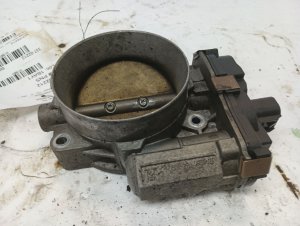
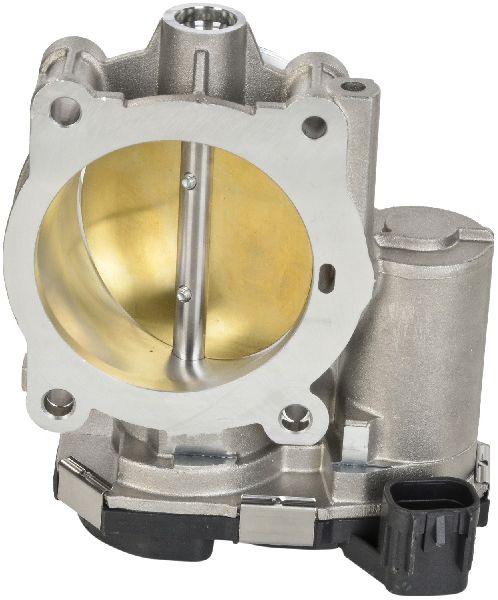
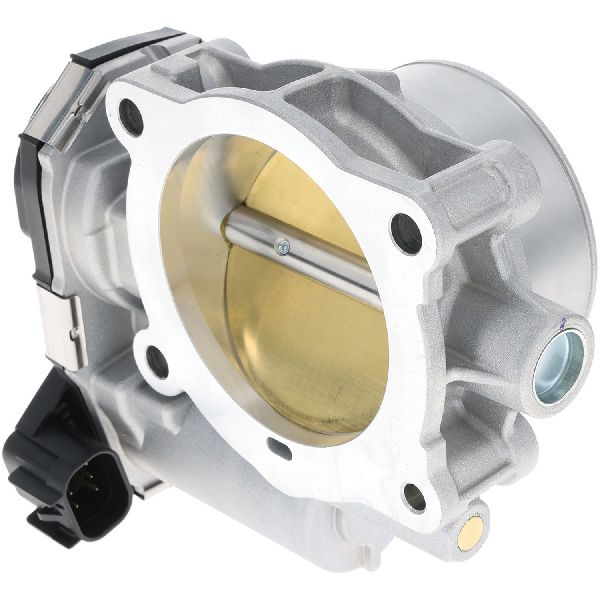
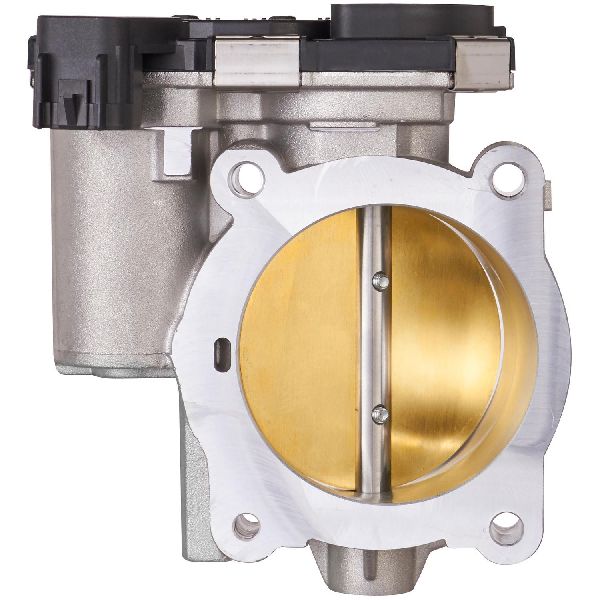
(OEM #ACDelco 217-3153 (GM 12605109))— This is the most common failure point for code P2135 on this vehicle, as the internal sensors fail. The sensors are not sold separately from the throttle body by GM.
Trusted brands: ACDelco (OEM), Bosch, Hitachi, TRQ
OEM price range: $250-$400
Aftermarket price range: $150-$250
Related Codes That Often Appear With This One
- P0121 — This code indicates a 'Throttle/Pedal Position Sensor/Switch 'A' Circuit Performance' problem, directly related to the same sensor system.
- P0221 — This code indicates a 'Throttle/Pedal Position Sensor/Switch 'B' Circuit Performance' problem, also directly related to the throttle body's internal sensors.
- P1516 — A GM-specific code for 'Throttle Actuator Control (TAC) Module Throttle Actuator Position Performance', which can be triggered by the same underlying throttle body faults.
Technical Service Bulletins (TSBs) & Recalls
- GM Special Coverage Adjustment #14582A: Covers the throttle position sensor failure, extending the warranty to 10 years/120,000 miles and outlining the replacement procedure. It lists the 2008-2011 CTS specifically.
- GM Corporate Bulletin Number 11-06-04-007B: Provides detailed instructions for addressing DTC P2135. It explicitly states that for 2008-2011 models, the ECM MUST be reprogrammed with the latest software after part replacement.
- TSB Bulletin #11-06-04-007C: While issued for other GM models like the Escalade, this bulletin reinforces the procedure for replacing the throttle position sensor cover when DTC P2135 is set and a "reduced power" message is displayed.
Platform-Specific Known Issues
- GM issued Special Coverage Adjustment #14582A and Technical Service Bulletin 11-06-04-007B due to the high failure rate of the throttle position sensor in these vehicles. The fix outlined by GM is to replace the throttle body and reprogram the ECM.
- Owner experiences on forums consistently point to throttle body replacement as the definitive fix. Attempts to clean the throttle body or address wiring are rarely successful for a persistent P2135 code.
Mechanic-Grade Diagnostic Values
- 5-Volt Reference Circuit Voltage — expected: 4.8 - 5.2 Volts. Failure: Voltage below 4.8V or above 5.2V points to a wiring issue or a fault in the ECM.
- Low Reference (Ground) Circuit Resistance — expected: < 5.0 Ohms. Failure: Resistance greater than 5.0 Ohms indicates a poor ground connection, which can cause erratic sensor readings.
- TP Sensor 1 Signal Voltage — expected: Approx. 0.5V at closed throttle, sweeping smoothly to ~4.5V at wide-open throttle.. Failure: Any jumps, spikes, or dropouts during a slow sweep of the pedal indicates a faulty sensor. The ECM may set a fault if the voltage is less than 0.32V or greater than 4.7V.
- TP Sensor 2 Signal Voltage — expected: Approx. 4.5V at closed throttle, sweeping smoothly down to ~0.5V at wide-open throttle.. Failure: The voltage should move inversely to TP Sensor 1. Any non-smooth movement or failure to correlate indicates a faulty sensor.
- TP Sensor 1 and 2 Correlation — expected: The two signals should be inversely mirrored. A scan tool may display an 'Agree/Disagree' parameter, which should always read 'Agree'.. Failure: The P2135 code will set if the ECM detects the two signals disagree by more than a calibrated value (typically 7-10%) for more than 1-2 seconds.
Scan Tool Commands That Help
- GM GDS2 / Tech2: Idle Learn Reset / Throttle Learn Reset — This function must be used after replacing or cleaning the throttle body. It resets the learned idle airflow values in the ECM. Failing to perform this reset is a common cause of high or unstable idle and can set other codes like P2176.
- GM GDS2 / Tech2: TP Sensor 1 and 2 Agree/Disagree Parameter — During diagnosis, observing this specific parameter while operating the throttle provides a clear pass/fail indication of sensor correlation. The parameter should always display 'Agree'.
Wiring & Ground Locations
- X87 Connector — The 6-pin electrical connector located directly on the electronic throttle body assembly at the front of the engine.. This is the primary connection point for all power, ground, and signal wires for the integrated TPS sensors. Internal wire fraying, pin corrosion, or a loose connection here is a common cause of the P2135 code. The pinout is: Pin B (Ground), Pin C (5V Reference), Pin E (TPS 1 Signal), Pin D (TPS 2 Signal).
- G102 / G131 — Located on the right front and left rear of the engine, respectively.. These are critical engine block grounds. A loose or corroded connection at these points can introduce electrical noise and unstable voltages to the entire engine management system, potentially causing sensor correlation faults.
- G106 / G130 — Located on the right rear of the engine and the rear of the right cylinder head.. These serve as primary grounds for the Engine Control Module (ECM). A poor connection here can directly impact the ECM's ability to correctly interpret sensor data from the throttle body, leading to a false P2135 code.
- Engine Harness Chafe Points — The engine wiring harness may chafe against the ECM/TCM bracket, the driver's side upper control arm, and the shock tower.. While not specific to the throttle body circuit alone, a GM service bulletin identifies these as common areas for wire damage. A short in the 5V reference or sensor signal wires within this harness could cause a P2135 code.
Real Owner Repair Stories
- LS1Tech.com forum user (Cadillac CTS-V (Gen 1, similar wiring principles)) — Multiple throttle codes including P2135, vehicle in 'Reduced Engine Power' mode.
❌ Tried (didn't work) Found and repaired a broken wire at the TPS connector., Replaced the TPS connector pigtail., Checked all other wiring, fuses, and grounds., Swapped in a different used throttle body., Replaced the TPS sensor on the used throttle body., Performed battery disconnect/relearn procedures.
✅ What actually fixed it The user's detailed diagnostic steps pointed towards an internal failure of the throttle body assembly itself, as even after fixing the obvious wiring damage, the code persisted immediately upon turning the key to the 'run' position, indicating a hard fault within the sensor correlation circuit. The final resolution, though not explicitly stated by the original poster, is implied to be a new throttle body assembly, as all other components and wiring were addressed.
OEM Part Supersession History
12605109→19420707— Standard part number update by GM. The parts are functionally identical.
Heads up: The new part number (19420707) is a direct replacement for the original (12605109) and is compatible with the 2008-2011 Cadillac CTS.
Model Year Variations Within This Range
- 2008-2011: According to TSB 11-06-04-007B, models from 2008-2011 require an ECM reprogram with the latest software after the throttle body is replaced to ensure compatibility and proper function. Later models (2011+) mentioned in the same TSB for other vehicle platforms did not always require this reprogram.
Diagnostic Flowchart
Other Known Issues on This Vehicle
Issues unrelated to this code that are worth knowing about as an owner of this generation:
- Premature Timing Chain Stretch (3.6L LLT V6) 🔴 High — Very common, typically between 70,000 and 120,000 miles. Triggers codes like P0008, P0017, P0018, P0019. (Ref: Special Coverage Adjustment #11340C)
- Rear Differential Bushing Failure 🟠 Medium — Common failure causing a 'clunk' noise from the rear when shifting from Park to Drive or Reverse.
- Clogged Sunroof Drains 🟠 Medium — Commonly occurs with age, leading to water leaking into the cabin, staining the headliner, and wetting the floor carpets.
- Faulty Door Lock Actuators / Switches 🟡 Low — The electronic front exterior door handle switches are a known failure point, preventing the door from opening from the outside.
- StabiliTrak / ABS Light Activation 🟠 Medium — Often caused by a faulty wheel speed sensor or its wiring, which illuminates the ABS and traction control lights.
Used vs. New Parts: Buying Guide for This Vehicle
When a used part is the smart pick: For this specific repair, buying a used throttle body is NOT recommended. The internal sensors are a known high-failure-rate wear item. A used part from a junkyard is likely to have similar wear and may fail soon after installation, repeating the problem.
What to inspect on the donor part:
- If forced to use a used part, source it from the lowest mileage donor vehicle possible.
- Inspect the connector pins for any signs of corrosion or damage.
- Check the throttle bore for excessive carbon buildup, which might indicate a poorly maintained engine.
OEM-only on this vehicle (don't cheap out):
- While not strictly 'OEM-only', using a new OEM (ACDelco) or a reputable OEM-supplier (like Bosch or Hitachi) throttle body is strongly advised for longevity and to avoid repeat failures.
Aftermarket brands forum-validated for this vehicle:
- ACDelco (OEM)
- Bosch
- Hitachi
Brands owners have reported issues with on this vehicle:
- Avoid unbranded, 'white-box' parts from online marketplaces, as their internal electronics may not meet OEM specifications for reliability and accuracy, leading to a quick return of the P2135 code.
Real Owner Stories
Aggregated from forums and TSBs cited above. Mileages and costs reflect what owners reported in those sources.
2004-2007 Cadillac CTS-V
Symptoms: The owner experienced a P2135 code and discovered a broken wire leading to the Throttle Position Sensor (TPS).
What fixed it: Even after repairing the connector, the code remained, indicating that an internal throttle body failure was the ultimate cause.
Source hint: LS1Tech.com thread titled 'P2135 - LS1Tech.com - Camaro and Firebird Forum Discussion'
2011 Chevrolet Silverado
Symptoms: After replacing the TPS sensor according to TSB #11-06-04-007B, the vehicle experienced a high idle.
What fixed it: The discussion highlighted the sensitivity of the repair and the necessity of the specific relearn process.
Source hint: GM-Trucks.com thread titled 'DTC 2135 - Ask A GM Technician'
2008-2011 Cadillac CTS 3.6L LLT — ~95000 miles
Symptoms: The vehicle displayed a 'Reduced Engine Power' message and entered limp mode with very limited acceleration.
What fixed it: Replacement of the entire throttle body assembly and an ECM reprogram as outlined in GM Special Coverage Adjustment #14582A.
Source hint: GM Special Coverage Adjustment #14582A
Documented NHTSA Reports
Cadillac SRX Owner Report
Symptoms: An owner reported random engine stalling after the engine was fully warmed up, especially during high humidity or rain. Diagnostic codes included P2135, P2119, P2176, P0638, and P1101.
What fixed it: NHTSA ODI #10607020 describes these symptoms where the engine could stall during idle.
Source hint: NHTSA ODI #10607020
Related OBD-II Codes
Frequently Asked Questions
Is there a special warranty extension for the throttle position sensor on my 2008-2011 Cadillac CTS?
Can I just clean the throttle body on my 3.6L LLT engine to fix the P2135 code?
What does GM Bulletin 11-06-04-007B say about repairing this code?
Why is my Cadillac CTS showing 'Service Stabilitrak' along with the P2135 code?
What is the recommended part for a wiring repair on the CTS throttle body?
Is there a specific procedure I need to follow after replacing the throttle body?
Helpful Videos
Used OEM Parts in Stock
New Aftermarket Parts Available



The information in this article is provided for general reference and educational purposes only. Vehicle specifications, procedures, and part compatibility can vary by production date, trim level, and region. Always consult your vehicle's factory service manual and verify part numbers before purchasing or performing repairs. Safety-critical components such as airbags, seat belts, and braking systems should be installed by a qualified professional.
- Cadillac CTS:
- 🧭 Diagnostic Flowchart
- 🎬 Helpful Videos
- 🛍️ Shop This Part
- What's Unique About the 2008-2011 Cadillac CTS
- Symptoms You May Notice
- Most Likely Causes
- Rare But Worth Checking
- Diagnosis Steps
- Parts You'll Likely Need
- Related Codes That Often Appear With This One
- Technical Service Bulletins (TSBs) & Recalls
- Platform-Specific Known Issues
- Mechanic-Grade Diagnostic Values
- Scan Tool Commands That Help
- Wiring & Ground Locations
- Real Owner Repair Stories
- OEM Part Supersession History
- Model Year Variations Within This Range
- Other Known Issues on This Vehicle
- Used vs. New Parts: Buying Guide for This Vehicle
- Real Owner Stories
- 2004-2007 Cadillac CTS-V
- 2011 Chevrolet Silverado
- 2008-2011 Cadillac CTS 3.6L LLT — ~95000 miles
- Documented NHTSA Reports
- Cadillac SRX Owner Report
- Related OBD-II Codes
- Frequently Asked Questions
- 🎟️ Get 5% Off