

P2135 on 2008-2013 Cadillac Escalade EXT: Causes and Fixes for Reduced Power
On a 2008-2013 Escalade EXT, code P2135 almost always means the throttle body's internal electronics have failed. This triggers the 'Reduced Engine Power' message. The most common fix is replacing the entire throttle body assembly, which costs around $150-$280 for the part and is a DIY-friendly job for many. A throttle relearn procedure is mandatory after replacement.
- P2135 on your Escalade EXT is almost certainly caused by a failed throttle body, which is a very common problem for this vehicle.
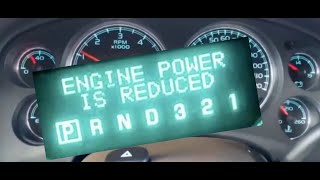
- The main symptom is a sudden "Reduced Engine Power" message, which puts the truck into a safe 'limp mode'.
- Do not just clean the throttle body; the issue is electronic, and the entire assembly must be replaced for a lasting fix.
- Replacing the throttle body is a manageable DIY job that takes about an hour with basic tools.
- After replacing the part, you must perform a 'throttle relearn' procedure so the computer recognizes the new part. This can often be done without special tools.
What's Unique About the 2008-2013 Cadillac ESCALADE EXT
This issue is notoriously common on this generation of GM trucks and SUVs (GMT900 platform), including the Escalade EXT. The failure is so frequent that GM issued a Technical Service Bulletin (TSB #110604007C) and a Special Coverage Adjustment (#11273A) for 2008-2011 models acknowledging the problem. The core issue is typically the failure of the electronic sensors integrated into the throttle body, not a mechanical problem. While the TSB originally detailed a procedure for replacing just the sensor cover, most mechanics and DIYers now opt to replace the entire throttle body assembly for a more reliable, long-term repair, as the separate sensor replacement was often not a permanent fix.
Diagnostic Flowchart
Tap your situation to follow the diagnostic path that matches what you're seeing on this vehicle.
Symptoms You May Notice
- "Reduced Engine Power" message on the dashboard.
- Check Engine Light is on.
- "Service Stabilitrak" or "Service Traction Control" messages may also appear simultaneously.
- Poor or hesitant acceleration.
- Unstable, high, or hunting idle speed.
- Vehicle will not accelerate properly (limp mode).
- In some cases, the engine may stall when coming to a stop.
- Replacing the accelerator pedal assembly when the fault is at the throttle body.
- Cleaning the throttle body. While a good maintenance practice, cleaning will not fix the internal electronic sensor failure that triggers P2135 and the 'Reduced Engine Power' message.
- Replacing the Mass Airflow (MAF) sensor. This is not typically related to a P2135 correlation fault.
Most Likely Causes
- Faulty Throttle Body Assembly 🔴 High Probability → Shop Fuel Injection Throttle Body The integrated electronic throttle position sensors are a known high-failure item on this GM platform, as acknowledged by manufacturer TSB #110604007C and Special Coverage Adjustment #11273A.
How to confirm: Use a scan tool to monitor the live data for 'TP Sensor 1' and 'TP Sensor 2'. With the key on and engine off, slowly press the gas pedal. The voltages should change smoothly and have an inverse relationship (e.g., one goes from 4.0V to 0.5V while the other goes from 0.5V to 4.0V). If either signal jumps, drops out, or is erratic, the throttle body has failed. 🎬 Watch this guide to diagnosing P2135 and reduced engine power.
Typical fix: Replace the entire throttle body assembly and perform the throttle relearn procedure. While cleaning a dirty throttle body can solve some idle issues, it will not fix the electronic failure that causes P2135. Many owners recommend using an OEM ACDelco part, as cheaper aftermarket units have been reported to fail prematurely.
Est. part cost: $150-$280 - Damaged Wiring or Poor Connection at Throttle Body 🟡 Medium Probability → Shop Fuel Injection Throttle Body The wiring harness connector is located on top of the engine and is subject to heat and vibration, which can lead to corrosion, pushed-out pins, or broken wires over time.
How to confirm: Visually inspect the throttle body electrical connector for corrosion, pushed-out pins, or broken wires. While monitoring sensor data on a scan tool, wiggle the harness to see if it causes the signal to drop out. A user on Tahoe Yukon Forum traced their issue to a wire rubbing on a metal hose crimp fitting near the ECM.
Typical fix: Repair the damaged section of wiring or replace the 6-pin connector pigtail (ACDelco PT2713 or equivalent).
Est. part cost: $15-$40
Rare But Worth Checking
- Faulty Accelerator Pedal Position (APP) Sensor: → Shop Accelerator Pedal Assembly While the symptoms are similar, the APP sensor (the gas pedal itself) is a less common failure point for this specific code on this vehicle compared to the throttle body. It will typically set other codes like P2138.
- Powertrain Control Module (PCM) Failure: → Shop Engine Control Module (ECM) This is very rare. The PCM should only be considered after all other possibilities, including the throttle body, wiring, and grounds, have been exhaustively ruled out.
Diagnosis Steps
- Read all fault codes with an OBD-II scanner. Note any other codes that appear alongside P2135.
- Turn the ignition off and inspect the electrical connector and wiring harness at the throttle body. Look for any signs of corrosion, damage, or loose pins. Wiggle the harness to check for intermittent connections.
- With the key on and engine off, use a scan tool with live data capability to graph the outputs for 'TP Sensor 1' and 'TP Sensor 2'.
- Slowly press and release the accelerator pedal several times. The voltage readings for the two sensors should be inverse and move smoothly without any spikes or dropouts.
- If the sensor readings are erratic or do not correlate, the throttle body assembly is faulty and needs to be replaced.
- If the sensor readings are stable, the issue may be in the wiring or, less commonly, the PCM.
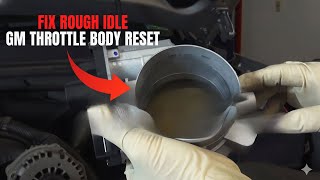
- Mandatory Final Step: After replacing the throttle body, perform a 'Throttle Relearn Procedure'. This can be done without a scan tool. 🎬 Watch: How to manually reset and relearn your throttle body.
Parts You'll Likely Need
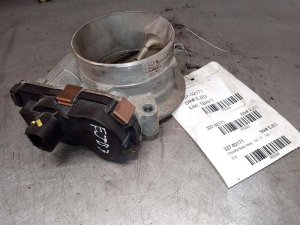
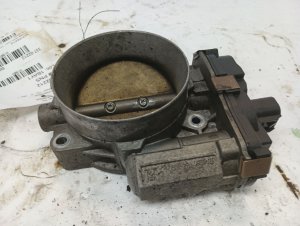
- Fuel Injection Throttle Body Assembly
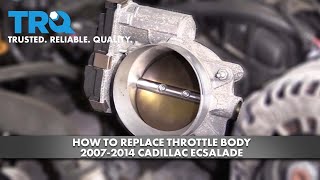
(OEM #12670839 (supersedes 217-3151, 12629992))— This is the most common cause of code P2135. The assembly includes the new throttle position sensors that have failed. Replacing the entire unit is the standard, reliable repair. 🎬 See this walkthrough on how to replace the throttle body.
Trusted brands: ACDelco (OEM), Hitachi, Standard Motor Products, Dorman
OEM price range: $240-$280
Aftermarket price range: $150-$220 - Throttle Body Connector Pigtail
(OEM #ACDelco PT2713)— If the wiring connector at the throttle body is corroded, melted, or has broken clips/wires, replacing the pigtail is necessary.
Trusted brands: ACDelco, Dorman, Michigan Motorsports
OEM price range: $30-$45
Aftermarket price range: $15-$25
Related Codes That Often Appear With This One
- P1516 — This code relates to the Throttle Actuator Control (TAC) module performance and is often triggered as a direct result of the throttle position correlation fault.
- P0121 — This code indicates a performance problem with the 'A' circuit of the throttle position sensor, which is one of the two sensors involved in the P2135 correlation check.
- P0220 — This code points to a malfunction in the 'B' circuit of the throttle position sensor, the other sensor involved in the P2135 fault.
Technical Service Bulletins (TSBs) & Recalls
- Bulletin #110604007C: Addresses diagnosis and repair for DTC P2135, which can cause a Malfunction Indicator Lamp (MIL) and a Reduced Engine Power message. It instructs technicians NOT to replace the entire throttle body but to instead replace the sensor cover and reprogram the ECM.
- Special Coverage Adjustment #11273A: A customer satisfaction program that extended warranty coverage for the throttle position sensor failure to 10 years/120,000 miles for affected models, covering the cost of replacement and reprogramming.
Platform-Specific Known Issues
- GM issued Technical Service Bulletin #110604007C for 2008-2011 models, which provides a procedure for addressing DTC P2135. The bulletin originally involved replacing the throttle position sensor cover and reprogramming the ECM, but experience has shown replacing the entire throttle body is often a more durable fix.
- A Special Coverage Adjustment program (#11273A) was also initiated by GM for 2008-2011 models, extending the warranty for this specific failure to 10 years or 120,000 miles. While this program has expired for most vehicles, it serves as official acknowledgment from GM of the widespread component defect.
Mechanic-Grade Diagnostic Values
- TP Sensor 1 Voltage (Key On, Engine Off) — expected: ~0.5V at closed throttle, sweeping smoothly to ~4.5V at wide-open throttle.. Failure: Voltage is erratic, jumps, or has dropouts when the pedal is pressed slowly.
- TP Sensor 2 Voltage (Key On, Engine Off) — expected: ~4.5V at closed throttle, sweeping smoothly to ~0.5V at wide-open throttle.. Failure: Voltage is erratic, jumps, or has dropouts. The signal should be the inverse of TP Sensor 1.
- Throttle Body Connector Pin C (Brown Wire) to Ground — expected: Should match TP Sensor 1 voltage reading on scan tool.. Failure: Voltage at the pin differs significantly from the scan tool reading, indicating a wiring issue between the connector and the PCM.
- Throttle Body Connector Pin A (Yellow Wire) to Ground — expected: Should match TP Sensor 2 voltage reading on scan tool.. Failure: Voltage at the pin differs significantly from the scan tool reading, indicating a wiring issue.
Scan Tool Commands That Help
- GM Tech 2 / GDS2: Throttle Position Sweep Test — This function commands the throttle motor to sweep from fully closed to fully open while graphing the TP sensor voltages. It's a definitive way to confirm if the sensors are failing without manually operating the pedal and can reveal glitches that are hard to catch otherwise.
- GM Tech 2 / GDS2: Idle Learn Reset / Throttle Relearn — This is a mandatory procedure after replacing the throttle body. It resets learned idle and off-idle values in the PCM, allowing it to learn the exact position of the new throttle plate.
Wiring & Ground Locations
- G103 — On the front of the passenger side (right) cylinder head, often on a stud near the thermostat housing.. This is a primary engine ground. A loose or corroded connection here can create voltage discrepancies for multiple sensors, including the throttle body, leading to correlation codes like P2135.
- G104 — On the rear of the passenger side (right) cylinder head.. This ground is shared by numerous components, and a poor connection can cause intermittent and difficult-to-diagnose electrical issues, including sensor data faults that trigger a P2135 code.
- Throttle Body Connector (X111) — The 6-pin connector directly on the throttle body assembly.. This is the primary connection point for all throttle control signals. Pins can become corroded, loose, or wires can break from heat and vibration, directly causing the P2135 fault. Wiggling this connector while watching live data is a key diagnostic step.
Real Owner Repair Stories
- LS1Tech Forum User (2008-2013 GM Truck (platform equivalent)) — Recurring P2135 with 'Reduced Engine Power', 'Service Traction Control', 'Service Stabilitrak'.
❌ Tried (didn't work) Replaced throttle body with aftermarket part, Replaced throttle body with used OEM part, Replaced throttle position sensor separately, Replaced throttle body pigtail connector, Cleaned all visible engine grounds
✅ What actually fixed it The user pulled the underhood fuse box and found corrosion on the main connectors underneath. Cleaning all fuse box connectors and applying dielectric grease resolved the network communication errors and the P2135 code. - 2CarPros Forum User (Chevrolet (platform equivalent)) — Stalling, jerking, loss of acceleration, and repeated P2135 code.
❌ Tried (didn't work) Replaced throttle body four separate times, Replaced accelerator pedal assembly twice
✅ What actually fixed it The issue was unresolved in the thread, but the professional advice given was to stop replacing parts and perform a detailed wiring harness inspection for intermittent voltage variations, as this is the likely cause when multiple new parts do not fix the issue. This highlights a common owner pitfall.
OEM Part Supersession History
12629992, 217-3151→12670839— Updated internal electronics and sensor design to improve reliability and address the failures leading to P2135.
Model Year Variations Within This Range
- 2008-2011: These model years were specifically covered by GM's Special Coverage Adjustment #11273A and TSB #110604007C, indicating the defect was most prevalent in the earlier half of the generation. While the part may fail on 2012-2013 models, it was not covered by the same extended warranty program.
Helpful Videos
Used OEM Parts in Stock
New Aftermarket Parts Available


The information in this article is provided for general reference and educational purposes only. Vehicle specifications, procedures, and part compatibility can vary by production date, trim level, and region. Always consult your vehicle's factory service manual and verify part numbers before purchasing or performing repairs. Safety-critical components such as airbags, seat belts, and braking systems should be installed by a qualified professional.
- Cadillac ESCALADE EXT:
- 🧭 Diagnostic Flowchart
- 🎬 Helpful Videos
- 🛍️ Shop This Part
- What's Unique About the 2008-2013 Cadillac ESCALADE EXT
- Symptoms You May Notice
- Most Likely Causes
- Rare But Worth Checking
- Diagnosis Steps
- Parts You'll Likely Need
- Related Codes That Often Appear With This One
- Technical Service Bulletins (TSBs) & Recalls
- Platform-Specific Known Issues
- Mechanic-Grade Diagnostic Values
- Scan Tool Commands That Help
- Wiring & Ground Locations
- Real Owner Repair Stories
- OEM Part Supersession History
- Model Year Variations Within This Range
- 🎟️ Get 5% Off