

P2135 on 2010-2016 Cadillac SRX: Throttle Position Sensor Fault Causes and Fixes
On a 2010-2016 Cadillac SRX, code P2135 almost always points to a failed throttle body assembly. This triggers the 'Reduced Engine Power' message and requires replacing the entire throttle body, as the sensors are integrated. The issue was so common GM issued a Special Coverage Adjustment (14582A) for this part. Expect to pay $150-$300 for an OEM part, with DIY difficulty rated at 2/5. A throttle relearn procedure is mandatory after replacement.
- P2135 on a 2010-2016 SRX almost always means you need a new throttle body assembly.
- The most common symptom is a sudden 'Reduced Engine Power' message and a severe lack of acceleration.
- The throttle position sensors (TPS) cannot be replaced separately; they are built into the throttle body.
- After replacing the throttle body, a 'throttle relearn' procedure is mandatory for the engine to idle and run correctly.
- Always check the wiring connector at the throttle body for damage before ordering a new part.
What's Unique About the 2010-2016 Cadillac SRX
The second-generation Cadillac SRX, like many GM vehicles from this era, is known for issues with its electronic throttle body. The throttle position sensors (TPS) are integrated directly into the throttle body assembly and are not sold separately. This design means that a failure of either internal sensor, which is the most common cause of P2135, necessitates the replacement of the entire unit. GM even issued a special coverage bulletin (14582A, later superseded by TSB 11-06-04-007C) for this exact problem on earlier models in this generation, highlighting the frequency of this failure.
Symptoms You May Notice
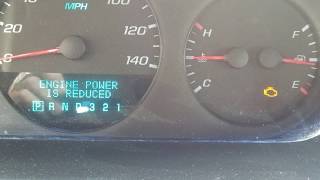
- "Reduced Engine Power" message displayed on the dashboard
- "Service Stabilitrak" message may also appear
- Check Engine Light is on
- Vehicle has very limited acceleration and power ('limp mode')
- Hesitation or surging during acceleration
- Unstable or rough idle
- Engine may stall when coming to a stop
- Engine revs without the gas pedal being pressed
- Replacing the accelerator pedal position (APP) sensor. While the code definition includes 'Pedal Position Sensor,' the fault on the SRX is overwhelmingly located at the throttle body, not the pedal.
- Cleaning a throttle body that has an internal electronic fault. While cleaning can resolve idle issues caused by carbon buildup, it will not fix the P2135 correlation error if the sensors have failed.
Most Likely Causes
- Failed Throttle Body Assembly 🔴 High Probability → Shop Fuel Injection Throttle Body The internal electronic throttle position sensors (TPS) are a known failure point on this platform, as acknowledged by GM's own service bulletins. The sensors are not available separately, requiring replacement of the whole assembly. Aftermarket replacements, like some from Dorman, may feature an improved non-contact Hall effect sensor to prevent future failures.
How to confirm: Use a scan tool to monitor the live data for TP Sensor 1 and TP Sensor 2. The voltage readings should be inverse and smooth as the accelerator is pressed. For example, one may sweep from 0.5V to 4.5V while the other sweeps from 4.5V to 0.5V. Jumps, spikes, or a lack of response from one sensor confirms the failure.
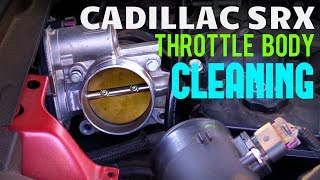
Typical fix: Replace the entire throttle body assembly. 🎬 Watch: How to test and replace your electronic throttle body After replacement, a throttle relearn procedure is required.
Est. part cost: $150-$300 - Wiring Harness or Connector Issue ⚪ Low Probability The wiring harness connector at the throttle body is exposed to engine heat and vibration, which can lead to corrosion, loose pins, or broken wires over time. Technicians pulling on the wires instead of the connector body during service can also dislodge pins.
How to confirm: With the engine off, disconnect the throttle body connector and inspect for corrosion, backed-out pins, or damage. With the key on, gently wiggle the connector and wiring harness while observing the TP sensor voltage on a scan tool. Any significant voltage fluctuation indicates a wiring fault.
Typical fix: Repair the damaged wiring or replace the connector pigtail. The mating connector part number is often GM 19352911.
Est. part cost: $20-$50
Rare But Worth Checking
- Powertrain Control Module (PCM) Fault: → Shop Engine Control Module (ECM) This is very uncommon. Before condemning the PCM, all other possibilities, especially the throttle body and its wiring, must be exhaustively ruled out.
Diagnosis Steps
- Connect an OBD-II scanner and confirm that P2135 is the primary code stored. Note any other related codes.
- Using the scanner's live data function, monitor the voltage readings of TP Sensor 1 and TP Sensor 2 while slowly pressing and releasing the accelerator pedal (with the engine off, key on). The two sensor readings should move smoothly in opposite directions (one increasing while the other decreases).
- If one sensor's reading is erratic, stuck, or doesn't change, the throttle body has likely failed.
- Turn the ignition off. Disconnect the electrical connector at the throttle body.
- Inspect the connector pins and wiring harness for any signs of corrosion, damage, or loose connections. Check for proper terminal tension.
- If the wiring looks good and the live data points to a sensor issue, the most probable cause is a faulty throttle body assembly.
- Replace the throttle body assembly and the gasket. 🎬 See this step-by-step throttle body removal guide
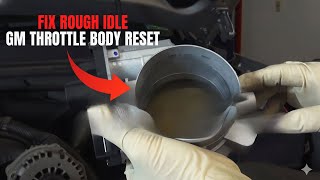
- Perform a throttle relearn procedure. 🎬 Watch: How to manually reset and relearn your GM throttle body A common method is to start the engine and let it idle in Park for 3 minutes, turn the engine off for 60 seconds, and repeat this cycle three times. Alternatively, some sources suggest simply driving the vehicle for a few days may allow the computer to relearn on its own, though the idle may be erratic during this period.
- Clear the codes and test drive the vehicle to ensure the issue is resolved.
Parts You'll Likely Need
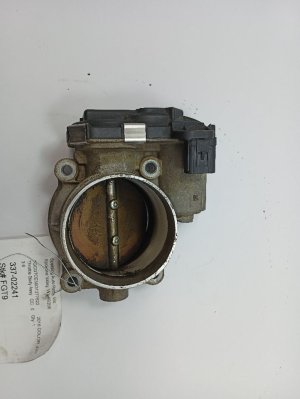
- Fuel Injection Throttle Body Assembly
(OEM #12670981 (For 3.6L LFX, supersedes 12632172))— This is the most common failure for code P2135 on the 2010-2016 SRX, as the internal throttle position sensors fail and are not serviceable separately.
Trusted brands: ACDelco (OEM), Bosch, Standard Motor Products, Dorman, Spectra Premium
OEM price range: $180-$360
Aftermarket price range: $75-$250
Related Codes That Often Appear With This One
- P0121 — This code also relates to Throttle/Pedal Position Sensor 'A' Circuit Performance and often appears alongside P2135 as part of the same throttle body failure.
- P0221 — This code points to a problem with Throttle/Pedal Position Sensor 'B' Circuit Performance, which is the second sensor involved in the P2135 correlation fault.
- P2119 — This code relates to Throttle Actuator Control Throttle Body Range/Performance, indicating a problem with the electronic motor that controls the throttle plate, which is also part of the same assembly.
- P1516 — This GM-specific code indicates that the actual throttle position does not match what the PCM has commanded, often appearing with P2135 during a throttle body failure.
Technical Service Bulletins (TSBs) & Recalls
- 14582A / 11-06-04-007: Malfunction Indicator Lamp (MIL) Illuminated, Reduced Engine Power Message Displayed, DTC P2135 Set. This bulletin addresses the throttle position sensor failure and provides diagnostic and repair procedures.
- TSB Bulletin #11-06-04-007C: While issued for other GM models like the Escalade, this bulletin outlines the specific procedure for replacing the throttle position sensor cover to resolve an illuminated indicator lamp, reduced power message, and DTC P2135.
- PIC6055A: Addresses the delaminating or bubbling of the CUE infotainment screen, a common unrelated issue on these vehicles.
Platform-Specific Known Issues
- General Motors issued Special Coverage Adjustment 14582A for this condition on some 2010-2011 SRX models, extending the warranty on the throttle body to 10 years or 120,000 miles. While this coverage has likely expired for most vehicles, it confirms this is a well-documented component failure.
- A user on CadillacForums.com with a 2011 SRX reported the classic P2135 symptoms: 'Service Stabilitrak' and 'Reduced Engine Power' messages. The fix was replacing the throttle body, which immediately solved the problem. The user noted the job was straightforward, involving only four bolts and an electrical connector.
Mechanic-Grade Diagnostic Values
- TP Sensor 1 Signal Voltage (Key On, Engine Off) — expected: Approx. 0.5V - 1.0V at closed throttle, sweeping smoothly up to approx. 3.5V - 4.5V at wide-open throttle.. Failure: Voltage is erratic, jumps, has dead spots, or does not change when the throttle plate is moved.
- TP Sensor 2 Signal Voltage (Key On, Engine Off) — expected: Approx. 3.8V - 4.5V at closed throttle, sweeping smoothly down to approx. 0.5V - 1.0V at wide-open throttle.. Failure: Voltage readings are inverse to Sensor 1. A failure is indicated by erratic readings, spikes, or a signal that doesn't change.
- Sum of TP Sensor 1 and TP Sensor 2 Voltages — expected: The sum of the two sensor voltages should remain relatively constant, close to 5.0V, throughout the throttle's range of motion.. Failure: The sum of the voltages deviates significantly, for example, dropping below 4.5V or exceeding 5.5V for more than a fraction of a second.
- 5-Volt Reference at Throttle Body Connector — expected: Steady 5.0V with the key on.. Failure: Voltage is low, high, or absent, indicating a wiring issue or a problem with the PCM.
Scan Tool Commands That Help
- GDS2/Tech2: Throttle/Idle Learn — This function should be used after replacing the throttle body assembly. It resets the learned idle position and throttle actuator control module values in the PCM, which is mandatory to ensure correct idle speed and throttle response.
- GDS2/Tech2: Data Display > Engine Data — To monitor live data PIDs for 'TP Sensor 1 Voltage' and 'TP Sensor 2 Voltage' simultaneously. Graphing these two PIDs while operating the throttle is the fastest way to confirm a correlation failure.
Wiring & Ground Locations
- Throttle Body Connector (8-pin) — Connected directly to the driver's side of the throttle body at the front of the intake manifold.. This is the single point of failure for all throttle body electrical signals. Key pins for testing are Pin E (5V Reference), Pin D (Low Reference/Ground), Pin G (TP Sensor 1 Signal - Dark Green wire), and Pin F (TP Sensor 2 Signal - Purple wire). Fretting corrosion on these pins is a known cause of intermittent P2135 codes.
- G103 — On the cowl in the left rear of the engine compartment, often located above the brake booster.. This is a major ground point for multiple modules, including the Body Control Module (BCM) and Instrument Panel Cluster (IPC), which communicate with the ECM. A poor ground here can cause a variety of difficult-to-diagnose network errors.
- G107 — On the front side of the left cylinder head.. This is a primary engine ground. A loose or corroded connection at G107 can affect the sensor return paths for critical engine sensors, potentially causing incorrect readings that could contribute to or mimic sensor failures.
OEM Part Supersession History
12632172→12670981 (via 12648415, 12669016, 12671015)— Standard part evolution for improved reliability and manufacturing updates.
Heads up: The throttle body for the 2010-2011 3.0L V6 (e.g., GM 12616994) is a different part and not interchangeable with the 3.6L V6 models. Always verify the part number by VIN.
Model Year Variations Within This Range
- 2010-2011: Models equipped with the 3.0L V6 (LF1) use a different throttle body (e.g., GM P/N 12616994) than the 2012-2016 models with the 3.6L V6 (LFX). While the failure mode and code are the same, the replacement part is not interchangeable.
- 2012-2016: These models exclusively use the 3.6L LFX V6 engine, which uses the throttle body part number family that starts with 12632172 and is superseded by 12670981.
Diagnostic Flowchart
Other Known Issues on This Vehicle
Issues unrelated to this code that are worth knowing about as an owner of this generation:
- Premature Timing Chain Stretch (3.0L & 3.6L V6) 🔴 High — Common, especially on vehicles with extended oil change intervals. Often appears between 70,000 and 120,000 miles, triggering codes like P0008 or P0017. (Ref: Multiple TSBs issued, including Special Coverage Adjustment #11340C for earlier models.)
- CUE Infotainment Screen Delamination/Failure 🟠 Medium — Extremely common on 2013-2016 models. The screen bubbles, cracks, or becomes unresponsive to touch, usually after 3-5 years. (Ref: TSB PIC6055A; GM offered a special reimbursement program and faced a class-action lawsuit over the issue.)
- Leaking Sunroof Drains 🟠 Medium — Common issue where drain tubes shrink or clog, causing water to leak into the cabin, often damaging electronics in the rear cargo area like the liftgate module. (Ref: Subject of a class-action lawsuit.)
- Rear Differential (eLSD) Failure 🟠 Medium — Affects AWD models, particularly from 2010-2012. A 'Service Rear Axle' message appears due to failing clutch pumps or seals in the electronic limited-slip differential. (Ref: TSB 12082 addressed leaking clutch piston seals on some 2012 models.)
- Water Intrusion in Headlight Assemblies 🟡 Low — Commonly reported issue where faulty seals allow condensation to build up inside the headlight housings, leading to foggy lenses and premature bulb failure.
- Loose Rear Toe Link Adjuster 🔴 High — A loose toe link in the rear suspension could cause a loss of vehicle control. Affects 2010-2016 models. (Ref: NHTSA Recall 14V571000)
Used vs. New Parts: Buying Guide for This Vehicle
When a used part is the smart pick: Due to the high failure rate of the internal electronics, purchasing a used throttle body is generally NOT recommended for this repair. The cost savings are minimal compared to the risk of the used part failing shortly after installation, requiring the labor to be done a second time.
Donor-vehicle mileage cap: roughly under 60000 miles for the part to have meaningful remaining life.
What to inspect on the donor part:
- Verify the part number on the used unit matches the required OEM number for your vehicle's VIN.
- Inspect the connector pins for any signs of corrosion, damage, or being bent.
- Check the throttle bore for excessive carbon buildup, which might indicate a high-mileage or poorly maintained donor vehicle.
- Ask for the donor vehicle's mileage if possible; lower is always better.
OEM-only on this vehicle (don't cheap out):
- While not strictly 'OEM-only', using a new ACDelco (GM's OEM brand) or a reputable OEM-supplier part (like Bosch) is the safest bet for longevity and avoiding repeat failures.
Aftermarket brands forum-validated for this vehicle:
- Bosch
- Standard Motor Products (SMP)
- Hitachi
Brands owners have reported issues with on this vehicle:
- While Dorman is a popular option and sometimes offers redesigned parts, some professional technicians report inconsistent quality control. Unbranded, low-cost parts from online marketplaces should be avoided as they have a high likelihood of premature failure.
Real Owner Stories
Aggregated from forums and TSBs cited above. Mileages and costs reflect what owners reported in those sources.
2011 Cadillac SRX
Symptoms: 'Service Stabilitrak' and 'Reduced Engine Power' messages appeared on the dash. The vehicle experienced the classic symptoms associated with P2135.
What fixed it: Replacing the throttle body assembly. The owner noted the repair was straightforward, requiring the removal of only four bolts and one electrical connector.
Source hint: CadillacForums.com - Thread: '2011 SRX Reduced Engine Power, Service Stabilitrak, Traction Control Off'
Documented NHTSA Reports
An owner reported in NHTSA ODI #10607020 that their engine would stall after being fully warmed up, especially during high humidity or rain. Diagnostic codes included P2135, P2119, and P1101, with the engine stalling during idle.
Related OBD-II Codes
Frequently Asked Questions
Is there a special warranty extension for the P2135 code on my 2010-2011 Cadillac SRX?
Can I just replace the Throttle Position Sensor (TPS) instead of the whole throttle body?
Why does my dashboard say 'Service Stabilitrak' when the problem seems to be the engine power?
Is there a specific replacement part that prevents this from happening again?
Do I need a professional scan tool to perform the throttle relearn after replacement?
What is the GM part number for the throttle body wiring connector if mine is corroded?
Helpful Videos

Used OEM Parts in Stock
New Aftermarket Parts Available



The information in this article is provided for general reference and educational purposes only. Vehicle specifications, procedures, and part compatibility can vary by production date, trim level, and region. Always consult your vehicle's factory service manual and verify part numbers before purchasing or performing repairs. Safety-critical components such as airbags, seat belts, and braking systems should be installed by a qualified professional.
- Cadillac SRX:
- 🧭 Diagnostic Flowchart
- 🎬 Helpful Videos
- 🛍️ Shop This Part
- What's Unique About the 2010-2016 Cadillac SRX
- Symptoms You May Notice
- Most Likely Causes
- Rare But Worth Checking
- Diagnosis Steps
- Parts You'll Likely Need
- Related Codes That Often Appear With This One
- Technical Service Bulletins (TSBs) & Recalls
- Platform-Specific Known Issues
- Mechanic-Grade Diagnostic Values
- Scan Tool Commands That Help
- Wiring & Ground Locations
- OEM Part Supersession History
- Model Year Variations Within This Range
- Other Known Issues on This Vehicle
- Used vs. New Parts: Buying Guide for This Vehicle
- Real Owner Stories
- 2011 Cadillac SRX
- Documented NHTSA Reports
- Related OBD-II Codes
- Frequently Asked Questions
- 🎟️ Get 5% Off