

P2135 on 2010-2015 Chevrolet Camaro: Throttle Position Sensor Causes and Fixes
On a 2010-2015 Camaro, code P2135 almost always points to a failing electronic throttle body. This triggers a 'Reduced Engine Power' warning. The most reliable fix is replacing the entire throttle body assembly, which costs around $100-$250 for an aftermarket part. It's a DIY-friendly job with a difficulty of 2/5.
- P2135 on a 2010-2015 Camaro will almost certainly put the car in 'Reduced Engine Power' mode.
- The overwhelming majority of cases are caused by a failed electronic throttle body assembly.
- Do not attempt to replace just the sensor; the most reliable and recommended repair is to replace the entire throttle body unit.
- After replacing the throttle body, a 'throttle relearn' procedure is necessary to ensure proper idle and performance. This can often be done without special tools by following a specific sequence of key cycles and idling.
What's Unique About the 2010-2015 Chevrolet Camaro
The 5th Generation Camaro, like many other GM vehicles from this era, has a known weakness in its electronic throttle body assembly. The internal throttle position sensors are not sold separately and are prone to failure over time, making P2135 a very common code on this platform. While not subject to a formal recall for the Camaro specifically, GM acknowledged this widespread issue by issuing a 'Special Coverage Adjustment' (Program #11273A) which extended the warranty on this part to 10 years or 120,000 miles for many other vehicles with the same part, though this has likely expired for most of these vehicles by now.
Symptoms You May Notice
- "Reduced Engine Power" message displayed on the dashboard
- Check Engine Light is on
- Hesitation or stumbling when accelerating
- Poor or sluggish acceleration
- Rough or unstable idle
- Engine may stall at stops
- Vehicle will not accelerate past a certain low speed (e.g., 10-20 mph)
- Replacing only the throttle position sensor (TPS). On the 2010-2015 Camaro, the TPS is integrated into the throttle body. While some aftermarket sensors are sold separately, this is not a reliable repair and the issue often returns. However, GM TSB #11-06-04-007C for other vehicles did involve replacing just the TPS cover and terminals (Part #19259452), but a full throttle body replacement is generally considered the more robust fix by the community.
- Cleaning the throttle body. While cleaning a dirty throttle body can fix idle issues, it will not resolve the electronic failure within the sensors that causes the P2135 code.
Most Likely Causes
- Failing Electronic Throttle Body Assembly 🔴 High Probability → Shop Fuel Injection Throttle Body The integrated throttle position sensors (TPS) are a known weak point on this generation of GM vehicles. The internal electronics wear out, causing the voltage signals to disagree. This was such a common issue that GM issued TSBs for other vehicles with the same problem.
How to confirm: Use a scan tool to monitor the live data for TP Sensor 1 and TP Sensor 2. The voltage readings should be inverse and mirror each other smoothly as the throttle is applied. Jumps, spikes, or dropouts in one of the sensor readings indicate a faulty throttle body.
Typical fix: Replace the entire throttle body assembly. Aftermarket sensors alone are available but are not a reliable long-term fix. After replacement, a throttle relearn procedure is required.
Est. part cost: $100 - $250 - Wiring or Connector Issue at Throttle Body ⚪ Low Probability → Shop Fuel Injection Throttle Body
How to confirm: Visually inspect the wiring harness and connector going to the throttle body for any signs of damage, corrosion, or loose pins. Wiggle the connector while monitoring the TPS voltage on a scan tool to see if the signal fluctuates. A Camaro5 forum user provides a detailed pin-out test procedure to isolate a wiring fault from a bad throttle body.
Typical fix: Repair the damaged wiring or clean/replace the connector pigtail.
Est. part cost: $10 - $50
Rare But Worth Checking
- Faulty Accelerator Pedal Position (APP) Sensor: → Shop Accelerator Pedal Assembly While possible, this usually sets a different code (like P2138). However, a fault in the pedal sensor could potentially cause correlation issues. It's less common than the throttle body itself. Some owners have replaced both the throttle body and pedal to be certain.
- Faulty Powertrain Control Module (PCM): → Shop Engine Control Module (ECM) This is extremely rare and should only be considered after all other possibilities, including the throttle body and wiring, have been definitively ruled out.
Diagnosis Steps
- Connect an OBD-II scanner and confirm that P2135 is the primary code stored.
- Using the scanner's live data function, monitor the voltage readings of 'TP Sensor 1' and 'TP Sensor 2'.
- With the key on and engine off, slowly press and release the accelerator pedal. The two sensor voltage readings should change smoothly. Typically, one sensor's voltage will rise while the other's falls.
- Watch for any spikes, glitches, or flat spots in the voltage readings from either sensor. Any erratic behavior strongly suggests a failing throttle body.
- If the scan tool data is inconclusive, turn the ignition off and disconnect the throttle body electrical connector.
- Inspect the connector terminals and wiring for any signs of corrosion, damage, or loose pins.
- If the wiring and connector appear to be in good condition and the sensor data was erratic, the throttle body assembly is the most likely culprit.
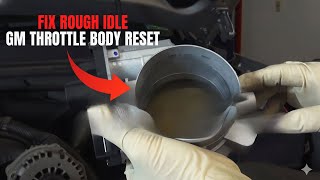
- After replacing the throttle body, perform a throttle relearn procedure. This can be done without a scan tool: With the engine warm, let it idle in Park for 3 minutes. Turn the engine off for 60 seconds. Restart and let it idle for another 3 minutes. The idle should now be stable. 🎬 Watch: How to manually reset and relearn your GM throttle body
Parts You'll Likely Need
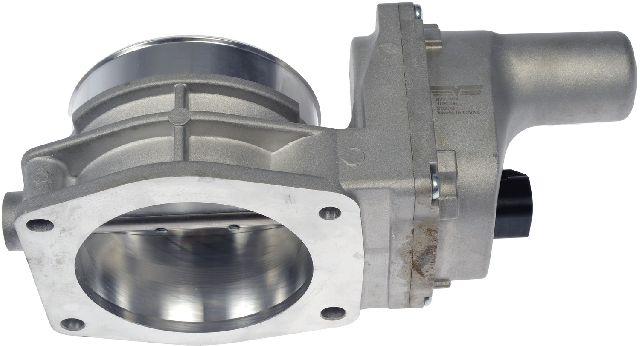
- Electronic Throttle Body Assembly
(OEM #12631186 (For 2.4L, check specific V6/V8 application))— This is the most common failure point for the P2135 code on this vehicle, as the internal throttle position sensors fail. The sensors are integrated and not reliably replaced on their own.
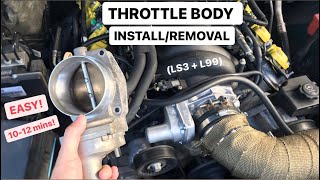
Trusted brands: ACDelco, Dorman, Hitachi, Spectra Premium 🎬 Watch: Step-by-step V6 Camaro throttle body installation guide
OEM price range: $200-$300
Aftermarket price range: $100-$250
Related Codes That Often Appear With This One
- P1516 — This is a GM-specific code for 'Throttle Actuator Control (TAC) Module Throttle Actuator Position Performance.' It often appears with P2135 because the ECM detects a conflict between the commanded throttle position and what the sensors are reporting.
- P2101 — This code means 'Throttle Actuator Control Motor Circuit Range/Performance.' If the computer cannot trust the position sensor data (P2135), it may also flag a fault with the motor that controls the throttle blade. One owner on Camaro5 reported getting P2101 immediately after cleaning the throttle body to try and fix P2135.
Technical Service Bulletins (TSBs) & Recalls
- While no TSB is specific to the 2010-2015 Camaro for P2135, GM TSB #11-06-04-007C was issued for numerous 2008-2011 GM trucks and SUVs for the exact same issue. It details a procedure for replacing just the TPS cover and terminals (Kit P/N 19259452) and notes that an ECM reprogram may be required on some models. This indicates a systemic problem with the part design during this era.
Platform-Specific Known Issues
- General Motors issued a Special Coverage Adjustment (Program #11273A) for the throttle position sensor, extending the warranty to 10 years or 120,000 miles due to the high failure rate. This confirms it was a widespread, manufacturer-acknowledged problem on many vehicles using this part.
Mechanic-Grade Diagnostic Values
- 5-Volt Reference Circuit Voltage — expected: 4.8–5.2 V. Failure: Voltage below 4.8V or above 5.2V indicates a short to ground, open circuit, or a faulty ECM.
- Low Reference Circuit Resistance to Ground — expected: Less than 5 Ω. Failure: Resistance greater than 5 Ω points to an open or high resistance in the ground circuit for the throttle body.
- TP Sensor 1 and 2 Voltage Sum — expected: Approximately 5.0 V. Failure: If the sum of the two sensor voltages is lower than 4.5V or higher than 5.5V for more than 0.3 seconds, the ECM will set P2135.
- TP Sensor 1 Voltage (Closed Throttle) — expected: ~0.5 - 0.7 V. Failure: Voltage significantly outside this range at idle indicates a sensor fault.
- TP Sensor 1 Voltage (Wide Open Throttle) — expected: ~4.0 - 4.5 V. Failure: Failure to reach this voltage range or erratic readings during throttle sweep points to a faulty sensor.
Scan Tool Commands That Help
- GDS2/Tech2: Idle Learn Reset — After replacing the throttle body, this function under 'Module Setup' or 'Special Functions' resets learned idle values in the ECM more reliably than the manual relearn procedure.
- GDS2/Tech2: Freeze Frame / Failure Records — Essential for diagnosing intermittent P2135 faults. This data shows a snapshot of all sensor values, including the conflicting TPS1 and TPS2 voltages, at the exact moment the code was triggered.
- GDS2/Tech2: TP Sensor 1 and 2 Agree/Disagree Parameter — While monitoring live data, slowly sweep the accelerator pedal. The parameter should consistently display 'Agree.' If it switches to 'Disagree' at any point, it confirms a fault within the throttle body assembly.
Wiring & Ground Locations
- Q38 Throttle Body Connector — The 6-pin electrical connector on the electronic throttle body assembly.. This is the primary connection point for all power, ground, and signal wires between the ECM and the throttle position sensors. Corrosion or loose pins here are a common cause of P2135. Pin E is the 5V reference, and Pin C is the low reference (ground).
- G110 (V8) — Attached to the rear of the driver's side cylinder head.. Poor ground connections at the cylinder heads are a known cause of intermittent P2135 and other PCM-related issues on GM vehicles. This ground is critical for stable sensor readings.
- G100 (V8) — On the lower right side of the engine block, above the starter solenoid.. This is a major engine block ground. Corrosion or looseness here can introduce electrical noise and cause erratic sensor behavior, potentially triggering correlation codes.
- G110 (V6) — At the front of the engine, bolted to the pulley above the A/C clutch connector.. This serves as a primary engine ground for the V6 models and is crucial for the proper operation of engine sensors, including the throttle body.
Real Owner Repair Stories
- Chevy HHR Network Forum (2008 Chevrolet HHR (Uses similar GM electronic throttle control system)) — Randomly throwing P2135 and going into reduced power mode.
❌ Tried (didn't work) Replacing parts related to the code
✅ What actually fixed it The owner discovered the issue was not a faulty part, but a poor connection at the ECM/PCM plugs. They removed the connectors, sprayed them with WD-40 (electrical contact cleaner is recommended), cleaned them with compressed air, and reconnected them. The problem did not return for several thousand miles, indicating a connection/corrosion issue was the root cause.
Documented NHTSA Reports
- An owner reported in NHTSA ODI #11191393 that their vehicle displayed P2135 and P2176 codes while running rough; despite recommendations to replace the battery and cables for $733, the issue was related to the speed control and sensor messages.
- In NHTSA ODI #10691577, a technician diagnosed a failed accelerator position sensor after finding P2135 stored in the computer, which was resolved by replacing the sensor assembly.
- NHTSA ODI #10683602 describes a case where a dealership ran a throttle sweep test for code P2135 and investigated PIP2019, checking connectors for corrosion and damage.
- A manufacturer service bulletin was cited in NHTSA ODI #10585778, where a dealer diagnosed P2135 and replaced the sensor assembly using GM sensor kit 19300180 under warranty.
- NHTSA ODI #10836390 notes that a vehicle experienced repeated P2135 codes for a throttle/pedal sensor issue, which repeatedly placed the car into limited power mode during warm-up and at starts.
OEM Part Supersession History
12631186→12694871— Standard part number update by the manufacturer, likely for minor revisions or supplier changes.
Heads up: These parts are generally interchangeable for the specified applications.
Model Year Variations Within This Range
- 2010-2011 (LLT V6): These models use a 72mm factory throttle body. Performance upgrades often involve a 76mm throttle body.
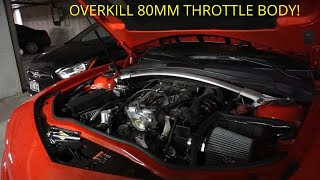
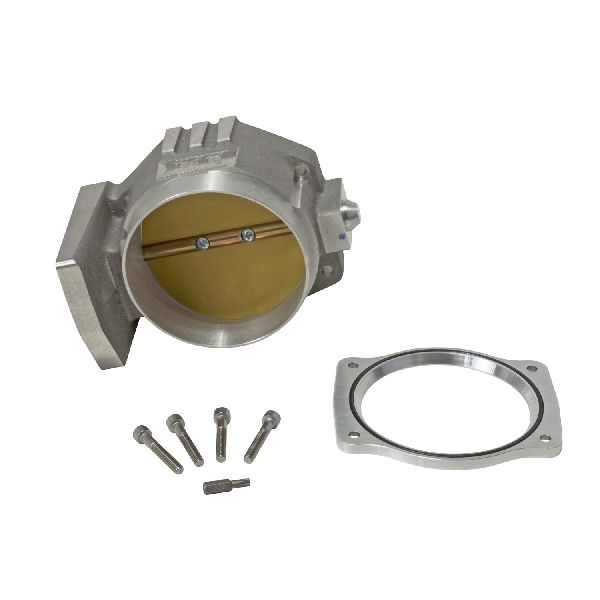
- 2012-2015 (LFX V6): These models also use a 72mm factory throttle body, but common performance upgrades involve an 80mm throttle body that requires an adapter plate.
Diagnostic Flowchart
Other Known Issues on This Vehicle
Issues unrelated to this code that are worth knowing about as an owner of this generation:
- Premature Timing Chain Wear (V6 LLT Engine) 🔴 High — Common on 2010-2011 V6 models, often appearing around 80,000 miles. Can cause catastrophic engine damage if the chain breaks. (Ref: TSB #12-06-01-009F was issued for other GM vehicles with this engine.)
- Ignition Switch Recall 🔴 High — A recall was issued for all 2010-2014 Camaros. A driver's knee could bump the key fob, moving the key out of the 'run' position and shutting off the engine and disabling airbags. (Ref: GM Recall #14294)
- Torque Converter Shudder (Automatic Transmission) 🟠 Medium — Some owners report a shudder or vibration during light acceleration, often between 40-50 mph, feeling like driving over rumble strips. (Ref: TSB #18-NA-355 addresses this issue, recommending a specific transmission fluid exchange procedure.)
- Active Fuel Management (AFM) Lifter Failure (V8 L99 Engine) 🟠 Medium — The L99 V8 in automatic SS models can experience collapsed lifters, causing ticking noises, misfires, and poor performance.
- Passenger Seat Occupancy Sensor Mat Failure 🟡 Low — The sensor mat in the passenger seat can tear, causing the airbag warning light to stay illuminated.
Used vs. New Parts: Buying Guide for This Vehicle
When a used part is the smart pick: For this specific P2135 code, buying a used throttle body is strongly discouraged. The internal electronic sensors are a known high-failure-rate item due to wear and heat. A used part from a junkyard carries a very high risk of failing again in a short amount of time.
Donor-vehicle mileage cap: roughly under 30000 miles for the part to have meaningful remaining life.
What to inspect on the donor part:
- Verify the part number matches your original exactly.
- Inspect the electrical connector pins for any signs of corrosion, bending, or damage.
- Check the throttle plate for smooth, unrestricted movement by hand.
- Avoid parts from vehicles with signs of flood damage or front-end collision.
OEM-only on this vehicle (don't cheap out):
- While not strictly OEM-only, using a genuine ACDelco throttle body is the most reliable option with the lowest chance of compatibility issues.
Aftermarket brands forum-validated for this vehicle:
- Dorman (Specifically their OE FIX models which may feature upgraded non-contact Hall effect sensors and improved shaft seals to prevent contamination).
- Hitachi
- Spectra Premium
Brands owners have reported issues with on this vehicle:
- Unbranded, no-name throttle bodies from online marketplaces should be avoided as their quality control and sensor accuracy can be highly inconsistent, leading to the code returning or other driveability problems.
Real Owner Stories
Aggregated from forums and TSBs cited above. Mileages and costs reflect what owners reported in those sources.
2010 Camaro 2SS
Symptoms: Kicking straight into limp mode, initially during hard acceleration into higher RPMs, now even at idle.
What fixed it: The user suspected the accelerator pedal after noting the throttle body was a relatively new GM OEM part.
Source hint: Camaro5.com owner report for 2010 Camaro 2SS
2010-2015 Chevrolet Camaro
Symptoms: P2135 appearing suddenly; cleaning the throttle body and MAF sensor provided only a temporary fix before the code returned.
What fixed it: Electronic failure of the throttle body part required replacement.
Source hint: Camaro5.com: Thread 'HELP! Just threw a P2135 and car is in limp mode (NOW P2101)' (2021)
2010-2015 Chevrolet Camaro
Symptoms: P2135 code and subsequent stalling on a modified vehicle.
What fixed it: Diagnostic steps led to replacing the throttle body and pedal sensor after checking battery voltage.
Source hint: Camaro5.com: Thread 'The dreaded P2135' (2023)
Related OBD-II Codes
Frequently Asked Questions
Is there a warranty extension for the throttle position sensor on my 2010-2015 Camaro?
Can I just replace the sensor, or do I need the whole throttle body assembly?
Do I need a professional scan tool to perform the throttle relearn after a repair?
Does TSB #11-06-04-007C apply specifically to the Camaro?
Could my P2135 code be related to the ignition switch recall?
What are the specific voltage behaviors I should look for on my scan tool?
Helpful Videos
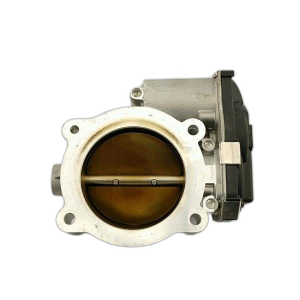
Used OEM Parts in Stock
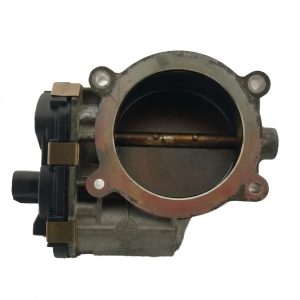
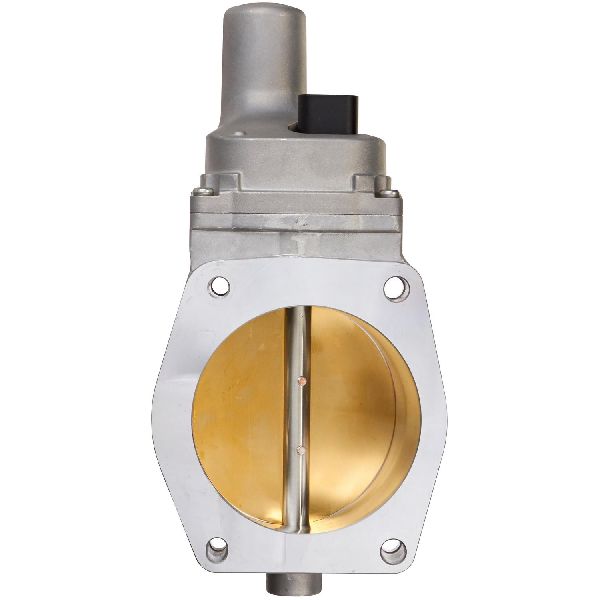
New Aftermarket Parts Available




The information in this article is provided for general reference and educational purposes only. Vehicle specifications, procedures, and part compatibility can vary by production date, trim level, and region. Always consult your vehicle's factory service manual and verify part numbers before purchasing or performing repairs. Safety-critical components such as airbags, seat belts, and braking systems should be installed by a qualified professional.
- Chevrolet Camaro:
- 🧭 Diagnostic Flowchart
- 🎬 Helpful Videos
- 🛍️ Shop This Part
- What's Unique About the 2010-2015 Chevrolet Camaro
- Symptoms You May Notice
- Most Likely Causes
- Rare But Worth Checking
- Diagnosis Steps
- Parts You'll Likely Need
- Related Codes That Often Appear With This One
- Technical Service Bulletins (TSBs) & Recalls
- Platform-Specific Known Issues
- Mechanic-Grade Diagnostic Values
- Scan Tool Commands That Help
- Wiring & Ground Locations
- Real Owner Repair Stories
- Documented NHTSA Reports
- OEM Part Supersession History
- Model Year Variations Within This Range
- Other Known Issues on This Vehicle
- Used vs. New Parts: Buying Guide for This Vehicle
- Real Owner Stories
- 2010 Camaro 2SS
- 2010-2015 Chevrolet Camaro
- 2010-2015 Chevrolet Camaro
- Related OBD-II Codes
- Frequently Asked Questions
- 🎟️ Get 5% Off