

P2135 on 2007-2009 Chevrolet Equinox 3.4L: Throttle Position Sensor Fault and Fixes
On a 2007-2009 Equinox with the 3.4L engine, code P2135 almost always means the electronic throttle body has failed. This triggers the 'Reduced Engine Power' warning. The fix is to replace the entire throttle body assembly, which costs about $150-$250 for an OEM part and is a straightforward DIY repair. Cleaning the throttle body will not fix the internal electronic sensor failure.
- P2135 on a 2007-2009 Equinox will put the vehicle into 'Reduced Engine Power' mode, making it unsafe for normal driving.
- The overwhelming cause is a failed electronic throttle body assembly. Don't waste time trying to clean it; the internal sensors have failed.
- Before paying for repairs, check with a GM dealer about Special Coverage Adjustment #14582, although it has likely expired.
- The repair is straightforward for a DIYer and involves replacing the entire throttle body assembly and gasket.
What's Unique About the 2007-2009 Chevrolet Equinox
This is a very common failure point on many General Motors vehicles from this era, including the Equinox with the 3.4L V6 engine. The electronic throttle position sensors are integrated into the throttle body assembly and are not sold separately. GM has acknowledged this issue by releasing a Technical Service Bulletin (TSB) and a Special Coverage program for certain model years, which may have covered the cost of repair even outside the standard warranty.
Symptoms You May Notice
- "Reduced Engine Power" message on the dashboard
- Check Engine Light is on
- "Service Stabilitrak" or "Service Traction Control" message may appear
- Severely limited acceleration and speed (limp mode)
- Hesitation or surging during acceleration
- Unstable, rough, or high idle
- Engine may stall, especially when coming to a stop
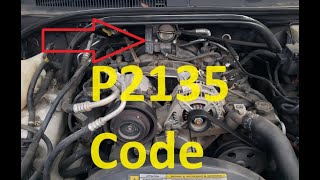
- Replacing the accelerator pedal position (APP) sensor. While the APP sensor is part of the same drive-by-wire system, code P2135 specifically points to a correlation error at the throttle body, not the pedal. The related code for the pedal sensor is P2138. 🎬 Watch: Learn the causes and fixes for code P2135
Most Likely Causes
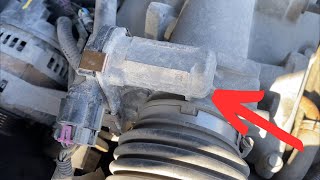
- Failing Throttle Body Assembly 🔴 High Probability → Shop Fuel Injection Throttle Body The integrated electronic throttle position sensors (TPS) are a known high-failure item on this GM platform. Internal electronic faults or wear cause the two sensor signals to disagree, triggering the P2135 code. The sensors are not serviced separately from the throttle body. This is the most common cause for P2135 on this vehicle.
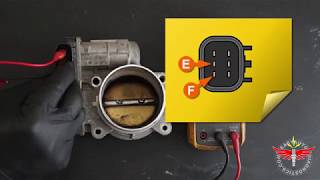
How to confirm: Using a scan tool with live data, monitor the voltage of TP Sensor 1 and TP Sensor 2. With the key on and engine off, slowly press the accelerator pedal. The voltage readings should change smoothly and correlate with each other. A jump, drop, or freeze in one of the signals indicates a faulty sensor. A multimeter can also be used to check the resistance between sensor terminals while manually opening and closing the throttle plate; an open or short circuit confirms failure. 🎬 Watch: How to test the electronic throttle body
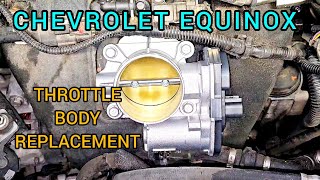
Typical fix: Replace the entire throttle body assembly and the corresponding gasket. 🎬 See this step-by-step replacement walkthrough After replacement, a throttle relearn procedure is required, which often involves letting the vehicle idle for several minutes, then driving it under specific conditions for the PCM to adapt.
Est. part cost: $150-$280 - Wiring or Connector Issue ⚪ Low Probability The wiring harness connector at the throttle body is exposed to engine vibration and heat, which can lead to terminal fretting (micro-vibrations causing poor contact), corrosion, or loose pins over time. Wires can also break internally inside the insulation, typically a few inches from the connector.
How to confirm: Visually inspect the wiring harness and electrical connector at the throttle body for any signs of damage, corrosion, moisture, or loose pins. Perform a 'wiggle test' on the harness with the scan tool connected and live data displayed; if wiggling the wires causes the sensor voltage to spike or drop, a wiring fault is present.
Typical fix: Repair the damaged wiring or clean/replace the affected connector pigtail. Applying dielectric grease to the connector can help prevent future moisture intrusion.
Est. part cost: $10-$50
Rare But Worth Checking
- Powertrain Control Module (PCM) Fault: → Shop Engine Control Module (ECM) This is very rare. The PCM should only be considered after all other possibilities, including the throttle body and wiring, have been definitively ruled out.
Diagnosis Steps
- Confirm the presence of code P2135 using an OBD-II scanner.
- Inspect the electrical connector at the throttle body. Disconnect it and check for corrosion, bent or backed-out pins, and moisture. Ensure it is seated securely.
- Inspect the wiring harness leading to the throttle body for any visible signs of damage, chafing, or melting. Perform a 'wiggle test' while monitoring live data.
- Using a scan tool with live data, observe the voltage readings for Throttle Position Sensor 1 and Throttle Position Sensor 2. With the ignition on (engine off), slowly depress and release the accelerator pedal. Both sensor readings should change smoothly and in a consistent, correlated manner. Any erratic jumps, spikes, or flat spots in the voltage of one sensor points to a faulty throttle body.
- If the wiring and connector appear fine and the scan tool data confirms a sensor correlation error, the throttle body assembly is the most likely cause and should be replaced.
- After replacement, clear the codes and perform the throttle relearn procedure. This may involve an idle period followed by a drive cycle, or it may require a specific sequence of key-on/key-off cycles.
- If the throttle body is replaced and the problem persists, a more in-depth diagnosis of the wiring between the throttle body and the PCM is necessary, checking for opens, shorts, or high resistance.
Parts You'll Likely Need
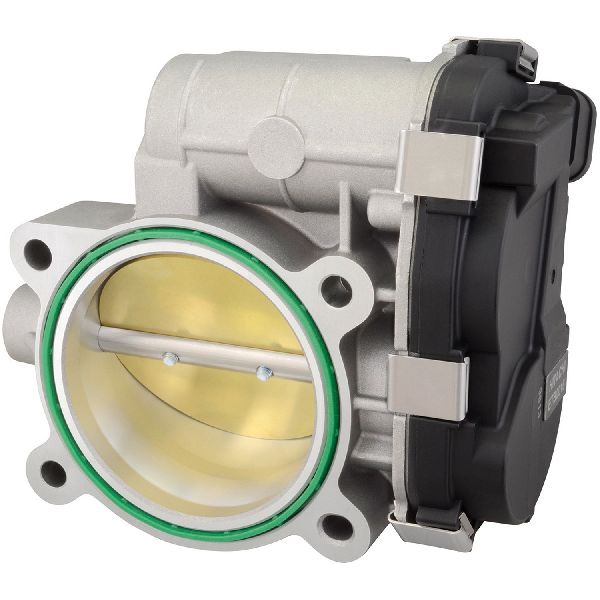
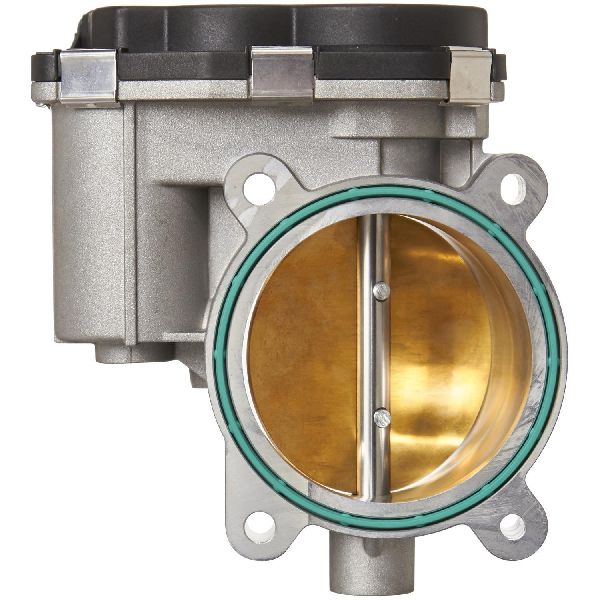
- Fuel Injection Throttle Body Assembly
(OEM #217-3108, 12609500)— This is the most common cause of P2135, as the internal throttle position sensors fail. The sensors are not available separately. The ACDelco part number is 217-3108, which corresponds to GM part number 12609500.
Trusted brands: ACDelco, Hitachi, Standard Motor Products, Cardone (Remanufactured)
OEM price range: $190-$250
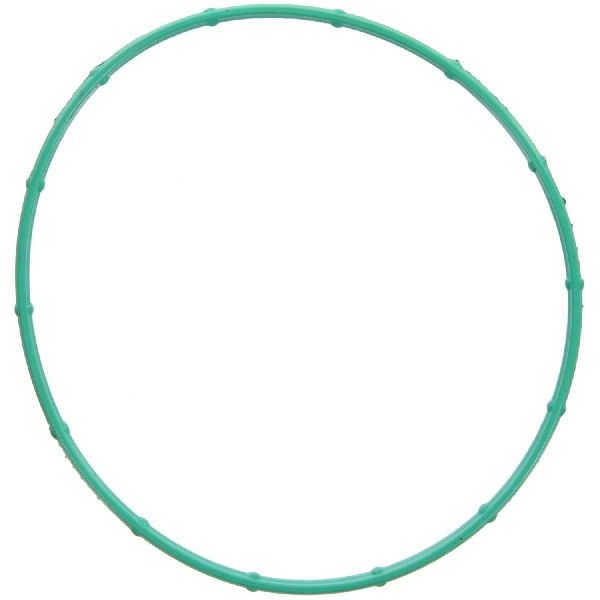
Aftermarket price range: $70-$180 - Throttle Body Gasket
(OEM #217-3109)— The gasket should always be replaced when the throttle body is removed to prevent vacuum leaks. Most new throttle bodies include a new gasket.
Trusted brands: ACDelco, Fel-Pro
OEM price range: $5-$15
Aftermarket price range: $3-$10
Related Codes That Often Appear With This One
- P1516 — This is a GM-specific code for Throttle Actuator Control (TAC) Module Performance. It often appears with P2135 because the sensor correlation fault prevents the TAC module from controlling the throttle blade correctly.
- P2138 — This code indicates a voltage correlation error with the Accelerator Pedal Position (APP) sensor. While less common, a widespread issue in the drive-by-wire system, such as a wiring problem, could potentially trigger both codes.
Technical Service Bulletins (TSBs) & Recalls
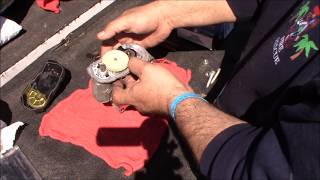
- GM Service Bulletin #09-06-04-024B: This bulletin addresses DTC P2135 and, for some vehicles including the 2007-2009 Equinox, advises against replacing the entire throttle body, instead providing a procedure to replace just the TP sensor cover and terminals. However, this repair is more complex and less common now; most aftermarket and many shop repairs default to replacing the complete throttle body for reliability.
- GM Service Bulletin #11-06-04-007C: While not directly for the Equinox, this TSB for other GM trucks with P2135 advises against replacing the throttle body and instead provides a procedure to replace just the TP sensor cover, followed by an ECM reprogram. This highlights GM's awareness of the sensor-specific failure.
Platform-Specific Known Issues
- GM issued Special Coverage Adjustment #14582 for some 2008-2009 models, which extended the warranty on the throttle position sensor to 10 years or 120,000 miles. This program has likely expired for all affected vehicles due to age, but owners can check with a GM dealer.
- A GM service bulletin (07-06-04-019F) notes that water intrusion into the instrument panel-to-body harness connector can cause various throttle control issues, though this more commonly triggers P2138.
- Some owners on forums report success by first attempting to clean the throttle body, but this is usually a temporary fix at best, as the root cause is an electronic failure within the sealed sensor unit, not carbon buildup.
Mechanic-Grade Diagnostic Values
- 5V Reference Circuit Voltage at Throttle Body Connector — expected: 4.8-5.2 Volts. Failure: Voltage outside this range indicates an issue with the PCM or wiring, not necessarily the throttle body itself.
- TP Sensor 1 Signal Voltage (Key On, Engine Off) — expected: Decreases from a starting value as the throttle opens.. Failure: A voltage reading less than 0.3V or greater than 4.8V for more than a second can set a fault.
- TP Sensor 2 Signal Voltage (Key On, Engine Off) — expected: Increases from a starting value as the throttle opens (opposite of Sensor 1).. Failure: A voltage reading less than 0.25V for more than a second can set a fault.
Scan Tool Commands That Help
- Tech2/GDS2 or equivalent professional scan tool: Idle Learn Reset / Throttle Position Learn — This command should be used after replacing the throttle body assembly to clear the old learned values from the PCM and force it to recalibrate to the new sensor's baseline positions. Failure to do so can result in a high or unstable idle.
Wiring & Ground Locations
- Throttle Body Connector (X109) — The 6-pin electrical connector directly on the electronic throttle body assembly.. This is the single connection point for both TP sensors and the throttle motor. All voltage, ground, and signal wires pass through here, making it a primary point of failure due to corrosion, moisture, or backed-out pins.
- G103 — On the 3.4L V6, this ground is located on the left side of the engine compartment.. This is a primary ground for the Powertrain Control Module (PCM). A poor connection here can cause a wide range of electrical problems and erratic sensor readings, potentially triggering a P2135 code.
- G105 — Located at the lower right rear of the engine (passenger side, near firewall).. Serves as a ground point for various engine components. Corrosion or a loose connection can introduce electrical noise that may interfere with sensor signals.
- G111 — Located at the rear of the engine, in the vicinity of the crankshaft position sensor.. A poor connection at this ground point can cause issues with critical engine sensor readings.
Real Owner Repair Stories
- Chevrolet Forum (2007 Chevrolet Equinox) — Sudden "Reduced Engine Power" mode, Service Stabilitrak light, and P2135 code.
❌ Tried (didn't work) The owner did not report trying other fixes first.
✅ What actually fixed it The owner was informed by a dealership that the throttle position sensor was not a separately serviceable part and that the entire throttle body assembly needed to be replaced. Replacing the throttle body resolved the issue.
OEM Part Supersession History
12577029→12609500— GM regularly updates service parts to integrate new materials or technologies.
Heads up: The part 12609500 is the direct replacement for 12577029 and is fully compatible for the specified 2007-2009 Equinox 3.4L models.
Model Year Variations Within This Range
- 2007-2009: The 3.4L LNJ engine used in the 2007-2009 Equinox is not interchangeable with the 3.4L engine from 2005-2006 models due to significant changes in engine management, including a different crankshaft position reluctor wheel and throttle body. An engine or throttle body from a 2006 or earlier model will not work in a 2007-2009 vehicle.
- 2008-2009: An optional 3.6L DOHC V6 engine was available in the Equinox Sport model. This engine uses a completely different throttle body than the 3.4L V6.
Diagnostic Flowchart
Other Known Issues on This Vehicle
Issues unrelated to this code that are worth knowing about as an owner of this generation:
- Lower Intake Manifold (LIM) Gasket Failure 🔴 High — Very common on the 3.4L V6, often occurring between 80,000 and 150,000 miles. The original gaskets degrade, causing coolant to leak externally or internally into the engine oil.
- Head Gasket Failure 🔴 High — Also a known, though less frequent, issue than the LIM gaskets. Can be a consequence of overheating caused by a failing LIM gasket. Symptoms include coolant loss, white smoke from exhaust, and engine misfires.
- Heater Core Failure / No Heat 🟠 Medium — Commonly caused by the heater core becoming clogged with debris or sludge from the cooling system, often related to degrading intake gaskets. Results in poor or no heat in the cabin, a sweet coolant smell, or a film on the inside of the windshield.
- Electric Power Steering (EPS) Failure or Noise 🟠 Medium — The 3.4L models use an electric power steering motor. Failures can cause a sudden loss of power assist, making steering very difficult. A clunking or knocking noise from the steering column is also a common complaint, sometimes related to the intermediate steering shaft.
Used vs. New Parts: Buying Guide for This Vehicle
When a used part is the smart pick: A used throttle body is generally NOT recommended for this repair. The primary cause of P2135 is the failure of internal electronic sensors due to wear and heat cycles. A used part from a junkyard carries a high risk of having the same issue or failing shortly after installation.
Donor-vehicle mileage cap: roughly under 80000 miles for the part to have meaningful remaining life.
What to inspect on the donor part:
- Verify the donor vehicle's mileage; lower is significantly better.
- Inspect the connector pins for any signs of corrosion, bending, or damage.
- Ensure the throttle bore is relatively clean, as a very dirty unit may indicate poor maintenance.
- If possible, get a part from a vehicle that was taken out of service due to a collision rather than engine failure.
OEM-only on this vehicle (don't cheap out):
- While not strictly OEM-only, using a new OEM (ACDelco) or a reputable aftermarket brand (Hitachi, Standard Motor Products) throttle body is highly advised for reliability and to avoid repeat repairs.
Aftermarket brands forum-validated for this vehicle:
- ACDelco (OEM)
- Hitachi
- Standard Motor Products
- Dorman (specifically their OE Fix line which may feature design improvements like contactless sensors)
Brands owners have reported issues with on this vehicle:
- No-name, unbranded parts sold on online marketplaces should be avoided due to inconsistent quality control and a higher likelihood of premature failure.
Real Owner Stories
Aggregated from forums and TSBs cited above. Mileages and costs reflect what owners reported in those sources.
2007 Chevrolet Equinox 3.4L
Symptoms: Randomly losing engine power, car feels like it is misfiring and starts puttering, 'Stabilitrak off' light comes on the dash interchanging with 'Reduced Engine Power' message.
What fixed it: The owner was informed by a dealer that the TPS is not a separate part and the entire throttle body must be replaced.
Source hint: Chevrolet Forum (chevroletforum.com) thread titled 'Equinox Throttle Position Sensor/Stability Track / Reduce Engine'
2007-2009 Chevrolet Equinox 3.4L
Symptoms: P2135 code appearing alongside 'Service Traction Control' and 'Service Stabilitrak' messages.
What fixed it: Replacing the complete throttle body assembly and performing a throttle relearn procedure.
Source hint: GM-Trucks.com thread titled 'P2135 code reduced engine power service traction contro'
Related OBD-II Codes
Frequently Asked Questions
Is there a warranty extension for the throttle position sensor on my 2008 Chevrolet Equinox?
Can I just replace the sensor, or do I need the whole throttle body for my 2007 Equinox?
Why does my Equinox show 'Service Stabilitrak' when the problem seems to be the engine throttle?
Will cleaning the throttle body fix the P2135 code on my 3.4L LNJ engine?
What is the 'Reduced Engine Power' mode I'm seeing on my dashboard?
Does the 2007 Pontiac Torrent have the same throttle body issues as the Equinox?
Helpful Videos

We Have This Part in Stock



The information in this article is provided for general reference and educational purposes only. Vehicle specifications, procedures, and part compatibility can vary by production date, trim level, and region. Always consult your vehicle's factory service manual and verify part numbers before purchasing or performing repairs. Safety-critical components such as airbags, seat belts, and braking systems should be installed by a qualified professional.
- Chevrolet Equinox:
- 🧭 Diagnostic Flowchart
- 🎬 Helpful Videos
- 🛍️ Shop This Part
- What's Unique About the 2007-2009 Chevrolet Equinox
- Symptoms You May Notice
- Most Likely Causes
- Rare But Worth Checking
- Diagnosis Steps
- Parts You'll Likely Need
- Related Codes That Often Appear With This One
- Technical Service Bulletins (TSBs) & Recalls
- Platform-Specific Known Issues
- Mechanic-Grade Diagnostic Values
- Scan Tool Commands That Help
- Wiring & Ground Locations
- Real Owner Repair Stories
- OEM Part Supersession History
- Model Year Variations Within This Range
- Other Known Issues on This Vehicle
- Used vs. New Parts: Buying Guide for This Vehicle
- Real Owner Stories
- 2007 Chevrolet Equinox 3.4L
- 2007-2009 Chevrolet Equinox 3.4L
- Related OBD-II Codes
- Frequently Asked Questions
- 🎟️ Get 5% Off