

P2135 on 2010-2017 Chevrolet Equinox 2.4L: Causes and Fixes for Reduced Engine Power
On a 2010-2017 Equinox 2.4L, code P2135 almost always indicates a failed electronic throttle body assembly. This triggers the 'Reduced Engine Power' warning. The most reliable fix is replacing the entire throttle body, which costs about $120-$250 for the part and is a common DIY job. A manual throttle relearn procedure is required after replacement.
- P2135 on a 2.4L Equinox almost always means the throttle body has failed and needs to be replaced.
- This is a safety-critical fault that will put the car in 'Reduced Engine Power' mode, making it unsafe for normal driving.
- Do not waste money replacing the accelerator pedal; the problem is at the engine's throttle body.
- Always replace the throttle body gasket at the same time to prevent vacuum leaks.
- After replacement, a simple throttle relearn procedure (idling the engine in a specific sequence) is required and can usually be done without special tools.
What's Unique About the 2010-2017 Chevrolet Equinox
This is a notoriously common issue on the 2.4L Ecotec engine used in the second-generation Chevrolet Equinox and its sibling, the GMC Terrain. The electronic throttle position sensors, which are integrated into the throttle body assembly and not sold separately, are a known weak point that frequently fails. While the code definition includes the accelerator pedal, the problem on this specific platform is overwhelmingly located at the throttle body itself. While TSB #11-06-04-007C exists for a sensor-only repair on some GM V8s, this does not apply to the Equinox; full replacement is the standard fix.
Symptoms You May Notice
- "Reduced Engine Power" message on the dashboard
- Check Engine Light is on
- "Service Stabilitrak" message may appear simultaneously
- Severely limited acceleration (limp mode)
- Vehicle speed limited, often to under 30 mph
- Unstable or rough idle
- Possible engine stalling
- Hesitation or surging during acceleration
- Replacing the Accelerator Pedal Position (APP) Sensor. While the code definition mentions the pedal, on the 2010-2017 Equinox, P2135 almost always points to the throttle body. A faulty pedal sensor would typically set a different code, such as P2138.
- Only cleaning the throttle body. While cleaning carbon buildup is good maintenance, it cannot fix the internal electronic correlation fault between the two sensors that causes P2135.
Most Likely Causes
- Failing Throttle Body Assembly 🔴 High Probability → Shop Fuel Injection Throttle Body The integrated electronic throttle position sensors (TPS) are a well-documented, high-failure item on this GM engine platform. Internal electronic components wear out or develop glitches, causing the two sensor signals to disagree. The sensors are not serviceable separately from the throttle body on this engine.
How to confirm: Use a scan tool to monitor live data for 'Throttle Position Sensor 1' and 'Throttle Position Sensor 2'. With the key on and engine off, slowly press and release the accelerator pedal. Any jumps, drops, freezes, or glitches in the voltage readings from either sensor confirms a faulty throttle body. The 'TP Sensor 1 and 2 Agree/Disagree' parameter should switch to 'Disagree' when the fault occurs.
Typical fix: Replace the entire throttle body assembly and its gasket. Cleaning the throttle body will not fix the internal electronic failure that causes P2135. A throttle relearn procedure is required after replacement.
Est. part cost: $120-$350 - Wiring or Connector Issue ⚪ Low Probability Wires can break internally near the connector from engine vibration over time. Pins can also become loose or corroded.
How to confirm: Visually inspect the 6-pin electrical connector at the throttle body for any signs of corrosion, moisture, spread pins, or physical damage to the wires. With the connector unplugged, perform a 'tug test' on each wire to ensure it is secure in the connector pin. A 'wiggle test' on the harness with the engine running may also induce the fault.
Typical fix: If the connector or wiring is damaged, repair the wiring or replace the connector pigtail.
Est. part cost: $15-$40
Rare But Worth Checking
- Faulty Powertrain Control Module (PCM): → Shop Engine Control Module (ECM) This is very rare. The PCM should only be considered after the throttle body and all related wiring have been thoroughly tested and confirmed to be good.
Diagnosis Steps
- Connect an OBD-II scanner and confirm P2135 is the primary code. Check for other related codes like P0222, P0122, or P2138.
- Using the scanner's live data function, monitor the voltage or percentage for 'Throttle Position Sensor 1' and 'Throttle Position Sensor 2'.
- With the ignition on but the engine off, slowly press the accelerator pedal to the floor and then slowly release it. Watch the sensor readings.
- The readings should be smooth and correlate (one may go from low to high, the other from high to low). Any sudden jumps, drops, or freezing in the data points strongly to a failed throttle body.
- If the live data is inconclusive, turn the vehicle off. Disconnect the throttle body electrical connector and inspect for corrosion, bent pins, or moisture. Perform a 'tug test' on each wire to check for breaks inside the insulation near the connector.
- If the wiring is intact and the sensor data was erratic, the throttle body assembly is faulty and needs replacement.
- After replacing the throttle body, you must perform the Throttle Relearn Procedure.
- Throttle Relearn Procedure (Manual Method): Start the engine and let it idle in Park for 3 minutes. Turn the engine off and wait 60 seconds. Start the engine again and let it idle in Park for another 3 minutes. The idle should now be stable and the Check Engine Light should be off. Driving the vehicle may also complete the process.
Parts You'll Likely Need
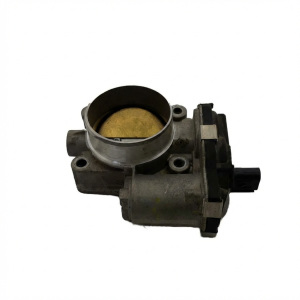
- Fuel Injection Throttle Body Assembly
(OEM #12670837)— This is the most common failure point for code P2135 on this vehicle. The internal throttle position sensors are not sold separately, requiring the replacement of the entire assembly.
Trusted brands: ACDelco (GM Original Equipment), Bosch, Hitachi, Dorman
OEM price range: $240-$360
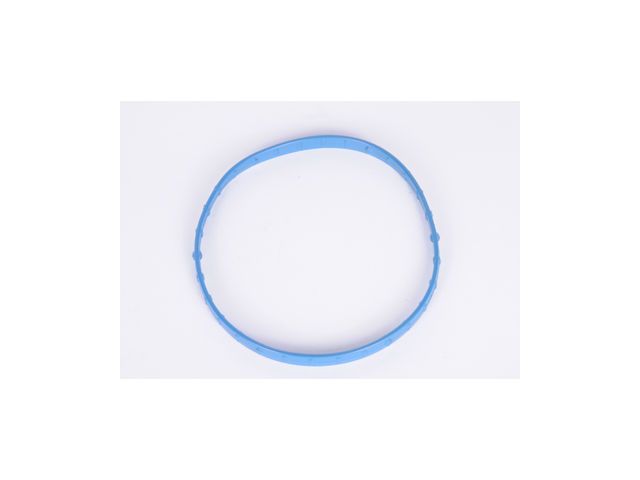
Aftermarket price range: $120-$250 - Throttle Body Gasket
(OEM #12634371)— The gasket provides the seal between the throttle body and the intake manifold. It should always be replaced when the throttle body is removed to prevent vacuum leaks.
Trusted brands: ACDelco, Fel-Pro
OEM price range: $5-$15
Aftermarket price range: $3-$10
Related Codes That Often Appear With This One
- P0222 — This code for 'Throttle Position Sensor 'B' Circuit Low' can appear with P2135, as it indicates a specific failure of one of the two sensors inside the throttle body assembly.
- P1516 — This is a GM-specific code for 'Throttle Actuator Control (TAC) Module Performance'. It often appears with P2135 because the computer's command to the throttle body doesn't match the position being reported by the failing sensors.
- P2176 — This code for 'Throttle Actuator Control System - Idle Position Not Learned' can appear after replacing the throttle body if the mandatory idle relearn procedure is not performed or completed successfully.
Technical Service Bulletins (TSBs) & Recalls
- TSB #11-06-04-007C: Diagnosis and Repair - Malfunction Indicator Lamp (MIL) Illuminated, Reduced Engine Power Message Displayed, DTC P2135 Set.
- Special Coverage Adjustment #14582A / #11273A: Extended warranty coverage for throttle position sensor issues on various GM models.
Platform-Specific Known Issues
- General Motors issued Technical Service Bulletin (TSB) #11-06-04-007C for DTC P2135. While this TSB was primarily aimed at V8-powered trucks and SUVs and detailed a sensor-only repair, its existence confirms the widespread nature of the TPS correlation fault across GM platforms. For the 2.4L Equinox, the standard repair remains full throttle body replacement.
- GM also had a Special Coverage Adjustment (#14582A) that extended the warranty for this issue to 10 years or 120,000 miles on some vehicles. While this specific program may not apply to all 2010-2017 Equinox models and has likely expired, it further demonstrates the well-known, high-failure rate of this component.
Mechanic-Grade Diagnostic Values
- TPS1 Signal Voltage (Key On, Engine Off) — expected: Decreases from a starting point as the throttle opens. Should sweep smoothly between approx. 4.0V and 1.0V.. Failure: Voltage is stuck, jumps, drops, or does not change smoothly with pedal input.
- TPS2 Signal Voltage (Key On, Engine Off) — expected: Increases from a starting point as the throttle opens. Should sweep smoothly between approx. 1.0V and 4.0V.. Failure: Voltage is stuck, jumps, drops, or does not change smoothly with pedal input.
- 5-Volt Reference Circuit at Throttle Body Connector — expected: 4.8V - 5.2V between Pin E (5V Ref) and Pin C (Low Ref/Ground).. Failure: Voltage outside this range indicates a wiring issue or a problem with the ECM.
- Low Reference (Ground) Circuit at Throttle Body Connector — expected: Less than 0.1V or near-zero resistance between Pin C and a good chassis ground.. Failure: Higher voltage or resistance indicates a poor ground connection at the ECM or a wiring fault.
- Throttle Actuator Motor (TAC) Resistance — expected: 2 to 15 Ohms between Pin A and Pin B of the throttle body connector.. Failure: A reading of less than 1 Ohm (short) or an over-limit/infinite reading (open) indicates a failed motor inside the throttle body assembly.
Scan Tool Commands That Help
- GDS2/Tech2: Throttle Sweep Test — This function, available on professional scan tools, graphs the TPS1 and TPS2 sensor voltages simultaneously as the tool commands the throttle plate to sweep open and closed. It is the most definitive way to identify erratic sensor behavior that might be missed by manually pressing the pedal.
- GDS2/Tech2: TP Sensor 1 and 2 Agree/Disagree Parameter — While observing live data, this specific parameter will switch from 'Agree' to 'Disagree' the instant the ECM detects the correlation fault. This confirms the condition that sets the P2135 code.
Wiring & Ground Locations
- Throttle Body Connector (6-Pin) — Connected directly to the electronic throttle body on the driver's side of the engine, at the end of the black plastic air intake tube.. This is the single connection point for both throttle position sensors and the throttle actuator motor. The pin functions are: Pin A: TAC Motor (-), Pin B: TAC Motor (+), Pin C: Low Reference (Ground), Pin D: TP Sensor 1 Signal, Pin E: 5-Volt Reference, Pin F: TP Sensor 2 Signal. All voltage and resistance tests are performed at these pins.
- G107 — On the driver's side of the cylinder head.. This is a critical ground point for the Engine Control Module (ECM) and multiple sensors. A loose or corroded connection here can cause erratic sensor readings and intermittent electrical faults, including P2135.
- G112 — On the lower left front of the engine block, under the alternator and just above the A/C compressor on the 2.4L engine.. This is another primary ground point for the ECM. A poor connection at this stud can cause a floating ground, leading to incorrect sensor voltage readings and communication errors.
Real Owner Repair Stories
- YouTube Commenter (Unknown GM Vehicle) — Recurring P2135 code, reduced engine power.
❌ Tried (didn't work) Replacing parts (presumably throttle body, pedal sensor)
✅ What actually fixed it The owner reseated every wire harness connector from the throttle body to the gas pedal, including the two main plugs on the ECM. They cleaned the connectors with compressed air and wiped them. This resolved a multi-year issue that thousands of dollars in parts could not fix.
OEM Part Supersession History
12631186→12694871— Standard part number update and potential revision by GM.12694871→12670837— Standard part number update and potential revision by GM. 12670837 is the most current OEM number for this application.
Heads up: An earlier part number, 12616668, is also listed as being superseded by this chain.
Diagnostic Flowchart
Other Known Issues on This Vehicle
Issues unrelated to this code that are worth knowing about as an owner of this generation:
- Excessive Oil Consumption 🔴 High — Extremely common on 2010-2013 models, but affects all years. Caused by faulty, low-tension piston rings that allow oil to burn in the combustion chamber. (Ref: Subject of class-action lawsuits and GM Special Coverage Adjustment #16118.)
- Timing Chain Stretch/Failure 🔴 High — Common, especially on vehicles with poor oil maintenance, exacerbated by oil consumption issues. Leads to rattling noises on startup, codes for camshaft position, and potential catastrophic engine failure.
- Cracked Exhaust Manifold 🟠 Medium — A very common failure on the 2.4L engine. The original cast iron manifold cracks from heat cycles, causing a ticking noise on cold starts and setting lean O2 sensor codes like P0131.
- High-Pressure Fuel Pump Failure 🟠 Medium — The direct-injection high-pressure fuel pump can fail, sometimes leaking fuel into the crankcase and diluting the engine oil, which is a major risk. (Ref: GM Emission Recall #43180 covered 2010-2011 models for this issue.)
- Failing VVT Solenoids 🟡 Low — The intake and exhaust variable valve timing (VVT) solenoids can fail or get clogged with sludge (often due to oil issues), causing rough idle, poor performance, and specific fault codes.
Used vs. New Parts: Buying Guide for This Vehicle
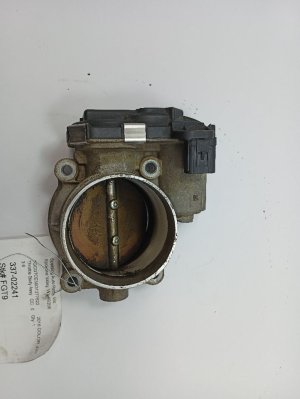
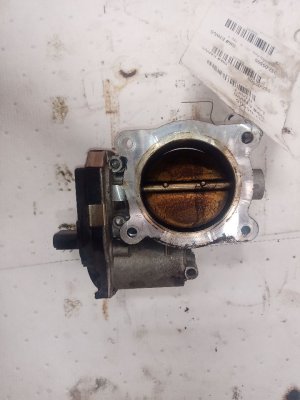
When a used part is the smart pick: A used OEM throttle body can be a cost-effective choice if it comes from a low-mileage donor vehicle (under 60k miles) and has a clear return policy. Since this is a high-failure electronic part, the risk of a used part failing is significant.
Donor-vehicle mileage cap: roughly under 60000 miles for the part to have meaningful remaining life.
What to inspect on the donor part:
- Verify the part number on the used unit matches the OEM number (e.g., 12670837) or a superseded number.
- Inspect the electrical connector pins for any signs of corrosion, bending, or damage.
- Look at the throttle plate; excessive black carbon buildup may indicate the donor engine had other issues (like high oil consumption), but the throttle body itself may still be functional.
- Ask for the mileage of the donor vehicle if possible. A part from a 58k-mile vehicle is a much better bet than one from a 150k-mile vehicle.
Aftermarket brands forum-validated for this vehicle:
- ACDelco (OEM supplier)
- Bosch (OEM supplier)
- Hitachi
- Dorman (specifically their OE FIX versions which claim to have improved internal seals to prevent failure)
Brands owners have reported issues with on this vehicle:
- Unbranded, 'white box' parts from online marketplaces with no warranty or seller reputation should be avoided, as quality control is a major concern for this electronic component.
Real Owner Stories
Aggregated from forums and TSBs cited above. Mileages and costs reflect what owners reported in those sources.
2011 GMC Terrain 2.4L
Symptoms: Engine Power Reduced message and P2135 code. The sensors are integrated and not separately serviceable.
What fixed it: Replacement of the entire throttle body assembly.
Source hint: YouTube - 'GMC Terrain Engine Power Reduced Code P2135'
2010 GMC Terrain 3.0L V6
Symptoms: Classic P2135 symptoms including 'reduced engine power' and engine stalling.
What fixed it: Replacement of the throttle body.
Source hint: Reddit r/MechanicAdvice - '2010 GMC Terrain reduced engine power'
Chevrolet HHR (GM Ecotec Platform)
Symptoms: P2135 code triggered by electrical issues at the throttle body.
What fixed it: Repairing a broken wire at the throttle body connector.
Source hint: Chevy HHR Network - 'P2135 code (help)'
Related OBD-II Codes
Frequently Asked Questions
Does GM Technical Service Bulletin #11-06-04-007C apply to my 2.4L Equinox?
Is there an extended warranty for the P2135 issue on the 2010-2017 Chevrolet Equinox?
Can I just clean the throttle body on my 2.4L Equinox to fix the P2135 code?
What other major engine issues should I look out for on my 2010-2017 Equinox 2.4L?
Is there a special procedure I need to follow after replacing the throttle body?
Why does my Equinox say 'Service Stabilitrak' when the P2135 code triggers?
Helpful Videos
Used OEM Parts in Stock
New Aftermarket Parts Available





The information in this article is provided for general reference and educational purposes only. Vehicle specifications, procedures, and part compatibility can vary by production date, trim level, and region. Always consult your vehicle's factory service manual and verify part numbers before purchasing or performing repairs. Safety-critical components such as airbags, seat belts, and braking systems should be installed by a qualified professional.
- Chevrolet Equinox:
- 🧭 Diagnostic Flowchart
- 🎬 Helpful Videos
- 🛍️ Shop This Part
- What's Unique About the 2010-2017 Chevrolet Equinox
- Symptoms You May Notice
- Most Likely Causes
- Rare But Worth Checking
- Diagnosis Steps
- Parts You'll Likely Need
- Related Codes That Often Appear With This One
- Technical Service Bulletins (TSBs) & Recalls
- Platform-Specific Known Issues
- Mechanic-Grade Diagnostic Values
- Scan Tool Commands That Help
- Wiring & Ground Locations
- Real Owner Repair Stories
- OEM Part Supersession History
- Other Known Issues on This Vehicle
- Used vs. New Parts: Buying Guide for This Vehicle
- Real Owner Stories
- 2011 GMC Terrain 2.4L
- 2010 GMC Terrain 3.0L V6
- Chevrolet HHR (GM Ecotec Platform)
- Related OBD-II Codes
- Frequently Asked Questions
- 🎟️ Get 5% Off