

P2135 on 2010-2012 Chevrolet Express: Throttle Position Sensor Causes & Fixes
On a 2010-2012 Chevrolet Express, code P2135 almost always indicates a fault with the electronic throttle body, triggering a 'Reduced Engine Power' warning. The most common fix is replacing the entire throttle body assembly. A GM Technical Service Bulletin also points to a specific repair involving replacing the throttle position sensor cover with a dedicated kit (P/N 19259452), which is a more complex but potentially cheaper alternative.
- P2135 on a 2010-2012 Express will trigger the 'Reduced Engine Power' mode, severely limiting vehicle speed.
- The most common culprit is a faulty electronic throttle body assembly.
- Before replacing parts, always inspect the wiring and connector at the throttle body for damage.
- A specific GM service bulletin (TSB #110604007C) offers a potentially cheaper fix by replacing only the TPS cover.
- After any repair to the throttle system, a 'throttle relearn' procedure is required to restore proper idle and performance.
What's Unique About the 2010-2012 Chevrolet EXPRESS
This issue is very common across GM trucks and vans from this era, including the Express and its platform-mate, the GMC Savana. General Motors issued a specific Technical Service Bulletin (TSB #11-06-04-007C) that details a procedure for replacing just the throttle position sensor cover and terminals to resolve the P2135 code, rather than the entire throttle body. This indicates a known weakness in the sensor's housing or electrical contacts, which are prone to failure. The problem was so widespread that GM also had a special coverage program (#11273A) that extended the warranty for this specific issue to 10 years or 120,000 miles, though it has now expired for these model years.
Diagnostic Flowchart
Tap your situation to follow the diagnostic path that matches what you're seeing on this vehicle.
Symptoms You May Notice
- "Reduced Engine Power" message on the dashboard
- Check Engine Light is on
- Severely limited acceleration and speed (limp mode)
- Hesitation or stumbling when pressing the gas pedal.
- Rough or unstable idle
- Vehicle may stall.
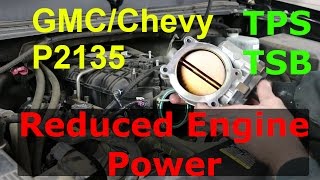
- Traction control or Stabilitrak warning light may also illuminate. 🎬 See how these symptoms look and how to diagnose them.
- Replacing the Accelerator Pedal Position (APP) Sensor. The APP sensor is located on the gas pedal assembly and typically sets its own specific codes, such as P2138. While a failing APP sensor can cause similar symptoms, P2135 on these GM vans almost always points to a problem at the throttle body on the engine.
Most Likely Causes
- Failing Throttle Body Assembly 🔴 High Probability → Shop Fuel Injection Throttle Body The integrated electronic throttle position sensors are a known weak point on this platform, often failing due to internal wear or electronic glitches. Owner forums and mechanic consensus suggest that while other fixes exist, a full replacement is often the most permanent solution.
How to confirm: Using a scan tool with live data, monitor the voltage of TP Sensor 1 and TP Sensor 2 while slowly pressing the accelerator pedal (engine off, key on). The voltage readings should be smooth. One sensor should sweep from approximately 0.5V to 4.5V, and the other should sweep inversely (e.g., 4.5V to 0.5V). Any jumps, drops, or spots where the signals don't mirror each other indicate a faulty sensor. 🎬 Watch: How to test throttle sensor voltage with a scan tool.
Typical fix: Replace the entire throttle body assembly. This is often the most reliable, long-term repair, as it replaces all potential failure points within the unit.
Est. part cost: $150-$350 - Faulty Throttle Position Sensor (TPS) Cover / Terminals 🟡 Medium Probability → Shop Fuel Injection Throttle Body GM issued TSB #11-06-04-007C specifically for this issue, indicating a known problem with the sensor's cover and electrical contacts causing the correlation fault. The TSB explicitly states to perform this repair if P2135 is present and to NOT replace the throttle body unless it has been dropped.
How to confirm: This is difficult to confirm without performing the repair. If the P2135 code is present and wiring is confirmed good, following the TSB procedure is a valid diagnostic step recommended by the manufacturer.
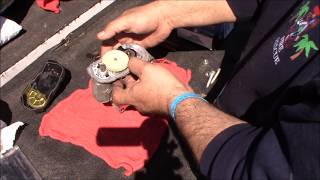
Typical fix: Following the procedure in TSB #11-06-04-007C, remove the throttle body, replace the TPS cover and its clips using kit P/N 19259452, 🎬 Watch: Step-by-step guide to replacing the TPS cover and terminals. and reinstall with a new gasket. For 2010 models, the TSB also requires reprogramming the ECM.
Est. part cost: $40-$120 - Damaged Wiring or Connector at Throttle Body ⚪ Low Probability → Shop Fuel Injection Throttle Body Engine vibration and heat can cause wires to break or pins in the connector to corrode or back out over time, leading to intermittent signal loss. Fretting corrosion on the connector pins is a known issue.
How to confirm: With the engine running, gently wiggle the wiring harness and connector at the throttle body. If this causes the engine to stumble or triggers the 'Reduced Power' message, the wiring is faulty. Visually inspect the connector pins for corrosion, damage, or being backed out. Check for continuity on the Dark Green (TP1 Signal) and Purple (TP2 Signal) wires.
Typical fix: Repair the damaged section of wire or replace the connector pigtail. Clean corroded terminals with electrical contact cleaner and apply dielectric grease.
Est. part cost: $20-$50
Rare But Worth Checking
- Faulty Powertrain Control Module (PCM): → Shop Engine Control Module (ECM) This is very uncommon and should only be considered after the throttle body and all related wiring have been thoroughly tested and confirmed to be good. A faulty PCM could send incorrect reference voltage or misinterpret sensor signals.
Diagnosis Steps
- Verify the code with an OBD-II scanner and check for any other stored codes. Note if P2135 is current or in history.
- Inspect the wiring harness and electrical connector at the throttle body for any signs of damage, corrosion, or loose pins. Pay close attention to the harness within 4-6 inches of the connector.
- Using a scan tool with live data, graph the outputs for TP Sensor 1 and TP Sensor 2. With the key on and engine off, slowly depress and release the accelerator pedal. The two signals should move smoothly and correlate with each other (one increasing while the other decreases). Any glitches, spikes, or dropouts indicate a failing sensor within the throttle body.
- If the wiring and connector appear sound, and the live data shows a fault, the cause is either the TPS cover/contacts or the throttle body assembly itself.
- Consider the TSB #11-06-04-007C repair, which involves replacing the TPS cover with kit P/N 19259452. This is a manufacturer-recommended procedure specifically for this code.
- Alternatively, replace the entire throttle body assembly. Many owners and mechanics report this as a more reliable long-term fix.
- After replacing the throttle body or TPS cover, clear the DTCs and perform a throttle relearn procedure. A manual procedure involves idling the engine for 3 minutes, turning it off for 60 seconds, and repeating the cycle.
- If the problem persists after replacing the throttle body and checking wiring, the PCM may be at fault, though this is rare.
Parts You'll Likely Need
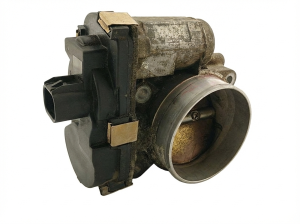
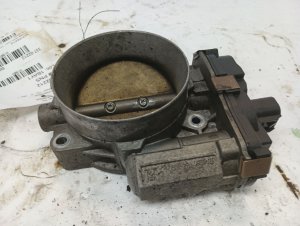
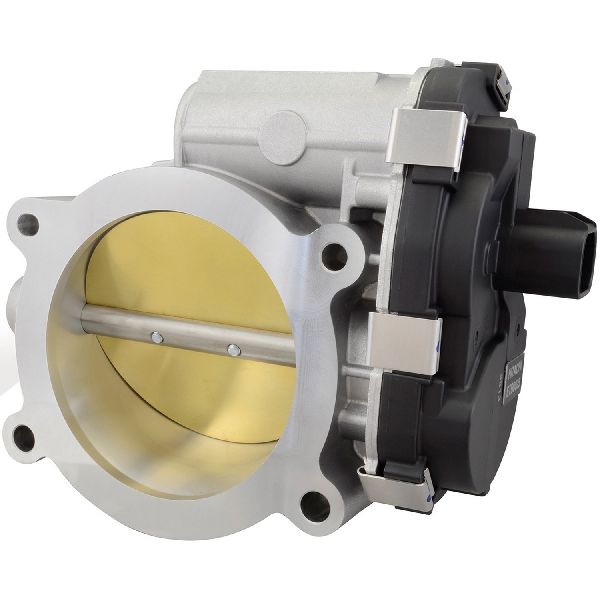
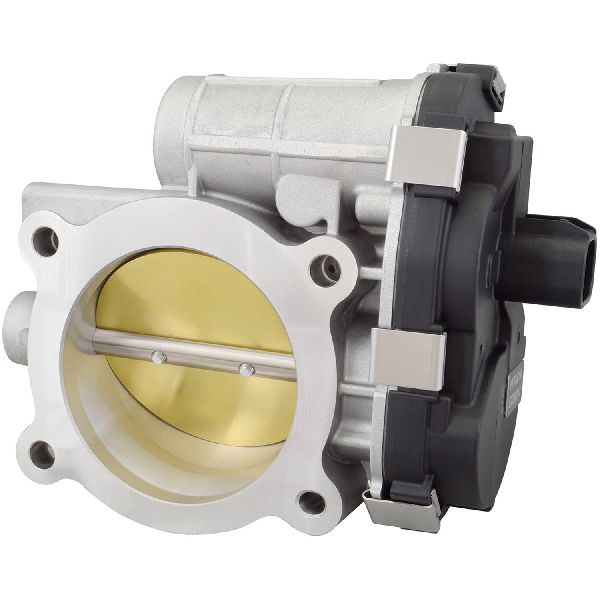
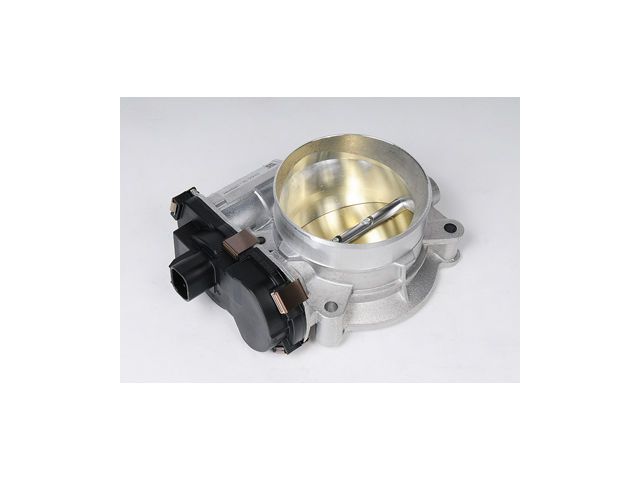
- Electronic Throttle Body Assembly
(OEM #ACDelco 217-3428 (cross-references to GM 12631186))— This is the most common cause of P2135, as the internal throttle position sensors fail. Replacing the entire assembly is the most reliable fix according to many owner experiences.
Trusted brands: ACDelco, Hitachi, Bosch, Dorman
OEM price range: $250-$400
Aftermarket price range: $150-$250 - Throttle Position Sensor Cover Kit
(OEM #GM / ACDelco 19259452)— Per GM TSB #11-06-04-007C, a faulty cover can cause this code. This is a cheaper alternative to replacing the entire throttle body if you are willing to perform the more detailed repair.
Trusted brands: ACDelco
OEM price range: $40-$120
Technical Service Bulletins (TSBs) & Recalls
- 11-06-04-007C: Details a procedure for replacing the throttle position sensor cover and terminals to address DTC P2135 and a 'Reduced Power' message. It applies to 2008-2011 Express/Savana vans.
- 11273A (Special Coverage): Extended warranty coverage for the throttle position sensor failure, but is now expired.
Platform-Specific Known Issues
- A well-documented issue covered by GM Technical Service Bulletin #11-06-04-007C describes a specific procedure for replacing the throttle position sensor cover (Kit P/N 19259452) to fix DTC P2135, which may be a more cost-effective repair than replacing the entire throttle body.
- For 2010 models, the TSB specifies that the Engine Control Module (ECM) must be reprogrammed with the latest software after the TPS cover is replaced. 2011 and newer models do not require this step.
- This problem was so common that GM also instituted Special Coverage Adjustment #11273A, extending the warranty on the part to 10 years/120,000 miles. This program has since expired for all 2010-2012 vehicles.
Mechanic-Grade Diagnostic Values
- TP Sensor 1 & 2 Voltage Correlation — expected: The voltage signals from TP Sensor 1 and TP Sensor 2 should mirror each other as the throttle is opened and closed. For example, Sensor 1 sweeps from ~0.5V to 4.5V while Sensor 2 sweeps from ~4.5V to ~0.5V.. Failure: The PCM will set P2135 if the two sensor signals disagree by more than 7-10% for less than 1 second. On a scan tool, any spikes, dropouts, or non-correlating movement indicates a fault.
- 5-Volt Reference Circuit Voltage — expected: 4.8-5.2 volts between the 5-volt reference circuit terminal and ground at the throttle body connector with the key on, engine off.. Failure: Voltage below 4.8V suggests a short to ground or an open/high resistance. Voltage above 5.2V suggests a short to voltage.
- Low Reference Circuit Resistance — expected: Less than 5 ohms of resistance between the low reference circuit terminal at the throttle body connector and chassis ground.. Failure: Resistance greater than 5 ohms indicates an open or high resistance in the ground circuit, which can cause skewed sensor readings.
Scan Tool Commands That Help
- GDS2 / Tech2: TP Sensor 1 and 2 Agree/Disagree Parameter — This specific parameter in the GM scan tool live data is used to directly monitor the correlation status between the two TP sensors as seen by the ECM. It will switch from 'Agree' to 'Disagree' when the fault condition occurs, confirming the P2135 trigger.
- GDS2 / Tech2: Idle Learn Reset / Throttle Learn — This function must be used after replacing the throttle body or TPS cover to reset the learned idle airflow values in the ECM. While a manual relearn procedure exists, using the scan tool function is the official and most reliable method.
Wiring & Ground Locations
- Throttle Body Connector (8-pin) — Connected to the driver's side of the throttle body at the front of the intake manifold.. This is the single connection point for both TP sensors and the throttle actuator motor. Fretting corrosion, loose pins, or broken wires within a few inches of this connector are a common cause of P2135. The key pins for testing are: Pin G (TP Sensor 1 Signal - Dark Green), Pin F (TP Sensor 2 Signal - Purple), Pin E (5V Reference), and Pin D (Low Reference).
- G103 — On the cowl in the left rear of the engine compartment, often located above the brake booster.. This is a major engine and sensor ground point. A loose or corroded G103 can cause a floating ground, leading to erratic voltage readings for multiple sensors, including the throttle position sensors, which can trigger a P2135 code.
Real Owner Repair Stories
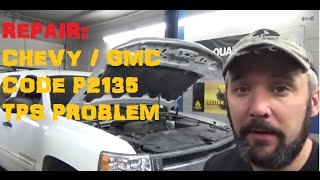
- Axle's Garage YouTube Video (2010 Chevy Silverado 1500 4.8L (shares engine/electronics with Express)) — Sporadic but worsening P2135, Check Engine Light, Stability Track error, Traction Control error, and Reduced Power (limp mode).
❌ Tried (didn't work) Clearing the code with a scanner provided a temporary fix, but the problem would always return.
✅ What actually fixed it The problem was permanently fixed by replacing only the throttle position sensor cover kit (P/N 19259452) on the original throttle body, as recommended by the TSB. The mechanic noted this is the correct fix 95% of the time.
OEM Part Supersession History
12631186→12694871— Standard part revision and update by the manufacturer.
Heads up: The new part number (12694871) is the direct replacement for the old one (12631186) and should be fully compatible.
Model Year Variations Within This Range
- 2010 only: When performing the TSB repair (replacing the TPS cover kit P/N 19259452), the Engine Control Module (ECM) must be reprogrammed with the latest software. This step is not required for 2011 and 2012 models according to TSB #11-06-04-007C.
Helpful Videos

Used OEM Parts in Stock
New Aftermarket Parts Available



The information in this article is provided for general reference and educational purposes only. Vehicle specifications, procedures, and part compatibility can vary by production date, trim level, and region. Always consult your vehicle's factory service manual and verify part numbers before purchasing or performing repairs. Safety-critical components such as airbags, seat belts, and braking systems should be installed by a qualified professional.
- Chevrolet EXPRESS:
- 🧭 Diagnostic Flowchart
- 🎬 Helpful Videos
- 🛍️ Shop This Part
- What's Unique About the 2010-2012 Chevrolet EXPRESS
- Symptoms You May Notice
- Most Likely Causes
- Rare But Worth Checking
- Diagnosis Steps
- Parts You'll Likely Need
- Technical Service Bulletins (TSBs) & Recalls
- Platform-Specific Known Issues
- Mechanic-Grade Diagnostic Values
- Scan Tool Commands That Help
- Wiring & Ground Locations
- Real Owner Repair Stories
- OEM Part Supersession History
- Model Year Variations Within This Range
- 🎟️ Get 5% Off