

P2135 on 2006-2011 Chevrolet Impala: Reduced Power, Causes, and Fixes
On a 2006-2011 Impala, P2135 almost always points to a failing throttle position sensor (TPS) on the throttle body, causing a "Reduced Engine Power" warning. A GM Technical Service Bulletin advises replacing the TPS sensor/cover, not the entire throttle body. The sensor kit is the most common fix.
- P2135 on a 2006-2011 Impala is a very common code that almost always means the throttle position sensor (TPS) is failing.
- The primary symptom is a sudden "Reduced Engine Power" message and a severe lack of acceleration.
- GM issued a service bulletin (12-06-04-003A) for this exact problem. The recommended fix is to replace the TPS sensor kit (GM Part #19300180), not the entire throttle body. [3, OWNER COMPLAINT #10585778]
- Before buying parts, check the throttle body wiring connector for any obvious damage or corrosion.
- This is a safety-critical repair, as the sudden loss of power can be dangerous in traffic.
What's Unique About the 2006-2011 Chevrolet IMPALA
This generation of Impala, along with many other GM vehicles from the era, is known for this specific issue. The problem became so common that General Motors issued a Technical Service Bulletin (TSB #12-06-04-003A) that specifically addresses DTC P2135. The bulletin, which also covers models like the Buick Lucerne, Chevy Malibu, and Pontiac G6, explicitly advises technicians *not* to replace the entire throttle body assembly as a first step. Instead, it provides a procedure to replace only the throttle position sensor cover and its related components, which is a more targeted and less expensive repair.
Diagnostic Flowchart
Tap your situation to follow the diagnostic path that matches what you're seeing on this vehicle.
Symptoms You May Notice
- "Reduced Engine Power" message on the dashboard.
- "Service Traction Control" message may appear simultaneously.
- Check Engine Light is on.
- Poor, delayed, or hesitant acceleration.
- Rough or unstable idle.
- Engine stalling, especially at low speeds or when coming to a stop.
- Replacing the entire throttle body when only the less expensive TPS sensor kit is needed. The official GM TSB specifically advises against this as a first step.
Most Likely Causes
- Failing Throttle Position Sensor (TPS) 🔴 High Probability → Shop Fuel Injection Throttle Body This is a well-documented, common failure part on this platform, as acknowledged by GM's own service bulletins. The internal contacts of the sensor wear out or develop faults over time, causing the voltage signals to become erratic.
How to confirm: Use a scan tool to monitor the voltage of TPS1 and TPS2. As the throttle is slowly opened, the voltages should change smoothly and inversely (e.g., one goes from ~1V to ~4V while the other goes from ~4V to ~1V). A jump, drop, or freeze in one of the signals indicates a bad sensor. Freeze frame data may show a mismatch at the time the code was set.
Typical fix: Replace the throttle position sensor and cover assembly on the throttle body, as per TSB #12-06-04-003A. 🎬 See a mechanic explain these common GM sensor problems. An owner complaint also confirms this fix. [OWNER COMPLAINT #10585778]
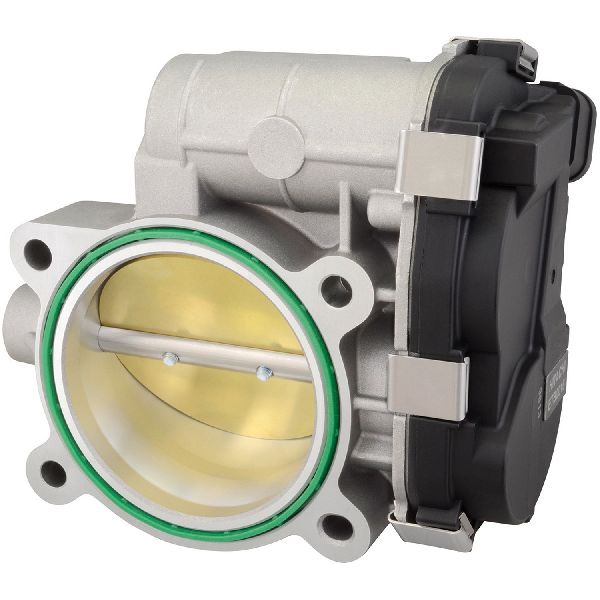
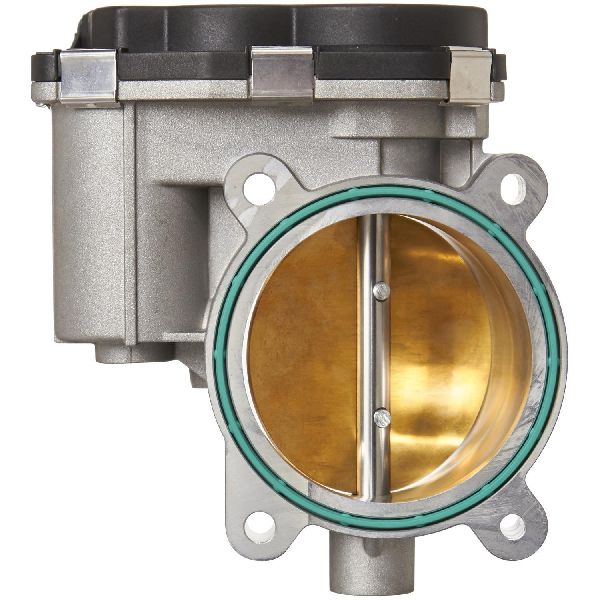
Est. part cost: $40-$80 - Faulty Throttle Body Assembly 🟡 Medium Probability → Shop Fuel Injection Throttle Body While the sensor is often the sole culprit, sometimes the internal motor, gears, or the throttle plate mechanism itself can fail or become excessively dirty, leading to correlation errors. Many owners and shops replace the entire assembly for simplicity, especially after a replacement TPS kit fails to solve the issue.
How to confirm: If a new TPS sensor doesn't resolve the issue, or if the throttle plate is visibly sticking or damaged, the entire assembly is suspect. Cleaning the throttle body bore and plate with a dedicated cleaner is a good first step, but often won't fix an internal electronic fault.
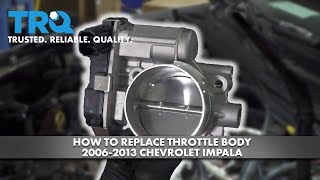
Typical fix: Replace the entire throttle body assembly, which includes a new integrated TPS. 🎬 Watch: Step-by-step guide to replacing the entire throttle body.
Est. part cost: $120-$250 - Wiring Harness or Connector Issues ⚪ Low Probability Forum users report that corrosion or loose pins in the wiring harness connectors, either at the throttle body or at major junction blocks, can cause intermittent voltage drops that trigger P2135. One owner complaint noted corrosion as a suspected cause. [OWNER COMPLAINT #10723783] A forum user on ScannerDanner forums noted a notorious grey connector on the driver's side strut tower that can collect water and cause this code.
How to confirm: Visually inspect the throttle body connector for pushed-out pins, corrosion, or damage. Wiggle the harness while monitoring TPS voltages on a scan tool to see if the signal drops out. Check for chafing on the harness near brackets, like the canister purge solenoid bracket.
Typical fix: Repair the damaged section of the wiring harness or replace the pigtail connector for the throttle body.
Est. part cost: $15-$50
Rare But Worth Checking
- Failing Accelerator Pedal Position (APP) Sensor: → Shop Accelerator Pedal Assembly The APP sensor at the gas pedal also has redundant sensors. While less common for this specific code, a fault in the pedal assembly can sometimes cause similar symptoms or related codes like P2122 or P2138 alongside P2135.
- Faulty Powertrain Control Module (PCM): → Shop Engine Control Module (ECM) This is extremely rare. The PCM should only be considered after all other possibilities, including sensors, the throttle body, and all related wiring, have been exhaustively tested and ruled out. One owner on a forum replaced the throttle body three times and the pigtail before suspecting the PCM.
Diagnosis Steps
- Connect an OBD-II scanner and confirm P2135 is present. Check for any other related codes.
- Review the freeze-frame data to see the sensor readings at the exact moment the fault occurred. 🎬 Watch: How to diagnose P2135 using freeze frame data. This can confirm a voltage mismatch between TPS1 and TPS2.
- Turn the ignition off and inspect the throttle body wiring connector for loose pins, corrosion, or damage. Also check the large grey connector on the driver's side strut tower for water intrusion.
- With the scanner displaying live data for TPS1 and TPS2, turn the ignition to 'ON' (engine off). Slowly press the gas pedal to the floor and release. Watch the voltage graphs. They should be smooth and mirror each other (one increasing, one decreasing). Any spikes, drops, or flat spots indicate a sensor failure.
- If the sensor data looks faulty, the most likely cause is the TPS. Following TSB #12-06-04-003A, replace the throttle position sensor cover/kit.
- If the sensor data appears normal and the wiring is good, inspect the throttle body bore for heavy carbon buildup that could cause the plate to stick. Clean it with a dedicated throttle body cleaner.
- If the problem persists after replacing the TPS and cleaning the throttle body, the issue may be with the throttle body's internal motor or a wiring issue further up the harness. At this point, replacing the complete throttle body assembly is a common next step.
- After replacing the TPS or throttle body, a throttle relearn procedure is required. A common method is to start the engine and let it idle for 3 minutes, turn it off for 60 seconds, then start and idle for another 3 minutes. Alternatively, driving the vehicle with several decelerations from over 45 MPH may allow the computer to relearn automatically.
Parts You'll Likely Need
- Throttle Position Sensor Kit
(OEM #19300180)— This is the most common failure point and the specific part recommended for replacement by GM's service bulletin to fix code P2135. [3, OWNER COMPLAINT #10585778] It is a genuine GM part and also sold under the ACDelco brand.
Trusted brands: ACDelco (GM Original Equipment)
OEM price range: $60-$90
Aftermarket price range: $40-$70 - Throttle Body Assembly
(OEM #12609500, 12577029)— Replaced if the TPS sensor kit does not fix the issue, or if the internal motor/gears have failed. It is a more comprehensive but more expensive fix. Part number 12609500 is a common replacement for the original 12577029.
Trusted brands: ACDelco, Hitachi, Bosch, Standard Motor Products (S20009)
OEM price range: $200-$300
Aftermarket price range: $120-$200
Related Codes That Often Appear With This One
- P1516, P2101 — These codes relate to the Throttle Actuator Control (TAC) module performance, which can be triggered by the same underlying throttle body electronic faults.
- P0068 — This code indicates a correlation issue between the MAP/MAF sensor and the throttle position. It can appear with P2135 if the computer receives conflicting information about airflow and throttle angle. [OWNER COMPLAINT #10980487]
- P0651 — This code points to an issue with the 'B' sensor reference voltage circuit. Since the TPS uses this reference voltage, a circuit problem could trigger both codes. [OWNER COMPLAINT #10980487, 14]
Technical Service Bulletins (TSBs) & Recalls
- Bulletin #12-06-04-003A: Describes a procedure for replacing the throttle position sensor cover to fix DTC P2135, advising against full throttle body replacement.
- Bulletin #PIP3089B: Addresses intermittent P2135 and related codes, suggesting inspection of wiring crimps at the throttle body connector and checking grounds G103 and G104.
Platform-Specific Known Issues
- A known issue with the throttle position sensor prompted GM to issue Technical Service Bulletin #12-06-04-003A, which provides a specific procedure for replacing the TPS cover to resolve DTC P2135 without replacing the entire throttle body.
- Owner complaints frequently mention that this code appears and causes the 'Reduced Engine Power' mode, sometimes intermittently, making diagnosis frustrating. [OWNER COMPLAINT #10502651]
- GM also issued a Special Coverage Adjustment (#14582, later updated) for some model years including the 2008-2011 Impala, extending the warranty on the throttle body assembly to 10 years or 120,000 miles due to this issue, though this coverage has now expired for all affected vehicles.
Mechanic-Grade Diagnostic Values
- Throttle Actuator Motor Resistance — expected: 2 to 15 Ohms. Failure: A reading of less than 1 Ohm (short) or an Over Limit/OL reading (open circuit).
- TPS1 Resistance Sweep — expected: Resistance should increase smoothly as the throttle plate is opened from closed to wide-open.. Failure: Resistance value stays stuck or has gaps/jumps as the throttle plate is moved.
- TPS2 Resistance Sweep — expected: Resistance should decrease smoothly as the throttle plate is opened from closed to wide-open.. Failure: Resistance value stays stuck or has gaps/jumps as the throttle plate is moved.
- Throttle Body Fastener Torque — expected: 10 N·m (89 lb in). Failure: N/A
Scan Tool Commands That Help
- GM Tech2 / GDS2 or equivalent: Idle Learn Reset — After replacing the throttle position sensor or the entire throttle body assembly to force the ECM to relearn the new minimum throttle position and airflow values, bypassing the manual relearn procedure. This is found under 'Module Setup' or 'Function Tests'.
Wiring & Ground Locations
- Throttle Body Connector — Plugged directly into the throttle body at the front of the engine's intake manifold.. This 6-pin connector is the single point of connection for both TPS sensors and the actuator motor. Loose pins, fretting corrosion, or broken wires within a few inches of this connector are a common cause of P2135. A wiggle test here while watching live data is a key diagnostic step.
- Throttle Body Connector Pinout — On the throttle body itself, where the harness connects.. Knowing the pin functions allows for resistance testing without a scan tool. Terminals A & B are for the actuator motor. Terminals D & E are for TPS1. Terminals E & F are for TPS2.
- G101 — At the lower front of the engine block.. This is a primary ground for the Engine Control Module (ECM) and Transmission Control Module (TCM). A poor connection here can cause a variety of engine control issues.
- G103 / G104 — On the cowl at the left rear of the engine compartment, often above the brake booster.. A GM Technical Service Bulletin (PIP3089B) specifically identifies a loose or corroded G103 or G104 as a potential cause for P2135 and other throttle-related codes.
- Grey Strut Tower Connector — A large grey electrical connector located on the driver's side strut tower.. This connector is known to be susceptible to water intrusion, which can cause corrosion and lead to intermittent APP/TPP codes, including P2135.
- EVAP Purge Valve Bracket — On the side of the cylinder head.. A service bulletin for similar GM platforms notes that the engine wiring harness can rub against this metal bracket, causing wires to chafe and short to ground, leading to intermittent electrical faults.
Real Owner Repair Stories
- Derbydog02 on YouTube (2010 Chevrolet Impala) — Reduced Power Mode, Check Engine Light with codes P0651 (5-Volt Reference 2 Circuit), P2135, and P2127 (APP Sensor 2 Circuit Low Voltage).
❌ Tried (didn't work) The vehicle had been at two different repair shops for over two months who could not diagnose the issue.
✅ What actually fixed it The technician found that the secondary air injection check valve, which shares the same 5-volt reference circuit as the throttle and pedal sensors, was shorted internally. Unplugging the faulty check valve restored the 5-volt reference signal and cleared all the codes. The car ran perfectly after unplugging it. - ScannerDanner Forum user 'Mikey' (2008 Chevrolet Impala) — Intermittent P2135 code, sometimes setting after 750 miles, sometimes after only 20 miles.
❌ Tried (didn't work) Replaced throttle body three times, Replaced throttle body pigtail connector, Replaced the Powertrain Control Module (PCM)
✅ What actually fixed it The user was still diagnosing, but a master technician on the forum advised them to inspect a large grey connector on the driver's side strut tower, which is notorious for collecting water and causing these codes. The other strong possibility suggested was a failing accelerator pedal assembly, as a Dorman replacement had previously failed to fix a similar issue on another vehicle. - YouTube user 'Helpful Hands' (Vehicle with P0122 and P2135) — Check engine light with codes for TPS circuit low voltage and TPS correlation error.
❌ Tried (didn't work) Initial checks of the wiring harness by wiggling it showed fluctuating voltage readings, indicating a problem in the harness itself rather than the sensor.
✅ What actually fixed it The technician discovered that wires in the harness leading to the throttle body were melted or stuck together. The final fix was to cut the faulty wire (purple wire in the video) and splice in a new section of wire, bypassing the damaged portion of the harness.
When the Usual Fixes Don't Work
- In several documented cases, replacing the common failure parts (TPS sensor, throttle body assembly, and even the PCM) did not resolve an intermittent P2135 code. The ultimate cause was found in the wiring, but not at the most obvious point. One successful diagnosis traced the fault to a shorted secondary air injection valve that shared the same 5-volt reference circuit, pulling down the voltage for the TPS and causing the correlation error. Another case pointed to a known issue of water intrusion in a large grey connector on the driver's side strut tower, causing intermittent shorts. These instances highlight the importance of diagnosing the entire circuit, including shared power/grounds and major harness connectors, before condemning expensive components.
OEM Part Supersession History
12577029→12609500— Updated/revised part from GM for the complete throttle body assembly.
Model Year Variations Within This Range
- 2006 vs 2007+: The 2006 model year uses a different Engine Control Module (E40 ECM) and wiring harness configuration (often with 3 or 4 large connectors) compared to the 2007 and newer models, which typically use an E67 ECM with two large connectors. Parts like the ECM are not interchangeable between these years without significant rewiring.
- 2008-2010 vs 2011: According to TSB #11-06-04-007B, when replacing the throttle position sensor cover kit, 2008-2010 models MUST have the ECM reprogrammed with the latest software calibration. 2011 models DO NOT require this reprogramming after the repair.
Helpful Videos

Used OEM Parts in Stock
New Aftermarket Parts Available


The information in this article is provided for general reference and educational purposes only. Vehicle specifications, procedures, and part compatibility can vary by production date, trim level, and region. Always consult your vehicle's factory service manual and verify part numbers before purchasing or performing repairs. Safety-critical components such as airbags, seat belts, and braking systems should be installed by a qualified professional.
- Chevrolet IMPALA:
- 🧭 Diagnostic Flowchart
- 🎬 Helpful Videos
- 🛍️ Shop This Part
- What's Unique About the 2006-2011 Chevrolet IMPALA
- Symptoms You May Notice
- Most Likely Causes
- Rare But Worth Checking
- Diagnosis Steps
- Parts You'll Likely Need
- Related Codes That Often Appear With This One
- Technical Service Bulletins (TSBs) & Recalls
- Platform-Specific Known Issues
- Mechanic-Grade Diagnostic Values
- Scan Tool Commands That Help
- Wiring & Ground Locations
- Real Owner Repair Stories
- When the Usual Fixes Don't Work
- OEM Part Supersession History
- Model Year Variations Within This Range
- 🎟️ Get 5% Off