

P2135 on 2013 Chevrolet Silverado 3500: Throttle Position Sensor Causes and Fixes
On a 2013 Silverado 3500 with the 6.0L gas engine, code P2135 is almost always caused by a failing throttle body assembly, triggering a 'Reduced Engine Power' warning. The most reliable fix is to replace the entire throttle body, which includes the integrated sensors. While a GM TSB suggests replacing only the sensor cover, most owner and technician experiences confirm a full replacement is the more durable, long-term solution. Expect to pay between $150-$275 for an OEM-quality part.
- P2135 on a 2013 Silverado 3500 indicates a disagreement between the two throttle position sensors and will cause the truck to enter 'Reduced Engine Power' mode.
- The most frequent and reliable fix is replacing the entire throttle body assembly, even though a GM TSB exists for replacing just the sensor cover.
- Before replacing parts, always inspect the wiring and connector at the throttle body for damage and check engine ground connections, as these can cause the same symptoms and are cheaper to fix.
- A GM Technical Service Bulletin (TSB #11-06-04-007C) and a Special Coverage program (#11273A) exist for this exact problem, confirming it's a widespread, known issue on GMT900 trucks.
- Replacing the throttle body is a DIY-friendly job that can be done with basic hand tools in about an hour.
What's Unique About the 2013-2013 Chevrolet SILVERADO 3500
This generation of GM trucks (GMT900 platform) is notoriously prone to issues with the electronic throttle body assembly, particularly on the V8 gas engines. General Motors issued a specific Technical Service Bulletin (TSB #11-06-04-007C) that addresses this exact code. The TSB outlines a procedure for replacing only the throttle position sensor cover and its internal contacts (Part No. 19259452), acknowledging a known weakness. However, many technicians and owners on forums report that this is often a temporary fix, and replacing the entire throttle body assembly is a more permanent repair because the internal motor contacts and other electronics can also fail. Some owners have also had success resolving the issue by addressing poor ground connections on the engine block or repairing frayed wires right at the throttle body connector.
Diagnostic Flowchart
Tap your situation to follow the diagnostic path that matches what you're seeing on this vehicle.
Generation note: The P2135 issue is extremely common across the entire GMT900 platform (2007-2013/14) which includes the Silverado, Sierra, Tahoe, Yukon, Suburban, and Escalade with V8 gas engines. GM also issued a Special Coverage Adjustment (#11273A) that extended the warranty for this specific failure to 10 years or 120,000 miles for many of these vehicles.
Symptoms You May Notice
- "Reduced Engine Power" message on the dashboard
- Check Engine Light is on
- "Service StabiliTrak" or "Service Traction Control" message may also appear
- Poor, limited, or no acceleration (Limp Mode)
- Hesitation or surging when pressing the gas pedal
- Unstable or high idle
- Sudden stalling or near-stalling when coming to a stop
- Accelerator pedal feels unresponsive or "dead"
- Replacing the accelerator pedal assembly first, when the problem is almost always at the throttle body on the engine for this specific code.
- Cleaning the throttle body bore. While cleaning carbon buildup is good maintenance, it will not fix the electronic failure of the internal sensors that causes P2135.
- Assuming a PCM software update will fix it. While a reflash is sometimes required after a part replacement per the TSB, it rarely fixes the root cause of a hardware failure.
Most Likely Causes
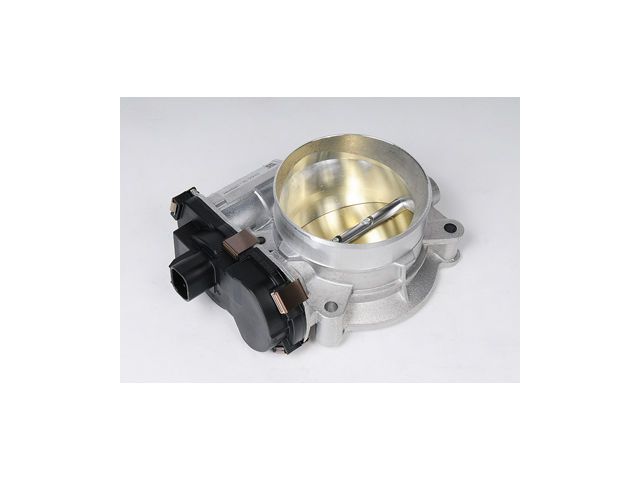
- Faulty Throttle Body Assembly 🔴 High Probability → Shop Fuel Injection Throttle Body The integrated Throttle Position Sensors (TPS) are a known, widespread failure point on this platform, as acknowledged by GM's TSB #11-06-04-007C. The internal electronic contacts for the sensors wear out over time, causing their signals to become erratic and disagree, which triggers the P2135 code. While the TSB suggests a sensor cover replacement, a full assembly replacement is the most cited permanent fix in owner forums.
How to confirm: Use a scan tool to graph live data for TPS1 and TPS2 voltages. With the key on and engine off, slowly press the accelerator pedal to the floor and back. The two voltage graphs should be smooth and mirror each other (one rising, one falling). Any spikes, dropouts, or jagged patterns in either signal confirms a faulty sensor within the throttle body.
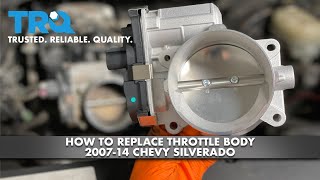
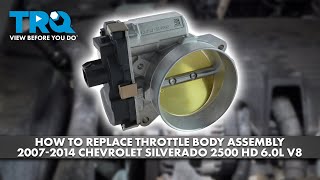
Typical fix: Replace the entire throttle body assembly. 🎬 Watch this step-by-step guide to replacing the full assembly. Aftermarket and OEM options are widely available. This is a more reliable long-term repair than following the TSB to replace only the sensor cover.
Est. part cost: $150-$275 - Wiring or Connector Issue 🟡 Medium Probability Engine vibration and heat can cause wires in the harness leading to the throttle body to fray or break internally, often within a few inches of the connector. The connector pins themselves can also suffer from fretting corrosion, leading to a poor connection.
How to confirm: Visually inspect the wiring harness and connector at the throttle body for any signs of damage, corrosion, or loose pins. With the engine running, carefully wiggle the connector and harness to see if it triggers the 'Reduced Power' mode or causes the engine to stumble. A user on Chevy Talk forums noted a wire broken inside the insulation as the cause.
Typical fix: Repair the damaged section of wiring or replace the connector pigtail. In some cases, running a new, separate wire for the faulty signal circuit directly to the PCM has solved the problem when the break is hard to find.
Est. part cost: $15-$50 - Poor Ground Connection ⚪ Low Probability The main engine and body grounds can become loose or corroded over time, causing a host of difficult-to-diagnose electrical issues, including TPS correlation faults.
How to confirm: Locate, remove, and clean the main ground straps/wires from the engine block to the chassis and firewall. A user on a Chevrolet forum reported fixing a recurring P2135 by repairing a ground on the back of the engine block.
Typical fix: Clean the contact surfaces of the ground connection points with a wire brush until they are bright metal and re-secure the connections tightly.
Est. part cost: $0-$10
Rare But Worth Checking
- Faulty Accelerator Pedal Position (APP) Sensor: → Shop Accelerator Pedal Assembly While less common for this specific code (P2138 is more typical), a failing APP sensor can sometimes cause correlation issues that the PCM interprets as a P2135. The APP sensor also uses two redundant sensors, and if they disagree, it can cause similar symptoms. A Reddit user reported replacing the pedal assembly as part of a long diagnostic process.
- Faulty Powertrain Control Module (PCM): → Shop Engine Control Module (ECM) This is extremely rare and should be the absolute last resort. The PCM is often blamed incorrectly when the actual fault lies in wiring or connections that were not thoroughly tested. All other possibilities must be exhaustively ruled out before considering PCM replacement.
Diagnosis Steps
- Connect an OBD-II scanner and confirm that P2135 is the primary code. Note any other codes present.
- Check for any related TSBs. For this vehicle, TSB #11-06-04-007C is directly relevant and confirms a known issue.
- Thoroughly inspect the electrical connector and wiring harness going to the throttle body. Look for any chafed wires, loose pins, or signs of corrosion. Pay close attention to the first 4 inches of the harness from the connector.
- Use a scan tool with live data capability. Graph the voltage readings of TPS Sensor 1 and TPS Sensor 2. With the key on and engine off, slowly press and release the accelerator pedal. The two voltage signals should move smoothly and in opposition to each other (one rising, one falling). Any glitches, spikes, or flat spots in the data strongly suggest a faulty throttle body.
- If the data is inconclusive, perform a 'wiggle test' by gently moving the connector and harness while watching the live data for any signal dropouts.
- Inspect and clean the main engine ground connections, particularly any located on the rear of the cylinder heads.
- If the wiring and grounds are confirmed to be good and the sensor data is erratic, the throttle body assembly is faulty and needs replacement.
- After replacement, a throttle relearn procedure is necessary. This can often be done without a scan tool by starting the engine and letting it idle for 3 minutes, turning it off for 60 seconds, starting and idling for another 3 minutes, and then turning it off again for 60 seconds. Some sources note the TSB requires a PCM reflash at a dealer, but many owners report no issues without it.
Parts You'll Likely Need
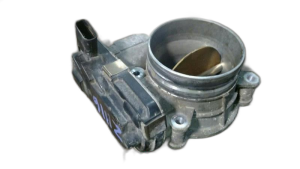
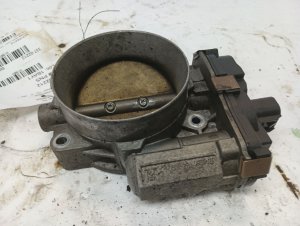
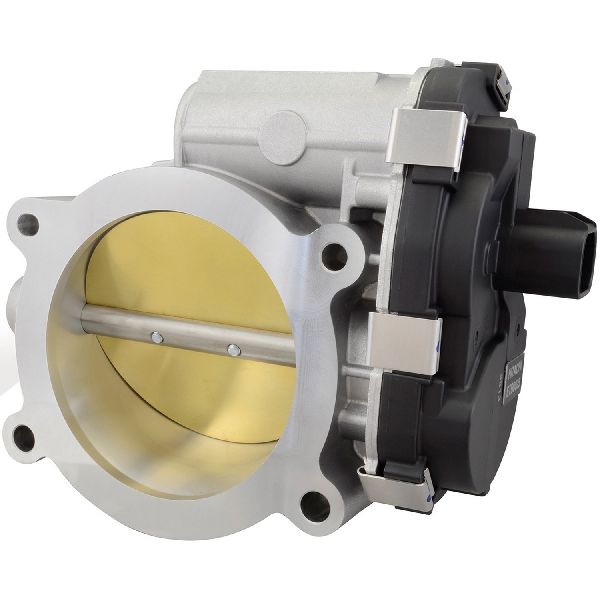
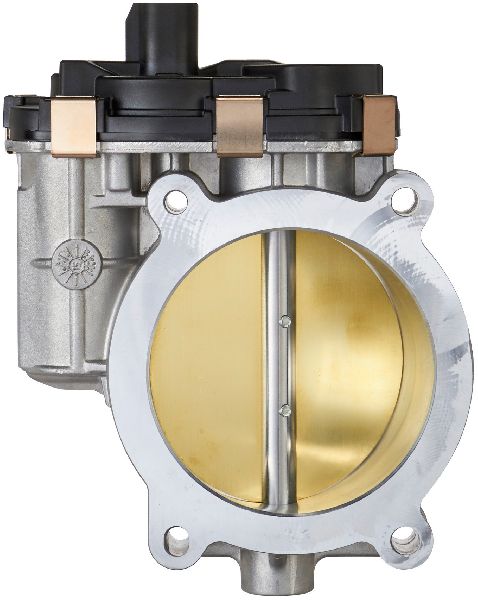
- Throttle Body Assembly
(OEM #12670839 (Supersedes older numbers, verify by VIN))— This is the most common failure for code P2135 on this truck. The assembly includes the throttle plate, actuator motor, and the integrated throttle position sensors that cause the fault. Replacing the entire unit is the most reliable fix.
Trusted brands: ACDelco (GM Genuine), Delphi, Hitachi, Standard Motor Products
OEM price range: $200-$275
Aftermarket price range: $150-$220 - Throttle Position Sensor Kit
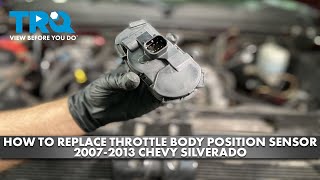
(OEM #19259452)— This is the part specified in TSB #11-06-04-007C. It allows for the replacement of just the sensor and cover, 🎬 See how to replace only the sensor per the TSB. which is a cheaper but potentially less reliable fix than replacing the entire throttle body assembly.
Related Codes That Often Appear With This One
- P0121 — This code specifically indicates a performance or range problem with Throttle Position Sensor 'A', which can be triggered alongside the correlation error of P2135.
- P0221 — This is the equivalent of P0121 but for Throttle Position Sensor 'B'. It indicates a performance problem with the second sensor.
- P1516 — This code relates to the Throttle Actuator Control (TAC) module performance, indicating the PCM's commanded throttle position doesn't match the actual throttle position. It often appears with P2135.
Technical Service Bulletins (TSBs) & Recalls
- Bulletin #11-06-04-007C: Details a procedure for replacing the throttle position sensor cover due to concerns of an illuminated indicator lamp, a reduced power message, and DTC P2135 being set. It advises against replacing the whole throttle body unless the cover replacement fails or the unit is damaged.
- Special Coverage Adjustment #11273A: Extended warranty coverage for the throttle position sensor condition.
Platform-Specific Known Issues
- A known issue is documented in GM Technical Service Bulletin #11-06-04-007C, which provides a procedure for replacing the throttle position sensor cover to fix DTC P2135 and the associated 'reduced power' message.
- GM also issued Special Coverage Adjustment #11273A, extending the warranty on the throttle position sensor to 10 years/120,000 miles for many affected trucks and SUVs, though this has likely expired for a 2013 model.
Mechanic-Grade Diagnostic Values
- TPS Sensor Voltage at Closed Throttle (Key On, Engine Off) — expected: 0.5V - 0.7V. Failure: Voltage outside of this range or unstable.
- TPS Sensor Voltage at Wide Open Throttle (Key On, Engine Off) — expected: 4.0V - 4.5V. Failure: Voltage does not reach this range or is erratic during pedal travel.
- TPS1 vs TPS2 Voltage Correlation — expected: The two sensor signals should mirror each other (one rises, one falls) and the difference between their scaled values should not exceed a specific threshold (e.g., >0.2V).. Failure: Any spikes, dropouts, or a voltage difference that exceeds the PCM's calibrated limit (typically for more than a fraction of a second) will set the code.
- 5-Volt Reference Circuit at Throttle Body Connector — expected: 5.0 Volts. Failure: No voltage or low voltage indicates a wiring issue or a problem with the PCM. A sensor can also short this circuit to ground.
Scan Tool Commands That Help
- Tech2 / GDS2: Idle Learn Reset — After replacing the throttle body or sensor, this function in the 'Module Setup' or 'Special Functions' menu resets learned idle airflow values in the ECM. It can stabilize the idle more quickly and reliably than a manual relearn procedure.
- Tech2 / GDS2: Freeze Frame / Failure Records — This data is critical for diagnosing an intermittent P2135. It captures a snapshot of all sensor values at the exact moment the fault occurred, helping to confirm if the TPS voltages were out of sync.
Wiring & Ground Locations
- G104 — On the front of the left (driver's side) cylinder head.. This is a primary engine-to-chassis ground. A poor connection here can cause erratic sensor readings and phantom codes as it is a ground point for the engine control circuits.
- G108 — On the lower right rear of the engine block.. This is another critical engine block ground. A loose or corroded connection here can affect various sensor inputs to the PCM.
- G102 — On the lower left front of the engine, part of the main negative battery cable harness.. This is the main battery ground to the engine block. A fault here can cause widespread electrical issues, including unstable voltage supply to sensors and the PCM.
- Throttle Body Connector — Plugged directly into the throttle body at the front of the intake manifold.. This connector is the single point for both TPS sensor signals, their 5V reference, and ground circuits. The pins can corrode or wires can fray right at the connector, making a 'wiggle test' while watching live data a key diagnostic step.
Real Owner Repair Stories
- YouTube video by 'Axle's Garage' (2010 Chevy Silverado 1500 4.8L V8) — Sporadic 'Reduced Power' mode, StabiliTrak and Traction Control warnings on the dash, vehicle becomes undrivable.
❌ Tried (didn't work) Temporarily clearing the code with a scanner or by disconnecting the battery would restore power, but the issue would always return and became more frequent over time.
✅ What actually fixed it The throttle position sensor (TPS) was replaced. The video demonstrates replacing only the sensor component on the throttle body, which resolved the P2135 code and associated limp mode.
OEM Part Supersession History
12627217, 12669073→12670839— GM regularly updates service parts to integrate new materials and technologies for improved reliability. This part number applies to a wide range of GM vehicles with different engines, not just the 6.0L V8.
Heads up: While part number 12670839 is listed for many GM vehicles, it primarily fits 2.5L 4-cylinder engines. The correct part number for the 6.0L V8 in a 2013 Silverado 3500 must be verified by VIN, as the provided number in Pass 2 (12670839) appears to be incorrect for this specific engine application based on search results.
Helpful Videos
Used OEM Parts in Stock
New Aftermarket Parts Available


The information in this article is provided for general reference and educational purposes only. Vehicle specifications, procedures, and part compatibility can vary by production date, trim level, and region. Always consult your vehicle's factory service manual and verify part numbers before purchasing or performing repairs. Safety-critical components such as airbags, seat belts, and braking systems should be installed by a qualified professional.
- Chevrolet SILVERADO 3500:
- 🧭 Diagnostic Flowchart
- 🎬 Helpful Videos
- 🛍️ Shop This Part
- What's Unique About the 2013-2013 Chevrolet SILVERADO 3500
- Symptoms You May Notice
- Most Likely Causes
- Rare But Worth Checking
- Diagnosis Steps
- Parts You'll Likely Need
- Related Codes That Often Appear With This One
- Technical Service Bulletins (TSBs) & Recalls
- Platform-Specific Known Issues
- Mechanic-Grade Diagnostic Values
- Scan Tool Commands That Help
- Wiring & Ground Locations
- Real Owner Repair Stories
- OEM Part Supersession History
- 🎟️ Get 5% Off