

P2135 on 2009-2012 Chevrolet Traverse: Throttle Position Sensor Causes and Fixes
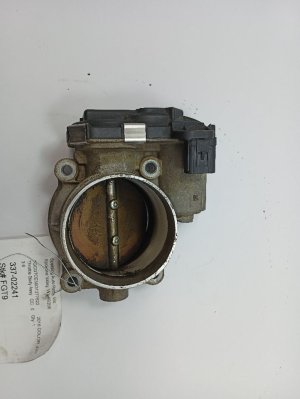
On a 2009-2012 Traverse, P2135 is almost always caused by a failing Throttle Position Sensor (TPS) on the throttle body. This triggers 'Reduced Engine Power' mode. The most common fix is replacing the entire throttle body assembly (e.g., ACDelco P/N 12694873), though a sensor-only repair kit (ACDelco P/N 19259452) exists per a GM TSB. Expect to pay $150-$400 for the part. A throttle relearn procedure is mandatory after replacement.
- P2135 on a 2009-2012 Traverse will put the vehicle into 'Reduced Engine Power' mode, making it unsafe for normal driving.
- The cause is almost always a faulty throttle position sensor, which is part of the throttle body assembly.
- Before replacing parts, always check the wiring and connector at the throttle body for damage or corrosion.
- The most straightforward and reliable fix is to replace the entire throttle body assembly. A throttle relearn procedure is necessary afterward.
- A cheaper but more complex repair option is to use the ACDelco sensor repair kit (P/N 19259452) as outlined in a GM TSB, though its long-term durability has been questioned by some mechanics.
What's Unique About the 2009-2012 Chevrolet Traverse
This issue was so common across many GM vehicles from this era, including the Traverse and its platform mates (Acadia, Enclave, Outlook), that GM issued a specific Technical Service Bulletin (TSB #11-06-04-007C) and a Special Coverage Adjustment (#11273A). These programs acknowledged a frequent failure of the throttle position sensor and extended the warranty on this specific part to 10 years or 120,000 miles. While the warranty extension has expired for these model years, its existence confirms a widespread, known defect with the original throttle body components.
Symptoms You May Notice
- Check Engine Light is on
- "Reduced Engine Power" message displayed on the dash
- "Service Traction Control" and "Service Stabilitrak" messages may appear
- Vehicle has very little acceleration and won't go over a certain low speed (limp mode)
- Hesitation or surging during acceleration
- Engine may stall after stopping
- Unstable or high idle, especially after part replacement without a relearn procedure
- Replacing the accelerator pedal assembly when the fault is at the throttle body.
- Replacing the PCM before exhaustively checking the throttle body and its wiring.
Most Likely Causes
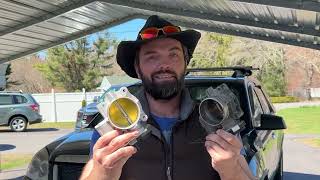
- Faulty Throttle Body Assembly 🔴 High Probability → Shop Fuel Injection Throttle Body The integrated Throttle Position Sensor (TPS) is a known high-failure item on this platform 🎬 Watch: Diagnosing GM throttle position sensor issues, as acknowledged by GM's TSB and special coverage program. Aftermarket replacements like Dorman's OE FIX feature improved seals to prevent moisture and oil intrusion that caused the original failures.
How to confirm: Use a scan tool with live data capability to graph the voltages of TP Sensor 1 and TP Sensor 2. As you slowly press the accelerator pedal, the voltage readings should change smoothly and in sync (one typically mirrors the other). If one sensor shows erratic jumps, dropouts, or doesn't correlate with the other, the sensor is faulty.
Typical fix: Replace the entire throttle body assembly. This is often easier and more reliable than replacing just the sensor components. A throttle relearn procedure is required after replacement. Some 2008-2011 models may also require an ECM reprogram per TSB #11-06-04-007C.
Est. part cost: $150 - $400 - Damaged Wiring or Poor Connection at Throttle Body 🟡 Medium Probability → Shop Fuel Injection Throttle Body
How to confirm: Visually inspect the wiring harness and connector going to the throttle body. Look for any signs of corrosion on the pins, chafed or broken wires, or a loose-fitting connector. Wiggle the connector with the engine running (and live data streaming) to see if it induces the voltage dropouts or the code.
Typical fix: Clean the connector terminals with electrical contact cleaner. If wiring is damaged, repair or replace the connector pigtail.
Est. part cost: $5 - $30
Rare But Worth Checking
- Faulty Powertrain Control Module (PCM): → Shop Engine Control Module (ECM) This is uncommon. The PCM should only be suspected after the throttle body and wiring have been thoroughly checked and confirmed to be good. Software glitches or outdated calibrations can sometimes cause a false P2135.
- Faulty Accelerator Pedal Position (APP) Sensor: → Shop Accelerator Pedal Assembly While possible, this is less likely. A problem with the APP sensor would typically set a different code, such as P2138.
Diagnosis Steps
- Connect an OBD-II scanner and confirm that P2135 is the primary code stored. Note any other codes.
- Using the scanner's live data function, monitor the voltage readings for 'TP Sensor 1' and 'TP Sensor 2'.
- With the key on and engine off, slowly press and release the accelerator pedal. Watch the two sensor voltage graphs. They should move smoothly and in parallel (though their values will differ, one may rise while the other falls). Any glitches, spikes, or dropouts on one sensor's graph indicate a fault.
- If the sensor data is erratic, turn the ignition off and disconnect the throttle body electrical connector. Inspect for corrosion, moisture, bent or backed-out pins.
- Inspect the wiring harness leading to the throttle body for any signs of damage, chafing, or breaks, especially where it might rub against other components.
- If the wiring and connector are in good condition, the throttle position sensor (and thus the throttle body assembly) is the most likely culprit.
- After replacing the throttle body, perform the throttle relearn procedure. This often involves letting the vehicle idle for several minutes, then driving it under specific conditions. Consult a service manual for the exact procedure.
- If the throttle body is replaced and the code persists, further diagnosis of the PCM may be required, including checking for available software updates as suggested by TSB #11-06-04-007C for some model years.
Parts You'll Likely Need
- Throttle Body Assembly
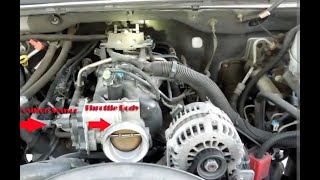
(OEM #12694873 (Supersedes 12616995, 12607330, 12593591))— This is the most common failure point for P2135. The throttle position sensors are integrated into the assembly, and replacing the entire unit is the standard and most reliable repair. 🎬 See this step-by-step throttle body replacement walkthrough
Trusted brands: ACDelco, Bosch, Delphi, Dorman
OEM price range: $250-$400
Aftermarket price range: $150-$250 - Throttle Position Sensor Cover/Repair Kit
(OEM #19259452)— As an alternative to replacing the entire throttle body, GM released a kit to replace just the sensor cover and terminals per TSB #11-06-04-007C. This is a more involved repair and some technicians report it's less durable than a full replacement.
Trusted brands: ACDelco
OEM price range: $50-$100
Related Codes That Often Appear With This One
- P0121 — This code also relates to Throttle/Pedal Position Sensor Performance and can be triggered by the same sensor correlation failure.
- P1516 — This code indicates a Throttle Actuator Control (TAC) Module performance issue, which can be set in conjunction with P2135 when the PCM detects a discrepancy between the commanded and actual throttle position.
Technical Service Bulletins (TSBs) & Recalls
- TSB #11-06-04-007C: Malfunction Indicator Lamp (MIL) Illuminated, Reduced Engine Power Message Displayed, DTC P2135 Set.
- Special Coverage Adjustment #11273A: Special Coverage for Throttle Position Sensor Replacement.
Platform-Specific Known Issues
- GM issued Technical Service Bulletin (TSB) #11-06-04-007C which details a procedure to replace only the throttle position sensor cover and terminals instead of the whole throttle body. It also notes that 2008-2011 models may require an ECM reprogram after the repair.
- GM also had a Special Coverage Adjustment #11273A that extended the warranty on this specific part to 10 years or 120,000 miles, highlighting the frequency of this failure. This has expired for all 2009-2012 models.
Mechanic-Grade Diagnostic Values
- TP Sensor 1 Voltage (Key On, Engine Off) — expected: Approx. 0.4V - 0.9V at closed throttle, sweeping smoothly up to approx. 4.5V at wide-open throttle.. Failure: Voltage is erratic, jumps, or has dropouts when the pedal is pressed slowly. Reading does not change with pedal movement.
- TP Sensor 2 Voltage (Key On, Engine Off) — expected: Approx. 4.5V at closed throttle, sweeping smoothly down to approx. 0.4V - 0.9V at wide-open throttle.. Failure: Voltage is erratic, jumps, or has dropouts. It should mirror the behavior of TP Sensor 1.
- TP Sensor 1 + TP Sensor 2 Correlated Voltage — expected: The sum of the two sensor voltages should remain relatively constant (around 5.0V) throughout the entire pedal sweep.. Failure: The sum deviates significantly, indicating one of the sensors is not reporting correctly, which triggers the P2135 correlation fault.
Scan Tool Commands That Help
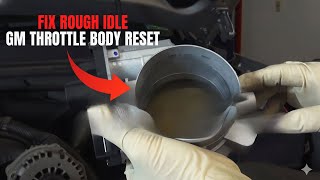
- GDS2 / Tech2: Idle Learn Reset (or Throttle/Idle Learn) — This is a mandatory procedure after replacing the throttle body. 🎬 Watch: How to manually relearn your GM throttle body It resets the learned idle and off-idle throttle positions in the ECM. Failure to perform this will result in an unstable or high idle.
- GDS2 / Tech2: Throttle Position Sweep Test — This bidirectional command allows the technician to command the throttle plate to open and close from the scan tool. It is used to verify the throttle motor's operation and to watch the TP sensor data for glitches without needing to operate the pedal, isolating the throttle body assembly for testing.
Wiring & Ground Locations
- Throttle Body Connector (X105) — The 6-pin electrical connector directly on the throttle body assembly.. This is the primary point of failure for wiring issues. Corrosion, moisture intrusion, or backed-out pins directly interrupt the sensor signals and motor control, causing P2135. Pinout: Pin A (Low Reference/Ground), Pin B (TP Sensor 2 Signal), Pin C (5V Reference), Pin D (TAC Motor Control 1), Pin E (TP Sensor 1 Signal), Pin F (TAC Motor Control 2).
- G103 — Typically located on the front of the driver's side cylinder head on the 3.6L LLT engine.. This is a major engine control ground. A loose or corroded G103 can create a floating ground, causing erratic voltage readings for multiple sensors, including the throttle position sensors, leading to a false P2135 code.
Real Owner Repair Stories
- traverseforum.com member report (2011 Chevrolet Traverse) — Check Engine Light, Reduced Engine Power message, Service Stabilitrak message, code P2135.
❌ Tried (didn't work) Cleaning the original throttle body.
✅ What actually fixed it The owner replaced the entire throttle body assembly with a new ACDelco part. After installation, they performed a manual relearn procedure (idle for 3 minutes, ignition off for 60 seconds, idle again for 3 minutes). This permanently resolved the code and all symptoms. - Professional technician forum discussion (2010 GMC Acadia (platform mate)) — Intermittent P2135, especially on humid days or after a car wash.
❌ Tried (didn't work) Replacing the throttle body assembly.
✅ What actually fixed it After the new throttle body didn't fix the issue, the technician closely re-inspected the harness connector. One of the female pins had 'backed out' slightly and was not making a secure connection. After carefully re-seating the pin in the connector housing and applying dielectric grease, the connection was secure and the code did not return. - NHTSA ODI #10730860 — An owner reported receiving messages for Traction Control Off, Service Traction Control, Service Stabilitrak, and Reduced Engine Power. A dealer confirmed code P2135 was generated due to a faulty throttle position sensor, requiring the replacement of the throttle body unit.
OEM Part Supersession History
12593591, 12607330, 12616995→12694873— Revisions to improve the reliability of the internal electronics and seals to prevent moisture/oil contamination that led to the original failures.
Model Year Variations Within This Range
- 2009-2011: According to TSB #11-06-04-007C, models from these years may require an ECM software update (reprogram) after the throttle body repair is performed to have the latest calibration for throttle control. 2012 models typically already have the updated software.
Diagnostic Flowchart
Other Known Issues on This Vehicle
Issues unrelated to this code that are worth knowing about as an owner of this generation:
- Premature Timing Chain Stretch 🔴 High — Very common, especially on 2009-2012 models. Often occurs between 70,000 and 120,000 miles. Exacerbated by extended oil change intervals. (Ref: Multiple TSBs issued (e.g., 12-06-01-009B) and a special warranty extension was offered.)
- 6T75 Transmission 3-5-R Wave Plate Failure 🔴 High — A well-documented failure on early models, typically leading to loss of 3rd, 5th, and Reverse gears and requiring a full transmission rebuild. (Ref: Special Coverage Adjustment 14404B extended warranty to 10 years/120,000 miles for this specific failure on 2009 models.)
- Power Steering Pump/Gear Failure 🟠 Medium — Common reports of power steering fluid leaks, whining noises, and intermittent loss of power assist at low speeds. (Ref: Special Coverage Adjustment 14329 extended warranty to 10 years/150,000 miles for power steering pump wear.)
- Water Pump Leak 🟠 Medium — The water pump seal is a common failure point, leading to coolant leaks. This was subject to a recall. (Ref: Recall #14030 was issued for failing water pump seals.)
- Cracked/Leaking A/C Lines 🟡 Low — The rear A/C lines are prone to corrosion and leaking, resulting in a loss of refrigerant and A/C function.
- Ignition Coil Failure 🟡 Low — Failure of one or more ignition coils is a common cause of engine misfires as the vehicle ages.
Used vs. New Parts: Buying Guide for This Vehicle
When a used part is the smart pick: Due to the extremely high failure rate of the original-design throttle bodies on this platform, purchasing a used part is strongly discouraged. The risk of receiving a part that has already failed or is near failure is very high. A used part should only be considered in an extreme budget crunch from a low-mileage, documented donor vehicle.
Donor-vehicle mileage cap: roughly under 60000 miles for the part to have meaningful remaining life.
What to inspect on the donor part:
- Check the connector pins for any signs of green or white corrosion.
- Ensure the throttle plate moves smoothly by hand without binding (if applicable).
- Look for excessive carbon buildup, which might indicate a poorly maintained engine.
- Ask for the VIN of the donor vehicle to verify its mileage and year.
Aftermarket brands forum-validated for this vehicle:
- ACDelco (OEM supplier)
- Bosch
- Delphi
Brands owners have reported issues with on this vehicle:
- Unbranded, 'white box' parts from online marketplaces should be avoided as their internal electronics may not meet the precise correlation requirements of the ECM, leading to a quick return of the P2135 code.
Real Owner Stories
Aggregated from forums and TSBs cited above. Mileages and costs reflect what owners reported in those sources.
2011 Chevrolet Traverse 3.6L V6
Symptoms: Reduced Engine Power, Stabilitrak Off, Traction Control Off messages appeared on the dash.
What fixed it: Replacing the throttle body and performing a relearn procedure resolved all symptoms.
Source hint: traverseforum.com: A thread titled 'Reduced Engine Power, Stabilitrak Off, Traction Control Off'
2009-2012 Chevrolet Traverse 3.6L V6
Symptoms: Vehicle entered limp mode due to P2135; attempts to clean the old throttle body failed to solve the problem long-term.
What fixed it: Installation of a new throttle body was the definitive fix.
Source hint: chevytalk.org: In a discussion about P2135 and limp mode
2011 Chevrolet Traverse
Symptoms: Traction control off, service traction control, service stabilitrack, and reduced engine power messages. A diagnostic scan confirmed code P2135.
What fixed it: According to NHTSA ODI #10730860, the throttle body unit was replaced to resolve the faulty throttle position sensor code.
Source hint: NHTSA ODI #10730860
Related OBD-II Codes
Frequently Asked Questions
Is there a special warranty extension for the throttle position sensor on my 2010 Chevrolet Traverse?
Does TSB #11-06-04-007C mean I have to replace the entire throttle body?
I replaced the throttle body on my 2011 Traverse but the idle is unstable. Did I get a bad part?
Why does my dash say 'Service Traction Control' when the P2135 code is for the throttle?
Can I use a used throttle body from a salvage yard to fix my P2135 code?
Are there any aftermarket throttle bodies that address the moisture issues mentioned in the GM bulletins?
Helpful Videos
We Have This Part in Stock

The information in this article is provided for general reference and educational purposes only. Vehicle specifications, procedures, and part compatibility can vary by production date, trim level, and region. Always consult your vehicle's factory service manual and verify part numbers before purchasing or performing repairs. Safety-critical components such as airbags, seat belts, and braking systems should be installed by a qualified professional.
- Chevrolet Traverse:
- 🧭 Diagnostic Flowchart
- 🎬 Helpful Videos
- 🛍️ Shop This Part
- What's Unique About the 2009-2012 Chevrolet Traverse
- Symptoms You May Notice
- Most Likely Causes
- Rare But Worth Checking
- Diagnosis Steps
- Parts You'll Likely Need
- Related Codes That Often Appear With This One
- Technical Service Bulletins (TSBs) & Recalls
- Platform-Specific Known Issues
- Mechanic-Grade Diagnostic Values
- Scan Tool Commands That Help
- Wiring & Ground Locations
- Real Owner Repair Stories
- OEM Part Supersession History
- Model Year Variations Within This Range
- Other Known Issues on This Vehicle
- Used vs. New Parts: Buying Guide for This Vehicle
- Real Owner Stories
- 2011 Chevrolet Traverse 3.6L V6
- 2009-2012 Chevrolet Traverse 3.6L V6
- 2011 Chevrolet Traverse
- Related OBD-II Codes
- Frequently Asked Questions
- 🎟️ Get 5% Off