

P2135 on 2006-2009 Chevrolet Uplander: Throttle Position Sensor Causes and Fixes
On a 2006-2009 Uplander, code P2135 is almost always caused by a failing electronic throttle body. This triggers the 'Reduced Engine Power' message and makes the van dangerously slow. The most reliable fix is to replace the entire throttle body assembly, which costs between $150 and $400 for the part. After replacement, a throttle relearn procedure is often necessary to correct the idle speed.
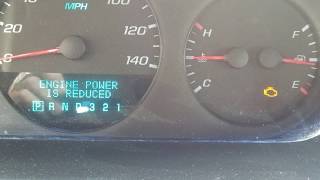
- P2135 on your Uplander will put the van into 'Reduced Engine Power' mode as a safety precaution.
- The most likely cause by far is a failed electronic throttle body assembly.
- Diagnosis involves using a scan tool to watch the two throttle position sensor signals; if one is erratic, the throttle body is bad.
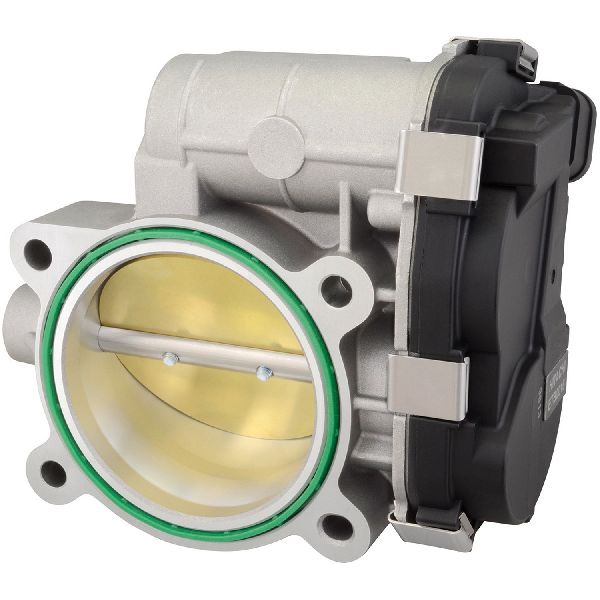
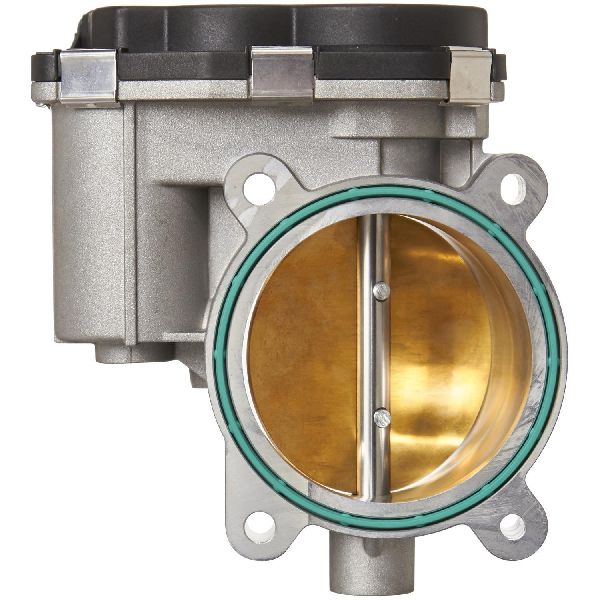
- The most reliable repair is to replace the entire throttle body and its gasket, not just attempt to clean it.
- After replacement, a throttle relearn procedure might be needed to correct a high idle.
What's Unique About the 2006-2009 Chevrolet Uplander
This generation of GM vehicles, including the Uplander and its platform-mates (Buick Terraza, Pontiac Montana SV6, Saturn Relay), is well-known for issues with the electronic throttle body. The internal sensors are a common failure point, making P2135 a frequent code for these vans. For some 2008-2009 models, GM issued a Special Coverage Adjustment (No. 15288), extending the warranty on the throttle body to 10 years or 120,000 miles due to the high failure rate. While this coverage has likely expired for all vehicles, it highlights the prevalence of this specific problem. A similar TSB for other GM vehicles, #11-06-04-007C, also addresses this exact code.
Symptoms You May Notice
- "Reduced Engine Power" message on the dashboard
- Check Engine Light is on
- Vehicle has very little acceleration and feels sluggish
- Hesitation or surging when pressing the gas pedal
- Rough or unstable idle
- Engine may stall when coming to a stop
- Engine revs higher than normal without throttle input
- Replacing only the Accelerator Pedal Position (APP) sensor. While the APP sensor can fail, P2135 on this vehicle points much more strongly to the throttle body on the engine.
- Cleaning the throttle body. While a dirty throttle body can cause idle issues, it will not fix the internal electronic sensor failure that triggers a P2135 correlation fault.
Most Likely Causes
- Faulty Throttle Body Assembly 🔴 High Probability → Shop Fuel Injection Throttle Body The integrated electronic throttle position sensors in the original throttle bodies on this GM platform have a high failure rate due to wear on the internal contacts and electronics.
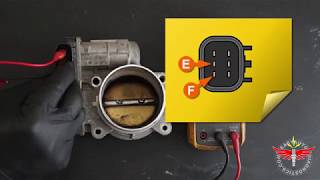
How to confirm: Use a scan tool to monitor the live data for TP Sensor 1 and TP Sensor 2. As you slowly press the accelerator pedal, the voltage readings should change smoothly and correlate (often in an opposite, mirrored pattern). A sudden drop, spike, or freeze in one of the sensor readings indicates a faulty throttle body. 🎬 Watch: How to test the electronic throttle body on GM vehicles
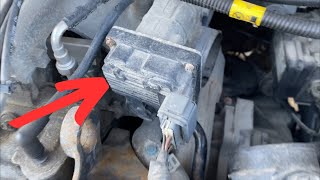
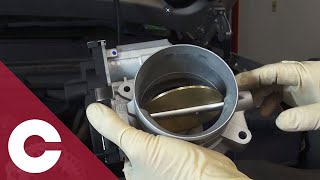
Typical fix: Replace the entire throttle body assembly. While cleaning a dirty throttle body can solve some idle issues, it will not fix the internal electronic sensor failure that causes P2135. Aftermarket assemblies are widely available and are often more cost-effective than OEM parts. 🎬 See this step-by-step Uplander throttle body replacement walkthrough
Est. part cost: $150-$400 - Wiring or Connector Issue 🟡 Medium Probability Engine vibration and heat can cause the wiring or pins in the connector at the throttle body to become loose or corroded over time. Fretting corrosion on the terminal pins is a known issue that can cause intermittent signal loss.
How to confirm: With the key on and a scan tool graphing the TP sensor data, wiggle the wiring harness and connector at the throttle body. If the voltage readings spike or drop out, the issue is in the wiring or connector. Visually inspect the connector pins for green or white corrosion or signs of pushed-out terminals.
Typical fix: Repair the damaged wiring or replace the connector pigtail. The GM pigtail part number is often PT2628. Ensure the connector is clean and makes a secure connection. Applying a small amount of dielectric grease can help prevent future corrosion.
Est. part cost: $20-$50
Rare But Worth Checking
- Faulty Accelerator Pedal Position (APP) Sensor: → Shop Accelerator Pedal Assembly While P2135 typically points to the throttle body, a faulty accelerator pedal sensor can sometimes cause similar correlation issues. This is more likely if other pedal-specific codes, like P2138, are also present.
- Powertrain Control Module (PCM) Fault: → Shop Engine Control Module (ECM) In very rare cases, the PCM itself can be the source of the problem, misinterpreting the sensor signals. This should only be considered after all other possibilities, including wiring and grounds, have been thoroughly ruled out.
Diagnosis Steps
- Connect an OBD-II scanner and confirm that P2135 is the primary code present.
- Access the live data stream on the scanner. Graph the outputs for 'TP Sensor 1' and 'TP Sensor 2'.
- With the key on and engine off, slowly press and release the accelerator pedal. Watch the graphs. The two sensor signals should move in a smooth, mirrored pattern. Any glitches, spikes, or flat spots on one of the lines indicate a sensor failure, almost always within the throttle body assembly.
- If the sensor data looks erratic, visually inspect the throttle body connector and wiring harness for any signs of damage, corrosion, or loose pins. Pay close attention to the female terminals inside the connector pigtail, as they can corrode or spread, causing a poor connection.
- While watching the live data, gently wiggle the connector and harness at the throttle body to see if it causes the signal to drop out. This is known as a 'wiggle test'.
- If the wiring and connector are good and the sensor data is faulty, the throttle body assembly needs to be replaced.
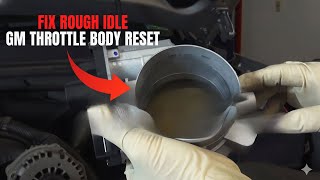
- After replacement, a throttle relearn procedure is necessary if the idle is high or unstable. This can often be done without a scan tool by starting the engine, letting it idle for 3 minutes, turning it off for 1 minute, restarting and idling for another 3 minutes. A short drive may also complete the process. 🎬 Watch: How to manually reset and relearn your GM throttle body
Parts You'll Likely Need
- Fuel Injection Throttle Body
(OEM #12609500)— This is the most common cause of P2135, as the internal throttle position sensors fail. The sensors are integrated into the assembly and are not typically replaced separately.
Trusted brands: ACDelco (OEM P/N may be 217-3153), Hitachi, Standard Motor Products, Dorman
OEM price range: $250-$400
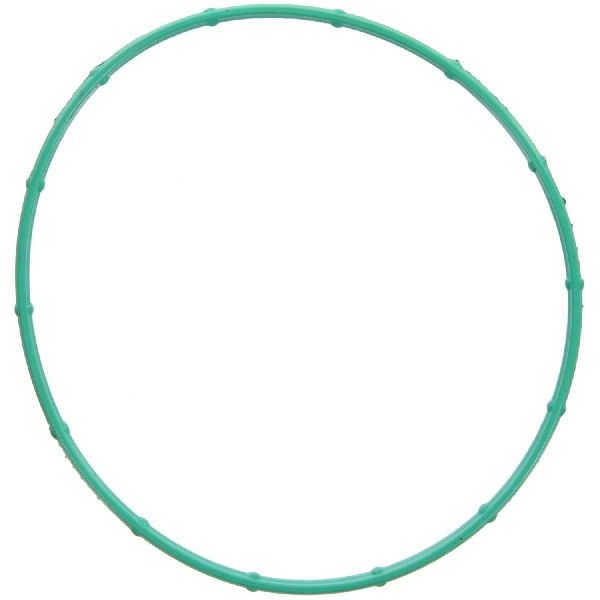
Aftermarket price range: $150-$250 - Throttle Body Gasket
(OEM #12608969)— The gasket should always be replaced when the throttle body is removed to prevent vacuum leaks.
Trusted brands: ACDelco, Fel-Pro
OEM price range: $10-$20
Aftermarket price range: $5-$15 - Throttle Body Connector Pigtail
(OEM #ACDelco PT2628)— If the 'wiggle test' confirms a bad connection or if corrosion is visible, replacing the connector is necessary to ensure a reliable repair.
Trusted brands: ACDelco, Dorman
OEM price range: $30-$50
Aftermarket price range: $20-$40
Related Codes That Often Appear With This One
- P1516 - Throttle Actuator Control (TAC) Module Throttle Actuator Position Performance
- P2101 - Throttle Actuator Control Motor Circuit Range/Performance
Technical Service Bulletins (TSBs) & Recalls
- TSB #11-06-04-007C: 'Diagnosis and Repair - Malfunction Indicator Lamp (MIL) Illuminated, Reduced Engine Power Message Displayed, DTC P2135 Set'. Provides a procedure for replacing the throttle position sensor cover and terminals instead of the entire throttle body.
- Special Coverage Adjustment #15288: Extended the original factory warranty on the throttle body assembly to 10 years or 120,000 miles for certain 2008-2009 models due to a high failure rate.
Platform-Specific Known Issues
- GM issued Special Coverage Adjustment #15288 for some 2008-2009 models, which extended the warranty for this specific throttle body failure to 10 years/120,000 miles. This program has now expired due to age.
- A GM Technical Service Bulletin (TSB #11-06-04-007C) exists for other models with similar engines, sometimes recommending a sensor repair kit (P/N 19259452) instead of a full throttle body replacement. However, for long-term reliability, most technicians and owners recommend replacing the complete assembly, as the sensor-only fix is often not a permanent solution.
Mechanic-Grade Diagnostic Values
- Throttle Actuator Control (TAC) Motor Resistance — expected: 2 to 15 Ohms. Failure: A reading of less than 1 Ohm (short circuit) or an over-limit/infinite reading (open circuit).
- TPS1 Resistance Sweep (between terminals D and E) — expected: Resistance should increase smoothly as the throttle plate is opened and decrease smoothly as it is closed.. Failure: Resistance value stays stuck, or there are gaps/jumps in the reading as the throttle plate is moved.
- TPS2 Resistance Sweep (between terminals E and F) — expected: Resistance should decrease smoothly as the throttle plate is opened and increase smoothly as it is closed (opposite of TPS1).. Failure: Resistance value stays stuck, or there are gaps/jumps in the reading as the throttle plate is moved.
- 5V Reference at Throttle Body Connector — expected: ~5.0V on the Gray wire with key on, engine off.. Failure: Low or no voltage, indicating a problem with the ECM or the wiring between the ECM and the throttle body.
Scan Tool Commands That Help
- Tech2 / GDS2: Freeze Frame / Failure Records — For intermittent P2135 faults, viewing the freeze frame data is critical. It provides a snapshot of all sensor values, including the conflicting TP1 and TP2 percentages or voltages, at the exact moment the fault was logged.
- Tech2 / GDS2: Idle Learn Reset / Throttle Learn — This function is mandatory after replacing the throttle body assembly to reset learned values and allow the ECM to calibrate to the new sensor's electronic range. Failure to perform this can cause the P2135 code to persist or result in an unstable idle.
Wiring & Ground Locations
- Throttle Body Connector (X105) — The 6-pin electrical connector on the electronic throttle body assembly.. This is the primary connection point for the dual throttle position sensors and the throttle actuator motor. Testing for 5V reference, ground, and signal voltages at this connector is critical for diagnosing a faulty throttle body versus a wiring issue.
- G105 / G106 — G105 is located on a transmission stud on the left rear side of the engine compartment. G106 is on the left side of the engine for the 3.9L.. These are primary grounds for the Engine Control Module (ECM). A loose or corroded connection at these points can cause erratic voltage, leading to incorrect sensor readings and unpredictable behavior that can mimic a faulty throttle body or other sensor failures.
OEM Part Supersession History
12577029→12609500— Standard part update and consolidation by the manufacturer.
Model Year Variations Within This Range
- 2006: The 3.9L LZ9 V6 engine was optional for 2006, with the 3.5L LX9 V6 being the standard engine.
- 2007-2009: The 3.9L LZ9 V6 engine became the standard and only engine for the Uplander starting in the 2007 model year. Consequently, the all-wheel-drive system was dropped as it could not handle the torque of the 3.9L engine.
Diagnostic Flowchart
Other Known Issues on This Vehicle
Issues unrelated to this code that are worth knowing about as an owner of this generation:
- Power Steering Pump Whine / Hose Leaks 🟠 Medium — Very common. Whining noise from the pump is a frequent complaint, and high-pressure hoses are prone to leaking fluid.
- 4T65-E Transmission Problems 🔴 High — The 4T65-E transmission can suffer from issues like harsh shifting, delayed engagement, or failure of the pressure control solenoid (PCS). In severe cases, internal components like the input sprag can fail, leading to a no-move condition. (Ref: A TSB (#08-07-30-040B) exists for harsh engagement issues on other vehicles with this transmission.)
- Intake Manifold Gasket Leaks 🟠 Medium — While GM improved the gasket design for the 3.9L LZ9 engine to be more robust than earlier V6s, external oil and coolant leaks can still occur. The 3.9L uses a 'dry' intake, making it less prone to internal coolant leaks that plagued the 3.5L engine.
- Wheel Hub / ABS Sensor Failure 🟠 Medium — The front wheel hub bearing assemblies, which contain the ABS wheel speed sensors, are a common wear item that can fail, causing an ABS or traction control light to illuminate.
- Variable Valve Timing (VVT) Solenoid Failure 🟡 Low — Failure of the VVT solenoid can cause a check engine light, poor fuel economy, and diminished engine performance. This is often caused by dirty oil clogging the solenoid's screens.
Used vs. New Parts: Buying Guide for This Vehicle
When a used part is the smart pick: Due to the extremely high failure rate of the electronic sensors within the throttle body for this specific vehicle platform, purchasing a used part from a junkyard is strongly discouraged. The risk of the used part failing shortly after installation is very high, making it a poor value despite the lower initial cost.
Donor-vehicle mileage cap: roughly under 80000 miles for the part to have meaningful remaining life.
What to inspect on the donor part:
- Verify the part number matches the original or superseded OEM number.
- Inspect the electrical connector pins for any signs of corrosion, bending, or damage.
- Check the throttle plate for freedom of movement and ensure it is not seized or binding.
- If possible, ask for the mileage of the donor vehicle; lower is always better.
Aftermarket brands forum-validated for this vehicle:
- ACDelco (Original Equipment)
- Hitachi
- Standard Motor Products (SMP)
- Dorman
Brands owners have reported issues with on this vehicle:
- No-name, unbranded parts sold on online marketplaces should be avoided due to inconsistent quality control.
Real Owner Stories
Aggregated from forums and TSBs cited above. Mileages and costs reflect what owners reported in those sources.
2004 GMC Yukon Denali
Symptoms: Frustrating experience with a recurring P2135 code despite replacing multiple parts.
What fixed it: Checking the pigtail for corrosion or pulled-out female terminals; the user highlighted the importance of diagnosing wiring and connector issues.
Source hint: Tahoe Yukon Forum - 'Throttle fault code P2135'
2008-2009 Chevrolet Uplander 3.9L — ~120000 miles
Symptoms: Malfunction Indicator Lamp (MIL) illuminated and 'Reduced Engine Power' message displayed on the dashboard.
What fixed it: Replacement of the throttle position sensor cover and terminals as per the TSB procedure, or replacement of the entire throttle body assembly.
Source hint: TSB #11-06-04-007C
2006-2009 Chevrolet Uplander
Symptoms: The 'Reduced Engine Power' message is a primary symptom for owners of this vehicle.
What fixed it: Replacing the throttle position sensor or the full throttle body and performing a throttle relearn procedure.
Source hint: Chevrolet Forum - Chevy Enthusiasts Forums
Related OBD-II Codes
Frequently Asked Questions
Is there a warranty extension for the throttle body on my 2008 Chevrolet Uplander?
Can I just replace the sensor instead of the whole throttle body on my 3.9L LZ9 engine?
My Uplander shows 'Reduced Engine Power' and P2135; will cleaning the throttle body fix it?
What is the specific pigtail part number if my throttle body connector is corroded?
Does the Buick Terraza or Saturn Relay have this same P2135 throttle issue?
How do I perform a throttle relearn on my Uplander after replacing the part?
Helpful Videos
We Have This Part in Stock



The information in this article is provided for general reference and educational purposes only. Vehicle specifications, procedures, and part compatibility can vary by production date, trim level, and region. Always consult your vehicle's factory service manual and verify part numbers before purchasing or performing repairs. Safety-critical components such as airbags, seat belts, and braking systems should be installed by a qualified professional.
- Chevrolet Uplander:
- 🧭 Diagnostic Flowchart
- 🎬 Helpful Videos
- 🛍️ Shop This Part
- What's Unique About the 2006-2009 Chevrolet Uplander
- Symptoms You May Notice
- Most Likely Causes
- Rare But Worth Checking
- Diagnosis Steps
- Parts You'll Likely Need
- Related Codes That Often Appear With This One
- Technical Service Bulletins (TSBs) & Recalls
- Platform-Specific Known Issues
- Mechanic-Grade Diagnostic Values
- Scan Tool Commands That Help
- Wiring & Ground Locations
- OEM Part Supersession History
- Model Year Variations Within This Range
- Other Known Issues on This Vehicle
- Used vs. New Parts: Buying Guide for This Vehicle
- Real Owner Stories
- 2004 GMC Yukon Denali
- 2008-2009 Chevrolet Uplander 3.9L — ~120000 miles
- 2006-2009 Chevrolet Uplander
- Related OBD-II Codes
- Frequently Asked Questions
- 🎟️ Get 5% Off