

P2135 on 2015-2017 Chrysler 200 2.4L: Throttle Body Failure Causes and Fixes
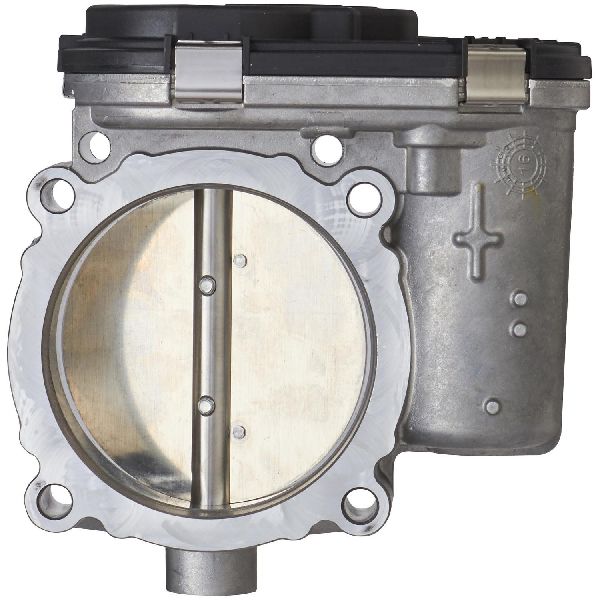
For a 2015-2017 Chrysler 200 with the 2.4L engine, code P2135 almost always means the entire electronic throttle body has failed. The fix is to replace the complete assembly, which costs about $365 for an OEM part and $100-$160 for labor. This is a very common failure on the 2.4L MultiAir 'Tigershark' engine family.
- P2135 on your Chrysler 200 almost certainly means you need a new throttle body.
- The vehicle will go into a dangerous 'limp mode' with very little power; do not continue to drive it.
- The repair involves replacing the entire throttle body assembly; the sensors inside cannot be replaced separately.
- After installing the new part, a throttle relearn procedure is required.
What's Unique About the 2015-2017 Chrysler 200
The 2.4L MultiAir 'Tigershark' engine, used across several Chrysler, Dodge, and Jeep models, has a well-documented history of electronic throttle body failures leading to this specific code. The issue is not the mechanical part of the throttle body, but the integrated electronic sensors which fail internally. Because these sensors are not sold separately, the entire throttle body assembly must be replaced, making this a common and specific repair for these vehicles.
Symptoms You May Notice
- Check Engine Light is on
- Flashing Electronic Throttle Control (ETC) 'lightning bolt' warning light on the dashboard
- Vehicle enters 'limp mode,' with severely reduced engine power and inability to accelerate
- Hesitation or surging during acceleration
- Unstable idle or stalling
- No throttle response or a 'dead' pedal feel
- Engine revs on its own without the pedal being pressed
- Replacing the accelerator pedal position (APP) sensor. While a faulty APP sensor can cause similar symptoms, the P2135 code specifically points to a correlation error between the two sensors within the throttle body itself, not the pedal. A pedal issue would more commonly set a P2138 code.
- Cleaning a dirty throttle body. While cleaning a carbon-fouled throttle body is good maintenance and can solve idle issues, it will not fix the internal electronic failure of the sensors that causes code P2135.
Most Likely Causes
- Faulty Electronic Throttle Body Assembly 🔴 High Probability → Shop Fuel Injection Throttle Body The integrated throttle position sensors (TPS) are known to fail electronically on this platform. The sensors are not serviceable separately from the throttle body assembly. This is a widespread issue across all vehicles using the 2.4L Tigershark engine.
How to confirm: Using a scan tool with live data, observe the two throttle position sensor voltage readings (TPS1 and TPS2) while an assistant slowly presses and releases the accelerator pedal. If one signal is erratic, stuck, or does not move in correlation with the other, the throttle body has failed internally.
Typical fix: Replace the entire electronic throttle body assembly. After replacement, a throttle relearn procedure must be performed, which often can be completed without special tools by following a specific drive cycle.
Est. part cost: $100-$365
Rare But Worth Checking
- Wiring Harness or Connector Issue: Before replacing the throttle body, always inspect the 6-pin wiring harness and the connector at the throttle body for any signs of damage, corrosion, or pushed-out pins. A wiggle test on the harness while watching live sensor data can sometimes reveal an intermittent connection issue.
- Powertrain Control Module (PCM) Failure: → Shop Engine Control Module (ECM) This is extremely rare. The PCM should only be considered as a potential cause after the throttle body and all related wiring have been thoroughly tested and confirmed to be in good working order.
Diagnosis Steps
- Connect an OBD-II scanner and confirm P2135 is present. Check for any other related codes like P0123 or P0222, which strongly point to the throttle body.
- Using the scanner's live data function, monitor the voltage or percentage of 'TPS1' and 'TPS2'.
- With the key on and engine off, have an assistant slowly press the accelerator pedal to the floor and slowly release it. Both sensor readings should change smoothly and in a correlated manner (one may be a mirror or a scaled version of the other, but they must move together).
- If one sensor's reading jumps, drops out, or stays flat while the other moves correctly, the throttle body assembly is faulty and needs replacement.
- If the sensor readings seem normal, perform a 'wiggle test'. While watching the live data, gently wiggle the wiring harness and connector at the throttle body. If the readings fluctuate wildly, you have a wiring problem.
- Visually inspect the throttle body connector pins for corrosion, moisture, or damage.
- If the throttle body and wiring are confirmed to be good, the issue may be with the PCM, but this is highly unlikely.
Parts You'll Likely Need
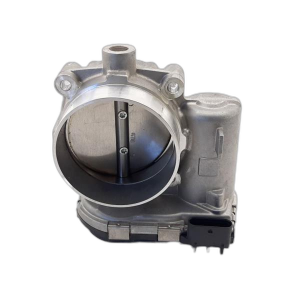
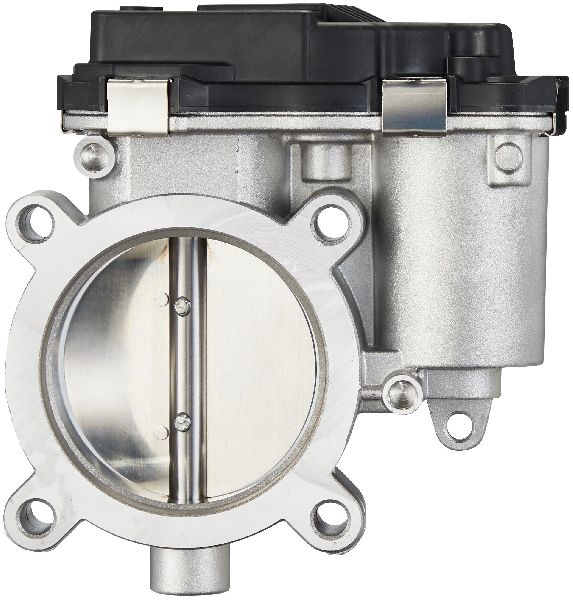
- Electronic Throttle Body Assembly
(OEM #4891970AD)— This is the most common cause of P2135 on this vehicle, as the internal sensors fail and are not sold separately. The original part number 4891970AB has been superseded by 4891970AC and then 4891970AD. Always verify fitment with the vehicle's VIN.
Trusted brands: Mopar, Bosch, Standard Motor Products (SMP), Spectra Premium
OEM price range: $250-$365
Aftermarket price range: $95-$180
Related Codes That Often Appear With This One
- P0123 — Stands for 'Throttle/Pedal Position Sensor/Switch A Circuit High', indicating a specific fault in one of the sensors that can trigger the P2135 correlation error. Seeing P0123 and P0222 together is a very strong indicator of throttle body failure.
- P0222 — Stands for 'Throttle/Pedal Position Sensor/Switch B Circuit Low', indicating a specific fault in the other sensor that can lead to the P2135 correlation error.
- P2110 — Stands for 'Electronic Throttle Control System - Forced Limited RPM'. This is not a cause, but a result. The PCM sets this code when it forces the engine into 'limp mode' because of the fault detected in P2135.
Technical Service Bulletins (TSBs) & Recalls
- While no TSB directly addresses the P2135 code by name for the Chrysler 200, several TSBs exist for powertrain and transmission software updates that can affect throttle response and diagnostics. For example, TSB 18-023-16 REV.C involves reprogramming the PCM for 'Powertrain Diagnostic and System Improvements' on 2.4L models. It is always wise to ensure the vehicle's software is up to date.
Platform-Specific Known Issues
- Owner Experience: Intermittent Limp Mode: An owner of a 2014 Chrysler 200 with 44,000 miles reported recurrent P2135 and P0121 codes, causing limp mode. Replacing the throttle body fixed the issue for about 9 months and 20,000 miles before the problem returned, suggesting that even replacement parts can fail.
- DIY Repair Success: A YouTube video by 'World Mechanics' demonstrates the successful replacement of the throttle body on a 2015 Dodge Dart with the same 2.4L engine to fix codes P0123, P0222, and P2135. After replacing the part and clearing the codes, the engine revved normally, confirming the fix.
Mechanic-Grade Diagnostic Values
- 5-Volt Reference at Throttle Body Connector — expected: 4.5V to 5.2V DC with Key On, Engine Off (KOEO).. Failure: Voltage significantly below 4.5V points to a wiring issue or a PCM fault.
- Sensor Ground Circuit Resistance — expected: Less than 5.0 ohms of resistance between the ground pin at the connector and a known good chassis ground.. Failure: High or infinite resistance (OL) indicates a bad ground connection for the sensor circuit.
- TPS1 and TPS2 Voltage Correlation — expected: The sum of the voltages from TPS1 and TPS2 should remain constant at approximately 5.0V as the throttle is opened and closed.. Failure: If the sum deviates or one sensor's reading is erratic, stuck, or does not move, the sensor assembly is faulty.
- Throttle Body Motor Circuit Resistance — expected: Between 2.5 and 25 Ohms when measured between the two motor control pins on the throttle body itself.. Failure: An 'open' or infinite resistance reading (OL) indicates a failed internal motor.
Scan Tool Commands That Help
- wiTECH (OEM) or advanced aftermarket scanner: Electronic Throttle Control (ETC) Relearn / Throttle Follower Test — This function is used after replacing the throttle body to calibrate the new part to the PCM. It can also be used during diagnosis to command the throttle plate to move and verify if the motor and sensors are responding correctly. Failure to respond to the command points to a faulty throttle body or wiring.
Wiring & Ground Locations
- Throttle Body 6-Pin Connector — Plugged directly into the electronic throttle body assembly on the driver's side of the intake manifold.. This is the single point of connection for all power, ground, and sensor signals. The pinout for the 2.4L Tigershark is: Pin 1: ETC Motor (-), Pin 2: TP Sensor 2 Signal, Pin 3: 5V Supply, Pin 4: Sensor Ground, Pin 5: TP Sensor 1 Signal, Pin 6: ETC Motor (+). All voltage and resistance tests are performed at these pins.
- G101 / G103 — Typically located at the rear of the cylinder head on the 2.4L engine.. These are primary engine ground points. A loose or corroded ground here can cause erratic behavior and incorrect voltage readings from engine sensors, including the throttle position sensors, potentially mimicking a P2135 fault.
- Transmission Mount Ground — A ground wire is often attached to a bolt on the transmission mount.. Some owners have found that adding an additional ground wire from the battery negative terminal to a solid chassis or transmission mount point can resolve various electrical issues, including no-start problems that can be related to poor grounding affecting the entire powertrain control system.
Real Owner Repair Stories
- YouTube channel 'BestCarFixes' (2015 Chrysler 200) — Check engine light with codes P2135, P0123, P0222.
❌ Tried (didn't work) Replacing the electronic throttle body with a new part., Clearing the codes with a scan tool.
✅ What actually fixed it The codes immediately returned after replacement, indicating the new part was not the fix. The mechanic concluded that further diagnosis was required to check for a fault in the wiring harness between the throttle body and the PCM, or a rare internal failure of the PCM itself.
When the Usual Fixes Don't Work
- While replacing the throttle body is the fix in over 90% of cases, there are documented instances where this does not resolve the code. In one case, a mechanic replaced the throttle body on a 2015 Chrysler 200, but codes P2135, P0123, and P0222 returned immediately upon starting the engine. This proves that in a minority of cases, the fault lies further upstream in the wiring harness (e.g., a short or open between the connector and the PCM) or, in very rare circumstances, is caused by a failed driver circuit within the Powertrain Control Module (PCM) itself. Therefore, if a new throttle body does not fix the issue, the next diagnostic step is a pin-by-pin continuity and resistance check of the wiring harness.
OEM Part Supersession History
4891970AB, 4891970AC→4891970AD— OEM part revisions to improve reliability and address known failure modes of the internal electronics.
Heads up: The newest part number (4891970AD) is the correct service replacement for all previous versions on the 2015-2017 2.4L MultiAir engine.
Model Year Variations Within This Range
- 2015-2017: The 2015-2017 Chrysler 200 uses the 2.4L 'Tigershark' MultiAir engine with throttle body P/N 4891970AD. This is distinct from the first-generation (2011-2014) model, which used the 2.4L 'World Engine' and a different throttle body (P/N 4891735AD). The parts are not interchangeable.
Diagnostic Flowchart
Other Known Issues on This Vehicle
Issues unrelated to this code that are worth knowing about as an owner of this generation:
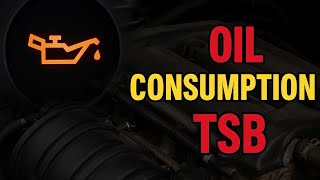
- Excessive Oil Consumption (2.4L Tigershark Engine) 🔴 High — Widespread issue affecting many 2015-2017 models. Owners report consuming a quart of oil in as little as 1,000 miles. The problem may stem from piston rings that don't seal properly. (Ref: TSB 09-003-23 (NHTSA ID 10231800) was issued for an oil consumption test and a warranty extension (XB1) for some vehicles, potentially leading to engine replacement.)
- Harsh Shifting / Transmission Failure (ZF 9-Speed) 🔴 High — Very common complaint for 2015 models. Symptoms include lurching, hard shifts, and unexpectedly shifting into neutral while driving. (Ref: Multiple recalls (e.g., NHTSA 16V-529) and TSBs (e.g., 21-013-16, 21-025-19) were issued for software updates, harness connector repairs, and a warranty extension to address these problems.)
- Engine Stalling While Driving 🔴 High — Frequently reported problem where the engine shuts off without warning, often related to low oil levels from the consumption issue or electronic faults.
- Random Deployment of Active Head Restraints (AHR) 🟠 Medium — The active head restraints can deploy without a collision, causing a sudden impact to the back of the occupant's head. This is due to a defect in the plastic brackets. (Ref: A class-action lawsuit was filed regarding this issue, but no specific recall has been issued for the Chrysler 200.)
Used vs. New Parts: Buying Guide for This Vehicle
When a used part is the smart pick: A used OEM throttle body can be a cost-effective option, but it is a significant gamble. Given the high electronic failure rate of this specific part, a used unit may have limited life remaining. It should only be considered if it comes from a very low-mileage donor vehicle and has a warranty from the seller. A high-quality used OEM part may be preferable to a new, unbranded, low-cost aftermarket part.
Donor-vehicle mileage cap: roughly under 50000 miles for the part to have meaningful remaining life.
What to inspect on the donor part:
- Verify the part number is 4891970AC or 4891970AD.
- Inspect the 6-pin connector for any signs of corrosion, bent pins, or damage to the plastic housing.
- Ensure the throttle plate moves freely by hand (with the unit unpowered) and doesn't show excessive carbon buildup or scoring on the bore.
- Ask for the VIN of the donor car to verify it's from a 2015-2017 2.4L model.
Aftermarket brands forum-validated for this vehicle:
- Dorman OE FIX (claims to have upgraded non-contact Hall effect sensors and improved seals to prevent common failures).
- Standard Motor Products (SMP)
- Bosch
- SKP
Brands owners have reported issues with on this vehicle:
- Unbranded, no-name parts sold on marketplaces without a warranty or clear return policy should be avoided due to the electronic complexity and high failure rate of this component.
Real Owner Stories
Aggregated from forums and TSBs cited above. Mileages and costs reflect what owners reported in those sources.
2014 Chrysler 200 2.4L — 44000 miles
Symptoms: Recurrent P2135 and P0121 codes, causing the vehicle to enter limp mode.
What fixed it: Replacing the throttle body fixed the issue for about 9 months and 20,000 miles before the problem returned.
Source hint: Vehicle-specific issues section: 'Owner Experience: Intermittent Limp Mode'
2016 Chrysler 200 2.4L
Symptoms: Vehicle experienced a no-start condition along with throttle-related fault codes.
What fixed it: Changing the Electronic Throttle Body.
Source hint: Owner_reports: YouTube: FIXING My 2016 Chrysler 200 No Start - [Changing My Electronic Throttle Body]
2015 Dodge Dart 2.4L
Symptoms: Engine light on, codes P0123, P0222, and P2135 present; engine would not rev normally.
What fixed it: Replacement of the electronic throttle body and clearing the codes.
Source hint: Vehicle-specific issues: 'DIY Repair Success' (World Mechanics YouTube)
Related OBD-II Codes
Frequently Asked Questions
Does TSB 18-023-16 REV.C apply to my 2015 Chrysler 200 2.4L regarding throttle issues?
Can I replace just the sensors on my Chrysler 200's throttle body to fix P2135?
Is there a specific procedure I need to follow after replacing the throttle body on my 2.4L Tigershark engine?
My Chrysler 200 is stalling and has a P2135 code; could this be related to the oil consumption TSB?
Are there other Chrysler or Jeep vehicles that have this same P2135 throttle body failure?
Helpful Videos
Used OEM Parts in Stock
New Aftermarket Parts Available


The information in this article is provided for general reference and educational purposes only. Vehicle specifications, procedures, and part compatibility can vary by production date, trim level, and region. Always consult your vehicle's factory service manual and verify part numbers before purchasing or performing repairs. Safety-critical components such as airbags, seat belts, and braking systems should be installed by a qualified professional.
- Chrysler 200:
- 🧭 Diagnostic Flowchart
- 🎬 Helpful Videos
- 🛍️ Shop This Part
- What's Unique About the 2015-2017 Chrysler 200
- Symptoms You May Notice
- Most Likely Causes
- Rare But Worth Checking
- Diagnosis Steps
- Parts You'll Likely Need
- Related Codes That Often Appear With This One
- Technical Service Bulletins (TSBs) & Recalls
- Platform-Specific Known Issues
- Mechanic-Grade Diagnostic Values
- Scan Tool Commands That Help
- Wiring & Ground Locations
- Real Owner Repair Stories
- When the Usual Fixes Don't Work
- OEM Part Supersession History
- Model Year Variations Within This Range
- Other Known Issues on This Vehicle
- Used vs. New Parts: Buying Guide for This Vehicle
- Real Owner Stories
- 2014 Chrysler 200 2.4L — 44000 miles
- 2016 Chrysler 200 2.4L
- 2015 Dodge Dart 2.4L
- Related OBD-II Codes
- Frequently Asked Questions
- 🎟️ Get 5% Off