

P2135 on 2013-2016 Dodge Dart 2.4L: Throttle Position Sensor Correlation Fault Explained
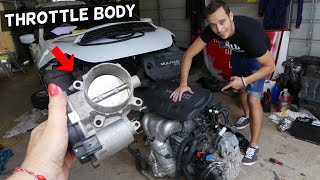
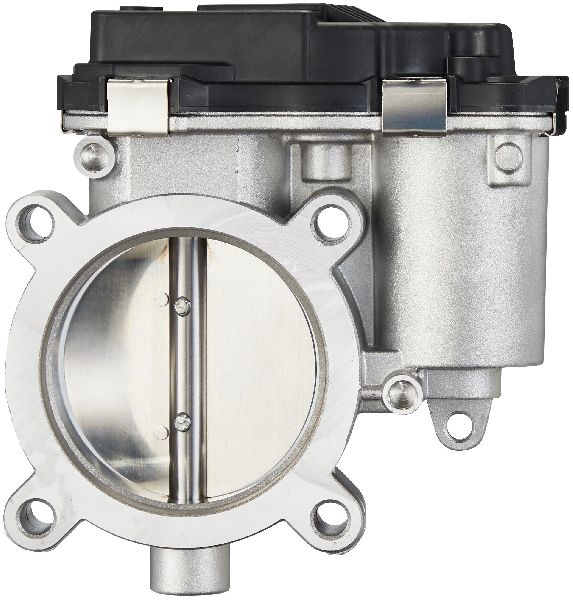
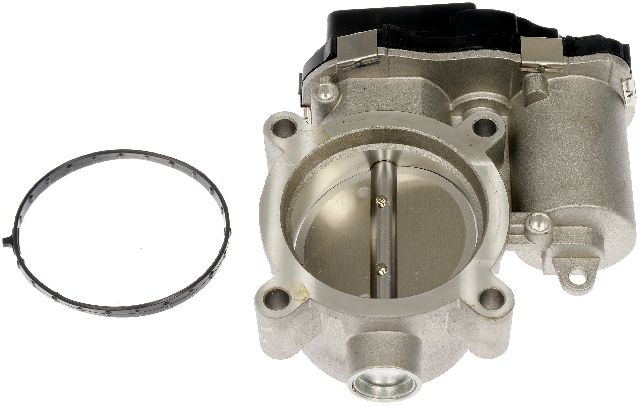
This code almost always indicates a failed electronic throttle body assembly. The internal sensors are not sold separately, so the entire unit must be replaced. Expect to pay around $150-$300 for a new throttle body, and a throttle relearn procedure is required after installation. This is a very common failure on the 2.4L MultiAir engine shared across Dodge, Jeep, and Chrysler models.
- P2135 on a 2013-2016 Dodge Dart 2.4L almost always means the electronic throttle body has failed.
- The throttle position sensors are built into the throttle body; you must replace the entire assembly.
- Do not waste time cleaning the throttle body to fix this specific electronic fault code.
- After replacing the part, a throttle relearn procedure is mandatory for the engine to idle and run correctly.
- This is a DIY-friendly repair for those with basic tools, typically taking less than an hour.
What's Unique About the 2013-2016 Dodge Dart
The 2.4L MultiAir (Tigershark) engine, used across several Dodge, Jeep, and Chrysler vehicles, is known for this specific issue. The dual throttle position sensors are integrated directly into the electronic throttle body and are not available as separate replacement parts. This design means that a failure of one of the internal sensors, which is the most common cause of P2135, necessitates the replacement of the entire throttle body assembly. Cleaning the throttle body will not fix this internal electronic fault.
Symptoms You May Notice
- Check Engine Light is on
- Electronic Throttle Control (ETC) or 'lightning bolt' warning light is illuminated
- Vehicle enters 'limp mode' with severely reduced engine power
- Hesitation or stumbling during acceleration
- Poor or no throttle response
- Unstable or rough idle
- Engine may stall
- Engine revving higher than normal without pedal input
- Replacing only the accelerator pedal position sensor.
- Cleaning a dirty throttle body, which will not fix the internal electronic failure that causes this code.
Most Likely Causes
- Faulty Electronic Throttle Body Assembly 🔴 High Probability → Shop Fuel Injection Throttle Body The integrated throttle position sensors are a common failure point on the 2.4L MultiAir engine, with many owners across multiple vehicle platforms reporting the same issue.
How to confirm: Use a scan tool to monitor live data for Throttle Position Sensor 1 and 2. If the voltage readings are erratic, do not change smoothly with pedal input, or are contradictory, the throttle body has likely failed. Also, inspect the electrical connector for damage, corrosion, or pushed-out pins.
Typical fix: Replace the entire throttle body assembly. A throttle relearn procedure must be performed after installation.
Est. part cost: $150-$300 - Wiring Harness or Connector Issue ⚪ Low Probability
How to confirm: Visually inspect the wiring harness and electrical connector going to the throttle body. Look for any signs of damage, corrosion, or loose pins. Wiggle the connector and wiring with the engine running (or while graphing sensor data with key-on, engine-off) to see if it causes voltage spikes or dropouts.
Typical fix: Repair the damaged wiring or replace the connector pigtail. Ensure a secure connection.
Est. part cost: $10-$50
Rare But Worth Checking
- Faulty Powertrain Control Module (PCM): → Shop Engine Control Module (ECM) This is very rare. The PCM should only be considered after the throttle body and wiring have been thoroughly checked and ruled out.
- Faulty Accelerator Pedal Position (APP) Sensor: → Shop Accelerator Pedal Assembly While it can cause similar symptoms, the P2135 code specifically points to a correlation issue between the two sensors within the throttle body itself, not the pedal sensor. A faulty APP sensor would typically set different codes.
Diagnosis Steps
- Connect an OBD-II scanner and confirm that P2135 is the primary code. Note any other related codes like P0123 or P0222, as they strongly suggest throttle body failure.
- Visually inspect the throttle body electrical connector and wiring harness for any damage, corrosion, or loose connections.
- Using a scan tool with live data capability, monitor the voltage readings of both Throttle Position Sensor 1 and Throttle Position Sensor 2 while an assistant slowly presses and releases the accelerator pedal. The voltage should change smoothly and logically.
- If the voltage readings are erratic, jumpy, or do not correlate, the throttle body assembly is faulty and needs to be replaced.
- If the wiring appears damaged, repair or replace the affected section.
- After replacing the throttle body, perform a throttle relearn procedure. A common manual method is: Turn the ignition to 'ON' (engine off) for 10 seconds. Slowly press the accelerator pedal to the floor and slowly release it. Turn the ignition 'OFF' for 10 seconds. Start the engine and let it idle for several minutes to allow the PCM to learn the new idle position. If this fails, a diagnostic scan tool may be required. 🎬 See: Manual throttle body relearn process
Parts You'll Likely Need
- Electronic Throttle Body Assembly
(OEM #4891970AD (supersedes 4891970AC, 4891970AB))— This is the most common cause of a P2135 code on this vehicle, as the internal throttle position sensors are integrated and not sold separately.
Trusted brands: Mopar, Dorman, Spectra Premium, SKP, Hitachi
OEM price range: $250-$360
Aftermarket price range: $150-$250
Related Codes That Often Appear With This One
- P0123 — This code indicates 'Throttle/Pedal Position Sensor/Switch A Circuit High'. A common failure mode is for one sensor to fail high (P0123) while the other fails low (P0222), triggering the P2135 correlation code.
- P0222 — This code indicates 'Throttle/Pedal Position Sensor/Switch B Circuit Low'. It often appears with P0123 and P2135 when the throttle body fails internally. 🎬 Watch: Diagnosing and fixing these throttle codes
- P2110 — This code, 'Throttle Actuator Control System - Forced Limited RPM', is an indicator that the PCM has detected a critical fault in the throttle system (like P2135) and has actively engaged 'limp mode'.
Technical Service Bulletins (TSBs) & Recalls
- TSB 18-061-16 REV. C: While not directly for P2135, this TSB for the related Jeep Renegade with the same 2.4L engine involves a PCM reflash to address various powertrain diagnostic enhancements, including codes for thermostat, cam/crank sensors, and implausible torque signals. It's a relevant software update to be aware of for overall engine management.
- TSB 18-023-16 REV. C: This TSB for the 2013-2015 Dart specifically involves reprogramming the PCM to address several Check Engine light codes and improve diagnostics for the 2.4L engine. It is advisable to ensure the vehicle's PCM is updated to the latest software version to rule out software-related glitches.
Platform-Specific Known Issues
- Owners on dodge-dart.org frequently report sudden limp mode and ETC light illumination while driving, with P2135 being the stored code. The overwhelming consensus is that replacing the throttle body resolves the issue.
- The failure can be intermittent at first, sometimes resetting after an ignition cycle, but it typically becomes more frequent until the part is replaced.
Mechanic-Grade Diagnostic Values
- Throttle Position Sensor 1 (TPS1) Voltage — expected: Smoothly sweeps from ~0.5V at closed throttle to ~4.5V at wide-open throttle.. Failure: Voltage is stuck, does not change with pedal input, has dead spots, or does not rise smoothly.
- Throttle Position Sensor 2 (TPS2) Voltage — expected: Mirrors TPS1, sweeping smoothly from ~4.5V at closed throttle down to ~0.5V at wide-open throttle.. Failure: Voltage is stuck, has dropouts, or does not change in direct opposition to TPS1. The sum of TPS1 and TPS2 should remain constant at ~5.0V.
- Throttle Body Motor Circuit Resistance — expected: 2.5 to 25 Ohms between the two motor control pins on the throttle body.. Failure: An 'open' or infinite resistance reading (OL) indicates a failed internal motor.
- 5-Volt Reference at Throttle Body Connector — expected: ~5.0 Volts DC with key on, engine off.. Failure: Significantly lower or no voltage indicates a wiring issue, a short in another sensor on the same circuit, or a problem with the PCM.
- Sensor Ground at Throttle Body Connector — expected: Less than 5.0 ohms of resistance to a known good chassis ground.. Failure: High resistance indicates a poor ground connection, which can cause erratic sensor readings.
Scan Tool Commands That Help
- wiTECH (Chrysler/Dodge/Jeep Dealer Tool): Throttle Body Relearn / ETC Relearn — This is the most reliable method to perform the mandatory relearn procedure after replacing the throttle body. It forces the PCM to learn the new sensor's closed, open, and part-throttle positions. Failure to perform this can result in high idle, stalling, or other throttle-related codes.
- Professional Bidirectional Scan Tool: Throttle Sweep Test / Actuator Test — To confirm a faulty throttle body before replacement. This command allows the technician to command the throttle plate to open and close while observing the live data from TPS1 and TPS2. If the plate doesn't move or the sensor readings are erratic during the test, it confirms an internal failure.
Wiring & Ground Locations
- Throttle Body Connector (C1) — 6-pin connector directly on the electronic throttle body assembly.. This is the primary connection point for all power, ground, and signal wires for the integrated TPS sensors and throttle motor. Corrosion, spread pins, or harness damage here is a common cause of failure.
- Pin 4 (5V Reference) — On the 6-pin throttle body connector. Often a Pink/Yellow wire.. This pin supplies the 5-volt reference from the PCM that both throttle position sensors use to generate their signal voltages. A loss of this voltage will cause multiple throttle-related codes.
- Pin 6 (Sensor Ground) — On the 6-pin throttle body connector. Often a Tan/Dark Green wire.. This is the dedicated sensor ground provided by the PCM. A poor connection here can cause fluctuating and incorrect voltage readings from the TPS sensors, leading to a correlation fault.
- G100 / G102 — Located on the left front of the engine compartment, on the frame rail/shock tower area.. These are primary chassis ground points for the engine harness and PCM. A loose or corroded ground here can cause a wide range of difficult-to-diagnose electrical issues, including erratic sensor behavior.
Real Owner Repair Stories
- YouTube Channel 'ThatTiredGuy' (2013 Dodge Dart 2.0L (similar electrical architecture)) — No crank, no start condition.
❌ Tried (didn't work) Replacing the starter motor.
✅ What actually fixed it The main ground strap from the frame rail to the engine block was severely corroded. Cleaning the corrosion from the ground points and re-securing the strap resolved all electrical issues and allowed the car to start. This highlights the importance of checking primary grounds for any electrical fault.
OEM Part Supersession History
4891970AB→4891970AC, then 4891970AD— Revisions by the manufacturer to improve reliability and address the common internal failures.
Diagnostic Flowchart
Other Known Issues on This Vehicle
Issues unrelated to this code that are worth knowing about as an owner of this generation:
- Excessive Engine Oil Consumption 🔴 High — Very common across all vehicles with the 2.4L Tigershark engine. Can start at any mileage. Many owners report adding 1 quart of oil every 1,000-2,000 miles. (Ref: TSB 09-006-20 REV. B; TSB 09-003-23)
- Manual Transmission / Clutch System Failure 🔴 High — Common on models with the manual transmission. Problems include the clutch pedal sticking to the floor, shifter cable issues, and premature failure of clutch components. (Ref: Subject of a class-action lawsuit.)
- Automatic Transmission Shifting Problems 🟠 Medium — Reported frequently, especially on the 2013 model year. Symptoms include rough shifting, jerking, and unexpected shifts to neutral. (Ref: Recall for potential to shift into neutral due to a control module bracket issue.)
- Engine Stalling While Driving 🔴 High — A significant number of complaints, particularly for 2013 and 2014 models, report the engine stalling unexpectedly in traffic.
- Electrical Issues / Premature Battery Failure 🟡 Low — Owners of 2013 models frequently report premature battery failure and other electrical glitches.
Used vs. New Parts: Buying Guide for This Vehicle
When a used part is the smart pick: Due to the extremely high failure rate of the electronic components within the throttle body for this specific engine, purchasing a used part from a junkyard is NOT recommended. The risk of the used part failing shortly after installation is very high, making it a poor value despite the lower initial cost.
What to inspect on the donor part:
- Not applicable, as used parts are not advised for this repair.
OEM-only on this vehicle (don't cheap out):
- While not strictly 'OEM-only', using a new Mopar (OEM) throttle body is the safest option for ensuring longevity and compatibility.
Aftermarket brands forum-validated for this vehicle:
- Dorman (specifically their 'OE FIX' versions which may use upgraded non-contact Hall Effect sensors)
- Hitachi (Astemo)
- Spectra Premium
- SKP
Brands owners have reported issues with on this vehicle:
- Unbranded, no-name parts from online marketplaces should be avoided as their quality control and durability are often questionable.
Real Owner Stories
Aggregated from forums and TSBs cited above. Mileages and costs reflect what owners reported in those sources.
2013-2016 Dodge Dart 2.4L
Symptoms: Sudden limp mode and ETC light illumination while driving.
What fixed it: Replacing the throttle body assembly.
Source hint: dodge-dart.org: Thread - 'Limp mode, ETC light, code P2135'
2013-2016 Dodge Dart 2.4L
Symptoms: The P2135 code returned after a previous repair attempt.
What fixed it: Ensuring a quality replacement part was used and performing the throttle relearn procedure correctly.
Source hint: dodge-dart.org: Thread - 'P2135 Throttle Position Sensor... Again'
Related OBD-II Codes
Frequently Asked Questions
Does TSB 18-023-16 REV. C apply to my 2013-2015 Dodge Dart with the 2.4L engine?
Can I use a used throttle body from a junkyard to fix the P2135 code on my Dart?
Is there a manual way to perform the throttle relearn on my Dodge Dart after replacing the part?
My Dart is entering 'limp mode' with a lightning bolt light; is this related to P2135?
Are there specific aftermarket brands recommended for the 2.4L throttle body replacement?
Does the Jeep Renegade TSB 18-061-16 REV. C matter for my Dodge Dart?
Helpful Videos
We Have This Part in Stock


The information in this article is provided for general reference and educational purposes only. Vehicle specifications, procedures, and part compatibility can vary by production date, trim level, and region. Always consult your vehicle's factory service manual and verify part numbers before purchasing or performing repairs. Safety-critical components such as airbags, seat belts, and braking systems should be installed by a qualified professional.
- Dodge Dart:
- 🧭 Diagnostic Flowchart
- 🎬 Helpful Videos
- 🛍️ Shop This Part
- What's Unique About the 2013-2016 Dodge Dart
- Symptoms You May Notice
- Most Likely Causes
- Rare But Worth Checking
- Diagnosis Steps
- Parts You'll Likely Need
- Related Codes That Often Appear With This One
- Technical Service Bulletins (TSBs) & Recalls
- Platform-Specific Known Issues
- Mechanic-Grade Diagnostic Values
- Scan Tool Commands That Help
- Wiring & Ground Locations
- Real Owner Repair Stories
- OEM Part Supersession History
- Other Known Issues on This Vehicle
- Used vs. New Parts: Buying Guide for This Vehicle
- Real Owner Stories
- 2013-2016 Dodge Dart 2.4L
- 2013-2016 Dodge Dart 2.4L
- Related OBD-II Codes
- Frequently Asked Questions
- 🎟️ Get 5% Off