

P2135 on 2007-2010 Ford Edge 3.5L: Throttle Body Failure Causes and Fixes
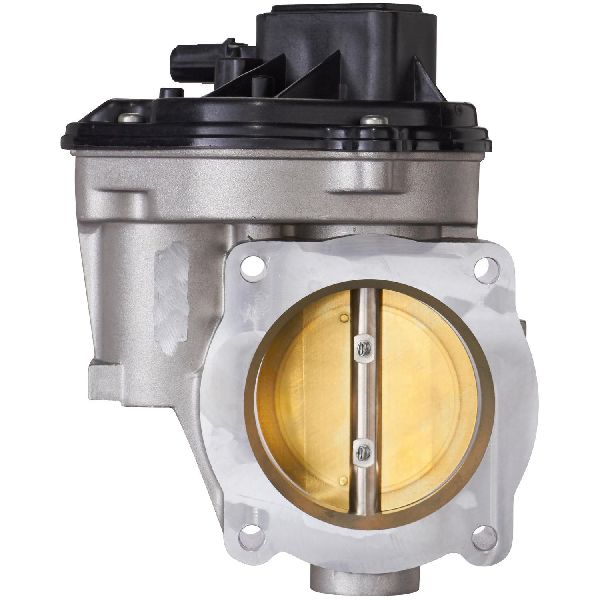
On a 2007-2010 Ford Edge, code P2135 is almost always caused by a failing electronic throttle body assembly. This triggers a 'wrench' light and limp mode. Replacing the entire throttle body assembly is the most common fix. This was a known issue that led Ford to issue a Customer Satisfaction Program (13N03) extending the warranty to 10 years/150,000 miles, though this has now expired for most vehicles. The repair involves replacing the part, which costs around $150-$350.
- P2135 on your Ford Edge almost certainly means you need a new throttle body.
- Symptoms include a 'wrench' light, reduced power (limp mode), and possible stalling.
- This was a known defect addressed by Ford's Customer Satisfaction Program 13N03, which has now expired for these model years.
- This is a DIY-friendly repair for many, typically taking less than an hour with basic hand tools.
- Always check the wiring connector for damage or corrosion before replacing parts.
- After replacement, a simple throttle body relearn procedure (idling the engine) is required.
What's Unique About the 2007-2010 Ford Edge
The first-generation Ford Edge, like many Ford vehicles from this era, is notorious for issues with its electronic throttle body (ETB). The problem became so widespread that it prompted a NHTSA investigation (PE13-003) and led Ford to create Customer Satisfaction Program 13N03. This program acknowledged the failure—caused by contamination on the internal motor contacts—and extended the warranty on the ETB to 10 years or 150,000 miles. While the P2135 code can technically point to the pedal sensor or wiring, experience shows the throttle body assembly itself is the overwhelming point of failure. The internal throttle position sensors (TPS) are not sold separately by Ford, so the entire ETB unit must be replaced.
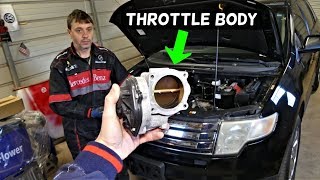
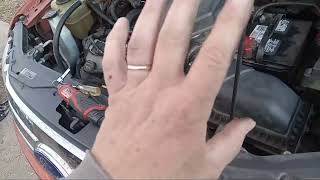
🎬 Watch: Diagnostic breakdown and throttle body replacement for the 3.5L.Symptoms You May Notice
- Check Engine Light is on
- Wrench icon (powertrain fault) is illuminated on the dashboard
- Vehicle enters 'limp mode' with drastically reduced engine power and acceleration
- Sudden loss of ability to accelerate, sometimes described as a 'dead pedal'
- Hesitation, surging, or stumbling upon acceleration
- Engine stalling, especially after coming to a stop
- Unstable or high idle
- Replacing the accelerator pedal assembly when the fault is in the throttle body.
- Replacing spark plugs or ignition coils, as a misfire can sometimes feel like the hesitation caused by this code.
- Assuming cleaning the throttle body will fix the issue. While cleaning a dirty throttle body is good practice, the P2135 code is caused by an internal electronic failure, not carbon buildup, so cleaning will not solve the problem.
Most Likely Causes
- Failing Electronic Throttle Body Assembly 🔴 High Probability → Shop Fuel Injection Throttle Body Ford's Customer Satisfaction Program 13N03 identified the root cause as contamination developing on the internal motor contacts of the throttle body, leading to intermittent electrical connectivity. This wear and tear is a well-documented, high-failure issue on this platform.
How to confirm: Use an OBD-II scanner with live data to graph the two TPS sensor voltages (TP1 and TP2). As you slowly open the throttle (with the engine off, key on), the voltages should move smoothly and inversely. If one signal is erratic, drops out, or spikes, the throttle body is faulty. This is the definitive diagnostic method short of replacement. 🎬 See how to test the throttle body using live data.
Typical fix: Replace the entire electronic throttle body assembly. A throttle body relearn procedure should be performed after installation.
Est. part cost: $150-$350 - Damaged Wiring or Poor Connection ⚪ Low Probability While less common than ETB failure, Ford TSB 09-11-11 does note the possibility of water intrusion into the main PCM connector, which can cause various electrical faults, including P2135. The connector at the throttle body itself can also become corroded or have a pin lose tension.
How to confirm: Visually inspect the wiring harness and connector at the throttle body for any signs of damage, corrosion, or loose pins. Check the main PCM connector for signs of water or corrosion. Wiggle the harness while monitoring live sensor data to see if the signal drops out.
Typical fix: Repair the damaged section of the wiring harness or clean and secure the connector. Apply dielectric grease to protect against moisture.
Est. part cost: $5-$50
Rare But Worth Checking
- Faulty Accelerator Pedal Position (APP) Sensor: → Shop Accelerator Pedal Assembly This is less common for P2135, as a fault here would typically set a P2138 code. However, it's a possibility. The APP sensor is part of the gas pedal assembly and is diagnosed similarly by checking its sensor voltage correlation. 🎬 Watch: How to replace the accelerator pedal position sensor.
- Faulty Powertrain Control Module (PCM): → Shop Engine Control Module (ECM) This is the least likely cause and is often misdiagnosed. The PCM should only be considered after the throttle body, wiring, and APP sensor have been definitively ruled out with proper testing. NHTSA ODI #10748493 notes that for some Ford vehicles, a faulty TPS and code P2135 may require a Powertrain Control Module reset.
Diagnosis Steps
- Read the trouble codes with an OBD-II scanner. Confirm P2135 is present, and note any other codes like P0122, P2111, or P2112.
- Use the scanner's live data function to monitor the voltage of both Throttle Position Sensors (TPS1 and TPS2).
- With the engine off and the key in the 'ON' position, slowly press and release the gas pedal. The two TPS voltage readings should change smoothly and inversely. Any jumps, dropouts, or erratic readings confirm a faulty throttle body. As seen in NHTSA ODI #10817084, a defective throttle body may show a TPS reading stuck at a high percentage (e.g., 82%).
- If the sensor data looks good, inspect the wiring harness and connector going to the throttle body. Check for loose connections, corrosion, or damaged wires.
- Inspect the main PCM connector for any signs of moisture or corrosion, as per TSB 09-11-11.
- Given the extremely high failure rate, if wiring is confirmed to be good and the live data was inconclusive, the throttle body is still the most probable cause and replacement is the next logical step. NHTSA ODI #10537825 highlights that pinpoint tests often show the throttle actuator control motor itself is failing.
- After replacing the throttle body, clear the codes. Perform the throttle body relearn procedure. The most common method is to disconnect the negative battery terminal during the swap, then after reconnecting, start the engine and let it idle for 10-15 minutes without touching the accelerator.
Parts You'll Likely Need
- Electronic Throttle Body Assembly
(OEM #7T4Z-9E926-EA (superseded by 7T4Z-9E926-FA))— This is the most common failure point for code P2135 on this vehicle. The internal sensors are not serviceable, requiring the replacement of the entire assembly. The original part has been superseded by an updated version.
Trusted brands: Motorcraft (OEM), Dorman (e.g., 977-588), Hitachi, Standard Motor Products
OEM price range: $250-$350
Aftermarket price range: $150-$250
Related Codes That Often Appear With This One
- P0122 — P0122 indicates 'Throttle Position Sensor A Circuit Low Input'. It can appear with P2135, further pointing to a failure within the throttle body's sensor circuits.
- P2111 — P2111 indicates 'Throttle Actuator Control System - Stuck Open'. This code relates to the motor that controls the throttle plate and can be triggered alongside P2135 if the entire throttle body assembly is failing.
- P2112 — P2112 indicates 'Throttle Actuator Control System - Stuck Closed'. This is another common companion code pointing directly to a malfunctioning throttle body assembly.
Technical Service Bulletins (TSBs) & Recalls
- TSB 09-11-11: Malfunction Indicator Lamp (MIL) on with various DTCs, notes possible water intrusion into the PCM connector.
- Customer Satisfaction Program 13N03: Not a TSB, but a Ford program extending warranty coverage for the electronic throttle body due to a high failure rate from contamination of internal contacts.
Platform-Specific Known Issues
- Ford Customer Satisfaction Program 13N03 was issued to address this common failure, extending the warranty on the throttle body to 10 years or 150,000 miles. While this program has likely expired for all 2007-2010 models, it confirms the widespread nature of the defect.
- A known Ford Technical Service Bulletin (TSB 09-11-11) exists for potential water intrusion into the PCM connector, which can cause this and other electrical codes.
Documented NHTSA Reports
- NHTSA ODI #10513400 describes a vehicle entering "limp home mode" on the freeway with code P2135; replacing the throttle body resolved the issue and prevented recurrence.
- NHTSA ODI #11097577 reports a case where P2111 and P2135 occurred daily at random times, persisting even after both the gas pedal and throttle body were replaced, suggesting deeper electrical or calibration issues.
Mechanic-Grade Diagnostic Values
- TPS1 vs. TPS2 Voltage Correlation — expected: The voltage signals from TP1 and TP2 should move smoothly and inversely. The difference between them should not exceed a calibrated value, typically around 0.2V.. Failure: On a live data graph, a sudden spike, drop, or glitch in one of the sensor readings while the other remains smooth indicates a failing sensor. The PCM will set the code if the deviation is detected for more than a couple of seconds.
- TPS1 and TPS2 Voltage Range — expected: Typically, one sensor will read from ~0.5V (closed) to ~4.5V (wide open), while the second sensor reads from ~4.5V (closed) to ~0.5V (wide open). Some systems check that the sum of the two sensor voltages remains constant at ~5.0V.. Failure: A reading that is stuck, does not sweep through the full range, or causes the sum of the two voltages to deviate significantly from 5.0V.
- Alternator AC Ripple Voltage — expected: A good alternator should have very low AC ripple, typically under 500mV (0.5V) AC.. Failure: Excessive AC voltage (greater than 0.5V) being introduced into the vehicle's electrical system by a failing diode in the alternator. This electrical 'noise' can interfere with sensitive sensor readings, causing the PCM to see a false correlation fault.
Scan Tool Commands That Help
- Ford IDS (Integrated Diagnostic System) or equivalent professional scanner: Clear KAM (Keep Alive Memory) — This function should be used after replacing the throttle body to wipe the PCM's adaptive memory, including learned idle and throttle trim values. This forces the PCM to start fresh and perform the relearn procedure with the new part.
- Ford IDS (Integrated Diagnostic System): Throttle Body/TPS Calibration or Relearn — While a manual relearn procedure often works, the IDS tool can command the PCM to perform a guided and verified throttle relearn. This can be useful if the manual procedure does not resolve an unstable idle after replacement.
Wiring & Ground Locations
- Electronic Throttle Body Connector (C175B) — The 6-pin connector located directly on the electronic throttle body assembly at the engine's air intake.. This is the single point of failure for all signals from the throttle body. The pins for TP1, TP2, the 5V reference (TPREF), and the sensor ground (TPRTN/ETCRTN) are all located here. Corrosion or a loose pin in this connector can directly cause a P2135 code.
- Throttle Body Connector Pinout — On the 6-pin connector C175B at the throttle body.. Knowing the pin functions allows for testing voltage directly at the source. Pin functions are typically: TP1 (Throttle Position 1 Signal), TP2 (Throttle Position 2 Signal), TPREF (5V Reference Voltage from PCM), TPRTN (Throttle Position Return/Ground), TACM+ (Throttle Actuator Control Motor +), TACM- (Throttle Actuator Control Motor -).
- G101 / G110 (Engine Ground) — G101 is located on the right rear of the engine. G110 is on the right front of the engine.. A poor main engine ground can cause a voltage potential difference between the engine block (where the throttle body is mounted) and the chassis/battery ground. This can introduce noise and voltage offsets into sensor readings, potentially causing correlation faults.
- G104 / G105 (Engine Compartment Grounds) — Located at the left front of the engine compartment.. These are primary grounding points for various components in the engine bay. While the TPS sensors have a dedicated return circuit to the PCM (ETCRTN), ensuring these main grounds are clean and tight is crucial for overall electrical system stability, which can indirectly affect sensor performance.
Real Owner Repair Stories
- YouTube channel 'Big E's auto' (2007 Ford Edge 3.5L) — Check Engine Light and Wrench light on, vehicle in limp mode. Initial code was P2135.
❌ Tried (didn't work) Inspected wiring for damage., Cleaned the throttle body.
✅ What actually fixed it After cleaning the throttle body, the P2135 code returned, along with a new P0122 code (TPS 'A' Circuit Low). This confirmed the issue was the sensor. The entire electronic throttle body assembly was replaced, which resolved all codes and symptoms.
OEM Part Supersession History
7T4Z-9E926-EA→7T4Z-9E926-FA— The original part was prone to failure. The superseding part is an updated design intended to be more robust.
Heads up: None. The new part (FA) is a direct replacement for the old part (EA).
Diagnostic Flowchart
Used vs. New Parts: Buying Guide for This Vehicle
When a used part is the smart pick: For this specific repair, a used part is NOT recommended. The failure is due to internal electronic wear and contamination, not external damage. A used part from a junkyard carries a very high risk of failing again in a short amount of time, as it likely has similar wear to the part being replaced.
What to inspect on the donor part:
- Not applicable. There are no reliable visual cues to determine the remaining life of the internal electronic sensors. A clean exterior does not indicate a healthy interior.
OEM-only on this vehicle (don't cheap out):
- Electronic Throttle Body Assembly
Aftermarket brands forum-validated for this vehicle:
- Motorcraft (OEM)
- Hitachi (Often an OEM supplier)
- Standard Motor Products (SMP)
- Dorman (Ensure it is their updated design if available)
Brands owners have reported issues with on this vehicle:
- Unnamed, no-brand, or suspiciously cheap units from online marketplaces. These often have poor quality control for the internal sensors and can fail quickly or not work correctly out of the box.
Real Owner Stories
Aggregated from forums and TSBs cited above. Mileages and costs reflect what owners reported in those sources.
2007 Ford Edge 3.5L
Symptoms: Check engine light and wrench light came on with code P2135. After replacing the throttle body, the codes returned along with P0122.
What fixed it: Replacing the accelerator pedal assembly (gas pedal) ultimately resolved the issue after a new throttle body did not.
Source hint: YouTube video title: Code P2135, and P0122 explained and throttle body replacement on 2007 Ford Edge 3 5L
2008 Ford Edge 3.5L
Symptoms: Vehicle set code P2135. The owner was quoted $500 by the dealership for the repair.
What fixed it: The owner purchased a Motorcraft throttle body online for $110 and replaced it themselves in 30 minutes, which completely fixed the problem.
Cost: $110-$110
Source hint: Blue Oval Forums: 2008 Edge Throttle Body
Related OBD-II Codes
Frequently Asked Questions
Was there a recall for the throttle body on my 2008 Ford Edge?
How can I definitively test the throttle body on my Ford Edge before replacing it?
Is it more likely the throttle body or the wiring that's causing P2135 on my 2009 Edge?
Does Ford's TSB 09-11-11 relate to the P2135 code?
Do I need to perform a 'relearn' procedure after installing a new throttle body on my Edge?
I have a 2009 Lincoln MKX with code P2135. Does this information apply to my vehicle?
Helpful Videos


Used OEM Parts in Stock
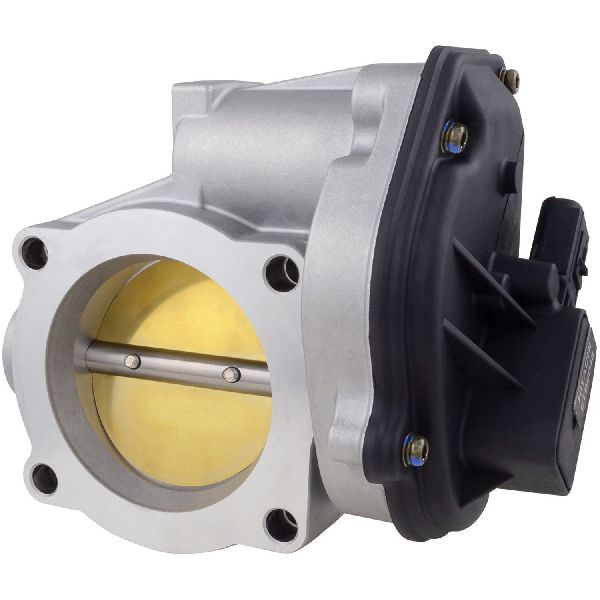
New Aftermarket Parts Available


The information in this article is provided for general reference and educational purposes only. Vehicle specifications, procedures, and part compatibility can vary by production date, trim level, and region. Always consult your vehicle's factory service manual and verify part numbers before purchasing or performing repairs. Safety-critical components such as airbags, seat belts, and braking systems should be installed by a qualified professional.
- Ford Edge:
- 🧭 Diagnostic Flowchart
- 🎬 Helpful Videos
- 🛍️ Shop This Part
- What's Unique About the 2007-2010 Ford Edge
- Symptoms You May Notice
- Most Likely Causes
- Rare But Worth Checking
- Diagnosis Steps
- Parts You'll Likely Need
- Related Codes That Often Appear With This One
- Technical Service Bulletins (TSBs) & Recalls
- Platform-Specific Known Issues
- Documented NHTSA Reports
- Mechanic-Grade Diagnostic Values
- Scan Tool Commands That Help
- Wiring & Ground Locations
- Real Owner Repair Stories
- OEM Part Supersession History
- Used vs. New Parts: Buying Guide for This Vehicle
- Real Owner Stories
- 2007 Ford Edge 3.5L
- 2008 Ford Edge 3.5L
- Related OBD-II Codes
- Frequently Asked Questions
- 🎟️ Get 5% Off