

P2135 on 2009-2012 Ford Escape 2.5L: Throttle Body Failure Causes and Fixes
On a 2009-2012 Ford Escape, code P2135 almost always means the entire electronic throttle body has failed due to an internal sensor correlation error. The fix is to replace the complete throttle body assembly, a common DIY job costing between $70 for an aftermarket part and $240 for an OEM Motorcraft part. This is a well-documented failure acknowledged by Ford's Customer Satisfaction Program 13N03.
- P2135 on a 2009-2012 Escape almost certainly means you need a new electronic throttle body.
- Do not try to buy just the sensor; it is integrated into the throttle body assembly for this model.
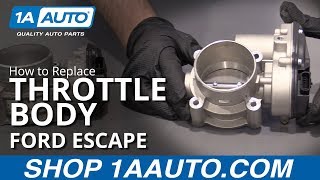
- The replacement is a relatively simple DIY job that can be done in under an hour with basic tools.
- Use the updated OEM part number DS7Z-9E926-D or a quality aftermarket equivalent for the most reliable repair. This part supersedes older, less reliable versions.
- After replacing the part, perform an idle relearn procedure, which usually involves a battery disconnect and a period of idling, to ensure smooth operation.
What's Unique About the 2009-2012 Ford Escape
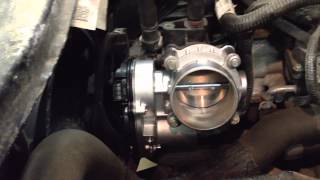
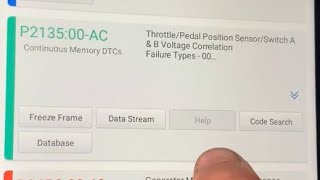
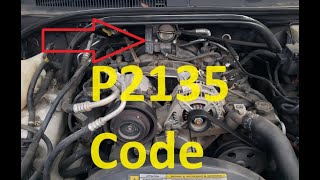
The 2009-2012 Ford Escape is notorious for electronic throttle body (ETB) failures, which are the root cause of code P2135. The issue stems from contamination or wear on the internal sensor contacts. The problem was so widespread that it prompted an NHTSA investigation (PE13003) and led Ford to issue Technical Service Bulletin (TSB) 09-23-5 for early models and later a Customer Satisfaction Program (13N03) that extended the warranty on the part to 10 years or 150,000 miles. Unlike many other vehicles where the TPS can be replaced separately, on this platform the sensors are integrated into the throttle body assembly and cannot be serviced individually. 🎬 See how this sensor failure triggers code P2135. Therefore, a P2135 code on this specific vehicle almost guarantees the entire ETB unit needs replacement.
Symptoms You May Notice
- Check Engine Light is on
- Wrench light on the dashboard is illuminated
- Vehicle enters 'limp mode' with severely reduced engine power and limited speed
- Sudden loss of power while driving
- Poor, sluggish, or no acceleration
- Hesitation or stumbling when trying to accelerate
- Engine surging
- Rough or unstable idle
- Engine stalling, sometimes while driving or at a stop
- Replacing the accelerator pedal assembly. While the pedal has its own sensors (APP), P2135 on this Escape model is almost exclusively caused by the throttle body, a fact supported by Ford's own TSBs.
- Attempting to replace just the throttle position sensor (TPS). The sensors are integrated into the throttle body on this vehicle and cannot be purchased or replaced separately. Some older vehicles had replaceable sensors, leading to this confusion.
- Cleaning the throttle body. While cleaning a dirty throttle body is good maintenance and may solve other issues, it will not fix an internal electrical electrical correlation fault between the sensors that triggers P2135.
Most Likely Causes
- Failed Electronic Throttle Body (ETB) Assembly 🔴 High Probability → Shop Fuel Injection Throttle Body This is a well-documented, widespread failure on this platform, acknowledged by Ford through TSB 09-23-5 and Customer Satisfaction Program 13N03. The internal throttle position sensors (TPS), which are part of the assembly, fail due to contamination or wear of the internal electrical contacts, causing them to lose correlation.
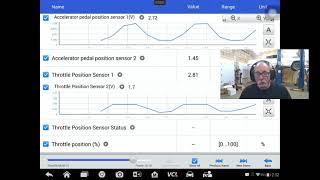
How to confirm: Scan the vehicle for codes. If P2135 is present, often accompanied by P2111 or P2112, the throttle body is the confirmed cause. Visual inspection of wiring is prudent, but the part itself is the most common failure point. An advanced scan tool could graph the two TPS signals (TPS1 and TPS2) to visually confirm they are not mirroring each other correctly. NHTSA ODI #10537825 notes a case where pinpoint tests specifically showed the throttle actuator control motor was failing alongside codes P2111 and P2135.
Typical fix: Replace the entire electronic throttle body assembly. The throttle position sensors are not sold separately. An idle relearn procedure is required after replacement.
Est. part cost: $70-$240
Rare But Worth Checking
- Wiring or Connector Issue: While the throttle body itself is the most likely culprit, it's always possible for a damaged wire, corroded pin, or loose connection at the throttle body harness to cause the voltage correlation error. Always inspect the connector and nearby wiring for damage before replacing parts.
- Powertrain Control Module (PCM) Fault: → Shop Engine Control Module (ECM) In very rare cases, the PCM itself can be the source of the problem. This should only be considered after a new throttle body fails to resolve the issue and all wiring has been confirmed to be in good condition. Sometimes a PCM software update is required.
Diagnosis Steps
- Confirm the presence of code P2135 using an OBD-II scanner.
- Check for any other related codes, such as P2111, P2112, or P0122.
- Inspect the electrical connector on the throttle body for any signs of corrosion, damage, or loose pins. Ensure it is seated securely.
- Inspect the wiring harness leading to the throttle body for any visible signs of damage, chafing, or breaks.
- Given the extremely high failure rate of this part on this specific vehicle, if the wiring appears intact, the next step is to replace the entire electronic throttle body assembly.
- After replacement, clear all DTCs.
- Perform an idle relearn procedure. This typically involves disconnecting the battery for 15 minutes to clear the PCM's adaptive memory, then starting the engine and letting it idle for several minutes to relearn idle and fuel trims. Some sources suggest a specific drive cycle may be needed.
Parts You'll Likely Need
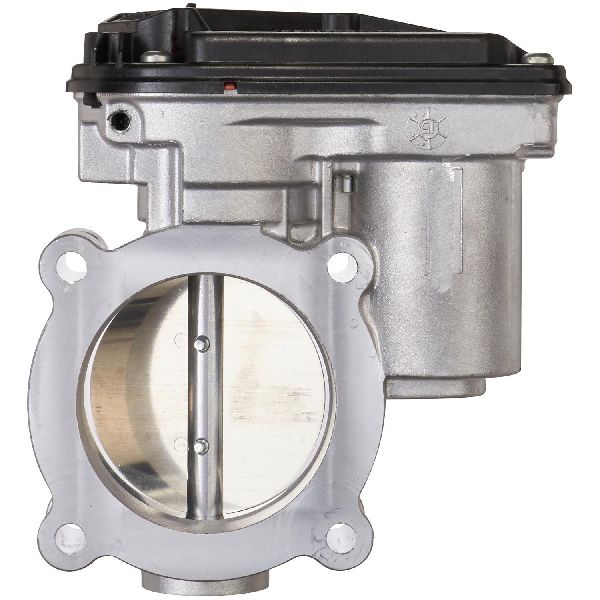
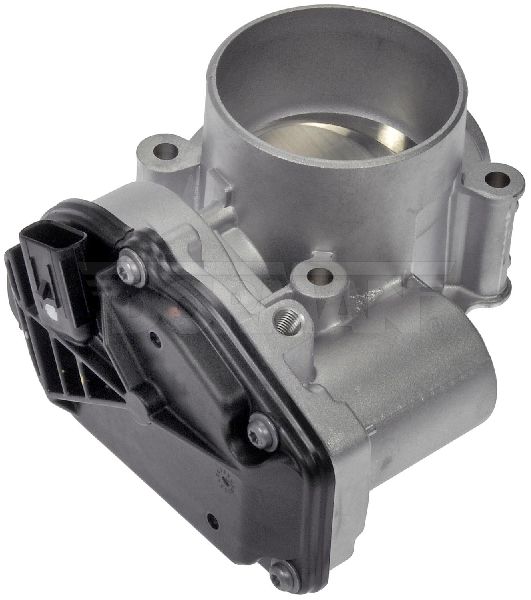
- Electronic Throttle Body Assembly
(OEM #DS7Z-9E926-D)— This is the direct cause of code P2135 in the vast majority of cases for this vehicle. The internal sensors fail, requiring replacement of the whole unit.
Trusted brands: Motorcraft (OEM), Hitachi, Delphi, Dorman
OEM price range: $190-$240
Aftermarket price range: $70-$150
Related Codes That Often Appear With This One
- P2111 — Indicates 'Throttle Actuator Control System - Stuck Open'. This code often appears with P2135 as the PCM loses trustworthy control over the throttle plate's position.
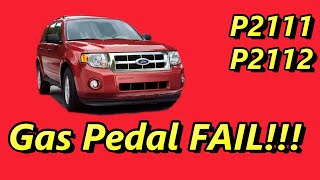
- P2112 — Indicates 'Throttle Actuator Control System - Stuck Closed'. Similar to P2111, this points to a loss of control over the throttle actuator, a common result of the sensor correlation fault. 🎬 Watch how to fix wrench light codes P2111 and P2112.
- P0122 — Indicates 'Throttle Position Sensor 'A' Circuit Low Input'. This may be set alongside P2135 if one of the internal sensors is failing with a low voltage reading.
Technical Service Bulletins (TSBs) & Recalls
- TSB 09-23-5: Malfunction Indicator Lamp (MIL) ON with Diagnostic Trouble Code (DTC) P2135. It identifies faulty Electronic Throttle Body (ETB) hardware as the cause for vehicles built between 6/22/2009 and 10/15/2009 and instructs technicians to replace the ETB.
- Mazda TSB 01-007/13: A parallel TSB issued for the Mazda Tribute, confirming the same issue on a platform mate with the same build dates and recommending throttle body replacement for P2135.
Platform-Specific Known Issues
- Ford issued TSB 09-23-5 for 2009-2010 models built between 6/22/2009 and 10/15/2009 that specifically addresses P2135 by recommending throttle body replacement.
- Ford Customer Satisfaction Program 13N03 extended the warranty on the electronic throttle body for some 2009-2013 models to 10 years or 150,000 miles due to the high failure rate. While this program has likely expired for most vehicles, it confirms the widespread nature of the problem.
- An NHTSA preliminary investigation, PE13003, was launched to look into throttle body failures causing stalling and surging on 2009-2013 Escapes and Mariners.
Mechanic-Grade Diagnostic Values
- TPS1 and TPS2 Live Data Voltage Correlation — expected: Using a scan tool with the key on and engine off, both TPS sensor voltages should be within 0.2V of each other as the accelerator pedal is slowly depressed and released. For example, one sensor may sweep from ~0.5V to ~4.5V while the other sweeps from ~4.5V down to ~0.5V.. Failure: If the voltages diverge by more than the 0.2V tolerance at any point, or if one sensor's reading is erratic, jumped, or flat, it confirms a correlation fault and a bad throttle body. In some instances, as seen in NHTSA ODI #10817084 for a similar Ford platform, a defective throttle body may cause the TPS reading to become stuck at a high percentage (e.g., 82%).
Scan Tool Commands That Help
- Ford IDS (or equivalent professional scan tool): Resetting The Keep Alive Memory (KAM) — This function must be performed after replacing the electronic throttle body. It clears the PCM's adaptive learning tables, including old throttle trim values, forcing it to relearn with the new part. A simple battery disconnect is an alternative but less reliable method.
Wiring & Ground Locations
- C175B — The main connector for the Powertrain Control Module (PCM), located at the rear center of the firewall in the engine compartment.. This connector is the termination point for the throttle body sensor wiring. Any corrosion or pin-fitment issues here can mimic a failed throttle body. The TPS signals are on specific pins within this large connector.
- G101 — Located at the rear of the engine for the 2.5L model.. This is a critical engine ground. A loose or corroded G101 can cause incorrect sensor readings and erratic behavior for multiple engine components, including the throttle body, potentially triggering a P2135 code.
- G104 — Located on the left (driver's side) front of the engine compartment, near the battery junction box.. This is a primary engine bay and chassis ground point. A poor connection here can disrupt the ground reference for the PCM and its sensors, leading to voltage correlation faults.
- Throttle Body Harness Chafing — The wiring harness leading to the throttle body.. While not a specific documented chafe point for this model, general engine vibration and heat can cause any harness to rub against engine components, potentially shorting the TPS signal wires and causing a P2135 code. A visual and tactile inspection of the harness loom is a necessary diagnostic step.
Real Owner Repair Stories
- Jaguar Owners Club forum post (Jaguar (demonstrates a universal issue with P2135)) — P2135 code returned 700 miles after replacing the throttle body.
❌ Tried (didn't work) Replacing the throttle body (the fault returned).
✅ What actually fixed it The user was advised to check the throttle body connector for corrosion, check battery and alternator health, and consider the accelerator pedal position sensor as the next likely culprit, highlighting that even with a new throttle body, the issue can persist due to wiring or other related sensors. - Ford Focus Owner (Cross-Model Reference) — NHTSA ODI #11097577 reports a situation where P2111 and P2135 occurred daily at random times, persisting even after the owner replaced both the gas pedal and the throttle body, suggesting deeper electrical or harness issues.
- Ford Transit Connect Owner (Cross-Model Reference) — NHTSA ODI #10564644 describes a scenario where the vehicle would run poorly and fail to accelerate after being warm and then getting cold, storing codes P2101, P2111, and P2135 before the throttle body was replaced.
OEM Part Supersession History
9L8Z-9E926-A→DS7Z-9E926-D— The original part was prone to premature failure of the internal sensor contacts. The superseding parts feature design revisions to improve durability and prevent the correlation fault that triggers P2135. Using the latest revision (DS7Z-9E926-D) is critical for a long-term repair.
Model Year Variations Within This Range
- 2009-2010: According to TSB 09-23-5, vehicles built between June 22, 2009, and October 15, 2009, were particularly susceptible to this failure due to a specific batch of faulty Electronic Throttle Body hardware. While the failure can occur on all 2009-2012 models, this specific build range was addressed directly by Ford.
Documented NHTSA Reports
- NHTSA ODI #10513400 describes a vehicle that went into limp home mode on the freeway with a Check Engine Light and code P2135. The problem was resolved after the throttle body was replaced.
- NHTSA ODI #10537825 reports a dealer diagnosis of a failing throttle body where codes P2111 and P2135 were retrieved, and pinpoint tests confirmed the throttle actuator control motor was failing.
Diagnostic Flowchart
Other Known Issues on This Vehicle
Issues unrelated to this code that are worth knowing about as an owner of this generation:
- 6F35 Transmission Failure 🔴 High — Widespread reports of shuddering, hard shifting, slipping, and complete failure, often before 100,000 miles. Lack of maintenance is a key contributor. (Ref: No recall, but numerous TSBs exist for various symptoms. Regular fluid changes (drain and fill) every 30k miles are highly recommended by owners.)
- Electric Power Steering (EPS) Failure 🔴 High — Common reports of sudden loss of power steering assist, making the vehicle very difficult to steer at low speeds. (Ref: Ford Recall 14S05 / NHTSA 14V286000 was issued to update software and, if necessary, replace the steering torque sensor or the entire steering column.)
- Rear Wheel Well / Shock Tower Rust 🔴 High — Extremely common in regions that use road salt ('Rust Belt'). The seam in the rear wheel arch traps moisture and debris, leading to severe corrosion that can compromise the unibody structure, particularly the rear shock towers. (Ref: No recall, but the issue is widely documented in owner forums. Repair can be very expensive if the structural shock tower is compromised.)
- Leaking Driver's Side Axle Seal 🟠 Medium — A common leak point, causing loss of transmission fluid. Symptoms are red fluid spots on the ground under the left-front of the vehicle. (Ref: No recall, but repair kits are available from Ford to replace the seal and related components.)
Used vs. New Parts: Buying Guide for This Vehicle
When a used part is the smart pick: A used throttle body is NOT recommended for this repair. The part fails due to internal wear on electrical contacts, a problem that is not visible externally. A used part from a junkyard is highly likely to have the same wear and could fail soon after installation, repeating the problem.
What to inspect on the donor part:
- Not applicable, as used parts are not advised for this specific failure.
OEM-only on this vehicle (don't cheap out):
- Electronic Throttle Body Assembly
Aftermarket brands forum-validated for this vehicle:
- Motorcraft (OEM) is the most recommended brand for a guaranteed fix.
- Hitachi and Delphi are reputable OEM suppliers and are generally considered reliable alternatives.
Brands owners have reported issues with on this vehicle:
- While not universally bad, some lower-cost, unbranded or 'white-box' throttle bodies available online have a reputation in forums for being dead-on-arrival (DOA) or failing prematurely. Given the labor involved and the critical nature of the part, sticking to OEM or top-tier aftermarket brands is a safer investment.
Real Owner Stories
Aggregated from forums and TSBs cited above. Mileages and costs reflect what owners reported in those sources.
2010 Ford Escape
Symptoms: Rough idle, RPMs oscillating between 500-1000, occasional stalling at stops, accelerator pedal goes dead while driving, red wrench light illuminates.
What fixed it: The owner's mechanic attempted to clean the throttle body, which provided only a temporary solution; the context indicates the owner was still seeking a definitive fix after the issue returned.
Source hint: Reddit r/MechanicAdvice
2009-2012 Ford Escape
Symptoms: Classic limp mode symptoms and discovering the issue after the fact because many owners were not notified by mail.
What fixed it: Replacement of the Electronic Throttle Body under Customer Satisfaction Program 13N03.
Source hint: Reddit r/fordescape - '2009-2012 Ford Escape Electronic Throttle Body Extended Coverage (recall)'
2009-2010 Ford Escape
Symptoms: Widespread failure of the internal mechanics of the throttle body leading to P2135.
What fixed it: Replacement of the electronic throttle body assembly.
Source hint: Ford Truck Enthusiasts Forum - '2009+ Electronic Throttle Body Problems'
Related OBD-II Codes
Frequently Asked Questions
Does TSB 09-23-5 apply to my 2010 Ford Escape?
Is there an extended warranty for the throttle body on a 2012 Ford Escape?
Can I just replace the Throttle Position Sensor (TPS) instead of the whole assembly?
Why did my Ford Escape suddenly lose power and show a wrench light?
Do I need to do anything special after replacing the throttle body on my 2.5L Escape?
Is the Mazda Tribute affected by the same P2135 throttle body issues as the Escape?
Helpful Videos
Used OEM Parts in Stock
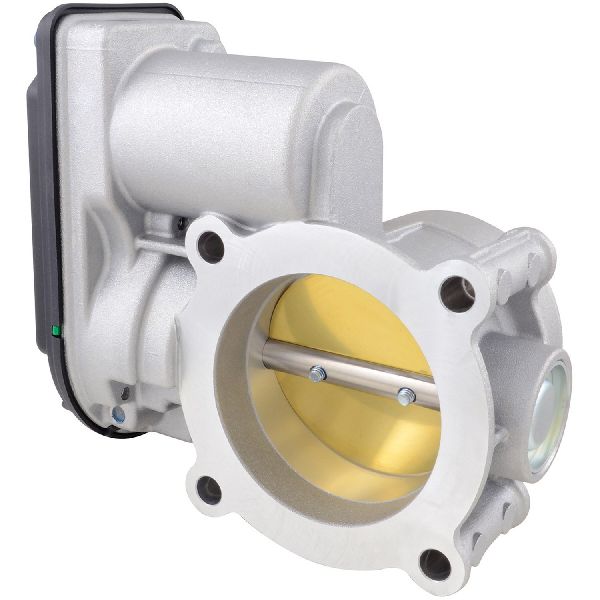
New Aftermarket Parts Available


The information in this article is provided for general reference and educational purposes only. Vehicle specifications, procedures, and part compatibility can vary by production date, trim level, and region. Always consult your vehicle's factory service manual and verify part numbers before purchasing or performing repairs. Safety-critical components such as airbags, seat belts, and braking systems should be installed by a qualified professional.
- Ford Escape:
- 🧭 Diagnostic Flowchart
- 🎬 Helpful Videos
- 🛍️ Shop This Part
- What's Unique About the 2009-2012 Ford Escape
- Symptoms You May Notice
- Most Likely Causes
- Rare But Worth Checking
- Diagnosis Steps
- Parts You'll Likely Need
- Related Codes That Often Appear With This One
- Technical Service Bulletins (TSBs) & Recalls
- Platform-Specific Known Issues
- Mechanic-Grade Diagnostic Values
- Scan Tool Commands That Help
- Wiring & Ground Locations
- Real Owner Repair Stories
- OEM Part Supersession History
- Model Year Variations Within This Range
- Documented NHTSA Reports
- Other Known Issues on This Vehicle
- Used vs. New Parts: Buying Guide for This Vehicle
- Real Owner Stories
- 2010 Ford Escape
- 2009-2012 Ford Escape
- 2009-2010 Ford Escape
- Related OBD-II Codes
- Frequently Asked Questions
- 🎟️ Get 5% Off