

P2135 on 2012-2018 Ford Focus: Throttle Position Sensor Correlation Causes and Fixes
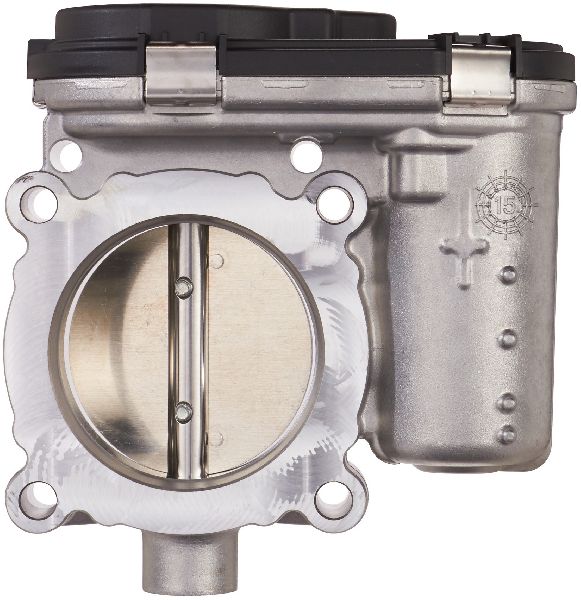
On a 2012-2018 Ford Focus, code P2135 is almost always caused by a failed electronic throttle body assembly. This is a very common issue for this car, leading to 'limp mode'. Replacing the entire throttle body is the typical fix, with parts costing between $100 and $300.
- P2135 on a 2012-2018 Focus almost always points to a failed electronic throttle body.
- Before replacing the throttle body on a 2012-2014 model, you MUST inspect the engine wiring harness for chafing near the intake manifold, as per TSB 18-2062.
- This is a DIY-friendly repair for those with basic tools; the part is easy to access.
- After replacing the throttle body, a 'relearn' procedure is mandatory. A common method is to let the engine idle for several minutes, first with no accessories on, and then with the A/C on.
What's Unique About the 2012-2018 Ford Focus
The 2012-2018 Ford Focus (MK3) is notorious for electronic throttle body failures that trigger the P2135 code. The problem was so widespread that Ford created a 'Customer Satisfaction Program' (13N03) that extended the warranty on this specific part to 10 years or 150,000 miles due to contamination on the internal motor contacts. While that program has likely expired for most vehicles, it confirms that a faulty throttle body is the most probable cause. Additionally, for 2012-2014 models built before specific dates in 2014, a Technical Service Bulletin (TSB 18-2062) points to a potential for the engine wiring harness to chafe against the intake manifold, which can also cause this code.
Symptoms You May Notice
- Check Engine Light is on
- Wrench light (powertrain fault indicator) is on
- Vehicle enters 'limp mode' (reduced engine power)
- Sudden loss of acceleration
- Erratic or hesitant throttle response
- Engine stalls, especially after coming to a stop
- Unstable or hunting idle
- Surge or hesitation when accelerating
- Replacing the accelerator pedal assembly when the fault is in the throttle body.
- Replacing the throttle body on a 2012-2014 model without first checking for the chafed wiring harness issue described in TSB 18-2062.
Most Likely Causes
- Failed Electronic Throttle Body Assembly 🔴 High Probability → Shop Fuel Injection Throttle Body This is a well-documented, widespread failure point for this platform, acknowledged by Ford through Customer Satisfaction Program 13N03. The internal throttle position sensors (TPS) are integral to the assembly and not serviceable separately, requiring replacement of the entire unit.
How to confirm: Using a scan tool, graph the live data for the two TPS PIDs (TP1 and TP2). With the key on and engine off, slowly press the gas pedal. The voltage readings should be smooth and mirror each other (one rising, one falling). Any jumps, dropouts, or flat lines confirm a faulty sensor within the throttle body.
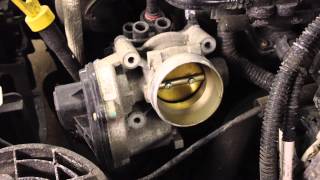
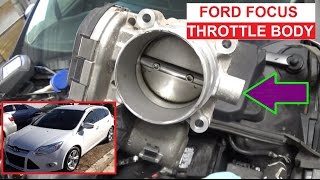
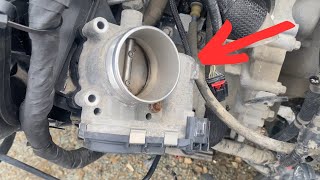
Typical fix: Replace the entire electronic throttle body assembly. 🎬 Watch: A step-by-step guide to replacing the throttle body. After replacement, a Powertrain Control Module (PCM) and Keep Alive Memory (KAM) reset must be performed to clear old adaptive values and allow the system to relearn the new 🎬 Watch: How to perform the critical throttle relearn process. throttle body's characteristics. This is often done by disconnecting the battery for 15 minutes.
Est. part cost: $100-$480 - Chafed Engine Wiring Harness 🟡 Medium Probability On 2012-2014 models built before early February 2014, the engine wiring harness can rub against the intake manifold, causing wires related to the throttle body to short out. This is documented in Ford TSB 18-2062, which lists P2135 as a potential resulting code.
How to confirm: Visually inspect the engine wiring harness where it runs near and behind the throttle body and intake manifold. Look for signs of abrasion, chafing, or exposed copper wires. Wiggling the harness while monitoring sensor voltage may also reveal the issue.
Typical fix: Repair the damaged wires by soldering in new sections and adding protective shielding like Coroplast tape or split loom convolute to prevent future chafing, as outlined in the TSB.
Est. part cost: $5-$20
Rare But Worth Checking
- Faulty Accelerator Pedal Position (APP) Sensor: → Shop Accelerator Pedal Assembly The P2135 code can also be triggered by a fault in the accelerator pedal's sensors. While less common than the throttle body on this Focus, it's a possibility if the throttle body and wiring check out. The APP sensor is part of the accelerator pedal assembly and is replaced as a single unit.
- Faulty Powertrain Control Module (PCM): → Shop Engine Control Module (ECM) In very rare cases, the PCM itself can be the source of the problem, misinterpreting correct sensor signals. This should only be considered after all other possibilities have been exhausted.
Diagnosis Steps
- Connect an OBD-II scanner and confirm P2135 is present. Note any other codes like P2111 or P2112.
- For 2012-2014 models specifically: Check the vehicle's build date. If built on or before Feb 4, 2014 (auto) or Feb 19, 2014 (manual), carefully inspect the engine wiring harness for chafing near the intake manifold, as detailed in TSB 18-2062. Repair any damaged wires before proceeding.
- Using the scanner's live data function, monitor the voltage PIDs for Throttle Position Sensor 1 (TP1) and Throttle Position Sensor 2 (TP2).
- With the key in the 'ON' position (engine off), have an assistant slowly press the accelerator pedal to the floor and slowly release it.
- Observe the voltage graphs. They should move smoothly in opposite directions (e.g., one from ~0.7V to 4.5V, the other from ~4.5V to 0.7V). If you see any spikes, glitches, or flat spots in the data, the throttle body has failed.
- If the wiring is intact and the sensor data is erratic, the electronic throttle body assembly is faulty and needs to be replaced.
- After replacing the throttle body, perform a KAM (Keep Alive Memory) reset by disconnecting the negative battery terminal for at least 15 minutes. Reconnect and let the vehicle idle for several minutes to allow the PCM to relearn idle trims.
- If both the wiring and sensor data appear perfect, investigate the less common causes like the accelerator pedal assembly.
Parts You'll Likely Need
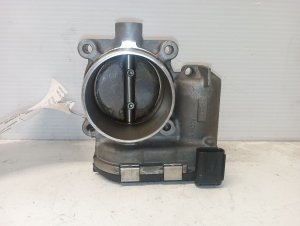
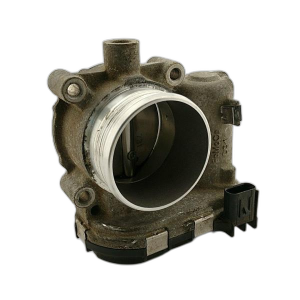
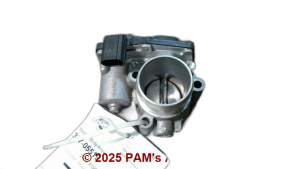
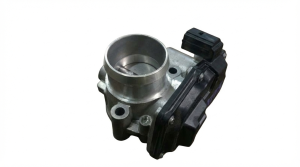
- Electronic Throttle Body Assembly
(OEM #Motorcraft TB-15 (replaces CP9Z-9E926-A))— This is the most common failure part for code P2135 on this vehicle. The internal sensors fail and are not sold separately, requiring the replacement of the entire assembly.
Trusted brands: Motorcraft, Standard Motor Products, Hitachi, Dorman
OEM price range: $250-$485
Aftermarket price range: $100-$220
Related Codes That Often Appear With This One
- P2111 — Indicates 'Throttle Actuator Control System - Stuck Open'. This code often appears with P2135 because the correlation fault can lead to the PCM losing control of the throttle plate position.
- P2112 — Indicates 'Throttle Actuator Control System - Stuck Closed'. Similar to P2111, this points to a loss of control over the throttle plate, reinforcing that the throttle body assembly is the root cause.
Technical Service Bulletins (TSBs) & Recalls
- TSB 18-2062: Addresses various drivability concerns, including P2135, caused by a chafed engine wiring harness on 2012-2014 Focus 2.0L GDI models. It provides specific build date cutoffs and repair procedures.
Platform-Specific Known Issues
- Customer Satisfaction Program 13N03: Ford issued this program to extend the warranty on the electronic throttle body to 10 years/150,000 miles due to a high rate of failure caused by internal contamination.
- TSB 18-2062: For 2012-2014 models (built before mid-Feb 2014), this bulletin identifies a problem where the engine wiring harness can chafe against the intake manifold, causing various throttle-related codes, including P2135.
Mechanic-Grade Diagnostic Values
- Throttle Position Sensor (TP) Voltage at Closed Throttle (Key On, Engine Off) — expected: 0.5V - 0.7V. Failure: Voltage is outside this range, or is erratic and unstable.
- Throttle Position Sensor (TP) Voltage at Wide Open Throttle (Key On, Engine Off) — expected: 4.0V - 4.5V. Failure: Voltage does not reach this range, or has glitches/dropouts while the pedal is being pressed.
- Throttle Body Connector Ground Circuit Voltage Drop — expected: Less than 0.1V. Failure: Voltage significantly higher than 0.1V indicates a poor ground connection, which can cause erratic sensor readings.
Scan Tool Commands That Help
- Ford IDS (Integrated Diagnostic System): Clear PCM Adaptive Memory / KAM Reset — This function must be used after replacing the electronic throttle body. It erases the learned values (like idle trim and throttle angle compensation) that the PCM had stored for the old, failing part. Failing to do this can result in an unstable idle or persistent codes even with a new part installed.
Wiring & Ground Locations
- Throttle Body Connector — Directly on the electronic throttle body assembly, where the engine wiring harness connects.. This is the primary connection point for the two internal throttle position sensors. Corrosion, fretting, or backed-out pins in this connector will directly cause a P2135 correlation fault. The harness near this connector is also the location of the chafing issue described in TSB 18-2062.
- G103 / G104 — Main engine ground located on the left front of the motor compartment, typically under or near the airbox on the chassis frame rail.. A poor main engine ground can cause a voltage drop across the entire engine control system. This can lead to the PCM receiving incorrect or unstable voltage signals from the throttle position sensors, triggering a P2135 code even if the throttle body itself is good. TSB 18-2062 specifically calls out cleaning and properly tightening the G103 ground bolt.
Real Owner Repair Stories
- Ford Owners Club user 'Hillkidstr' (2005 Ford Focus 1.6L (Note: This is a different generation, but the P2135 cause and effect are identical to the 2012-2018 models)) — Loss of power during acceleration, 'system malfunction' light, followed by MIL light and limp mode. Code P2135 was recovered.
❌ Tried (didn't work) Initial research pointed to corroded pins on the TPS connector.
✅ What actually fixed it The user confirmed with a Ford dealer that the ultimate fix was replacing the entire throttle body assembly, as a revised part with gold-plated pins had been released to solve the corrosion issue.
OEM Part Supersession History
CP9Z-9E926-A→CP9Z-9E926-B, CP9Z-9E926-D, Motorcraft TB-15— Part revisions to improve reliability and address the common internal contact failure.
Heads up: While multiple revisions exist, they are generally interchangeable for the 2012-2018 Focus 2.0L GDI. The key is to ensure the replacement part number is a valid supersession of the original.
Model Year Variations Within This Range
- 2012-2014: Models built on or before Feb 4, 2014 (automatic) or Feb 19, 2014 (manual) are susceptible to the engine wiring harness chafing against the intake manifold, as documented in TSB 18-2062. Later models had revised harness routing or protection.
Diagnostic Flowchart
Other Known Issues on This Vehicle
Issues unrelated to this code that are worth knowing about as an owner of this generation:
- DPS6 PowerShift Dual-Clutch Transmission Failure 🔴 High — Extremely common on 2012-2016 models. Symptoms include shuddering, hesitation, jerky shifts, and complete loss of engagement. Multiple lawsuits and warranty extensions were issued. (Ref: Multiple TSBs and Customer Satisfaction Programs; subject of a major class-action lawsuit.)
- Faulty Canister Purge Valve (CPV) 🟠 Medium — Very common across all 2012-2018 models. A stuck-open valve causes stalling (especially after refueling), rough idle, erratic fuel gauge readings, and can deform the fuel tank. (Ref: Ford Safety Recall 18S32 (NHTSA 18V735) and Customer Satisfaction Program 24N07.)
- Electric Power Steering Assist Failure 🔴 High — Prevalent on 2012-2014 models. Can result in a sudden and complete loss of power steering, making the vehicle difficult to steer at low speeds. Often requires full steering rack replacement. (Ref: Multiple TSBs (e.g., TSB 12-2-17) and a recall (14S05) for some vehicles.)
- Failing Passenger Side Engine Mount 🟠 Medium — Common failure item. The hydraulic mount collapses over time, leading to excessive engine vibration felt in the cabin, especially at idle and during acceleration.
- Hatchback Latch Malfunction 🟡 Low — Affects 2013-2017 hatchback models. The hatch could be opened with a single press of the interior release button while the car is in motion. (Ref: Ford Recall 16C13 (NHTSA 16V-647).)
Used vs. New Parts: Buying Guide for This Vehicle
When a used part is the smart pick: A used OEM throttle body can be a cost-effective option IF it comes from a low-mileage donor vehicle (ideally under 60,000 miles) and you can verify its functionality or get a short-term warranty. Given the high failure rate of this part, a used part is a gamble, but can be better than a cheap, no-name aftermarket part.
Donor-vehicle mileage cap: roughly under 60000 miles for the part to have meaningful remaining life.
What to inspect on the donor part:
- Check for a clean throttle bore with minimal carbon buildup.
- Ensure the electrical connector pins are straight, clean, and free of corrosion.
- Ask for the VIN of the donor car to check its mileage and confirm it's from a 2015 or newer model, which may have a slightly more reliable part.
- Avoid parts that look like they've been sitting in a wet environment.
Aftermarket brands forum-validated for this vehicle:
- Motorcraft (OEM)
- Standard Motor Products (SMP)
- Hitachi
- Dorman (specifically their OE FIX line, which claims improvements like a non-contact Hall effect sensor)
Brands owners have reported issues with on this vehicle:
- Unnamed, generic 'white box' parts from online marketplaces. Forum discussions often show these failing quickly or being dead-on-arrival. It's better to buy a used OEM part than a new, ultra-cheap generic one.
Real Owner Stories
Aggregated from forums and TSBs cited above. Mileages and costs reflect what owners reported in those sources.
2010 Ford Focus
Symptoms: Powertrain service light, limp mode, and a rough, hunting idle. The throttle body was reportedly 'gummed up' by PCV system byproducts.
What fixed it: Replacement of the throttle body assembly.
Source hint: Reddit r/FordFocus thread titled '2010 focus p2135'
2012 Ford Focus 2.0L GDI
Symptoms: P2135 code with corroded TPS connections.
What fixed it: Replacement of the throttle body due to contact corrosion on the pins within the TP sensor and the wiring harness electrical connector.
Source hint: Ford Owners Club (fordownersclub.com) 2012 thread
Ford Focus 2.0L GDI
Symptoms: Limp mode, rough idle, and presence of both P2111 and P2135 codes.
What fixed it: Replacing the throttle body.
Source hint: Focus Fanatics (focusfanatics.com) thread titled 'P2111 and P2135, seems like a TB but I'm a n00b'
Related OBD-II Codes
Frequently Asked Questions
Does Ford have an extended warranty for the throttle body on my 2012 Focus?
My 2013 Focus has P2135 and the wiring looks frayed near the intake. Is there a technical bulletin for this?
Can I just replace the sensor (TPS) on my 2.0L GDI Focus throttle body?
What is the 'Wrench Light' on my dashboard indicating alongside the P2135 code?
Is there a specific procedure I need to follow after replacing the throttle body on my Focus?
Helpful Videos

Used OEM Parts in Stock
New Aftermarket Parts Available


The information in this article is provided for general reference and educational purposes only. Vehicle specifications, procedures, and part compatibility can vary by production date, trim level, and region. Always consult your vehicle's factory service manual and verify part numbers before purchasing or performing repairs. Safety-critical components such as airbags, seat belts, and braking systems should be installed by a qualified professional.
- Ford Focus:
- 🧭 Diagnostic Flowchart
- 🎬 Helpful Videos
- 🛍️ Shop This Part
- What's Unique About the 2012-2018 Ford Focus
- Symptoms You May Notice
- Most Likely Causes
- Rare But Worth Checking
- Diagnosis Steps
- Parts You'll Likely Need
- Related Codes That Often Appear With This One
- Technical Service Bulletins (TSBs) & Recalls
- Platform-Specific Known Issues
- Mechanic-Grade Diagnostic Values
- Scan Tool Commands That Help
- Wiring & Ground Locations
- Real Owner Repair Stories
- OEM Part Supersession History
- Model Year Variations Within This Range
- Other Known Issues on This Vehicle
- Used vs. New Parts: Buying Guide for This Vehicle
- Real Owner Stories
- 2010 Ford Focus
- 2012 Ford Focus 2.0L GDI
- Ford Focus 2.0L GDI
- Related OBD-II Codes
- Frequently Asked Questions
- 🎟️ Get 5% Off