

P2135 on 2013-2020 Ford Fusion: Throttle Position Sensor Correlation Causes and Fixes
On a 2013-2020 Ford Fusion, code P2135 is almost always caused by a failing electronic throttle body. The two internal throttle position sensors send conflicting voltage signals to the computer, forcing the car into a protective 'limp mode' with severely reduced power. Replacing the entire throttle body assembly is the most common and reliable fix, costing around $70-$240 for the part.
- P2135 on a 2013-2020 Fusion almost always points to a faulty electronic throttle body.
- Symptoms are serious and include the vehicle entering a reduced-power 'limp mode', making it unsafe for normal driving.
- Diagnosis involves using a scan tool to watch the two throttle position sensor voltages; if one is erratic, the throttle body needs replacement.
- Replacing the throttle body is a DIY-friendly job that takes about an hour with basic tools.
- After replacement, a throttle body relearn procedure (often just disconnecting the battery for 15 minutes and then idling the engine) is necessary.
What's Unique About the 2013-2020 Ford Fusion
The 2013-2020 Ford Fusion (second generation) continued to see issues with its electronic throttle body (ETB), a problem that also plagued earlier models and other Ford vehicles. The failure is so common that Ford issued Customer Satisfaction Program 13N03, extending the warranty on the ETB for many earlier models due to internal sensor contamination and wear. While that specific program doesn't cover all 2013+ models, it establishes a clear history of this component being a weak point. For the 2013-2020 Fusion, owner experiences and mechanic reports point overwhelmingly to the throttle body itself as the primary point of failure for a P2135 code, far more often than the accelerator pedal sensor or wiring.
Symptoms You May Notice
- Check Engine Light is on
- Wrench light is on
- Vehicle enters 'limp mode' (reduced engine power)
- Poor, delayed, or no acceleration.
- Hesitation or surging during acceleration.
- Engine may stall, especially after stopping.
- Engine RPMs are higher than usual or revving without pressing the gas pedal.
- Replacing the accelerator pedal sensor first. While it can be a cause, the throttle body is a much more frequent point of failure for P2135 on this specific vehicle.
- Replacing the throttle body with a low-quality remanufactured unit that may use older, less reliable sensor designs, leading to a quick return of the fault.
Most Likely Causes
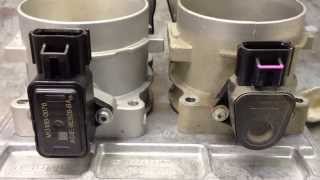
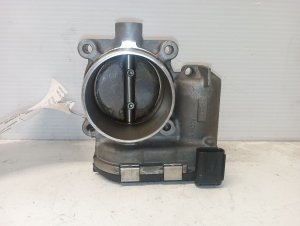
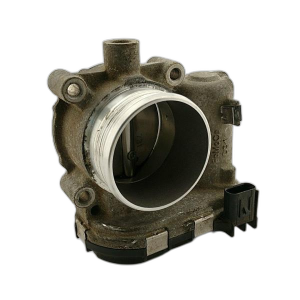
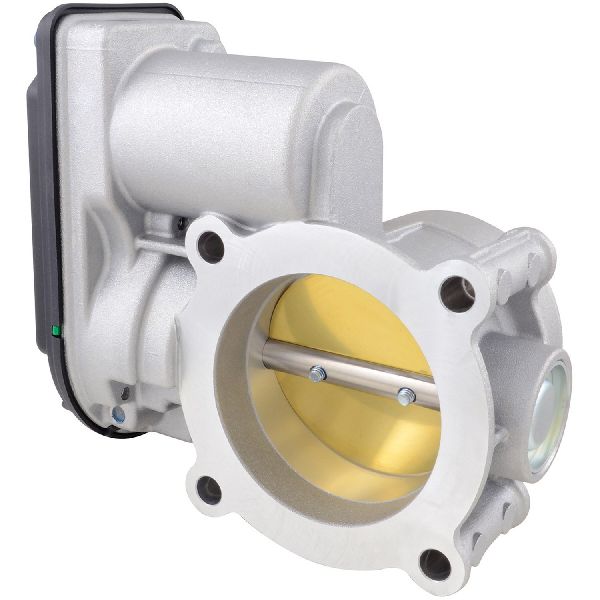
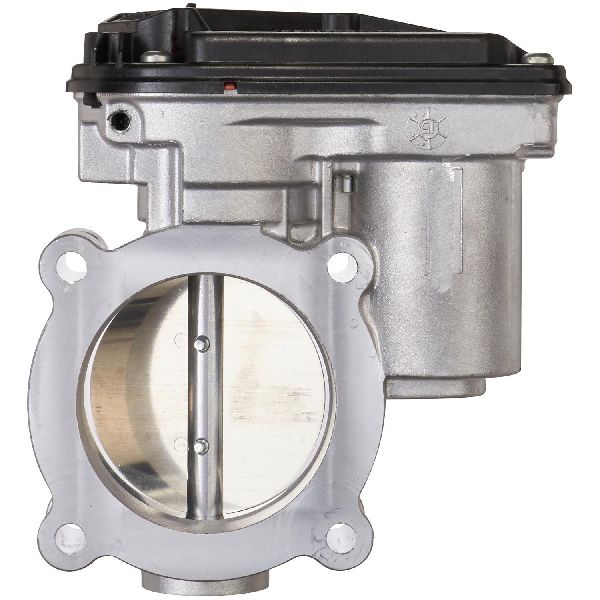
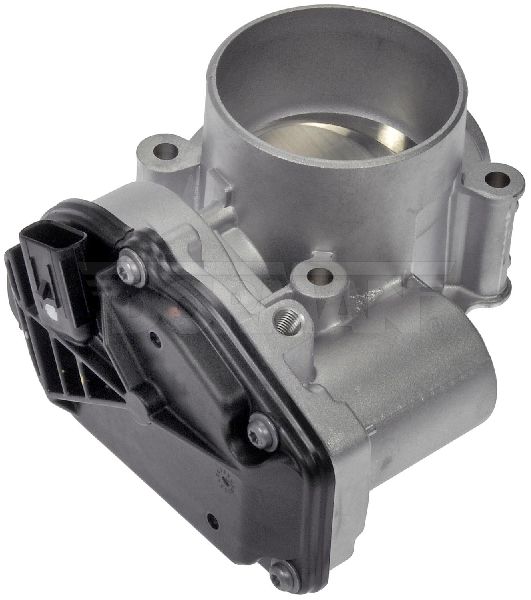
- Faulty Electronic Throttle Body (ETB) Assembly 🔴 High Probability → Shop Fuel Injection Throttle Body This is a well-documented common failure part on many Ford vehicles from this era, including the Fusion. Internal components, specifically the non-serviceable throttle position sensors, fail due to wear or contamination, causing the correlation error. A manufacturer report for a similar Ford platform (NHTSA ODI #10537825) confirmed that pinpoint tests showed the throttle actuator control motor failing, requiring a full assembly replacement.
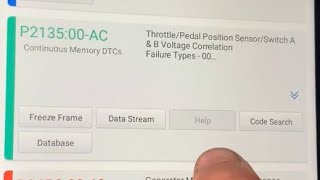
How to confirm: Use a scan tool to monitor the live data for the two throttle position sensor voltages (TP1 and TP2). With the key on and engine off, slowly press the accelerator pedal. The two voltages should move smoothly and inversely (e.g., one sweeps 0.5V to 4.5V while the other sweeps 4.5V to 0.5V). A jump, drop, or freeze in one of the signals indicates a faulty sensor within the throttle body.
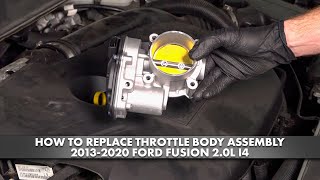
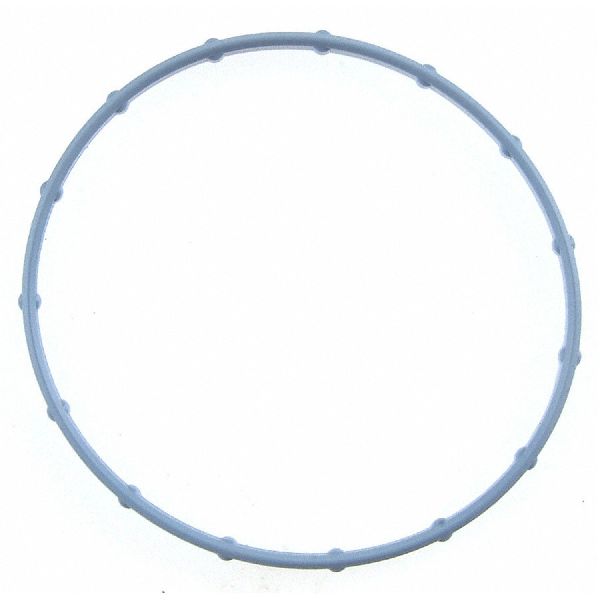
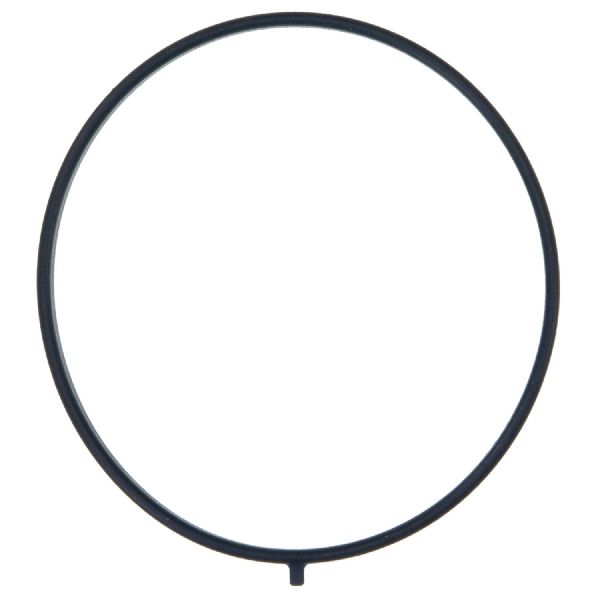
Typical fix: Replace the entire electronic throttle body assembly and the gasket. 🎬 Watch: Step-by-step 2.0L throttle body replacement walkthrough After replacement, a throttle body relearn procedure is required to ensure proper idle and performance.
Est. part cost: $70-$240 - Damaged Wiring or Poor Connection ⚪ Low Probability While less common than ETB failure, wiring harnesses can be subject to heat and vibration, leading to chafing or loose pins at the throttle body connector.
How to confirm: Visually inspect the wiring harness and connector going to the throttle body for any signs of damage, corrosion, or loose pins. With the scan tool graphing the sensor data, wiggle the connector and wiring to see if it causes the voltage signals to drop out or become erratic.
Typical fix: Repair the damaged wiring or clean the connector terminals. If the connector itself is damaged, it may need to be replaced with a pigtail connector.
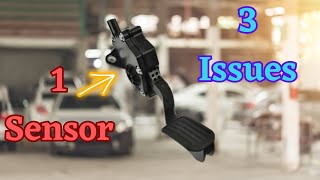
Est. part cost: $10-$50 - Faulty Accelerator Pedal Position (APP) Sensor ⚪ Low Probability → Shop Accelerator Pedal Assembly
How to confirm: This is less common than a throttle body failure for this code. A scan tool can also be used to monitor the APP sensor signals (APP1 and APP2). If the throttle body and wiring check out, the pedal assembly becomes the next suspect. A Reddit user with a 2020 Fusion reported having to replace the pedal assembly after a new throttle body did not fix a recurring P2135 code.
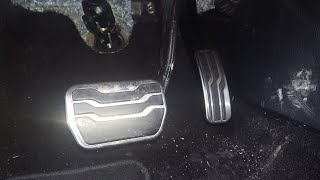
Typical fix: Replace the entire accelerator pedal assembly, as the sensor is integrated into it. 🎬 See how to replace the accelerator pedal assembly
Est. part cost: $50-$150
Rare But Worth Checking
- Faulty Powertrain Control Module (PCM): → Shop Engine Control Module (ECM) This is extremely rare and should only be considered after all other possibilities, including wiring, have been thoroughly ruled out by a professional. A PCM failure can mimic many other sensor failures. NHTSA ODI #10748493 notes that in some Ford vehicles, a PCM reset may be required alongside sensor replacement to fully clear the fault.
Diagnosis Steps
- Connect an OBD-II scanner and confirm the presence of code P2135. Check for any other related codes like P2111, P2112, or P0122.
- Using the scanner's live data function, graph the voltage readings for Throttle Position Sensor 1 (TP1) and Sensor 2 (TP2).
- With the key in the 'ON' position (engine off), slowly and steadily press the accelerator pedal to the floor and then release it. The two voltage signals should be smooth and have an inverse relationship (one goes up while the other goes down).
- If you see any spikes, drops, or flat lines in one of the sensor readings, the electronic throttle body assembly is almost certainly faulty and needs to be replaced. NHTSA ODI #10817084 describes a case where a TPS reading became stuck at 82%, confirming a defective throttle body.
- If the sensor data looks good, turn the vehicle off. Inspect the throttle body electrical connector and wiring for any signs of corrosion, damage, or loose pins.
- If the wiring looks okay, perform a wiggle test. While graphing the sensor data, wiggle the harness and connector to see if you can induce a fault.
- If the throttle body and wiring are confirmed to be good, the next most likely cause is the accelerator pedal position sensor assembly.
- After replacing the throttle body, perform a throttle relearn procedure. A common method is to turn the key to 'ON' (engine off), slowly press the gas pedal to the floor and release it three times, then start the engine and let it idle to relearn idle trims. Driving the vehicle for several miles may also be required to complete the process. 🎬 Watch: How to perform the electronic throttle calibration
- As a last resort, if all sensors and wiring are confirmed to be working correctly, the issue could be with the PCM, but this is very unlikely.
Parts You'll Likely Need
- Electronic Throttle Body Assembly
(OEM #DS7Z-9E926-D (Supersedes DS7Z-9E926-A))— This is the most common cause of P2135 on the Ford Fusion. The internal sensors fail, causing a correlation error. This part number is widely cited for the 1.5L, 2.0L, and 2.5L engines in this generation.
Trusted brands: Motorcraft, Bosch, Hitachi, Dorman
OEM price range: $150-$240
Aftermarket price range: $70-$180
Related Codes That Often Appear With This One
- P2111 — This code means 'Throttle Actuator Control System - Stuck Open'. It often appears with P2135 because the sensor correlation fault can cause the PCM to lose control of the throttle plate, leading it to believe it's stuck.
- P2112 — This code means 'Throttle Actuator Control System - Stuck Closed'. Similar to P2111, it points to a loss of control over the throttle plate, reinforcing that the throttle body assembly is the likely root cause.
- P0122 — This code for 'Throttle/Pedal Position Sensor 'A' Circuit Low' can accompany P2135 as it indicates a specific fault in one of the two sensors that P2135 is comparing.
- P2106 — This code for 'Throttle Actuator Control System - Forced Limited Power' frequently accompanies P2135 during limp mode events, as noted in NHTSA ODI #10403627.
Technical Service Bulletins (TSBs) & Recalls
- TSB 09-23-5: Addressed MIL or wrench light with DTC P2135 on some 2010 Fusions, identifying the cause as ETB hardware and advising replacement.
- Customer Satisfaction Program 13N03: Not a TSB, but an extended warranty program covering the throttle body on certain 2009-2013 models for 10 years/150,000 miles due to known failure issues.
Platform-Specific Known Issues
- Ford issued a Customer Satisfaction Program (13N03) for older models (up to 2013) which extended the warranty on the throttle body to 10 years/150,000 miles, highlighting the known issues with this component due to internal contamination. While this program may not cover the entire 2013-2020 range, it establishes a history of problems with this part.
- A Technical Service Bulletin (TSB 09-23-5) was issued for the 2010 Fusion for P2135, directly calling for the replacement of the Electronic Throttle Body (ETB).
Mechanic-Grade Diagnostic Values
- TP1 and TP2 Voltage Check (Key On, Engine Off) — expected: The two sensor voltages should be inverse. For example, TP1 might read ~4.5V at closed throttle and sweep down to ~0.5V at wide-open throttle, while TP2 does the opposite, sweeping from ~0.5V to ~4.5V. The movement must be smooth with no spikes or dropouts.. Failure: Any reading that is erratic, jumps, freezes, or does not move smoothly indicates a failure within the throttle body's internal sensors.
- Throttle Body Connector Pin Voltage (Key On, Engine Off) — expected: Using a multimeter on the harness-side connector: Pin 2 should have 4.5-5.0V (Reference Voltage), and Pin 4 should have 12V (Power).. Failure: Absence of these voltages points to a wiring or PCM issue, not a throttle body failure.
Scan Tool Commands That Help
- FORScan or Ford IDS: Throttle Body Relearn / Reset All Adaptations — This function should be used after replacing the electronic throttle body. It clears the old learned values from the PCM, forcing it to recalibrate to the new sensor's positions. Failure to do this can result in rough idle, stalling, or the P2135 code returning.
Wiring & Ground Locations
- Throttle Body Connector (C134) — Plugged directly into the electronic throttle body assembly at the front of the engine's intake manifold.. This is the single connection point for the two TPS sensors and the throttle motor. Corrosion, moisture, or backed-out pins in this connector are a common point of failure and can mimic a faulty throttle body. A wiggle test on this connector while watching live data is a key diagnostic step.
- C134 Pinout (Harness Side) — The main engine harness connector that plugs into the throttle body.. Knowing the pin functions allows for direct testing with a multimeter to rule out wiring issues before replacing the throttle body. Pin 2: 5V Reference, Pin 4: 12V Power.
Real Owner Repair Stories
- Reddit user, r/fordfusion (2020 Ford Fusion, 54,900 miles) — Wrench light appeared intermittently, then wrench and check engine light with code P2135. Eventually, the car went into limp mode.
❌ Tried (didn't work) The dealership first replaced the electronic throttle body and gasket.
✅ What actually fixed it When the code returned, the dealership then replaced the accelerator pedal assembly ('Pedal assy'). The issue still returned a third time, indicating a complex or intermittent wiring problem, or a faulty replacement part. This story highlights that while the throttle body is the most common cause, the diagnostic path can sometimes lead to the pedal assembly or beyond.
Documented NHTSA Reports
- An owner reported in NHTSA ODI #11097577 that P2135 and P2111 codes continued to occur daily at random times even after replacing both the gas pedal and the throttle body, suggesting deeper electrical or software issues.
- NHTSA ODI #10403627 describes a dangerous loss of power at highway speeds accompanied by a wrench light and P2135, noting the issue occurred more frequently when the A/C was on.
OEM Part Supersession History
9L8Z-9E926-A, DS7Z-9E926-A→DS7Z-9E926-D— Ford updated the part to improve reliability and address the known failure modes related to internal contamination and electronic faults.
Heads up: The newer part DS7Z-9E926-D is a direct replacement for the older versions and should be used for all repairs.
Diagnostic Flowchart
Other Known Issues on This Vehicle
Issues unrelated to this code that are worth knowing about as an owner of this generation:
- Coolant Intrusion into Cylinders (EcoBoost Engines) 🔴 High — A known design flaw in 1.5L, 1.6L, and 2.0L EcoBoost engines where the block design allows coolant to leak into cylinders, causing misfires, white exhaust smoke, and eventual catastrophic engine failure. (Ref: TSB 21-2337 (for 1.5L))
- Degraded Shifter Cable Bushing 🔴 High — The bushing that attaches the shifter cable to the transmission can degrade or detach, preventing the vehicle from shifting into the intended gear. This can lead to a rollaway risk if the vehicle is not actually in Park. Affects 2013-2016 models. (Ref: Recall 22S43 / NHTSA 22V413000)
- Steering Gear Motor Bolt Corrosion 🔴 High — In regions where road salt is used, the bolts securing the electric power steering motor can corrode and fracture, causing a sudden loss of power steering assist. Affects 2013-2016 models. (Ref: Recall 19S26 / NHTSA 19V632000)
- Harsh or Delayed Shifting (6F35 Transmission) 🟠 Medium — Many owners report issues with the 6F35 automatic transmission, including hard shifts, shuddering, or slipping. Sometimes addressed with a PCM/TCM software update, but may require valve body or transmission replacement.
- Swollen Lug Nuts 🟡 Low — A very common annoyance where the chrome-capped factory lug nuts swell due to corrosion underneath the cap, making them impossible to remove with the standard lug wrench.
Used vs. New Parts: Buying Guide for This Vehicle
When a used part is the smart pick: Never. Given that the electronic throttle body is a known high-failure item due to internal electronic wear and contamination, purchasing a used part is a significant gamble. The used part may have the same underlying defect and could fail shortly after installation, wasting time and money.
What to inspect on the donor part:
- Not applicable, as a used part is not recommended.
OEM-only on this vehicle (don't cheap out):
- While not strictly OEM-only, using a genuine Motorcraft part (DS7Z-9E926-D) is the safest bet for a long-term repair.
Aftermarket brands forum-validated for this vehicle:
- Dorman: Often mentioned as a reliable alternative, with some products claiming an improved design (e.g., non-contact Hall effect sensor, proprietary 'Sensor Shield') to prevent the original failure mode.
- Bosch: A reputable OEM supplier that also offers parts to the aftermarket.
- Hitachi: Another well-regarded brand for electronic components.
Brands owners have reported issues with on this vehicle:
- Unbranded, no-name parts from online marketplaces should be avoided. These often have high failure rates and may not perform the relearn procedure correctly, leading to a recurring P2135 code.
Real Owner Stories
Aggregated from forums and TSBs cited above. Mileages and costs reflect what owners reported in those sources.
2020 Ford Fusion
Symptoms: Recurring P2135 code. The dealer initially replaced the throttle body, but the code returned later.
What fixed it: Replacement of the accelerator pedal assembly.
Source hint: Reddit - r/fordfusion (May 2023) URL: https://www.reddit.com/r/fordfusion/comments/13v708h/code_p2135/
2020 Ford Fusion 1.5L — 53000 miles
Symptoms: Experienced code P2135; the vehicle was taken to the dealer for repair.
What fixed it: The dealer replaced the throttle body, though the owner noted the code returned a month later, suggesting a secondary issue.
Source hint: Reddit - r/MechanicAdvice (April 2023) URL: https://www.reddit.com/r/MechanicAdvice/comments/1305qf4/2020_ford_fusion_se_15/
Related OBD-II Codes
Frequently Asked Questions
Is there an extended warranty for the throttle body on my 2013 Ford Fusion?
My 2010 Fusion has a wrench light and P2135; is there a specific fix for this year?
I replaced the throttle body on my Fusion but the P2135 code came back. What else could it be?
Do I need to do anything special after installing a new throttle body (DS7Z-9E926-D)?
Can I just clean the sensors inside the throttle body to fix the correlation error?
Are there other major issues I should watch for on my 2013-2016 Fusion while fixing this?
Helpful Videos

Used OEM Parts in Stock
New Aftermarket Parts Available


The information in this article is provided for general reference and educational purposes only. Vehicle specifications, procedures, and part compatibility can vary by production date, trim level, and region. Always consult your vehicle's factory service manual and verify part numbers before purchasing or performing repairs. Safety-critical components such as airbags, seat belts, and braking systems should be installed by a qualified professional.
- Ford Fusion:
- 🧭 Diagnostic Flowchart
- 🎬 Helpful Videos
- 🛍️ Shop This Part
- What's Unique About the 2013-2020 Ford Fusion
- Symptoms You May Notice
- Most Likely Causes
- Rare But Worth Checking
- Diagnosis Steps
- Parts You'll Likely Need
- Related Codes That Often Appear With This One
- Technical Service Bulletins (TSBs) & Recalls
- Platform-Specific Known Issues
- Mechanic-Grade Diagnostic Values
- Scan Tool Commands That Help
- Wiring & Ground Locations
- Real Owner Repair Stories
- Documented NHTSA Reports
- OEM Part Supersession History
- Other Known Issues on This Vehicle
- Used vs. New Parts: Buying Guide for This Vehicle
- Real Owner Stories
- 2020 Ford Fusion
- 2020 Ford Fusion 1.5L — 53000 miles
- Related OBD-II Codes
- Frequently Asked Questions
- 🎟️ Get 5% Off