

P2135 on 2014-2019 GMC Sierra: Throttle Position Sensor Causes and Fixes
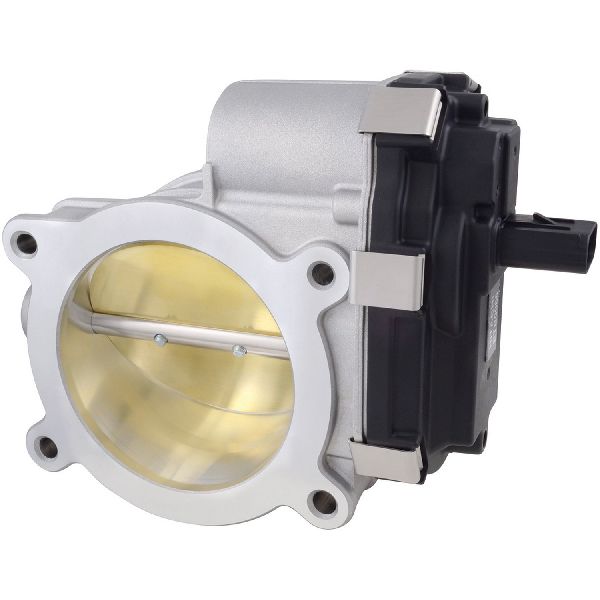
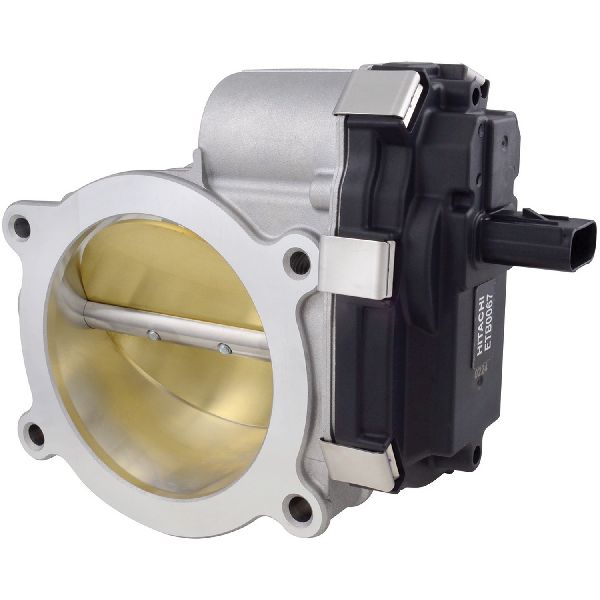
On a 2014-2019 GMC Sierra, code P2135 is almost always caused by a failing throttle position sensor (TPS), which is integrated into the throttle body. This triggers the 'Reduced Engine Power' warning. The fix is to replace the entire throttle body assembly, which costs between $150 and $400 for the part. A simple, tool-free idle relearn procedure is mandatory after replacement.
- P2135 on a 2014-2019 Sierra almost always means the throttle body has failed electronically.
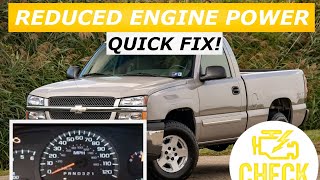
- The truck will enter 'Reduced Engine Power' mode, making it unsafe for normal driving.
- The correct fix is to replace the entire throttle body assembly; simply cleaning it will not solve the problem.
- After replacement, a throttle idle relearn procedure is mandatory to prevent high or erratic idling.
- Always check the wiring connector at the throttle body for damage before replacing parts.
What's Unique About the 2014-2019 GMC Sierra
The P2135 code is a notoriously common issue on GM trucks, including the 2014-2019 Sierra and its platform mates like the Chevrolet Silverado. The problem was so widespread on the previous generation that GM issued a Special Coverage Adjustment extending the warranty for this specific failure. While that specific TSB and warranty extension don't apply to these newer models, the failure pattern remains the same: the electronic sensors integrated into the throttle body wear out, making replacement of the complete throttle body assembly the standard and most reliable repair.
Generation note: This guide covers the third generation (K2XX platform, 2014-2018) and the first year of the fourth generation (T1XX platform, 2019) of the GMC Sierra. The causes and repair procedures for code P2135 are consistent across these models for the specified engines.
Symptoms You May Notice
- "Reduced Engine Power" message on the dashboard
- Check Engine Light is on
- Vehicle has very limited acceleration and power (limp mode)
- "Service StabiliTrak" or "Service Traction Control" message may also appear
- Unstable or high idle
- Hesitation or surging during acceleration
- Engine may stall when coming to a stop
- Replacing the Accelerator Pedal Position (APP) Sensor. P2135 specifically points to a sensor correlation error at the throttle body, not the pedal.
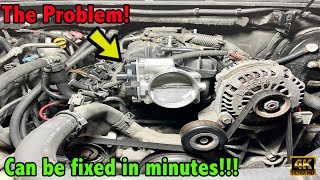
- Only cleaning the throttle body. 🎬 Watch: How to quickly fix the P2135 sensor issue While cleaning a dirty throttle body is good maintenance, it will not fix the internal electronic failure of the sensors that causes this code.
Most Likely Causes
- Faulty Throttle Body Assembly 🔴 High Probability → Shop Fuel Injection Throttle Body The internal throttle position sensors (TPS) are integrated into the throttle body and are a known high-failure item on GM trucks. Electronic failure of these sensors is the primary cause of P2135.
How to confirm: After verifying no wiring issues, monitor TP Sensor 1 and TP Sensor 2 on a live data scan tool. A voltage difference of more than 0.2V-0.3V between the sensors, or erratic/jumping readings from one sensor while the other is smooth, confirms the failure.
Typical fix: Replace the entire throttle body assembly. After replacement, a throttle idle relearn procedure is mandatory.
Est. part cost: $150-$400 - Damaged Wiring or Poor Connection at Throttle Body ⚪ Low Probability → Shop Fuel Injection Throttle Body The wiring harness connector at the throttle body is exposed to engine heat and vibration, which can lead to corrosion, pushed-out pins, or chafed wires over time.
How to confirm: Visually inspect the throttle body connector for pushed-out pins, corrosion, or broken wires. Perform a 'wiggle test' on the connector and harness with the engine running to see if it affects the idle or sensor readings on a scan tool.
Typical fix: Repair the damaged section of the wiring harness or replace the connector pigtail.
Est. part cost: $20-$50
Rare But Worth Checking
- Faulty Accelerator Pedal Position (APP) Sensor: → Shop Accelerator Pedal Assembly While P2135 typically points to the throttle body, a failing gas pedal sensor can sometimes cause similar correlation codes. However, a faulty APP sensor usually sets a different code, like P2138.
- Powertrain Control Module (PCM) Issue: → Shop Engine Control Module (ECM) In very rare cases, the PCM itself can be the source of the fault. This should only be considered after all other possibilities, including the throttle body and wiring, have been definitively ruled out.
Diagnosis Steps
- Retrieve all stored DTCs with an OBD-II scanner. Confirm P2135 is the primary code.
- Inspect the wiring harness and electrical connector at the throttle body. Look for any signs of damage, corrosion, or loose pins. Perform a wiggle test.
- Using a scan tool with live data capability, graph the voltage readings of Throttle Position Sensor 1 and Throttle Position Sensor 2 while slowly pressing and releasing the accelerator pedal with the key on, engine off. The voltages should change smoothly and mirror each other. Jumps, spikes, or dropouts in one sensor's reading indicate a faulty throttle body.
- If wiring is intact and sensor readings are erratic, the throttle body assembly is faulty and needs to be replaced.
- After replacing the throttle body, clear all DTCs.
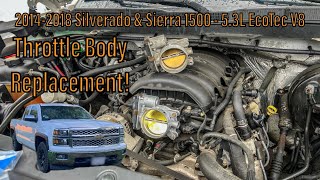
- Perform the throttle idle relearn procedure. This is critical to ensure the engine idles correctly. A common tool-free method is: 1. Start the engine and let it idle in Park for 3 minutes. The idle may be high but should start to decrease. 2. Turn the ignition OFF for 60 seconds. 3. Start the engine again and let it idle in Park for another 3 minutes. The idle should now be normal. If not, a short drive cycle may be required. 🎬 Watch: Electronic throttle body relearn procedure demonstration
Parts You'll Likely Need
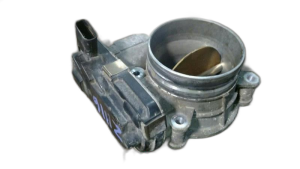
- Throttle Body Assembly
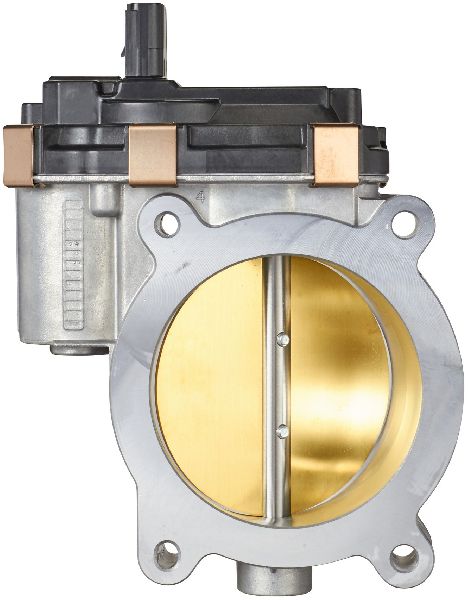
(OEM #ACDelco 12670839 (for 5.3L/6.2L), ACDelco 12670838 (for 4.3L) - Verify with VIN)— This is the most common failure for code P2135 on these trucks, as the internal throttle position sensors fail. The sensors are not sold separately for this generation, requiring the replacement of the entire assembly.
Trusted brands: ACDelco (OEM), Hitachi, Standard Motor Products, Dorman
OEM price range: $250-$400
Aftermarket price range: $150-$300
Technical Service Bulletins (TSBs) & Recalls
- TSB #11-06-04-007C (Pertains to previous generation but highlights the known issue)
- TSB 18-NA-355 (Addresses transmission shudder, a separate common issue on these trucks)
- Special Coverage Adjustment 17336 (Addresses A/C condenser leaks, another common platform issue)
- Bulletin #11-06-04-007C provides a specific procedure for replacing the throttle position sensor cover for concerns regarding an illuminated indicator lamp, a reduced power message, and DTC P2135.
Platform-Specific Known Issues
- GM issued Technical Service Bulletin (TSB) #11-06-04-007C and Special Coverage Adjustment #11273A for P2135 on the previous generation (up to 2011 models), extending the warranty to 10 years/120,000 miles for this issue. While not directly applicable to the 2014-2019 models, it establishes a long history of this specific part failure on GM trucks.
Mechanic-Grade Diagnostic Values
- TP Sensor 1 vs. TP Sensor 2 Voltage Correlation — expected: The two sensor voltages should mirror each other (one increasing, one decreasing) and stay within a very close range.. Failure: A voltage difference of more than 0.2V to 0.3V between the two sensors at any given throttle position will trigger the P2135 code.
- 5-Volt Reference at Throttle Body Connector — expected: 4.75V to 5.25V with key on, engine off.. Failure: Voltage outside of this range indicates a problem with the PCM or the wiring, not necessarily the throttle body itself.
Scan Tool Commands That Help
- GDS2/Tech2: Idle Learn Reset / ETCS Reset — This function should be used after replacing the throttle body assembly. It forces the ECM to immediately relearn the new sensor's baseline values for closed throttle, which is faster and more reliable than the manual idle relearn procedure.
- GDS2/Tech2: Freeze Frame / Failure Records — For intermittent P2135 faults, viewing the freeze frame data is critical. It provides a snapshot of all sensor values, including the exact conflicting TP1 and TP2 voltages, at the moment the fault was logged.
Wiring & Ground Locations
- G103 / G104 — Typically located on the rear of the cylinder heads/engine block.. These are main engine grounds. A loose or corroded connection at these points can cause a variety of intermittent electronic issues and sensor data problems, including the voltage correlation error seen in P2135. They should be inspected for tightness and cleanliness before replacing expensive components.
- Throttle Body Connector (X108 on some diagrams) — The 8-pin electrical connector plugged directly into the throttle body assembly.. This is the single point of failure for all wiring-related causes of P2135. Wires are known to break internally within 1-4 inches of the connector due to engine vibration and heat. A 'wiggle test' of this harness while monitoring live data is a key diagnostic step.
Real Owner Repair Stories
- GM-Trucks.com user PH-Wolf (2011 Chevrolet Silverado with 52,000 miles (previous generation, but identical failure pattern)) — Check Engine Light, Traction Control light, 'Reduced Engine Power', 'Service Traction Control', 'Service Stabilitrak' messages. Codes P0121 and P2135.
❌ Tried (didn't work) The user was out of town and went directly to a dealer for diagnosis.
✅ What actually fixed it The Chevrolet dealer replaced the throttle position sensor (TPS) on the throttle body, reprogrammed the ECU, and performed a throttle relearn procedure. The total cost was $260 and the fix was permanent. - NHTSA ODI #10669832 — An owner reported experiencing "Reduced Power and Stabilitrac" problems displayed on the dash in extreme cold temperatures. A scan revealed DTC code P2135, which they noted has to do with the throttle position sensor.
Documented NHTSA Reports
- NHTSA ODI #10495252: An owner reported that after a P2135 code was read, the truck stopped accelerating and would not go over 25 mph, taking about two full minutes to reach that speed.
- NHTSA ODI #11341685: A report describes a vehicle entering reduced power mode while driving, with codes P1516, P2135, and P0120 returning for a third time.
- NHTSA ODI #11080681: An owner reported safety concerns after the vehicle dropped speed to 20 mph on the highway, noting check engine codes P0120 and P2135.
OEM Part Supersession History
12627217, 12669073→12670839— Standard part evolution for improved reliability or manufacturing changes.
Heads up: The newest part number (12670839) is the correct service replacement for the earlier numbers on the 5.3L and 6.2L engines.
Diagnostic Flowchart
Other Known Issues on This Vehicle
Issues unrelated to this code that are worth knowing about as an owner of this generation:
- Active/Dynamic Fuel Management (AFM/DFM) Lifter Failure 🔴 High — Common issue, particularly on 5.3L L83 and 6.2L L86 engines. Can occur as early as 60,000 miles but is more frequent at higher mileage (80,000+). Regular oil changes are critical.
- 8-Speed (8L90/8L45) Transmission Shudder/Harsh Shifting 🟠 Medium — Widespread on 2015-2019 models equipped with the 8-speed automatic. The issue is a torque converter shudder that feels like driving over rumble strips, typically between 40-70 mph. (Ref: TSB 18-NA-355 (recommends fluid flush with Mobil 1 Synthetic LV ATF HP Blue Label))
- Leaking A/C Condenser 🟠 Medium — Very common failure on 2014-2018 models. The condenser, which is a combination unit with the transmission cooler, is prone to cracking from thermal stress, causing refrigerant to leak out. (Ref: Special Coverage Adjustment 17336 (extends warranty for this specific leak on some models))
- Cracked High-Pressure Fuel Pump 🔴 High — The high-pressure fuel pump, driven by the camshaft, can develop cracks leading to fuel leaks and potential fire risk. This was subject to a recall. (Ref: Recall N182202781)
Used vs. New Parts: Buying Guide for This Vehicle
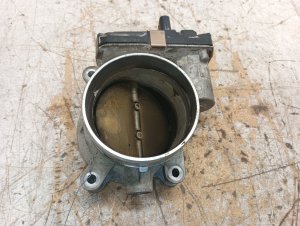
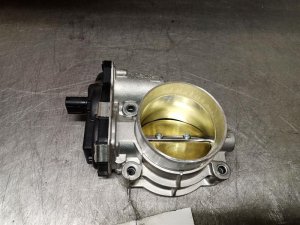
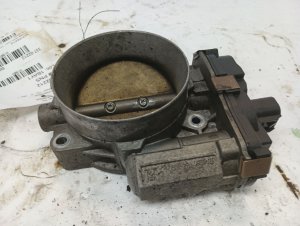
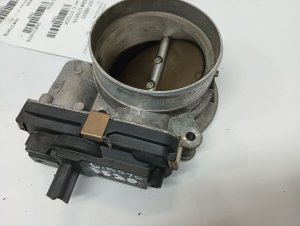
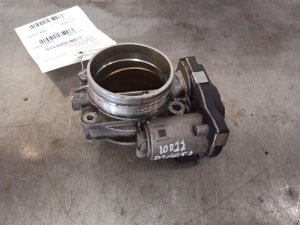
When a used part is the smart pick: A used OEM throttle body from a low-mileage, late-model donor vehicle can be a cost-effective alternative to a new aftermarket part. Given that this is a high-failure item, a used part is only recommended if its history is known or its mileage is very low.
Donor-vehicle mileage cap: roughly under 50000 miles for the part to have meaningful remaining life.
What to inspect on the donor part:
- Verify the donor vehicle's VIN to ensure it's from the correct year range and engine type.
- Inspect the electrical connector pins for any signs of corrosion, bending, or damage.
- Check the throttle plate for excessive carbon buildup, which could indicate high mileage or other engine issues.
- Ensure there are no cracks or damage to the plastic sensor housing on the side of the throttle body.
OEM-only on this vehicle (don't cheap out):
- Throttle Body Assembly
Aftermarket brands forum-validated for this vehicle:
- ACDelco (OEM)
- Hitachi (often an OEM supplier)
Brands owners have reported issues with on this vehicle:
- Unnamed, no-brand parts from online marketplaces are a significant gamble due to the electronic sensitivity of this component. Forum discussions frequently advise against ultra-cheap options as they often fail prematurely.
Real Owner Stories
Aggregated from forums and TSBs cited above. Mileages and costs reflect what owners reported in those sources.
2014-2019 GMC Sierra
Symptoms: The dashboard displayed 'Reduced Engine Power' and 'Service Traction Control' messages.
What fixed it: Dealer repair of the throttle body assembly.
Source hint: GM-Trucks.com: A thread titled 'P2135 code reduced engine power service traction contro'
2015-2020 GMC Yukon
Symptoms: The owner experienced a frustrating repair journey, replacing multiple parts before identifying the actual fault.
What fixed it: The diagnostic process led to suspecting a wiring issue after other parts failed to clear the throttle fault.
Source hint: TahoeYukonForum.com: A user in the thread 'Throttle fault code P2135'
2014-2019 GMC Sierra
Symptoms: After cleaning the throttle body, the idle was not working correctly and remained unstable.
What fixed it: Performing the specific throttle idle relearn procedure.
Source hint: GM-Trucks.com: In a thread titled 'Cleaned TB and idle relearn not working'
Related OBD-II Codes
Frequently Asked Questions
Does Special Coverage Adjustment #11273A or TSB #11-06-04-007C cover my 2014-2019 GMC Sierra?
Can I just clean the throttle body on my 5.3L L83 to fix the P2135 code?
Is there a tool-free way to perform the idle relearn on my Sierra after replacing the throttle body?
My Sierra is showing 'Reduced Engine Power' and 'Service StabiliTrak' at the same time. Are these related?
Which replacement throttle body brand is recommended for the 6.2L L86 engine?
Could my P2135 code be caused by the same issue as the transmission shudder mentioned in TSB 18-NA-355?
Helpful Videos

Used OEM Parts in Stock
New Aftermarket Parts Available


The information in this article is provided for general reference and educational purposes only. Vehicle specifications, procedures, and part compatibility can vary by production date, trim level, and region. Always consult your vehicle's factory service manual and verify part numbers before purchasing or performing repairs. Safety-critical components such as airbags, seat belts, and braking systems should be installed by a qualified professional.
- GMC Sierra:
- 🧭 Diagnostic Flowchart
- 🎬 Helpful Videos
- 🛍️ Shop This Part
- What's Unique About the 2014-2019 GMC Sierra
- Symptoms You May Notice
- Most Likely Causes
- Rare But Worth Checking
- Diagnosis Steps
- Parts You'll Likely Need
- Technical Service Bulletins (TSBs) & Recalls
- Platform-Specific Known Issues
- Mechanic-Grade Diagnostic Values
- Scan Tool Commands That Help
- Wiring & Ground Locations
- Real Owner Repair Stories
- Documented NHTSA Reports
- OEM Part Supersession History
- Other Known Issues on This Vehicle
- Used vs. New Parts: Buying Guide for This Vehicle
- Real Owner Stories
- 2014-2019 GMC Sierra
- 2015-2020 GMC Yukon
- 2014-2019 GMC Sierra
- Related OBD-II Codes
- Frequently Asked Questions
- 🎟️ Get 5% Off