

P2135 on 2005-2010 GMC Sierra 2500: Throttle Position Sensor Causes and Fixes
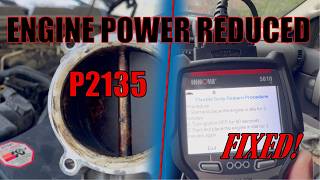
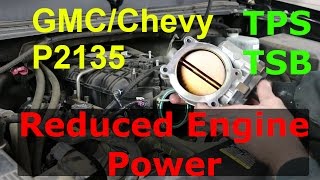
On a 2005-2010 GMC Sierra 2500, code P2135 almost always indicates a failing throttle body assembly, which contains the throttle position sensors. This triggers the 'Reduced Engine Power' message and limp mode. The most common fix is replacing the entire throttle body assembly or the throttle position sensor cover/kit. A throttle relearn procedure is required after the repair.
- P2135 on this truck almost always means the throttle position sensor has failed, which is part of the throttle body assembly.
- Your truck will go into 'Reduced Engine Power' mode, making it unsafe for normal highway driving.
- The most reliable fix is often to replace the entire throttle body assembly, though a cheaper sensor kit is available per a GM TSB.
- After replacing the part, a 'throttle relearn' procedure is necessary for the engine to idle correctly. This can often be done without special tools.
- Always check the wiring and connector to the throttle body before buying parts, as chafing can cause the same code.
What's Unique About the 2005-2010 Gmc SIERRA 2500
This generation of GMC trucks is notoriously prone to P2135 due to the design of the throttle body's integrated electronics. General Motors issued multiple Technical Service Bulletins (TSBs), including the well-documented #11-06-04-007C, that specifically address this code by providing a procedure to replace only the throttle position sensor cover and its internal components, acknowledging a known weakness. While the TSB provides a cheaper fix using a sensor kit (P/N 19259452), many owners and mechanics on forums report that replacing the entire throttle body assembly is a more reliable long-term repair, as the internal motor contacts can also wear. GM also released Special Coverage Adjustment #11273, extending the warranty to 10 years/120,000 miles for this specific issue on many V8 models.
Diagnostic Flowchart
Tap your situation to follow the diagnostic path that matches what you're seeing on this vehicle.
Generation note: This year range covers the end of the GMT800 platform (2005-2006, and 'Classic' 2007 models) and the beginning of the GMT900 platform (2007.5-2010). While the P2135 code has the same meaning and general cause for both, part numbers for the throttle body and specific TSB applicability may differ. TSB #11-06-04-007C and Special Coverage #11273 primarily apply to 2008 and newer models. Always verify the correct part for your specific model year and VIN.
Symptoms You May Notice
- Check Engine Light is on
- "Reduced Engine Power" message on the dashboard
- "Service Stabilitrak" or "Service Traction Control" message may also appear
- Vehicle has very limited acceleration (limp mode)
- Engine may stall, hesitate, or surge
- Unstable or rough idle
- Hard shifting from the transmission as a result of erratic throttle signals
- Replacing the accelerator pedal assembly. The problem is almost always at the engine's throttle body, not the driver's pedal, for code P2135.
- Cleaning the throttle body without replacement. While cleaning carbon buildup is good maintenance and recommended during the repair, it will not fix the internal electronic failure of the sensors that causes P2135.
Most Likely Causes
- Faulty Throttle Body Assembly / TPS Sensor 🔴 High Probability → Shop Fuel Injection Throttle Body The integrated throttle position sensors (TPS) are a well-documented failure point on this platform, leading to multiple GM TSBs and a special warranty extension. The electronic sensors and their contacts wear out over time, causing the voltage signals to become erratic.
How to confirm: Use a scan tool to monitor live data for TPS Sensor 1 and TPS Sensor 2. Their voltage readings should change smoothly and correlate (often one rising from ~0.5V to ~4.5V, the other falling) as the accelerator is pressed. Any jumps, dropouts, or readings that don't mirror each other confirm a faulty sensor/throttle body.
Typical fix: Two common fixes exist: 1) Replace only the TPS sensor cover and gasket using a kit (e.g., ACDelco P/N 19259452) as outlined in TSB 11-06-04-007C. 2) Replace the entire throttle body assembly, which many find to be a more permanent solution. After either repair, a throttle relearn procedure is required. TSBs also note that an ECM software update may be required for 2008-2011 models.
Est. part cost: $50-$80 for sensor kit, $150-$350 for full assembly - Wiring or Connector Issue 🟡 Medium Probability The engine wiring harness is exposed to heat and vibration, which can lead to chafed wires, loose pins in the connector, or corrosion. Specific chafe points have been noted near the front of the cylinder head and other brackets on similar GM trucks.
How to confirm: Visually inspect the wiring harness leading to the throttle body for any signs of damage, melting, or corrosion. With the key on and engine off, gently wiggle the connector and harness while watching the live TPS data on a scan tool. If the voltage readings jump or the code is triggered, the harness is faulty.
Typical fix: Repair the damaged section of the wiring harness or replace the connector pigtail. Secure the harness away from any sharp edges or heat sources to prevent recurrence.
Est. part cost: $20-$50
Rare But Worth Checking
- Faulty Powertrain Control Module (PCM): → Shop Engine Control Module (ECM) This is very rare and should only be considered after the throttle body and wiring have been definitively ruled out. Diagnostic procedures in the TSB provide steps to test the PCM circuits if a new throttle body doesn't fix the issue.
- Faulty Accelerator Pedal Position (APP) Sensor: → Shop Accelerator Pedal Assembly While P2135 specifically points to a correlation issue at the throttle body, a faulty accelerator pedal sensor can sometimes cause related drivability issues. However, it would typically set its own specific codes (like P2138).
Diagnosis Steps
- Connect a scan tool to verify P2135 is the primary code and check for any other stored codes. Note any Freeze Frame data.
- Using the scan tool's live data function, graph the voltage or percentage readings for 'TPS1' and 'TPS2'.
- With the key on and engine off, slowly press and release the accelerator pedal. The two sensor readings should move smoothly without any glitches or dropouts. They should correlate in a mirrored pattern (e.g., one goes 0.5V to 4.5V, the other goes 4.5V to 0.5V). A voltage difference of more than 0.2V-0.3V between them can trigger the code.
- If the sensor data is erratic, proceed to inspect the throttle body connector. Turn the ignition off.
- Disconnect the throttle body and inspect the connector pins and terminals for corrosion, damage, or a loose fit.
- If the connector looks good, perform a 'wiggle test' on the harness while monitoring the live data to check for intermittent connection issues.
- If the wiring and connector are confirmed to be good, the throttle position sensor (and likely the throttle body assembly) is faulty and needs to be replaced.
- After replacement, perform the Throttle Relearn Procedure. A common manual method is: 1. Start the engine and let it idle in Park for 3 minutes. 2. Turn the engine off and wait 60 seconds. 3. Restart the engine and let it idle for another 3 minutes. The idle should stabilize. 4. A short drive cycle may be needed to finalize the learn process.
Parts You'll Likely Need
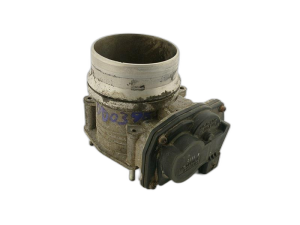
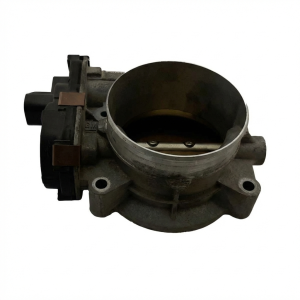
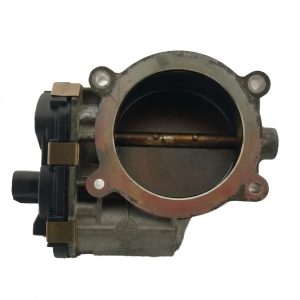
- Throttle Body Assembly
(OEM #12580760, 12679524 (Verify by VIN))— This is the most common failure. The internal throttle position sensors are integrated into the assembly and fail electronically, causing the P2135 correlation error. Replacing the whole unit is often more reliable than just the sensor.
Trusted brands: ACDelco, Delphi, Bosch, Hitachi
OEM price range: $250-$400
Aftermarket price range: $150-$250 - Throttle Position Sensor Kit
(OEM #19259452)— This is the GM-specified repair in TSB 11-06-04-007C. It replaces the sensor cover, gasket, and internal contacts without replacing the entire throttle body. It's a cheaper but potentially less durable fix.
Trusted brands: ACDelco
OEM price range: $50-$80
Aftermarket price range: $40-$60
Related Codes That Often Appear With This One
- P1516
- P0120
- P0220
Technical Service Bulletins (TSBs) & Recalls
- 11-06-04-007C: 'Diagnosis and Repair - Malfunction Indicator Lamp (MIL) Illuminated, Reduced Engine Power Message Displayed, DTC P2135 Set.' Details the procedure for replacing the TPS cover.
- 11273A (Special Coverage Adjustment): 'Special Coverage Adjustment – Throttle Position Sensor Replacement.' Extended warranty coverage for the throttle position sensor condition to 10 years or 120,000 miles.
Platform-Specific Known Issues
- GM issued Technical Service Bulletin #11-06-04-007C specifically for this issue, detailing a procedure to replace the throttle position sensor cover to resolve DTC P2135. It explicitly states not to replace the entire throttle body unless the procedure fails. The TSB also notes that a PCM reprogram may be required on 2008-2011 models after the repair.
- A Special Coverage Adjustment (#11273A) was also issued, extending warranty coverage for this specific failure to 10 years or 120,000 miles on many V8-equipped GM trucks and SUVs from this era, including the Sierra. Owners should check with a dealer to see if their vehicle is still covered.
Mechanic-Grade Diagnostic Values
- TPS1 Signal Voltage (Key On, Engine Off) — expected: ~0.5V - 0.7V at closed throttle, sweeping up to ~4.0V - 4.5V at wide-open throttle.. Failure: Voltage is erratic, jumps, has dropouts, or does not sweep smoothly as the pedal is pressed.
- TPS2 Signal Voltage (Key On, Engine Off) — expected: Signal is typically inverse to TPS1 (e.g., starts high, sweeps low) and should also be smooth with no dropouts.. Failure: Voltage is stuck, jumps, or does not correlate with TPS1's movement.
- TPS1 and TPS2 Voltage Sum — expected: The sum of the two sensor voltages should remain relatively constant, typically around 5.0V.. Failure: The sum of the voltages is less than 4.5V or more than 5.5V for 0.3 seconds.
- Throttle Actuator Motor Resistance — expected: Between 2 and 15 Ohms between terminals A and B on the throttle body.. Failure: Reading is over the limit (open circuit) or less than 1 Ohm (short circuit).
- TPS Sensor Resistance Sweep — expected: When testing resistance between the signal and reference pins, the reading should increase/decrease smoothly as the throttle plate is moved.. Failure: Resistance value stays stuck, has gaps, or jumps erratically.
Scan Tool Commands That Help
- Tech2 / GDS2: Idle Learn Reset — After replacing the throttle body or TPS sensor, this function in the 'Module Setup' or 'Special Functions' menu can be used to reset learned idle airflow values in the ECM, which can help stabilize idle speed more quickly than the manual relearn procedure.
- Tech2 / GDS2: Freeze Frame / Failure Records — When diagnosing an intermittent P2135, the freeze frame data is critical. It captures a snapshot of all sensor values at the exact moment the fault occurred. For P2135, it can show the conflicting TPS1 and TPS2 percentages or voltages that triggered the code.
Wiring & Ground Locations
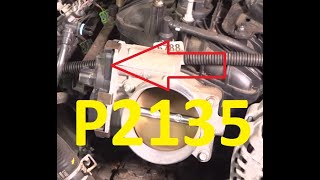
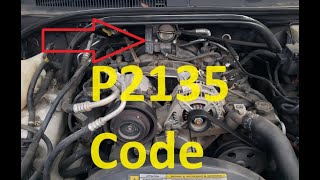
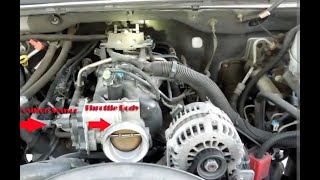
- Throttle Body Connector — Plugged directly into the throttle body assembly, located at the front of the intake manifold.. This is the single point of connection for both TPS sensors and the throttle actuator motor. Corrosion, moisture, or loose pins in this connector are a primary cause of the P2135 code. A wiggle test on this connector while watching live data is a key diagnostic step.
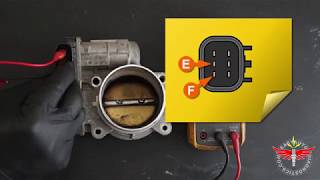
- Throttle Body Connector Pinout (Typical) — On the main harness connector that plugs into the throttle body.. Knowing the pin functions allows for direct testing with a multimeter. Typical assignments are: Pin G: TP Sensor 1 Signal (Dark Green wire), Pin F: TP Sensor 2 Signal (Purple wire), Pin E: 5 Volt Reference (Light Blue/Black wire), Pin B: Low Reference/Ground (Black/White wire).
- G102 / G103 — Typically located on the rear or front of the left-side (driver's side) cylinder head or on the engine block nearby.. These are primary engine block grounds. While not directly for the TPS low reference circuit, a poor engine ground can introduce electrical noise and voltage offsets that can affect sensor readings and contribute to intermittent correlation faults. Cleaning these grounds is a good practice when chasing electrical issues.
Real Owner Repair Stories
- HVAC Mechanic YouTube Comment (Not specified, but general GM application) — Recurring P2135 error over several years.
❌ Tried (didn't work) Spending thousands of dollars on unspecified parts replacements.
✅ What actually fixed it The owner finally fixed the issue by unplugging, blowing out with compressed air, and firmly reseating every electrical connector from the throttle body, to the ECM, to the accelerator pedal. The fix took 10 minutes and cost nothing.
OEM Part Supersession History
12580760→12679524— This is a common supersession for the throttle body assembly used on many 2005-2009 GM trucks. The new part number is the current replacement provided by GM.
Heads up: While a direct replacement, some sources note that a PCM software update may be required for the vehicle to operate correctly with the newer part, as outlined in TSB 11-06-04-007C.
Model Year Variations Within This Range
- 2008-2011: Vehicles in this range MUST have the Engine Control Module (ECM) reprogrammed with the latest software calibration after installing the TPS sensor cover kit, per TSB 11-06-04-007C. Failure to do so may result in the code returning.
Helpful Videos

Used OEM Parts in Stock
New Aftermarket Parts Available


The information in this article is provided for general reference and educational purposes only. Vehicle specifications, procedures, and part compatibility can vary by production date, trim level, and region. Always consult your vehicle's factory service manual and verify part numbers before purchasing or performing repairs. Safety-critical components such as airbags, seat belts, and braking systems should be installed by a qualified professional.
- Gmc SIERRA 2500:
- 🧭 Diagnostic Flowchart
- 🎬 Helpful Videos
- 🛍️ Shop This Part
- What's Unique About the 2005-2010 Gmc SIERRA 2500
- Symptoms You May Notice
- Most Likely Causes
- Rare But Worth Checking
- Diagnosis Steps
- Parts You'll Likely Need
- Related Codes That Often Appear With This One
- Technical Service Bulletins (TSBs) & Recalls
- Platform-Specific Known Issues
- Mechanic-Grade Diagnostic Values
- Scan Tool Commands That Help
- Wiring & Ground Locations
- Real Owner Repair Stories
- OEM Part Supersession History
- Model Year Variations Within This Range
- 🎟️ Get 5% Off