

P2135 on 2008-2011 GMC Sierra Denali: Causes, Fixes, and Throttle Body Issues
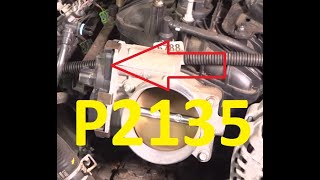
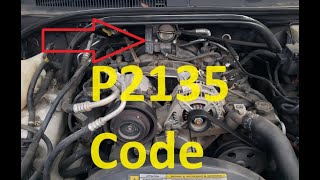
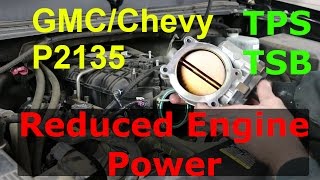
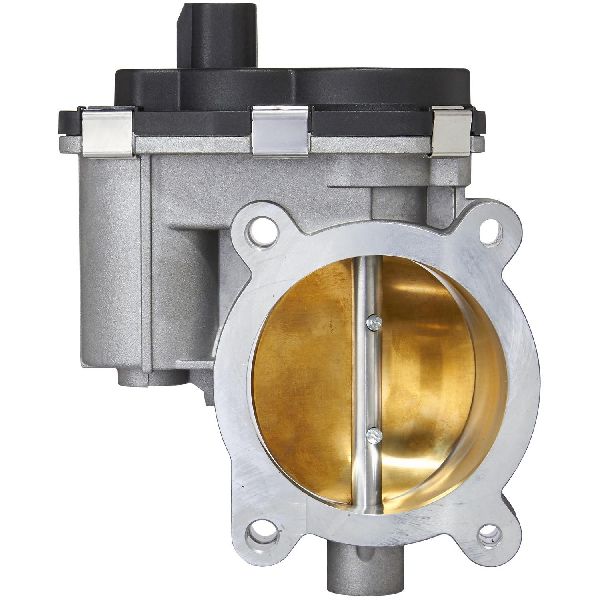
On a 2008-2011 GMC Sierra Denali, code P2135 is almost always caused by a faulty throttle position sensor (TPS). GM issued a TSB for this exact problem, providing a repair kit for the sensor cover (Part No. 19259452). If the kit isn't used, replacing the entire throttle body assembly is the common fix, costing between $150 and $400 for the part. A throttle relearn procedure is required after the repair.
- P2135 on a 2008-2011 Sierra Denali almost always points to a problem with the Throttle Position Sensor (TPS) on the throttle body.
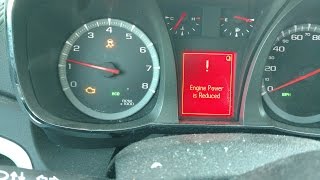
- The most common symptoms are a 'Reduced Engine Power' message and a severe lack of acceleration.
- GM created a specific TSB (#11-06-04-007C) to address this by replacing only the TPS cover, which is a cheaper alternative to a full throttle body replacement.
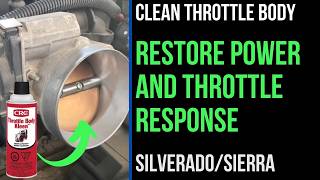
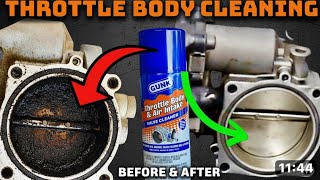
- Before replacing parts, it's worth cleaning the throttle body, as carbon buildup can sometimes cause the throttle plate to stick and trigger this code.
- After replacing the sensor or throttle body, a throttle relearn procedure is recommended to ensure proper idle and performance.
What's Unique About the 2008-2011 Gmc SIERRA DENALI
This issue is extremely common across many GM trucks and SUVs from this era, including the Sierra Denali. The problem became so widespread that GM issued a Technical Service Bulletin (TSB #11-06-04-007C 🎬 Watch: How to fix the P2135 voltage correlation code) with a specific procedure to replace only the throttle position sensor cover and terminals, rather than the entire expensive throttle body assembly. For a long time, replacing the whole throttle body was the only option, but GM later provided this more targeted and cheaper repair kit (GM Part #19259452).
Diagnostic Flowchart
Tap your situation to follow the diagnostic path that matches what you're seeing on this vehicle.
Symptoms You May Notice
- "Reduced Engine Power" message on the dashboard.
- Check Engine Light (Malfunction Indicator Lamp) is on.
- Vehicle has very little acceleration or power (limp mode).
- Unstable or high idle.
- Traction control or stability control light may also illuminate.
- Engine may stall when coming to a stop.
- Hesitation or surging during acceleration.
- Replacing the Accelerator Pedal Position (APP) Sensor. While the APP sensor can cause similar symptoms (like limp mode), P2135 specifically points to a correlation issue at the throttle body itself. The APP sensor has its own set of trouble codes (e.g., P2138).
Most Likely Causes
- Faulty Throttle Position Sensor (TPS) 🔴 High Probability → Shop Fuel Injection Throttle Body This is a well-documented, widespread failure on this GM platform. The TSB #11-06-04-007C directly addresses this component's failure. The sensor's internal contacts or the cover can fail, leading to the correlation error. This is the most common cause by a wide margin.
How to confirm: Use a scan tool to monitor live data for TP Sensor 1 and TP Sensor 2. The voltage readings should move smoothly and in opposition as the throttle is pressed. If one is erratic, jumps, or doesn't respond, the sensor is bad.
Typical fix: Replace the throttle position sensor using the official GM kit (Part #19259452) as outlined in TSB #11-06-04-007C. Alternatively, replace the entire throttle body assembly, which includes a new sensor. After replacement, a throttle relearn procedure is required.
Est. part cost: $50-$115 for the sensor kit, $150-$400 for a complete throttle body assembly. - Dirty or Sticking Throttle Body 🟡 Medium Probability → Shop Fuel Injection Throttle Body Carbon and gunk can build up in the throttle body bore, causing the throttle plate to stick slightly. This can cause a mismatch between the desired throttle position and the actual position reported by the sensors. While cleaning is recommended, it often does not solve P2135 by itself if the sensor has already failed.
How to confirm: Visually inspect the throttle body bore and plate for heavy carbon buildup. The plate should move freely without sticking.
Typical fix: Remove the throttle body and clean it thoroughly with a dedicated throttle body cleaner and a soft brush or rag. This is typically done at the same time as the TPS replacement.
Est. part cost: $5-$15 for a can of throttle body cleaner. - Wiring Harness or Connector Issues ⚪ Low Probability The wiring connector at the throttle body can experience fretting corrosion on the pins, or the wires can chafe. Ground wires for the ECM are also a potential, though less common, point of failure.
How to confirm: Inspect the wiring harness and connector going to the throttle body. Look for any signs of chafing, corrosion on the pins (a greenish powder), or loose connections. Wiggle the connector with the engine running (if safe) to see if it affects the idle or sensor readings on a scan tool.
Typical fix: Repair the damaged section of the wiring harness, clean the connector pins, or replace the connector pigtail. Ensure chassis and engine grounds are clean and tight.
Est. part cost: $10-$50 for wiring repair supplies.
Rare But Worth Checking
- Faulty Powertrain Control Module (PCM): → Shop Engine Control Module (ECM) This is very rare and should only be considered after all other possibilities, including the throttle body, TPS, and wiring, have been exhaustively ruled out. A faulty PCM can misinterpret sensor signals, but it is far more likely the sensor itself has failed.
Diagnosis Steps
- Verify with a scan tool that P2135 is the primary code stored.
- Check for any Technical Service Bulletins (TSBs) related to this code for your vehicle. TSB #11-06-04-007C is the key document for this issue.
- Turn the ignition off and inspect the wiring harness and connector at the throttle body for any visible damage, corrosion, or loose pins.
- Remove the air intake duct to access the throttle body. Inspect the throttle bore and plate for heavy carbon buildup.
- If dirty, remove the throttle body and clean it thoroughly with throttle body cleaner.
- If the code persists, the most likely cause is the throttle position sensor. You can either follow the TSB procedure to replace the sensor cover and terminals (GM Part #19259452) or replace the entire throttle body assembly.
- After replacement, a throttle relearn procedure is required. A common manual procedure is: 1. With the engine warm and all accessories off, start the engine and let it idle in Park for 3 minutes. 2. Turn the engine off and wait 60 seconds. 3. Restart the engine and let it idle for another 3 minutes. The PCM should now have learned the new idle position. Driving the vehicle for several miles may also be required for the computer to fully adjust.
Parts You'll Likely Need
- Throttle Position Sensor Cover Kit
(OEM #19259452)— This is the specific repair outlined by GM in TSB #11-06-04-007C. It allows for the replacement of just the failed sensor component without replacing the entire throttle body. It is the most cost-effective and manufacturer-recommended fix.
Trusted brands: ACDelco, GM Genuine Parts
OEM price range: $50-$115
Aftermarket price range: N/A - Throttle Body Assembly
(OEM #217-3153 (ACDelco))— This is the more comprehensive fix if the TSB kit is unavailable or if the throttle body itself is damaged. It includes a new throttle plate, motor, and the critical throttle position sensors all in one unit.
Trusted brands: ACDelco, Bosch, Hitachi
OEM price range: $250-$400
Aftermarket price range: $150-$250
Related Codes That Often Appear With This One
- P1516: 'Throttle Actuator Control (TAC) Module Throttle Actuator Position Performance'. This code often appears with P2135 as they both relate to the PCM's ability to control and verify the throttle's position.
- P2101: 'Throttle Actuator Control Motor Circuit Range/Performance'. This indicates a problem with the motor that opens and closes the throttle blade, which can be triggered by the same root causes.
Technical Service Bulletins (TSBs) & Recalls
- 11-06-04-007C: 'Diagnosis and Repair - Malfunction Indicator Lamp (MIL) Illuminated, Reduced Engine Power Message Displayed, DTC P2135 Set.' This TSB is the primary factory-authorized repair guide. It provides the procedure for replacing the throttle position sensor cover (Part #19259452) and explicitly warns against replacing the entire throttle body unless the kit is out of stock.
- 11273A: 'Special Coverage Adjustment – Throttle Position Sensor Replacement.' This document extended the warranty coverage for this specific failure to 10 years/120,000 miles for a wide range of 2008-2011 GM trucks and SUVs, including the Sierra.
Platform-Specific Known Issues
- GM issued Technical Service Bulletin #11-06-04-007C which details a procedure for replacing just the throttle position sensor cover, rather than the entire throttle body. The bulletin explicitly states 'DO NOT replace the throttle body' if this condition is found and the sensor kit is available.
- A Special Coverage Adjustment (#11273A) was also issued, extending the warranty on this component to 10 years or 120,000 miles. However, this coverage has expired for all affected 2008-2011 vehicles. This bulletin confirms the high failure rate of the original part.
- The TSB for 2008-2010 models also requires an ECM reprogram with an updated calibration after the sensor is replaced. Failing to do this may lead to the code returning.
- Real-world owner experience highlights the persistence of this issue. One owner on the Tahoe Yukon Forum reported dealing with P2135 for two years, replacing the TPS four times, the pigtail, and the MAF sensor before suspecting the ECM. This underscores the importance of following the TSB exactly, including the ECM reprogram where specified.
Mechanic-Grade Diagnostic Values
- TP Sensor 1 Signal Voltage (Key On, Engine Off) — expected: Approx. 0.5V - 0.7V at closed throttle, increasing smoothly to ~4.5V at wide-open throttle.. Failure: Voltage is erratic, jumps, has dead spots, or is outside the expected range. A voltage less than 0.3V or greater than 4.8V will set a fault.
- TP Sensor 2 Signal Voltage (Key On, Engine Off) — expected: Starts high (approx. 4.5V) at closed throttle and decreases smoothly as the throttle opens.. Failure: Voltage is erratic, does not sweep smoothly in opposition to Sensor 1, or is outside the expected range. A voltage less than 0.3V or greater than 4.6V will set a fault.
- TP Sensor 1 vs. TP Sensor 2 Correlation — expected: The ECM expects the sum of the two sensor voltages to be a relatively constant value (around 5V) throughout the throttle range. On a scan tool, the 'TP Sensor 1 and 2 Agree/Disagree' parameter should display 'Agree'.. Failure: The ECM detects that the two sensor signals disagree by more than 7-10% for a short period (less than 1 second), triggering code P2135.
- Throttle Actuator Control (TAC) Motor Resistance — expected: Between 2 and 15 Ohms when measured across terminals A and C (or A and B on some diagrams) of the throttle body connector.. Failure: Resistance is over the limit (open circuit) or less than 1 Ohm (short circuit), indicating a failed motor.
Scan Tool Commands That Help
- Tech2 / GDS2 (or equivalent professional scan tool): Observe 'TP Sensor 1 and 2 Agree/Disagree' parameter — This specific parameter, mentioned in TSB #11-06-04-007C, is the definitive test after a repair. While slowly depressing the accelerator pedal, this should consistently read 'Agree'. If it ever switches to 'Disagree', the fault is still present.
Wiring & Ground Locations
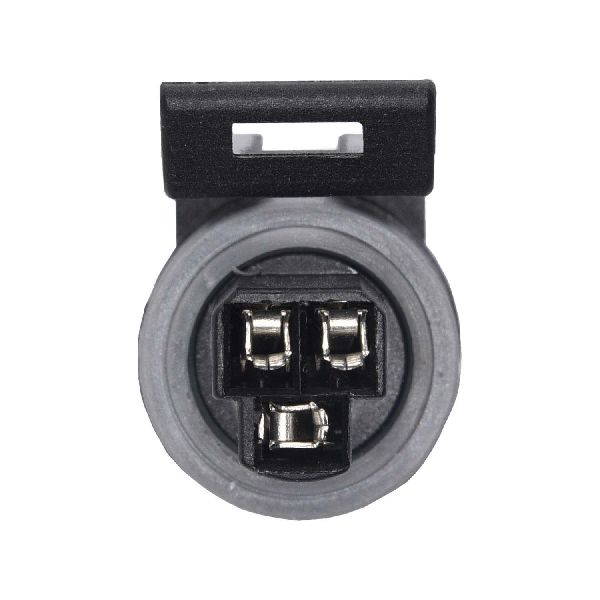
- Throttle Body Connector (8-pin) — On the electronic throttle body itself, where the engine harness connects.. This is the primary connection point for all signals related to P2135. Pin fretting, corrosion, or loose terminals here are a common cause of failure. The pinout is: A: TAC Motor Control, B: Low Reference (Ground), C: TAC Motor Control, D: Low Reference (Ground), E: 5V Reference, F: TP Sensor 2 Signal, G: TP Sensor 1 Signal, H: 5V Reference.
- G102 / G103 — G102 is located on the rear of the left cylinder head. G103 is on the cowl, above the brake booster.. These are critical engine and body ground points. The Engine Control Module (ECM) and its sensors rely on clean, tight grounds for accurate voltage readings. A poor ground at G102 or G103 can introduce electrical noise and voltage offsets, potentially causing a correlation code like P2135 even if the throttle body is good.
- Engine Control Module (ECM) — Located in the left front of the engine compartment, near the fan shroud.. The ECM provides the 5-volt reference and ground circuits to the throttle position sensors and interprets their return signals. All wiring from the throttle body ultimately terminates here.
Real Owner Repair Stories
- Forum user on GM-Trucks.com (2008 GMC Sierra) — Reduced Engine Power, code P2135.
❌ Tried (didn't work) Replaced the entire throttle body assembly., Replaced the accelerator pedal position (APP) sensor.
✅ What actually fixed it The wiring pigtail connector at the throttle body was faulty. After replacing the throttle body and pedal sensor didn't work, the owner replaced the connector itself, which finally resolved the issue. This points to an intermittent connection issue that wasn't fixed by simply plugging the old connector into new parts.
Model Year Variations Within This Range
- 2008-2010: TSB #11-06-04-007C and related service documents indicate that for models from 2008-2010, an ECM software update (reprogram) is required after replacing the throttle position sensor or throttle body. This updated calibration is necessary to accommodate the new sensor's characteristics. Failure to perform the reprogram on these specific years can lead to the code returning.
Helpful Videos


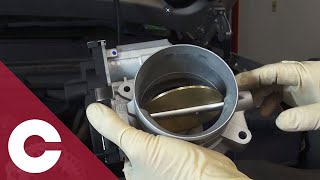
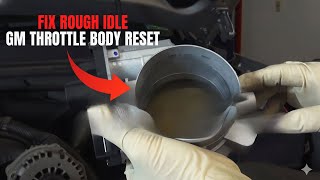

We Have This Part in Stock

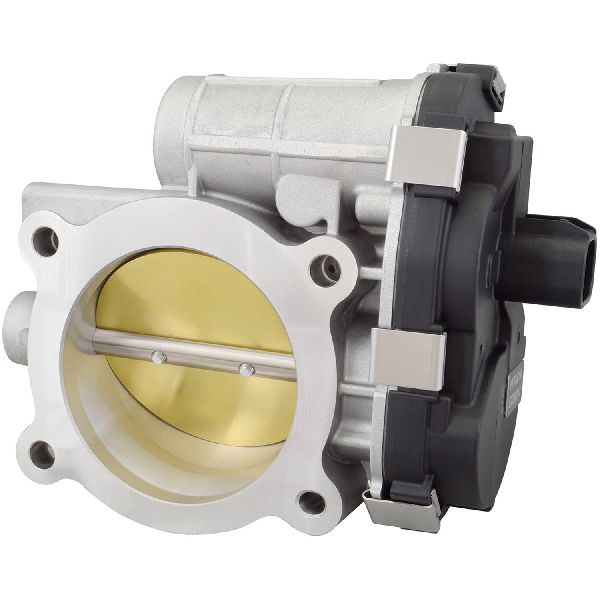

The information in this article is provided for general reference and educational purposes only. Vehicle specifications, procedures, and part compatibility can vary by production date, trim level, and region. Always consult your vehicle's factory service manual and verify part numbers before purchasing or performing repairs. Safety-critical components such as airbags, seat belts, and braking systems should be installed by a qualified professional.
- Gmc SIERRA DENALI:
- 🧭 Diagnostic Flowchart
- 🎬 Helpful Videos
- 🛍️ Shop This Part
- What's Unique About the 2008-2011 Gmc SIERRA DENALI
- Symptoms You May Notice
- Most Likely Causes
- Rare But Worth Checking
- Diagnosis Steps
- Parts You'll Likely Need
- Related Codes That Often Appear With This One
- Technical Service Bulletins (TSBs) & Recalls
- Platform-Specific Known Issues
- Mechanic-Grade Diagnostic Values
- Scan Tool Commands That Help
- Wiring & Ground Locations
- Real Owner Repair Stories
- Model Year Variations Within This Range
- 🎟️ Get 5% Off