

P2135 on 2010-2017 GMC Terrain 2.4L: Throttle Position Sensor Correlation Error Causes and Fixes
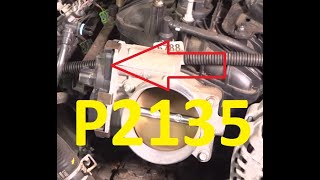
On a 2010-2017 GMC Terrain with the 2.4L engine, code P2135 almost always means the electronic throttle body assembly has failed, triggering 'Reduced Engine Power' mode. The fix is to replace the entire throttle body. An aftermarket part costs around $100-$200, and the repair is DIY-friendly. A throttle relearn procedure is required after replacement.
- P2135 on a 2.4L Terrain almost always means the throttle body has failed and needs to be replaced as a complete assembly.
- The vehicle will enter a 'Reduced Engine Power' mode, making it unsafe for normal driving.
- After replacement, a throttle relearn procedure is mandatory and can often be done without special tools.
- The Chevrolet Equinox with the 2.4L engine is a direct platform mate and suffers from the exact same issue.
- Do not confuse this with a dirty throttle body; cleaning will not fix the internal electronic sensor fault.
What's Unique About the 2010-2017 GMC Terrain
The 2.4L Ecotec engine used in the first-generation GMC Terrain and its sibling, the Chevrolet Equinox, is well-known for issues with the electronic throttle body. While some other GM vehicles have service bulletins that allow for replacing just the throttle position sensor, on the Terrain the sensors are integrated into the throttle body assembly and are not considered separately serviceable. Therefore, the standard and most reliable fix for P2135 on this specific vehicle is the replacement of the entire throttle body unit. Cleaning the throttle body, while good for maintenance, will not fix the internal electronic failure that causes this code.
Symptoms You May Notice
- "Reduced Engine Power" message on the dashboard
- Vehicle stuck in "limp mode" with severely limited acceleration
- Check Engine Light is on
- "Service Stabilitrak" message may also appear
- Hesitation or surging during acceleration
- Unstable or high idle
- Engine may stall
- Replacing the accelerator pedal assembly first. On the Terrain, P2135 almost always points to the throttle body, not the pedal.
- Assuming cleaning the throttle body will fix the electronic fault. While cleaning carbon buildup is good practice and can solve other idle issues (like code P1524), it does not repair the internal sensor failure that triggers P2135.
Most Likely Causes
- Failed Electronic Throttle Body Assembly 🔴 High Probability → Shop Fuel Injection Throttle Body This is a widely documented high-failure item on the 2.4L Ecotec engine. The internal, non-serviceable throttle position sensors (TPS) wear out or fail electronically, causing the correlation error.
How to confirm: Use a scan tool with live data to monitor the two TPS voltage signals (TPS1 and TPS2). With the key on and engine off, slowly press the accelerator pedal. The voltages should change smoothly and in opposite directions. One should sweep up (e.g., ~0.5V to ~4.5V) and the other should sweep down (e.g., ~4.5V to ~0.5V). If one or both signals are erratic, jumpy, or flat, the throttle body has failed. The signal wires are Pin D (Dark Green) for TPS1 and Pin F (Purple) for TPS2 on the connector.
Typical fix: Replace the entire throttle body assembly and gasket. A throttle body idle relearn procedure must be performed immediately after installation.
Est. part cost: $100-$250 - Damaged Wiring or Connector at Throttle Body ⚪ Low Probability → Shop Fuel Injection Throttle Body The engine harness connector can suffer from fretting corrosion, moisture intrusion, or broken wires due to engine vibration and heat cycles over time. GM has noted fretting corrosion as a cause for similar codes on other platforms.
How to confirm: Visually inspect the 6-pin throttle body electrical connector (X105) and the nearby wiring for any signs of corrosion (green or white powder), backed-out pins, or frayed/broken wires. Wiggle the connector with the engine running to see if it causes the idle to stumble or the code to set.
Typical fix: If corrosion or damage is found, clean the pins with electrical contact cleaner or replace the connector pigtail. This requires cutting the old connector off and splicing the new one in, wire by wire. Applying dielectric grease to the connector pins can help prevent future corrosion.
Est. part cost: $20-$50
Rare But Worth Checking
- Failed Accelerator Pedal Position (APP) Sensor: → Shop Accelerator Pedal Assembly While the code definition includes the pedal sensor, a failure here typically sets a different code, like P2138. It's an unlikely cause for P2135 on this platform but possible if there's a circuit issue affecting both components.
- Faulty Powertrain Control Module (PCM): → Shop Engine Control Module (ECM) This is extremely rare. The PCM should only be considered after the throttle body, wiring, and pedal sensor have all been definitively ruled out as the cause.
Diagnosis Steps
- Scan for Codes: Confirm P2135 is the primary code. Note any other codes, like P2101 or P2176.
- Visual Inspection: Turn the vehicle off. Inspect the throttle body electrical connector for damage, corrosion, or loose pins. Check the wiring harness leading to it for any obvious signs of damage.
- Live Data Analysis: Using a capable OBD-II scanner, monitor the live data for 'TPS1 Voltage' and 'TPS2 Voltage'. With the key on and engine off, the values should be steady.
- Test Sensor Sweep: While watching the live data, slowly press the accelerator pedal to the floor and release it. The two voltage readings should move in opposite directions smoothly, with no spikes or dropouts. If there are any glitches in the voltage readings, the throttle body is faulty.
- Perform Relearn Procedure (If Recently Replaced): If the throttle body was recently replaced and the code persists, ensure the throttle relearn procedure was performed. A common manual method is to idle the engine for 3 minutes, turn it off for 60 seconds, and then idle again for another 3 minutes.
- Condemn the Part: If the sensor sweep test fails, the throttle body assembly is the cause. If the wiring is visibly damaged, repair that first. If both check out, the problem could be a very rare PCM fault, which requires professional diagnosis.
Parts You'll Likely Need
- Electronic Throttle Body Assembly
(OEM #12694871 (supersedes 12631186))— This is the most common failure part for code P2135 on this vehicle. The internal, non-serviceable throttle position sensors fail, requiring replacement of the entire assembly.
Trusted brands: ACDelco (OEM), Bosch, Hitachi
OEM price range: $170-$250
Aftermarket price range: $100-$180
Related Codes That Often Appear With This One
- P2101 — This code for 'Throttle Actuator Control Motor Circuit Range/Performance' often appears with P2135 because when the sensor signals are implausible, the ECM can no longer trust its control over the throttle plate motor.
- P2176 — This code for 'Minimum Throttle Position Not Learned' often appears after replacing the throttle body if the mandatory idle relearn procedure is not performed correctly.
- P1516 — A GM-specific code for 'Throttle Actuator Control (TAC) Module Performance' that can be set alongside P2135 when the commanded throttle position does not match the actual position.
Technical Service Bulletins (TSBs) & Recalls
- While not directly for the Terrain, TSB #11-06-04-007C for other GM models highlights the commonality of this issue across the brand, though the repair procedure (sensor-only replacement) does not apply to the Terrain.
- Manufacturer Bulletin #11-06-04-007C also outlines a specific procedure for replacing the throttle position sensor cover on related models like the Envoy when a reduced power message is displayed and DTC P2135 is set.
- Special Coverage #14582: Covered throttle body replacement for 10 years/120,000 miles on certain GM vehicles, including some that used this engine family. This program is now expired for the 2010-2017 Terrain.
Platform-Specific Known Issues
- GM previously issued a Special Coverage Adjustment (SCA) #14582 for this issue on some 2010-2014 models, which extended the warranty coverage for the throttle body to 10 years or 120,000 miles. Owners should check with a GM dealer to see if their specific VIN was covered, though this program has expired for all vehicles in the 2010-2017 range as of the mid-2020s.
Mechanic-Grade Diagnostic Values
- Throttle Actuator Control (TAC) Motor Resistance — expected: 2 to 15 Ohms between terminals A and B of the throttle body connector.. Failure: A reading over the limit indicates an open circuit; a reading under 1 Ohm indicates a short circuit.
- TPS1 Resistance Sweep (between pins D and E) — expected: Starts around 2.7 kOhms (closed throttle), should increase smoothly as the throttle plate is opened.. Failure: The resistance value is stuck, jumps erratically, or has dead spots during the sweep.
- TPS2 Resistance Sweep (between pins E and F) — expected: Starts around 2.2 kOhms (closed throttle), should decrease smoothly as the throttle plate is opened (opposite of TPS1).. Failure: The resistance value is stuck, jumps erratically, or has dead spots during the sweep.
- TPS1 Signal Voltage (Key On, Engine Off, Throttle Closed) — expected: Less than 1.0 V at terminal D (Dark Green wire).. Failure: Voltage is greater than 1.0 V, indicating a short to voltage or faulty ECM.
- TPS2 Signal Voltage (Key On, Engine Off, Throttle Closed) — expected: 4.8 V to 5.2 V at terminal F (Purple wire).. Failure: Voltage is outside this range, indicating a short to ground, short to voltage, or faulty ECM.
- PCM Connector Ground Circuit Resistance — expected: Less than 1.0 Ohm between the PCM ground pins and the negative battery terminal.. Failure: Resistance higher than 1.0 Ohm indicates a poor ground connection (e.g., at G112) or a compromised wire.
Scan Tool Commands That Help
- GDS2/Tech2: Throttle/Idle Learn — This function is required after replacing the throttle body to reset learned values and establish a new baseline idle position. Failure to perform this can cause persistent high idle, stalling, or code P2176.
- GDS2/Tech2: Throttle Position Sensor Data Display — Used during diagnosis to view live voltage and percentage data for both TPS1 and TPS2 simultaneously, which is the primary method for confirming a correlation fault.
Wiring & Ground Locations
- X105 — The 6-pin electrical connector at the electronic throttle body.. This is the single point of connection for both TPS sensors and the throttle motor. It is a common point for fretting corrosion, moisture intrusion, or loose pins that directly cause P2135.
- G105 / G109 — On the rear of the engine block for the 2.4L engine.. These are primary engine ground points. A poor connection here can affect the reference voltage for multiple sensors, including the throttle body, leading to erratic readings and correlation codes.
- G112 — Lower left front of the engine.. This is another critical engine ground. A high-resistance ground at this location can cause sensor data to be skewed, potentially triggering a P2135 code.
- ECM (Engine Control Module) — Located in the engine compartment, typically near the underhood fuse block on the driver's side.. All sensor signals from the throttle body are sent to the ECM for processing. While rare, a fault in the ECM's internal driver circuits can mimic a sensor failure.
Real Owner Repair Stories
- Chevy HHR Network forum post (Chevrolet HHR (uses similar 2.4L Ecotec and wiring)) — Intermittent P2135 code, check engine light, and shaking.
❌ Tried (didn't work) Initial diagnosis pointed towards replacing the throttle body.
✅ What actually fixed it The owner performed a 'tug test' on the wires at the throttle body connector and found a loose gray wire. Replacing the single pin within the connector resolved the issue completely without needing a new throttle body. - NHTSA ODI #11063373 — An owner reported that their vehicle was towed to a mechanic after a failure where code P2135 for the throttle/pedal sensor switch was revealed, though the engine light was not on after turning the car off and back on.
OEM Part Supersession History
12631186→12694871— Likely an internal revision to improve the durability of the throttle position sensors that were prone to failure in the original design.
Model Year Variations Within This Range
- 2010-2012: The optional V6 engine was a 3.0L unit.
- 2013-2017: The optional V6 engine was upgraded to a more powerful and reliable 3.6L unit. The 2.4L base engine, which is the subject of this P2135 article, remained consistent throughout the entire 2010-2017 generation.
Diagnostic Flowchart
Other Known Issues on This Vehicle
Issues unrelated to this code that are worth knowing about as an owner of this generation:
- Excessive Oil Consumption 🔴 High — Extremely common, especially on 2010-2013 models. Can start as early as 60,000 miles. Caused by faulty piston ring design. (Ref: A class-action lawsuit led to Special Coverage #14159 for piston and ring replacement, which has since expired.)
- Stretched/Failed Timing Chain 🔴 High — Common between 80,000-120,000 miles. Often accelerated by low oil levels from the oil consumption issue. Results in rattling noise on startup and can lead to catastrophic engine failure.
- Frozen PCV Orifice / Rear Main Seal Failure 🟠 Medium — Occurs primarily in cold climates. The PCV orifice in the intake manifold can freeze and clog, causing crankcase pressure to build and blow out the rear main seal, resulting in a major oil leak. (Ref: Special Coverage Adjustment #14882 was issued to address cleaning the PCV orifice.)
- Stabilitrak / ABS / Traction Control Lights 🟡 Low — Common issue often caused by corroded wheel speed sensor wiring or a failed wheel hub/bearing assembly.
- HVAC Actuator Failure 🟡 Low — Fairly common. Actuators that control airflow direction and temperature blending fail, causing clicking noises from the dash or inability to change temperature/vents.
Used vs. New Parts: Buying Guide for This Vehicle
When a used part is the smart pick: For this specific repair, a used throttle body is a very poor choice and is not recommended. The part has a notoriously high failure rate due to an internal electronic design flaw. A used part from a donor vehicle, regardless of mileage, is likely to have the same defect and could fail shortly after installation, wasting both time and money.
What to inspect on the donor part:
- Not applicable, as used parts are not advised for this failure.
OEM-only on this vehicle (don't cheap out):
- While not strictly 'OEM-only', using a new, quality part is critical. The ACDelco (OEM) or Bosch units are the most trusted replacements. Avoid unbranded, exceptionally cheap options as their internal electronics may be of lower quality and fail prematurely.
Aftermarket brands forum-validated for this vehicle:
- ACDelco (OEM)
- Bosch
- Hitachi
Brands owners have reported issues with on this vehicle:
- Unbranded or 'white-box' parts from online marketplaces with no warranty or brand reputation. Given the electronic nature of the failure, quality control is paramount.
Real Owner Stories
Aggregated from forums and TSBs cited above. Mileages and costs reflect what owners reported in those sources.
2011 GMC Terrain 2.4L
Symptoms: The vehicle experienced a failure that required the throttle body to be replaced as a complete unit because the internal sensors were not serviceable.
What fixed it: Replacement of the entire throttle body assembly.
Source hint: mechanic_video Source 7
2010-2014 GMC Terrain 2.4L — ~120000 miles
Symptoms: Throttle body failure leading to a 'Reduced Engine Power' message and potential 'Service Stabilitrak' warnings.
What fixed it: Replacement of the throttle body under Special Coverage Adjustment #14582 (while the program was active).
Source hint: Special Coverage #14582
Documented NHTSA Reports
GMC Yukon Owner Report
Symptoms: An owner reported that their truck stopped accelerating and would not go over 25 mph, taking about two full minutes to reach that speed. A local garage confirmed the engine code was P2135.
Source hint: NHTSA ODI #10495252
GMC Yukon XL Owner Report
Symptoms: An owner reported that codes P1516, P2135, and P0120 returned for a third time, causing the car to go into reduced power mode while driving.
Source hint: NHTSA ODI #11341685
GMC Yukon Denali Owner Report
Symptoms: A report describes the vehicle dropping speed to 20 mph on the highway, with check engine codes P0120 and P2135 present.
Source hint: NHTSA ODI #11080681
Related OBD-II Codes
Frequently Asked Questions
Is there a recall or special warranty for the P2135 code on my 2012 GMC Terrain 2.4L?
Can I just replace the sensor on my Terrain's throttle body like TSB #11-06-04-007C suggests?
Why does my dashboard say 'Service Stabilitrak' when the problem seems to be the engine power?
What is the 'relearn procedure' I need to do after fixing the P2135 code?
Could the P2135 code be related to the oil consumption issues on my 2013 Terrain?
Helpful Videos
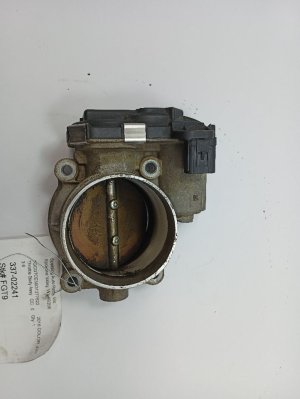
Used OEM Parts in Stock
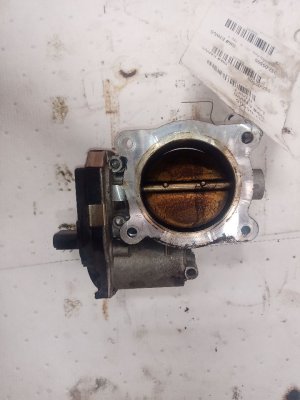
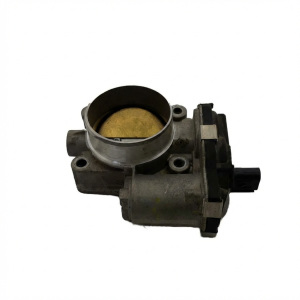
New Aftermarket Parts Available



The information in this article is provided for general reference and educational purposes only. Vehicle specifications, procedures, and part compatibility can vary by production date, trim level, and region. Always consult your vehicle's factory service manual and verify part numbers before purchasing or performing repairs. Safety-critical components such as airbags, seat belts, and braking systems should be installed by a qualified professional.
- GMC Terrain:
- 🧭 Diagnostic Flowchart
- 🎬 Helpful Videos
- 🛍️ Shop This Part
- What's Unique About the 2010-2017 GMC Terrain
- Symptoms You May Notice
- Most Likely Causes
- Rare But Worth Checking
- Diagnosis Steps
- Parts You'll Likely Need
- Related Codes That Often Appear With This One
- Technical Service Bulletins (TSBs) & Recalls
- Platform-Specific Known Issues
- Mechanic-Grade Diagnostic Values
- Scan Tool Commands That Help
- Wiring & Ground Locations
- Real Owner Repair Stories
- OEM Part Supersession History
- Model Year Variations Within This Range
- Other Known Issues on This Vehicle
- Used vs. New Parts: Buying Guide for This Vehicle
- Real Owner Stories
- 2011 GMC Terrain 2.4L
- 2010-2014 GMC Terrain 2.4L — ~120000 miles
- Documented NHTSA Reports
- GMC Yukon Owner Report
- GMC Yukon XL Owner Report
- GMC Yukon Denali Owner Report
- Related OBD-II Codes
- Frequently Asked Questions
- 🎟️ Get 5% Off