

P2135 on 2008-2012 Honda Accord: Throttle Position Sensor Failure Causes and Fixes
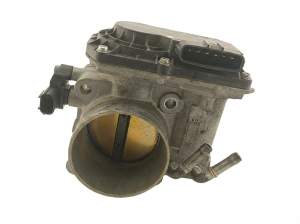
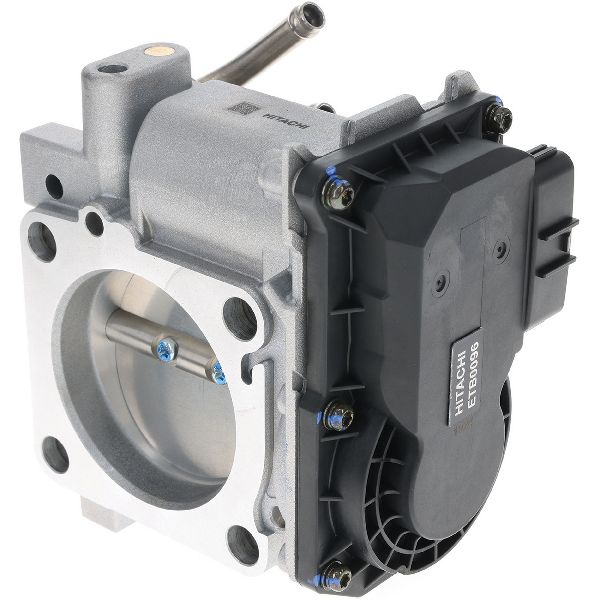
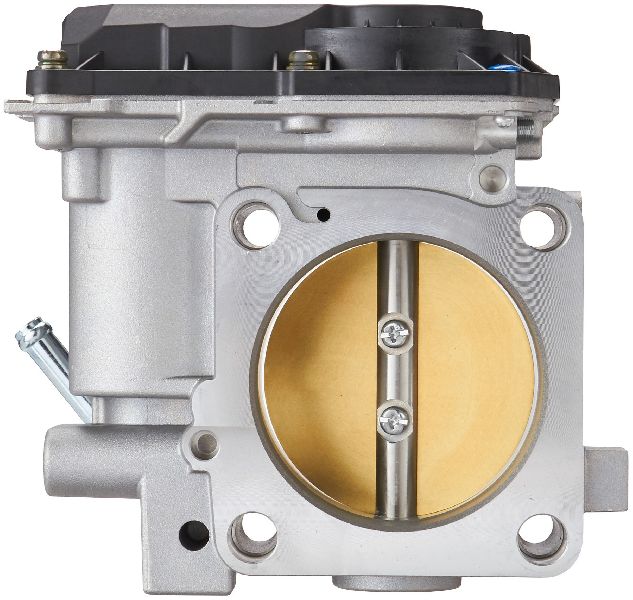
On a 2008-2012 Honda Accord, P2135 is most often caused by a failing throttle body assembly. The internal throttle position sensors fail, requiring replacement of the whole unit. Before replacing parts, inspect the wiring harness at the throttle body for damage, as this is another common cause.
- P2135 on a 2008-2012 Accord usually means the throttle body is failing, but you should always check the wiring harness first.
- Symptoms include a Check Engine Light and the car going into 'limp mode' with severely reduced power.
- The throttle position sensors are integrated into the throttle body and cannot be replaced separately.
- After replacing the throttle body, a specific 'idle relearn' procedure is mandatory to ensure correct engine operation.
What's Unique About the 2008-2012 Honda Accord
For the 8th generation Honda Accord (2008-2012), the dual throttle position (TP) sensors are integrated into the throttle body assembly and are not sold separately by Honda. This means a failure of the internal sensors typically requires replacing the entire throttle body. While the fault is electronic, owners have also reported that the wiring harness leading to the throttle body can become frayed or damaged right at the 6-pin connector, making a thorough wiring inspection a critical first step before ordering expensive parts.
Symptoms You May Notice
- Check Engine Light is on
- Vehicle enters 'limp mode' (reduced engine power)
- Poor, sluggish, or hesitant acceleration
- Erratic engine RPM or surging
- Engine may stall or have a rough idle
- Multiple dashboard warning lights may appear simultaneously (e.g., VSA, Traction Control), as these systems rely on accurate throttle data.
- Replacing the Accelerator Pedal Position (APP) sensor when the fault is in the throttle body. While possible, the throttle body is the more frequent cause for P2135 on this platform.
- Cleaning the throttle body. While cleaning carbon buildup is good maintenance for an unstable idle, it will not fix the internal electronic failure of the sensors that causes a P2135 code. The failure is electrical, not a physical restriction.
Most Likely Causes
- Faulty Throttle Body Assembly 🔴 High Probability → Shop Fuel Injection Throttle Body The throttle position sensors (TPS) are integrated into the throttle body and are a common failure point. The internal electronic components wear out over time, causing the voltage signals to become erratic or uncorrelated.
How to confirm: After confirming wiring is intact, use a scan tool to monitor the live data for TP sensor 'A' (or 1) and 'B' (or 2). If the voltage readings are jumpy, do not move smoothly, or show dropouts as the throttle is manually operated, the sensor assembly is faulty.
Typical fix: Replace the entire throttle body assembly. A 'throttle relearn' or 'idle relearn' procedure must be performed after replacement.
Est. part cost: $200-$450 - Damaged Wiring or Connector at Throttle Body 🟡 Medium Probability → Shop Fuel Injection Throttle Body Engine vibration and heat can cause wires in the harness leading to the throttle body to fray, break, or develop loose connections at the connector pins. This is a known issue, sometimes happening right where the wires enter the connector.
How to confirm: Visually inspect the wiring harness going to the throttle body connector for any signs of damage, fraying, or tension. Unplug the connector and check for corrosion or loose pins. Gently wiggle the harness with the engine running to see if it triggers the fault. Check for continuity on the TPSA and TPSB signal wires back to the PCM.
Typical fix: Repair the damaged section of wire (soldering is recommended) or replace the connector pigtail. Ensure the connection is secure and not under tension.
Est. part cost: $10-$50 - Faulty Accelerator Pedal Position (APP) Sensor ⚪ Low Probability → Shop Accelerator Pedal Assembly The APP sensor, located on the gas pedal assembly, works similarly to the TPS and can also fail, though it is less common for this specific code.
How to confirm: Use a scan tool to monitor the APP sensor voltage readings as the pedal is pressed. If the signals are erratic or drop out, the sensor is likely bad. Code P2138 often accompanies a failing APP sensor.
Typical fix: Replace the entire accelerator pedal assembly, as the sensor is typically integrated into it.
Est. part cost: $150-$250
Rare But Worth Checking
- Faulty Powertrain Control Module (PCM): → Shop Engine Control Module (ECM) A PCM failure is rare but possible. This should only be considered after all other possibilities, including wiring and sensors, have been exhaustively tested. The PCM may require special programming upon replacement.
Diagnosis Steps
- Read the code and any other accompanying codes with an OBD-II scanner.
- Check for any Technical Service Bulletins (TSBs). While no TSB is specific to P2135 on this model, TSBs for related issues like oil consumption (12-087) exist.
- Turn the ignition off. Thoroughly inspect the wiring harness and 6-pin connector at the throttle body. Look for chafed/broken wires or loose pins. A frayed wire right at the connector is a known issue.
- If wiring looks good, use a scan tool with live data to observe the voltage readings for TP Sensor 1 and TP Sensor 2. They should move smoothly and in a correlated manner as the throttle is slowly opened and closed (with the engine off, ignition on).
- If one or both signals are erratic, jumpy, or show dropouts, the throttle body assembly is the likely culprit.
- As a deeper wiring check, disconnect the PCM connector B (a 49-pin connector) and check for continuity between terminals B17 (TPSA) and B26 (TPSB) to test the sensor wiring harness integrity.
- If TP sensor signals appear normal, use the scan tool to monitor the Accelerator Pedal Position (APP) sensor signals while pressing and releasing the gas pedal. Check for smooth, consistent operation.
- If both the throttle body and pedal sensor circuits test good, the issue may be an intermittent connection or a rare PCM fault.
Parts You'll Likely Need
- Throttle Body Assembly
(OEM #16400-R44-A02 (for 2.4L L4, supersedes 16400-R44-A01))— This is the most common failure. The internal throttle position sensors are not sold separately, requiring the replacement of the entire assembly.
Trusted brands: Honda (OEM), Bosch, Hitachi, Autotecnica
OEM price range: $350-$450
Aftermarket price range: $160-$300
Related Codes That Often Appear With This One
- P2138 — This code specifically points to a voltage correlation problem with the Accelerator Pedal Position (APP) sensor. If seen with P2135, it increases the likelihood of a fault in the pedal assembly or its circuit.
- P2101 — This code indicates a problem with the throttle actuator control motor. Since the motor and sensors are in the same throttle body housing, seeing both codes together strongly suggests a complete throttle body failure.
Technical Service Bulletins (TSBs) & Recalls
- Honda TSB 12-087: Addresses high engine oil consumption on 2.4L engines due to sticking rings. While not directly for P2135, excessive oil blow-by can contaminate the intake and throttle body, potentially contributing to electronic issues over time.
Platform-Specific Known Issues
- Mandatory Idle Relearn Procedure: After replacing the throttle body or even disconnecting the battery, an idle relearn procedure is critical. Failure to do so can result in a high or erratic idle and may even trigger other codes like P0507. The procedure involves clearing the old throttle position learned values with a capable scan tool, then letting the engine idle from cold to operating temperature under specific conditions.
- Manual Idle Relearn Steps (If Scan Tool for TP Clear is unavailable): While a scan tool is best, some owners have success with a manual relearn: 1. Ensure all electrical accessories (A/C, radio, lights) are OFF. 2. Turn the ignition to ON (II) for 2 seconds. 3. Start the engine and let it idle without touching the throttle until it reaches operating temperature (when the radiator fans cycle twice). 4. Let the engine continue to idle for an additional 5 minutes.
Mechanic-Grade Diagnostic Values
- TP Sensor 1 (TPSA) and TP Sensor 2 (TPSB) Voltage — expected: With key on, engine off: TPSA should be ~0.5-0.7V at closed throttle and sweep smoothly to ~4.5V at wide-open throttle. TPSB operates inversely, starting high and sweeping low. The combined voltage of TPSA and TPSB should remain steady at ~5.0V throughout the throttle plate's movement.. Failure: Voltage readings that are jumpy, erratic, show dropouts, or do not sweep smoothly indicate a failing sensor. If the combined voltage deviates, it points to a wiring or power/ground issue.
- Continuity Check at PCM — expected: With the battery disconnected and both the throttle body and PCM connectors unplugged, there should be continuity (near 0 ohms) between the throttle body connector pin for TPSA and pin B17 on PCM connector B (49-pin). There should also be continuity between the throttle body connector pin for TPSB and pin B26 on PCM connector B.. Failure: High resistance or no continuity (OL) indicates a break in the wire between the throttle body and the PCM.
Scan Tool Commands That Help
- Honda Diagnostic System (HDS) or equivalent professional scanner: ETCS (TAC) TEST > TP POSITION CHECK — This function is used to clear the stored throttle position learned values from the PCM. It is a mandatory step after replacing the throttle body or if troubleshooting idle issues. Failure to perform this reset can cause an erratic idle or prevent the new part from functioning correctly.
Wiring & Ground Locations
- Throttle Body 6-Pin Connector — The electrical connector on the electronic throttle body assembly.. This connector carries all signals for the dual TP sensors and the throttle motor. The pins are: Pin 1 (TPSA), Pin 3 (TPSB), Pin 2 (VCC - 5V Reference), Pin 4 (SG - Sensor Ground), Pin 6 (Motor +), Pin 5 (Motor -). Corrosion or a broken wire at any of the first four pins can directly cause P2135.
- PCM Connector B (49-Pin) — One of the main connectors at the Powertrain Control Module (PCM), typically located in the engine bay or behind the dashboard.. This connector contains the termination points for the TP sensor signals. Specifically, pin B17 is for TPSA signal and pin B26 is for TPSB signal. Testing continuity to these pins from the throttle body connector is the definitive way to rule out a wiring harness break.
- G101 Ground — The main engine-to-chassis ground, often located on or near the thermostat housing at the top middle of the engine.. This is the primary power and logic ground for the ECU/PCM. A poor connection here can cause unstable voltage across the entire engine management system, leading to erratic sensor readings and seemingly random codes, including P2135.
Real Owner Repair Stories
- NHTSA ODI #10537865 — An owner reported that a technician found DTC code P2135 TP Sensor A/B incorrect voltage correlation. The technician initially recalibrated the TP sensor to address the issue.
- NHTSA ODI #11479189 (Cross-model reference) — An owner of a similar Honda model experienced the P2135 code five times, which caused dashboard warning lights to flash and the vehicle to enter an immediate limp mode.
- Unofficial Honda FIT Forums (2012 Honda Fit M/T (similar Honda DBW system)) — Intermittent P2135, check engine light, traction control light, vehicle enters limp mode.
❌ Tried (didn't work) Clearing the code (it would return).
✅ What actually fixed it The user monitored live data and noticed both the APP and TP sensors were 'twitchy'. Unplugging the Accelerator Pedal Position Sensor (APPS) connector and plugging it back in resolved the issue. The final cause was a loose connection at the gas pedal sensor, not the throttle body. - 2CarPros Forum (2006 Honda Accord (UK model)) — Recurring P2135 with power loss, surging, and hunting idle.
❌ Tried (didn't work) Replacing the throttle body with a secondhand unit (worked for a few months, then failed)., Replacing the APP sensor and another secondhand throttle body (failed within 5 miles)., Resetting throttle position at a garage., Sending ECU for testing (came back fine).
✅ What actually fixed it The issue was intermittent and hard to trace. A certified expert on the forum suggested the likely culprit, after all other common parts were swapped, was a failing separate 'throttle actuator control module', a component that can go bad and cause this code but is often overlooked. - AliExpress Product Review/Story (2010 Honda Accord, 112K miles) — Initially P0507 (Idle Control System High), violent RPM dips and surges at stops, occasional stalling.
❌ Tried (didn't work) Replacing Idle Air Control Valve., Cleaning the throttle body plate twice., Replacing the MAF sensor.
✅ What actually fixed it The owner discovered moisture and greenish corrosion on pins 3 and 5 of the 6-pin throttle body connector. The root cause was degraded seals allowing humidity in, disrupting the electrical signals. Replacing the connector pigtail would be the fix. This is a direct cause for P2135, even though a different code was initially present.
OEM Part Supersession History
16400-R44-A01→16400-R44-A02— Standard part revision by the manufacturer.
Heads up: Applies to USA-built 2.4L Accord models. The parts are interchangeable, with the A02 being the latest version.
Diagnostic Flowchart
Other Known Issues on This Vehicle
Issues unrelated to this code that are worth knowing about as an owner of this generation:
- Excessive Oil Consumption (V6 and L4 Engines) 🔴 High — Common on both V6 models (due to VCM operation) and 2.4L 4-cylinder models (due to sticking piston rings). Can start as early as 60,000 miles. (Ref: TSB 12-087 (for L4) and TSB 11-033 (for V6) were issued, and a class-action lawsuit extended warranties.)
- VTC Actuator Rattle on Cold Start (2.4L L4 Engine) 🟠 Medium — Very common issue on the K24Z3 engine. A brief, loud rattle or grind for 1-3 seconds upon cold startup is the primary symptom.
- Premature Rear Brake Wear 🟠 Medium — Widespread on 2008-2010 models. Rear brake pads may wear out in as little as 15,000-25,000 miles. (Ref: A class-action lawsuit was settled, providing some reimbursement for past repairs. The issue is attributed to the design of the Electronic Brake Distribution (EBD) system.)
Used vs. New Parts: Buying Guide for This Vehicle
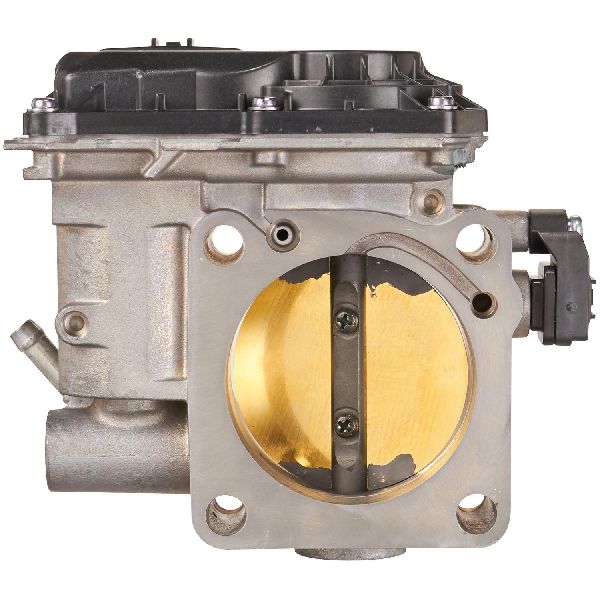
When a used part is the smart pick: A used throttle body is a significant gamble for this repair. The failure is electronic wear-and-tear inside a sealed unit. A used part may work temporarily but could fail soon after, as seen in owner forums. It should only be considered as a last resort for budget constraints or to test if the throttle body is the issue before buying a new one.
Donor-vehicle mileage cap: roughly under 75000 miles for the part to have meaningful remaining life.
What to inspect on the donor part:
- Verify the part number (GMD7A for 2.4L) matches your original.
- Inspect the 6-pin connector for any signs of corrosion, bent pins, or damage.
- Check the throttle plate for excessive carbon buildup, which might suggest a hard life.
- Ask the seller for the donor vehicle's mileage if possible; lower is always better.
OEM-only on this vehicle (don't cheap out):
- Throttle Body Assembly
Aftermarket brands forum-validated for this vehicle:
- Hitachi (Often the OEM supplier)
- Bosch
Brands owners have reported issues with on this vehicle:
- Unbranded, no-name units from online marketplaces are highly suspect and often fail quickly. It is better to buy a used OEM part than a new, cheap, unbranded one.
Real Owner Stories
Aggregated from forums and TSBs cited above. Mileages and costs reflect what owners reported in those sources.
2009 Honda Accord EX-L V6 — 136000 miles
Symptoms: VSA light, Check Engine, and Triangle Warning light all came on and the engine sounds like its struggling. Codes P2135 and P2101 were thrown.
What fixed it: The owner reported that the issue returned even after the throttle body was fully replaced, suggesting a potential intermittent connection or wiring fault.
Source hint: reddit.com r/Honda
2008-2012 Honda Accord
Symptoms: P2135 code triggered by erratic voltage signals.
What fixed it: Repairing a frayed wire in the harness right at the throttle body connector.
Source hint: Unofficial Honda FIT Forums (fitfreak.net) and DriveAccord.net
2009-2014 Acura TSX (2.4L K24Z3 engine)
Symptoms: Limp mode and P2135 code; identical symptoms to the Accord platform.
What fixed it: Replacement of the throttle body assembly or repair of the wiring harness at the plug.
Source hint: Platform mate comparison (Acura TSX forum discussions)
Related OBD-II Codes
Frequently Asked Questions
Does Honda TSB 12-087 regarding oil consumption apply to my P2135 throttle code?
Can I perform the idle relearn on my 2008-2012 Accord without a professional scan tool?
Why did my VSA and Traction Control lights come on at the same time as the P2135 code?
Is it possible to just replace the sensor, or do I need the whole throttle body assembly?
I replaced my throttle body but now I have a high idle and code P0507. What happened?
Could the issue be with my gas pedal instead of the engine throttle body?
Helpful Videos
Used OEM Parts in Stock
New Aftermarket Parts Available


The information in this article is provided for general reference and educational purposes only. Vehicle specifications, procedures, and part compatibility can vary by production date, trim level, and region. Always consult your vehicle's factory service manual and verify part numbers before purchasing or performing repairs. Safety-critical components such as airbags, seat belts, and braking systems should be installed by a qualified professional.
- Honda Accord:
- 🧭 Diagnostic Flowchart
- 🎬 Helpful Videos
- 🛍️ Shop This Part
- What's Unique About the 2008-2012 Honda Accord
- Symptoms You May Notice
- Most Likely Causes
- Rare But Worth Checking
- Diagnosis Steps
- Parts You'll Likely Need
- Related Codes That Often Appear With This One
- Technical Service Bulletins (TSBs) & Recalls
- Platform-Specific Known Issues
- Mechanic-Grade Diagnostic Values
- Scan Tool Commands That Help
- Wiring & Ground Locations
- Real Owner Repair Stories
- OEM Part Supersession History
- Other Known Issues on This Vehicle
- Used vs. New Parts: Buying Guide for This Vehicle
- Real Owner Stories
- 2009 Honda Accord EX-L V6 — 136000 miles
- 2008-2012 Honda Accord
- 2009-2014 Acura TSX (2.4L K24Z3 engine)
- Related OBD-II Codes
- Frequently Asked Questions
- 🎟️ Get 5% Off