

P2135 on 2011-2015 Honda Civic: Throttle Position Sensor Failure Causes and Fixes
On a 2011-2015 Honda Civic, code P2135 is most often caused by a failing Throttle Position Sensor (TPS). Because the sensor is integrated into the throttle body, the entire throttle body assembly usually needs to be replaced. Expect to pay between $200-$400 for the part. Before replacement, inspect the wiring harness for damage, as that is a less common but possible cause.
- P2135 on a 2011-2015 Civic almost always points to a problem with the Throttle Position Sensor (TPS).
- The TPS is part of the throttle body; you must replace the entire assembly, not just the sensor.
- Before buying a new throttle body, always inspect the wiring and connector for damage, as this is a cheaper and possible fix.
- A faulty accelerator pedal can cause this code, but it's much less likely than the throttle body.
- After replacing the throttle body, you must perform an idle relearn procedure for the engine to idle correctly.
What's Unique About the 2011-2015 Honda Civic

For the 8th and 9th generation Honda Civic, the most common point of failure for a P2135 code is the Throttle Position Sensor (TPS). Unlike older vehicles where the TPS was a separate, inexpensive part, Honda integrated the sensor into the electronic throttle body assembly on these models. This means a simple sensor failure requires the replacement of the entire, more costly, throttle body unit. While the Accelerator Pedal Position (APP) sensor can also cause this code, it is a much less frequent issue on this platform, and is more commonly associated with code P2138.
Generation note: This range covers the final year of the 8th generation (2011) and the 9th generation (2012-2015). The cause and repair, typically a throttle body replacement, are consistent for the common 1.8L (R18) engine across these years. The issue is also seen on the 8th generation Civics.
Symptoms You May Notice

- Check Engine Light is on
- Flashing 'D' (Drive) indicator light on the dashboard
- Vehicle enters 'limp mode' (reduced engine power)
- Poor, delayed, or hesitant acceleration
- Unstable or surging idle
- Engine may stall when coming to a stop
- No response when pressing the gas pedal
- Replacing the Accelerator Pedal Position (APP) sensor when the fault is actually with the Throttle Position Sensor (TPS) on the throttle body. Code P2138 is more specific to the APP sensor.
- Replacing the throttle body without first thoroughly inspecting the wiring harness and connector, which is a much cheaper potential fix.
Most Likely Causes

- Failed Throttle Position Sensor (Integrated into Throttle Body) 🔴 High Probability → Shop Fuel Injection Throttle Body The electronic sensors integrated into the throttle body assembly are a common failure point as the vehicle ages due to heat and vibration. Honda does not sell the sensor separately for this model.
How to confirm: Use a scan tool with live data to graph the voltage of TPS Sensor 1 (TP1) and TPS Sensor 2 (TP2). As you slowly press the gas pedal with the key on and engine off, the two voltage readings should move smoothly and in tandem. One should rise (e.g., ~0.5V to ~4.5V) while the other falls. Any signal that jumps, drops out, freezes, or is erratic indicates the sensor is bad. The PCM expects the sum of the two sensor voltages to be a constant value (around 5V); if this sum deviates, the code is set.
Typical fix: Replace the entire throttle body assembly with a new gasket. After replacement, a throttle body idle relearn procedure must be performed for the engine to idle correctly.
Est. part cost: $200-$450 - Damaged Wiring or Poor Connection at Throttle Body 🟡 Medium Probability → Shop Fuel Injection Throttle Body The wiring harness connector at the throttle body is exposed to engine vibration and heat, which can cause wires to fray or pins to lose connection over time.
How to confirm: Visually inspect the wiring harness and connector going to the throttle body. Wiggle the connector with the engine running to see if it causes a change in idle or triggers the code. Check for corrosion, backed-out pins, or broken wires. A multimeter can be used to check for continuity between the PCM connector and the throttle body connector.
Typical fix: Repair the damaged section of wiring or replace the connector pigtail. In a documented case on a similar Honda model, a Toyota pigtail (Part No. 90980-11858) for a Denso throttle body was used as a compatible replacement. Aftermarket pigtail connectors are also available.
Est. part cost: $15-$50 - Failed Accelerator Pedal Position (APP) Sensor ⚪ Low Probability → Shop Accelerator Pedal Assembly
How to confirm: Use a scan tool to monitor the live data for APP Sensor 1 and APP Sensor 2. As you press the gas pedal, the voltages should change smoothly without glitches. A user on a Honda Fit forum initially suspected the APP sensor after wiggling its connector seemed to temporarily resolve the issue, but the P2135 code returned, pointing back to the throttle body.
Typical fix: Replace the accelerator pedal assembly, which contains the integrated sensors.
Est. part cost: $150-$250
Rare But Worth Checking
- Faulty Powertrain Control Module (PCM): → Shop Engine Control Module (ECM) This is extremely rare and can be caused by internal circuit failure. The PCM should only be considered after all other possibilities, including sensors and wiring, have been exhaustively tested and ruled out.
- Dirty Throttle Body: → Shop Fuel Injection Throttle Body While less likely to cause a correlation code than outright failure, heavy carbon buildup can cause the throttle plate to stick, which may lead to erratic sensor readings. Cleaning the throttle body is a good preliminary step.
Diagnosis Steps

- Read the code with an OBD-II scanner and confirm P2135 is present. Note any other codes.
- Check for any Technical Service Bulletins (TSBs) for your vehicle's year and model related to P2135. While no specific Honda TSB was found, GM has issued TSBs for P2135 on their vehicles related to TPS and wiring issues.
- With the ignition on and engine off, use a scan tool to view live data for the two Throttle Position Sensors (TPS1, TPS2) and the two Accelerator Pedal Position Sensors (APP1, APP2).
- Slowly press and release the gas pedal, watching the APP sensor voltages. They should move smoothly without any glitches or dropouts.
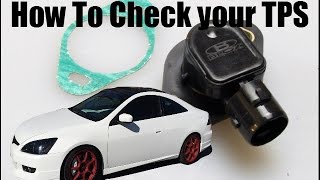
- While observing the TPS voltages, slowly open and close the throttle plate by hand (if accessible) or have a helper press the pedal. The two TPS voltages should mirror each other smoothly (one typically rises from ~0.5V to ~4.5V, while the other falls). Any jumping, freezing, or dropouts in the voltage indicates a faulty TPS. 🎬 See this guide on how to test your throttle position sensor.
- If the sensor data appears normal, thoroughly inspect the wiring harness and connector at the throttle body for any signs of damage, corrosion, or loose pins. Wiggle the harness to see if the fault can be induced.
- If the TPS data is erratic, the throttle body assembly is the most likely cause. If the APP data is erratic, the accelerator pedal assembly is the cause. The TPS is the more common failure for this code on this vehicle.
- If replacing the throttle body, perform the Idle Relearn Procedure after installation.
Parts You'll Likely Need
- Throttle Body Assembly
(OEM #16400-R1A-A01)— This is the most common fix because the failure-prone Throttle Position Sensor (TPS) is integrated into this assembly for the 2011-2015 Civic.
Trusted brands: Honda (OEM), Hitachi (OEM supplier), WVE/NTK, Cardone (Remanufactured)
OEM price range: $350-$650
Aftermarket price range: $200-$300 - Throttle Body Gasket
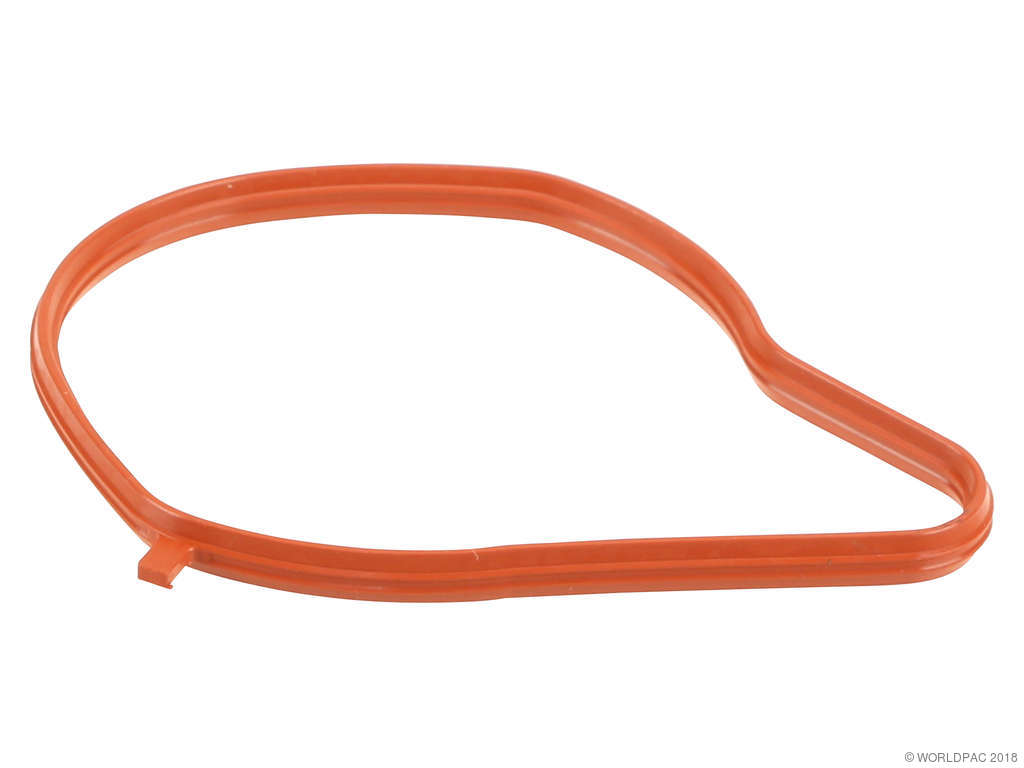
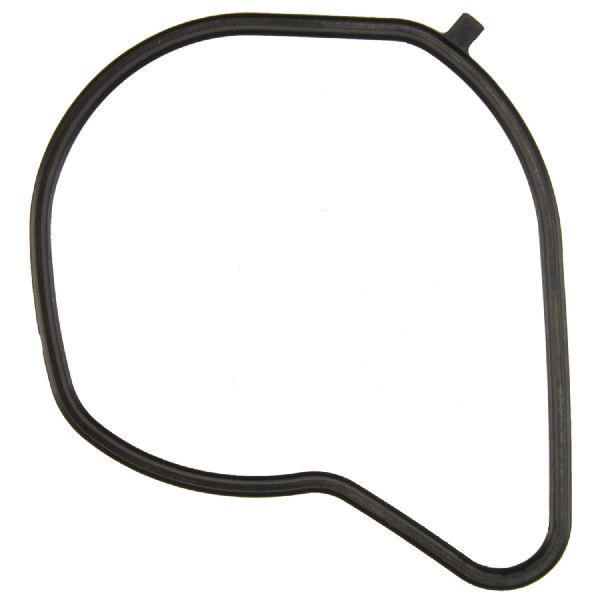
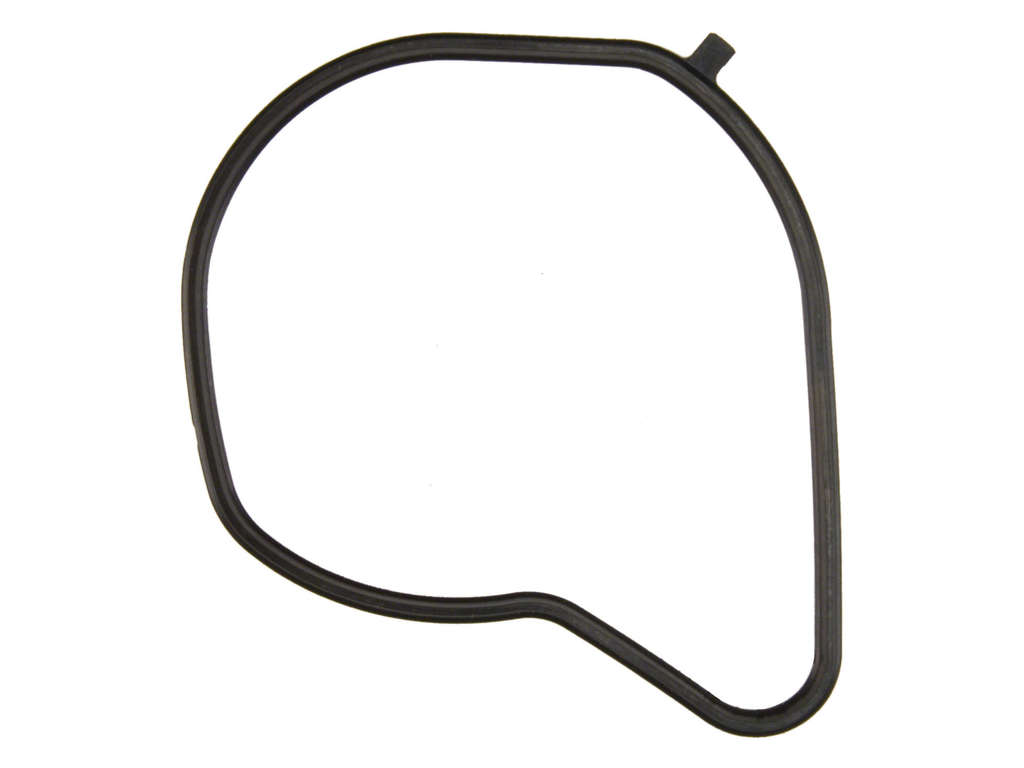
(OEM #17107-RNA-A01)— A new gasket is required when replacing the throttle body to ensure there are no vacuum leaks.
Trusted brands: Honda (OEM), Fel-Pro
OEM price range: $15-$25
Aftermarket price range: $5-$10
Technical Service Bulletins (TSBs) & Recalls
- No specific Honda TSBs for P2135 on this platform were found during research. However, GM has issued TSBs like 12-06-04-003A for P2135 on their vehicles, which points to a pattern of TPS and wiring issues being the root cause across manufacturers.
Platform-Specific Known Issues
- Idle Relearn Procedure is Critical: After replacing or cleaning the throttle body, or even disconnecting the battery, the PCM's adaptive memory for idle control is lost. A specific idle relearn procedure must be performed. Failure to do so will result in an unstable, high, or hunting idle. The procedure generally involves warming the engine fully, then letting it idle with no electrical load for 5-10 minutes until the radiator fan cycles. 🎬 Watch: How to perform the idle relearn procedure without a scanner.
Mechanic-Grade Diagnostic Values
- Throttle Position Sensor (TPS) A & B Voltage Sum — expected: Constant 5V. Failure: If the sum of the two sensor voltages deviates from 5V for more than 200 milliseconds, the PCM detects a malfunction.
- Throttle Position (TP) Sensor Voltage (Key On, Engine Off) — expected: ~0.5V - 0.7V at closed throttle, ~4.0V - 4.5V at wide-open throttle.. Failure: Readings that are erratic, jump, or do not change smoothly indicate a faulty sensor.
- Accelerator Pedal Position (APP) Sensor Voltage (Key On, Engine Off) — expected: ~0.5V - 0.9V with pedal released, ~3.5V - 4.5V at full throttle.. Failure: Voltage that doesn't change smoothly or has dropouts indicates a faulty APP sensor.
Scan Tool Commands That Help
- Honda Diagnostic System (HDS): ETCS TEST (Electronic Throttle Control System) — This function is used to test the throttle control system and verify if the P2135 fault is current or intermittent after clearing the code.
- Honda Diagnostic System (HDS): TP POSITION CHECK — Allows for viewing the throttle position learning value and resetting it. This is often required after cleaning or replacing the throttle body to resolve high or erratic idle issues.
- Honda Diagnostic System (HDS): Reset ECM — Used to clear the PCM's learned values after a repair, such as replacing the throttle body. This must be followed by an idle relearn procedure.
Wiring & Ground Locations

- G101 — Typically located on the engine block or transmission housing, serving as a primary ground for the PGM-FI system.. A poor connection at G101 can cause erratic behavior in various engine sensors, including the throttle body sensors, potentially leading to a P2135 code. The PGM-FI subrelay circuit and ETCS throttle control system relay ground through here.
- PCM Connector C (44-pin) — At the Powertrain Control Module (PCM).. This connector contains the signal wires for the throttle position sensors. Specifically, pin C12 provides the VCC3 (5V reference) to both TPS A and B. Checking for continuity and shorts between pins C20 (TPSA) and C21 (TPSB) is a key diagnostic step.
- Throttle Body 6-Pin Connector — Directly on the electronic throttle body assembly.. This is the primary connection point for the throttle position sensors and throttle actuator motor. It is a common point of failure due to heat and vibration causing loose pins or corrosion. A 'tug test' on the wires entering this connector can reveal a poor internal crimp.
Real Owner Repair Stories
- Chevy HHR Network Forum (2010 Chevrolet HHR 2.2L (Similar Denso electronic throttle system)) — Car running rough, multiple dash lights (low power, traction control), shaking, then clearing up with only a check engine light for P2135.
❌ Tried (didn't work) Considering throttle body replacement.
✅ What actually fixed it The owner performed a 'tug test' on the wires at the throttle body connector and found a loose gray wire. Replacing the single pin within the connector resolved the issue completely without replacing the throttle body. - NHTSA ODI #10537865 (Honda Accord — Cross-model reference) — An owner reported that a technician found DTC code P2135 for TP sensor A/B incorrect voltage correlation. The technician initially attempted to recalibrate the TP sensor to resolve the issue.
- NHTSA ODI #11479189 (Honda Pilot — Cross-model reference) — An owner experienced the P2135 code five times, which caused the dashboard warning lights to flash numerous warnings and forced the vehicle into an immediate reduced-power state.
Diagnostic Flowchart
Used vs. New Parts: Buying Guide for This Vehicle
When a used part is the smart pick: A used OEM throttle body from a low-mileage donor vehicle can be a reliable and cost-effective alternative to a new OEM unit, and is often preferable to a new, non-OEM aftermarket part with questionable electronics.
Donor-vehicle mileage cap: roughly under 75000 miles for the part to have meaningful remaining life.
What to inspect on the donor part:
- Verify the part number from the donor vehicle matches your requirement exactly; different engines use non-interchangeable parts.
- Inspect the electrical connector pins to ensure they are straight, clean, and free of corrosion.
- Gently move the throttle plate by hand; it should move smoothly without any sticking or binding.
- Avoid units with excessive carbon buildup, as this may indicate high mileage or poor engine maintenance on the donor car.
OEM-only on this vehicle (don't cheap out):
- Throttle Position Sensor (if attempting to replace separately, which is not standard procedure for this vehicle)
Aftermarket brands forum-validated for this vehicle:
- Hitachi (often the original OEM supplier)
- Standard Motor Products (SMP)
Brands owners have reported issues with on this vehicle:
- Unbranded, no-name throttle bodies from online marketplaces are frequently cited in forums as failing quickly or being defective out of the box.
Real Owner Stories
Aggregated from forums and TSBs cited above. Mileages and costs reflect what owners reported in those sources.
2012 Honda Fit — 70000 miles
Symptoms: While cruising at 30-35 mph, the engine shuddered, the Check Engine and traction control lights came on, and the vehicle went into limp mode. The code was P2135.
What fixed it: The owner ultimately confirmed the throttle body was the fault and replaced it. The issue was noted to be worse in hot weather.
Source hint: fitfreak.net
8th Gen Honda Civic
Symptoms: A persistent P2135 code that would not clear.
What fixed it: Replacing both the throttle body and the accelerator pedal did not resolve the issue, strongly suggesting the fault was in the wiring harness between the components and the PCM.
Source hint: Pakwheels.com
8th Gen Honda Civic Si
Symptoms: The P2135 code returned even after replacing major components.
What fixed it: Replacing the throttle body and accelerator pedal was unsuccessful. The owner was advised to perform a thorough inspection of the wiring and consider a fuel system reset with an advanced scan tool.
Source hint: Reddit r/CivicSi
Related OBD-II Codes
Frequently Asked Questions
Do I have to replace the entire throttle body for a P2135 code, or can I just replace the sensor?
What is the 'idle relearn procedure' and why is it necessary after replacing the throttle body?
My mechanic said the wiring connector at the throttle body is broken. Is there a specific part number for a replacement?
Are there any official Honda recalls or Technical Service Bulletins (TSBs) for P2135 on my Civic?
My 'D' (Drive) light is flashing and the car has no power. Is this a symptom of P2135?
Could the problem be my gas pedal instead of the throttle body?
I have a Honda Fit with the same P2135 code. Does this Civic article apply to my car?
Helpful Videos


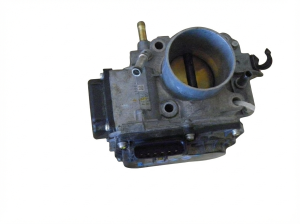
Used OEM Parts in Stock
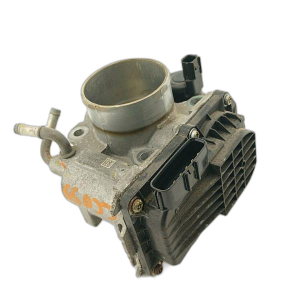
New Aftermarket Parts Available

The information in this article is provided for general reference and educational purposes only. Vehicle specifications, procedures, and part compatibility can vary by production date, trim level, and region. Always consult your vehicle's factory service manual and verify part numbers before purchasing or performing repairs. Safety-critical components such as airbags, seat belts, and braking systems should be installed by a qualified professional.
- Honda Civic:
- 🧭 Diagnostic Flowchart
- 🎬 Helpful Videos
- 🛍️ Shop This Part
- What's Unique About the 2011-2015 Honda Civic
- Symptoms You May Notice
- Most Likely Causes
- Rare But Worth Checking
- Diagnosis Steps
- Parts You'll Likely Need
- Technical Service Bulletins (TSBs) & Recalls
- Platform-Specific Known Issues
- Mechanic-Grade Diagnostic Values
- Scan Tool Commands That Help
- Wiring & Ground Locations
- Real Owner Repair Stories
- Used vs. New Parts: Buying Guide for This Vehicle
- Real Owner Stories
- 2012 Honda Fit — 70000 miles
- 8th Gen Honda Civic
- 8th Gen Honda Civic Si
- Related OBD-II Codes
- Frequently Asked Questions
- 🎟️ Get 5% Off