

P2135 on 2017-2022 Honda CR-V: Throttle Position Sensor Correlation Failure Causes and Fixes
On a 2017-2022 Honda CR-V, code P2135 almost always indicates a failing throttle body. The throttle position sensors (TPS) are integrated and not sold separately. The fix is to replace the entire throttle body assembly and perform an idle relearn procedure. Expect to pay $200-$500 for the part.
- P2135 on a 2017-2022 CR-V almost always means the throttle body has failed internally.
- The vehicle will likely enter a 'limp mode' with severely reduced power, making it unsafe for highway driving.
- Before replacing the throttle body, always inspect the wiring and connector for damage, as this is a known secondary cause.
- Replacing the throttle body is a DIY-friendly job, but you MUST perform an idle relearn procedure afterward to prevent idling problems.
- Always replace the throttle body gasket when performing this repair to avoid vacuum leaks.
What's Unique About the 2017-2022 Honda CR-V
For the 5th generation Honda CR-V (2017-2022), like many modern Hondas with the 1.5L Turbo and 2.0L engines, the dual throttle position sensors (TPS) are integrated directly into the electronic throttle body assembly and are not available as a separate, serviceable part. This design means that a failure of the internal sensors, a very common issue, necessitates the replacement of the entire throttle body. While wiring issues can be a cause, a faulty throttle body is the most common point of failure for this code on this specific platform.
Symptoms You May Notice
- Check Engine Light is on
- Multiple dashboard warnings, such as "Emissions System Problem," "Brake System Problem," or other system failure lights
- Vehicle enters "limp mode" (Reduced Engine Power)
- Sudden loss of power or poor acceleration.
- Hesitation or stalling during acceleration.
- Unstable, high, or erratic idle
- Inconsistent or jerky throttle response.
- Vehicle may not accelerate as expected or have unintended surges.
- Replacing the Accelerator Pedal Position (APP) sensor without checking the throttle body first. P2135 on this CR-V points more strongly to the throttle body.
- Replacing the throttle body without checking the wiring harness first. A simple wiggle test can save hundreds of dollars if the fault is a broken wire.
- Cleaning the throttle body. While cleaning a dirty throttle body can resolve idle issues, it will not fix an internal electrical sensor correlation fault.
Most Likely Causes
- Faulty Throttle Body Assembly 🔴 High Probability → Shop Fuel Injection Throttle Body The integrated Throttle Position Sensors (TPS) are a known common failure item on Honda's 1.5T engine platform. Honda does not sell the sensors separately, requiring replacement of the entire assembly.
How to confirm: Use a scan tool with live data to monitor the voltages of TP Sensor 1 (TPSA) and TP Sensor 2 (TPSB). The voltages should move smoothly and in opposition as the throttle is pressed (e.g., one goes from low to high, the other from high to low). If the readings are erratic, do not track each other correctly, or one is stuck, the throttle body is faulty.
Typical fix: Replace the entire throttle body assembly with a new gasket. After replacement, a throttle position relearn procedure must be performed using a scan tool or a specific manual sequence.
Est. part cost: $200-$500 - Wiring or Connector Issue 🟡 Medium Probability The wiring harness to the throttle body can sometimes be too tight from the factory or become brittle over time, leading to frayed wires or poor connections at the 6-pin connector.
How to confirm: Visually inspect the wiring harness leading to the throttle body for any signs of damage, fraying, or corrosion. Perform a "wiggle test" on the connector and harness while monitoring live TP sensor data on a scan tool to see if the voltage readings jump or drop out. A more advanced check involves testing for a short between the TPSA and TPSB wires (PCM connector terminals) with the throttle body connector unplugged.
Typical fix: Repair the damaged section of wire or replace the connector pigtail. Ensure the harness has enough slack to prevent future stress.
Est. part cost: $10-$50 - Faulty Accelerator Pedal Position (APP) Sensor ⚪ Low Probability → Shop Accelerator Pedal Assembly While less common for this specific code, the APP sensor also uses a dual-sensor correlation check. A failure here can sometimes, though rarely, be misinterpreted or trigger related codes. A user on a Honda Fit forum initially suspected the APP sensor due to a loose connection before determining the throttle body was the ultimate culprit.
How to confirm: Use a scan tool to monitor the live data for APP Sensor 1 and APP Sensor 2. The voltage should increase smoothly as you press the pedal. A separate code, P2138, more directly points to the APP sensor.
Typical fix: Replace the accelerator pedal assembly. This is typically a simple bolt-on part inside the cabin.
Est. part cost: $150-$250
Rare But Worth Checking
- Powertrain Control Module (PCM) Failure: → Shop Engine Control Module (ECM) This is extremely rare. The PCM should only be considered after all other possibilities, including the throttle body and wiring, have been exhaustively tested and ruled out. Sometimes a PCM software update is required, but hardware failure is unlikely.
Diagnosis Steps
- Connect an OBD-II scanner and confirm P2135 is present. Note any other codes.
- Using the scanner's live data function, monitor the voltage readings for TP Sensor A and TP Sensor B. They should have a consistent, correlated relationship as the throttle is manually opened and closed (with the engine off, key on).
- Visually inspect the wiring harness and the 6-pin connector at the throttle body for any signs of damage, corrosion, or loose pins.
- Perform a "wiggle test": while watching the live TP sensor voltages, gently wiggle the connector and the nearby harness. If the voltage readings jump erratically, you have a wiring issue.
- If the wiring is good but the sensor voltages are erratic or do not correlate, the throttle body assembly is faulty.
- If the TP sensor data is stable, check the live data for the Accelerator Pedal Position (APP) sensors as a secondary check, though this is a less likely cause.
- After replacing the faulty component (usually the throttle body), clear the DTCs.
- Perform the throttle position relearn procedure (also called an idle learn procedure). This is mandatory. The general steps are: warm the engine to operating temperature (radiator fan comes on), then let it idle for 5-10 minutes with no accessories on. Using a Honda-specific scan tool (HDS) is the most reliable method.
Parts You'll Likely Need
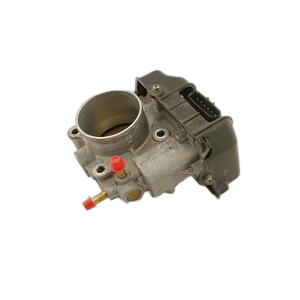
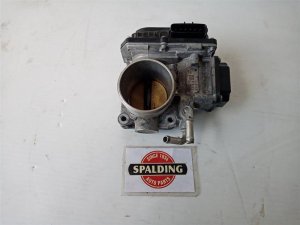
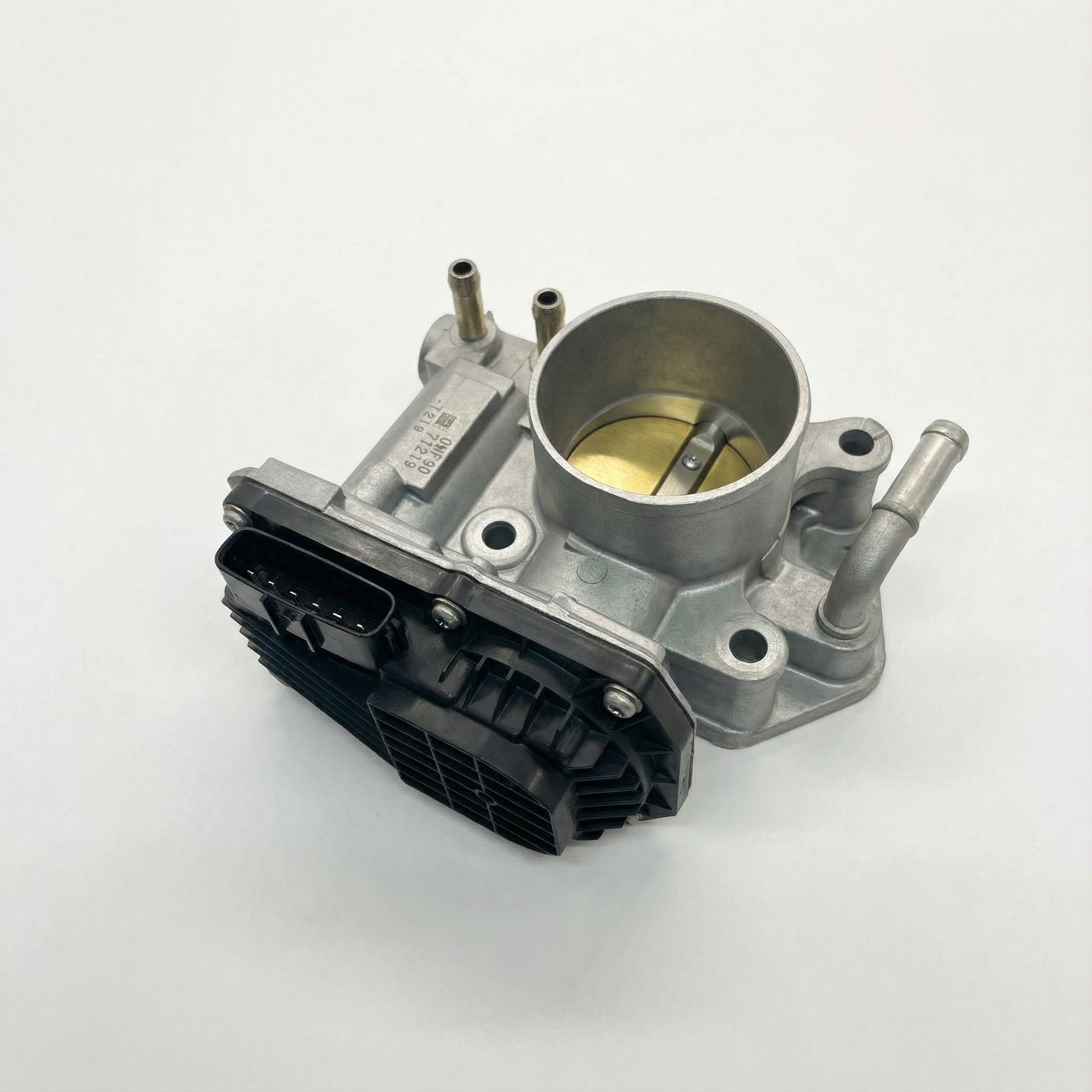
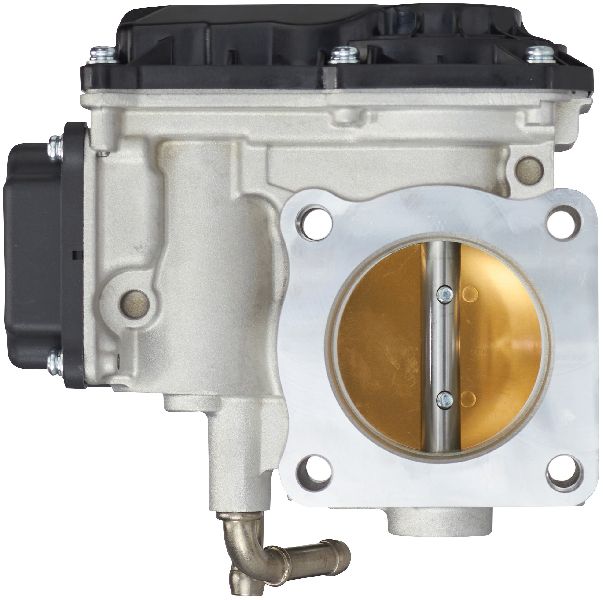
- Throttle Body Assembly
(OEM #16400-5BA-A01)— This is the most common cause of P2135, as the internal throttle position sensors fail and are not sold separately. This part number is for the 2.0L engine; the 1.5L Turbo engine uses a different part.
Trusted brands: Honda (OEM), Hitachi
OEM price range: $350-$500
Aftermarket price range: $200-$350 - Throttle Body Gasket
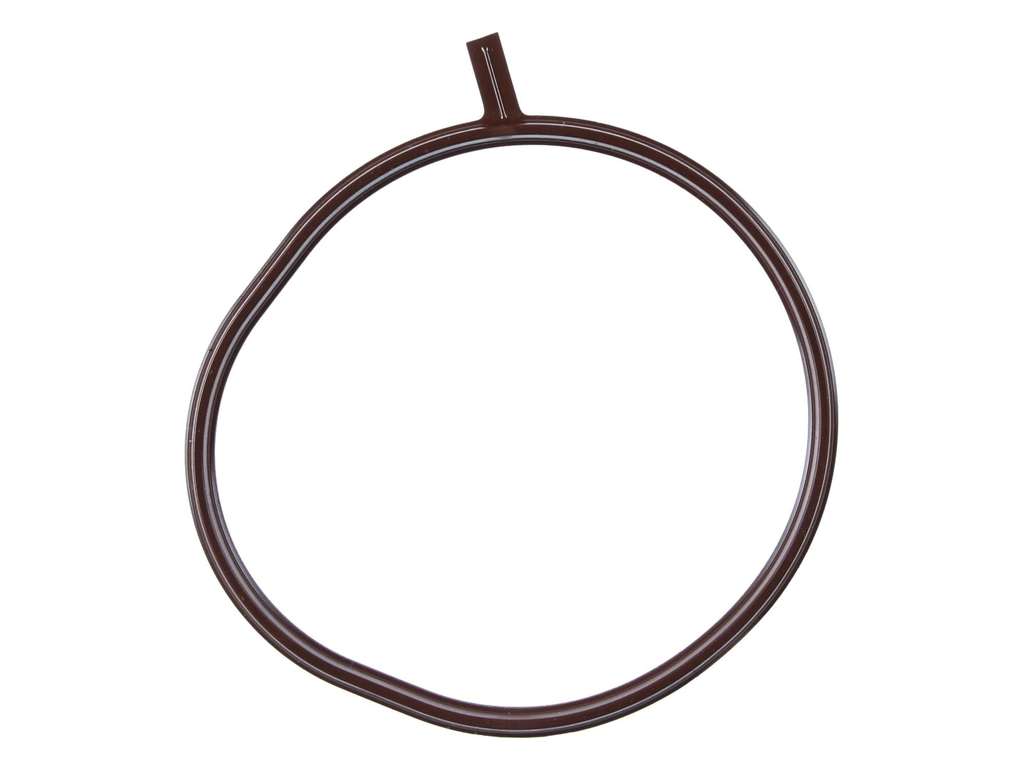
(OEM #16176-5BA-A01)— The gasket should always be replaced when the throttle body is removed to prevent vacuum leaks. A new throttle body may or may not include one.
Trusted brands: Honda (OEM), Fel-Pro
OEM price range: $5-$15
Aftermarket price range: $3-$10
Related Codes That Often Appear With This One
- P2101 — This code for 'Throttle Actuator Control Motor Circuit Range/Performance' often appears with P2135 because the motor that moves the throttle plate is in the same assembly as the failing position sensors.
- P2176 — This code for 'Throttle Actuator Control System - Idle Position Not Learned' can be triggered when the PCM can't trust the sensor readings to establish a proper idle. It can also appear after a throttle body replacement if the idle relearn procedure is not performed correctly.
Platform-Specific Known Issues
- Owner Experience on CR-V Owners Club Forum: Multiple owners on crvownersclub.com have documented experiencing P2135. A common report is that the car will suddenly lose power, display multiple warning lights on the dash, and enter limp mode. The consensus fix in these threads is always a full throttle body replacement, which resolves the issue.
- Heat-Related Failures: A user on an unofficial Honda Fit forum noted their P2135 code seemed to appear more frequently when the weather was hot, suggesting a possible link between ambient temperature and the failure of the electronic components within the throttle body.
Mechanic-Grade Diagnostic Values
- TP Sensor 1 (TPSA) Voltage — expected: Approx. 0.5V at closed throttle, rising smoothly to approx. 4.5V at wide-open throttle (WOT).. Failure: Voltage is stuck, jumps erratically, or shows sudden spikes/dropouts when graphed on a scan tool.
- TP Sensor 2 (TPSB) Voltage — expected: Moves in opposition or parallel to TPSA. For example, it may read approx. 4.5V at closed throttle and decrease smoothly to approx. 0.5V at WOT.. Failure: Voltage does not track smoothly in relation to TPSA, causing the correlation check to fail.
- Sum of TPSA + TPSB Voltages (Live Data) — expected: The sum of the two sensor voltages should remain constant, typically around 5.0V, throughout the entire range of throttle movement.. Failure: The sum deviates significantly (e.g., outside a 4.8V - 5.2V range), which is a direct confirmation of the correlation fault.
- Continuity between PCM Connector B Pins — expected: No continuity should exist between pins #46 (THL1) and #47 (THL2) with the throttle body connector unplugged.. Failure: Continuity indicates a short circuit in the engine wiring harness between the two throttle position sensor signal wires.
- Throttle Body 5V Reference Wire to Ground — expected: Steady 5.0 Volts with key on, engine off.. Failure: Missing or fluctuating voltage points to a problem in the wiring or the PCM, not the throttle body itself.
Scan Tool Commands That Help
- Honda Diagnostic System (HDS) or equivalent high-end scanner: ETCS (TAC) TEST -> TP POSITION CHECK — This function is used to clear the stored throttle position learned values from the PCM. It is a critical step to perform after cleaning or replacing the throttle body to force the system to recalibrate to the new sensor's baseline readings.
Wiring & Ground Locations
- PCM Connector B (51P) — At the Powertrain Control Module (PCM). The specific location of the PCM can vary but is typically in the engine bay or under the dashboard.. This connector contains the signal wires for the throttle position sensors. A diagnostic step for a suspected wiring short is to check for continuity between pins #46 and #47 on this connector with the throttle body unplugged.
- Ground G101 — Commonly located on the engine block, specifically on or near the thermostat housing.. G101 is a primary power and logic ground for the ECU/PCM. A loose, corroded, or broken connection at this point can cause a host of erratic electrical issues and fault codes, including sensor correlation errors like P2135. It should be inspected whenever widespread electrical or sensor issues are present.
Real Owner Repair Stories
- 2CarPros Forum User (via search result) (Chevrolet platform mate to GMC Yukon (similar drive-by-wire system)) — Stalling, jerking, loss of acceleration, and check engine light with code P2135.
❌ Tried (didn't work) Replaced the throttle body assembly (3 separate times), Replaced the accelerator pedal assembly (twice)
✅ What actually fixed it The issue was ultimately traced to a wiring problem in the harness, which caused an intermittent voltage variation that triggered the code. This highlights the critical need to test the wiring harness before replacing expensive components.
Model Year Variations Within This Range
- 2017-2022: The 2017-2022 CR-V was available with two primary engines that use different throttle bodies: the 1.5L Turbo (L15B7) and the 2.0L Naturally Aspirated (primarily in Hybrid models). The part number for the 2.0L engine is 16400-5BA-A01. The part for the 1.5T is different and must be verified by VIN before ordering.
Diagnostic Flowchart
Other Known Issues on This Vehicle
Issues unrelated to this code that are worth knowing about as an owner of this generation:
- Engine Oil Dilution (1.5T Engine) 🔴 High — More common in colder climates and on vehicles used for short trips. Can occur at low mileage. (Ref: Honda issued software updates and extended warranties in some regions to address this. No single TSB covers all years, but it's a widely acknowledged problem.)
- Parasitic Battery Drain 🟠 Medium — Common across 2017-2019 models. Owners report dead batteries after the vehicle sits for a few days. (Ref: A software bug in the Vehicle Stability Assist (VSA) module can cause a parasitic draw. Honda addressed this with software updates, such as in TSB A19-039 for the 2019 model.)
- Sticky Steering 🔴 High — Affects 2022+ models most prominently. Drivers report a 'notchy' or 'sticky' feeling in the steering at highway speeds. (Ref: NHTSA investigation and Honda recall 24V-744. The initial fix involves replacing a spring and redistributing grease in the EPS gearbox, though some owners report this is insufficient.)
- Fuel Injector Failure (1.5T Engine) 🟠 Medium — Can lead to misfires on a cold start. Some owners report issues as early as 60,000 miles.
- Infotainment System Glitches 🟡 Low — Widespread reports of freezing, crashing, and connectivity issues with the head unit across the generation. (Ref: Various software updates were released, but problems persist for some owners.)
Used vs. New Parts: Buying Guide for This Vehicle
When a used part is the smart pick: A used throttle body is a high-risk purchase for P2135, as the internal sensors are the most common failure point. It should only be considered as a last-resort, temporary fix for a vehicle on a strict budget, with the understanding that it may fail again quickly.
Donor-vehicle mileage cap: roughly under 50000 miles for the part to have meaningful remaining life.
What to inspect on the donor part:
- Verify the part came from a running, driving vehicle that did NOT have a P2135 or other throttle-related codes.
- Inspect the 6-pin electrical connector for any signs of green corrosion, bent pins, or physical damage.
- Ensure the throttle plate moves freely by hand (with power off) and is not seized or excessively dirty.
- Ask for a warranty or return period from the seller (junkyard or online).
OEM-only on this vehicle (don't cheap out):
- Throttle Body Assembly
Aftermarket brands forum-validated for this vehicle:
- Hitachi (often the Original Equipment Manufacturer for Honda)
Documented NHTSA Reports
Manufacturer Model Reference (Honda Pilot)
Symptoms: An owner reported experiencing the P2135 code five times, with four occurrences in a single year. The failure caused the dashboard warning lights to flash numerous warnings and the vehicle to enter an immediate limp mode (NHTSA ODI #11479189).
Manufacturer Model Reference (Honda Accord)
Symptoms: A technician found DTC code P2135 indicating TP sensor A/B incorrect voltage correlation. The technician initially attempted to recalibrate the TP sensor, but the incident recurred (NHTSA ODI #10537865).
Real Owner Stories
Aggregated from forums and TSBs cited above. Mileages and costs reflect what owners reported in those sources.
2017-2022 Honda CR-V
Symptoms: The car suddenly lost power, displayed multiple warning lights on the dash, and entered limp mode.
What fixed it: Full throttle body replacement.
Source hint: CR-V Owners Club Forums (crvownersclub.com)
2008-2013 Honda Fit (Shared Platform Logic)
Symptoms: The code appeared more frequently when the weather was hot; initially suspected the APP sensor due to a loose connection.
What fixed it: Replacing the throttle body and gasket.
Source hint: Unofficial Honda FIT Forums (fitfreak.net)
Related OBD-II Codes
Frequently Asked Questions
Can I just replace the Throttle Position Sensor (TPS) on my 2017-2022 Honda CR-V 1.5T?
Is there a specific procedure I need to follow after replacing the throttle body on my CR-V?
My CR-V is showing 'Emissions System Problem' and 'Brake System Problem' at the same time as P2135. Are these separate failures?
Does the weather affect the P2135 code on Honda vehicles?
Is the P2135 code related to the oil dilution issue on the 1.5T engine?
Could a loose accelerator pedal cause the P2135 code on my CR-V?
Helpful Videos
Used OEM Parts in Stock
New Aftermarket Parts Available

The information in this article is provided for general reference and educational purposes only. Vehicle specifications, procedures, and part compatibility can vary by production date, trim level, and region. Always consult your vehicle's factory service manual and verify part numbers before purchasing or performing repairs. Safety-critical components such as airbags, seat belts, and braking systems should be installed by a qualified professional.
- Honda CR-V:
- 🧭 Diagnostic Flowchart
- 🎬 Helpful Videos
- 🛍️ Shop This Part
- What's Unique About the 2017-2022 Honda CR-V
- Symptoms You May Notice
- Most Likely Causes
- Rare But Worth Checking
- Diagnosis Steps
- Parts You'll Likely Need
- Related Codes That Often Appear With This One
- Platform-Specific Known Issues
- Mechanic-Grade Diagnostic Values
- Scan Tool Commands That Help
- Wiring & Ground Locations
- Real Owner Repair Stories
- Model Year Variations Within This Range
- Other Known Issues on This Vehicle
- Used vs. New Parts: Buying Guide for This Vehicle
- Documented NHTSA Reports
- Manufacturer Model Reference (Honda Pilot)
- Manufacturer Model Reference (Honda Accord)
- Real Owner Stories
- 2017-2022 Honda CR-V
- 2008-2013 Honda Fit (Shared Platform Logic)
- Related OBD-II Codes
- Frequently Asked Questions
- 🎟️ Get 5% Off