

P2135 on 1997-2010 Saab 9-5: Throttle Position Sensor Correlation Fault Causes and Fixes
On a Saab 9-5 with the 2.2L diesel engine, code P2135 almost always points to a failing electronic throttle body. This will cause the vehicle to enter 'Limp Home Mode' with severely reduced power. The most common and reliable fix is to replace the entire throttle body assembly, as the internal sensors are the point of failure.
- P2135 on a Saab 9-5 indicates a mismatch between the two throttle position sensors.
- The most common symptom is the vehicle entering a 'Reduced Engine Power' or 'Limp Home Mode'.
- The most probable cause is a faulty electronic throttle body assembly.
- Before replacing parts, always inspect the wiring and connector to the throttle body for damage or corrosion.
- After replacing the throttle body, a relearn procedure may be necessary to ensure proper idle and performance.
What's Unique About the 1997-2010 Saab 9-5
While P2135 is a generic code, on many GM-era Saabs, including the 9-5 with the D223L engine, it is very commonly caused by the failure of the electronic throttle body assembly itself rather than just a wiring issue. The internal sensors wear out or fail, creating the voltage mismatch. While cleaning the throttle body is sometimes suggested for general maintenance, it will not fix the internal electronic fault that causes P2135. Replacement is the only long-term solution.
Generation note: This guide covers the first generation of the Saab 9-5 (1997-2010) equipped with the D223L 2.2L TiD diesel engine, which was available from 2002-2005. The electronic throttle control system and the common causes for P2135 are consistent for these model years.
Symptoms You May Notice
- Check Engine Light is on
- Vehicle enters 'Limp Home Mode' or 'Reduced Engine Power' mode
- Severely limited acceleration or inability to accelerate
- Erratic or unstable idle
- Hesitation or surging during acceleration
- Vehicle may stall
- Cruise control becomes inoperative
- Replacing only the accelerator pedal sensor when the fault is in the throttle body.
- Replacing fuel injectors or suspecting a fuel delivery problem due to the poor engine performance, without first addressing the specific throttle-related code.
- Assuming a vacuum leak is the cause of the P2135 code, although a vacuum leak can cause other driveability issues, it does not typically cause a sensor correlation fault.
Most Likely Causes
- Failing Electronic Throttle Body Assembly 🔴 High Probability → Shop Fuel Injection Throttle Body The internal throttle position sensors (TPS) within the Bosch electronic throttle body are a common failure point on this platform. Over time, the resistive tracks wear out, causing the voltage signals to become erratic and no longer correlate.
How to confirm: Use a diagnostic scan tool to monitor the live data streams for Throttle Position Sensor 1 and Sensor 2. As the throttle is slowly opened and closed, the voltage readings should be smooth and correlate correctly (one may rise while the other falls). Jumps, dropouts, or a voltage difference greater than 4-8% between the sensors indicates a faulty sensor within the throttle body. 🎬 See how to test and replace electronic throttle bodies
Typical fix: Replace the entire throttle body assembly. Aftermarket and remanufactured units are available. A throttle body relearn procedure (often called a 'throttle body alignment' or TBA) may be required after installation, which can sometimes be accomplished by letting the car idle for several minutes.
Est. part cost: $150-$450 - Wiring or Connector Issues 🟡 Medium Probability Engine vibration and heat can cause wiring harnesses to become brittle or connector pins to lose tension or corrode over time, leading to intermittent signal loss.
How to confirm: Visually inspect the wiring harness and connector going to the throttle body for any signs of damage, corrosion, or loose pins. With the key on and engine off, gently wiggle the connector and wiring while observing the TPS voltage readings on a scan tool to see if the signal becomes erratic.
Typical fix: Repair the damaged section of wiring or clean/replace the connector pigtail.
Est. part cost: $10-$50
Rare But Worth Checking
- Faulty Powertrain Control Module (PCM/ECM): → Shop Engine Control Module (ECM) This is very uncommon, but possible. It should only be considered after the throttle body and wiring have been thoroughly checked and ruled out. An ECM failure will often be accompanied by other seemingly unrelated fault codes. Some forum users have pointed to this as a rare cause.
- Faulty Accelerator Pedal Position (APP) Sensor: → Shop Accelerator Pedal Assembly While the code points to the throttle body sensors, a failing APP sensor at the gas pedal can sometimes cause similar correlation codes. This is less common for this specific code on this vehicle but worth considering if a new throttle body does not resolve the issue.
Diagnosis Steps
- Connect a diagnostic scan tool and confirm that P2135 is the primary code stored.
- Access the live data stream on the scan tool. Observe the voltage readings for both Throttle Position Sensor 'A' and 'B'.
- With the key on and engine off, slowly press the accelerator pedal to the floor and release it. The voltage readings from the two sensors should change smoothly and in a predictable, correlated manner.
- According to the SAAB WIS, a fault is registered when the voltage difference between the two sensors is greater than 4% at idle or 8% at full throttle. If you see any voltage spikes, dropouts, or a persistent difference outside this range, the throttle body is faulty.
- If the sensor data seems stable, perform a visual inspection of the throttle body connector and its wiring harness. Look for chafed wires, corrosion in the connector, or loose pins.
- Gently wiggle the wiring harness and connector while watching the live sensor data to see if you can induce a fault.
- If both the sensor data and wiring appear to be good, the issue could be with the Accelerator Pedal Position (APP) sensor or, in rare cases, the ECM itself.
Parts You'll Likely Need
- Electronic Throttle Body Assembly
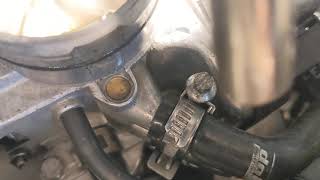
(OEM #GM 93176028 (supercedes 12791257), Bosch 0281002437)— This is the most frequent cause of P2135 on this platform, as the internal sensors fail, causing the voltage correlation error. The entire unit must be replaced. 🎬 Watch: Saab 9-5 throttle body replacement overview
Trusted brands: Bosch (OEM), ACDelco
OEM price range: $350-$500
Aftermarket price range: $150-$300
Related Codes That Often Appear With This One
- P2176 — This code relates to the throttle actuator control system's inability to learn the idle position. It can appear after a throttle body replacement if the relearn procedure is not performed correctly.
- P2101 — This code points to a problem with the throttle actuator control motor, which is also housed within the throttle body. A failing throttle body can have both bad sensors (P2135) and a bad motor (P2101).
- P1230 — Another Saab-specific code indicating that the Throttle Valve / Pedal Position Sensor signal is not in the expected range, often pointing directly to a failing throttle body.
Platform-Specific Known Issues
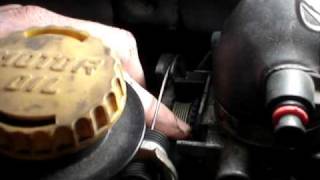
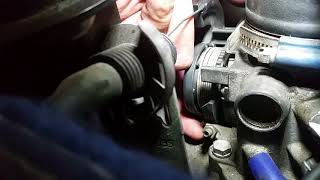
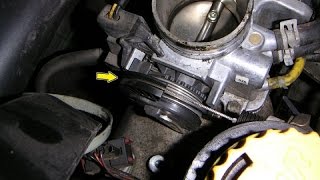
- Resetting Limp Home Mode Manually: On some Saab 9-5 models, it is possible to manually reset the throttle body from 'limp mode' at the unit itself. By removing the side cover, a spring-loaded cog can be reset, which may temporarily restore function. However, if the underlying electronic fault (P2135) exists, the throttle body will likely re-enter limp mode quickly. This is a temporary fix at best. 🎬 Watch: How to reset Saab 9-5 limp home mode
Mechanic-Grade Diagnostic Values
- Voltage sum of TPS Sensor 1 and Sensor 2 — expected: Consistently 5V. Failure: If the sum of the two sensor voltages deviates from 5V, it indicates a fault within the throttle body's internal sensor circuits.
- 5V Reference at Throttle Body Connector — expected: A steady 5 volts at the 5V reference pin(s) with the key on, engine off.. Failure: Low, absent, or fluctuating voltage points to a wiring issue or a problem with the ECM's 5V reference circuit.
Scan Tool Commands That Help
- Saab Tech 2: Idle Learn Reset / Throttle Body Adaptation — This function must be used after replacing the throttle body to allow the ECM to learn the new sensor's home and range values. Failure to do so can result in an unstable idle, other DTCs like P2176, or continued limp mode.
- Saab Tech 2: Live Data Monitoring of TPS 1 and TPS 2 — This is the primary diagnostic step. Graphing both sensor voltages while slowly operating the pedal will clearly show any dropouts, spikes, or non-linear behavior that confirms an internal throttle body fault.
Wiring & Ground Locations
- G7 — Located above the throttle body on the 4-cylinder diesel engine.. This is a critical engine grounding point. A loose or corroded connection here can introduce electrical noise and unstable voltages to various engine sensors, including the throttle body, potentially causing correlation faults.
- G25 — Main battery ground connection on the gearbox.. A poor main ground connection at the gearbox can affect the entire powertrain's electrical system, leading to unpredictable sensor behavior and fault codes.
- G2 — Located on the left-hand structural member behind the headlamp, serves as a primary chassis ground for the battery.. This is part of the main grounding scheme. A redundant ground cable often runs between G2 and G25, highlighting the importance of solid chassis and powertrain grounds for stable electronics.
Real Owner Repair Stories
- Reddit user on r/saab (2008 Saab 9-3 2.0T (similar GM T8 system)) — Check Engine Light with P2135, vehicle enters limp mode.
❌ Tried (didn't work) Resetting the ECU by disconnecting the battery provided a temporary fix, but the code would return.
✅ What actually fixed it The user noted the problem only occurred in very cold weather (below freezing). While the thread did not have a final confirmed repair, the top suggestions from experienced users were a failing throttle body or, more rarely, a failing ECU, which can be sensitive to temperature changes when failing.
Model Year Variations Within This Range
- 2002-2005: The D223L 2.2L TiD engine was used in the Saab 9-5 from 2002 to 2005. While the core engine and throttle system remained consistent, minor changes occurred in the 9-5 platform. For example, 2003 and later models received ESP (stability control) instead of just TCS (traction control), and 2004-2005 models had cosmetic updates like a different front bumper for the Aero trim and an updated SID (Saab Information Display). These changes do not significantly affect the diagnosis or repair of code P2135.
Diagnostic Flowchart
Other Known Issues on This Vehicle
Issues unrelated to this code that are worth knowing about as an owner of this generation:
- Bosch VP44 Injection Pump Failure 🔴 High — Can occur at moderate to high mileage. Failure is often sudden, causing the engine to cut out or fail to start.
- EGR Valve Clogging 🟠 Medium — Common on diesel engines. Carbon buildup restricts the valve, leading to poor performance, increased smoke, and EGR-related fault codes (e.g., P0401).
- Air Leaks in Fuel System Causing Hard Starts 🟠 Medium — Aging rubber fuel return lines and injector seals can perish, allowing air into the fuel system. This typically manifests as difficulty starting the engine, especially when cold or parked facing uphill.
- SID (Saab Information Display) Pixel Failure 🟡 Low — Extremely common across all 9-5 models. The ribbon cable connecting the LCD screen to the circuit board degrades, causing lines of pixels or the entire display to become unreadable.
- Turbocharger Failure 🔴 High → Shop Turbocharger — Reported on higher-mileage vehicles, often due to bearing wear or oil starvation. Symptoms include white/blue smoke from the exhaust and loss of power.
Used vs. New Parts: Buying Guide for This Vehicle
When a used part is the smart pick: Given that the failure mode of the throttle body is electronic wear-out, purchasing a used unit is a significant gamble. It only makes sense if the part is from a verified low-mileage donor vehicle and comes with a warranty from the seller. A new or professionally remanufactured unit is strongly recommended for long-term reliability.
Donor-vehicle mileage cap: roughly under 60000 miles for the part to have meaningful remaining life.
What to inspect on the donor part:
- Verify the part number (Bosch 0281002437 or GM 93176028) matches exactly.
- Inspect the electrical connector for any corrosion, bent, or damaged pins.
- Check the plastic housing for any cracks, warping, or signs of heat damage.
- Manually move the throttle plate (if possible) to feel for any binding or roughness.
- Ask the seller for the mileage of the donor car if available.
OEM-only on this vehicle (don't cheap out):
- While aftermarket options exist, the OEM Bosch unit is the most proven and reliable choice. An electronic component this critical to driveability is often not a good place to save money with an unproven brand.
Aftermarket brands forum-validated for this vehicle:
- Bosch (OEM supplier)
- ACDelco (GM's official parts brand)
Brands owners have reported issues with on this vehicle:
- Unbranded, no-name parts from online marketplaces should be avoided, as their internal electronics may not meet OEM specifications for accuracy and durability, leading to a repeat failure.
Real Owner Stories
Aggregated from forums and TSBs cited above. Mileages and costs reflect what owners reported in those sources.
2008 Saab 9-3 (similar D223L-style system)
Symptoms: P2135 code appearing specifically during very cold weather conditions.
What fixed it: The community confirmed it is typically a failing throttle body, though the ECU was mentioned as a rare secondary possibility.
Source hint: r/saab on Reddit (2023) titled 'P2135 code'
Saab 9-5 2.2L Diesel
Symptoms: Owner questioned if cleaning the throttle body would provide a long-term solution for the recurring fault.
What fixed it: The consensus determined that electronic failure of the unit was inevitable, requiring a full replacement of the throttle body assembly.
Source hint: Saab Tech Talk (STT) Forum (2011) topic 145.0
Related OBD-II Codes
Frequently Asked Questions
Can I just clean the throttle body on my Saab 9-5 to fix the P2135 code?
Is there a way to get my 9-5 out of 'Limp Home Mode' without a scan tool?
What voltage difference between the sensors triggers P2135 on the D223L engine?
Are there specific brands I should look for when replacing the throttle body?
Does the P2135 code affect the cruise control on my Saab?
Could the P2135 code be caused by the accelerator pedal instead of the throttle body?
Helpful Videos



The information in this article is provided for general reference and educational purposes only. Vehicle specifications, procedures, and part compatibility can vary by production date, trim level, and region. Always consult your vehicle's factory service manual and verify part numbers before purchasing or performing repairs. Safety-critical components such as airbags, seat belts, and braking systems should be installed by a qualified professional.
- Saab 9-5:
- 🧭 Diagnostic Flowchart
- 🎬 Helpful Videos
- What's Unique About the 1997-2010 Saab 9-5
- Symptoms You May Notice
- Most Likely Causes
- Rare But Worth Checking
- Diagnosis Steps
- Parts You'll Likely Need
- Related Codes That Often Appear With This One
- Platform-Specific Known Issues
- Mechanic-Grade Diagnostic Values
- Scan Tool Commands That Help
- Wiring & Ground Locations
- Real Owner Repair Stories
- Model Year Variations Within This Range
- Other Known Issues on This Vehicle
- Used vs. New Parts: Buying Guide for This Vehicle
- Real Owner Stories
- 2008 Saab 9-3 (similar D223L-style system)
- Saab 9-5 2.2L Diesel
- Related OBD-II Codes
- Frequently Asked Questions
- 🎟️ Get 5% Off