

P2135 on 2005-2009 Saab 9-7x 4.2L: Throttle Position Sensor Causes and Fixes
On a 2005-2009 Saab 9-7x with the 4.2L engine, code P2135 is almost always caused by a failing throttle body assembly. This triggers the 'Reduced Engine Power' warning. The most reliable fix is to replace the entire throttle body, which costs between $150 and $400 for the part. After replacement, a simple idle relearn procedure is required.
- P2135 on your Saab 9-7x almost certainly means the throttle body is failing, which is a very common issue for this vehicle platform.
- The main symptom will be the 'Reduced Engine Power' warning, which makes the vehicle very slow and potentially unsafe to drive in traffic.
- The most reliable fix is to replace the entire throttle body assembly and its gasket. Don't forget to perform the throttle relearn procedure after installation to avoid idle problems.
- Before buying parts, always perform a quick visual inspection of the wiring and connector going to the throttle body to rule out a simple electrical issue.
What's Unique About the 2005-2009 Saab 9-7x
The Saab 9-7x is built on the General Motors GMT360 platform, sharing its powertrain and electronics with the Chevrolet Trailblazer, GMC Envoy, Buick Rainier, and Isuzu Ascender. This is good news for parts availability, but it also means the 9-7x inherited a very common weak point: the electronic throttle body assembly. Failures of the internal throttle position sensors are extremely common across this entire family of vehicles, making P2135 one of the most frequent codes owners will encounter, often accompanied by the 'Reduced Engine Power' message.
Symptoms You May Notice
- "Reduced Engine Power" message on the instrument cluster
- Check Engine Light is illuminated
- Severely limited throttle response and acceleration (limp mode)
- Unstable, rough, or high idle speed
- Hesitation or stumbling during acceleration
- Engine stalling, especially when coming to a stop
- Service Stabilitrak / Traction Control light may also illuminate
- Replacing the Accelerator Pedal Position (APP) sensor. While the APP sensor is part of the drive-by-wire system, it typically generates its own specific codes (like P2138) and is not the common cause for P2135 on this platform.
Most Likely Causes
- Failing Throttle Body Assembly 🔴 High Probability → Shop Fuel Injection Throttle Body This is a well-documented, common failure point on the GM GMT360 platform. The internal throttle position sensors (TPS) wear out electronically and are not sold separately by the OEM. Cleaning the throttle body will not fix this electronic failure.
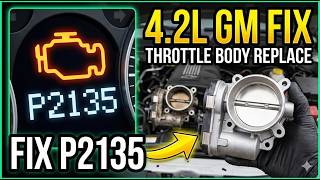
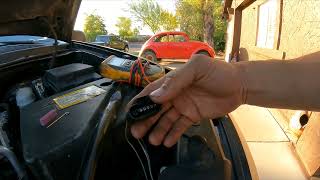
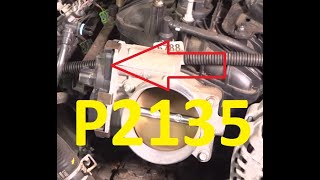
How to confirm: Use a scan tool to monitor TP Sensor 1 and TP Sensor 2 voltages while operating the pedal (key on, engine off). Jumps, dropouts, or non-linear readings indicate failure. If the wiring is confirmed to be good, the throttle body is the culprit. 🎬 Watch: How to diagnose and fix P2135 sensor voltage correlation codes.
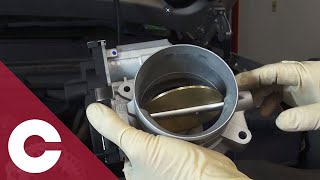
Typical fix: Replace the entire throttle body assembly with a new unit. 🎬 Watch: Step-by-step guide to replacing the throttle body on this platform. A throttle relearn procedure must be performed after installation. A common method is to start the engine and let it idle for 3 minutes, turn it off for 60 seconds, then start and idle for another 3 minutes. 🎬 See how to perform the electronic throttle body relearn procedure.
Est. part cost: $150-$400 - Damaged Wiring or Connector 🟡 Medium Probability The engine harness wiring near the throttle body can become brittle from heat cycles and vibration, leading to chafing or internal breaks. The female terminals in the 8-pin connector pigtail can also corrode or spread, causing a poor connection.
How to confirm: Visually inspect the wiring harness leading to the throttle body for any signs of rubbing, melting, or physical damage. Wiggle the connector and harness with the engine running (or while watching live data) to see if it affects idle or induces the code. Check the connector for corrosion or loose pins.
Typical fix: Repair the damaged section of wire or replace the throttle body connector pigtail (ACDelco P/N: PT2628).
Est. part cost: $20-$50
Rare But Worth Checking
- Shorted Electronic Fan Clutch Wiring: On the GMT360 platform, the wiring for the electronic fan clutch can short out and has been known to cause a false P2135 code. Before replacing a PCM, it is worth inspecting the fan clutch harness as a final check.
- Faulty Powertrain Control Module (PCM): → Shop Engine Control Module (ECM) This is extremely rare and should only be considered after a new throttle body and verified wiring fail to resolve the code. All other possibilities, including the fan clutch wiring, must be exhausted first.
Diagnosis Steps
- Connect an OBD-II scanner and confirm P2135 is the primary code. Check for any other related codes like P1516 or P2101.
- Visually inspect the wiring harness leading to the throttle body. Look for any signs of chafing, rubbing against other components, or heat damage.
- Inspect the throttle body electrical connector for a secure fit, corrosion on the pins, or any backed-out wires. Perform a 'wiggle test' on the connector and harness while monitoring live data to see if you can induce a fault.
- With a scan tool capable of viewing live data, monitor the values for "TP Sensor 1" and "TP Sensor 2". The values should change smoothly as you slowly press and release the gas pedal (with the key on, engine off).
- Observe the relationship between the two sensors. They should sweep in opposite directions (one rising, one falling). Any sudden jumps, dropouts, or spots where the values freeze indicate a failing sensor.
- If the wiring and connector appear perfect and the sensor data is erratic, the throttle body assembly has failed.
- As a final check, inspect the wiring to the electronic fan clutch, as a short in this harness is a known, though rare, cause of a false P2135 on these trucks.
- If a new throttle body does not fix the issue, the circuits between the throttle body and the PCM must be tested for continuity and shorts before considering a PCM failure.
Parts You'll Likely Need
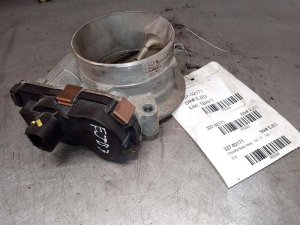
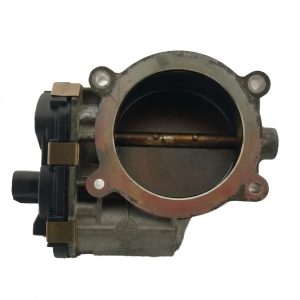
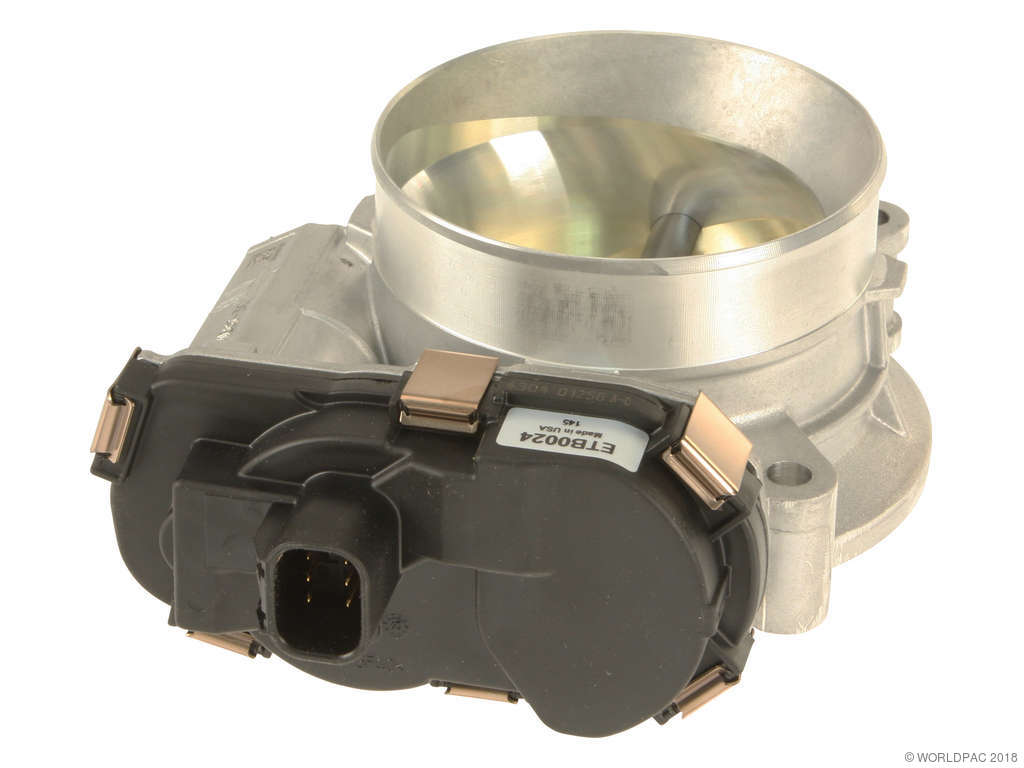
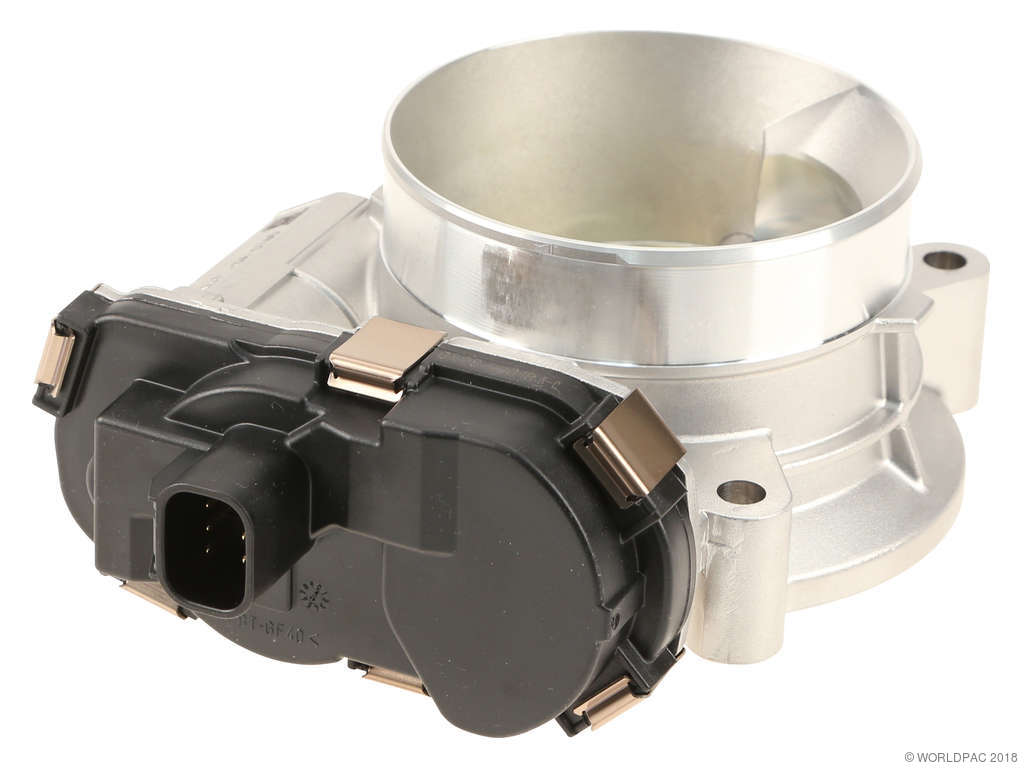
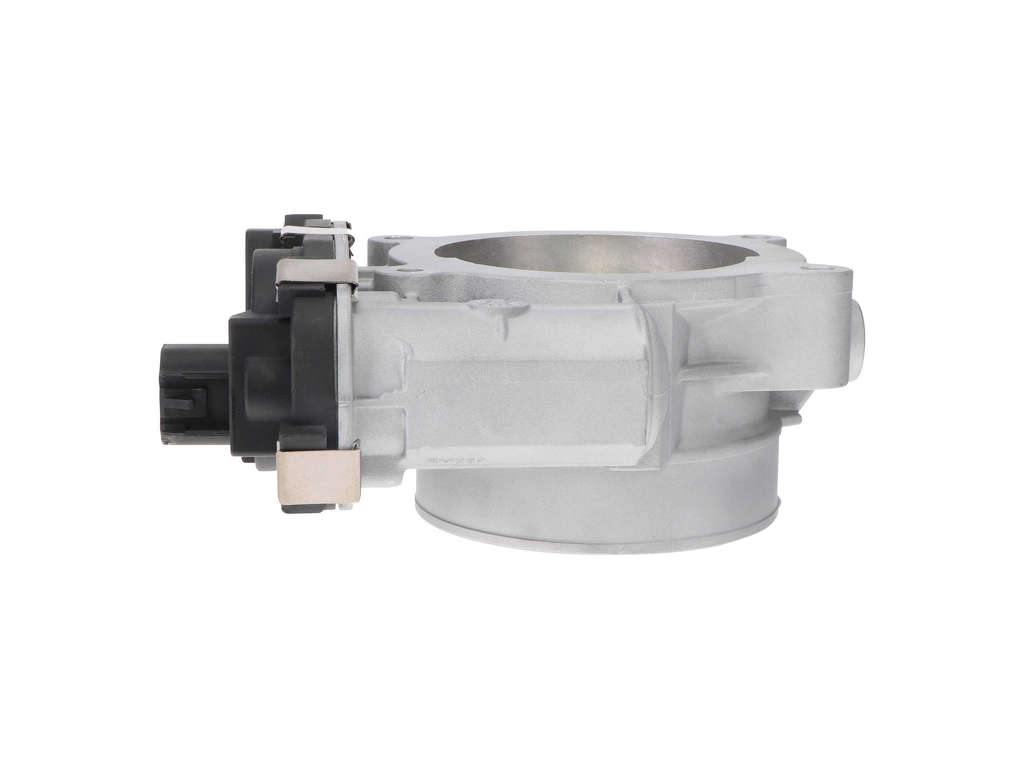
- Throttle Body Assembly
(OEM #19420713 (supersedes 12570800, 12679525))— This is the most common cause of code P2135. The internal sensors fail, and on this platform, they are integrated into the assembly and not serviced separately by GM.
Trusted brands: ACDelco (OEM), Hitachi (often the original supplier), Standard Motor Products (SMP), Cardone (Remanufactured)
OEM price range: $250-$425
Aftermarket price range: $150-$250 - Throttle Body Gasket
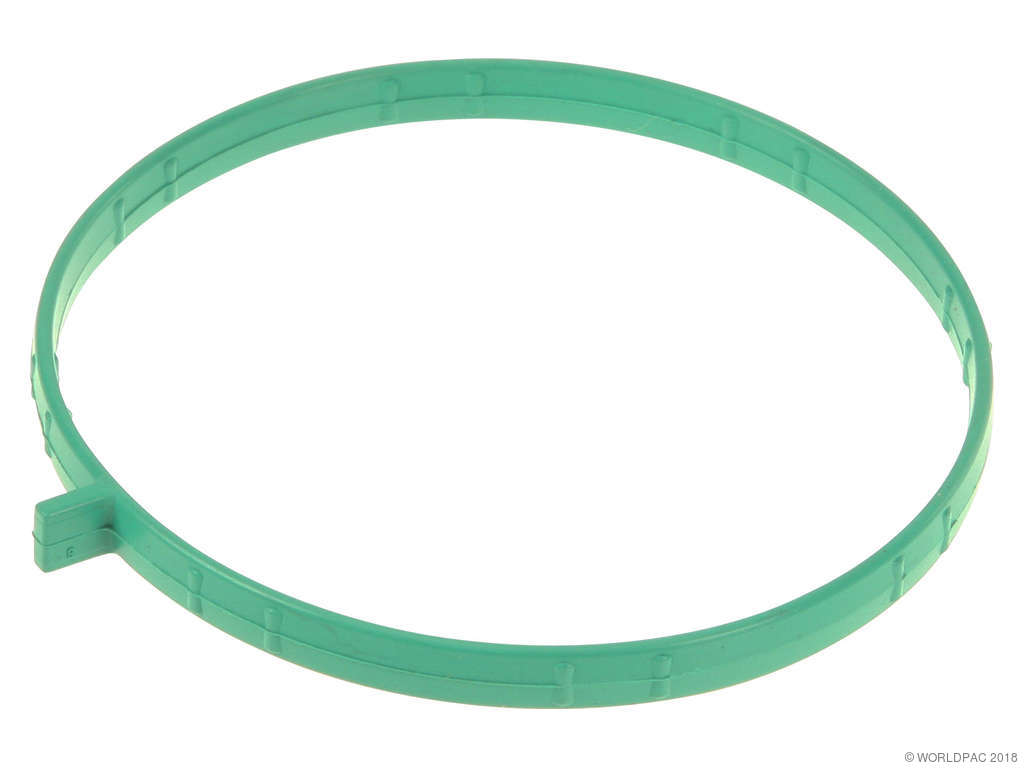
(OEM #12575463)— The gasket provides a critical seal between the throttle body and the intake manifold. It should always be replaced when the throttle body is removed to prevent vacuum leaks. Some new throttle bodies include one.
Trusted brands: ACDelco, Fel-Pro, Mahle
OEM price range: $8-$15
Aftermarket price range: $3-$10 - Throttle Body Connector Pigtail
(OEM #ACDelco PT2628 (GM 88986221))— If the connector itself is damaged or the terminals are spread/corroded, replacing the pigtail is necessary to ensure a solid electrical connection to the new throttle body.
Trusted brands: ACDelco, Dorman
OEM price range: $30-$50
Aftermarket price range: $20-$35
Related Codes That Often Appear With This One
- P1516 — This code relates to the Throttle Actuator Control (TAC) module performance and is often set alongside P2135 when the throttle plate position doesn't match the commanded position.
- P2176 — This code indicates the PCM has failed to learn the throttle's idle position. It can appear after a throttle body replacement if the relearn procedure isn't done correctly, or if a faulty throttle body is preventing the procedure from completing.
- P2101 — This code for 'Throttle Actuator Control Motor Circuit Range/Performance' points to an issue with the motor inside the throttle body. A failing throttle body can have both bad sensors (P2135) and a bad motor (P2101).
Technical Service Bulletins (TSBs) & Recalls
- TSB 12-06-04-003A: Details the diagnostic and replacement procedure for the throttle position sensor cover on some GM models, confirming the complexity and specific steps required if attempting a sensor-only repair.
- TSB 11-06-04-007C: While primarily for V8 models, this TSB details a procedure for replacing the TPS cover and terminals to resolve P2135, acknowledging the sensor as the root cause. This led to Special Coverage Adjustment #11273A (now expired) for many GM trucks and SUVs.
Platform-Specific Known Issues
- The Saab 9-7x and its GM platform mates are notorious for throttle body failures leading to P2135 and 'Reduced Engine Power' mode.
- While some other GM vehicles (mostly V8s) had a Special Coverage Adjustment (#11273) or TSB (#11-06-04-007C) for a replaceable TPS sensor kit, this was not generally applicable to the 4.2L LL8 engine. For this platform, replacing the entire throttle body assembly is the standard and most reliable repair.
Mechanic-Grade Diagnostic Values
- TP Sensor 1 Voltage (Key On, Engine Off) — expected: ~0.5-0.7V at closed throttle, ~4.0-4.5V at wide open throttle.. Failure: Voltage is outside of range, erratic, does not change smoothly, or does not correlate with Sensor 2.
- TP Sensor 2 Resistance Sweep (4.2L I6) — expected: Resistance should change smoothly from ~2.4 kOhms at closed throttle to ~1.0 kOhms at wide-open throttle.. Failure: Jumps, spikes, or dropouts in the resistance reading as the throttle plate is manually moved.
- TP Sensor 1 and 2 Voltage Correlation — expected: The voltage difference should not exceed 7-10%. A GM scan tool parameter 'TP Sensor 1 and 2 Agree/Disagree' should read 'Agree'.. Failure: The ECM will set the code if the sensors disagree by more than 7-10% for less than 1 second.
- 5-Volt Reference at Throttle Body Connector — expected: A steady 5 volts should be present at the two 5V reference pins (e.g., Pin G and Pin B).. Failure: Low, absent, or fluctuating voltage can indicate a shorted sensor on the same circuit (like the fan clutch) or a PCM fault.
Scan Tool Commands That Help
- GM Tech2 / GDS2: TAC System Test (Throttle Actuator Control) — This bidirectional control allows a technician to command the throttle plate to open and close, verifying if the motor is responding and checking for physical binding. This helps separate a mechanical failure (sticking plate) from an electrical one (bad sensor/motor).
- GM Tech2 / GDS2: Idle Learn / Throttle Relearn — This function is mandatory after cleaning or replacing the throttle body. It resets the learned idle position in the ECM. Skipping this step will often result in a high idle, unstable idle, or trigger code P2176.
- GM Tech2 / GDS2: Live Data Parameter: 'TP Sensor 1 and 2 Agree/Disagree' — This is the specific GM parameter to monitor for diagnosing P2135. It provides a direct confirmation of the fault condition detected by the ECM, showing 'Agree' or 'Disagree' based on the sensor correlation.
Wiring & Ground Locations
- Throttle Body Connector (4.2L I6) — The 8-pin electrical connector on the throttle body assembly.. This is the single point of connection for the dual throttle position sensors and the actuator motor. Corrosion, spread pins, or wire damage here is a direct cause of P2135. Pin E (Yellow) and F (Brown) control the motor. The other pins are for the two TPS sensors, their 5V reference, and grounds.
- G107 — On the driver's side of the engine block, about midway back and down, located under the EVAP Purge Solenoid.. This is a primary engine block ground. A loose or corroded connection here can cause unstable sensor readings and contribute to various electrical faults, including throttle-related codes.
- G109 (4.2L) — On the lower left side of the engine.. This is another critical engine ground point. Verifying its integrity is an important step when diagnosing any electrical issue on the engine.
Real Owner Repair Stories
- GMTNation.com Forum User (GM Vehicle with P1221, P2135) — Reduced Engine Power light, engine stalling.
❌ Tried (didn't work) Initial diagnosis was unclear.
✅ What actually fixed it A forum moderator suggested unplugging the electronic fan clutch as a diagnostic step. A shorted fan clutch can disrupt the 5-volt reference circuit that is shared with the throttle body, causing false P2135 codes. The user was advised to check the fan clutch wiring for chafing and shorts.
OEM Part Supersession History
12570800→12679525, then 19420713— Standard part evolution for design improvements or supplier changes.
Heads up: The latest part number, 19420713, is the correct service replacement for all previous versions for this application.
Model Year Variations Within This Range
- 2006-2009: For the 2006 model year, the 4.2L LL8 engine received an internal redesign and the addition of a Mass Air Flow (MAF) sensor. This increased horsepower from 275 hp to 291 hp. While the throttle body part number remained consistent for the repair, the engine management and tuning are different.
- 2002-2005 vs 2006-2007: The wiring diagrams for the Throttle Actuator Control (TAC) system are different between these year groups. While the throttle body itself may be interchangeable, a technician must use the correct year-specific wiring diagram for accurate electrical diagnosis.
Diagnostic Flowchart
Used vs. New Parts: Buying Guide for This Vehicle
When a used part is the smart pick: Given the extremely high failure rate of the internal electronics, purchasing a used throttle body for this vehicle is strongly discouraged. The risk of the used part failing shortly after installation is very high, making it a poor value proposition despite the lower initial cost.
Donor-vehicle mileage cap: roughly under 80000 miles for the part to have meaningful remaining life.
What to inspect on the donor part:
- If buying used is unavoidable, source from a vehicle with the lowest possible mileage.
- Inspect the connector pins for any signs of corrosion or damage.
- Check the throttle plate for excessive carbon buildup, as heavy coking can indicate a hard life.
- Ask for a warranty, even if it's only 30-90 days.
OEM-only on this vehicle (don't cheap out):
- While not strictly 'OEM-only', using a high-quality new part is critical. ACDelco (OEM) or Hitachi (often the original supplier to GM) are the most recommended brands for reliability.
Aftermarket brands forum-validated for this vehicle:
- Hitachi
- Standard Motor Products (SMP)
Brands owners have reported issues with on this vehicle:
- No-name, unbranded parts from online marketplaces should be avoided. While brands like Cardone (remanufactured) are available, the quality can be inconsistent, and a new unit from a reputable brand is a safer investment.
Real Owner Stories
Aggregated from forums and TSBs cited above. Mileages and costs reflect what owners reported in those sources.
2005 Chevrolet Trailblazer LT 4.2L I6 — 238000 miles
Symptoms: The truck failed to start on the first two cranks, then started with a rough idle that eventually smoothed out. The check engine light came on with codes P2135, P2101, and P1516.
What fixed it: The owner had already replaced the throttle body 3,000 miles prior. Forum discussion suggested the replacement part may have failed prematurely or that a persistent wiring issue was the underlying cause.
Source hint: GMTNation forum report ('SOLVED! - Crank no start when rains - GMTNation')
2004 Chevrolet Trailblazer 4.2L I6
Symptoms: The vehicle entered 'engine power reduce mode' and set code P2135.
What fixed it: A certified expert outlined the diagnostic steps and concluded that the most likely failure was the throttle body assembly itself, assuming the wiring checked out.
Source hint: 2CarPros.com - 'Code P2135, engine power reduce mode?'
GMT360 Platform Vehicle with 4.2L I6
Symptoms: The owner experienced a reoccurring 'low power / limp mode' condition accompanied by codes P2135 and P2101.
What fixed it: A forum moderator advised the owner to check for a short in the electronic fan clutch wiring, a known but uncommon cause for these codes, before condemning the PCM.
Source hint: GMTNation.com - 'reoccuring low power / limp mode'
Related OBD-II Codes
Frequently Asked Questions
I heard there was a special coverage program for this P2135 issue on GM trucks. Does it apply to my 2007 Saab 9-7x 4.2L?
Can I just clean the throttle body to fix the 'Reduced Engine Power' message and code P2135?
Is it possible to replace only the throttle position sensor (TPS) instead of the whole expensive assembly?
I replaced the throttle body, but the code came back. What should I check next?
The wiring connector at my throttle body looks corroded. What is the part number for a replacement pigtail?
My 'Service Stabilitrak' light came on at the same time as the Check Engine Light for P2135. Are these related?
Helpful Videos
Used OEM Parts in Stock
New Aftermarket Parts Available



The information in this article is provided for general reference and educational purposes only. Vehicle specifications, procedures, and part compatibility can vary by production date, trim level, and region. Always consult your vehicle's factory service manual and verify part numbers before purchasing or performing repairs. Safety-critical components such as airbags, seat belts, and braking systems should be installed by a qualified professional.
- Saab 9-7x:
- 🧭 Diagnostic Flowchart
- 🎬 Helpful Videos
- 🛍️ Shop This Part
- What's Unique About the 2005-2009 Saab 9-7x
- Symptoms You May Notice
- Most Likely Causes
- Rare But Worth Checking
- Diagnosis Steps
- Parts You'll Likely Need
- Related Codes That Often Appear With This One
- Technical Service Bulletins (TSBs) & Recalls
- Platform-Specific Known Issues
- Mechanic-Grade Diagnostic Values
- Scan Tool Commands That Help
- Wiring & Ground Locations
- Real Owner Repair Stories
- OEM Part Supersession History
- Model Year Variations Within This Range
- Used vs. New Parts: Buying Guide for This Vehicle
- Real Owner Stories
- 2005 Chevrolet Trailblazer LT 4.2L I6 — 238000 miles
- 2004 Chevrolet Trailblazer 4.2L I6
- GMT360 Platform Vehicle with 4.2L I6
- Related OBD-II Codes
- Frequently Asked Questions
- 🎟️ Get 5% Off