

P2135 on 2007-2009 Saturn Aura: Throttle Position Sensor Fault Causes and Fixes
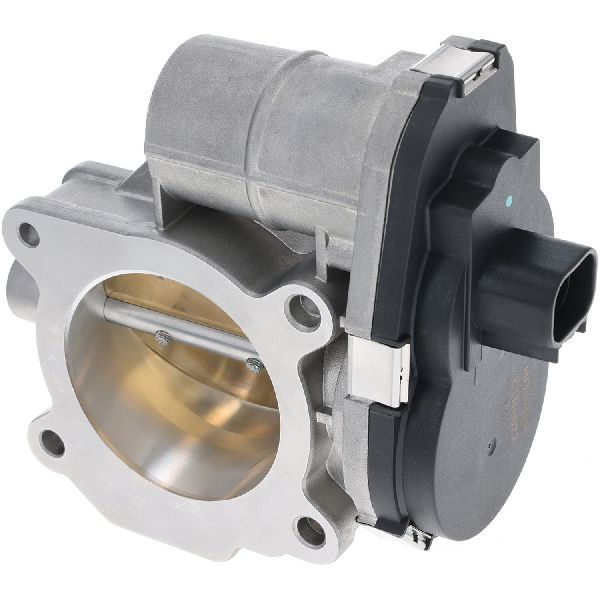
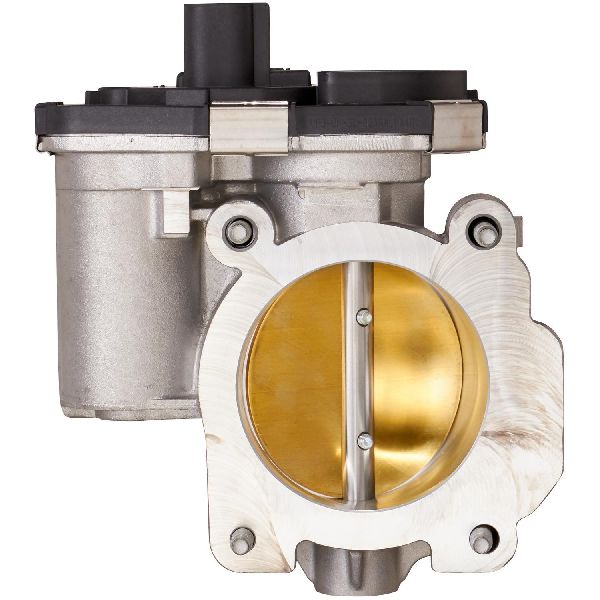
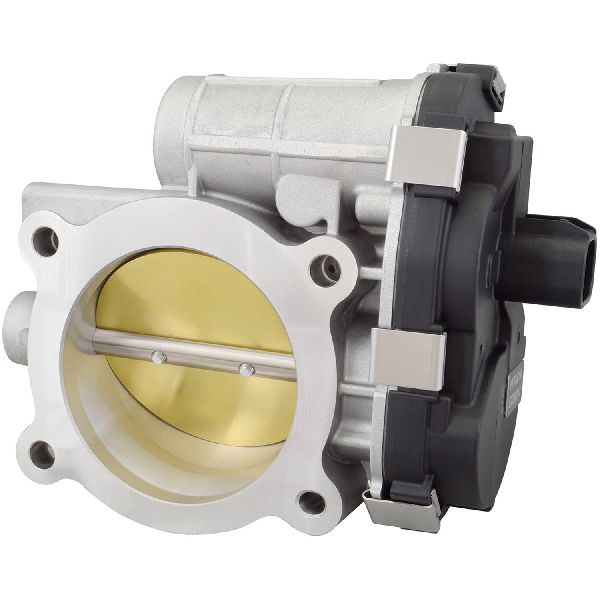
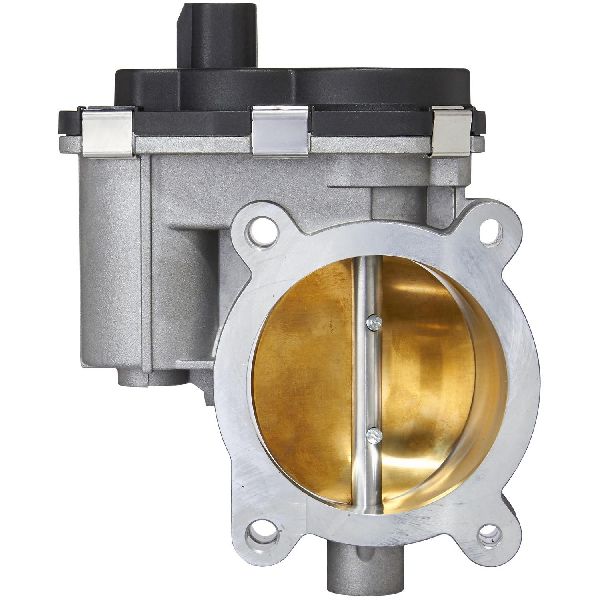
On a 2007-2009 Saturn Aura, code P2135 is most often caused by a failing throttle body assembly. This triggers a 'Reduced Engine Power' warning. Replacing the entire throttle body is the most common fix. Expect to pay between $100 and $250 for an aftermarket part.
- P2135 on a Saturn Aura will almost certainly put the car into 'Reduced Engine Power' mode, making it unsafe for highway use.
- The most probable cause is a failed throttle body assembly; the internal sensors are the weak point.
- Before replacing the throttle body, always perform a quick inspection of the wiring and connector at the throttle body for any obvious damage.
- Do not replace the accelerator pedal for this code; P2135 points to the throttle body on the engine.
What's Unique About the 2007-2009 Saturn Aura
The Saturn Aura, sharing its Epsilon platform with vehicles like the Chevrolet Malibu and Pontiac G6, is part of a wide range of GM vehicles known for this specific issue. The problem was so prevalent that GM issued multiple Technical Service Bulletins (TSBs) and even a Special Coverage Adjustment (a type of extended warranty) for this exact code on many similar models. While some GM vehicles had a TSB allowing for the replacement of just the sensor cover, the most common and reliable repair for the Aura and its platform mates is the replacement of the entire throttle body assembly.
Symptoms You May Notice
- Check Engine Light is on
- "Reduced Engine Power" message displayed
- Vehicle has very limited acceleration (limp mode)
- Hesitation or surging during acceleration
- Unstable or high idle
- Engine may stall, especially when coming to a stop
- Engine revs higher than normal without pressing the gas pedal
- Replacing the Accelerator Pedal Position (APP) sensor. Code P2135 points to the throttle body on the engine, not the gas pedal assembly inside the car. The code for the pedal sensor is typically P2138.
Most Likely Causes
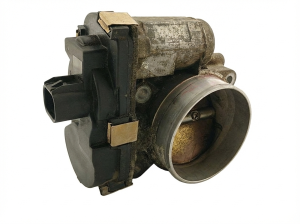
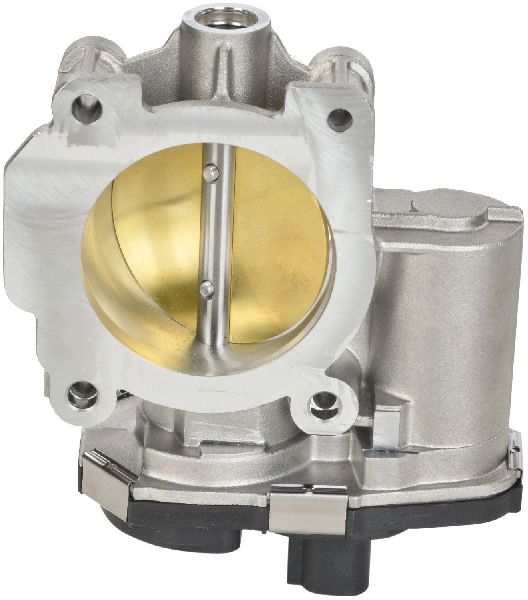
- Failing Throttle Body Assembly 🔴 High Probability → Shop Fuel Injection Throttle Body The internal throttle position sensors (TPS) wear out over time. These sensors are integrated into the throttle body and are generally not sold separately for this vehicle. This is a very common failure point across many GM platforms from this era.
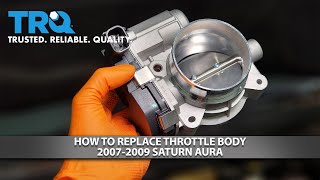
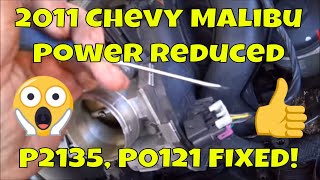
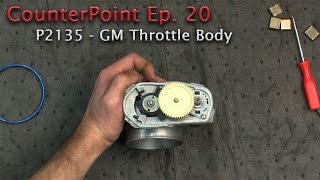
How to confirm: Use an OBD-II scanner to graph the live data for TPS1 and TPS2. As the throttle is slowly opened, the voltage readings should be smooth and inversely correlated (as one goes up, the other goes down). Jumps, spikes, or dropouts in the voltage indicate a failing sensor. 🎬 Watch how to test and replace an electronic throttle body
Typical fix: Replace the entire throttle body assembly. After replacement, a throttle relearn procedure is required, though some vehicles will perform this automatically after a short drive cycle.
Est. part cost: $100-$250 - Wiring or Connector Issue 🟡 Medium Probability The wiring harness connector at the throttle body is exposed to engine heat and vibration, which can lead to corrosion, loose pins, or broken wires over time. There are also known issues on related platforms of wires chafing against the engine or other components.
How to confirm: Visually inspect the throttle body connector for any signs of corrosion, backed-out pins, or damaged wires. Wiggle the connector and wiring harness with the engine running and live data streaming to see if it causes the sensor readings to fluctuate. Trace the harness back toward the ECM, looking for any points where it might be rubbing against metal components.
Typical fix: Clean the connector terminals or, if damaged, replace the connector pigtail. If chafing is found, repair the damaged wires and re-route or protect the harness to prevent future damage.
Est. part cost: $15-$40
Rare But Worth Checking
- Powertrain Control Module (PCM) Fault: → Shop Engine Control Module (ECM) This is very rare. The PCM should only be considered a potential cause after the throttle body and all related wiring have been thoroughly tested and confirmed to be in good working order. Sometimes a PCM software update or reflash from a dealer can resolve the issue.
Diagnosis Steps
- Connect an OBD-II scanner and confirm that P2135 is the primary code stored.
- Using the scanner's live data function, monitor the voltage readings for Throttle Position Sensor 1 and Throttle Position Sensor 2.
- With the key on and engine off, slowly press the accelerator pedal to the floor and release it. The voltage for one sensor should sweep smoothly from low to high (e.g., ~0.5V to ~4.5V) while the other sweeps from high to low (e.g., ~4.5V to ~0.5V).
- Look for any glitches, spikes, or flat spots in the voltage readings. Any erratic behavior strongly suggests a faulty throttle body.
- If the scan tool data is inconclusive, turn the vehicle off and disconnect the throttle body electrical connector.
- Inspect the connector terminals on both the harness side and the throttle body side for corrosion, moisture, or damage. Check for good pin tension in the female terminals of the harness connector.
- Trace the wiring harness from the throttle body back as far as possible, looking for any signs of chafing, melting, or breaks.
- If the wiring and connector appear to be in good condition and the live data showed glitches, the throttle body assembly is the most likely cause of the fault.
- After replacement, clear the DTCs. Start the engine and let it idle for a few minutes, then drive the vehicle to allow the PCM to perform a throttle relearn procedure.
Parts You'll Likely Need
- Throttle Body Assembly
(OEM #12607204 (3.6L LY7, verify by VIN), 12694871 (3.6L LY7, later models), Part numbers for 2.4L and 3.5L vary, confirm with dealer.)— This is the most common failure for code P2135 on this platform, as the internal sensors are not available separately.
Trusted brands: ACDelco, Bosch, Hitachi, Standard Motor Products
OEM price range: $200-$350
Aftermarket price range: $100-$250
Related Codes That Often Appear With This One
- P1516 — This is a GM-specific code for Throttle Actuator Control (TAC) performance, which often appears with P2135 as both relate to the PCM's inability to control or verify the throttle's position.
- P2101 — This code indicates a problem with the electric motor that moves the throttle plate. Since the motor and sensors are in the same assembly, a failing throttle body can trigger both codes.
- P0121, P0122, P0221, or P0222 — These codes point to circuit performance or low input issues for the individual throttle position sensors ('A' or 'B'). They can accompany P2135 when one of the internal sensors fails completely.
Technical Service Bulletins (TSBs) & Recalls
- 12-06-04-003A: This GM bulletin specifically addresses DTC P2135. For some models, it provided a procedure to replace only the TP sensor cover instead of the whole throttle body. However, the bulletin explicitly states "DO NOT replace the throttle body 🎬 See this video on GM throttle body sensor cover repair" unless this procedure fails, highlighting the sensor as the known issue. Full throttle body replacement has since become the more common and recommended repair due to parts availability and reliability.
- 11273A: A special coverage adjustment for throttle body issues causing reduced power mode on a wide range of GM vehicles. This extended warranty coverage to 10 years/120,000 miles, confirming the high failure rate of the component.
Platform-Specific Known Issues
- General Motors issued a Special Coverage Adjustment (#11273A and others) for this exact problem on many vehicles that share components with the Aura. This was an extension of the factory warranty to 10 years or 120,000 miles. While this coverage has likely expired for all 2007-2009 models, it confirms this is a well-documented manufacturer issue.
- A video from 1A Auto provides a detailed, step-by-step replacement guide for the throttle body on a 2007 Saturn Aura with the 3.5L engine, which is very similar for the other engines. It shows the location of the bolts, connector, and intake hose, and specifies a torque of 89 in-lbs for the fasteners. 🎬 Watch this step-by-step Saturn Aura throttle body replacement guide
Mechanic-Grade Diagnostic Values
- TPS1 and TPS2 Voltage Correlation (Key On, Engine Off) — expected: TPS1 should sweep smoothly from ~0.5V to ~4.5V as the pedal is pressed, while TPS2 sweeps inversely from ~4.5V to ~0.5V. The combined voltage of both sensors should remain constant at approximately 5.0V.. Failure: Any spikes, dropouts, or glitches in either voltage signal, or if the combined voltage deviates significantly from 5.0V.
- Low Reference (Ground) at Throttle Body Connector — expected: Less than 100 ohms of resistance between the low reference pin at the connector and a known good chassis ground.. Failure: High or infinite resistance (an open circuit), indicating a broken or corroded ground wire for the sensor circuit.
Scan Tool Commands That Help
- Tech2 / GDS2 (or capable aftermarket scanner): Throttle/Idle Learn Reset — This command should be used after replacing the throttle body or cleaning it thoroughly. It forces the PCM to immediately learn the new closed and wide-open throttle positions. While a manual relearn often works, using the scan tool function is the official and most reliable method.
- Tech2 / GDS2 (or capable aftermarket scanner): Graphing TPS1 vs TPS2 Data — This is the primary diagnostic step. Graphing the two sensor inputs simultaneously while slowly operating the pedal makes it very easy to visually spot the exact moment one sensor drops out or reports an erratic voltage, confirming an internal throttle body fault.
Wiring & Ground Locations
- Throttle Body Connector — The 6-pin electrical connector that plugs directly into the electronic throttle body assembly, located where the main air intake duct connects to the engine.. This is the single point of failure for all signals from the throttle body. Corrosion, backed-out pins, or chafed wires within a few inches of this connector are a common cause of P2135.
- G105 / G106 / G107 — These are primary engine grounds. Locations vary slightly by engine, but are generally found on the engine block or cylinder heads at the rear or side of the engine. For example, on the 3.6L, G105 is at the center rear of the engine.. The Engine Control Module (ECM) and its sensors rely on these grounds. A loose or corroded ground can create voltage offsets and electrical noise, causing the sensitive TPS signals to become erratic and trigger a false correlation code.
- ECM Connectors — Located in the engine compartment, typically on the left side in front of or behind the battery.. All throttle body wiring terminates here. A known, but less common, issue is poor pin tension or corrosion at the ECM connector, which can mimic a sensor or wiring harness failure.
Real Owner Repair Stories
- Chevy HHR Network Forum (2008 Chevrolet HHR 2.2L Ecotec (platform mate with shared components)) — Intermittent P2135 code with 'Reduced Engine Power' light.
❌ Tried (didn't work) Initial throttle body replacement (worked for 3 months, then code returned).
✅ What actually fixed it Following a GM service bulletin, the owner re-crimped several wire terminals at the ECM connector. The problem did not return after this repair, indicating poor pin connections at the ECM were the root cause.
When the Usual Fixes Don't Work
- While the vast majority of P2135 codes on this platform are fixed by replacing the throttle body, there are documented cases where the issue persists. In one such case involving a platform-mate (Chevy HHR), the ultimate fix was not the throttle body itself, but re-crimping the wire terminals at the main Engine Control Module (ECM) connector. This suggests that if a new throttle body does not resolve the code, the next step should be a thorough inspection of the wiring harness connections at the computer, not just at the sensor.
Diagnostic Flowchart
Other Known Issues on This Vehicle
Issues unrelated to this code that are worth knowing about as an owner of this generation:
- Premature Timing Chain Stretch (3.6L LY7 V6) 🔴 High — Very common, often appearing between 70,000 and 120,000 miles. Can cause catastrophic engine damage if ignored. (Ref: Special Coverage Adjustment #11340B (for other GM models, but addresses the same engine issue).)
- 3-5-R Wave Plate Failure (6-Speed Automatic) 🔴 High — A widespread, well-documented failure in the 6T70/6T75 transmission (used with V6 engines), leading to a sudden loss of 3rd, 5th, and Reverse gears. (Ref: TSB #14404A (Extended Warranty Coverage).)
- Sudden Loss of Electric Power Steering (EPS) 🔴 High — Very common issue where power steering assist is suddenly lost, making the vehicle difficult to steer at low speeds. (Ref: NHTSA Campaign #14V153000.)
- Intermediate Steering Shaft Clunk 🟠 Medium — A common clunking or rattling noise felt in the steering wheel during low-speed turns or over bumps, caused by the intermediate shaft. (Ref: TSB #06-02-32-007G.)
- Transmission Shift Cable Failure (4-Speed Automatic) 🟠 Medium — The tabs on the shift cable end can fracture, causing a mismatch between the gear shifter position and the actual gear the transmission is in. (Ref: NHTSA Campaign #12V460000.)
- Faulty Camshaft Position Actuator Solenoids (2.4L LE5) 🟠 Medium — Common failure item on the Ecotec engine, leading to rough idle, poor performance, and codes like P0011 or P0014. Often caused by clogged screens on the solenoids.
Used vs. New Parts: Buying Guide for This Vehicle
When a used part is the smart pick: For this specific repair, buying a used throttle body from a junkyard is NOT recommended. The internal electronic sensors are a known high-failure-rate wear item. A used part has an unknown history and is very likely to fail in the same manner as the original part, potentially in a short amount of time.
Donor-vehicle mileage cap: roughly under 50000 miles for the part to have meaningful remaining life.
What to inspect on the donor part:
- Verify the part is from a vehicle with low mileage, if possible.
- Inspect the electrical connector pins for any signs of corrosion or damage.
- Ensure the throttle plate moves smoothly by hand without binding (where applicable).
- Avoid parts from vehicles that show signs of flood damage or engine fires.
Aftermarket brands forum-validated for this vehicle:
- ACDelco (OEM supplier)
- Bosch
- Hitachi
- Dorman (specifically their OE FIX versions which may feature upgraded non-contact Hall effect sensors)
- Standard Motor Products
Brands owners have reported issues with on this vehicle:
- Generic, unbranded parts from online marketplaces. These often have a high rate of premature failure and may not have the same electronic calibration as OEM-style parts, leading to persistent codes or poor performance.
Real Owner Stories
Aggregated from forums and TSBs cited above. Mileages and costs reflect what owners reported in those sources.
2008 Saturn Aura (shared platform with Chevy HHR)
Symptoms: Experienced the P2135 code repeatedly.
What fixed it: Dealer replacement of the entire throttle body assembly followed by an ECM reprogram.
Cost: $633-$633
Source hint: Chevy HHR Network - 'What finally fixed your P2135 code?'
Related OBD-II Codes
Frequently Asked Questions
Is there a GM Special Coverage Adjustment for the P2135 code on my Saturn Aura?
Does GM Bulletin 12-06-04-003A require me to replace the entire throttle body?
What is the torque specification for the throttle body bolts on a 3.5L Saturn Aura?
Can I just replace the Throttle Position Sensor (TPS) on my 2.4L LE5 engine?
Will I need to perform a special procedure after replacing the throttle body?
Is the P2135 code related to the Electric Power Steering (EPS) failure on my Aura?
Helpful Videos

Used OEM Parts in Stock
New Aftermarket Parts Available


The information in this article is provided for general reference and educational purposes only. Vehicle specifications, procedures, and part compatibility can vary by production date, trim level, and region. Always consult your vehicle's factory service manual and verify part numbers before purchasing or performing repairs. Safety-critical components such as airbags, seat belts, and braking systems should be installed by a qualified professional.
- Saturn Aura:
- 🧭 Diagnostic Flowchart
- 🎬 Helpful Videos
- 🛍️ Shop This Part
- What's Unique About the 2007-2009 Saturn Aura
- Symptoms You May Notice
- Most Likely Causes
- Rare But Worth Checking
- Diagnosis Steps
- Parts You'll Likely Need
- Related Codes That Often Appear With This One
- Technical Service Bulletins (TSBs) & Recalls
- Platform-Specific Known Issues
- Mechanic-Grade Diagnostic Values
- Scan Tool Commands That Help
- Wiring & Ground Locations
- Real Owner Repair Stories
- When the Usual Fixes Don't Work
- Other Known Issues on This Vehicle
- Used vs. New Parts: Buying Guide for This Vehicle
- Real Owner Stories
- 2008 Saturn Aura (shared platform with Chevy HHR)
- Related OBD-II Codes
- Frequently Asked Questions
- 🎟️ Get 5% Off