

P2135 on 2003-2007 Saturn Ion 2.2L: Causes and Fixes for Reduced Engine Power
On a 2003-2007 Saturn Ion, code P2135 is almost always caused by a failing throttle body assembly. The throttle position sensors are integrated and not sold separately. Replacing the entire throttle body is the most common and effective fix. Expect to pay $100-$200 for an aftermarket part. Before replacement, inspect the wiring connector for corrosion, and after replacement, a throttle relearn procedure is recommended.
- P2135 on a Saturn Ion will immediately put the car in 'Reduced Engine Power' mode, making it unsafe for highway driving.
- The most likely cause by a wide margin is a failed throttle body assembly.
- Before buying a new throttle body, always inspect the wiring harness and connector for damage or corrosion, as this is a cheaper and simpler fix.
- The throttle position sensors cannot be purchased separately; they are integrated into the throttle body.
- Do not confuse this with code P2138, which points to the accelerator pedal sensor.
What's Unique About the 2003-2007 Saturn Ion
The 2.2L Ecotec engine in the Saturn Ion uses a drive-by-wire throttle body where the throttle position sensors (TPS) are built into the assembly and cannot be replaced separately. While wiring issues can occur, a high failure rate of the electronic components within the throttle body itself makes it the primary suspect for P2135 on this platform. This issue was extremely common across many GM vehicles from this era that used the same Delta platform and Ecotec engines, such as the Chevrolet Cobalt and Pontiac G5.
Symptoms You May Notice
- "Reduced Engine Power" message on the dashboard 🎬 Watch: Diagnosing Reduced Engine Power and related GM trouble codes
- Check Engine Light is on
- Vehicle has very little acceleration (limp mode)
- Engine may stall, especially when coming to a stop
- Unstable, surging, or high idle speed
- Hesitation or surging during acceleration
- Traction Control or "TC" light may also turn on
- Car may refuse to start intermittently
- Replacing only the accelerator pedal sensor. This is the incorrect part for a P2135 code, which points to the throttle body on the engine, not the pedal inside the car. Code P2138 is the primary code for the pedal sensor.
- Replacing the PCM without first confirming the throttle body and wiring are good. This is an expensive and usually unnecessary repair.
- Ignoring wiring issues. Many owners replace the throttle body only to have the code return, later finding a chafed wire that was the real problem.
Most Likely Causes
- Failing Throttle Body Assembly 🔴 High Probability → Shop Fuel Injection Throttle Body The internal electronic throttle position sensors (TPS) are a known high-failure point on these GM Ecotec throttle bodies. The wear on the internal contacts and electronics causes the voltage signals to become erratic. The sensors are not available as a separate part, requiring replacement of the whole unit.
How to confirm: Use a scan tool to graph the voltage of TPS1 and TPS2. With the key on and engine off, slowly press the gas pedal. The two signals should move smoothly and mirror each other (one rising, one falling). A jump, drop, flat line, or spiky reading in one of the signals confirms a failed sensor inside the throttle body. The failure is often intermittent, so it may not be present on every test.
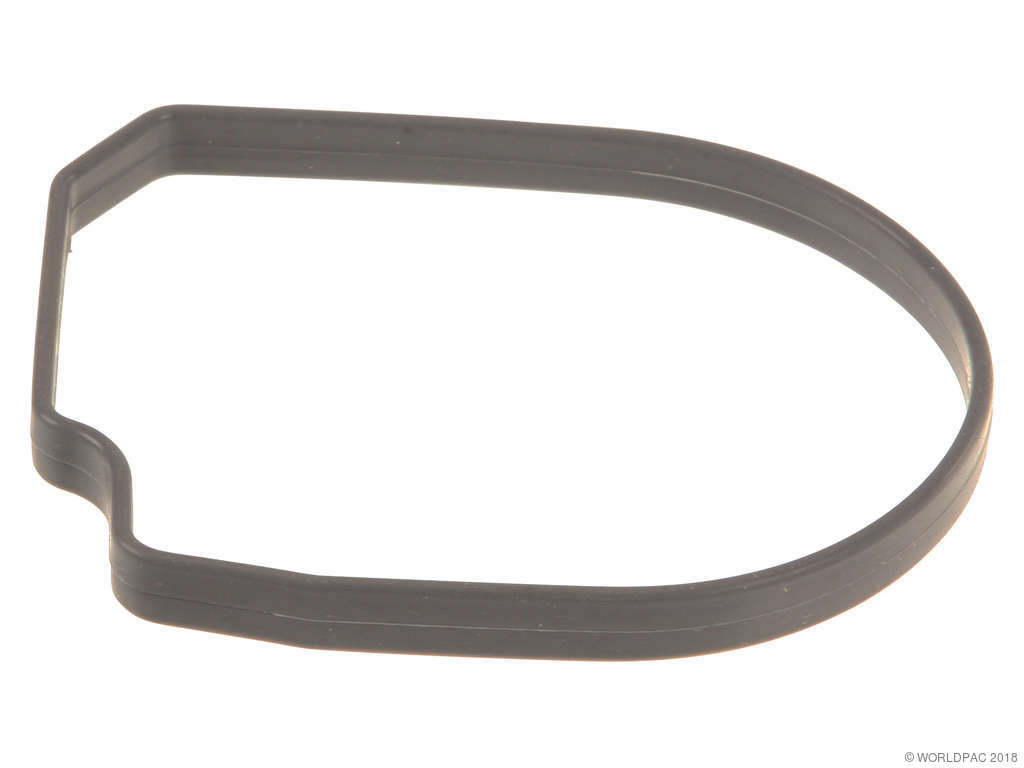
Typical fix: Replace the entire throttle body assembly. 🎬 Watch: How to replace the throttle body on a 2.2L engine After replacement, a throttle relearn procedure is recommended to establish a new base idle. Many owners report the system will self-learn after a few drive cycles, but a manual relearn can resolve idle issues faster. A common manual procedure involves idling the engine for 3 minutes, turning it off for 60 seconds, and idling for another 3 minutes.
Est. part cost: $100-$250 - Wiring Harness or Connector Issue 🟡 Medium Probability The engine wiring harness can chafe against engine or chassis components, causing wires to short to ground or to each other. Common rub points on GM platforms include the corner of the cylinder head, brackets for accessories like the alternator, and where the harness passes through the firewall or near shock towers. The connector at the throttle body can also develop corrosion or loose pins, interrupting the signal.
How to confirm: Visually inspect the entire wiring harness leading to the throttle body for any signs of rubbing, melting, or exposed copper wires. Unplug the connector and check for green/white corrosion, moisture, or bent/loose pins. Wiggle the harness with the engine running to see if it causes the idle to stumble or the code to appear. Use a multimeter to check for 5V reference, good ground, and signal continuity at the connector.
Typical fix: Repair the damaged section of wire with a solder and heat-shrink. If the connector is damaged, replace the pigtail connector (available in the aftermarket). Apply dielectric grease to the new connector to prevent future moisture intrusion.
Est. part cost: $15-$50 - Dirty Throttle Body ⚪ Low Probability → Shop Fuel Injection Throttle Body Carbon and oil vapor buildup from the PCV system can cause the throttle plate to stick, especially just off-idle. The PCM may interpret this sticking as a correlation error between the commanded position and the actual sensor readings, as the motor struggles to move the plate.
How to confirm: Remove the air intake tube and visually inspect the throttle bore and plate for a thick layer of black carbon buildup. The plate may feel sticky if you attempt to move it (with the key off).
Typical fix: Clean the throttle body bore and plate thoroughly with a dedicated throttle body cleaner and a soft brush or rag. Do not use harsh chemicals like brake cleaner. To open the plate for cleaning, have a helper turn the key to 'ON' (engine off) and press the gas pedal. Disconnecting the battery during cleaning can help initiate an idle relearn.
Est. part cost: $5-$15
Rare But Worth Checking
- Faulty Powertrain Control Module (PCM): → Shop Engine Control Module (ECM) This is very rare. In some forum-documented cases, after replacing the throttle body and verifying wiring, a PCM replacement was the final solution. Before condemning the PCM, all other possibilities must be exhaustively ruled out. A PCM failure can sometimes be caused by a shorted sensor or actuator, so the root cause must be found.
- Failing Accelerator Pedal Position (APP) Sensor: → Shop Accelerator Pedal Assembly While possible, a problem with the gas pedal sensor will typically set code P2138. However, in some fringe cases, it could contribute to a correlation fault. It's an unlikely cause for P2135 alone and should not be the first part replaced.
Diagnosis Steps
- Check for other DTCs. Codes like P1516 or P2101 strongly point to a throttle body issue. A P2138 would point towards the accelerator pedal.
- Perform a visual inspection. Check the wiring harness to the throttle body for obvious signs of damage, chafing against brackets (especially near the alternator and cylinder head), or melting.
- Inspect the connector. Unplug the throttle body connector and check for green or white corrosion, moisture, or backed-out pins. Ensure it clicks securely back into place. Apply dielectric grease upon reassembly.
- Graph the sensor data. Using a capable scan tool, monitor the live data for 'TPS1 Voltage' and 'TPS2 Voltage'. With the key on and engine off, slowly press and release the accelerator pedal. The two voltage readings should be smooth and inversely proportional (e.g., TPS1 sweeps 0.5V to 4.5V as TPS2 sweeps 4.5V to 0.5V). Any spikes, dropouts, or erratic behavior indicates a faulty throttle body. 🎬 See this guide for testing and replacing electronic throttle bodies
- Test the wiring. If sensor data is erratic or unavailable, use a multimeter to test the connector. Check for 4.8-5.2 volts on the 5-volt reference wire (terminal E) and less than 5 ohms of resistance to ground on the low reference wire (terminal C).
- Clean the throttle body. If the sensor data looks good and wiring is intact, clean the throttle body bore and plate to ensure the plate is not sticking, which can mimic a sensor fault.
- Replace the throttle body. If all other steps fail to find a fault, the internal electronics of the throttle body assembly are the most likely cause.
Parts You'll Likely Need
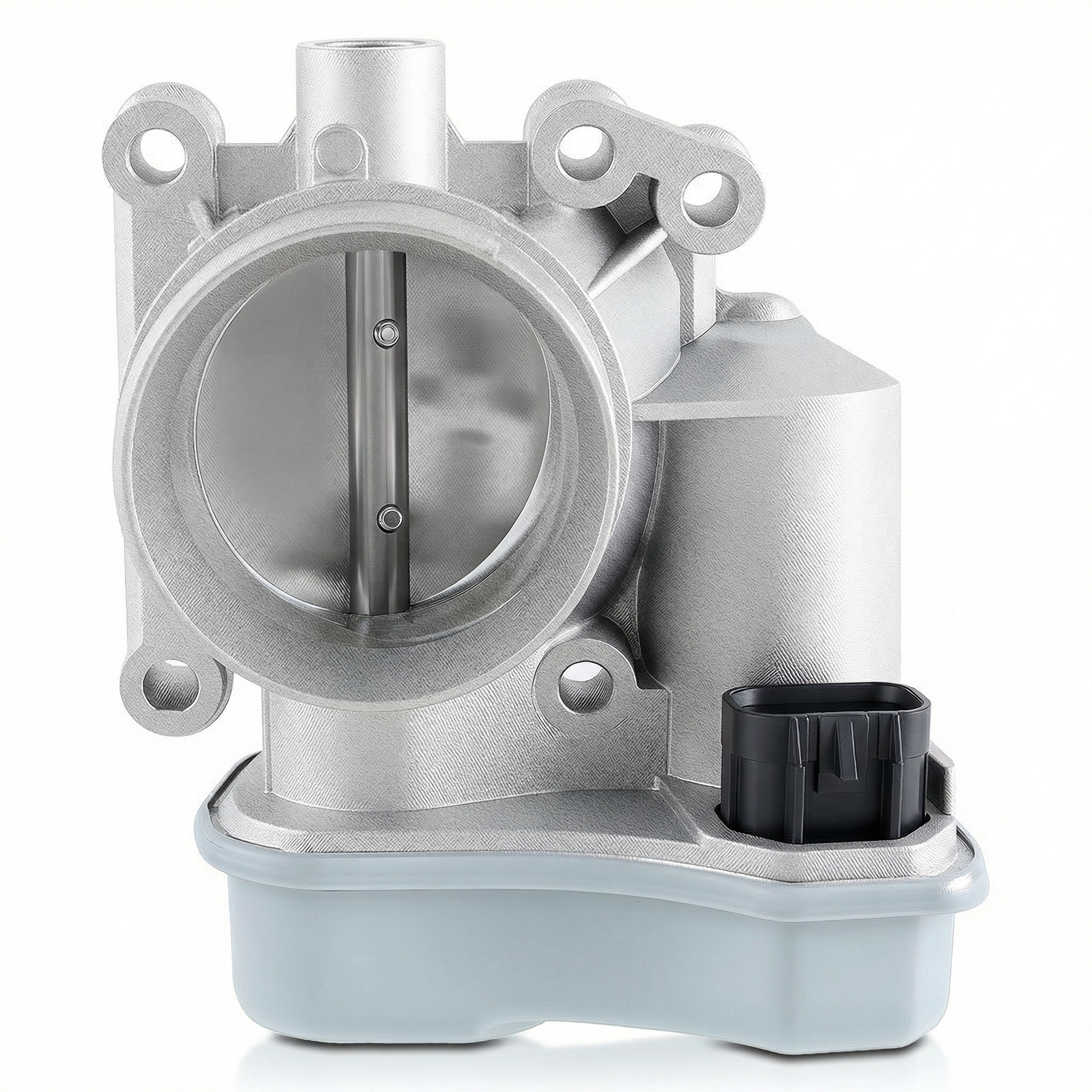
- Throttle Body Assembly
(OEM #12568796)— This is the most common failure for code P2135 on this vehicle, as the internal throttle position sensors fail. The sensors are not sold separately. The original OEM part number was 12568796, which may be superseded.
Trusted brands: ACDelco (OEM), Hitachi, Dorman, Standard Motor Products, Spectra Premium
OEM price range: $175-$300
Aftermarket price range: $90-$200
Related Codes That Often Appear With This One
- P1516 — This is a GM-specific code for 'Throttle Actuator Control (TAC) Module Throttle Actuator Position Performance'. It often appears with P2135 because both codes relate to the PCM's inability to control or verify the throttle plate's position.
- P2101 — This code means 'Throttle Actuator Control Motor Circuit Range/Performance'. It indicates a problem with the electric motor that moves the throttle plate, which is part of the same throttle body assembly as the sensors that cause P2135.
- P0122 — This code indicates 'Throttle Position Sensor/Switch A Circuit Low Input'. It can accompany P2135 when one of the internal sensors shorts or fails to a low voltage state.
- P0222 — This code indicates 'Throttle Position Sensor/Switch B Circuit Low Input'. Similar to P0122, it points to a failure in the second internal sensor circuit.
Technical Service Bulletins (TSBs) & Recalls
- 07-06-04-019G: Intermittent Malfunction Indicator Lamp (MIL) Illuminated, DTC P2138 with Reduced Engine Power. While for a different code (P2138), it is highly relevant as it details a known GM issue with water intrusion and corrosion in a key wiring harness connector affecting pedal/throttle signals. It advises checking the IP-to-body harness connector before replacing parts.
- 12-06-04-003A: Malfunction Indicator Lamp (MIL) Illuminated, Reduced Engine Power Message Displayed, DTC P2135 Set. This TSB applies to other GM vehicles (like the Malibu and G6) with similar engines. It specifically addresses P2135 and, for certain throttle body designs, provides a procedure to replace only the sensor cover. However, for the Ion's platform mate, the Cobalt, full replacement is the standard fix, suggesting the cover-only repair may not be applicable or reliable for all Ecotec throttle bodies.
Platform-Specific Known Issues
- A GM Technical Service Bulletin (TSB) #07-06-04-019G discusses wiring issues related to the accelerator pedal, which sets code P2138. While P2135 points to the throttle body, it's crucial not to confuse the two, as a pedal issue can cause similar symptoms but requires a different diagnosis focused on the driver's kick panel area.
Mechanic-Grade Diagnostic Values
- TPS1 and TPS2 Voltage Correlation — expected: The sum of the two sensor voltages should remain steady around 5.0V. As one sensor's voltage sweeps up (e.g., 0.5V to 4.5V), the other should sweep down (e.g., 4.5V to 0.5V).. Failure: The sum of the voltages is less than 4.5V or more than 5.5V. A scan tool may show a difference between the two sensors of more than 0.2V-0.3V, which can trigger the code.
- Throttle Actuator Motor Resistance — expected: Between 2 and 15 Ohms between the two motor terminals on the throttle body.. Failure: A reading significantly outside this range, such as an open circuit (infinite resistance) or a short (less than 1 Ohm), indicates a failed actuator motor within the throttle body.
Scan Tool Commands That Help
- Tech2 / Professional Scan Tool: Graphing TPS1 and TPS2 Live Data — This is the primary diagnostic step. Graphing the two sensor voltages while slowly operating the pedal (Key On, Engine Off) will visually expose any glitches, spikes, or dropouts that indicate a failing sensor within the throttle body.
- Tech2 / Professional Scan Tool: Throttle Relearn / ETCS Reset / Idle Learn Reset — This function should be used after replacing the throttle body or cleaning it. It forces the PCM to find the new closed-throttle position and relearn idle airflow values, which can resolve high or unstable idle after the repair.
Wiring & Ground Locations
- G105 — On the lower left rear of the engine, above the starter.. This is a primary engine ground. A loose or corroded connection here can cause a variety of sensor and module issues, including erratic voltage readings that could potentially trigger a correlation code like P2135.
- G107 — On the left rear corner of the cylinder head.. This ground is for components on the cylinder head. Poor grounding here can introduce electrical noise and unstable reference voltages for sensors connected to the engine block, contributing to sensor correlation faults.
- Throttle Body Connector — The 8-pin rectangular electrical connector on the throttle body assembly.. This is the single point of connection for both throttle position sensors and the throttle actuator motor. Corrosion, moisture, or backed-out pins in this connector are a common cause of P2135 and should be inspected before replacing parts.
- Underhood Fuse Block — Located at the left rear side of the engine compartment.. This block contains the fuses and relays that supply power to the ECM and engine control components, including the throttle body. A poor connection or corroded fuse here can cause power supply issues.
Real Owner Repair Stories
- Chevy HHR Network Forum (2008 Chevy HHR 2.2L) — P2135 code, Reduced Engine Power mode.
❌ Tried (didn't work) Replacing the throttle body initially seemed to work, but the problem returned after 3 months.
✅ What actually fixed it The owner's son, a GM mechanic, suggested a TSB fix involving re-crimping wires at the ECM connector. This provided a more permanent solution. Another user in the same thread reported that unplugging, spraying the ECM connectors with WD-40, and plugging them back in repeatedly solved their issue long-term. - Chevy HHR Network Forum (Chevy HHR (year/engine not specified)) — P2135 code, vehicle would barely move without going into limp mode.
❌ Tried (didn't work) Cleaning the throttle body inside and out., Inspecting each individual wire and cleaning the ground., Unplugging and plugging the ECM connector back in provided a temporary fix.
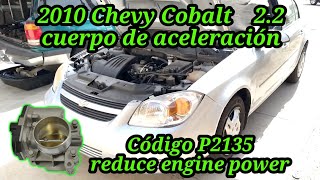
✅ What actually fixed it The owner took the vehicle to a dealer. The dealer replaced the throttle body assembly and performed an ECM software update/reprogram, which permanently fixed the issue for a cost of $633. - YouTube Video Comment/Story (2010 Chevy Cobalt 2.2L) — P2135 code, 'Reduced Engine Power' message, engine shaking, no acceleration.
❌ Tried (didn't work) The owner had previously replaced the accelerator pedal, which only fixed the problem for about one month before it returned.
✅ What actually fixed it Replacing the entire throttle body assembly resolved the issue. The video also demonstrates using a scan tool to perform a throttle relearn procedure after installation.
OEM Part Supersession History
12568796→ACDelco 217-2296 (service replacement)— GM regularly updates service parts to integrate new materials or technologies.
Heads up: Part 12568796 is also noted as replacing the even earlier part number 25312094. When ordering, it is critical to verify fitment by VIN, but 12568796 and 217-2296 are the most commonly cited replacements for this platform.
Diagnostic Flowchart
Used vs. New Parts: Buying Guide for This Vehicle
When a used part is the smart pick: For this specific failure (P2135), buying a used throttle body is NOT recommended. The failure is electronic and related to wear on internal sensor contacts. A used part from a junkyard is likely to have similar wear and could fail soon after installation, wasting time and money.
What to inspect on the donor part:
- Not applicable, as buying used is not advised for this part.
OEM-only on this vehicle (don't cheap out):
- While not strictly 'OEM-only', using a new, quality part is critical. The ACDelco (OEM) part is the safest bet for reliability.
Aftermarket brands forum-validated for this vehicle:
- ACDelco (OEM supplier)
- Hitachi (Often an OEM supplier for electronic parts)
- Dorman (Specifically mentions an upgraded design with a proprietary sensor shield to prevent future failures)
Brands owners have reported issues with on this vehicle:
- Unnamed, no-brand parts from online marketplaces should be avoided. Reviews for some generic brands are mixed, and given the critical safety function of the part (preventing limp mode), sticking to reputable brands is a wise investment.
Real Owner Stories
Aggregated from forums and TSBs cited above. Mileages and costs reflect what owners reported in those sources.
2007 Saturn Ion
Symptoms: Vehicle set codes P2135 and P0121.
What fixed it: The throttle body was replaced as a complete unit, followed by a relearn procedure.
Source hint: SaturnFans.com thread titled '2007 Ion - throttle / pedal position sensor problem.'
2006 Chevrolet Cobalt
Symptoms: Vehicle set P2135 along with other throttle actuator control (TAC) codes; the issue became progressively worse over time.
What fixed it: After some misdiagnosis, the dealer replaced both the throttle body and the PCM under warranty to resolve the issue.
Source hint: The Chevrolet Cobalt SS Forum thread titled 'Pcm & tb issue... Fixed!'
2007 Saturn Ion 2.2L
Symptoms: A recurring P2135 code with the description 'Throttle Position Sensors 1-2 Not Plausible'.
What fixed it: The owner replaced the throttle body, but the problem returned. This led to further diagnosis considering the accelerator pedal position (APP) sensor or the PCM as potential culprits.
Source hint: Car Talk Community thread titled 'Car had throttle body issues, then transmission, now throttle again'
Related OBD-II Codes
Frequently Asked Questions
I replaced the throttle body on my 2.2L Ion. Do I need a special tool for the 'relearn' procedure?
Can I just replace the throttle position sensor (TPS) instead of the whole throttle body assembly?
My mechanic suspects a wiring issue for P2135. Where are the common problem spots on a Saturn Ion?
My Ion is in 'Reduced Engine Power' mode. Could it be the gas pedal instead of the throttle body?
Is cleaning the throttle body a valid fix for P2135 on this car?
How can I confirm the throttle body has failed before buying a new one?
Helpful Videos

Used OEM Parts in Stock
New Aftermarket Parts Available




The information in this article is provided for general reference and educational purposes only. Vehicle specifications, procedures, and part compatibility can vary by production date, trim level, and region. Always consult your vehicle's factory service manual and verify part numbers before purchasing or performing repairs. Safety-critical components such as airbags, seat belts, and braking systems should be installed by a qualified professional.
- Saturn Ion:
- 🧭 Diagnostic Flowchart
- 🎬 Helpful Videos
- 🛍️ Shop This Part
- What's Unique About the 2003-2007 Saturn Ion
- Symptoms You May Notice
- Most Likely Causes
- Rare But Worth Checking
- Diagnosis Steps
- Parts You'll Likely Need
- Related Codes That Often Appear With This One
- Technical Service Bulletins (TSBs) & Recalls
- Platform-Specific Known Issues
- Mechanic-Grade Diagnostic Values
- Scan Tool Commands That Help
- Wiring & Ground Locations
- Real Owner Repair Stories
- OEM Part Supersession History
- Used vs. New Parts: Buying Guide for This Vehicle
- Real Owner Stories
- 2007 Saturn Ion
- 2006 Chevrolet Cobalt
- 2007 Saturn Ion 2.2L
- Related OBD-II Codes
- Frequently Asked Questions
- 🎟️ Get 5% Off