

P2135 on 2008 Saturn Outlook: Throttle Position Sensor Failure and Fixes
On a 2008 Saturn Outlook, code P2135 is almost always caused by a failed electronic throttle body assembly, which forces the vehicle into 'Reduced Engine Power' mode. The fix is to replace the entire throttle body. Expect to pay $90-$250 for the part, and it's a DIY-friendly job (2/5 difficulty). A throttle relearn procedure is required after installation.
- P2135 on your 2008 Outlook will put the vehicle into 'Reduced Engine Power' mode, and the most likely cause is a failed throttle body.
- Do not confuse this with code P2138, which points to the accelerator pedal. For P2135, the problem is at the engine.
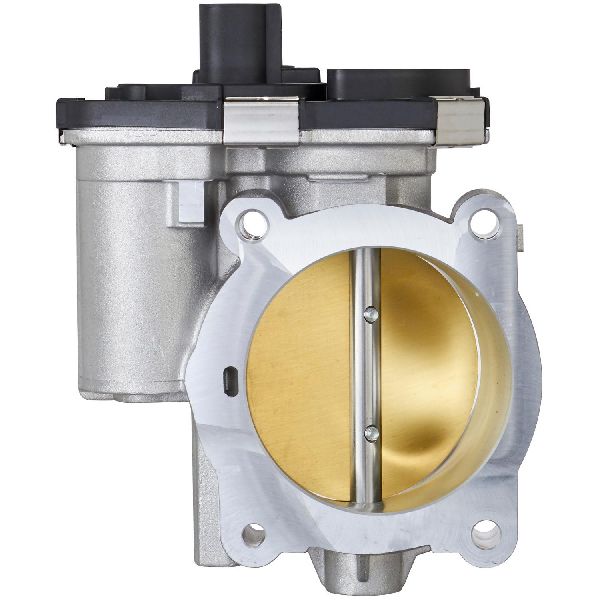
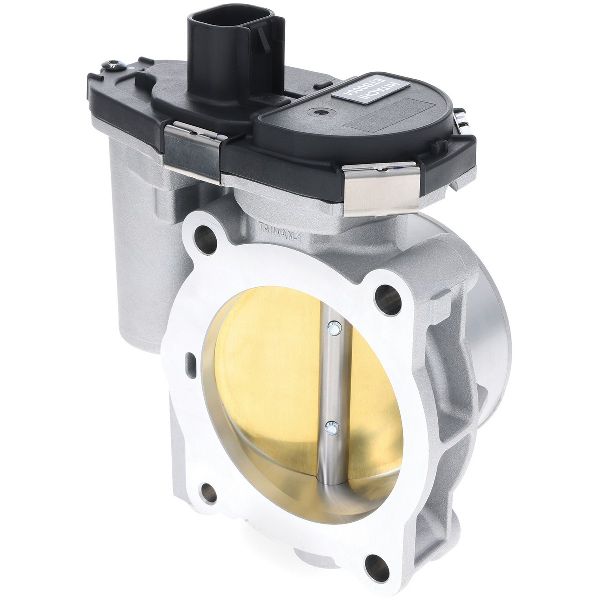
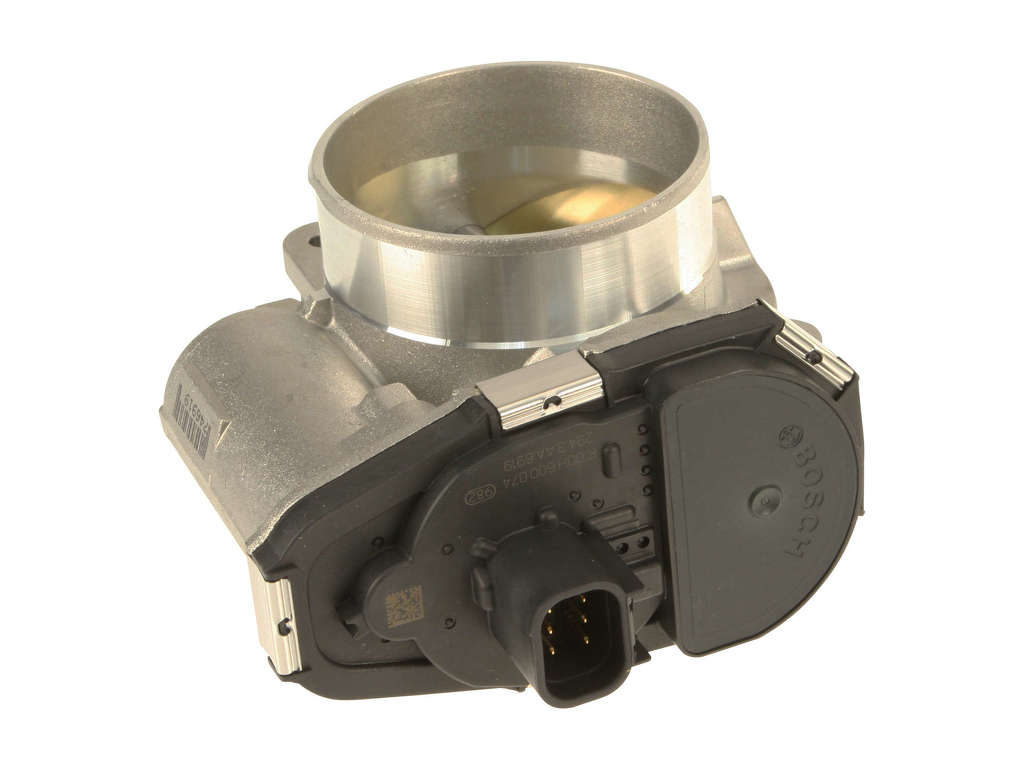
- The fix is to replace the entire throttle body assembly; the sensors inside cannot be bought separately.
- After replacing the part, a 'throttle relearn' procedure is mandatory for the engine to idle and run correctly. This can usually be done without a scan tool.
What's Unique About the 2008-2008 Saturn Outlook
The Saturn Outlook and its GM Lambda platform siblings (GMC Acadia, Buick Enclave, Chevrolet Traverse) are well-known for throttle body failures leading to the P2135 code. The throttle position sensors are integrated directly into the throttle body assembly and cannot be replaced separately. While GM has issued TSBs for similar codes related to wiring or just replacing the TPS sensor cover on other models, the overwhelming cause for P2135 on this specific vehicle is the electronic failure of the throttle body unit itself, a common issue across many GM models from this era. GM even issued a Special Coverage Adjustment (14582) for this issue, extending the warranty to 10 years/120,000 miles, which has since expired for all 2008 models.
Symptoms You May Notice
- Sudden activation of 'Reduced Engine Power' or 'Limp Mode' message on the driver information center
- Check Engine Light is on
- Drastic loss of acceleration
- Hesitation or surging during acceleration
- Engine may stall when coming to a stop
- Unstable or high idle
- Engine revving without pressing the gas pedal
- Replacing the Accelerator Pedal Position (APP) sensor. The APP sensor typically causes code P2138, not P2135.
- Cleaning the throttle body. While good for maintenance, cleaning will not fix the internal electronic sensor failure that triggers P2135. A Reddit user noted that while cleaning is often suggested, the root cause is usually electronic.
Most Likely Causes
- Failed Electronic Throttle Body Assembly 🔴 High Probability → Shop Fuel Injection Throttle Body The internal electronic sensors wear out over time, a common failure point on this GM platform. The sensors are not serviceable separately. This was a widespread enough issue for GM to issue Special Coverage Adjustment 14582.
How to confirm: Using a scan tool with live data, monitor the voltages for 'TP Sensor 1' and 'TP Sensor 2' while slowly pressing the accelerator pedal (with the key on, engine off). The two signals should move smoothly and inversely. If either signal drops out, spikes, or is erratic, the throttle body has failed internally. A persistent difference of more than 0.2V-0.3V between the sensors can trigger the code.
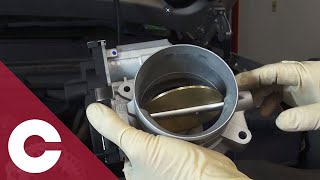
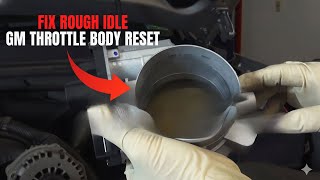
Typical fix: Replace the entire throttle body assembly. A throttle relearn procedure is required after installation. 🎬 See: GM electronic throttle body relearn procedure This can often be done without a scan tool by following a specific sequence of idling the engine and turning the ignition off.
Est. part cost: $90-$250 - Poor Connection or Damaged Wiring at Throttle Body ⚪ Low Probability → Shop Fuel Injection Throttle Body Engine vibration and heat can cause the pins in the electrical connector to loosen or develop fretting corrosion over time. In some GM models, harness chafing against brackets has been a known issue.
How to confirm: Disconnect the electrical connector at the throttle body. Inspect for any green or white corrosion, bent pins, or pins that have backed out of the connector. With the scan tool graphing live data, wiggle the harness with the engine running to see if it triggers the fault.
Typical fix: Clean the connector pins with an electrical contact cleaner and apply a small amount of dielectric grease. If pins are loose or the connector is damaged, the pigtail may need to be replaced.
Est. part cost: $5-$30
Rare But Worth Checking
- Failing Powertrain Control Module (PCM): → Shop Engine Control Module (ECM) This is extremely rare. The PCM should only be considered after definitively ruling out the throttle body and its wiring.
Diagnosis Steps
- Confirm P2135 is the active code using an OBD-II scanner.
- Check for any other related codes like P0121, P0221, or P2101, which strongly point to a failed throttle body.
- Visually inspect the electrical connector and wiring harness at the throttle body. Look for loose connections, corrosion, or damaged wires.
- Using a scan tool with live data, observe the voltage readings of both Throttle Position Sensor 1 and Throttle Position Sensor 2. The readings should be smooth and react inversely as the throttle is slowly opened and closed (with key on, engine off).
- If the voltage readings show any spikes, dropouts, or erratic behavior, the throttle body assembly is faulty and must be replaced.
- If the wiring and sensor readings appear correct, the issue could be a rare intermittent fault or a problem with the PCM, which may require more advanced diagnostics.
- After replacement, perform the mandatory throttle relearn procedure. A common method involves idling the engine in Park for 3 minutes, turning the engine off for 60 seconds, and then idling again for 3 minutes.
Parts You'll Likely Need
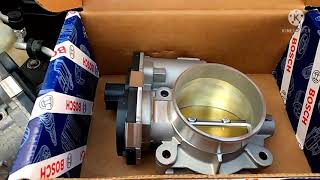
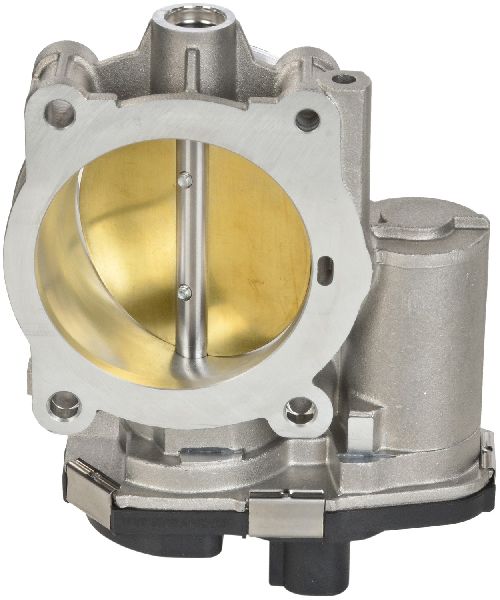
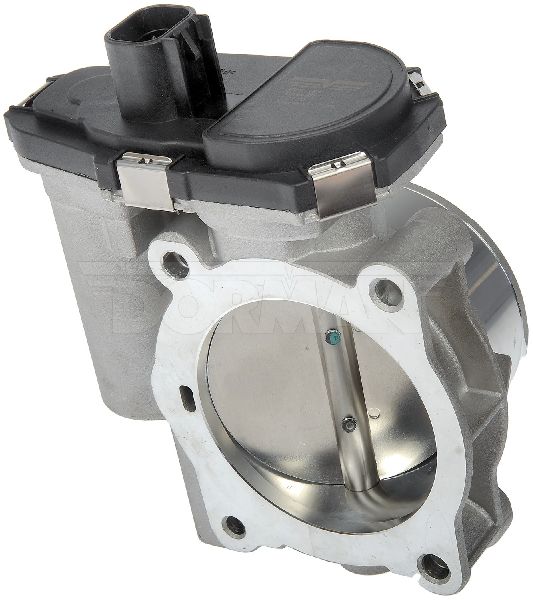
- Electronic Throttle Body Assembly
(OEM #12694873)— This is the most common cause of code P2135, as the internal, non-serviceable sensors fail. This part number is a common GM Genuine/ACDelco replacement.
Trusted brands: ACDelco (GM Genuine), Bosch, Dorman, Standard Motor Products
OEM price range: $170-$250
Aftermarket price range: $90-$180
Related Codes That Often Appear With This One
- P0121 — This code indicates a performance problem with TPS 'A'. It often appears with P2135 when the throttle body's internal sensors begin to fail. GM Special Coverage 14582 specifically addresses P0121 alongside P2135.
- P2101 — This code relates to the throttle actuator control motor, which is also part of the throttle body assembly. Seeing both codes together is a definitive sign the entire throttle body has failed.
- P0068 — This code indicates a correlation error between the MAP sensor, MAF sensor, and throttle position. A faulty throttle body is a primary cause of this code.
- P0221 — This code indicates a performance problem with TPS 'B'. Like P0121, it is often associated with P2135 and was included in GM's Special Coverage for throttle body issues.
Technical Service Bulletins (TSBs) & Recalls
- GM Special Coverage Adjustment 14582: Addresses P2135, P0121, and P0221 by replacing the throttle body assembly. It extended the warranty to 10 years/120,000 miles, which is now expired.
- GM TSB 11-06-04-007C: While not directly for the Outlook, this TSB for other GM trucks and vans with P2135 details a procedure to replace only the TPS cover and terminals (P/N 19259452) instead of the whole throttle body, indicating a known weakness in the sensor's housing across the GM lineup.
Platform-Specific Known Issues
- The electronic throttle body on the GM 3.6L V6 engine used in the Outlook is a well-documented, high-failure rate item, leading to GM Special Coverage Adjustment 14582.
- A mandatory throttle relearn procedure is required after replacement. Failure to do so will result in a high or unstable idle. The manual procedure is often successful: idle for 3 mins, key off for 60 secs, idle for 3 mins again. 🎬 Watch: How to manually reset and relearn your GM throttle body
Mechanic-Grade Diagnostic Values
- TP Sensor 1 and TP Sensor 2 Voltage Correlation (Key On, Engine Off) — expected: The two sensor voltages should move inversely. As one increases from ~0.5V to ~4.5V, the other should decrease from ~4.5V to ~0.5V. The combined voltage of both sensors should remain constant at approximately 5.0V.. Failure: A voltage difference between the two sensors that exceeds 0.2V to 0.3V for more than a couple of seconds. Any sudden spikes, dropouts, or jagged movements in the voltage graph of either sensor while the pedal is slowly and smoothly depressed indicates a failure.
Scan Tool Commands That Help
- GDS2/Tech2 or equivalent professional scan tool: Graphing Live Data for TP Sensor 1 and TP Sensor 2 — This is the primary diagnostic step. Graphing both sensor voltages simultaneously while slowly operating the accelerator pedal (engine off) is the most effective way to visually identify the erratic signal, spike, or dropout from the failing sensor that is causing the correlation fault.
Wiring & Ground Locations
- Throttle Body Connector — On the electronic throttle body itself, located at the engine's air intake.. This 6-pin connector is the primary interface for the throttle position sensors and throttle actuator motor. Fretting corrosion, loose pins, or damaged wires at this connector can directly cause the P2135 code.
- G103 — On the left side of the engine compartment, on the left inner fender panel.. This is a major engine compartment ground point. While not exclusively for the ECM, poor contact here can introduce electrical noise and voltage issues that may affect sensor readings.
- G113 — Located on the left side of the engine, at an engine-to-transmission stud.. This is a critical ground point for the engine control module (ECM) and transmission control module (TCM). A poor connection here can directly impact the ECM's ability to correctly interpret sensor data from the throttle body.
Real Owner Repair Stories
- Chevy HHR Network Forum (2008 Chevrolet HHR 2.2L Ecotec (Different vehicle, but same GM-era P2135 issue)) — Intermittent 'Engine Power Reduced' message and P2135 code.
❌ Tried (didn't work) The problem would reoccur intermittently over thousands of miles, sometimes going away after cleaning the computer connectors with WD-40, but always returning.
✅ What actually fixed it A dealer technician found a pin that was not fully seated in its electrical harness plug, causing intermittent contact. Replacing the faulty pin/plug contact permanently resolved the issue.
OEM Part Supersession History
12593591, 12607330, 12616995→12694873— Standard part evolution, likely for improved reliability of the internal electronics that were a common failure point.
Heads up: The newer part number (12694873) is the correct and current replacement for all previous versions on the 2008 Saturn Outlook.
Diagnostic Flowchart
Other Known Issues on This Vehicle
Issues unrelated to this code that are worth knowing about as an owner of this generation:
- Premature Timing Chain Stretch 🔴 High — Very common, often occurs between 60,000 and 100,000 miles. Exacerbated by extended oil change intervals recommended by the original Oil Life Monitor calibration. (Ref: GM Special Coverage Adjustment 11340C extended the warranty to 10 years/120,000 miles, but this has expired.)
- Broken 3-5-R Transmission Wave Plate 🔴 High — A widespread, well-documented failure in the 6T70/6T75 automatic transmission, leading to a sudden loss of 3rd, 5th, and Reverse gears. (Ref: GM Special Coverage Adjustment 14404B extended the warranty to 10 years/120,000 miles, which has now expired for all 2008 models.)
- Power Steering Fluid Leaks / Pump Failure 🟠 Medium — Common complaints of power steering fluid leaks from hoses or the steering rack, and whining or failure of the power steering pump, leading to difficult steering at low speeds. (Ref: GM issued a letter for a power steering pump wear condition for some 2008 models.)
- Water Leaks from Sunroof Drains 🟠 Medium — Clogged sunroof drain tubes are common, causing water to leak into the cabin, often damaging the fuse block, body control module (BCM), and other electronics located in the passenger footwell.
Used vs. New Parts: Buying Guide for This Vehicle
When a used part is the smart pick: Given the extremely high failure rate of the electronic sensors within this specific throttle body, buying a used part is strongly discouraged. The risk of the used part failing shortly after installation is very high, making it false economy. A new part with a warranty is the recommended approach.
What to inspect on the donor part:
- Not applicable as a used part is not recommended.
OEM-only on this vehicle (don't cheap out):
- While not strictly 'OEM-only', a new throttle body from a reputable manufacturer is critical. Avoid used parts entirely for this repair.
Aftermarket brands forum-validated for this vehicle:
- ACDelco (GM Genuine)
- Bosch
- Hitachi
- Delphi
Brands owners have reported issues with on this vehicle:
- No-name, unbranded parts from online marketplaces should be avoided due to the critical safety function of the throttle body.
Real Owner Stories
Aggregated from forums and TSBs cited above. Mileages and costs reflect what owners reported in those sources.
2008 Saturn Outlook — 67000 miles
Symptoms: issues with the stabilitrak and the engine power reduced (Code P2135)
What fixed it: The user reported the issue was ongoing and had not been resolved despite replacing the Throttle Body, checking connections, and installing a pigtail.
Cost: Almost $1000
Source hint: owner_reports - source: Chevrolet Forum
2008 GMC Acadia 3.6L V6
Symptoms: Engine Power Reduced message
What fixed it: Electronic throttle body failure replacement (identified as a platform-mate issue).
Source hint: Reddit r/MechanicAdvice - '08 GMC Acadia, "Engine Power Reduced" message...'
Related OBD-II Codes
Frequently Asked Questions
Is there a recall or special coverage for the P2135 code on my 2008 Saturn Outlook?
Can I just replace the sensor on the throttle body of my Outlook?
Do I need a professional scan tool to perform the throttle relearn after a repair?
Why did my Outlook suddenly lose power and display 'Reduced Engine Power'?
Are there other common issues I should watch for on my 2008 Outlook while fixing this code?
Could a water leak be causing my P2135 code?
Helpful Videos
We Have This Part in Stock

The information in this article is provided for general reference and educational purposes only. Vehicle specifications, procedures, and part compatibility can vary by production date, trim level, and region. Always consult your vehicle's factory service manual and verify part numbers before purchasing or performing repairs. Safety-critical components such as airbags, seat belts, and braking systems should be installed by a qualified professional.
- Saturn Outlook:
- 🧭 Diagnostic Flowchart
- 🎬 Helpful Videos
- 🛍️ Shop This Part
- What's Unique About the 2008-2008 Saturn Outlook
- Symptoms You May Notice
- Most Likely Causes
- Rare But Worth Checking
- Diagnosis Steps
- Parts You'll Likely Need
- Related Codes That Often Appear With This One
- Technical Service Bulletins (TSBs) & Recalls
- Platform-Specific Known Issues
- Mechanic-Grade Diagnostic Values
- Scan Tool Commands That Help
- Wiring & Ground Locations
- Real Owner Repair Stories
- OEM Part Supersession History
- Other Known Issues on This Vehicle
- Used vs. New Parts: Buying Guide for This Vehicle
- Real Owner Stories
- 2008 Saturn Outlook — 67000 miles
- 2008 GMC Acadia 3.6L V6
- Related OBD-II Codes
- Frequently Asked Questions
- 🎟️ Get 5% Off