

P2135 on 2004-2012 Volvo S40 2.0D: Causes and Fixes for Limp Mode
On a 2004-2012 Volvo S40, code P2135 is most often caused by a faulty accelerator pedal sensor or a poor connection at the Central Electronic Module (CEM). Before buying parts, clean the CEM connectors under the glovebox, as this is a common, free fix that has solved the issue for many owners.
- P2135 means there is a disagreement between throttle or pedal position sensors, causing limp mode.
- ALWAYS start by cleaning the Central Electronic Module (CEM) connectors in the passenger footwell. This is a well-documented, free fix for this specific car.
- If cleaning the CEM doesn't work, the most likely failed part is the accelerator pedal assembly.
- Use a scan tool with live data to confirm which sensor is failing before replacing parts.
- Do not drive the vehicle with this code, as a sudden loss of power can be extremely dangerous.
What's Unique About the 2004-2012 Volvo S40
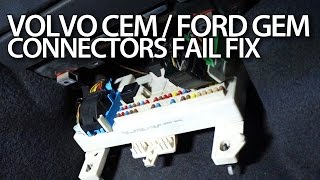
On this specific P1 platform Volvo (which includes the S40, V50, C30, and C70), a very common and unique cause for P2135 is a poor electrical connection at the Central Electronic Module (CEM), located in the passenger footwell. Owners report that passengers can accidentally kick the module or its wiring, leading to intermittent connection issues that trigger this code. Furthermore, the CEM is vulnerable to moisture from clogged sunroof drains or a poorly sealed windshield, causing corrosion on the connector pins (especially the green connector). Many owners have fixed the problem simply by disconnecting, cleaning with contact cleaner, and reconnecting the CEM plugs, avoiding the cost of replacing parts.
Symptoms You May Notice
- Sudden loss of power and entering 'Limp Home Mode'
- "Reduced Engine Performance" or "Anti-Skid Service Required" message displayed on the dashboard
- Engine will not rev above 2800-3000 RPM
- Erratic, delayed, or no throttle response
- Engine stalling, especially after stopping
- Check Engine Light is on (though sometimes it may not illuminate immediately)
- Multiple, seemingly unrelated electrical faults appearing at once (e.g., ABS, SRS, Power Steering failure messages) if the CEM is the cause
- Replacing the throttle body when the actual fault is the accelerator pedal sensor or a bad connection at the CEM.
- Replacing the accelerator pedal when the actual fault is a poor connection at the CEM.
Most Likely Causes
- Poor Connection at Central Electronic Module (CEM) 🔴 High Probability The CEM is located in the passenger footwell under the glovebox, where it and its connectors (particularly the green one) can be kicked or disturbed. It is also highly susceptible to water damage from clogged sunroof drains or leaking windshield seals, causing corrosion on the pins.
How to confirm: Inspect the CEM for any signs of loose connections. Disconnect the battery, then unplug the large green and grey connectors from the CEM. Check for any dull, oxidized, or corroded pins. Check the passenger footwell carpet and padding for any signs of dampness.
Typical fix: Clean the male and female connector pins with a dedicated electronics contact cleaner (like DeoxIT) and a small, soft brush. Let dry completely before reconnecting. This is a low-cost, high-reward first step.
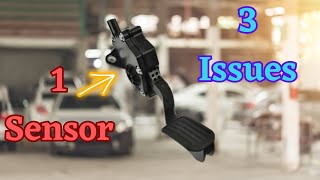
Est. part cost: $5-$15 for contact cleaner - Faulty Accelerator Pedal Position (APP) Sensor 🔴 High Probability → Shop Accelerator Pedal Assembly The sensor is integrated into the accelerator pedal assembly. The internal resistive tracks or contact points wear out over time, causing noisy or erratic signals. This is a common failure point across many vehicles with electronic throttles.
How to confirm: Use a scan tool with live data capability to monitor the two APP sensor voltage signals (e.g., APP1 and APP2). As you press the pedal, the voltages should change smoothly and in correlation. If one signal is erratic, drops out, or is noisy, the sensor is bad.
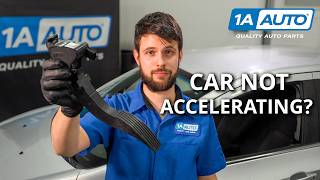
Typical fix: Replace the entire accelerator pedal assembly. It is typically a bolt-in part with a single electrical connector. An OEM part number for some models is Volvo 30715523.
Est. part cost: $90-$200 - Damaged Wiring or Connectors 🟡 Medium Probability Wiring to the accelerator pedal can be stressed over time. The engine bay wiring to the throttle body is exposed to heat and vibration. A specific issue on platform mates is chafing of the harness against other components.
How to confirm: Visually inspect the wiring harnesses for the accelerator pedal and throttle body. Wiggle the connectors and wiring with the engine on and live data streaming to see if you can induce the fault. Check for corrosion in the connector plugs themselves.
Typical fix: Repair the broken wire or replace the damaged connector pigtail. Sometimes the fix is as simple as cleaning corroded pins within a connector.
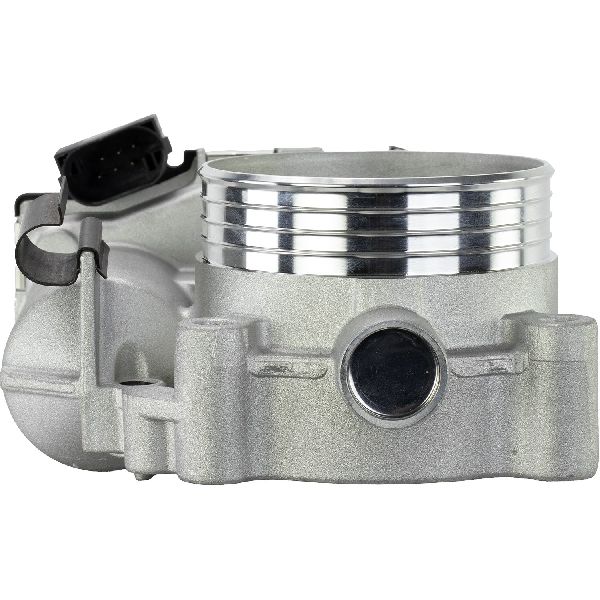
Est. part cost: $10-$50 - Faulty Throttle Body / Throttle Position Sensor (TPS) ⚪ Low Probability → Shop Fuel Injection Throttle Body While less common than the pedal sensor for this specific code, the internal Throttle Position Sensors can fail. On this model, the sensors are integrated into the throttle body and not sold separately. Carbon and oil buildup can also cause the throttle plate to stick, leading to correlation errors.
How to confirm: Use a scan tool to monitor the two TPS sensor voltage signals (e.g., TPS1 and TPS2). They should move smoothly as the throttle plate opens. A jumpy or non-responsive signal indicates a fault. Also, visually inspect the throttle body for heavy carbon buildup.
Typical fix: First, try cleaning the throttle body thoroughly with a dedicated cleaner. If that fails, replace the entire electronic throttle body assembly. A relearn procedure may be required after installation.
Est. part cost: $200-$400
Rare But Worth Checking
- Failing Engine Control Module (ECM): → Shop Engine Control Module (ECM) This is very rare. All other possibilities, especially wiring and connectors, should be exhaustively ruled out before considering the ECM.
Diagnosis Steps
- Read the fault codes with an OBD-II scanner to confirm P2135 is the primary code. Note any other codes present.
- Start with the most common, no-cost fix for this platform. Disconnect the battery for at least 15 minutes.
- Access the Central Electronic Module (CEM) in the passenger footwell. Unplug its main connectors (usually one green, one grey). Inspect for corrosion, moisture, or bent pins. Clean all male and female pins with electronic contact cleaner and a soft brush. Allow to dry completely.
- Reconnect the CEM, reconnect the battery, clear the codes, and test drive the vehicle. Many owners report this permanently solves the problem. If the code returns, proceed.
- Use a scan tool that can display live data. Graph the two accelerator pedal position (APP) sensor voltages. Press the pedal slowly and smoothly from 0% to 100%. The two signals should move in a smooth, correlated fashion (one may rise while the other falls, or both may rise at different rates). Look for any spikes, dropouts, or flat spots in the data.
- If the APP sensor data is erratic, the pedal assembly needs replacement.
- If the APP sensor data is clean, graph the two throttle position sensor (TPS) voltages while someone else operates the pedal (or while the engine is running, if safe). Look for the same types of signal anomalies.
- If the TPS data is erratic, consider cleaning the throttle body first. If cleaning doesn't help, the throttle body is likely faulty.
- If both sensors appear to have clean signals, perform a 'wiggle test'. With the live data streaming, gently wiggle the wiring harnesses and connectors for the pedal, throttle body, and CEM to check for intermittent shorts or opens that cause the signal to drop out.
Parts You'll Likely Need
- Accelerator Pedal Assembly
(OEM #30715523 (Verify by VIN))— This is the most frequent component failure for code P2135 on this platform, after checking the CEM connections. The internal sensors wear out.
Trusted brands: Bosch, Hella, Metzger, Volvo (OEM)
OEM price range: $250-$350
Aftermarket price range: $90-$200 - Electronic Throttle Body — This is the next most likely part to fail if the pedal assembly and wiring are confirmed to be good. The internal position sensors fail or the mechanism gets clogged with carbon.
Trusted brands: Bosch, VDO
OEM price range: $400-$550
Aftermarket price range: $200-$400
Related Codes That Often Appear With This One
- P0222 - Throttle/Pedal Position Sensor/Switch 'B' Circuit Low Input
- U0301 - Software Incompatibility with Engine Control Module
Platform-Specific Known Issues
- The location of the Central Electronic Module (CEM) in the passenger footwell makes it susceptible to connection issues caused by being kicked or from moisture, which can directly cause the P2135 code. This is the most important vehicle-specific check.
- Water ingress into the CEM from clogged sunroof drains or a bad windshield seal is a known P1 platform issue that causes a host of electrical problems, including P2135.
Mechanic-Grade Diagnostic Values
- Accelerator Pedal Sensor Signal Voltage — expected: 0.5V to 4.5V depending on pedal position.. Failure: Voltage is erratic, drops out, or does not change smoothly when the pedal is pressed.
- Alternator AC Ripple Voltage — expected: Close to 0 AC Volts with the engine running.. Failure: Any significant AC voltage reading indicates a bad diode in the alternator, which can cause electrical noise and trigger sensor correlation faults.
Hidden / Shadow Codes Worth Checking
- ECM-9400: Accelerator pedal (AP) position sensor. This is a Volvo-specific code that can be associated with P2135, pointing directly to the pedal sensor circuit. (see via Volvo's VIDA/DICE diagnostic tool.)
- ECM-9520 / ECM-951F / ECM-918F: These are Volvo-specific codes for the Accelerator Pedal (AP) position sensor, indicating 'Signal too high' or 'Faulty signal'. A missing PWM signal from the pedal can be a root cause. (see via Volvo's VIDA/DICE diagnostic tool.)
Scan Tool Commands That Help
- VIDA (Volvo DICE): Adaptation of the throttle unit — After replacing the electronic throttle body. This function allows the ECM to learn the new throttle body's start and end positions. The process is done with the engine running and may cause the engine to nearly stall as it cycles the throttle plate.
Wiring & Ground Locations
- APP Sensor Signal Wire — The white signal wire from the accelerator pedal sensor runs to Pin 31 of the left-hand lower connector block on the Central Electronic Module (CEM).. This is the direct signal path from the pedal to the CEM. A poor connection at Pin 31 on the CEM is a known cause of P2135, making it a critical point to inspect and clean.
- Engine Bay Fuse Box - Fuse #8 — In the engine compartment fuse box.. On some P1 platform vehicles, fuse #8 supplies power to the accelerator pedal sensor. A blown fuse here will cause a loss of the PWM signal from the pedal, triggering fault codes.
Real Owner Repair Stories
- Volvo Owners Club Forum user 'Wooders' (2005 S40 SE 2.0D) — Intermittent limp mode, especially during acceleration, and engine would not rev over 3000 RPM. Also had other electrical issues with mirrors, central locking, and windows.
❌ Tried (didn't work) Replacing the throttle pedal assembly, Replacing the electronic throttle body
✅ What actually fixed it Removing the Central Electronic Module (CEM) from under the glovebox and carefully cleaning all the dull/oxidized connector pins. This single action resolved the P2135 code and the other electrical faults. - Reddit user '796bgd' (2008 2.0D S40) — Car went into limp mode with P2135 stored. Also had intermittent "anti-skid repair needed" messages, especially after driving in rain or snow.
✅ What actually fixed it Removed the CEM from the passenger footwell, cleaned the plugs and the circuit board itself with electronics circuit cleaner and isopropyl alcohol. The problem was resolved after reassembly.
When the Usual Fixes Don't Work
- In several documented cases, owners replaced both the accelerator pedal and the throttle body, which are the most common component failures for P2135, yet the problem persisted. The final solution was found to be cleaning the electrical connectors on the Central Electronic Module (CEM), indicating that on this platform, connection integrity at the CEM should be treated as a primary suspect, not just a secondary check.
OEM Part Supersession History
30715523→31445345— Part revision or manufacturer change.
Heads up: The replacement part may look physically different from the original part installed in the vehicle, but should function correctly. Always verify fitment with the vehicle's VIN.
Model Year Variations Within This Range
- 2008-2012: A facelift for the 2008 model year introduced changes to the interior and exterior, including cabin electronics and lighting. While the core cause of P2135 (CEM, pedal) remains the same, specific wiring or module software could have minor differences from pre-facelift (2004-2007) models.
Diagnostic Flowchart
Other Known Issues on This Vehicle
Issues unrelated to this code that are worth knowing about as an owner of this generation:
- Diesel Particulate Filter (DPF) Clogging 🔴 High — Common for cars used primarily for short trips, preventing passive regeneration. Often occurs after 70,000 miles. (Ref: Some models require an EOLYS additive fluid top-up and counter reset at the dealer.)
- Alternator Failure 🟠 Medium — The alternator, or its regulator/brushes, can fail, leading to 'Low Battery' warnings and eventual non-start conditions. Some owners have replaced the regulator without removing the whole alternator.
- CEM Water Ingress and Failure 🔴 High — A well-documented issue where clogged sunroof drains or a leaking windshield seal allows water to drip onto the CEM, causing widespread and bizarre electrical faults.
- Sticking Throttle Body / Hard Starting 🟡 Low → Shop Fuel Injection Throttle Body — Carbon and oil buildup can cause the throttle plate to stick, especially when cold, leading to a no-start or difficult start condition.
- Dual-Mass Flywheel (DMF) Failure (Manual Gearbox) 🟠 Medium — The DMF on manual transmission models can fail, causing vibration, rattling noises at idle, and difficulty shifting. This is a common issue on the 2.0D engine across platforms.
Used vs. New Parts: Buying Guide for This Vehicle
When a used part is the smart pick: A used accelerator pedal assembly from a reputable salvage yard is a very sensible and cost-effective option. Since it's an electronic part not subject to mechanical wear in the same way as suspension, a low-mileage donor is a good bet. A used CEM can also be considered, but may require programming (using VIDA) to the car's VIN, adding complexity.
Donor-vehicle mileage cap: roughly under 80000 miles for the part to have meaningful remaining life.
What to inspect on the donor part:
- For an accelerator pedal, check for smooth, unobstructed pedal travel.
- For a CEM, inspect connectors for any signs of corrosion, water damage (white or green powder), or bent pins. Avoid any module that shows signs of moisture exposure.
- Verify the part number on the used component matches the original exactly.
- Ask for the donor vehicle's mileage and check for signs of front-end collision damage, which could have stressed wiring.
OEM-only on this vehicle (don't cheap out):
- While not strictly OEM-only, the Electronic Throttle Body is a critical component. Using a new OEM (Bosch) or a remanufactured unit from a specialist like Xemodex is highly recommended over a used one of unknown history, as they can be prone to failure and require adaptation.
Aftermarket brands forum-validated for this vehicle:
- Bosch (Often the OEM supplier for throttle bodies and pedals)
- Hella
Brands owners have reported issues with on this vehicle:
- Unbranded, no-name parts from online marketplaces should be avoided for critical electronic components like the pedal and throttle body, as their internal sensors may not meet the precise correlation requirements of the ECM, leading to the code returning.
Real Owner Stories
Aggregated from forums and TSBs cited above. Mileages and costs reflect what owners reported in those sources.
Volvo S40 2.0D
Symptoms: The car threw fault code P2135. Replacing the accelerator pedal and the throttle body made no difference to the issue.
What fixed it: Cleaning the Central Electronic Module (CEM) connectors.
Source hint: Volvo Owners Club Forum (volvoforums.org.uk) thread titled 'Fault code p2135' by user 'Wooders'
Volvo S40 2.0D
Symptoms: Vehicle entered limp mode with a P2135 error code; suspected CEM issue.
What fixed it: Removing the CEM and cleaning the board and connectors with circuit cleaner and isopropyl alcohol.
Source hint: Reddit (r/Volvo) thread titled 'P2135 error code -CEM issue?'
Volvo S60 (Cross-Model Reference)
Symptoms: An owner reported a P2135 / ECM-9200 code indicating a faulty throttle position sensor signal (NHTSA ODI #10523760).
What fixed it: The owner sought verification from an authorized dealer to confirm the specific error codes pulled from the vehicle's computer.
Source hint: NHTSA ODI #10523760
Related OBD-II Codes
Frequently Asked Questions
Why does my Volvo S40 display 'Anti-Skid Service Required' alongside the P2135 code?
Is there a specific part of the CEM I should check for the P2135 error?
Can a clogged sunroof drain cause my S40 to go into Limp Home Mode?
What is the part number for the accelerator pedal if I need to replace it?
My S40 won't rev above 3000 RPM; is this related to the P2135 code?
Should I replace the throttle body first to fix this code?
Helpful Videos
We Have This Part in Stock

The information in this article is provided for general reference and educational purposes only. Vehicle specifications, procedures, and part compatibility can vary by production date, trim level, and region. Always consult your vehicle's factory service manual and verify part numbers before purchasing or performing repairs. Safety-critical components such as airbags, seat belts, and braking systems should be installed by a qualified professional.
- Volvo S40:
- 🧭 Diagnostic Flowchart
- 🎬 Helpful Videos
- 🛍️ Shop This Part
- What's Unique About the 2004-2012 Volvo S40
- Symptoms You May Notice
- Most Likely Causes
- Rare But Worth Checking
- Diagnosis Steps
- Parts You'll Likely Need
- Related Codes That Often Appear With This One
- Platform-Specific Known Issues
- Mechanic-Grade Diagnostic Values
- Hidden / Shadow Codes Worth Checking
- Scan Tool Commands That Help
- Wiring & Ground Locations
- Real Owner Repair Stories
- When the Usual Fixes Don't Work
- OEM Part Supersession History
- Model Year Variations Within This Range
- Other Known Issues on This Vehicle
- Used vs. New Parts: Buying Guide for This Vehicle
- Real Owner Stories
- Volvo S40 2.0D
- Volvo S40 2.0D
- Volvo S60 (Cross-Model Reference)
- Related OBD-II Codes
- Frequently Asked Questions
- 🎟️ Get 5% Off