

P2138 on 2007-2015 Audi Q7: Accelerator Pedal Sensor (G79/G185) Failure Causes and Fixes
Code P2138 on a 2007-2015 Audi Q7 almost always points to a failing accelerator pedal position (APP) sensor. The vehicle may enter 'limp mode' with a flashing EPC light and reduced power. Replacing the entire accelerator pedal assembly is the most common and effective fix.
- P2138 on a 2007-2015 Audi Q7 is a strong indicator of a failed accelerator pedal sensor assembly (containing sensors G79 and G185).
- Symptoms typically include a flashing EPC light, Check Engine Light, and the vehicle entering a low-power 'limp mode'.
- The fix is almost always to replace the entire accelerator pedal assembly, which is a straightforward DIY job for many owners.
- Before ordering a part, confirm the diagnosis by checking live sensor data with an OBD-II scanner if possible. Look for non-correlating voltage signals from the G79 and G185 sensors.
What's Unique About the 2007-2015 Audi Q7
On the first-generation Audi Q7 (Typ 4L) and its platform mates, the VW Touareg and Porsche Cayenne, the P2138 code is overwhelmingly linked to the accelerator pedal assembly itself, rather than the throttle body. The pedal assembly contains the two accelerator position sensors (G79 and G185), and these are known to fail internally due to wear on the carbon tracks inside the sensor. Unlike some other vehicles where wiring or throttle body issues are more common for this code, Q7, Touareg, and Cayenne owners most frequently resolve the issue by replacing the entire pedal unit.
Symptoms You May Notice
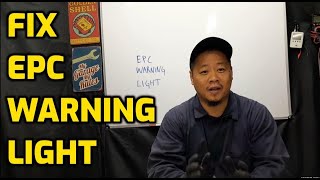
- Check Engine Light and/or EPC (Electronic Power Control) light is on 🎬 Watch: Common causes and fixes for the VW/Audi EPC light
- Vehicle enters 'limp mode' with significantly reduced engine power and acceleration
- Hesitation or sudden loss of power while driving
- Jerky or erratic throttle response
- Traction control (ESP) and self-leveling suspension warning lights may also illuminate
- Inability to rev the engine past a certain RPM (e.g., 3000 RPM)
- Poor fuel economy (MPG)
- Replacing the throttle body. On the Audi Q7 and its platform mates, P2138 is most often related to the accelerator pedal sensor (G79/G185), not the throttle position sensors located on the throttle body.
Most Likely Causes
- Faulty Accelerator Pedal Position (APP) Sensor 🔴 High Probability → Shop Accelerator Pedal Assembly The sensor is integrated into the accelerator pedal assembly and is a very common failure point on this platform. Internal wear on the sensor's electronic components or carbon tracks causes the two voltage signals to drift and conflict, triggering the fault. The failure can be intermittent at first but typically becomes more frequent.
How to confirm: A diagnostic scan tool (like VCDS) can monitor the live data from the two pedal sensors (G79 and G185) in Measuring Block Group 062. As you press the pedal, the voltage readings should change smoothly and in a predictable, correlated manner. For example, G79 might range from ~0.74V to a lower value, while G185 ranges from ~0.37V to a lower value. If one signal is erratic, drops out, or doesn't track with the other, the sensor assembly is bad. A divergence greater than 0.5V can trigger the fault.
Typical fix: Replace the entire accelerator pedal assembly. The sensors (G79/G185) are integrated and not sold separately. This is a direct replacement part.
Est. part cost: $150-$275 - Wiring or Connector Issue ⚪ Low Probability While less common than pedal failure for the Q7, the 6-pin wiring harness leading to the accelerator pedal can become damaged, or the connector pins can corrode or become loose, causing an intermittent signal. Water ingress into the connector or resistance buildup in wire splices are other possibilities. The service manual specifies using only gold-plated terminals for any repairs on this connector to ensure a reliable connection.
How to confirm: Visually inspect the wiring harness running to the accelerator pedal for any signs of damage, chafing, or pinching. Unplug the 6-pin connector and check for corrosion, moisture, or backed-out pins. Use a multimeter to check for continuity between the pedal connector and the ECM connector (T94), with a specified maximum resistance of 1.5 ohms. Also check for the correct reference voltage (typically ~5.0V) and ground at the connector.
Typical fix: Repair the damaged section of wiring or clean/replace the electrical connector using gold-plated terminals.
Est. part cost: $5-$50
Rare But Worth Checking
- Faulty Engine Control Module (ECM): → Shop Engine Control Module (ECM) This is very rare. Before suspecting the ECM, all other possibilities, especially the pedal sensor and its wiring, must be exhaustively ruled out. An ECM software update could potentially resolve the issue if calibration thresholds are off, but hardware failure is unlikely.
- Dirty or Faulty Throttle Body: → Shop Fuel Injection Throttle Body While P2138 on the Q7 almost always points to the pedal, a problem with the throttle position sensors (TPS) on the throttle body can sometimes trigger it. This is less likely but worth considering if a new pedal doesn't solve the issue. Oil contamination in the throttle body has been noted by some owners, but is often a separate issue.
Diagnosis Steps
- Scan for Codes: Use an OBD-II scanner (VCDS is recommended for VW/Audi) to confirm P2138 is the primary code. Note any other codes, especially those related to G79 or G185 sensors.
- Analyze Live Data: Access the live data stream (Measuring Value Blocks). For VCDS, this is typically Group 062. Monitor the voltage readings for the two accelerator pedal position sensors (G79 and G185).
- Test Pedal Response: With the key on and engine off, slowly and smoothly press and release the accelerator pedal while watching the live data. The voltage signals for G79 and G185 should rise and fall smoothly together without any spikes, dropouts, or flat spots. A divergence greater than ~0.5V can trigger the fault.
- Inspect Wiring: Visually inspect the wiring harness and the 6-pin connector at the accelerator pedal for any signs of damage, corrosion, or loose connections.
- Check Voltages at Connector: If you have a wiring diagram, use a multimeter to verify that the sensor is receiving the correct reference voltage (should be >4.5V, typically 5.0V) and has a good ground connection from the ECM. Check continuity from the pedal connector to the ECM connector; resistance should not exceed 1.5 ohms.
- Replace the Accelerator Pedal Assembly: If the sensor data is erratic and the wiring is confirmed to be good, the pedal assembly is faulty and needs to be replaced. It is typically held in by one or two bolts and is a plug-and-play part.
- Clear Codes and Test Drive: After replacement, clear the diagnostic trouble codes and perform a test drive to ensure the EPC light and drivability issues are resolved. A throttle body adaptation is generally not required for this repair, but can be performed in VCDS under Engine -> Basic Settings -> Group 060 if other throttle work was done.
Parts You'll Likely Need
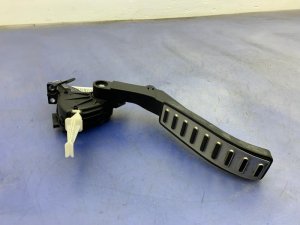
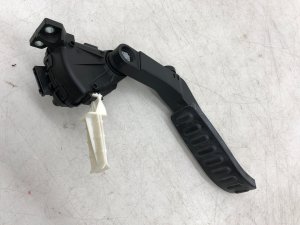
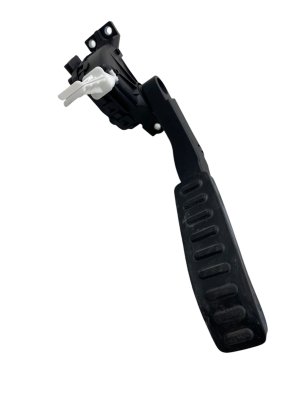
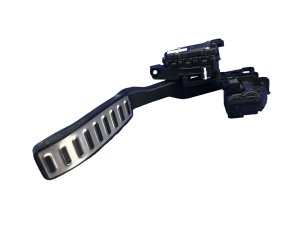
- Accelerator Pedal Assembly with Sensor
(OEM #7L0723507D)— This is the most common failure for code P2138 on this vehicle. The assembly includes the integrated G79 and G185 accelerator pedal position sensors which fail internally.
Trusted brands: Genuine Audi/VW, Hella, Bosch, Duralast
OEM price range: $250-$395
Aftermarket price range: $150-$260
Related Codes That Often Appear With This One
- P2122 - Accelerator Position Sensor (G79): Signal too Low
- P2127 - Accelerator Position Sensor 2 (G185): Signal too Low
- P1639 - Accelerator Position Sensor 1/2 (G79/G185): Implausible Signal
Platform-Specific Known Issues
- Owner Experience: EPC Light After Car Sits: A 2009 Q7 owner on AudiWorld reported that after the vehicle sat for a week, the EPC light came on immediately upon starting and driving. The engine would not rev past 3000 RPM and seemed stuck in gear. Restarting the car would temporarily clear the EPC light, but the Check Engine Light would remain on, and the issue would return. This is a classic symptom pattern for an intermittent-to-failing accelerator pedal sensor.
- Confusion with Throttle Body: → Shop Fuel Injection Throttle Body In the same AudiWorld thread, the owner initially suspected the Throttle Position Sensor (TPS) and removed the throttle body for inspection, finding oil inside (a common but often unrelated issue from the PCV system). This highlights the common misdiagnosis of blaming the throttle body when the pedal sensor is the actual culprit for P2138 on this platform.
Mechanic-Grade Diagnostic Values
- VCDS Live Data (MVB Group 062, Field 3) - G79 Sensor % — expected: Starts at ~14.5% (idle) and increases smoothly to ~79% (full throttle).. Failure: Values jump, are erratic, or do not correspond to pedal movement.
- VCDS Live Data (MVB Group 062, Field 4) - G185 Sensor % — expected: Starts at ~7.0% (idle) and increases smoothly to ~40% (full throttle).. Failure: Values jump, are erratic, or do not correspond to pedal movement.
- VCDS Live Data (Freeze Frame) - G79 / G185 Voltage — expected: G79: ~742 mV, G185: ~371 mV at idle/fault condition.. Failure: A significant, persistent deviation from this ratio under steady pedal can indicate a fault.
- Wiring Harness Continuity (Pedal to ECM) — expected: Max 1.5 ohms.. Failure: Resistance higher than 1.5 ohms indicates a problem in the wiring harness.
- Reference Voltage at Pedal Connector — expected: ~5.0 V.. Failure: Significantly lower voltage (e.g., below 4.5V) points to a wiring or ECM issue.
Scan Tool Commands That Help
- VCDS (Ross-Tech): Engine -> Measuring Blocks -> Group 062 — This is the primary diagnostic screen to watch the live percentage values from both accelerator pedal sensors (G79 and G185) simultaneously. It's used to confirm if the sensor signals are smooth, correlated, and free of dropouts when the pedal is pressed.
- VCDS (Ross-Tech): Engine -> Basic Settings -> Group 060 — This performs a Throttle Body Adaptation (TBA). While not strictly required for an accelerator pedal replacement, it is recommended if the throttle body was cleaned or disconnected, or if the battery was disconnected for an extended period. It relearns the throttle plate's end stops.
Wiring & Ground Locations
- Accelerator Pedal Connector — Directly at the top of the accelerator pedal assembly, under the driver's side dashboard.. This 6-pin connector is the single point of failure for all signals from the G79/G185 sensors to the ECM. Corrosion, moisture, or loose pins here will directly cause a P2138 code.
- Ground Point 44 — On the left lower A-pillar, behind the driver's side kick panel.. This is a primary chassis ground point for components in the driver's footwell area. A poor connection here could potentially introduce electrical noise or ground offsets affecting sensitive sensor readings.
- Ground Point 45 — Behind the center of the instrument panel.. This is a central ground location for many dashboard and electronic module components. While not a direct cause, a fault here can create widespread, difficult-to-diagnose electrical issues.
- ECM Connector (T94) — At the Engine Control Module (ECM), which is typically located in the plenum chamber (under the cowl cover at the base of the windshield).. This is the termination point for the accelerator pedal wiring. When performing continuity checks, technicians test the wires between the pedal's 6-pin connector and this large ECM connector.
Real Owner Repair Stories
- Carly Forum User 'JuliKoch19' (2013 Audi Q5 3.0 TFSI (Similar VAG platform and system)) — Poor cold starts, increased fuel consumption, and unresponsive throttle.
❌ Tried (didn't work) Initial suspicion was a faulty throttle body.
✅ What actually fixed it A diagnostic scan revealed a defective accelerator pedal module. The control valve wasn't receiving correct signals due to the bad pedal sensor readings. Replacing the accelerator pedal module resolved all symptoms.
OEM Part Supersession History
7L0723507→7L0723507B, 7L0723507D— Standard part evolution and revision by the manufacturer.
Heads up: Part numbers starting with 7L0/7P5 are for the first-generation Q7/Touareg/Cayenne platform. They are not compatible with newer Audi models (like the 4M chassis Q7) which use part numbers beginning with 8W1.
Diagnostic Flowchart
Used vs. New Parts: Buying Guide for This Vehicle
When a used part is the smart pick: A used OEM accelerator pedal assembly is a viable and cost-effective option for this repair. The part is a robust electronic component, and a tested, used unit from a reputable salvage yard is often a better choice than a new, non-OEM aftermarket part which may lack precise calibration.
Donor-vehicle mileage cap: roughly under 100000 miles for the part to have meaningful remaining life.
What to inspect on the donor part:
- Verify the part number on the used assembly exactly matches the one being replaced.
- Thoroughly inspect the 6-pin electrical connector. The pins must be perfectly straight, clean, and free of any green or white corrosion. Bent or corroded pins are a major red flag.
- If possible, choose a part from a vehicle with lower mileage and no signs of water damage in the interior.
Aftermarket brands forum-validated for this vehicle:
- Hella
- Bosch
- Standard Motor Products
Brands owners have reported issues with on this vehicle:
- Unbranded, no-name parts from online marketplaces should be avoided as their calibration and longevity are questionable.
Real Owner Stories
Aggregated from forums and TSBs cited above. Mileages and costs reflect what owners reported in those sources.
2009 Audi Q7
Symptoms: After the vehicle sat for a week, the EPC light came on immediately upon starting. The engine would not rev past 3000 RPM and felt like it was stuck in gear. Restarting the car would make the EPC light go away temporarily, but the Check Engine Light stayed on.
What fixed it: This pattern is described as a classic symptom of an intermittent-to-failing accelerator pedal sensor, for which the standard fix is replacing the entire accelerator pedal assembly.
Source hint: vehicle_specific_issues: 'Owner Experience: EPC Light After Car Sits' / AudiWorld Forums: 'EPC code P2138'
Audi Q7 3.0 TDI (CJGA engine)
Symptoms: The vehicle would set fault code P2138 and enter limp mode. The fault would appear when the throttle was released, but would temporarily clear if the throttle was held steady at 50%.
What fixed it: The owner first replaced the accelerator pedal with a used part, but the condition remained the same, indicating the issue might be in the wiring or the replacement part was also faulty.
Source hint: owner_reports from MHH AUTO
Related OBD-II Codes
Frequently Asked Questions
My 2009 Q7 has the EPC light on and won't rev past 3000 RPM. Is it definitely the accelerator pedal?
Can I just buy and replace the small sensor on the gas pedal assembly?
I'm using VCDS to diagnose P2138 on my Q7. Which measuring block shows the pedal sensor data?
My mechanic thinks the throttle body is the problem. Could that cause a P2138 code?
I'm repairing a damaged wire on the accelerator pedal connector. Can I use any type of terminal?
After I replace the accelerator pedal, is a throttle body adaptation necessary?
Does this same P2138 pedal issue affect the Porsche Cayenne or VW Touareg?
Helpful Videos
We Have This Part in Stock

The information in this article is provided for general reference and educational purposes only. Vehicle specifications, procedures, and part compatibility can vary by production date, trim level, and region. Always consult your vehicle's factory service manual and verify part numbers before purchasing or performing repairs. Safety-critical components such as airbags, seat belts, and braking systems should be installed by a qualified professional.
- Audi Q7:
- 🧭 Diagnostic Flowchart
- 🎬 Helpful Videos
- 🛍️ Shop This Part
- What's Unique About the 2007-2015 Audi Q7
- Symptoms You May Notice
- Most Likely Causes
- Rare But Worth Checking
- Diagnosis Steps
- Parts You'll Likely Need
- Related Codes That Often Appear With This One
- Platform-Specific Known Issues
- Mechanic-Grade Diagnostic Values
- Scan Tool Commands That Help
- Wiring & Ground Locations
- Real Owner Repair Stories
- OEM Part Supersession History
- Used vs. New Parts: Buying Guide for This Vehicle
- Real Owner Stories
- 2009 Audi Q7
- Audi Q7 3.0 TDI (CJGA engine)
- Related OBD-II Codes
- Frequently Asked Questions
- 🎟️ Get 5% Off