

P2138 on 2005-2012 Cadillac Escalade: Reduced Power Causes and Fixes
On a 2005-2012 Escalade, code P2138 almost always means the Accelerator Pedal Position (APP) sensor assembly has failed. A wiring issue at a specific connector, often due to water intrusion, is the second most likely cause. Replacing the pedal assembly is a simple DIY fix costing between $60 and $170. Before replacing the pedal, it is critical to inspect the IP-to-body harness connector for corrosion.
- P2138 on an Escalade almost always triggers the 'Reduced Engine Power' safety mode.
- The most likely cause is a failed accelerator pedal assembly, which is an easy DIY replacement (Difficulty 1/5).
- Before replacing the pedal, inspect the large wiring connector in the driver's kick panel for corrosion, as this is a known issue covered by GM Technical Service Bulletins.
- Do not replace the throttle body for this code; the fault lies with the pedal sensor or its wiring.
- The correct OEM replacement part is typically ACDelco part number 25832864.
What's Unique About the 2005-2012 Cadillac ESCALADE
On this generation of GM trucks and SUVs (GMT900 platform), including the Escalade, the P2138 code is notoriously common. While the pedal sensor itself is a frequent failure point, these vehicles are also highly susceptible to a specific wiring problem detailed in GM Technical Service Bulletins. GM issued multiple TSBs (e.g., #070604019F) pointing to water intrusion and corrosion in the large IP-to-body harness connector (sometimes identified as C206), which can perfectly mimic the symptoms of a bad pedal sensor. Water leaks from A-pillar seals, sunroof drains, or the windshield cowl area are known to drip onto this connector, causing the issue. It is crucial to inspect this connector before replacing any parts.
Diagnostic Flowchart
Tap your situation to follow the diagnostic path that matches what you're seeing on this vehicle.
Generation note: This range covers the end of the second generation (2005-2006) and the majority of the third generation (2007-2012) Escalade. The underlying cause and repair for code P2138 are very similar for both generations, as they both use a similar drive-by-wire throttle system. The primary part, the accelerator pedal assembly, and the vulnerability to water intrusion in harness connectors are common points of failure for both.
Symptoms You May Notice
- "Reduced Engine Power" message on the dashboard.
- Check Engine Light is on.
- Poor, delayed, or no acceleration (sometimes called "dead pedal").
- Vehicle is stuck in "limp mode" with very limited speed.
- Erratic or jerky throttle response.
- Engine may stall when coming to a stop.
- Multiple warning lights activating at once (ABS, Traction Control, etc.).
- Replacing the Throttle Body. The symptoms of a bad throttle body can be similar, but P2138 specifically points to a correlation fault at the pedal sensor circuits. Throttle body issues typically set different codes (like P2135 on many GM models).
- Ignoring the TSBs. Many owners replace the pedal assembly, only for the code to return because the root cause was the corroded IP-to-body harness connector. 🎬 See this walkthrough on fixing the common harness connector issue. Always check the connector first.
Most Likely Causes
- Faulty Accelerator Pedal Position (APP) Sensor Assembly 🔴 High Probability → Shop Accelerator Pedal Assembly The dual sensors within the pedal assembly wear out over time, causing their voltage signals to drift and no longer correlate. This is a very common failure on this platform due to the design and sensitivity of the sensors.
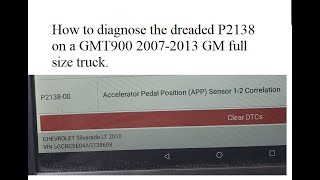
How to confirm: With a capable scan tool, monitor the live data for APP Sensor 1 and APP Sensor 2. As you slowly press the pedal, the voltage readings should be smooth and consistent. 🎬 Watch: How to pinpoint P2138 using diagrams and live data. For example, APP1 might sweep from ~1.0V to ~4.2V while APP2 sweeps from ~0.5V to ~2.5V. Jumps, dropouts, or a lack of response from one sensor while the other moves indicates a faulty sensor. The sensor is integrated into the pedal and is not serviced separately.
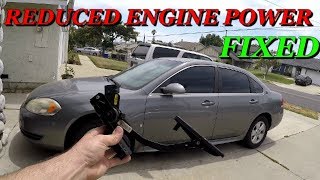
Typical fix: Replace the entire accelerator pedal assembly. This is a straightforward repair involving two or three 10mm nuts and one electrical connector. Applying dielectric grease 🎬 Watch: A simple and inexpensive Escalade pedal replacement guide. to the new connector is recommended.
Est. part cost: $60-$170 - Corroded or Damaged IP-to-Body Harness Connector 🟡 Medium Probability → Shop Body Wiring Harness GM issued TSBs #070604019F and #PIP3783D acknowledging that water can leak into the Instrument Panel (IP) to body harness connector, causing corrosion on the pins for the APP sensor circuits. Common leak sources include A-pillar seals, sunroof drains, and windshield cowls. This corrosion creates unwanted resistance and voltage drops, triggering P2138.
How to confirm: Locate the large IP-to-body harness connector (may be designated C206), typically near the driver's side kick panel. Disconnect the battery, then unhook the connector and inspect the pins and terminals for any signs of green or white corrosion, moisture, or backed-out pins.
Typical fix: Clean the connector terminals with an electrical contact cleaner and a small brush. Apply dielectric grease to the connector before reassembly to prevent future moisture intrusion. In severe cases, the affected wires and terminals may need to be replaced, or a new pigtail spliced in.
Est. part cost: $5-$25 - Damaged Wiring to the APP Sensor ⚪ Low Probability Wires can become chafed, stretched, or damaged near the pedal assembly or at the harness connector, leading to an open or short in the circuit. Poorly executed previous repairs using butt connectors instead of solder and heat-shrink are a common failure point.
How to confirm: Visually inspect the wiring harness leading to the accelerator pedal for any signs of damage, chafing, or poor previous repairs. Perform a continuity test on the signal and reference wires (e.g., Dark Blue for APP1, Light Blue for APP2 on some models) between the APP sensor connector and the PCM connector.
Typical fix: Repair the damaged section of wire using solder and heat-shrink tubing. If a previous repair was done poorly with butt connectors, re-doing it properly can solve the issue.
Est. part cost: $1-$10
Rare But Worth Checking
- Faulty Powertrain Control Module (PCM): → Shop Engine Control Module (ECM) This is extremely rare. The PCM should only be considered after all other possibilities, including the pedal assembly and all related wiring, have been thoroughly tested and ruled out. One diagnostic test involves checking if the PCM can read full voltage when 5V is directly applied to the signal wire pin; if it can't, the PCM may be faulty.
Diagnosis Steps
- Read the trouble codes with an OBD-II scanner. Confirm P2138 is present and note any other codes.
- Check for Technical Service Bulletins (TSBs). TSB #070604019F is highly relevant and points to a known wiring connector issue. The bulletin explicitly warns *not* to replace the pedal assembly before checking the wiring.
- Inspect the IP-to-Body Harness Connector. Disconnect the battery. Locate the connector in the driver's side kick panel area. Disconnect and check thoroughly for green or white corrosion or water damage. Clean with electrical contact cleaner and apply dielectric grease if any issues are found.
- Test the APP Sensor with a Scan Tool. Access live data and view the voltage or percentage for APP Sensor 1 and APP Sensor 2. Press the pedal slowly from 0% to 100%. The values should change smoothly and in correlation. Any glitches, spikes, or flat spots indicate a failed pedal sensor.
- Visually Inspect Wiring. Check the harness going to the accelerator pedal for any obvious signs of damage, chafing, or poor previous repairs like butt connectors.
- Replace the Accelerator Pedal Assembly. If the sensor tests bad or the wiring inspection passes, replace the entire pedal assembly. It is typically held on by two or three 10mm nuts.
- Perform Idle Relearn Procedure (If Necessary). Some GM vehicles may require an idle relearn procedure after replacing the pedal or throttle body to ensure smooth operation.
- Clear Codes and Test Drive. After the repair, clear the DTCs with the scanner and perform a test drive, including some hard accelerations, to ensure the 'Reduced Engine Power' message does not return.
Parts You'll Likely Need
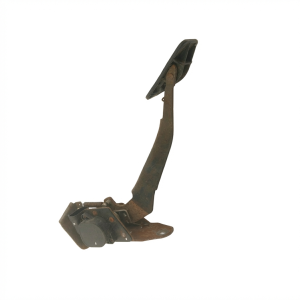
- Accelerator Pedal Assembly with Sensor
(OEM #25832864)— This is the most common failure part for code P2138. The internal sensors wear out, causing the voltage correlation error. The entire assembly must be replaced.
Trusted brands: ACDelco (GM Genuine), Standard Motor Products (APS265), Dorman (699-105), NGK/NTK (AD0456), Wells (SU9416)
OEM price range: $90-$170
Aftermarket price range: $50-$120
Related Codes That Often Appear With This One
- P2122 — Indicates a low voltage input for APP Sensor 1 ('D' circuit), often set alongside P2138 when the sensor fails.
- P2127 — Indicates a low voltage input for APP Sensor 2 ('E' circuit), also commonly appearing with P2138.
- P2120, P2123, P2125, P2128 — These are all related to the APP sensor circuits. TSB #PIP3783D and TSB #07-06-04-019F note that any of these can appear with P2138, pointing to an issue in the accelerator pedal circuits or related wiring.
Technical Service Bulletins (TSBs) & Recalls
- 070604019F: Interm
Platform-Specific Known Issues
- TSB #070604019F: This bulletin directly addresses P2138 and the 'Reduced Engine Power' message, identifying the cause as potential water intrusion into the instrument panel-to-body harness connector. It specifically instructs technicians to check for water leaks from A-pillar seals, sunroof drains, or windshield sealing before replacing parts.
- TSB #PIP3783D: This bulletin also points to P2138 and related codes being caused by poor terminal tension in the accelerator pedal position sensor circuits, which can be a result of corrosion or physical damage to the connector pins.
- Connector Location: The problematic IP-to-Body harness connector is located in the driver's side footwell/kick panel area, making it susceptible to water running down from the A-pillar.
Mechanic-Grade Diagnostic Values
- APP Sensor 1 and 2 Live Data Voltage — expected: Both sensors should show proportional voltage changes as the pedal is pressed. For example, APP1 may sweep from ~0.5V to ~4.5V, while APP2 sweeps in a different range. The key is a smooth, consistent change without glitches or dropouts.. Failure: A voltage divergence greater than 0.5V between the two sensor signals will typically trigger the fault. Any jumps, flat spots, or one sensor not responding while the other does indicates a failure.
- 5-Volt Reference at APP Connector — expected: Between 4.5 and 5.2 volts on the 5V reference wire with the key on, engine off.. Failure: Voltage below 4.5V suggests a problem with the PCM or a short on the 5V reference circuit, which may be shared with other sensors.
- APP Sensor Circuit Resistance — expected: Low resistance (under 5 ohms) on all signal and ground wires when testing continuity from the APP connector to the ECM connector.. Failure: Resistance greater than 20 Ω indicates a wiring problem, such as corrosion or a damaged wire.
Scan Tool Commands That Help
- GDS2/Tech2: Live Data - APP Sensor 1 and APP Sensor 2 Voltage/Percentage — This is the primary diagnostic step. Observing the two sensor inputs on a graphing scanner while slowly pressing and releasing the pedal is the fastest way to identify a failing pedal sensor. A 'wiggle test' on the harness connectors (at the pedal, IP-to-body, and ECM) while watching this data can pinpoint intermittent wiring issues.
- GDS2/Tech2: Idle Relearn Procedure — While not always required for a pedal replacement, it's good practice to perform an idle relearn if the throttle body was cleaned or disconnected during diagnosis, or if the idle is unstable after the repair.
Wiring & Ground Locations
- APP Sensor Connector (at pedal) — Directly plugged into the top of the accelerator pedal assembly.. This is the primary connection point. Pinout for GMT900 is typically: Pin E - APP Sensor 1 Signal (Dark Blue), Pin B - APP Sensor 2 Signal (Light Blue), Pin F - 5V Reference (White/Black), Pin C - 5V Reference (Tan), Pin A - Low Reference (Purple), Pin D - Low Reference (Brown).
- ECM Connector J1 (X1) — The E38 ECM is located in the engine bay. J1 is the large connector, often black.. This is the destination for the APP sensor signals. For a 2010 Silverado (similar to Escalade), APP Sensor 2 signal is at pin 32 and APP Sensor 1 is at pin 29. Corrosion or poor pin tension here can cause P2138.
- IP-to-Body Harness Connector (X206/C206) — Located in the driver's side kick panel area, near the floor.. This is the connector cited in TSB #07-06-04-019F as a common source of water intrusion and corrosion, which directly interrupts the APP sensor signals as they pass from the cabin to the engine bay.
- G103 / G104 — On GMT900 trucks, G103 is on the front of the right (passenger) cylinder head. G104 is on the rear of the left (driver) cylinder head.. These are major engine and control module ground points. While not the most common cause for P2138, a loose or corroded ground here can cause a host of electrical issues, including erratic sensor readings.
Real Owner Repair Stories
- Chevrolet Forum user (2007 Silverado 5.8L (GMT900 platform, similar to Escalade)) — Code P2138, 'Engine Power Reduced' message, vehicle nearly dies.
❌ Tried (didn't work) Replaced Throttle Position Sensor, Replaced Accelerator Position Sensor (gas pedal)
✅ What actually fixed it The user was advised that after replacing both the pedal and throttle sensor, the next logical step according to diagnostic procedure is to check for an open or short in the wiring harness between the pedal and the ECM, or a poor electrical connection at one of the connectors.
OEM Part Supersession History
15101848, 15847349→25832864— GM regularly updates service parts to integrate new materials or improve reliability.
Heads up: The replacement part 25832864 is a direct fit and does not require programming.
Model Year Variations Within This Range
- 2005-2006 vs 2007-2012: The 2005-2006 models are on the GMT800 platform, while 2007-2012 are GMT900. While the P2138 fault is common to both, the GMT900 platform is more frequently cited for the water-intrusion issue at the IP-to-body connector. The GMT800 is known for its simpler electronics, while the GMT900 introduced more complex modules and refined interiors, which can affect harness routing and connector locations slightly.
Helpful Videos

We Have This Part in Stock

The information in this article is provided for general reference and educational purposes only. Vehicle specifications, procedures, and part compatibility can vary by production date, trim level, and region. Always consult your vehicle's factory service manual and verify part numbers before purchasing or performing repairs. Safety-critical components such as airbags, seat belts, and braking systems should be installed by a qualified professional.
- Cadillac ESCALADE:
- 🧭 Diagnostic Flowchart
- 🎬 Helpful Videos
- 🛍️ Shop This Part
- What's Unique About the 2005-2012 Cadillac ESCALADE
- Symptoms You May Notice
- Most Likely Causes
- Rare But Worth Checking
- Diagnosis Steps
- Parts You'll Likely Need
- Related Codes That Often Appear With This One
- Technical Service Bulletins (TSBs) & Recalls
- Platform-Specific Known Issues
- Mechanic-Grade Diagnostic Values
- Scan Tool Commands That Help
- Wiring & Ground Locations
- Real Owner Repair Stories
- OEM Part Supersession History
- Model Year Variations Within This Range
- 🎟️ Get 5% Off