

P2138 on 2005-2012 Cadillac Escalade ESV: Reduced Power Causes and Fixes
On a 2005-2012 Escalade, P2138 almost always means the Accelerator Pedal Position (APP) sensor has failed or its wiring is compromised. This triggers 'Reduced Engine Power' mode. The most common fix is replacing the entire accelerator pedal assembly, which costs about $70-$150 for the part. However, before replacing the pedal, it is critical to inspect for water intrusion and corrosion at the IP-to-body harness connector (X202) in the driver's kick panel, a well-documented GM issue.
- P2138 on your Escalade will trigger the 'Reduced Engine Power' safety mode, making the vehicle unsafe for normal driving.
- The most likely cause is a failed Accelerator Pedal Position (APP) sensor, which is part of the gas pedal assembly.
- Before replacing the pedal, you MUST inspect the X202 wiring connector in the driver's kick panel for corrosion from water leaks, a known GM issue detailed in TSB 07-06-04-019F.
- Replacement is a simple DIY job, but throwing a new part at it without checking the wiring can lead to the problem returning.
What's Unique About the 2005-2012 Cadillac ESCALADE ESV
On this generation of GM trucks and SUVs, including the Escalade ESV, the P2138 code is a very well-documented issue. The problem is so common that General Motors issued multiple Technical Service Bulletins (TSBs). While the pedal sensor itself can fail, the TSBs point to a specific vulnerability: water intrusion into the instrument panel-to-body harness connector (often called the X202 connector), located in the driver's side kick panel. This corrosion can mimic the symptoms of a bad pedal sensor, making a thorough wiring inspection critical before replacing parts. An early version of the TSB explicitly states "Do Not replace the accelerator pedal assembly" before checking for water leaks.
Diagnostic Flowchart
Tap your situation to follow the diagnostic path that matches what you're seeing on this vehicle.
Generation note: This range covers the end of the second generation (2005-2006, GMT800) and the majority of the third generation (2007-2012, GMT900). The P2138 issue is common across both generations, with the primary causes (pedal sensor failure and wiring issues) being the same. However, you must verify the correct pedal assembly part number for your specific year and whether you have fixed or power-adjustable pedals (RPO code JF4), as they are not interchangeable. For example, ACDelco part 25832864 is common for 2007-2011 models with adjustable pedals.
Symptoms You May Notice
- "Reduced Engine Power" message on the dashboard.
- Check Engine Light is on.
- "Service Stabilitrak" or "Service Traction Control" message may also appear.
- Severely limited acceleration or engine power (limp mode).
- Hesitation or sluggish throttle response.
- Erratic or jerky acceleration.
- Engine may stall when coming to a stop.
- Intermittent nature: the problem may disappear after restarting the car, only to return days or weeks later.
- Replacing the Throttle Body. P2138 specifically relates to the correlation of sensors in the accelerator *pedal* assembly or its wiring. While a faulty throttle body can cause similar symptoms, it will typically set different codes, such as P2135 or P0121.
- Replacing the APP sensor without checking wiring. Many owners replace the pedal assembly, only for the P2138 code to return because the root cause was corrosion in the X202 body connector.
Most Likely Causes
- Failed Accelerator Pedal Position (APP) Sensor 🔴 High Probability → Shop Accelerator Pedal Assembly The internal electronic components and potentiometers of the sensor wear out over time, leading to inconsistent voltage signals. It is a very common failure item on these trucks.
How to confirm: Use a scan tool to monitor live data for APP Sensor 1 and APP Sensor 2. Press the pedal slowly; the voltage readings should be smooth and correlate without any spikes or dropouts. 🎬 Watch: How to diagnose the APP sensor using live data. For example, APP1 might sweep from ~1.0V to 4.2V while APP2 sweeps from ~0.5V to 2.5V. If the readings are erratic, jump, or one sensor stops responding, the sensor assembly is bad.
Typical fix: Replace the entire accelerator pedal assembly. The sensor is integrated into the pedal unit and is not sold separately. This is a simple DIY job requiring only basic hand tools and about 15-30 minutes.
Est. part cost: $70 - $170 - Wiring or Connector Issue (Water Intrusion) 🟡 Medium Probability As documented in GM TSB #07-06-04-019F, water can leak into the instrument panel-to-body harness connector (X202) near the driver's kick panel, causing corrosion on the pins for the 🎬 See how to find and clean the corroded X202 connector. APP sensor circuits. Common leak sources include A-pillar seals, sunroof drains, and windshield/cowl sealing.
How to confirm: Visually inspect the large IP-to-body harness connector (X202) behind the driver's side kick panel. Look for signs of moisture, green or white corrosion, or backed-out pins. Wiggle the harness while watching live data to see if the signal fluctuates. Also check the connector at the pedal itself.
Typical fix: Disconnect the battery. Clean the corroded terminals carefully using a terminal cleaning spray (like Deoxit D5) and a small brush. Apply dielectric grease to the connector before reassembly to prevent future moisture intrusion. If damage is severe, the connector pigtail or affected wires may need to be replaced.
Est. part cost: $10 - $50
Rare But Worth Checking
- Faulty Engine Control Module (ECM): → Shop Engine Control Module (ECM) This is very rare. The ECM should only be considered after the APP sensor and all related wiring (including connectors and grounds) have been thoroughly tested and confirmed to be good. In some cases, a technician may find that the ECM itself cannot read the proper voltage from the sensor.
- Frayed/Damaged Wiring Harness: Beyond the main connector, wires can become frayed or damaged under the hood due to brittle plastic loom or rubbing against other components. One owner on a forum found a previous bad splice on the throttle position sensor wiring that was causing the issue intermittently.
Diagnosis Steps
- Read the trouble codes with an OBD-II scanner. Confirm P2138 is present and note any other codes, such as P2122, P2127, or P1125.
- Access live data on the scanner and monitor the voltage readings for 'APP Sensor 1' and 'APP Sensor 2'.
- With the engine off and key on, slowly press and release the accelerator pedal. Watch for smooth, linear voltage changes. The two sensor values should change in a predictable, correlated manner (one may rise while the other falls). Any jumps, dropouts, or erratic behavior points to a faulty pedal sensor.
- If the live data seems normal, the issue may be intermittent. The next step is mandatory based on GM TSBs: Locate the IP-to-body harness connector (X202) in the driver's side kick panel area.
- Disconnect the battery, then disconnect the X202 connector and inspect for any signs of water intrusion, corrosion (green or white powder), or damaged/backed-out pins. This is a known issue cited in GM TSBs.
- If corrosion is found, clean the terminals thoroughly with an electronic cleaner and apply dielectric grease before reconnecting. If no corrosion is found here, also inspect the electrical connector directly at the accelerator pedal for damage or loose connections.
- If no wiring issues are found and the live data was erratic, replace the accelerator pedal assembly. Ensure you order the correct part for your vehicle's specific year and pedal type (fixed or adjustable).
- After repair, clear the codes. It's good practice to perform a throttle body relearn procedure, which can be done without a scan tool by cycling the key to 'ON' for 10 seconds and 'OFF' for 10 seconds three times before starting the engine. Perform a test drive to ensure the 'Reduced Engine Power' message does not return.
Parts You'll Likely Need
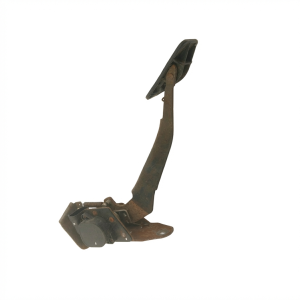
- Accelerator Pedal Assembly
(OEM #ACDelco 25832864 (For 2007-2011 w/ Adjustable Pedals, tin connector). Replaces 15101848, 15847349. Note: Part numbers vary by year and pedal type, always verify fitment.)— This is the most frequent cause of P2138. The assembly contains the integrated APP sensors that fail, and it is replaced as a single unit. 🎬 Watch this quick walkthrough for replacing the accelerator pedal assembly.
Trusted brands: ACDelco (GM Genuine), Standard Motor Products (SMP), Dorman
OEM price range: $95 - $170
Aftermarket price range: $70 - $120
Related Codes That Often Appear With This One
- P2122 — Indicates a low voltage input for APP Sensor 1 ('D' circuit).
- P2123 — Indicates a high voltage input for APP Sensor 1 ('D' circuit).
- P2127 — Indicates a low voltage input for APP Sensor 2 ('E' circuit).
- P2128 — Indicates a high voltage input for APP Sensor 2 ('E' circuit).
- P1125 — An older, related GM-specific code for the Accelerator Pedal Position system that often appears with P2138 on earlier models.
Technical Service Bulletins (TSBs) & Recalls
- 07-06-04-019F: Intermittent Malfunction Indicator Lamp (MIL) Illuminated, DTC P2138 with Reduced Engine Power (Repair Instrument Panel (IP) to Body Harness Connector). This is the primary TSB for the water intrusion issue.
- PIP3783D: Mentions inspecting Accelerator Pedal Position circuits for poor terminal tension when P2138 and related codes are present, often due to intermittent faults that are hard to reproduce.
Platform-Specific Known Issues
- GM Technical Service Bulletin #07-06-04-019F specifically calls out water intrusion into the IP-to-body harness connector (X202) as a cause for P2138, leading to intermittent 'Reduced Engine Power' warnings. Technicians are advised to check for water leaks from A-pillar seals, sunroof drains, or windshield seals before replacing any parts.
- An early version of the TSB from 2007 explicitly warns: "Important: Do Not replace the accelerator pedal assembly" before thoroughly inspecting the kick panel connector for water damage, highlighting how common this misdiagnosis is.
Mechanic-Grade Diagnostic Values
- APP Sensor 1 & 2 Voltage (Key On, Pedal Released) — expected: APP1: ~0.8-1.0V, APP2: ~0.3-0.6V. Both should be low and stable.. Failure: Voltages that are erratic, zero, or significantly outside the expected range.
- APP Sensor 1 & 2 Voltage (Pedal Fully Depressed) — expected: APP1: ~4.2-4.5V, APP2: ~2.1-2.5V. Both should rise smoothly and proportionally.. Failure: A divergence greater than 0.5V between the two scaled sensor signals typically triggers the fault. Any spikes, dropouts, or non-linear movement indicates failure.
- APP Sensor 5-Volt Reference Circuit — expected: 4.8V to 5.2V between the 5V reference pin and ground.. Failure: Voltage below 4.8V or above 5.2V indicates a short or open in the reference circuit, which may also affect other sensors on the same circuit.
- APP Sensor Low Reference (Ground) Circuit Resistance — expected: Less than 5 ohms between the low reference pin at the connector and a known good chassis ground.. Failure: Resistance greater than 5 ohms indicates a poor ground connection, which can cause floating or incorrect voltage readings.
Scan Tool Commands That Help
- Tech2 / GDS2: Live Data Graphing - APP Sensor 1 vs. APP Sensor 2 — This is the primary diagnostic method. Graphing both sensor voltages simultaneously while slowly operating the pedal makes it easy to spot any dropouts, spikes, or areas where the signals do not track each other correctly. The two signals should move proportionally.
- Tech2 / GDS2: Diagnostic Repair Verification — After performing a repair, such as cleaning a connector or replacing the pedal, this function runs the vehicle through the specific conditions required to confirm the fault is gone and allows for clearing of the history DTC.
Wiring & Ground Locations
- X202 Connector — Located in the driver's side kick panel area, it is the large Instrument Panel (IP) to body harness connector.. This connector is the single most common point of failure besides the pedal itself. Per GM TSB #07-06-04-019F, it is highly susceptible to water intrusion from A-pillar or sunroof drain leaks, causing corrosion on the APP sensor signal pins passing through it.
- APP Sensor Connector (at pedal) — Directly plugged into the top of the accelerator pedal assembly.. This 6-pin connector provides power, ground, and signal paths. Pinout for 2007+ models is typically: Pin A (Purple) - Low Reference, Pin B (Light Blue) - APP Sensor 2 Signal, Pin C (Tan) - 5-Volt Reference 1, Pin D (Dark Blue) - APP Sensor 1 Signal, Pin E (Tan/White) - 5-Volt Reference 2, Pin F (Brown) - Low Reference.
- G103 Ground — Located on the cowl in the left rear of the engine compartment, often near the brake booster.. This is a major ground point for the Body Control Module (BCM) and Instrument Panel Cluster (IPC). While not the direct ground for the APP sensor (which is grounded via low reference wires to the ECM), a poor G103 connection can cause a wide range of bizarre electronic issues that could potentially mimic sensor problems.
- Engine Block to Firewall Ground — A braided ground strap running from the rear of the engine block/cylinder head to the firewall.. This is a primary ground path for the engine and ECM. A corroded or broken strap can cause the ECM to seek a ground path through other circuits, leading to voltage offsets and reference issues that can trigger correlation codes like P2138.
Real Owner Repair Stories
- YouTube channel 'South Florida Technical Training' (General GM Trucks 2007-2011) — Intermittent 'Reduced Engine Power' message and P2138 code, even after replacing the accelerator pedal.
❌ Tried (didn't work) Replacing the accelerator pedal assembly.
✅ What actually fixed it The permanent fix recommended was to completely eliminate the problematic IP-to-body harness connector (X202) for the APP circuits. This involves running new, dedicated wires directly from the accelerator pedal connector to the ECM connector, soldering and heat-shrinking the connections at the ECM side to bypass the potential water intrusion point.
OEM Part Supersession History
15101848, 15847349→25832864— Part has been updated by GM over the years for reliability.
Heads up: This part number (25832864) is for models WITH power-adjustable pedals. It will not fit models with fixed pedals.
Model Year Variations Within This Range
- 2007-2014: The accelerator pedal assembly is different for vehicles with power-adjustable pedals (RPO JF4) versus those with fixed pedals. For models WITHOUT adjustable pedals, a common part is Standard Motor Products APS265 or Wells 5S7950. Always verify fitment with the VIN.
- 2007-2012: The TSB regarding water intrusion in the X202 connector mentions that the connector terminals can be made of different materials (tin or gold) depending on the vehicle's options and year. This can affect the repair procedure, as different terminal repair kits may be required if the pins are too corroded to be cleaned.
Helpful Videos

We Have This Part in Stock

The information in this article is provided for general reference and educational purposes only. Vehicle specifications, procedures, and part compatibility can vary by production date, trim level, and region. Always consult your vehicle's factory service manual and verify part numbers before purchasing or performing repairs. Safety-critical components such as airbags, seat belts, and braking systems should be installed by a qualified professional.
- Cadillac ESCALADE ESV:
- 🧭 Diagnostic Flowchart
- 🎬 Helpful Videos
- 🛍️ Shop This Part
- What's Unique About the 2005-2012 Cadillac ESCALADE ESV
- Symptoms You May Notice
- Most Likely Causes
- Rare But Worth Checking
- Diagnosis Steps
- Parts You'll Likely Need
- Related Codes That Often Appear With This One
- Technical Service Bulletins (TSBs) & Recalls
- Platform-Specific Known Issues
- Mechanic-Grade Diagnostic Values
- Scan Tool Commands That Help
- Wiring & Ground Locations
- Real Owner Repair Stories
- OEM Part Supersession History
- Model Year Variations Within This Range
- 🎟️ Get 5% Off