

P2138 on 2005-2012 Chevrolet Corvette: Causes and Fixes for Reduced Engine Power
On a 2005-2012 Corvette, code P2138 is most often caused by a faulty accelerator pedal position (APP) sensor or a poor electrical connection at the sensor, throttle body, or a key body harness connector (X184). This triggers the 'Reduced Engine Power' message. Replacing the accelerator pedal assembly is the most common fix, costing around $70-$120 for the part, but cleaning connectors should be performed first.
- P2138 on a C6 Corvette will almost always put the car into 'Reduced Engine Power' mode.
- The most likely fix is replacing the entire accelerator pedal assembly, but only after thoroughly inspecting and cleaning the connectors at the pedal, the throttle body, and especially the X184 harness connector in the passenger-side engine bay.
- This is a very common and well-documented issue for this platform, with official GM service bulletins available.
- The repair is considered easy for a DIYer, with the pedal costing around $70-$120 and requiring basic hand tools.
What's Unique About the 2005-2012 Chevrolet CORVETTE

The C6 Corvette is well-known for this specific issue, and GM has issued multiple Technical Service Bulletins (TSBs) about it. The problem is frequently traced back to not only the accelerator pedal sensor itself but also to water intrusion and corrosion in a specific body harness connector (often called X184) that carries the pedal sensor signals. This connector is located in the engine bay on the passenger side, between the battery (on wet sump cars) or oil tank (on dry sump cars) and the fender wall. This makes checking and cleaning all related connectors a critical first diagnostic step on a Corvette before replacing the pedal assembly.
Diagnostic Flowchart

Tap your situation to follow the diagnostic path that matches what you're seeing on this vehicle.
Symptoms You May Notice

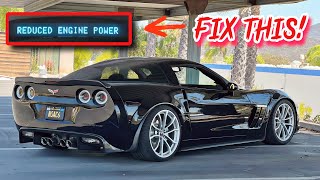
- "Reduced Engine Power" message on the driver information c 🎬 Watch: What to do when Reduced Engine Power appearsenter (DIC).
- Illuminated Check Engine Light (Malfunction Indicator Lamp).
- Poor, erratic, or no acceleration.
- Unresponsive or 'dead' throttle pedal.
- "Service Traction System" or "Service Active Handling System" message may also appear.
- Sudden loss of power while driving.
- Rough or unstable idle.
- Replacing the throttle body. While throttle body codes can occur, P2138 specifically points to a correlation issue with the *pedal* sensors. Diagnostics should always start at the pedal and its wiring connectors (pedal, X184, throttle body) before replacing any major components.
Most Likely Causes

- Faulty Accelerator Pedal Position (APP) Sensor 🔴 High Probability → Shop Accelerator Pedal Assembly The sensor is integrated into the pedal assembly and its internal contacts can wear out or fail, causing the voltage signals to become erratic. The high demand for the replacement part suggests a high failure rate.
How to confirm: Use a scan tool to monitor the live data for APP Sensor 1 and APP Sensor 2. As you press the pedal, their voltage readings should change smoothly. One common pattern is APP1 sweeping from ~0.5V to ~4.5V, while APP2 sweeps from ~1.0V to ~2.25V. If one signal is erratic, jumps, drops out, or doesn't move, the sensor is bad.
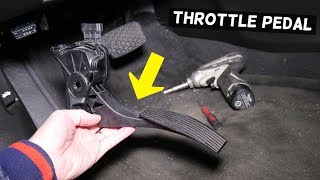
Typical fix: Replace the entire accelerator pedal assembly, which includes the integrated sensor. This is a simple DIY job involving two 10mm bolts and one electrical connector. 🎬 See this walkthrough on how to replace the pedal assembly
Est. part cost: $70-$120 - Poor Connection at IP-to-Body Harness Connector (X184) 🟡 Medium Probability → Shop Body Wiring Harness GM issued TSBs #07-06-04-019E and #070604019F specifically for this issue, which can be caused by water intrusion. The connector is located between the battery/oil tank and the passenger-side fender wall, where it can be exposed to moisture.
How to confirm: Disconnect the battery. Locate the large, 40-pin connector (X184) and disconnect it. Inspect the pins and terminals on both sides for any green or white corrosion, or bent pins. Even if no corrosion is visible, cleaning is recommended.
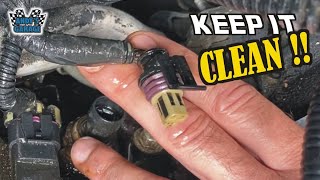
Typical fix: Clean the connector terminals thoroughly with electrical contact cleaner and a small brush. Allow it to dry completely, then apply dielectric grease to the seal and pins before reconnecting 🎬 Watch: Pro tips for cleaning and protecting electrical connectors securely.
Est. part cost: $5-$25 - Poor Connection at the APP Sensor or Throttle Body ⚪ Low Probability → Shop Fuel Injection Throttle Body Vibrations and heat cycles can cause the connectors at the pedal itself or at the throttle body to become loose, or the terminals within them can lose tension over time.
How to confirm: Visually inspect the electrical connector at the accelerator pedal and the one at the throttle body. Ensure they are fully seated and the locking tabs are engaged. Gently tug on each wire going into the connector to check for broken wires inside the insulation.
Typical fix: Reseat the connector. Apply dielectric grease to protect the connection. If the connector housing is broken or a wire is loose, a replacement connector pigtail may need to be spliced in.
Est. part cost: $0-$30
Rare But Worth Checking
- Faulty Powertrain Control Module (PCM/ECM): → Shop Engine Control Module (ECM) This is very rare. All other possibilities, especially wiring and sensors, should be exhaustively ruled out before considering PCM replacement.
- Aftermarket Throttle Controller: Some aftermarket devices that plug in-line with the accelerator pedal to modify throttle response (e.g., Vitesse, Pedal Commander) can fail and cause this code. If one is installed, removing it completely should be the first diagnostic step.
- Dirty or Sticking Throttle Body: → Shop Fuel Injection Throttle Body While P2138 points to the pedal sensors, a throttle body plate that is sticking due to carbon buildup can cause a delayed reaction that the PCM may interpret as a correlation fault with the pedal's request. Cleaning the throttle body is a valid, though less common, fix.
Diagnosis Steps
- Read all trouble codes with an OBD-II scanner. Note any accompanying codes like P1516 or P2101.
- If any aftermarket throttle controllers are installed, remove them completely, clear codes, and re-test.
- Inspect the electrical connector at the accelerator pedal assembly. Ensure it's secure and free of corrosion. Apply dielectric grease.
- Disconnect the battery. Locate and inspect the IP-to-body harness connector (X184) between the passenger-side battery/oil tank and the fender wall. Clean it thoroughly with electrical contact cleaner and apply dielectric grease.
- Inspect the electrical connector at the throttle body. Ensure it is fully seated and check for any broken wires at the connector.
- Using a scan tool with live data, monitor the voltage of APP Sensor 1 and APP Sensor 2 while slowly pressing and releasing the accelerator pedal. The signals should be smooth and correlate inversely without any jumps or dropouts.
- If the signals are erratic and the connector checks were good, replace the accelerator pedal assembly.
- After repair, clear the trouble codes and perform a test drive to ensure the issue is resolved. A throttle relearn procedure is generally not required.
Parts You'll Likely Need
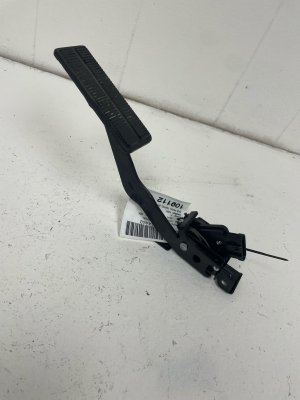
- Accelerator Pedal Assembly
(OEM #25830024)— This is the most frequent cause of P2138 on the C6 Corvette. The assembly contains the non-serviceable APP sensors that fail internally. The original part number 25830024 has been superseded by newer numbers like 19417903 or 25835421.
Trusted brands: ACDelco, GM Genuine Parts
OEM price range: $70-$120
Aftermarket price range: $50-$90
Related Codes That Often Appear With This One
- P1516 — This code relates to the throttle actuator control (TAC) module, indicating a command versus actual throttle position error. It can be triggered as a secondary fault when the PCM receives conflicting data from the pedal due to P2138.
- P2101 — This code indicates a problem with the throttle actuator control motor circuit. Like P1516, it can be a symptom of the PCM's confusion caused by the primary P2138 fault.
- P2122 — This code for 'APP Sensor 1 Circuit Low Voltage' can accompany P2138, pointing more directly to a failure within the pedal assembly itself.
Technical Service Bulletins (TSBs) & Recalls
- 07-06-04-019E: Intermittent Malfunction Indicator Lamp (MIL) Illuminated, DTC P2138 with Reduced Engine Power (Repair Instrument Panel (IP) to Body Harness Connector).
- 07-06-04-019F: A revised version of the above TSB, updating the model years to 2018 and prior GM vehicles and reiterating the cause as water intrusion into the IP-to-body harness connector.
Platform-Specific Known Issues
- A known issue, documented in TSB #07-06-04-019F, involves water intrusion into the IP-to-body harness connector (X184), causing corrosion and setting DTC P2138. The TSB explicitly warns *not* to replace the pedal assembly before checking this connector.
- Some owners on CorvetteForum report that replacing the pedal assembly does not fix the issue, but cleaning the X184 connector does. One user with a 2013 Grand Sport replaced the pedal to no avail, then resolved the issue by removing the battery and cleaning the X184 connector behind it.
- The location of the problematic connector can be confusing. While some TSBs mention the 'left hand kick panel area' for other GM vehicles, on the C6 Corvette it is consistently found in the engine bay on the passenger side, near the firewall, between the fender and the battery or dry sump oil tank.
Mechanic-Grade Diagnostic Values
- APP Sensor 1 & 2 Voltage (Scan Tool, Ignition ON) — expected: Between 0.32V and 4.75V, changing smoothly with pedal input.. Failure: Voltage is outside the range, erratic, jumps, or has dropouts.
- APP Sensor 5-Volt Reference Circuit Voltage (at pedal connector) — expected: 4.8V - 5.8V between the 5V reference pin and ground.. Failure: Voltage is below 4.8V (open/short to ground) or above 5.2V (short to voltage).
- APP Sensor Low Reference Circuit Resistance (at pedal connector) — expected: Less than 5.0 ohms between the low reference pin and a known good ground.. Failure: Resistance is greater than 5.0 ohms, indicating an open or high resistance in the ground circuit.
Scan Tool Commands That Help
- Tech 2 / GDS2: Live Data Monitoring (APP Sensor 1, APP Sensor 2) — This is the primary diagnostic step to visually confirm if the two APP sensor signals are correlating correctly. A technician can watch the voltage sweeps as the pedal is pressed to spot any glitches, spikes, or dropouts that would trigger P2138.
Wiring & Ground Locations
- Accelerator Pedal Connector (6-pin) — Directly on the top of the accelerator pedal assembly under the driver's side dashboard.. This is the primary connection point for the APP sensor. The pins are: A (Low Reference for Sensor 2), B (APP Sensor 2 Signal), C (5-Volt Reference for Sensor 2), D (Low Reference for Sensor 1), E (APP Sensor 1 Signal), F (5-Volt Reference for Sensor 1).
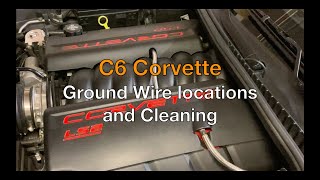
- X184 Connector — In the engine bay, passenger side, near the firewall. On wet sump cars (most base models), it's between the battery and the fender. On dry sump cars (Grand Sport, Z06, ZR1), it's between the oil tank and the fender.. This 40-pin connector carries the APP sensor signals from the cabin to the ECM. It is a known weak point for water intrusion and corrosion per GM TSBs, directly causing P2138.
- G107 Ground — On the driver's side of the engine block, below the cylinder head.. This is a primary engine ground point. The APP sensor's 'Low Reference' circuits (the sensor's ground) are tied to the ECM, which relies on a solid engine-to-chassis ground. A loose or corroded G107 can introduce noise or voltage offsets, causing the ECM to see a correlation fault.
- ECM/PCM Connector C1 (X1) — The Engine Control Module is located in the passenger side front fender well, requiring removal of the fender liner to access.. The APP sensor signals terminate here. Specifically, for a 2005 model, APP Sensor 1 Signal is on Pin 22 (Dark Blue wire) and the 5-Volt Reference is on Pin 35 (White/Black wire). Checking for corrosion or backed-out pins at the ECM is a final step if all other wiring checks out.
Real Owner Repair Stories
- CorvetteForum user 'Tom Larsen' (2013 Chevrolet Corvette Grand Sport (Automatic)) — Car went into limp mode while cruising on the highway, displaying code P2138.
❌ Tried (didn't work) Replacing the accelerator pedal assembly.
✅ What actually fixed it The user located the X184 connector behind the battery, disconnected it, sprayed both ends thoroughly with electrical contact cleaner, and reconnected it. This resolved the issue and the check engine light disappeared.
OEM Part Supersession History
25830024→19417903, 25835421— Standard part revision and number consolidation by GM.
Heads up: The newer part numbers (19417903, 25835421) are direct replacements for the original and are fully compatible with all 2005-2013 Corvettes.15831256→25830024— Early part number that was replaced by 25830024.
Heads up: This is an older number in the supersession chain. If sourcing a used part, it's better to find the newest revision possible.
Model Year Variations Within This Range
- 2006-2013 (Dry Sump Models: Z06, ZR1, Grand Sport): The location of the critical X184 connector is slightly different. On these models equipped with a dry-sump oiling system, the connector is found between the passenger-side fender and the large oil tank, whereas on wet-sump models it is between the fender and the battery.
Helpful Videos
We Have This Part in Stock

The information in this article is provided for general reference and educational purposes only. Vehicle specifications, procedures, and part compatibility can vary by production date, trim level, and region. Always consult your vehicle's factory service manual and verify part numbers before purchasing or performing repairs. Safety-critical components such as airbags, seat belts, and braking systems should be installed by a qualified professional.
- Chevrolet CORVETTE:
- 🧭 Diagnostic Flowchart
- 🎬 Helpful Videos
- 🛍️ Shop This Part
- What's Unique About the 2005-2012 Chevrolet CORVETTE
- Symptoms You May Notice
- Most Likely Causes
- Rare But Worth Checking
- Diagnosis Steps
- Parts You'll Likely Need
- Related Codes That Often Appear With This One
- Technical Service Bulletins (TSBs) & Recalls
- Platform-Specific Known Issues
- Mechanic-Grade Diagnostic Values
- Scan Tool Commands That Help
- Wiring & Ground Locations
- Real Owner Repair Stories
- OEM Part Supersession History
- Model Year Variations Within This Range
- 🎟️ Get 5% Off