

P2138 on 2013-2018 Chevrolet Corvette: Causes and Fixes for Reduced Engine Power
On a 2013-2018 (C7) Corvette, code P2138 is most often caused by a faulty Accelerator Pedal Position (APP) sensor or a poor electrical connection. This triggers the 'Reduced Engine Power' message. Replacing the accelerator pedal assembly is a common fix, but GM TSBs specifically warn to first inspect the IP-to-body harness connector (X184) in the passenger-side engine bay for water intrusion and corrosion before replacing any parts.
- P2138 on a C7 Corvette means the two sensors in your gas pedal are sending conflicting signals to the computer.
- This will immediately trigger a 'Reduced Engine Power' warning and make the car unsafe for normal driving.
- Before replacing the accelerator pedal assembly (the most common fix), always inspect the wiring connectors at the pedal and in the passenger/driver kick panel area for corrosion, as per GM service bulletins.
- If you have an aftermarket throttle controller installed, remove it first as it can be the source of the fault.
- Replacing the accelerator pedal is a simple DIY job that requires basic tools and about 30 minutes.
What's Unique About the 2013-2018 Chevrolet CORVETTE
While P2138 is a common code across many GM vehicles, the C7 Corvette has a specific, well-documented point of failure. GM Technical Service Bulletin #070604019F explicitly warns *not* to replace the pedal assembly before checking for water intrusion and corrosion in the IP-to-body harness connector (known as X184). On the C7, this connector is located in the engine bay on the passenger side, between the battery (on wet sump cars) or the dry sump oil tank (on Z51, Grand Sport, Z06) and the fender wall. This location is prone to water from leaks around the A-pillar or cowl, 🎬 See how to identify and fix common Corvette water leaks. making a thorough connector inspection the critical first diagnostic step.
🎬 Watch: A quick walkthrough of the X184 connector cleaning process.Diagnostic Flowchart
Tap your situation to follow the diagnostic path that matches what you're seeing on this vehicle.
Symptoms You May Notice
- "Reduced Engine Power" message on the driver information center.
- Check Engine Light (Malfunction Indicator Lamp) is illuminated.
- Poor or no throttle response; engine will not accelerate or barely gets above idle.
- Loss of power while driving at cruising speeds.
- "Service Traction Control" or "Service Stabilitrak" messages may also appear.
- Replacing the throttle body assembly when the fault is in the accelerator pedal or its wiring. P2138 specifically refers to a correlation error that most often originates at the pedal sensors.
- Immediately replacing the accelerator pedal assembly without first inspecting and cleaning the X184 harness connector in the engine bay, as explicitly advised by GM's TSB. Many forum users report the issue returning until this connector is addressed.
Most Likely Causes
- Faulty Wiring or Connector (X184) 🔴 High Probability GM TSBs #070604019F and #07-06-04-019E specifically cite water intrusion into the instrument panel (IP) to body harness connector (X184) as a primary cause for P2138. Its location in the passenger-side engine bay exposes it to potential water leaks from cowl or A-pillar seals, leading to corrosion and intermittent voltage mismatches.
How to confirm: Visually inspect the X184 connector (passenger engine bay, near battery/oil tank) and the connector at the accelerator pedal for any signs of green or white corrosion, moisture, or backed-out pins. Disconnect the battery, unplug the connector, and check the terminals. Use a scan tool to monitor APP sensor voltages while wiggling the harness to see if the signal drops out.
Typical fix: Clean the connector terminals thoroughly with electrical contact cleaner, apply dielectric grease to seal out moisture, and ensure a secure connection. If terminals are badly corroded or wires are broken, the connector pigtail may need to be replaced. Some mechanics recommend bypassing the connector entirely for a more permanent fix by running new wires directly from the pedal to the ECM.
Est. part cost: $10-$50 - Failed Accelerator Pedal Position (APP) Sensor Assembly 🔴 High Probability → Shop Accelerator Pedal Assembly This is a common failure item on many GM vehicles. The internal sensors wear out or fail, causing their voltage signals to drift out of correlation. Many owners replace this part first, though TSBs advise checking wiring first.
How to confirm: With a scan tool, observe the live data for APP Sensor 1 and APP Sensor 2. As you press the pedal, the voltages should change smoothly and predictably. One voltage should sweep up while the other sweeps down. If one signal is erratic, jumps, or drops out, the sensor assembly is faulty.
Typical fix: Replace the entire accelerator pedal assembly. The sensors are integrated into the pedal unit and are not serviced separately. This is a simple DIY job involving a couple of bolts and one electrical connector.
Est. part cost: $80-$150 - Dirty or Faulty Throttle Body ⚪ Low Probability → Shop Fuel Injection Throttle Body While less common for P2138 (which points to the pedal), a very dirty throttle body can cause the plate to stick, or the throttle position sensors (TPS) on the throttle body can fail. This can sometimes trigger a P2138 as the ECM struggles to correlate the driver's request with the throttle's actual position. A damaged wire or pigtail at the throttle body can also be a cause.
How to confirm: Inspect the throttle body bore and plate for heavy carbon buildup. Check the wiring and connector at the throttle body for damage, tugging on each wire to ensure it's not broken inside the insulation. Test the TPS sensors using a scan tool's live data.
Typical fix: Clean the throttle body with a dedicated cleaner. If the TPS sensors are faulty, the entire throttle body assembly usually needs to be replaced. If the pigtail is damaged, it will need to be replaced.
Est. part cost: $200-$400
Rare But Worth Checking
- Engine Control Module (ECM) Failure: → Shop Engine Control Module (ECM) This is extremely rare and should only be considered after all other possibilities (wiring, pedal, throttle body) have been exhaustively ruled out. The ECM is the last component to suspect.
- Aftermarket Throttle Controller: Devices that plug in-line with the accelerator pedal to modify throttle response (like a Vitesse or Pedal Commander) are a very common cause of this code. They can fail, have a poor connection, or need recalibration. If one is installed, it should be the first thing you remove to see if the problem resolves.
Diagnosis Steps
- Read the trouble codes with an OBD-II scanner and confirm P2138 is present.
- If any aftermarket throttle controller (Vitesse, Pedal Commander, etc.) is installed, remove it completely, clear the codes, and re-test. This is a frequent cause.
- Disconnect the battery. Locate and inspect the IP-to-body harness connector (X184) in the passenger-side engine bay, between the battery/oil tank and the fender wall.
- Unplug X184 and check for any signs of water intrusion or corrosion (green/white powder). Clean both halves of the connector thoroughly with electrical contact cleaner and apply dielectric grease before reconnecting securely.
- Inspect the wiring and connector at the accelerator pedal assembly for damage, corrosion, or loose pins. Reseat the connector.
- Using a scan tool with live data, monitor the voltage readings for APP Sensor 1 and APP Sensor 2 while slowly pressing and releasing the accelerator pedal. Both signals should be smooth and react instantly. Any dropouts, spikes, or flat spots indicate a faulty pedal assembly.
- If pedal sensors and wiring appear good, inspect the wiring and connector at the electronic throttle body for similar issues.
- If all wiring and connectors are confirmed to be good, and the APP sensor signals are erratic, replace the accelerator pedal assembly.
- Clear the trouble codes and perform a test drive to ensure the repair was successful.
Parts You'll Likely Need
- Accelerator Pedal Assembly
(OEM #84872010 (superseded by 19417903, 23434371))— This is the most common part to fail internally, causing the P2138 code. The assembly contains the two Accelerator Pedal Position (APP) sensors which are not sold separately.
Trusted brands: ACDelco (OEM)
OEM price range: $100-$150
Aftermarket price range: $70-$120 - IP to Body Harness Connector Pigtail — If the X184 connector identified in GM's TSB is damaged by water intrusion beyond cleaning, replacing the connector pigtail may be necessary to ensure a reliable connection.
Trusted brands: ACDelco
OEM price range: $30-$60
Aftermarket price range: $20-$40 - Electrical Contact Cleaner and Dielectric Grease — These are essential for performing the first, most crucial diagnostic step: cleaning the X184 and pedal connectors. This step alone often resolves the problem.
Trusted brands: CRC, Permatex
OEM price range: $15-$25
Aftermarket price range: $10-$20
Related Codes That Often Appear With This One
- P2122 — Indicates 'APP Sensor 1 Circuit Low Voltage', pointing directly to a fault in the pedal assembly or its wiring.
- P2127 — Indicates 'APP Sensor 2 Circuit Low Voltage', also pointing directly to a fault in the pedal assembly or its wiring.
- P1516 / P2101 — These codes relate to the Throttle Actuator Control (TAC) module or motor performance. They can sometimes appear with P2138 if the ECM is confused by conflicting pedal and throttle body signals.
Technical Service Bulletins (TSBs) & Recalls
- 070604019F: Intermittent Malfunction Indicator Lamp (MIL) Illuminated, DTC P2138 with Reduced Engine Power (Repair Instrument Panel (IP) to Body Harness Connector)
Platform-Specific Known Issues
- Water Intrusion into X184 Connector: A known issue documented in TSB #070604019F is water intrusion into the IP-to-body harness connector (X184), causing corrosion and intermittent P2138 codes. On the C7, this is in the passenger engine bay, near the battery or dry sump oil tank. Water leaks from the cowl, A-pillar, or windshield seals are often the root cause.
- Aftermarket Throttle Controller Interference: Many owners install throttle response controllers like the Vitesse or Pedal Commander. These devices plug in-line with the pedal and are a frequent source of P2138 codes, either through failure or improper calibration. Multiple forum threads confirm removing these devices resolves the issue.
Mechanic-Grade Diagnostic Values
- APP Sensor 1 & 2 Voltage (Scan Tool Live Data) — expected: Both sensors should read between 0.32V and 4.75V. As the pedal is pressed, one sensor's voltage should increase while the other decreases in a smooth, proportional manner.. Failure: A voltage divergence greater than 0.5V between the two sensors, or any reading that is erratic, spiking, or unresponsive.
- 5-Volt Reference Circuit Voltage (at APP connector) — expected: 4.8V - 5.2V between the respective 5V reference pin (Pin C for Sensor 2, Pin F for Sensor 1) and ground.. Failure: Voltage below 4.8V indicates an open/short to ground; voltage above 5.2V indicates a short to voltage.
- Low Reference Circuit Resistance (at APP connector) — expected: Less than 5.0 ohms between the low reference pins (Pin A for Sensor 2, Pin D for Sensor 1) and a known good ground.. Failure: Resistance greater than 5.0 ohms indicates an open or high resistance in the ground circuit.
Scan Tool Commands That Help
- GDS2 / Tech 2 (or equivalent): Live Data Monitoring: APP Sensor 1 and APP Sensor 2 Voltage — This is the primary diagnostic step to visually confirm if the two APP sensor signals are correlating correctly. A technician watches the voltage sweeps as the pedal is pressed to spot any glitches, spikes, or dropouts that would trigger P2138.
- GDS2 / Tech 2 (or equivalent): Idle Learn / Throttle Relearn Procedure — May be required after replacing the throttle body or, in some cases, the accelerator pedal, to reset learned values. Often, a simple drive cycle will allow the ECM to relearn on its own.
Wiring & Ground Locations
- Accelerator Pedal Connector (6-Pin) — Directly on top of the accelerator pedal assembly, under the driver's side dash.. This is the primary connector for the APP sensors. Pin integrity is critical. Pinout is: Pin A (PU wire): Low Reference for Sensor 2; Pin B (L-BU wire): Signal for Sensor 2; Pin C (TN wire): 5V Reference for Sensor 2; Pin D (BN wire): Low Reference for Sensor 1; Pin E (D-BU wire): Signal for Sensor 1; Pin F (WH/BK wire): 5V Reference for Sensor 1.
- X184 (IP-to-Body Harness Connector) — In the engine bay on the passenger side, between the battery (wet sump) or dry sump oil tank (Z51/GS/Z06) and the fender wall.. This connector carries the APP sensor signals to the ECM and is a known point of failure due to water intrusion and corrosion, as documented in GM TSB #070604019F.
- G106 — On the passenger's side of the engine block, above the starter.. This is a main ground point for the PCM (ECM). A poor ground here can cause a variety of difficult-to-diagnose electronic issues, including erratic sensor readings that could potentially trigger a P2138.
Real Owner Repair Stories
- CorvetteForum user (2013 Corvette Grand Sport (C6, but TSB and issue are identical for C7)) — Car went into limp mode while cruising on the highway, P2138 code present.
❌ Tried (didn't work) Replacing the accelerator pedal assembly.
✅ What actually fixed it After the new pedal didn't fix it, the user located the X184 connector between the oil tank and fender wall on the passenger side, disconnected the battery, and cleaned the corroded connector. This resolved the issue. - Camaro5 Forum user (similar GM platform) (Chevrolet Camaro ZL1) — Repeatedly getting P2138, Reduced Engine Power, and Service Stabilitrak messages.
❌ Tried (didn't work) Replacing the accelerator pedal sensor., Cleaning the throttle body., Verifying wiring harnesses had no shorts.
✅ What actually fixed it The issue was caused by an aftermarket JMS PowerMAX FuelMAX V2 Fuel Pump Voltage Booster that was plugged in-line with the accelerator pedal harness. Removing the aftermarket device and plugging the OEM harness back in completely solved the problem. - CorvetteForum user (C6 Corvette) — P2128/P2138 codes and limp mode returned a few weeks after replacing the accelerator pedal assembly.
❌ Tried (didn't work) Replacing the accelerator pedal assembly with a new ACDelco part.
✅ What actually fixed it The user noted their battery was completely dead. Another user pointed out that a low battery can throw these codes and that a Vitesse Throttle Controller was the root cause of their identical problem. The final resolution pointed towards resolving the battery issue and removing any aftermarket throttle controllers.
When the Usual Fixes Don't Work
- While replacing the accelerator pedal assembly is a very common fix, multiple owner reports confirm that this does not always solve the problem. In many cases, the issue returned until the X184 connector was thoroughly cleaned and sealed, as advised by the GM TSB. In other cases, removing an aftermarket throttle controller was the final solution after a new pedal failed to fix the code.
OEM Part Supersession History
84872010→19417903, then 23434371— Typically for design improvements, material changes, or supplier changes. Specific reason not documented in search results.
Model Year Variations Within This Range
- 2013-2018: The component next to the problematic X184 connector varies by trim. On wet sump models (base Stingray), it is located next to the battery. On dry sump models (Z51, Grand Sport, Z06), it is located next to the dry sump oil tank in the same passenger-side engine bay location.
Helpful Videos
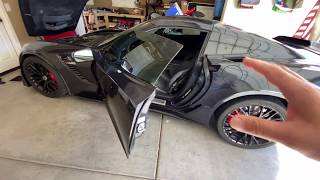
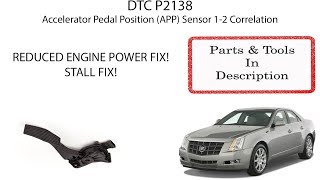
We Have This Part in Stock
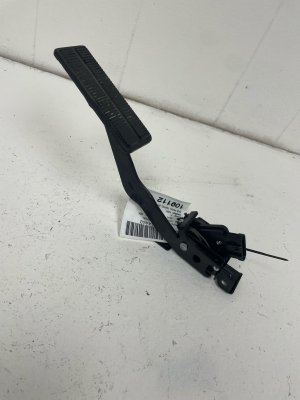

The information in this article is provided for general reference and educational purposes only. Vehicle specifications, procedures, and part compatibility can vary by production date, trim level, and region. Always consult your vehicle's factory service manual and verify part numbers before purchasing or performing repairs. Safety-critical components such as airbags, seat belts, and braking systems should be installed by a qualified professional.
- Chevrolet CORVETTE:
- 🧭 Diagnostic Flowchart
- 🎬 Helpful Videos
- 🛍️ Shop This Part
- What's Unique About the 2013-2018 Chevrolet CORVETTE
- Symptoms You May Notice
- Most Likely Causes
- Rare But Worth Checking
- Diagnosis Steps
- Parts You'll Likely Need
- Related Codes That Often Appear With This One
- Technical Service Bulletins (TSBs) & Recalls
- Platform-Specific Known Issues
- Mechanic-Grade Diagnostic Values
- Scan Tool Commands That Help
- Wiring & Ground Locations
- Real Owner Repair Stories
- When the Usual Fixes Don't Work
- OEM Part Supersession History
- Model Year Variations Within This Range
- 🎟️ Get 5% Off