

P2138 on 2005-2012 Chevrolet Equinox: Reduced Power Causes and Fixes
On a 2005-2012 Equinox, P2138 with a 'Reduced Engine Power' message is most often caused by a faulty wiring connection at the instrument panel-to-body harness connector or a failing accelerator pedal sensor. The wiring issue is a well-documented problem covered by GM Technical Service Bulletin #07-06-04-019F, which points to water intrusion and corrosion in the connector located in the driver's side kick panel area.
- P2138 on a Chevy Equinox almost always results in 'Reduced Engine Power' mode for safety.
- Before buying any parts, inspect the wiring. Check the connector at the throttle body and the IP-to-body harness connector near the driver's kick panel for corrosion, as this is a known GM issue.
- Do not automatically assume the accelerator pedal or throttle body is bad. Owner reports and TSBs show that wiring is a very common culprit.
- If a sensor replacement is needed, the accelerator pedal assembly is a more frequent failure point than the entire throttle body.
What's Unique About the 2005-2012 Chevrolet EQUINOX

For this generation of Equinox and its platform mates like the Pontiac Torrent and Saturn Vue, the P2138 code is very frequently linked to a specific wiring problem, not just a failed sensor. Manufacturer TSBs #07-06-04-019E and its revision #07-06-04-019F point directly to water intrusion causing corrosion in the instrument panel-to-body harness connector. This connector, often found in the driver's side kick panel, carries the critical accelerator pedal signals. This means that simply replacing the pedal or throttle body often fails to fix the problem, a scenario confirmed by numerous owner complaints and forum discussions.
Diagnostic Flowchart

Tap your situation to follow the diagnostic path that matches what you're seeing on this vehicle.
Generation note: This range covers the entire first generation (2005-2009) and the first three years of the second generation (2010-2012) Equinox. The TSBs related to this issue apply to vehicles in both generations, indicating the underlying cause, particularly the IP-to-body harness wiring issue, is common across this entire year span and also affects platform mates like the Pontiac Torrent, Saturn Vue, and GMC Terrain.
Symptoms You May Notice
- "Reduced Engine Power" message on the dashboard.
- Check Engine Light is on.
- Poor, delayed, or no acceleration.
- Vehicle won't accelerate past a certain low speed (limp mode).
- Unstable or high idle.
- "Service Stabilitrak" or "Service Traction Control" message may also appear.
- Sudden loss of power while at cruising speed.
- Replacing the accelerator pedal when the actual fault is in the IP-to-body wiring harness. An owner complaint to the NHTSA (ODI #11588456) and forum posts confirm that replacing the pedal alone does not always fix the issue, pointing to the TSB-identified wiring problem.
- Replacing the throttle body without first inspecting the wiring and connectors. The TSBs strongly point to wiring as a primary cause, making it a more likely and cheaper starting point than replacing the expensive throttle body itself.
Most Likely Causes

- Wiring/Connector Issue at IP to Body Harness 🔴 High Probability GM issued TSBs #07-06-04-019E and #070604019F specifically for this problem. Water can leak past A-pillar seals, sunroof drains, or windshield sealing and enter the instrument panel-to-body harness connector (sometimes called C209), causing corrosion and voltage discrepancies between the APP sensor circuits.
How to confirm: Disconnect the battery. Locate and disconnect the large harness connector in the driver's side kick panel area. Visually inspect both male and female sides for any signs of water intrusion, green or white corrosion, or backed-out pins.
Typical fix: Clean the corroded terminals carefully with a terminal cleaning tool and electrical contact cleaner. Apply dielectric grease to the connector before reassembly to prevent future moisture intrusion.
Est. part cost: $15-$40 for a connector pigtail - Faulty Accelerator Pedal Position (APP) Sensor 🟡 Medium Probability → Shop Accelerator Pedal Assembly The APP sensor is integrated into the accelerator pedal assembly. It is a high-use electronic component that can wear out, causing its internal sensors to send erratic or mismatched signals to the ECM.
How to confirm: Use a scan tool to monitor the live data for APP Sensor 1 and APP Sensor 2. The voltage readings should sweep smoothly and in correlation (one may rise while the other falls, but they should be consistent) as the pedal is pressed. A jumpy, flat, or non-responsive signal from one sensor indicates a bad pedal assembly.
Typical fix: Replace the entire accelerator pedal assembly. This is typically held on by two or three 10mm nuts and is a straightforward replacement.
Est. part cost: $50-$150 - Faulty Throttle Body Assembly ⚪ Low Probability → Shop Fuel Injection Throttle Body The throttle body contains the electronic throttle plate motor and its own set of Throttle Position Sensors (TPS). Carbon buildup can cause the plate to stick, or the internal sensors can fail, creating a conflict with the APP sensor signals.
How to confirm: First, try cleaning the throttle body bore and plate with a dedicated cleaner. If the problem persists, test the TPS sensors using a scan tool, similar to testing the APP sensor. Also inspect the 8-pin connector at the throttle body for corrosion or loose pins.
Typical fix: Clean the throttle body. If cleaning doesn't work or the sensors are confirmed to be faulty via scan tool data, the entire throttle body assembly must be replaced.
Est. part cost: $150-$300
Rare But Worth Checking
- Failing Engine Control Module (ECM): → Shop Engine Control Module (ECM) This is a last resort. The ECM is the least likely component to fail. All other possibilities, especially wiring and sensors, should be exhaustively checked before condemning the ECM.
- Low Battery Voltage / Poor Grounds: On some GM vehicles, if the battery voltage drops too low or system grounds are poor, the throttle body's learned calibration can be lost, leading to correlation codes like P2138 upon startup. Ensure the battery and charging system are healthy.
Diagnosis Steps
- Read the trouble codes with an OBD-II scanner. Note any other codes that are present, especially other 5V reference circuit codes.
- Check for Technical Service Bulletins (TSBs) related to P2138 for your Equinox. TSB #07-06-04-019F is highly relevant and should be reviewed.
- Visually inspect the wiring harness and 8-pin connector at the throttle body. Ensure it is securely clipped and free of corrosion.
- Locate and inspect the Instrument Panel (IP) to body harness connector, typically found in the driver's side kick panel area. Disconnect it and check thoroughly for signs of water damage, corrosion, or pushed-out terminals as detailed in GM TSBs.
- If corrosion is found, clean the terminals carefully and apply dielectric grease. If a terminal is broken or heavily damaged, replace the connector pigtail.
- If wiring appears pristine, use a scan tool to observe live data for APP Sensor 1 and APP Sensor 2. Press the accelerator pedal slowly and watch for smooth, corresponding changes in voltage. Any jumps or dropouts indicate a faulty pedal sensor.
- Perform the same live data test for the Throttle Position Sensors (TPS 1 and TPS 2) to check for smooth operation.
- If the pedal sensor signals are erratic, replace the accelerator pedal assembly.
- If the throttle position sensor signals are erratic, first clean the throttle body thoroughly. If the issue persists, replace the throttle body assembly.
- Check battery voltage and main engine/chassis ground connections to rule out low voltage issues.
Parts You'll Likely Need

- Accelerator Pedal Assembly
(OEM #25832864)— This assembly contains the APP sensors that are a common point of failure. It is often replaced when wiring issues are ruled out. This is the complete pedal unit.
Trusted brands: ACDelco, Dorman, Standard Motor Products
OEM price range: $80-$150
Aftermarket price range: $50-$100 - Throttle Body Connector Pigtail
(OEM #PT2628)— The TSBs indicate wiring and connector issues are a primary cause. If the 8-pin connector at the throttle body is corroded or damaged, this pigtail is needed for the repair.
Trusted brands: ACDelco, Dorman
OEM price range: $25-$40
Aftermarket price range: $15-$25 - Throttle Body Assembly — If the internal Throttle Position Sensors (TPS) have failed or the unit is damaged beyond cleaning, the entire assembly needs to be replaced.
Trusted brands: ACDelco, Hitachi, Delphi
OEM price range: $200-$300
Aftermarket price range: $150-$220
Related Codes That Often Appear With This One
- P1125 — This is a GM-specific code for Accelerator Pedal Position System, often set alongside P2138.
- P2125 — This code also relates to the Throttle/Pedal Position Sensor ('E' circuit), indicating a broader issue within the pedal sensor system.
- P0700 — This is a Transmission Control System Malfunction code. The engine computer may send this generic fault to the transmission controller when a severe engine issue like P2138 occurs.
Technical Service Bulletins (TSBs) & Recalls
- Bulletin #07-06-04-019E: Addresses intermittent MIL, Reduced Engine Power, and DTC P2138 ca
Platform-Specific Known Issues
- A known issue, documented in GM TSBs #07-06-04-019E and #070604019F, involves water intrusion into the instrument panel-to-body harness connector, causing corrosion and triggering DTC P2138. The source of the water leak can be clogged sunroof drains, a bad windshield seal, or faulty A-pillar seals.
Mechanic-Grade Diagnostic Values
- 5V Reference Voltage at APP Connector — expected: 4.8-5.2 V between the 5V reference circuit terminal and ground.. Failure: Voltage outside this range indicates a problem with the ECM or wiring.
- APP Sensor Low Reference Circuit Resistance — expected: Less than 5 ohms between the low reference circuit terminal and ground.. Failure: Resistance greater than 5 ohms suggests an open or high resistance in the ground circuit.
- APP Sensor 1 and 2 Signal Voltage (Scan Tool) — expected: With the pedal at rest, both sensor voltages should be steady and within a specific range (e.g., APP1 ~0.6-0.9V, APP2 ~1.3-1.5V). As the pedal is depressed, one voltage should rise smoothly while the other falls smoothly, maintaining a consistent correlation.. Failure: Jumpy, erratic, or non-responsive voltage from either sensor during pedal sweep indicates a faulty APP sensor assembly.
- APP Sensor Internal Resistance — expected: Typically 3-5 kΩ between certain pins, which changes as the pedal is moved.. Failure: An open circuit (infinite resistance) or a short (zero resistance) indicates a failed sensor.
Scan Tool Commands That Help
- GM Tech2 / GDS2 or compatible professional scanner: Throttle/Idle Learn — This function should be used after replacing the throttle body or sometimes the ECM. It forces the computer to learn the new closed and wide-open throttle positions. Failure to perform this may result in an unstable idle or persistent codes.
- GM Tech2 / GDS2 or compatible professional scanner: Live Data Graphing (APP1 vs. APP2) — This is the primary diagnostic step to confirm a faulty accelerator pedal. By graphing the two APP sensor voltages simultaneously, a technician can easily spot any dropouts, spikes, or moments where the signals lose their correlation as the pedal is operated.
Wiring & Ground Locations
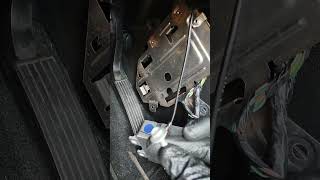
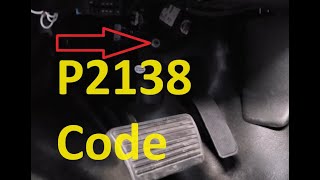
- IP-to-Body Harness Connector (X209) — Located in the driver's side kick panel area, near the floor.. This is the specific connector identified in GM TSB #07-06-04-019F as being prone to water intrusion and corrosion, which directly interrupts the APP sensor signals traveling to the ECM, causing P2138.
- G103 — Located at the left rear of the engine compartment on the cowl, often above the brake booster.. This is a major ground distribution point that grounds the Body Control Module (BCM) and the Data Link Connector (DLC). While not a direct ground for the APP sensor itself, a poor connection here can cause widespread communication issues and electrical gremlins that could mimic sensor failures.
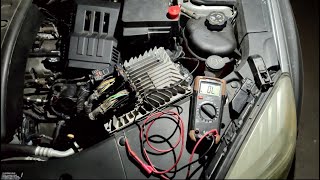
- ECM/PCM Grounds — The ECM has dedicated ground wires in its main connectors. For the 2.4L engine, these are large black and white wires in the top left terminal of each main ECM connector.. The APP sensor circuits are referenced to ground through the ECM. A poor ECM ground can cause voltage offsets and unstable readings on the 5V reference circuits, leading to correlation codes like P2138.
- APP Sensor Connector — Directly plugs into the top of the accelerator pedal assembly.. This 6-pin connector is the first point of connection from the sensor. Loose pins, corrosion, or damage here will cause an immediate P2138. It contains two 5V reference circuits, two signal circuits, and two low reference (ground) circuits.
Real Owner Repair Stories
- YouTube channel 'Sam's Automotive' (2005 Chevrolet Equinox 3.4L) — Codes P1125, P2125, and P2138 were present.
❌ Tried (didn't work) Replacing the throttle body with a brand new part., Replacing the accelerator pedal assembly with a brand new part.
✅ What actually fixed it Replacing the Powertrain Control Module (PCM/ECM) with a used unit from a junkyard that had matching part numbers resolved all codes. The original PCM was faulty. - Chevy Equinox Forum user (2012 Chevrolet Equinox, 192k miles) — Reduced Engine Power, Service Stabilitrak message, and code P2138.
❌ Tried (didn't work) Replacing the accelerator pedal assembly with an OEM part., Replacing the throttle body with an OEM part., Performing a manual idle relearn procedure (idle 3 min, off 5 min, idle 3 min).
✅ What actually fixed it The forum thread shows the user tried the common parts replacements without success and was still seeking a solution, highlighting the common misdiagnosis loop. The final fix was not posted, but the story is valuable as a cautionary tale against replacing parts without diagnosing the wiring first, which is the next logical step suggested by other users.
When the Usual Fixes Don't Work
- A significant counter-narrative to the common 'replace the pedal' advice is found in owner complaints and repair stories. NHTSA ODI #11588456 explicitly states that replacing the accelerator pedal with an OEM part did not resolve the P2138 code, strongly suggesting the fault was elsewhere, likely in the wiring as per TSB #07-06-04-019F. Furthermore, a documented repair on a 2005 Equinox showed that even after replacing both the pedal and the throttle body, the codes remained until the ECM itself was replaced, indicating it was the true point of failure. These cases prove that while the pedal is a common cause, it is not the only cause, and a full diagnosis of the wiring and ECM should be considered before committing to expensive parts.
OEM Part Supersession History
15101848, 15847349→25832864— Part consolidation and potential design updates by GM over the vehicle's lifecycle.
Heads up: While part 25832864 is the common service replacement, it's critical to verify the connector type. Some earlier models used a different connector design. Always match the new part to the old one visually before installation.
Model Year Variations Within This Range
- 2005-2009 vs 2010-2012: The first generation (2005-2009) and second generation (2010-2012) have different interior architectures and dash designs, which can slightly alter the exact location and access method for the IP-to-body harness connector (X209). However, the connector's function and vulnerability to water intrusion remain the same. The accelerator pedal assembly itself may have different connector types between early and late first-gen models.
Helpful Videos


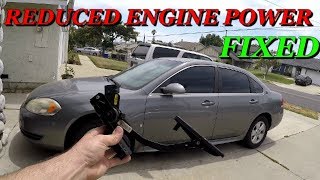
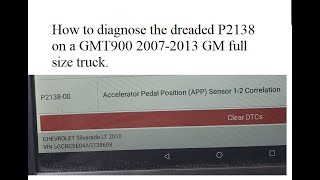
We Have This Part in Stock
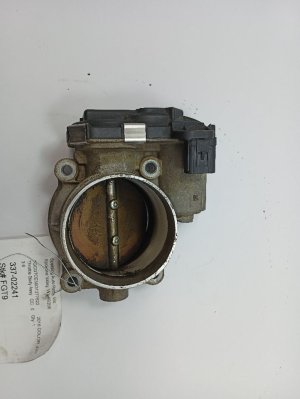
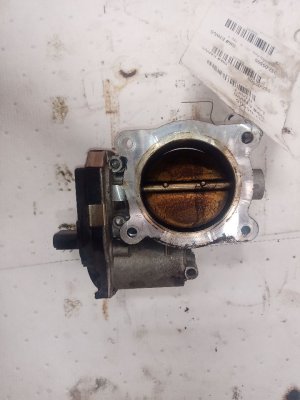

The information in this article is provided for general reference and educational purposes only. Vehicle specifications, procedures, and part compatibility can vary by production date, trim level, and region. Always consult your vehicle's factory service manual and verify part numbers before purchasing or performing repairs. Safety-critical components such as airbags, seat belts, and braking systems should be installed by a qualified professional.
- Chevrolet EQUINOX:
- 🧭 Diagnostic Flowchart
- 🎬 Helpful Videos
- 🛍️ Shop This Part
- What's Unique About the 2005-2012 Chevrolet EQUINOX
- Symptoms You May Notice
- Most Likely Causes
- Rare But Worth Checking
- Diagnosis Steps
- Parts You'll Likely Need
- Related Codes That Often Appear With This One
- Technical Service Bulletins (TSBs) & Recalls
- Platform-Specific Known Issues
- Mechanic-Grade Diagnostic Values
- Scan Tool Commands That Help
- Wiring & Ground Locations
- Real Owner Repair Stories
- When the Usual Fixes Don't Work
- OEM Part Supersession History
- Model Year Variations Within This Range
- 🎟️ Get 5% Off