

P2138 on 2005-2010 Chevrolet Silverado 2500: Causes and Fixes for Reduced Engine Power
On a 2005-2010 Silverado 2500, code P2138 is most often caused by a faulty accelerator pedal position (APP) sensor or a poor electrical connection. This triggers the 'Reduced Engine Power' warning. Before replacing the pedal assembly (around $50-$180), inspect the IP-to-body harness connector (often labeled C206 or X202) in the driver's kick panel for green or white corrosion, a common issue noted in GM Technical Service Bulletin #07-06-04-019F.
- P2138 on a 2005-2010 Silverado 2500 will cause the truck to enter 'Reduced Engine Power' mode for safety.
- Before replacing any parts, inspect the large IP-to-body harness connector in the driver's kick panel for corrosion, as this is a very common cause identified in a GM Technical Service Bulletin.
- If wiring and connectors are good, the most likely fix is to replace the entire accelerator pedal assembly, which is a DIY-friendly job.
- Do not mistake this for a throttle body issue; P2138 almost always points to the accelerator pedal or its associated wiring on this truck.
What's Unique About the 2005-2010 Chevrolet SILVERADO 2500
For this generation of Silverado and its platform mates, the P2138 code is very frequently caused by wiring and connector issues, not just a failed pedal. GM has issued a well-known Technical Service Bulletin (TSB #07-06-04-019F) that points to water intrusion into the Instrument Panel (IP)-to-body harness connector as a primary cause. This connector, located in the driver's side kick panel, is vulnerable to water leaks from the A-pillar, windshield, or sunroof drains, leading to corrosion that disrupts the pedal sensor signals. This makes a thorough inspection of this specific connector a critical first step before replacing any parts, a fact repeatedly emphasized by technicians and in GM's own documents.
Diagnostic Flowchart
Tap your situation to follow the diagnostic path that matches what you're seeing on this vehicle.
Generation note: The 2005-2010 year range covers two Silverado generations: the first generation (GMT800), which ended with the 2007 'Classic' models, and the second generation (GMT900), which began in 2007. While the underlying cause of P2138 is similar for both, parts like the accelerator pedal assembly are not interchangeable. The GMT900 models are the primary subject of the TSBs regarding water intrusion. Always verify the correct part for your specific model year and pedal type (fixed vs. adjustable).
Symptoms You May Notice
- "Reduced Engine Power" message on the instrument cluster.
- Check Engine Light (Malfunction Indicator Lamp) is on.
- Poor or non-responsive acceleration.
- Vehicle may stall when coming to a stop.
- Unstable or rough idle.
- Traction control light may illuminate simultaneously.
- Replacing the throttle body. P2138 specifically refers to a correlation error between the two sensors in the accelerator pedal assembly. A throttle body position sensor correlation error would typically set a P2135 code.
- Replacing the accelerator pedal without checking wiring first. Many owners and even some shops replace the pedal assembly, only to have the code return because the actual fault was corrosion in the IP-to-body harness connector, as detailed in TSB #07-06-04-019F.
Most Likely Causes
- Corroded or Damaged IP-to-Body Harness Connector 🔴 High Probability → Shop Body Wiring Harness As documented in TSB #07-06-04-019F, this connector (may be labeled C206, X202, or X101 depending on the specific diagram) is in the driver's kick panel and is highly susceptible to water intrusion from leaking windshield seals, A-pillar seams, or sunroof drains. The resulting corrosion on the APP sensor circuit pins causes the voltage mismatch.
How to confirm: Disconnect the battery. Remove the driver's kick panel trim to access the large connector. Disconnect it and meticulously inspect both male and female sides for any signs of moisture, green/white corrosion, or backed-out pins. A water hose test on the windshield and A-pillar area may reveal the source of the leak.
Typical fix: Clean the connector terminals carefully with a dedicated contact cleaner and a small nylon brush. If corrosion is severe, the affected terminals, the entire connector, or the wiring itself may need to be replaced. After cleaning/repair, apply a small amount of dielectric grease to the connector seal to help prevent future moisture intrusion and find and fix the source of the water leak. 🎬 Watch: How to fix the reduced engine power message.
Est. part cost: $5-$50 - Faulty Accelerator Pedal Position (APP) Sensor 🔴 High Probability → Shop Accelerator Pedal Assembly The internal resistive strips or sensors within the pedal assembly can wear out over time, causing their signals to drift, become erratic, or no longer correlate, especially after many miles and years of use.
How to confirm: Use a scan tool to monitor the live data for APP Sensor 1 and APP Sensor 2. The voltage readings should move smoothly and in a predictable, correlated manner as you press and release the pedal. Jumps, dropouts, or a lack of signal from one sensor indicates a faulty pedal. A 'wiggle test' on the pedal's harness while watching the data can also reveal intermittent connection issues.
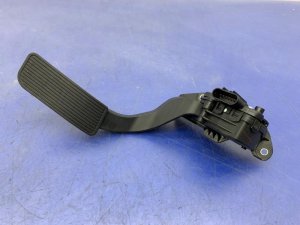
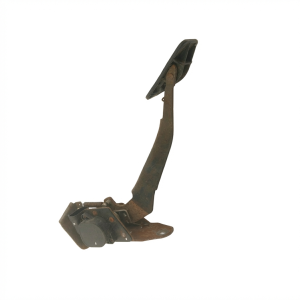
Typical fix: Replace the entire accelerator pedal assembly. It is a single unit that contains both sensors and is held on by two 10mm bolts. 🎬 See this walkthrough for replacing the accelerator pedal assembly.
Est. part cost: $50-$180 - Damaged Wiring or Poor Connection at the APP Sensor 🟡 Medium Probability The wiring harness connector at the pedal itself can become loose, and the terminals can lose tension or fret (micro-vibrations causing wear), leading to an intermittent connection. This is addressed in TSB #PIP3783D.
How to confirm: Inspect the electrical connector plugged directly into the accelerator pedal assembly. Check for loose or backed-out pins, corrosion, or damaged wires. Wiggle the connector while monitoring live sensor data on a scan tool to see if the voltage readings fluctuate.
Typical fix: Repair the wiring or replace the pigtail connector if damaged. Ensure the connector is fully seated and the terminals have good tension. Some technicians may run new, dedicated wires from the pedal to the ECM to bypass problematic factory connectors entirely.
Est. part cost: $15-$40
Rare But Worth Checking
- Faulty Powertrain Control Module (PCM): → Shop Engine Control Module (ECM) This is rare. The PCM is the last item to suspect after all other possibilities, including sensors and all wiring/connectors, have been thoroughly ruled out. One owner on a forum diagnosed a bad PCM after finding high internal resistance on the low-reference circuits.
- Aftermarket Accessories: Improperly installed aftermarket electronics (like remote starters or performance tuners) tapped into 5-volt reference circuits can interfere with sensor readings and trigger a P2138 code. TSB #07-06-04-019F specifically calls this out as a preliminary check.
- Corroded Main Engine/Body Ground Straps: On trucks used in salty or wet climates, the main braided ground straps (e.g., from the frame to the body) can corrode internally. This can cause a floating ground and create intermittent, hard-to-diagnose electrical issues, including sensor correlation codes like P2138.
Diagnosis Steps
- Scan for Codes: Read all diagnostic trouble codes. Note if P2138 is accompanied by any other codes, especially P2135 or APP circuit-specific codes.
- Inspect IP-to-Body Harness Connector: This is the most critical vehicle-specific step. Following GM TSB #07-06-04-019F, disconnect the battery, then locate the large harness connector in the driver's side kick panel. Disconnect it and inspect thoroughly for signs of water damage or green/white corrosion. This is the most common cause.
- Clean and Seal Connector: If corrosion is found, clean the terminals with electrical contact cleaner and a nylon brush. Allow to dry completely, then apply a thin layer of dielectric grease to the connector's weather seal before reconnecting. The source of the water leak must also be found and repaired.
- Inspect Wiring at Pedal: Visually inspect the electrical connector and wiring harness at the accelerator pedal assembly for any obvious damage, looseness, or corrosion. Perform a 'wiggle test' on the harness while observing live data.
- Analyze Live Data: Use a scan tool to view the live data streams for APP Sensor 1 and APP Sensor 2. The voltage values should be different but should change in direct correlation as the pedal is slowly pressed and released. For example, one may sweep from 0.5V to 2.5V while the other sweeps from 1.0V to 4.5V. Look for any spikes, dropouts, or erratic behavior from either sensor.
- Test Circuits: If a sensor signal is faulty and connectors are clean, test the 5-volt reference, low reference (ground), and signal circuits between the PCM and the APP sensor connector for continuity and shorts to ground/power.
- Replace APP Sensor: If all wiring and connectors are confirmed to be good and the live data shows a faulty sensor, replace the accelerator pedal assembly.
- Verify Repair: Clear the codes and perform a test drive to ensure the issue is resolved and the P2138 code does not return.
Parts You'll Likely Need
- Accelerator Pedal Position (APP) Sensor Assembly
(OEM #25832864 (Common for GMT900, 2007.5-2010). GMT800 (2005-2007 Classic) uses a different part number; always verify by VIN.)— This is the most common part to fail and cause a P2138 code after wiring issues have been ruled out. The assembly contains both sensors and is replaced as a single unit. Part #25832864 is a common replacement for GMT900 trucks.
Related Codes That Often Appear With This One
- P2135 — This code indicates a correlation error with the Throttle Position Sensors (TPS) on the throttle body. While P2138 points to the pedal, a general electrical issue in the 5-volt reference circuit or a failing PCM could potentially cause both codes.
- P2122, P2123, P2127, P2128 — These are circuit-specific codes for the APP sensors (e.g., circuit low, circuit high). They often accompany P2138 and can help pinpoint whether the issue is with APP sensor 1 or 2, or a specific wire in the circuit.
Technical Service Bulletins (TSBs) & Recalls
- 07-06-04-019F: Intermittent Malfunction Indicator Lamp (MIL) Illuminated, DTC P2138 with Reduced Engine Power (Repair Instrument Panel (IP) to Body Harness Connector). This is the primary document for diagnosing this code on this vehicle.
- PIP3783D: This bulletin addresses poor terminal tension in the APP sensor circuits which can also lead to P2138.
Platform-Specific Known Issues
- TSB #07-06-04-019F: IP-to-Body Harness Connector Corrosion: → Shop Body Wiring Harness This is the primary document for diagnosing P2138 on these vehicles. It explicitly states the cause is often water intrusion into the IP-to-body harness connector, causing corrosion and a voltage mismatch. It warns technicians NOT to replace the pedal assembly before inspecting this connector. The water source is often a leak from the A-pillar, windshield, or sunroof drains.
- TSB #PIP3783D: Poor Terminal Tension: This bulletin points to poor terminal tension in the APP sensor circuits as another potential cause for codes like P2138. This can happen at the pedal connector itself or at other connectors in the harness, reinforcing the need for thorough wiring inspection.
Mechanic-Grade Diagnostic Values
- APP Sensor 1 Voltage (Scan Tool) — expected: 0.35V - 4.75V, sweeping smoothly with pedal movement.. Failure: Voltage is jumpy, stuck, outside the range, or doesn't change with pedal input. The ECM may set the DTC if voltage is <0.325V or >4.75V for more than 0.4 seconds.
- APP Sensor 2 Voltage (Scan Tool) — expected: 0.32V - 4.75V, sweeping smoothly with pedal movement. The signal should be roughly half of Sensor 1's voltage at any given position.. Failure: Voltage is jumpy, stuck, outside the range, or doesn't correlate with Sensor 1. The ECM may set the DTC if voltage is <0.325V or >4.75V for more than 0.4 seconds.
- 5-Volt Reference at APP Connector — expected: 4.8V - 5.2V (Key On, Engine Off). Failure: Voltage outside this range indicates a problem with the wiring or the ECM's 5V reference circuit.
- Low Reference Circuit Resistance to Ground — expected: Less than 5 ohms. Failure: Resistance greater than 5 ohms indicates an open or high resistance in the ground circuit for the sensor, which can cause erratic readings.
Scan Tool Commands That Help
- Tech2 / GDS2 / Professional Scan Tool: Live Data Graphing (APP Sensor 1 vs. APP Sensor 2) — This is the primary diagnostic step. Graphing both APP sensor voltages simultaneously while slowly pressing and releasing the pedal makes it easy to spot glitches, dropouts, or non-correlation that would be missed by looking at numbers alone.
- Tech2 / GDS2 / Professional Scan Tool: APP Sensor Agree/Disagree Parameter — Some GM software provides a specific parameter that will read 'Agree' or 'Disagree'. If it reads 'Disagree' at any point while operating the pedal, it confirms the fault the ECM is seeing.
- N/A: Idle Relearn / Throttle Relearn Procedure — While some GM vehicles require a specific idle or throttle relearn procedure after service, for a P2138 fix involving only the accelerator pedal, a simple battery disconnection during the repair is usually sufficient. The ECM will relearn the new pedal's baseline values on its own after startup. No special scan tool function is typically required.
Wiring & Ground Locations
- APP Sensor Connector (at pedal) — Directly plugged into the accelerator pedal assembly, under the driver's side dashboard.. This is the starting point for the entire circuit. The 6 pins are typically: Pin A (Low Ref 2), Pin B (APP 2 Signal), Pin C (5V Ref 2), Pin D (Low Ref 1), Pin E (APP 1 Signal), Pin F (5V Ref 1). Damage or poor terminal tension here is a primary cause of P2138.
- IP-to-Body Connector (C206 / X202 / X101) — Large multi-pin connector located in the driver's side kick panel area, near the floor.. This is the connector identified in TSB #07-06-04-019F as being highly vulnerable to water intrusion. The APP sensor signal, 5V reference, and low reference wires all pass through this connector, and corrosion on these specific pins is the most common vehicle-specific cause of P2138.
- ECM Connector J1 (at E38 ECM) — The top connector (J1) on the E38 Engine Control Module, located in the engine bay.. This is the destination for the APP sensor signals. A technician may need to test for continuity and voltage at the specific pins for APP1 (Pin 29) and APP2 (Pin 32) on this connector to rule out a wiring break between the kick panel and the ECM.
- G103 / G104 (Engine Grounds) — G103 is typically on the left front of the engine block. G104 is often on the passenger side rear of the cylinder head.. The ECM and its sensors rely on a solid ground connection to the engine block and chassis. While not a direct cause, a corroded or loose main engine ground can create floating voltages and intermittent electrical issues across multiple systems, potentially including a P2138 code.
Real Owner Repair Stories
- GMTNation forum user (2008 Silverado 4.8L) — P2138 code present, no throttle response at all (engine RPM does not increase when pedal is pressed).
❌ Tried (didn't work) Replacing the Throttle Body, Replacing the Accelerator Pedal Assembly
✅ What actually fixed it The user was still diagnosing, but the fact that replacing both the pedal and throttle body did not fix the issue strongly points to a wiring problem between the components (like the known C206 connector issue) or a faulty ECM, which is a common pattern for this code. - Reddit user /u/HayBarrel18 (2017 Silverado 1500 LT (Note: Newer generation but same code and principle)) — Intermittent P2138 and reduced power mode at random times, even with just the key on, engine off.
❌ Tried (didn't work) Replacing the accelerator pedal, Replacing the throttle body, Replacing the wiring harness from the accelerator pedal to the ECM, Multiple dealership visits that could not replicate the issue
✅ What actually fixed it The user did not post a final resolution, but their experience of replacing all common components without success highlights the difficulty of diagnosing intermittent wiring faults or a potential intermittent ECM failure. One commenter suggested a bad ground near the driver's A-pillar.
OEM Part Supersession History
15847349, 15101848→25832864— Standard part evolution and consolidation by GM.
Heads up: Part #25832864 is specified for many GMT900 trucks (approx. 2007.5-2013) with adjustable pedals. It is critical to verify the correct part number by VIN, as non-adjustable pedal trucks and GMT800 (2005-2007 Classic) trucks use different parts that are not interchangeable.
Model Year Variations Within This Range
- 2005-2007 'Classic' (GMT800): These models use a different accelerator pedal assembly part number than the GMT900 trucks. While they can still suffer from P2138, the widespread issue of water intrusion into the C206 kick panel connector is more thoroughly documented and prevalent on the 2007.5+ GMT900 platform.
- 2007.5-2010 (GMT900): These are the primary models affected by the water intrusion issue detailed in TSB #07-06-04-019F. The design of the A-pillar, windshield sealing, and kick panel connector (C206/X202) makes them particularly prone to this specific failure mode for P2138.
Helpful Videos
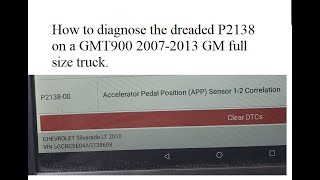
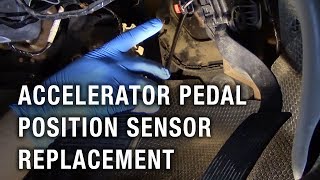
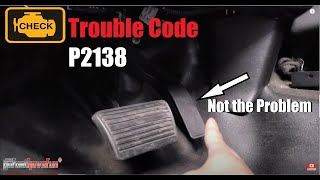
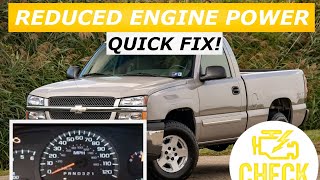
We Have This Part in Stock

The information in this article is provided for general reference and educational purposes only. Vehicle specifications, procedures, and part compatibility can vary by production date, trim level, and region. Always consult your vehicle's factory service manual and verify part numbers before purchasing or performing repairs. Safety-critical components such as airbags, seat belts, and braking systems should be installed by a qualified professional.
- Chevrolet SILVERADO 2500:
- 🧭 Diagnostic Flowchart
- 🎬 Helpful Videos
- 🛍️ Shop This Part
- What's Unique About the 2005-2010 Chevrolet SILVERADO 2500
- Symptoms You May Notice
- Most Likely Causes
- Rare But Worth Checking
- Diagnosis Steps
- Parts You'll Likely Need
- Related Codes That Often Appear With This One
- Technical Service Bulletins (TSBs) & Recalls
- Platform-Specific Known Issues
- Mechanic-Grade Diagnostic Values
- Scan Tool Commands That Help
- Wiring & Ground Locations
- Real Owner Repair Stories
- OEM Part Supersession History
- Model Year Variations Within This Range
- 🎟️ Get 5% Off