

P2138 on 2005-2012 Chevrolet Tahoe: Causes for Reduced Engine Power
On a 2005-2012 Tahoe, P2138 almost always points to a faulty Accelerator Pedal Position (APP) sensor or its wiring. This triggers a dangerous 'Reduced Engine Power' mode. Before replacing the pedal assembly (GM Part #25832864, ~$50-$150), you MUST inspect the wiring and the IP-to-body harness connector in the driver's kick panel for water damage and corrosion, as this is a very common root cause documented in GM service bulletin #07-06-04-019F.
- P2138 on a 2005-2012 Tahoe indicates a critical fault with the accelerator pedal's sensors, causing the vehicle to enter a dangerous 'Reduced Engine Power' mode.
- Do not drive the vehicle. The risk of stalling or having no acceleration in traffic is high.
- Before replacing the accelerator pedal assembly, thoroughly inspect the wiring and connector at the pedal for damage or loose pins. This is a very common point of failure.
- Be aware of the known TSBs related to water intrusion and poor connections in the body harness, especially on 2007-2012 models. Check the driver's kick panel for moisture.
- Diagnosis with a scan tool that can read live data is the most effective way to confirm whether the pedal sensor itself has failed.
What's Unique About the 2005-2012 Chevrolet TAHOE
On this generation of GM trucks, including the Tahoe, the P2138 code is notoriously linked to specific, well-documented issues. Multiple Technical Service Bulletins (TSBs), most notably #07-06-04-019F, point not just to the pedal sensor itself, but to problems with the wiring and connectors between the pedal and the engine computer. Water intrusion into the large Instrument Panel (IP)-to-body harness connector, located in the driver's side kick panel, causes corrosion on the APP sensor circuit pins. 🎬 Watch: See how to fix the common kick panel connector issue. This corrosion is frequently the true root cause, leading many owners to mistakenly replace the pedal assembly when the real fault is in the wiring.
Diagnostic Flowchart
Tap your situation to follow the diagnostic path that matches what you're seeing on this vehicle.
Generation note: The 2005-2012 year range covers two Tahoe generations: the GMT800 (2005-2006) and the GMT900 (2007-2012). While the P2138 code can occur on both, the most widely documented issues with wiring connectors and TSBs specifically reference the GMT900 platform. However, the fundamental causes and diagnostic principles apply to both generations, as the drive-by-wire system is conceptually similar.
Symptoms You May Notice
- "Reduced Engine Power" message on the instrument cluster
- Check Engine Light is on
- Vehicle will not accelerate or has very poor throttle response
- Engine may stall unexpectedly.
- "Service StabiliTrak" or "Traction Control Off" message may illuminate.
- Harsh or erratic transmission shifting after the event.
- Replacing the throttle body. While related to acceleration, the throttle body has its own set of diagnostic codes (like P2135). P2138 specifically points to a correlation issue at the accelerator pedal sensors, making the pedal assembly or its wiring the primary focus.
- Replacing the APP sensor without checking the wiring. Many owners replace the pedal assembly only to have the P2138 code return because the actual problem was corrosion in the IP-to-body harness connector.
Most Likely Causes
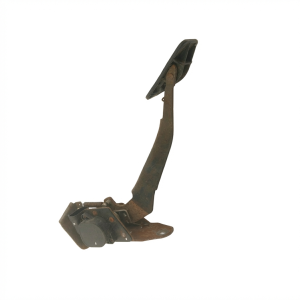
- Faulty Accelerator Pedal Position (APP) Sensor 🔴 High Probability → Shop Accelerator Pedal Assembly The internal electronic components and brushes of the sensor wear out over time, causing the two internal signals to stop correlating, creating voltage drops or spikes. It is a common failure item.
How to confirm: Use a scan tool with live data to monitor APP Sensor 1 and APP Sensor 2 voltages while slowly pressing the pedal. The voltages should change smoothly and in a predictable, opposing manner 🎬 Watch: A diagnostic walkthrough using wiring diagrams and live data. (e.g., one goes 1V to 4V, the other 4V to 1V). A jump, drop, or flat-line in one of the signals indicates a bad sensor.
Typical fix: Replace the entire accelerator pedal assembly. It is a single, non-serviceable unit.
Est. part cost: $50-$150 - Wiring Harness or Connector Issues 🔴 High Probability GM has issued multiple TSBs (e.g., #07-06-04-019F) for this exact problem. The primary culprit is water intrusion into the instrument panel-to-body harness connector, located in the driver's kick panel area. Leaks from A-pillar seals, sunroof drains, or windshield seals allow water to drip onto this connector, causing corrosion and voltage discrepancies between the APP sensor circuits.
How to confirm: Visually inspect the connector at the accelerator pedal. Wiggle the connector and harness while watching live data for any changes. Pull back the driver's side kick panel and locate the large IP-to-body harness connector. Disconnect it and inspect for any signs of moisture or green/white corrosion on the pins.
Typical fix: Repairing the wiring, cleaning corroded terminals with a specialized cleaner, applying dielectric grease, and fixing the source of the water leak. In severe cases, replacing the connector pigtail or running new wires from the pedal to the ECM may be necessary.
Est. part cost: $15-$75 - Dirty or Faulty Throttle Body ⚪ Low Probability → Shop Fuel Injection Throttle Body While P2138 is primarily a pedal sensor code, a throttle body that is sticking due to carbon buildup can sometimes cause erratic throttle plate movements that the ECM struggles to correlate with the pedal's request. This is less common for this specific code than the pedal or wiring.
How to confirm: Visually inspect the throttle body for heavy carbon deposits. Test the throttle position sensor (TPS) on the throttle body for correct operation using a scan tool.
Typical fix: Clean the throttle body with a dedicated cleaner and a soft brush. A throttle relearn procedure may be required after cleaning.
Est. part cost: $10-$20
Rare But Worth Checking
- Faulty Engine Control Module (ECM): → Shop Engine Control Module (ECM) This is extremely rare and should only be considered a last resort. The ECM should only be suspected after all other possibilities, including the entire wiring harness between the pedal and ECM, have been exhaustively tested and ruled out.
Diagnosis Steps
- Scan the vehicle for all DTCs. Confirm P2138 is present, and note any other APP-related codes (P2122, P2123, P2127, P2128).
- Using a scan tool, monitor the live data for 'APP Sensor 1' and 'APP Sensor 2'.
- With the key on and engine off, slowly press and release the accelerator pedal. Watch the voltage readings. They should move smoothly and correlate. Any sudden jumps, drops, or freezing of one signal indicates a problem.
- Gently wiggle the wiring harness and connector at the accelerator pedal while watching the live data. If the voltage numbers jump around, the issue is in the connection.
- Crucial Step: Pull back the driver's side kick panel trim. Locate the large Instrument Panel (IP)-to-body harness connector. Disconnect it and thoroughly inspect for any signs of water intrusion, such as rust stains on nearby metal, moisture, or green/white corrosion on the connector pins.
- If water intrusion is suspected, identify and repair the source. Common leak points are faulty A-pillar seals, clogged sunroof drains, or a poorly sealed windshield.
- If the IP-to-body connector is corroded, clean the terminals carefully with an electrical contact cleaner and a small brush. Apply dielectric grease before reconnecting to prevent future moisture damage.
- If all wiring and connectors are confirmed to be clean and dry, the APP sensor itself is the most likely culprit and the pedal assembly should be replaced.
- If a new pedal assembly does not fix the issue, a more in-depth diagnosis of the wiring harness continuity between the pedal and the ECM is required.
Parts You'll Likely Need
- Accelerator Pedal Position (APP) Sensor Assembly
(OEM #25832864 (supersedes 15847349, 15101848))— This is the most common failed component for code P2138, assuming the wiring is okay. The sensor is integrated into the pedal assembly and is replaced as a single unit. 🎬 See this step-by-step guide for replacing the accelerator pedal assembly.
Trusted brands: ACDelco (Genuine GM), Dorman, Bosch
OEM price range: $100-$180
Aftermarket price range: $50-$120
Related Codes That Often Appear With This One
- P2122 — Indicates 'APP Sensor 1 Circuit Low Voltage', pointing to a specific fault within the same pedal assembly.
- P2123 — Indicates 'APP Sensor 1 Circuit High Voltage', pointing to a specific fault within the same pedal assembly.
- P2127 — Indicates 'APP Sensor 2 Circuit Low Voltage', pointing to a specific fault within the same pedal assembly.
- P2128 — Indicates 'APP Sensor 2 Circuit High Voltage', pointing to a specific fault within the same pedal assembly.
Technical Service Bulletins (TSBs) & Recalls
- 07-06-04-019F: Intermittent Malfunction Indicator Lamp (MIL) Illuminated, DTC P2138 with Reduced Engine Power (Repair Instrument Panel (IP) to Body Harness Connector). This is the most current and relevant TSB.
- 07-06-04-019E: An earlier version of the same TSB, now superseded by 'F'.
- PIP3783D: Malfunction Indicator Lamp on or reduced engine power message. Technician may find Diagnostic Trouble Codes P2120, P2122, P2123, P2125, P2127, P2128, and/or P2138. Advises inspection of APP circuits for poor terminal tension.
Platform-Specific Known Issues
- GM TSB #07-06-04-019F is the key document for this issue. It explicitly states that P2138 is often caused by water intrusion in the IP-to-body harness connector and warns technicians *not* to replace the pedal assembly without first inspecting this connector.
- Water leaks are a known issue on this platform. Poorly sealed roof-mounted antennas (GPS/OnStar), clogged sunroof drains, or failing windshield/A-pillar seals can allow water to run down the A-pillar and drip directly onto the critical harness connector in the kick panel, causing the P2138 fault.
- Owner complaints frequently cite the dangerous nature of this fault, with the vehicle suddenly losing power in traffic. One owner on a forum described the truck falling on its face during a freeway merge.
Mechanic-Grade Diagnostic Values
- APP Sensor 1 Voltage (Dark Blue wire) — expected: Approx. 0.9V at idle (pedal released) to 2.4V at wide-open throttle (WOT).. Failure: Voltage is erratic, jumps, or does not change smoothly when the pedal is pressed.
- APP Sensor 2 Voltage (Light Blue wire) — expected: Approx. 3.1V at idle (pedal released) to 2.6V at wide-open throttle (WOT). Note that this sensor's voltage decreases as the pedal is pressed.. Failure: Voltage does not correlate with Sensor 1, is erratic, or shows spikes/glitches during pedal movement.
- 5-Volt Reference Circuit — expected: Steady 5.0V at the designated reference wire at the APP sensor connector with key-on, engine-off.. Failure: Voltage is significantly lower or higher than 5.0V, or is unstable, indicating a problem with the ECM or a short in another sensor on the same circuit.
- Low Reference (Ground) Circuit Resistance — expected: Less than 5.0 ohms between the APP sensor connector's low reference pins and a known good ground.. Failure: Resistance is higher than 5.0 ohms, indicating a poor ground connection, which is a common cause of this code.
Scan Tool Commands That Help
- Tech 2 / GDS2 (GM Dealer Tool) or high-end Autel/Snap-on: Idle Learn Reset / Throttle Position Reset — This function should be used after replacing the throttle body or, in some cases, after cleaning it. It forces the ECM to relearn the closed and wide-open positions of the throttle plate. While P2138 is a pedal code, this may be required if the throttle body was serviced during diagnosis.
- Professional Scan Tool (e.g., Autel, Snap-on): Brake Pedal Position Sensor Learn — While not directly for the accelerator, a faulty or uncalibrated brake pedal position sensor can cause conflicting inputs to the ECM's torque management system. If P2138 persists after addressing the APP circuit, verifying the brake pedal sensor calibration is a valid next step.
Wiring & Ground Locations
- APP Sensor Connector (at pedal) — Directly on the top of the accelerator pedal assembly, under the driver's side dashboard.. This is the primary connection point. Pin assignments for GMT900 (2007-2012) are typically: Pin E (Dark Blue) = APP Sensor 1 Signal, Pin A (Light Blue) = APP Sensor 2 Signal. Other pins are for the 5V reference and low reference (ground) circuits. A loose connection or fretting corrosion here can cause the code.
- IP-to-Body Harness Connector — In the driver's side kick panel area, near the floor. This is a large, multi-wire connector.. This is the location specified in TSB #07-06-04-019F as the most common failure point due to water intrusion from A-pillar, sunroof, or windshield leaks. The APP sensor signals pass through this connector on their way to the ECM, and corrosion here creates the voltage discrepancy.
- G103 / G107 — These are common engine block ground locations for the GMT900 platform, typically found on the rear of the driver's side cylinder head or on the front of the engine block.. The APP sensor circuits rely on a clean low reference (ground) signal provided by the ECM, which in turn must be properly grounded to the engine block and chassis. A loose or corroded main engine ground can cause floating voltages and trigger various sensor correlation codes, including P2138.
Real Owner Repair Stories
- Tahoe Yukon Forum user (2011 Yukon XL 2500 (6.0L), ~200k miles) — P2138 code with reduced engine power.
❌ Tried (didn't work) Replaced all six wires to the accelerator pedal with a new connector plug., Replaced the accelerator pedal assembly., Replaced the throttle body assembly (including new TPS)., Cleaned sunroof drains to address known water leak., Checked all connectors for corrosion (none was visible).
✅ What actually fixed it The user diagnosed high resistance (15-50 ohms vs <5 ohm spec) internal to the ECM on the two low reference circuits for the APP sensor. The final conclusion was a faulty ECM, likely damaged by the intermittent water intrusion. - YouTube video by South Florida Technical Training (General 2007-2011 GM Trucks) — P2138, reduced engine power, especially after replacing the pedal assembly.
❌ Tried (didn't work) Replacing the accelerator pedal assembly.
✅ What actually fixed it The definitive fix for recurring issues caused by water in the IP-to-body connector is to completely bypass the problematic connector. This involves running new, dedicated wires directly from the APP sensor connector to the ECM connector pins, soldering and sealing them properly at the ECM side.
OEM Part Supersession History
15101848, 15847349→25832864— Standard part evolution, likely for improved durability or internal component changes to reduce failures.
Heads up: No known incompatibilities; this is the correct service replacement. However, after replacement, a throttle relearn procedure may be beneficial to ensure smooth idle and throttle response, even though it's not always mandatory.
Model Year Variations Within This Range
- 2005-2006 (GMT800): The accelerator pedal assembly and its sensor may have a different part number and connector design (some use a 9-wire plug vs. the later 6-wire). While the operating principle is the same, diagnostic values and pinouts may differ slightly. The IP-to-body connector water intrusion issue is less documented for this generation compared to the GMT900.
- 2007-2012 (GMT900): This is the generation most heavily referenced in TSB #07-06-04-019F for the water intrusion issue at the IP-to-body harness connector. The APP sensor is a 6-wire plug, and specific diagnostic voltage ranges are available.
Helpful Videos

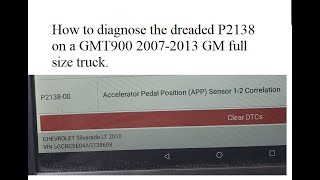
We Have This Part in Stock

The information in this article is provided for general reference and educational purposes only. Vehicle specifications, procedures, and part compatibility can vary by production date, trim level, and region. Always consult your vehicle's factory service manual and verify part numbers before purchasing or performing repairs. Safety-critical components such as airbags, seat belts, and braking systems should be installed by a qualified professional.
- Chevrolet TAHOE:
- 🧭 Diagnostic Flowchart
- 🎬 Helpful Videos
- 🛍️ Shop This Part
- What's Unique About the 2005-2012 Chevrolet TAHOE
- Symptoms You May Notice
- Most Likely Causes
- Rare But Worth Checking
- Diagnosis Steps
- Parts You'll Likely Need
- Related Codes That Often Appear With This One
- Technical Service Bulletins (TSBs) & Recalls
- Platform-Specific Known Issues
- Mechanic-Grade Diagnostic Values
- Scan Tool Commands That Help
- Wiring & Ground Locations
- Real Owner Repair Stories
- OEM Part Supersession History
- Model Year Variations Within This Range
- 🎟️ Get 5% Off