

P2138 on 2009-2016 Chevrolet Traverse: Reduced Power Causes & Fixes
On a 2009-2016 Traverse, P2138 is almost always caused by a faulty accelerator pedal position (APP) sensor or a bad wiring connection, most notably water intrusion at the IP-to-body harness connector near the driver's kick panel. The most common symptom is the 'Reduced Engine Power' message. Replacing the pedal assembly is a common fix, but inspecting the wiring first is critical to avoid misdiagnosis.
- P2138 on a 2009-2016 Traverse will almost certainly trigger the 'Reduced Engine Power' mode, making the vehicle unsafe to drive in normal traffic.
- Always inspect the wiring connector at the throttle body first. Cleaning or repairing this connector is a low-cost fix that solves the problem in many cases, as noted in official GM service bulletins.
- If the wiring is good, the next most likely cause is a failed accelerator pedal assembly. This part contains the sensors and must be replaced as a complete unit.
- A scan tool that can read live data is the most effective tool for confirming a faulty accelerator pedal sensor.
- Do not immediately replace the expensive throttle body, as it is a less common cause for this specific code than the pedal or wiring.
What's Unique About the 2009-2016 Chevrolet TRAVERSE
The first-generation Traverse and its GM Lambda platform siblings are particularly known for issues with wiring connectors. TSB #07-06-04-019F 🎬 Watch: How to inspect and clean the IP-to-body connector. specifically calls out water intrusion into the Instrument Panel (IP) to body harness connector, located near the driver's side kick panel, as a primary cause. Water from clogged sunroof drains, poor windshield seals, or A-pillar leaks can drip onto this connector, causing corrosion and the voltage discrepancy that triggers P2138. Technicians are explicitly advised to inspect and repair this water damage before replacing the pedal or throttle body.
Diagnostic Flowchart
Tap your situation to follow the diagnostic path that matches what you're seeing on this vehicle.
Generation note: The 2009-2016 model years all belong to the first generation of the Chevrolet Traverse (2009-2017). The causes and repairs for P2138 are consistent across this entire generation and its platform mates (Buick Enclave, GMC Acadia, Saturn Outlook).
Symptoms You May Notice
- "Reduced Engine Power" message displayed on the dashboard
- Check Engine Light is on
- Poor, delayed, or no throttle response
- Vehicle won't accelerate properly or has sudden loss of power
- Unstable idle
- "Service Stabilitrak" or "Service Traction Control" messages may also appear. [ODI #10836794]
- Replacing the throttle body when the actual problem is the wiring connector leading to it. The TSBs highlight this as a key diagnostic step to avoid unnecessary replacement. [TSB #07-06-04-019E, TSB #070604019F]
- Replacing the accelerator pedal assembly without first inspecting the IP-to-body harness connector in the driver's kick panel for water damage.
Most Likely Causes
- Damaged Wiring / Water Intrusion at IP-to-Body Connector 🔴 High Probability This is a well-documented weak point for this platform, as confirmed by multiple GM Technical Service Bulletins. The IP-to-body harness connector (sometimes called X202) is located in the driver's kick panel area, where it is vulnerable to water leaks from the A-pillar, sunroof drains, or windshield cowl. This moisture causes corrosion on the APP sensor circuit pins passing through the connector.
How to confirm: Peel back the carpet and remove the driver's side kick panel. Visually inspect the large electrical connector for any signs of moisture, green or white corrosion, or backed-out pins. A water hose test on the windshield and A-pillar area may reveal the source of a leak.
Typical fix: Disconnect the battery. Unplug the connector and clean the terminals meticulously with a dedicated contact cleaner (like Deoxit D5). Apply dielectric grease to the terminals before reconnecting to prevent future moisture intrusion. The source of the water leak must also be found and repaired.
Est. part cost: $10-$30 (for cleaner and grease) - Faulty Accelerator Pedal Position (APP) Sensor 🔴 High Probability → Shop Accelerator Pedal Assembly The sensor is integrated into the accelerator pedal assembly and is a common failure point, as documented in numerous owner complaints and repair stories. [ODI #11080051, 10] After years of use, the internal contacts can wear out, causing erratic voltage signals.
How to confirm: Use a scan tool to monitor live data for APP Sensor 1 and APP Sensor 2. As you press the pedal, the voltage readings should be smooth and correlate (e.g., one sensor's voltage is consistently half of the other's). Jumps, dropouts, or a lack of response from one sensor indicates failure.
Typical fix: Replace the entire accelerator pedal assembly. It is a single unit held by three bolts and does not typically require programming.
Est. part cost: $100-$180 - Fretting Corrosion or Damage at Throttle Body Connector 🟡 Medium Probability → Shop Fuel Injection Throttle Body While the kick panel connector is more common for P2138, the connector at the throttle body itself can also suffer from poor terminal tension or corrosion, causing intermittent signals. This was a more prominent issue on other GM models but can still occur on the Traverse.
How to confirm: Visually inspect the wiring harness connector at the throttle body. Look for loose pins, corrosion, or signs of moisture. With the engine running, carefully wiggle the connector to see if it affects idle speed or triggers the code.
Typical fix: Clean the terminals with a contact cleaner. If corrosion is severe or pins are loose, replace the connector pigtail. Applying dielectric grease upon reassembly is recommended.
Est. part cost: $20-$50
Rare But Worth Checking
- Faulty Throttle Body: → Shop Fuel Injection Throttle Body While less common for P2138 specifically (which points more to the pedal/wiring), a failing throttle position sensor (TPS) on the throttle body can sometimes cause correlation issues. This is more likely if other throttle-related codes (like P2135) are present.
- Faulty Engine Control Module (ECM): → Shop Engine Control Module (ECM) This is extremely rare. The ECM should only be considered after all other possibilities, including all wiring, connectors, and sensors, have been thoroughly tested and ruled out.
Diagnosis Steps
- Read the trouble codes with an OBD-II scanner. Note P2138 and any other codes present.
- Begin with the most likely cause specified in TSB #07-06-04-019F: Inspect the IP-to-body harness connector. Remove the driver's side kick panel and look for signs of water intrusion or corrosion on the large connector.
- If corrosion is found, disconnect the battery, clean the connector terminals thoroughly, apply dielectric grease, and reconnect. Find and fix the source of the water leak.
- If the kick panel connector is clean, inspect the wiring and connector at the accelerator pedal assembly under the dashboard.
- Using a scan tool with live data, monitor the voltage readings for 'APP Sensor 1' and 'APP Sensor 2'.
- Slowly press and release the accelerator pedal. The two voltage readings should change smoothly and mirror each other (one may be half the voltage of the other, but they must move in tandem).
- If you see any voltage spikes, dropouts, or one sensor not responding, the accelerator pedal assembly is faulty and needs replacement.
- If the pedal sensor data is perfect, perform a 'wiggle test' on the IP-to-body, accelerator pedal, and throttle body connectors while watching the live data to see if you can induce a fault.
- If all wiring and the pedal sensor are confirmed good, the problem may lie within the throttle body's internal sensors or, very rarely, the ECM.
Parts You'll Likely Need
- Accelerator Pedal Assembly
(OEM #25832864)— This is the most common parts-based fix for P2138 when wiring is not the cause. The sensors are integrated and not sold separately. OEM part 25832864 supersedes older numbers like 15847349 and 15101848.
Trusted brands: ACDelco (OEM), Dorman (e.g., 699-205)
OEM price range: $120-$180
Aftermarket price range: $80-$140 - Throttle Body Connector Pigtail — Used to repair corrosion or damage at the throttle body harness, a known weak point.
Trusted brands: ACDelco, Dorman
OEM price range: $30-$50
Aftermarket price range: $20-$40 - Dielectric Grease / Electrical Contact Cleaner — Essential for properly servicing corroded connectors at the kick panel or throttle body to ensure a good connection and prevent future moisture damage.
Trusted brands: Permatex, CRC, ACDelco
OEM price range: $10-$25
Aftermarket price range: $8-$20
Related Codes That Often Appear With This One
- P2122 — This code specifically indicates 'Accelerator Pedal Position Sensor 1 Circuit Low Input'. It often appears with P2138 because it points to a fault in the same component, as seen in owner complaints. [ODI #10809217]
- P2127 — This code indicates 'Accelerator Pedal Position Sensor 2 Circuit Low Input', also pointing directly to a fault within the accelerator pedal assembly.
- P2135 — This code is for 'Throttle/Pedal Position Sensor/Switch A/B Voltage Correlation' and points more towards the throttle body's internal sensors. If seen with P2138, it may suggest a more complex wiring issue or a problem with the throttle body itself.
Technical Service Bulletins (TSBs) & Recalls
- Bulletin #07-06-04-019F: Intermittent Malfunction Indicator Lamp (MIL) Illuminated, DTC P2138 with Reduced Engine Power (Repair Instrument Panel (IP) to Body
Platform-Specific Known Issues
- A recurring issue on this platform is water intrusion into the Instrument Panel (IP) to body harness connector, which can cause corrosion on the APP sensor circuits and trigger a P2138 code. This is the primary focus of TSB #07-06-04-019F.
- GM issued TSB #07-06-04-019F, which superseded earlier versions, specifically to address P2138 and Reduced Engine Power by instructing technicians to find and repair water leaks and then repair the harness connector in the driver's kick panel.
- Owners on forums like traverseforum.com frequently share experiences of successfully fixing P2138 by either replacing the pedal assembly or cleaning the corroded kick panel connector.
Mechanic-Grade Diagnostic Values
- APP Sensor 1 and 2 Voltage Correlation — expected: Both sensors should show proportional voltage changes as the pedal is pressed. For example, APP1 might sweep from ~0.9V to ~4.6V while APP2 sweeps from ~0.4V to ~2.3V. The key is that they move in tandem without glitches.. Failure: The ECM triggers P2138 if the voltage difference between the two sensor signals exceeds a predetermined value (e.g., >0.5V) for more than a calibrated period (e.g., 2 seconds).
- APP Sensor 1 and 2 Voltage at Rest (Pedal Released) — expected: Approximately 0.5V to 0.9V, depending on the specific sensor.. Failure: Voltage significantly higher or lower than the expected range, or 0V.
- APP Sensor 1 and 2 Voltage at Full Throttle — expected: Approximately 4.5V for the primary sensor.. Failure: Voltage does not reach the expected maximum or is erratic on the way up.
- APP Circuit Wiring Resistance — expected: Less than 20 Ω.. Failure: Resistance greater than 20 Ω indicates a wiring problem, such as corrosion or a break.
Scan Tool Commands That Help
- GDS2 (GM Global Diagnostic System 2): Vehicle DTC Information — To perform an initial scan of all modules to see if P2138 is accompanied by other DTCs, especially communication or 5V reference codes.
- GDS2 (GM Global Diagnostic System 2): Diagnostic Data Display (Live Data) — To monitor the live voltage data streams for APP Sensor 1 and APP Sensor 2 simultaneously. This allows for graphing the pedal's sweep to visually identify any glitches, dropouts, or non-correlation that would trigger P2138.
- GDS2 (GM Global Diagnostic System 2): Clear DTCs — After a repair (like cleaning a connector or replacing the pedal), this function is used to clear the P2138 code. A test drive is then needed to verify the fault does not return.
Wiring & Ground Locations
- IP-to-Body Harness Connector (X202) — Located in the driver's side kick panel area, near the floor.. This is the specific connector identified in GM TSB #07-06-04-019F as the most common cause of P2138 on the Traverse. The APP sensor signal and reference circuits pass through X202, and water intrusion here causes corrosion that disrupts the voltage signals, leading to the correlation fault.
- Accelerator Pedal Position (APP) Sensor Connector — Directly attached to the accelerator pedal assembly under the driver's side dashboard.. This is the primary connection point for the APP sensors. Loose pins, corrosion, or damage to this 6-pin connector or its wiring can directly cause P2138 and related codes.
- G303 — Near the base of the left (driver's side) 'B' pillar, behind the trim panel.. This is a major interior ground point. While not directly cited for P2138, a poor ground here can cause a variety of strange electrical issues in the cabin and should be inspected if multiple, seemingly unrelated codes are present with P2138.
- G110 — Located on the right rear of the engine, mounted to the back of the cylinder head.. This is a critical ground point shared by the ECM and Transmission Control Module (TCM). A loose or corroded G110 can cause a host of engine management and communication DTCs, and could potentially be an edge-case cause for P2138 if other symptoms are present.
Real Owner Repair Stories
- 2CarPros Forum User (Vehicle not specified, but GM platform with P2138) — Persistent P2138 code and 'Reduced Power' light.
❌ Tried (didn't work) Replaced throttle body 2 times, Replaced accelerator pedal 3 times, Shop checked wiring and said it was fine, Reset the ECM
✅ What actually fixed it The issue was traced to moisture and corrosion in the IP-to-Body harness connector (X202) located in the driver's kick panel, as detailed in the GM TSB. The final recommendation was to thoroughly clean the connector terminals with a product like Deoxit D5 and find/fix the source of the water leak. - Car Talk Community User (2008 Buick LaCrosse (shares similar GM electronics)) — P2138 with reduced power and traction control warnings, occurring almost exclusively during or after rain.
❌ Tried (didn't work) Replacing the throttle body, Replacing the accelerator pedal
✅ What actually fixed it The problem was confirmed to be water intrusion. The final advice given and accepted was that the water leak source must be found and fixed, and the affected electrical connectors under the dash must be thoroughly cleaned of corrosion.
OEM Part Supersession History
15101848→15847349— Part revision or supplier change.15847349→25832864— Part revision or supplier change. This is the most current number commonly available.
Model Year Variations Within This Range
- 2013-2017: The Traverse received a facelift for the 2013 model year, which included interior and exterior styling updates. While the fundamental cause of P2138 (pedal, wiring, water leaks) remains the same, there could be minor differences in the routing of wiring harnesses or the disassembly procedure for interior trim panels (like the kick panel) compared to the 2009-2012 models.
Helpful Videos

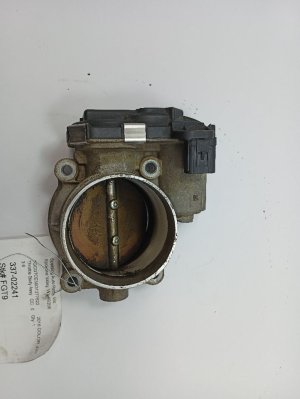
We Have This Part in Stock

The information in this article is provided for general reference and educational purposes only. Vehicle specifications, procedures, and part compatibility can vary by production date, trim level, and region. Always consult your vehicle's factory service manual and verify part numbers before purchasing or performing repairs. Safety-critical components such as airbags, seat belts, and braking systems should be installed by a qualified professional.
- Chevrolet TRAVERSE:
- 🧭 Diagnostic Flowchart
- 🎬 Helpful Videos
- 🛍️ Shop This Part
- What's Unique About the 2009-2016 Chevrolet TRAVERSE
- Symptoms You May Notice
- Most Likely Causes
- Rare But Worth Checking
- Diagnosis Steps
- Parts You'll Likely Need
- Related Codes That Often Appear With This One
- Technical Service Bulletins (TSBs) & Recalls
- Platform-Specific Known Issues
- Mechanic-Grade Diagnostic Values
- Scan Tool Commands That Help
- Wiring & Ground Locations
- Real Owner Repair Stories
- OEM Part Supersession History
- Model Year Variations Within This Range
- 🎟️ Get 5% Off