

P2138 on 2001-2010 Chrysler PT Cruiser: Throttle Sensor Failure Causes and Fixes
On a 2001-2010 PT Cruiser, code P2138 almost always points to a faulty Throttle Position Sensor (TPS) located on the throttle body. This will cause limp mode and stalling. Replacing the sensor is the most common fix, costing about $25-$60 for an aftermarket part and is a simple DIY job. However, many owners report premature failure of aftermarket sensors and recommend using a Mopar OEM part for long-term reliability.
- P2138 on a PT Cruiser almost always points to a problem at the throttle body, not the gas pedal.
- The most likely culprit is a failed Throttle Position Sensor (TPS), which is an affordable and easy part to replace.
- Symptoms are serious and include limp mode and stalling, so the issue should be addressed promptly.
- Before replacing any parts, always check the sensor's wiring and connector for damage, as this can mimic a sensor failure.
- You can test the TPS yourself with a basic multimeter to confirm the failure before buying a new part.
What's Unique About the 2001-2010 Chrysler PT Cruiser
Unlike many modern vehicles with fully electronic 'drive-by-wire' gas pedals, most 2001-2010 PT Cruisers use a traditional mechanical throttle cable that connects the gas pedal to the throttle body. This is a key difference because it means the P2138 correlation fault is almost always located at the throttle body itself, not the accelerator pedal. Diagnosis is simplified, as you can focus on the Throttle Position Sensor (TPS) and its wiring, rather than a more complex system with sensors at both the pedal and the throttle. While some very late models or turbo variants might have different setups, the cable-actuated system is predominant and the TPS remains the focal point for this code.
Symptoms You May Notice
- Vehicle enters 'limp mode' with drastically reduced engine power 🎬 Watch: How to diagnose and fix limp mode
- Check Engine Light and/or Electronic Throttle Control (ETC) warning light is on
- Hesitation or stumbling during acceleration
- Engine stalling, especially when coming to a stop or at idle
- Rough or unstable idle
- No throttle response or a 'dead pedal'
- Harsh or erratic shifting on automatic transmission models
- Sudden, unintended deceleration while driving
- Replacing the accelerator pedal assembly. On most PT Cruisers, this is a simple mechanical part connected to a cable and does not contain the sensors that cause this code.
- Replacing the entire throttle body assembly when only the inexpensive TPS sensor has failed.
- Ignoring a bad wiring connection and repeatedly replacing the TPS sensor, only for the problem to return.
Most Likely Causes
- Faulty Throttle Position Sensor (TPS) 🔴 High Probability → Shop Fuel Injection Throttle Body The TPS is a high-wear electronic component with moving internal parts (potentiometer) that can degrade over time, leading to erratic voltage signals. Given the age of these vehicles and the heat/vibration in the engine bay, sensor failure is extremely common. Many owners report that cheaper aftermarket sensors fail very quickly, making OEM Mopar sensors the recommended replacement.
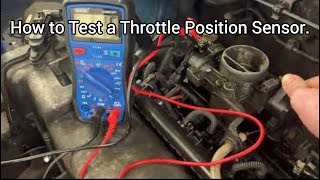
How to confirm: With the key on, use a multimeter to test the signal wire at the TPS connector. The voltage should sweep smoothly from about 0.5V to 4.5V as you manually open the throttle blade. Any jumps, dead spots, or incorrect voltage ranges indicate a bad sensor. 🎬 See this step-by-step guide on testing a TPS A scan tool can also graph the two internal sensor voltages to show the discrepancy.
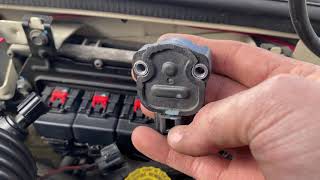
Typical fix: Replace the Throttle Position Sensor. It is mounted to the side of the throttle body with two Torx or Phillips screws.
Est. part cost: $25-$60 (Aftermarket), $100-$190 (OEM) - Damaged Wiring or Connector at the TPS 🟡 Medium Probability Engine vibration and heat can cause the wires in the TPS harness to become brittle, chafe, or break over time. The connector pins can also spread or corrode, leading to a poor connection. Wiggling the harness near the sensor while the engine is running may reproduce the symptoms.
How to confirm: Visually inspect the wiring harness and connector for any signs of damage, melting, or corrosion. Check for a stable 5-volt reference and good ground at the connector with a multimeter. Gently tug on each wire at the connector to ensure it is secure. Check for spread pins inside the connector that may not be making good contact.
Typical fix: Repair the damaged section of wire or replace the TPS connector pigtail.
Est. part cost: $10-$25 - Dirty or Sticking Throttle Body ⚪ Low Probability → Shop Fuel Injection Throttle Body Carbon and oil vapor from the PCV system can build up inside the throttle body, causing the throttle plate to stick or not close properly. This can create a mismatch between what the TPS reports and what the PCM expects, especially at idle.
How to confirm: Remove the air intake hose from the throttle body and inspect the throttle bore and plate for heavy black carbon deposits. Check if the plate moves freely without sticking.
Typical fix: Clean the throttle body thoroughly with a dedicated throttle body cleaner and a soft brush or rag. Be sure to clean both sides of the throttle plate. 🎬 Watch: How to clean your PT Cruiser throttle body
Est. part cost: $5-$15
Rare But Worth Checking
- Faulty Powertrain Control Module (PCM): → Shop Engine Control Module (ECM) This is very rare. The PCM should only be considered after all other possibilities, including the sensor, wiring, and throttle body, have been definitively ruled out. A PCM failure might also be accompanied by other unrelated codes.
Diagnosis Steps
- Scan the vehicle for any other stored trouble codes to see if they provide additional clues (e.g., sensor voltage codes).
- Perform a thorough visual inspection of the Throttle Position Sensor (TPS) connector and its wiring harness. Look for any frayed wires, loose pins, spread terminals, or signs of corrosion.
- With the key on and engine off, connect a multimeter to the TPS signal wire. Manually open and close the throttle plate by hand. The voltage should read approximately 0.5V when closed and sweep smoothly and consistently up to around 4.5V when fully open. Any glitches, spikes, or dead spots indicate a failed TPS.
- Verify the TPS is receiving a steady 5-volt reference and has a solid ground connection through its connector.
- If the sensor and wiring test good, inspect the throttle body bore and plate for heavy carbon buildup that could cause it to stick. Clean if necessary.
- If replacing the TPS, be aware that many aftermarket sensors have a high failure rate for this platform. Using a genuine Mopar part is highly recommended for a lasting repair.
- After the repair, perform a throttle relearn procedure. This can often be done by disconnecting the battery for 15-20 minutes, reconnecting it, turning the key to the 'ON' position for 10 seconds without starting, then turning it off, and finally starting the engine to let it idle and recalibrate.
Parts You'll Likely Need
- Throttle Position Sensor (TPS)
(OEM #4874371AC (superseded by 68433984AA))— This sensor is the most common failure point for code P2138 on a PT Cruiser due to its mechanical nature and location in a high-heat environment. Owner consensus strongly suggests that aftermarket sensors fail frequently and that an OEM Mopar part is the best solution.
Trusted brands: Mopar (Highly Recommended), Standard Motor Products (TH215), NTK, Wells (5S5087)
OEM price range: $105-$185
Aftermarket price range: $25-$60 - Throttle Body Assembly
(OEM #04891440AA)— In rare cases where the throttle shaft is worn or if the TPS is not sold separately for a specific model year/variant, the entire assembly may be replaced. This is uncommon for a P2138 code alone.
Trusted brands: Mopar
OEM price range: $250-$350
Aftermarket price range: $150-$250
Related Codes That Often Appear With This One
- P0121 — This code indicates 'TPS 'A' Circuit Performance Problem' and is often set for the same reason: a failing TPS with dead spots.
- P0122 — This code for 'TPS 'A' Circuit Low Input' points to the same sensor and wiring, indicating the signal voltage is below the expected range.
- P0123 — This code for 'TPS 'A' Circuit High Input' is the opposite of P0122 but is caused by a failure in the same sensor or its circuit.
Technical Service Bulletins (TSBs) & Recalls
- While no specific TSB for P2138 on the PT Cruiser is widely cited, GM released a TSB (07-06-04-019) for a similar issue on their vehicles caused by water intrusion into a body harness connector. This highlights the importance of checking for corrosion and water damage in connectors as a possible cause, even if it's not a documented common failure on the PT Cruiser.
Platform-Specific Known Issues
- High failure rate of aftermarket TPS sensors is widely reported by owners. Many have had to replace cheap sensors multiple times before switching to an OEM Mopar part to resolve the issue permanently.
Mechanic-Grade Diagnostic Values
- TPS 5V Reference Voltage — expected: ~5.0 Volts. Failure: Voltage significantly lower than 5.0V indicates a wiring issue or a problem with the PCM's 5V reference circuit, which may be shared with other sensors.
- TPS Signal Voltage (Throttle Closed) — expected: ~0.5V to 1.0V. Failure: Voltage outside this range at closed throttle suggests a misadjusted or faulty sensor.
- TPS Signal Voltage (Throttle Wide Open) — expected: ~4.5 Volts. Failure: Voltage significantly below 4.5V at wide-open throttle indicates a faulty sensor or a mechanical obstruction.
- TPS Signal Sweep — expected: Smooth, linear voltage increase from closed to wide-open throttle with no dropouts or spikes.. Failure: Any sudden jumps, drops, or dead spots in the voltage reading as the throttle is slowly opened indicates a worn or failing potentiometer inside the sensor.
Scan Tool Commands That Help
- Generic OBD-II Scanner with Live Data: View Live Data for TPS/APP signals — This is the primary method to confirm a correlation fault. A technician can graph the two sensor signals (often labeled as TPS1 and TPS2, or TP D and TP E) and watch for them to diverge or for one to become erratic while the other is smooth. A divergence greater than 0.5V typically triggers the fault.
- N/A - Manual Procedure: Throttle Relearn / Reset — After replacing the TPS or throttle body, or after disconnecting the battery, a relearn procedure is necessary to recalibrate the system. The common method is to disconnect the battery for 10-15 minutes, reconnect, turn the key to 'ON' (without starting) for 10 seconds, turn off, and then start the engine to let it idle and adjust.
Wiring & Ground Locations
- TPS Connector — Attached directly to the Throttle Position Sensor on the side of the throttle body.. This is the most common point for wiring failure due to heat and vibration. Inspect for loose pins, corrosion, or frayed wires. Wiggling this connector with the engine running can often reproduce the symptoms of a bad connection.
- G102 — On the left front strut tower.. This is a primary engine and chassis ground point. A loose or corroded G102 can cause numerous electrical issues, including erratic sensor readings for components grounded through this point, potentially contributing to a P2138 code.
- G105 — On the left front inner fender.. Another key ground point in the engine bay. Ensuring this and other grounds are clean and tight is a crucial step in diagnosing any electronic fault code.
- Cylinder Head Ground Strap — A grounding strap that typically connects from the firewall or strut tower to the back of the cylinder head.. This provides a dedicated ground for the cylinder head and its mounted components. If this strap is loose, broken, or corroded, it can cause intermittent and hard-to-diagnose sensor issues.
OEM Part Supersession History
4874371AC→68433984AA— Standard part number update by the manufacturer. The new part is a direct replacement for the old one.
Heads up: According to Mopar parts catalogs, 68433984AA is the correct replacement for 4874371AC. However, some parts retailers indicate the OEM sensor was discontinued around 2024, leading to a rise in aftermarket options.
Model Year Variations Within This Range
- 2003-2010: For 2003-2010 models, both turbo and non-turbo PT Cruisers use the same 52mm throttle body, and therefore the same TPS. This simplifies parts sourcing as the sensor is consistent across these model years and engine types.
- 2001-2002: Early models (2001-2002) may have a different throttle body design. While the P2138 code would have similar causes, it's important to verify the specific part number for these earlier years as it may differ from the 2003-2010 models.
Diagnostic Flowchart
Other Known Issues on This Vehicle
Issues unrelated to this code that are worth knowing about as an owner of this generation:
- Premature Front Lower Control Arm Bushing Failure 🔴 High — Very common, often occurs before 100,000 miles, leading to clunking noises over bumps, poor alignment, and uneven tire wear.
- Timing Belt Replacement (2.4L Non-Turbo) 🔴 High — This is a critical maintenance item. The 2.4L is an interference engine, meaning if the belt breaks, catastrophic engine damage will occur. The recommended replacement interval is around 90,000-105,000 miles, but age is also a factor. (Ref: Owner's manual specifies replacement at 102,000 miles under Schedule 'B'.)
- Cooling Fan Assembly Failure 🔴 High — The radiator cooling fan motor or relay is a frequent failure point, leading to engine overheating, especially in stop-and-go traffic or when the A/C is on.
- Engine Stalling / TIPM Issues 🟠 Medium — Some model years, particularly 2006, are noted for engine stalling while driving. This can be related to various electrical issues, sometimes involving the Totally Integrated Power Module (TIPM).
- Camshaft Position Sensor Failure 🟠 Medium — A faulty camshaft position sensor can cause the vehicle to crank but not start, or to stall unexpectedly.
Used vs. New Parts: Buying Guide for This Vehicle
When a used part is the smart pick: For this specific repair, a used part is almost never a smart choice. The Throttle Position Sensor is a high-wear electronic part. The primary reason for failure is age and use, so a used sensor from a junkyard is likely to have the same issues or fail shortly after installation.
What to inspect on the donor part:
- Not applicable, as used TPS sensors are not recommended.
OEM-only on this vehicle (don't cheap out):
- Throttle Position Sensor (TPS)
Brands owners have reported issues with on this vehicle:
- All non-OEM/Mopar brands. Forum and parts supplier consensus is extremely strong that generic, store-brand, and other low-cost aftermarket TPS sensors have a very high rate of premature failure or are dead-on-arrival for this vehicle.
Real Owner Stories
Aggregated from forums and TSBs cited above. Mileages and costs reflect what owners reported in those sources.
2003-2010 Chrysler PT Cruiser 2.4L
Symptoms: The vehicle experienced a P2138 code and entered 'limp mode.'
What fixed it: Replacing the Throttle Position Sensor resolved the issue, as confirmed by multiple members of the community.
Source hint: ptcruiserclub.com thread titled 'P2138 Code - Limp Mode Experience'
2003-2010 Chrysler PT Cruiser 2.4L
Symptoms: Purchased a cheap aftermarket TPS from a local auto parts store, but it either failed to fix the TPS issue or failed within a very short timeframe.
What fixed it: Replacing the faulty aftermarket unit with a quality Mopar OEM TPS sensor.
Source hint: Modern Performance - Mopar OEM TPS Sensor product description
Related OBD-II Codes
Frequently Asked Questions
I found a TSB (07-06-04-019) regarding water intrusion and P2138; does this apply to my PT Cruiser?
Should I buy a cheap Throttle Position Sensor from a local auto parts store for my 2003-2010 PT Cruiser?
Can I use a used TPS from a junkyard to fix the P2138 code on my PT Cruiser?
Is there a specific procedure I need to follow after replacing the TPS on my PT Cruiser?
Could my PT Cruiser's P2138 code be caused by a dirty throttle body instead of a bad sensor?
Helpful Videos
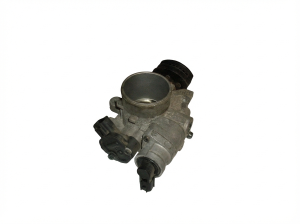
Used OEM Parts in Stock
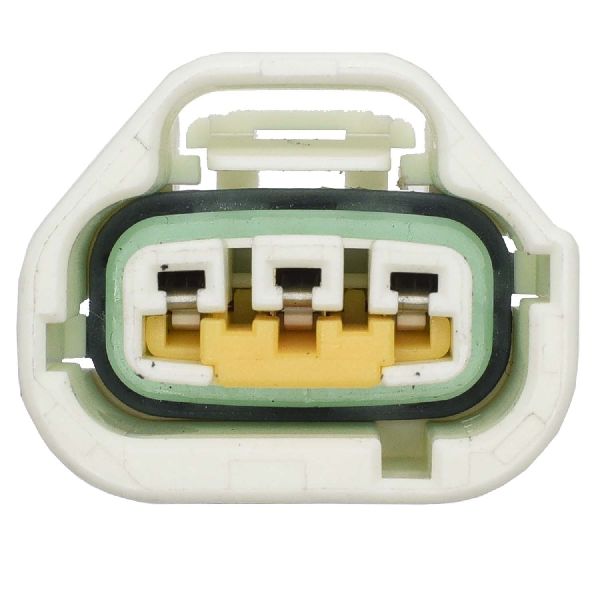
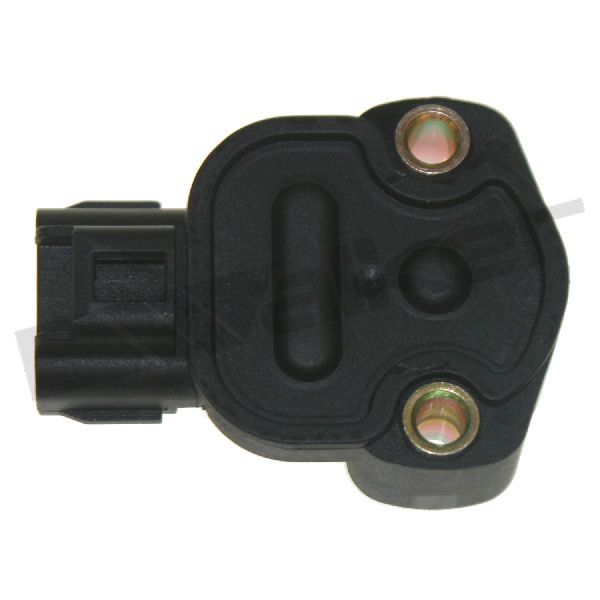
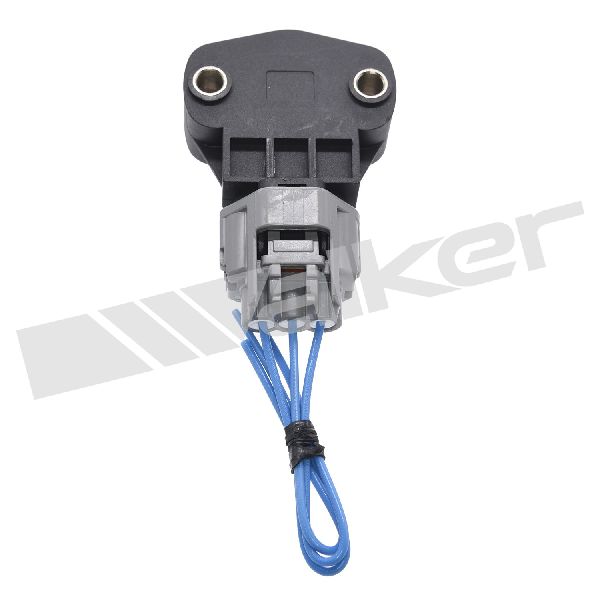
New Aftermarket Parts Available


The information in this article is provided for general reference and educational purposes only. Vehicle specifications, procedures, and part compatibility can vary by production date, trim level, and region. Always consult your vehicle's factory service manual and verify part numbers before purchasing or performing repairs. Safety-critical components such as airbags, seat belts, and braking systems should be installed by a qualified professional.
- Chrysler PT Cruiser:
- 🧭 Diagnostic Flowchart
- 🎬 Helpful Videos
- 🛍️ Shop This Part
- What's Unique About the 2001-2010 Chrysler PT Cruiser
- Symptoms You May Notice
- Most Likely Causes
- Rare But Worth Checking
- Diagnosis Steps
- Parts You'll Likely Need
- Related Codes That Often Appear With This One
- Technical Service Bulletins (TSBs) & Recalls
- Platform-Specific Known Issues
- Mechanic-Grade Diagnostic Values
- Scan Tool Commands That Help
- Wiring & Ground Locations
- OEM Part Supersession History
- Model Year Variations Within This Range
- Other Known Issues on This Vehicle
- Used vs. New Parts: Buying Guide for This Vehicle
- Real Owner Stories
- 2003-2010 Chrysler PT Cruiser 2.4L
- 2003-2010 Chrysler PT Cruiser 2.4L
- Related OBD-II Codes
- Frequently Asked Questions
- 🎟️ Get 5% Off