

P2138 on 2005-2007 Ford Five Hundred: Throttle Body and Pedal Sensor Guide
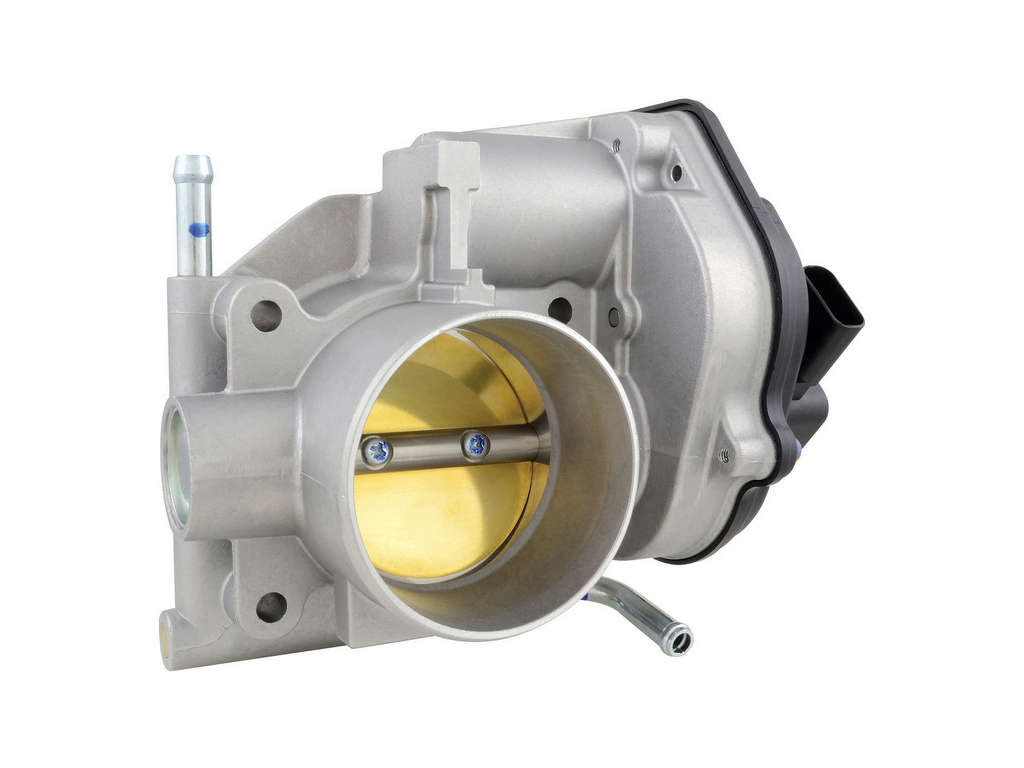
On a 2005-2007 Ford Five Hundred, code P2138 is almost always caused by a failing electronic throttle body. A thorough cleaning may fix it temporarily, but replacement is often necessary. The PCM enters 'Fail-Safe Mode' as a safety precaution. Expect to pay $150-$300 for a new Motorcraft throttle body, with DIY difficulty rated at 2/5.
- P2138 on a 2005-2007 Five Hundred almost always points to a problem with the electronic throttle body.
- Before replacing parts, try cleaning the throttle body thoroughly and performing a PCM relearn procedure, as this can sometimes fix the issue.
- This is a serious safety issue; do not drive the vehicle, as it can lose all acceleration power without warning.
- If replacement is necessary, the entire throttle body assembly must be replaced, not just a sensor.
- Always perform a relearn procedure after cleaning or replacing the throttle body to ensure proper idle and performance.
What's Unique About the 2005-2007 Ford Five Hundred
The Ford Five Hundred and its platform mates (Ford Freestyle, Mercury Montego) are well-documented for having issues with the electronic throttle body (ETB). Failures are so common that Ford issued a Technical Service Bulletin (TSB 05-25-13) 🎬 Watch: Understanding common Ford Five Hundred throttle body failures for this exact problem, which can also manifest as engine surging. While the code can point to the accelerator pedal, owner and technician experiences overwhelmingly indicate the throttle body is the primary culprit for this specific vehicle, often leading to a 'wrench' light and 'Engine Fail-Safe Mode' on the dash.
Symptoms You May Notice
- Check Engine Light and/or Wrench Light illuminated
- Vehicle enters "Engine Fail-Safe Mode" or "Limp Mode"
- Sudden loss of engine power and acceleration
- No response or delayed response from the accelerator pedal
- Hesitation or stumbling during acceleration
- Rough, erratic, or surging idle
- Engine stalling, sometimes at low speeds or after starting
- Replacing the accelerator pedal assembly when the much more common failure is the electronic throttle body.
- Replacing the throttle body without performing the relearn procedure, which can cause continued idling, stalling, or performance issues as the PCM has not learned the new sensor's baseline values.
- Assuming a used throttle body from a junkyard will work. As seen in forum posts, these often fail quickly or are already faulty.
Most Likely Causes
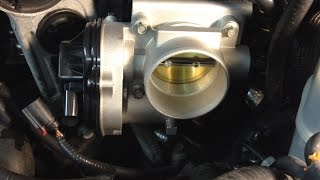
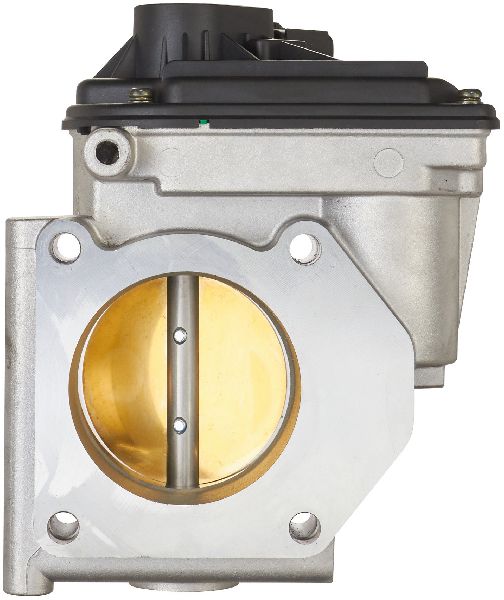
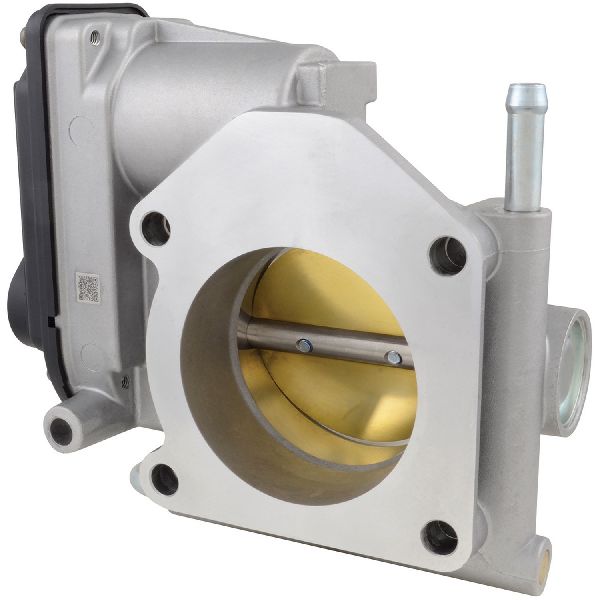
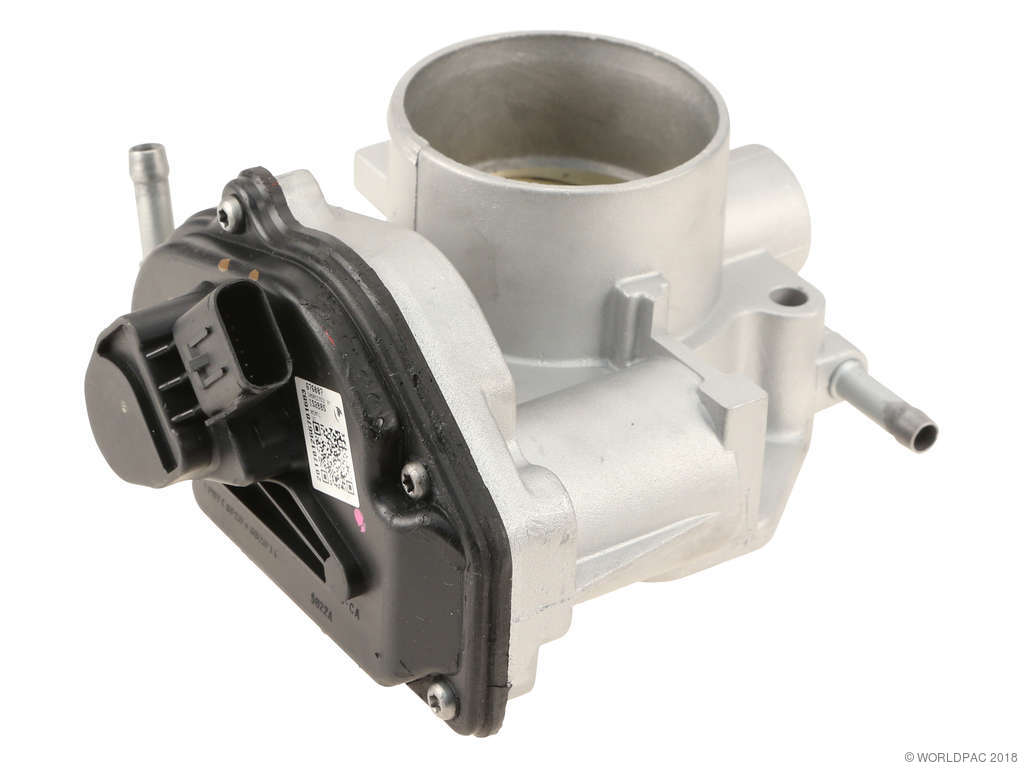
- Failing Electronic Throttle Body (ETB) 🔴 High Probability → Shop Fuel Injection Throttle Body This is a widely documented failure point for this platform, as acknowledged by Ford's TSB 05-25-13. The internal electronics of the integrated Throttle Position Sensor (TPS) fail over time, causing the two internal sensor signals to no longer correlate.
How to confirm: After confirming no wiring issues, and if cleaning the throttle body doesn't resolve the issue, the ETB is the most likely cause. A scan tool may show erratic or non-correlating TPS1 and TPS2 voltage readings. In many owner experiences, cleaning provides only a temporary fix before the code returns, indicating a hard failure of the electronics.
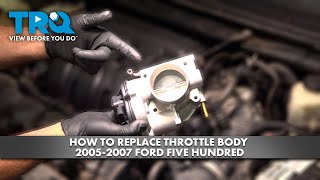
Typical fix: Replace the entire electronic throttle body assembly. 🎬 Watch: Step-by-step throttle body replacement walkthrough A 'relearn' procedure must be performed after installation to reset the PCM's adaptive memory and learn the new sensor positions.
Est. part cost: $150-$300 - Dirty or Sticking Throttle Body 🟡 Medium Probability → Shop Fuel Injection Throttle Body Carbon and oil vapor from the PCV system can build up behind the throttle plate, causing it to bind and not move smoothly. The PCM detects a mismatch between the commanded position and the actual position reported by the TPS, triggering the code.
How to confirm: Remove the air intake tube and visually inspect the throttle bore and plate for heavy, black carbon deposits, especially around the edges where the plate rests at idle. Manually move the plate (with the key off) to feel for any binding or sticking.
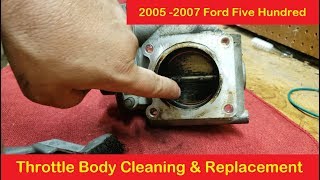
Typical fix: Thoroughly clean the throttle body bore and plate with a dedicated throttle body cleaner and a soft brush or cloth. 🎬 See this quick guide on cleaning your throttle body Do not spray cleaner directly into the electronics. Perform a PCM reset/relearn procedure afterward.
Est. part cost: $5-$15 - Failing Accelerator Pedal Position (APP) Sensor ⚪ Low Probability → Shop Accelerator Pedal Assembly While less common on this platform than the throttle body, the APP sensor can still fail. Manufacturer service bulletin SSM 53375 notes that vehicles may exhibit an illuminated wrench indicator with DTC P2138 stored in the PCM due to APP-related faults.
How to confirm: Use a scan tool with live data capability to monitor the two APP sensor voltage signals (APP1 and APP2). As you press the pedal, both voltages should rise smoothly and proportionally. If one signal drops out, spikes, or is erratic, the sensor is faulty. One signal typically rises while the other falls as a cross-check.
Typical fix: Replace the entire accelerator pedal assembly, as the sensor is integrated into it. A relearn procedure should follow.
Est. part cost: $100-$200
Rare But Worth Checking
- Wiring Harness or Connector Damage: Check for corrosion, chafed wires, or loose pins at the connectors for both the throttle body and the accelerator pedal assembly. A poor connection can cause intermittent signal loss and trigger a correlation fault. On some Ford platforms, chafing of the harness near the engine can cause shorts to ground on critical sensor wires. Manufacturer bulletin SSM 46829 indicates that P2138 can be caused by the APP sensor harness being improperly routed behind the brake booster to the brake pedal.
- Powertrain Control Module (PCM) Failure: → Shop Engine Control Module (ECM) This is extremely rare. All other possibilities, including wiring and all related sensors, should be exhaustively ruled out before considering PCM replacement. A PCM issue could also manifest as other unrelated codes.
Diagnosis Steps
- Scan for Codes: Confirm P2138 is present and check for other related codes like P2104, P2111, or P2112, which reinforce a throttle body issue.
- Inspect Wiring: Visually inspect the wiring and connectors at the throttle body and accelerator pedal for any obvious damage, corrosion, or looseness. Ensure the connectors are fully seated. As noted in SSM 46880, check for improper harness routing near the brake pedal assembly which can trigger P2138.
- Analyze Live Data: Using a scan tool, graph the two APP sensor voltages (APP1, APP2) while slowly pressing and releasing the gas pedal. They should move smoothly and in opposition without glitches. Then, graph the two TPS sensor voltages (TPS1, TPS2). They should also track each other smoothly as the throttle plate moves.
- Inspect and Clean Throttle Body: Remove the air intake hose from the throttle body. Inspect for heavy carbon buildup. If dirty, clean it thoroughly with throttle body cleaner and a soft cloth/brush. Pay special attention to the area where the throttle plate rests.
- Perform Relearn Procedure: After cleaning or replacing a part, a full PCM relearn is critical. A common method is: Disconnect the negative battery terminal for at least 15 minutes. Some technicians recommend shorting the disconnected positive and negative cables (with the battery fully disconnected) to drain all capacitors in the PCM. Reconnect the battery, turn the key to the 'ON' position for one minute without starting, then turn off. Start the engine and let it idle for 10-15 minutes without touching the throttle or turning on accessories like the A/C to allow it to find its new base idle.
- Test Drive: Drive the vehicle normally, with smooth accelerations, to allow the PCM to learn shift points and throttle response. If the code returns after cleaning and relearning, the issue is a hard failure, most likely the ETB itself.
- Replace the Most Likely Part: Based on the high failure rate on this platform, the electronic throttle body is the most probable cause. If live data in Step 3 specifically and definitively showed a fault with the APP sensor, replace the accelerator pedal assembly instead.
- Final Relearn: After replacing either component, repeat the full relearn procedure from Step 5.
Parts You'll Likely Need
- Electronic Throttle Body Assembly
(OEM #6F9Z-9E926-A (supersedes 5F9Z-9E926-AA, 5F9Z-9E926-B))— This is the most common failure part for P2138 on this vehicle, as documented by owner complaints and a manufacturer TSB. The updated part number suggests a revision to address the original flaw.
Trusted brands: Motorcraft, Hitachi, Cardone (remanufactured)
OEM price range: $200-$350
Aftermarket price range: $150-$250 - Accelerator Pedal Assembly
(OEM #5F9Z9F836BA)— This is the second most likely cause, though far less common than the throttle body. It is replaced if diagnostic testing confirms a fault with the pedal's internal sensors.
Trusted brands: Motorcraft, Standard Motor Products (APS118), Dorman
OEM price range: $150-$250
Aftermarket price range: $100-$180
Related Codes That Often Appear With This One
- P2104 — P2104 (Throttle Actuator Control System - Forced Idle) is a direct result of P2138. When the PCM detects the correlation fault, it no longer trusts the throttle system and forces the engine to idle as a safety measure, causing the 'Fail-Safe Mode'.
- P2111 / P2112 — These codes indicate the Throttle Actuator Control system is stuck open (P2111) or stuck closed (P2112). These can be triggered by the same binding from carbon buildup or electronic faults within the throttle body that cause P2138.
Technical Service Bulletins (TSBs) & Recalls
- TSB 05-25-13: Pertains to engine surging and potential throttle-related fault codes (including P2138) due to a defective Electronic Throttle Body (ETB). It recommends replacement with an updated part, now identified
- SSM 53375: Notes that vehicles may exhibit an illuminated powertrain malfunction (wrench) indicator with diagnostic trouble codes including P2138 stored in the powertrain control module.
- SSM 46880: Describes instances where P2138 and other DTCs are triggered by the APP sensor harness being improperly routed behind the brake booster to the brake pedal.
- SSM 46829: A manufacturer bulletin stating that P2138 can be caused by improper routing of the APP sensor 14A005 harness, potentially leading to warning indicators for ABS or Advanced Trac.
Platform-Specific Known Issues
- A known high failure rate of the electronic throttle body prompted Ford to issue Technical Service Bulletin (TSB) 05-25-13 for the 2005 Ford Five Hundred, Freestyle, and Mercury Montego.
- Many owners report that cleaning the throttle body provides only a temporary fix, with the 'Engine Fail-Safe Mode' returning within days or weeks, confirming the need for replacement.
Mechanic-Grade Diagnostic Values
- Accelerator Pedal Position (APP) Sensor Voltage — expected: Two sensors, APP1 and APP2. Both should show smooth, proportional changes as the pedal is pressed. One may sweep from ~0.5V (released) to ~4.5V (full throttle), while the other does the inverse or sweeps at half the voltage. A divergence greater than 0.5V between the expected correlation typically triggers the fault.. Failure: Any sudden jumps, dropouts, flat spots, or non-linear response in the voltage graph on a scan tool as the pedal is slowly and steadily depressed and released.
- Throttle Position (TP) Sensor Voltage — expected: Similar to the APP, two sensors (TP1, TP2) should show smooth, correlated voltage changes as the throttle plate moves. A typical range is ~0.9V to ~4.5V.. Failure: Erratic readings, voltage spikes, or signals that do not track each other smoothly indicate a failing sensor within the throttle body assembly.
Scan Tool Commands That Help
- Ford IDS (Integrated Diagnostic System): Datalogger for APP/TP PIDs — To simultaneously graph the voltage of both APP sensors and both TP sensors to visually identify which pair is losing correlation. This is the definitive way to distinguish an APP sensor fault from a TP sensor fault.
- Ford IDS (Integrated Diagnostic System): Powertrain > Engine > Key On Engine Off Self Test — To run an on-demand diagnostic routine that can sometimes detect circuit faults that aren't present during normal continuous monitoring.
- Ford IDS (Integrated Diagnostic System) or equivalent professional scan tool: Throttle Body Relearn / Reset All Adaptations — After replacing the throttle body or cleaning it, a scan tool can force the PCM to immediately relearn the new closed-throttle and wide-open-throttle positions, which is more reliable than the manual battery-disconnect method.
Wiring & Ground Locations
- G101 — Located on the right front of the engine compartment.. This is a primary engine ground. A poor connection here can cause unstable voltage and reference signals for various engine sensors, including the electronic throttle body, potentially leading to correlation codes.
- G102 / G104 — Located on the right rear of the engine compartment for 2005 models, or near the battery for later models.. These are critical grounds for the Powertrain Control Module (PCM) and Data Link Connector (DLC). A loose or corroded G104 can cause communication issues and erratic sensor readings, as the PCM's ground reference is compromised.
- Main Engine Harness Chafe Point — The main wiring harness that runs over the top of the engine may rub against a silver air conditioning line.. Vibrations can cause the A/C line to wear through the harness insulation, exposing and shorting wires for critical sensors like the throttle body or pedal, leading to intermittent P2138 and other codes.
Real Owner Repair Stories
- YouTube video by user Daryl Turcott, referencing FordTechMakuloco (Ford Five Hundred (year not specified, but applies to 2005-2007)) — No crank, no start, multiple misfires, PCM communication faults, super rich misfiring, and various codes including P0107, P0108.
❌ Tried (didn't work) The owner spent $1275 on parts and incorrect shop diagnoses before finding the root cause.
✅ What actually fixed it The main engine wiring harness was rubbing against an air conditioning line, causing multiple wires to short out. The fix was to separate the harness from the A/C line, repair the damaged wires by taping them, and securing the harness in a new position away from the line. - Ford Forum user (2006 Ford Five Hundred) — After replacing a dead battery, the vehicle had zero throttle response and would only idle. Codes P2104, P2111, and P2112 were present.
❌ Tried (didn't work) Performing the manual throttle relearn procedure multiple times., Disconnecting the battery and discharging the electrical system., Cleaning the throttle body while still on the engine.
✅ What actually fixed it The forum thread ends without a definitive resolution posted by the user, highlighting a common scenario where a simple battery change on a vehicle with a pre-existing (but perhaps unnoticed) dirty throttle body can trigger fail-safe mode. The loss of Keep Alive Memory (KAM) makes the PCM unable to compensate for the carbon buildup it had previously adapted to. The next logical step, though not confirmed by the user, would be a full replacement of the throttle body. - NHTSA ODI #11435669 — An owner reported the car stopping in the middle of traffic with no warning. The service invoice noted codes P2610 and P2138, requiring a wire repair bypass from connector C210 to the PCM and a software reprogram per TSB 13-11-15.
- NHTSA ODI #10860309 — A report describes a check engine light with code P2138 (APP sensor correlation error). The technician performed a bypass of circuits LE136, LE137, and RE137 at connector C210 as specified in TSB 13-11-15.
OEM Part Supersession History
5F9Z-9E926-AA, 5F9Z-9E926-B→6F9Z-9E926-A— The original electronic throttle bodies had a high failure rate. The supersession to a new part number indicates a design revision by Ford/Motorcraft to address the internal electronic faults that caused P2138.
Diagnostic Flowchart
Other Known Issues on This Vehicle
Issues unrelated to this code that are worth knowing about as an owner of this generation:
- Premature CVT Transmission Failure 🔴 High — Very common. Many owners report shuddering, slipping, or outright failure, often before 100,000 miles. Symptoms include hesitation, juddering between 15-30 mph, and loss of power. (Ref: No specific recall, but numerous owner complaints. Some issues could be addressed with PCM/TCM software updates if caught early.)
- Worn Engine Torque Strut Mount ('Dog Bone' Mount) 🟠 Medium — Common failure item. Leads to excessive engine vibration felt in the cabin at idle, and a 'clunk' noise when shifting into gear. Can fail as early as 50,000 miles. (Ref: No specific TSB for this mount, but it is a widely discussed owner complaint.)
- Lower Control Arm Ball Joint Failure 🔴 High — A significant safety issue where the front lower ball joints can wear prematurely and separate, causing a loss of steering control. This has been reported at various mileages. (Ref: Numerous complaints filed with NHTSA, but no formal recall was issued.)
- Premature Rear Brake Wear 🟡 Low — Owners have reported unusually fast wear on rear brake pads, sometimes needing replacement in as little as 20,000-30,000 miles.
- HVAC Blower Motor Resistor/Module Failure 🟡 Low — Common issue causing the fan to only work on the highest setting (manual climate control) or fluctuate speeds randomly (automatic climate control).
Used vs. New Parts: Buying Guide for This Vehicle
When a used part is the smart pick: For this specific repair, using a part from a salvage yard is NOT recommended. The electronic throttle body is a known high-failure item on this platform. A used part is highly likely to be either already faulty or near the end of its service life.
What to inspect on the donor part:
- Not applicable due to the high risk of failure.
OEM-only on this vehicle (don't cheap out):
- Electronic Throttle Body Assembly
Aftermarket brands forum-validated for this vehicle:
- Motorcraft (OEM)
- Hitachi (Often an OEM supplier)
Brands owners have reported issues with on this vehicle:
- Unbranded, no-name parts from online marketplaces should be avoided. While cheaper, they have a high rate of being dead-on-arrival or failing prematurely, leading to repeated repairs.
Real Owner Stories
Aggregated from forums and TSBs cited above. Mileages and costs reflect what owners reported in those sources.
2005 Ford Five Hundred 3.0L V6
Symptoms: The car was stalling at low speeds and the engine would not rev when the throttle was pressed.
What fixed it: The symptoms were identified as a throttle body failure, a common issue for this model year.
Source hint: Reddit r/Cartalk - Transmission(?) Problems with 2005 Ford Five Hundred
2005 Ford Five Hundred 3.0L V6
Symptoms: Codes P2104 and P2111 were present. Cleaning the throttle body only worked temporarily before the issue returned. A used replacement part also failed immediately.
What fixed it: Replacement of the throttle body with a functional unit (noting that used parts have a high failure rate).
Source hint: FordForums.com - Throttle Body Issues
2007 Ford Five Hundred 3.0L V6
Symptoms: Wrench light illuminated and the vehicle suffered a total loss of power.
What fixed it: The mechanic attempted cleaning the throttle body, but it did not solve the problem; the Electronic Throttle Body (ETB) required full replacement followed by a relearn process.
Source hint: YouTube - DIY Auto Homeschool Repair
Related OBD-II Codes
Frequently Asked Questions
Does TSB 05-25-13 apply to my 2005 Ford Five Hundred?
Can I just clean the throttle body on my Five Hundred to fix P2138?
Is there a specific 'relearn' procedure I need to follow after replacing the throttle body?
Could my P2138 code actually be a transmission problem?
What is the estimated cost to fix the P2138 code on this vehicle?
Helpful Videos
We Have This Part in Stock


The information in this article is provided for general reference and educational purposes only. Vehicle specifications, procedures, and part compatibility can vary by production date, trim level, and region. Always consult your vehicle's factory service manual and verify part numbers before purchasing or performing repairs. Safety-critical components such as airbags, seat belts, and braking systems should be installed by a qualified professional.
- Ford Five Hundred:
- 🧭 Diagnostic Flowchart
- 🎬 Helpful Videos
- 🛍️ Shop This Part
- What's Unique About the 2005-2007 Ford Five Hundred
- Symptoms You May Notice
- Most Likely Causes
- Rare But Worth Checking
- Diagnosis Steps
- Parts You'll Likely Need
- Related Codes That Often Appear With This One
- Technical Service Bulletins (TSBs) & Recalls
- Platform-Specific Known Issues
- Mechanic-Grade Diagnostic Values
- Scan Tool Commands That Help
- Wiring & Ground Locations
- Real Owner Repair Stories
- OEM Part Supersession History
- Other Known Issues on This Vehicle
- Used vs. New Parts: Buying Guide for This Vehicle
- Real Owner Stories
- 2005 Ford Five Hundred 3.0L V6
- 2005 Ford Five Hundred 3.0L V6
- 2007 Ford Five Hundred 3.0L V6
- Related OBD-II Codes
- Frequently Asked Questions
- 🎟️ Get 5% Off