

P2138 on 2009-2019 Ford Flex 3.5L V6: Throttle and Pedal Sensor Fault Guide
P2138 on a Ford Flex usually means the electronic throttle body is failing, a common issue on Fords of this era. The vehicle may suddenly lose power and go into 'limp mode'. Replacing the entire throttle body assembly is the most frequent fix, as the internal sensors are not sold separately.
- P2138 on a 2009-2019 Ford Flex is a serious code that makes the vehicle unsafe to drive.
- The most probable cause is a failing electronic throttle body, a known weak point on Fords of this era.
- The second most likely cause is a faulty accelerator pedal assembly.
- Diagnosis involves using a scan tool to watch live data from both the pedal (APP) and throttle body (TPS) sensors to see which pair is showing conflicting signals.
- The fix is to replace the entire faulty assembly (either the throttle body or the pedal); the sensors themselves are not typically sold separately.
What's Unique About the 2009-2019 Ford Flex
Many Ford vehicles from this era, including the Flex, were prone to issues with their electronic throttle bodies (ETB). Ford acknowledged this by issuing Customer Satisfaction Program 13N03, which extended the warranty on the ETB for many models due to internal contamination causing intermittent electrical faults. While the Flex wasn't explicitly named in the primary documents for 13N03 (which focused on Fusion, Milan, Escape, and Mariner), the failure mode described—sudden limp mode, wrench light, and contamination of internal contacts—perfectly matches the common P2138 fault on the Flex and its platform mates that use the same component. This history makes the throttle body a primary suspect on the Flex, often more so than the accelerator pedal sensor.
Generation note: The Ford Flex had one generation from 2009-2019, with a major facelift in 2013. The electronic throttle body issue was particularly common on pre-facelift models (2009-2012), aligning with Ford's extended warranty program for this component on other vehicles. However, the failure can still occur on 2013-2019 models as the fundamental design is similar.
Symptoms You May Notice
- Sudden loss of acceleration
- Engine goes into 'limp mode' (reduced power)
- Check Engine Light and/or Wrench Light is on
- Erratic or delayed throttle response
- Engine stalling, especially when coming to a stop
- Unresponsive gas pedal
- Hesitation when accelerating from a stop
- Replacing only the accelerator pedal sensor when the more common failure is the electronic throttle body.
- Replacing the PCM without performing proper diagnostics on the sensors and wiring first.
- Cleaning the throttle body without addressing the underlying electronic failure of the internal sensors.
Most Likely Causes
- Failing Electronic Throttle Body (ETB) 🔴 High Probability → Shop Fuel Injection Throttle Body A known issue on many Ford platforms of this era. Internal contamination and wear of the integrated Throttle Position Sensors (TPS) lead to signal correlation errors. Ford's Customer Satisfaction Program 13N03 addressed this widespread problem on other models using similar parts.
How to confirm: Use a scan tool to monitor live data for TPS1 and TPS2. If the voltage readings are erratic, do not track smoothly with throttle application, or show a significant discrepancy, the ETB is likely faulty. A visual inspection may reveal oil or carbon buildup inside the throttle bore, causing the plate to stick.
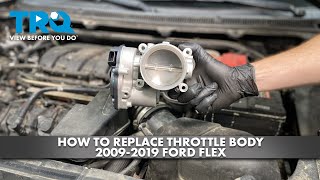
Typical fix: Replace the entire electronic throttle body assembly. 🎬 See this walkthrough on how to replace the throttle body. The throttle position sensors are integrated and not typically sold separately. After replacement, a throttle body relearn procedure is required, which often involves letting the vehicle idle for several minutes after reconnecting the battery.
Est. part cost: $150-$350 - Failing Accelerator Pedal Position (APP) Sensor 🟡 Medium Probability → Shop Accelerator Pedal Assembly
How to confirm: Use a scan tool to monitor live data for APP1 and APP2. Slowly press and release the gas pedal. The voltage readings should be smooth and correlate with each other (often one is half the voltage of the other). Any jumps, dropouts, or non-responsive behavior indicates a faulty APP sensor.
Typical fix: Replace the accelerator pedal assembly. The APP sensor is integrated into the pedal assembly and is not serviced separately.
Est. part cost: $90-$200 - Wiring or Connector Issue ⚪ Low Probability
How to confirm: Visually inspect the wiring harnesses and connectors at both the throttle body and the accelerator pedal assembly. Look for any signs of damage, corrosion, or loose pins. Gently wiggle the wires while monitoring sensor data on a scan tool to see if the fault can be induced. Pay close attention to the harness near the throttle body, as engine vibration and heat can cause issues over time.
Typical fix: Repair the damaged section of wiring or clean/replace the affected connector. A pigtail connector for the throttle body is a common repair part.
Est. part cost: $10-$50
Rare But Worth Checking
- Faulty Powertrain Control Module (PCM): → Shop Engine Control Module (ECM) This is very rare. The PCM should only be considered after all other possibilities, including sensors and wiring, have been exhaustively tested and ruled out. A PCM failure can sometimes cause other damage, such as melted ignition coils.
Diagnosis Steps
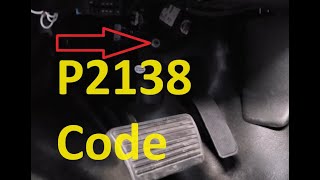
- Connect an OBD-II scanner and confirm P2138 is the primary code. 🎬 Watch: A guide to understanding P2138 causes and fixes. Note any other codes present, like P2111 or P2112.
- Using the scanner's live data function, monitor the voltage readings for APP Sensor 1, APP Sensor 2, TPS 1, and TPS 2.
- With the engine off and key on, slowly press and release the accelerator pedal. Watch the APP sensor readings. They should move smoothly and in correlation. If they jump, are flat, or don't agree, the pedal assembly is likely the issue.
- If the APP sensors read correctly, start the engine (if safe) or have an assistant operate the pedal. Watch the TPS readings. They should also move smoothly and in correlation. If they are erratic or disagree, the throttle body is the likely culprit.
- If sensor data seems inconclusive, perform a visual inspection. Check the wiring and connectors to the accelerator pedal (under the dash) and the throttle body (on the engine's air intake). Look for chafed wires, corrosion, or loose connections.
- Inspect the inside of the throttle body for heavy carbon or oil buildup, which can cause the throttle plate to stick.
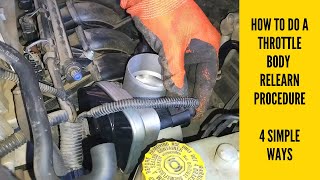
- If a new throttle body is installed, perform a relearn procedure. This typically involves disconnecting the battery for 15 minutes, reconnecting it, turning the key to the 'ON' position for a minute, then starting the engine and letting it idle for at least 10 minutes to allow the PCM to learn the new throttle limits. 🎬 See four different ways to perform a throttle body relearn.
- If both sensors and wiring appear good, the issue could be a rare PCM fault, but professional diagnosis is recommended at this stage.
Parts You'll Likely Need
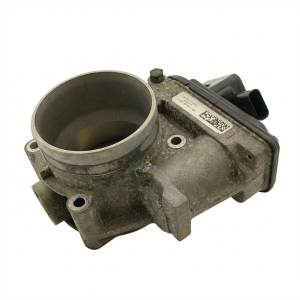
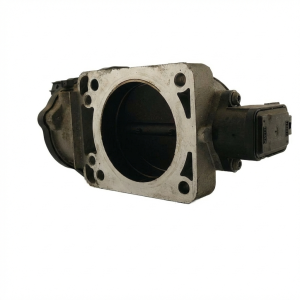
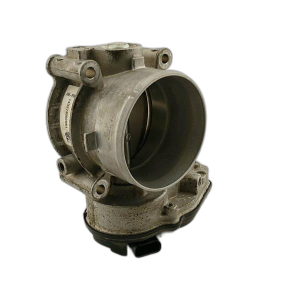
- Electronic Throttle Body Assembly
(OEM #Motorcraft TB-12 (for 3.5L Turbo EcoBoost), Motorcraft TB-2 (check specific application, may fit NA 3.5L), Ford AA5Z-9E926-A (superseded by TB-12 for some models))— This is the most common failure point for P2138 on this vehicle due to a known history of internal sensor and motor issues. The TPS is integrated and not sold separately.
Trusted brands: Motorcraft, Bosch, Standard Motor Products, Hitachi
OEM price range: $250-$350
Aftermarket price range: $150-$250 - Accelerator Pedal Assembly
(OEM #7f9a-9f836-aa (example part number, verify by VIN), 6W7Z-9725-AA (another possible Ford part, verify fitment))— The second most likely cause. If diagnostic tests show erratic signals from the pedal sensors, the entire assembly must be replaced.
Trusted brands: Motorcraft, Dorman, Standard Motor Products (APS118)
OEM price range: $150-$220
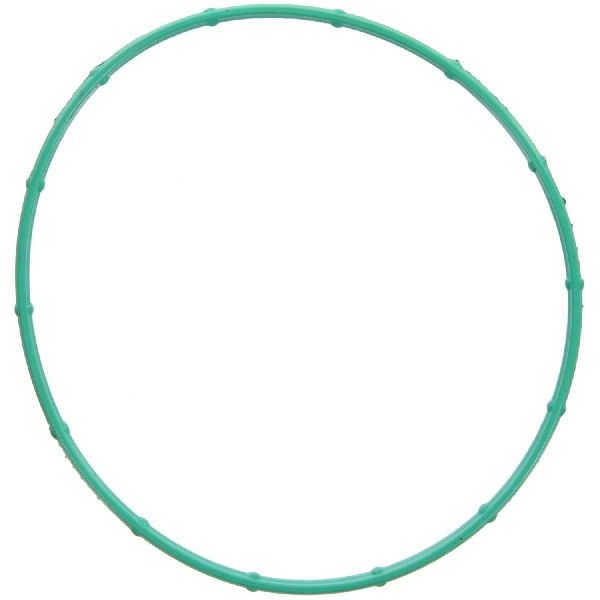
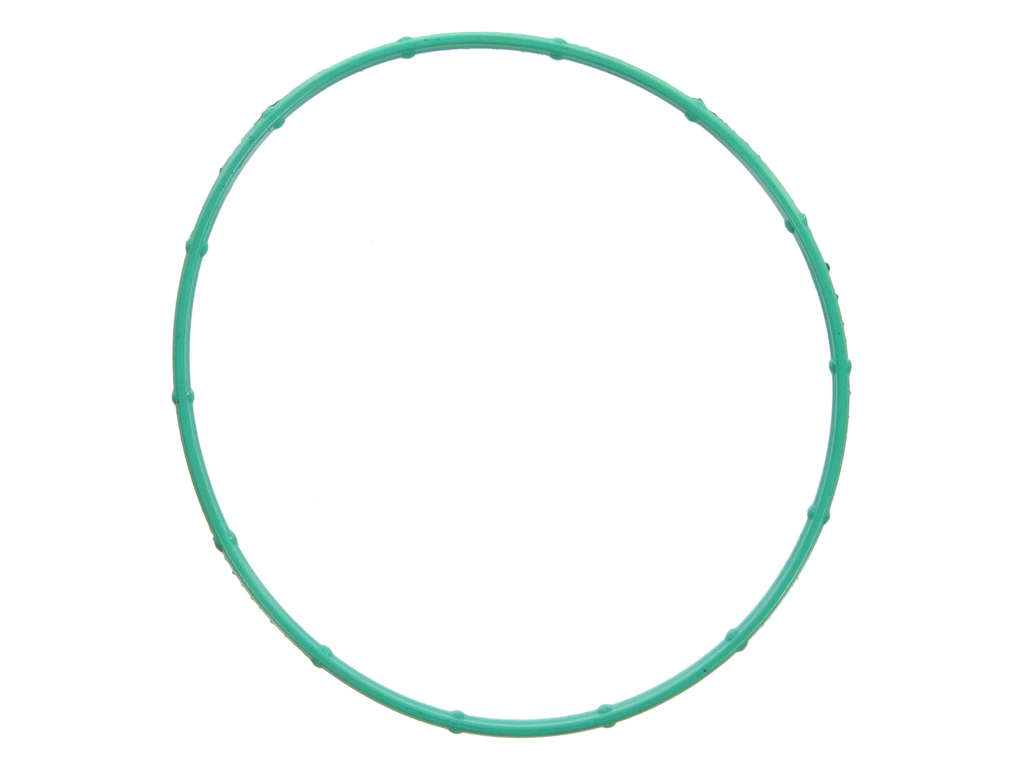
Aftermarket price range: $90-$150 - Throttle Body Gasket — Should be replaced whenever the throttle body is removed to ensure a proper seal and prevent vacuum leaks.
Trusted brands: Fel-Pro, Mahle, Motorcraft
OEM price range: $10-$20
Aftermarket price range: $5-$15
Related Codes That Often Appear With This One
- P2111 — Indicates 'Throttle Actuator Control System - Stuck Open', often triggered by the same internal throttle body faults.
- P2112 — Indicates 'Throttle Actuator Control System - Stuck Closed', also a common companion code pointing to a failing throttle body.
- P2135 — A similar correlation fault ('Throttle/Pedal Position Sensor/Switch A/B Voltage Correlation'), pointing to the same set of components.
Technical Service Bulletins (TSBs) & Recalls
- Customer Satisfaction Program 13N03 - While not a traditional TSB, this program for extended warranty coverage on the Electronic Throttle Body is highly relevant as it documents the widespread nature of the component failure that causes P2138. The official reason cited is contamination on the internal motor contacts, leading to intermittent electrical connectivity and limp mode.
- Bulletin #SSM 53375 - Notes that vehicles may exhibit an illuminated powertrain malfunction (wrench) indicator with diagnostic trouble code P2138 stored in the powertrain control module (PCM).
- Bulletin #SSM 46880 - Describes how P2138 and other DTCs may be caused by the Accelerator Pedal Position (APP) sensor 14A005 harness being improperly routed behind the brake booster to the brake pedal.
- Bulletin #SSM 46829 - Similarly identifies that P2138 can be triggered by improper routing of the APP sensor harness, which can also lead to warning indicators for the airbag, ABS, and Advanced Trac systems.
Platform-Specific Known Issues
- Ford's Customer Satisfaction Program 13N03 extended the warranty for electronic throttle bodies on many 2009-2013 models to 10 years/150,000 miles due to high failure rates causing limp mode. While the Flex was not an explicitly listed model, the program highlights a systemic issue with the component design used across the Ford lineup, making the ETB a primary suspect for P2138 on the Flex.
Mechanic-Grade Diagnostic Values
- APP and TPS Sensor Voltage (Key On, Engine Off) — expected: Approximately 0.5V - 1.0V with pedal/throttle released, rising smoothly to ~4.5V at full application.. Failure: A voltage divergence greater than 0.5V between the two correlated sensors (e.g., APP1 vs APP2) will typically trigger the fault. Any jumps, dropouts, or non-linear response during pedal press indicates a failure.
- TPS Total Resistance — expected: Greater than 4k Ohms is a typical specification for this type of sensor.. Failure: A reading significantly lower than the specification or an open circuit (infinite resistance) indicates a failed sensor.
- Wiring Harness Resistance — expected: Less than 20 Ω on sensor signal wires from the component connector to the PCM connector.. Failure: Resistance greater than 20 Ω indicates corrosion or a damaged wire, which can cause a voltage drop and trigger the correlation code.
Scan Tool Commands That Help
- Ford IDS (or equivalent high-level scanner): Throttle Body Relearn / Reset Adaptive Memory — Required after replacing the electronic throttle body or disconnecting the vehicle's battery to reset the learned throttle plate home position and prevent high/low or rough idle. While a manual procedure exists, a scan tool command is the most reliable method.
- Graphing Scan Tool: Live Data Graphing for APP1, APP2, TPS1, TPS2 — This is the primary diagnostic step. Graphing the sensor voltages while operating the pedal allows for easy visualization of any signal dropouts, glitches, or poor correlation that would not be apparent from looking at numerical data alone.
Wiring & Ground Locations
- Main Engine Harness Grounds — Wiring diagrams indicate key ground points are located on the engine itself, often near specific components like a coil-on-plug, and on the chassis.. The APP and TPS sensors rely on a clean ground reference for their voltage signals. A poor or corroded engine or chassis ground can introduce electrical noise or a voltage offset, causing the PCM to see a correlation fault between sensors even if the sensors themselves are good.
OEM Part Supersession History
7T4Z-9E926-EA→7T4Z-9E926-FA— Part number revision by Ford, likely for improvements in reliability or manufacturing.AT4Z-9E926-A, AT4Z-9E926-B, BL3Z-9E926-A→BL3Z-9E926-B (Motorcraft TB-1052)— Multiple revisions for the throttle body used on the 3.5L/3.7L engines, indicating ongoing design updates to address failures.
Heads up: It is critical to verify the correct part number by VIN, as different part numbers exist for Turbocharged vs. Naturally Aspirated engines.
Model Year Variations Within This Range
- 2009-2012 vs 2013-2019: The throttle body part numbers differ between the pre-facelift (2009-2012) and post-facelift (2013-2019) models, as well as between the naturally aspirated and turbocharged (EcoBoost) engines. For example, part 7T4Z-9E926-FA is listed for the 2009 model, while different numbers apply to later years. Always confirm the part number with the vehicle's VIN.
Diagnostic Flowchart
Other Known Issues on This Vehicle
Issues unrelated to this code that are worth knowing about as an owner of this generation:
- Internal Water Pump Failure 🔴 High — Can occur as early as 50,000 miles, but more common around 100,000-150,000 miles. Failure can cause catastrophic engine damage by leaking coolant directly into the engine oil.
- Power Transfer Unit (PTU) Failure (AWD Models) 🔴 High — Commonly occurs due to fluid overheating and breakdown, as the unit is located near the hot exhaust and is not easily serviced. Symptoms include grinding/shuttering noises and a propane-like smell.
- Faulty Door Latch / 'Door Ajar' Light 🟠 Medium — Widespread issue where a faulty switch in the door latch causes the 'Door Ajar' light to stay on, preventing doors from locking and interior lights from turning off. Affects 2011-2014 models most. (Ref: Safety Recall 23S36, Customer Satisfaction Program 19N09)
- Electric Power Steering (EPAS) Failure 🔴 High — Particularly noted on 2011-2013 models, the EPAS can fail intermittently or completely, resulting in a sudden loss of power steering assist, which is a significant safety hazard.
- Engine Electrical Issues / PCM Failure 🟠 Medium — Complaints exist for various electrical problems, including sudden stalling, no-start conditions, and, in some cases, PCM failure that can damage ignition coils.
Used vs. New Parts: Buying Guide for This Vehicle
When a used part is the smart pick: A used accelerator pedal assembly is a reasonable choice as it is a less complex electronic part located inside the cabin, protected from engine heat and contamination. A used throttle body is a riskier proposition due to the high failure rate of the original parts.
Donor-vehicle mileage cap: roughly under 80000 miles for the part to have meaningful remaining life.
What to inspect on the donor part:
- For a used throttle body, avoid parts showing heavy carbon buildup or signs of oil inside the bore.
- Check the electrical connector for any corrosion, bent pins, or signs of heat damage.
- Whenever possible, choose a part from a vehicle with the lowest possible mileage.
- Verify the part number on the used component matches the original part exactly.
OEM-only on this vehicle (don't cheap out):
- While not strictly OEM-only, the Electronic Throttle Body is the highest-risk component. Given the known issues with the original design, a new OEM (Motorcraft) or a quality aftermarket part with design improvements is strongly recommended over a used unit.
Aftermarket brands forum-validated for this vehicle:
- Dorman (Specifically their OE FIX line, which often uses non-contact Hall Effect sensors to prevent the original failure mode)
- Standard Motor Products (TechSmart)
- Bosch
- Hitachi
Brands owners have reported issues with on this vehicle:
- Unbranded, no-name parts from online marketplaces should be avoided, as their quality control and sensor accuracy can be highly suspect, leading to a quick return of the P2138 code.
Real Owner Stories
Aggregated from forums and TSBs cited above. Mileages and costs reflect what owners reported in those sources.
2009 Ford Flex 3.5L V6
Symptoms: Sudden power loss on the highway accompanied by the wrench light illumination. The owner had to pull over and restart the car to regain functionality. The code was not always stored initially.
What fixed it: Replacement of the Electronic Throttle Body (ETB).
Source hint: CarComplaints.com - 2009 Ford Flex Engine Problems
Documented Owner Reports
An owner reported that their car stopped in the middle of traffic with no warning; the service invoice noted code P2138 and required a wire repair to bypass connector C210 to the PCM per TSB 13-11-15 (NHTSA ODI #11435669). Another report mentions a check engine light with P2138 (APP sensor correlation error) where the technician followed TSB 13-11-15 to bypass specific circuits at connector C210 (NHTSA ODI #10860309).
Related OBD-II Codes
Frequently Asked Questions
Does Ford's Customer Satisfaction Program 13N03 apply to my Ford Flex?
What is the most likely cause of a P2138 code on my 2009-2019 Ford Flex?
Can I just replace the sensors on the throttle body to fix P2138?
Is there a specific procedure I need to follow after replacing the throttle body?
Could my P2138 code be related to the internal water pump issue on the 3.5L V6?
Are there any other Ford vehicles that share this P2138 throttle issue?
Helpful Videos
Used OEM Parts in Stock
New Aftermarket Parts Available

The information in this article is provided for general reference and educational purposes only. Vehicle specifications, procedures, and part compatibility can vary by production date, trim level, and region. Always consult your vehicle's factory service manual and verify part numbers before purchasing or performing repairs. Safety-critical components such as airbags, seat belts, and braking systems should be installed by a qualified professional.
- Ford Flex:
- 🧭 Diagnostic Flowchart
- 🎬 Helpful Videos
- 🛍️ Shop This Part
- What's Unique About the 2009-2019 Ford Flex
- Symptoms You May Notice
- Most Likely Causes
- Rare But Worth Checking
- Diagnosis Steps
- Parts You'll Likely Need
- Related Codes That Often Appear With This One
- Technical Service Bulletins (TSBs) & Recalls
- Platform-Specific Known Issues
- Mechanic-Grade Diagnostic Values
- Scan Tool Commands That Help
- Wiring & Ground Locations
- OEM Part Supersession History
- Model Year Variations Within This Range
- Other Known Issues on This Vehicle
- Used vs. New Parts: Buying Guide for This Vehicle
- Real Owner Stories
- 2009 Ford Flex 3.5L V6
- Documented Owner Reports
- Related OBD-II Codes
- Frequently Asked Questions
- 🎟️ Get 5% Off