

P2138 on 2011-2018 Ford Focus 2.0L: Causes for Pedal & Throttle Sensor Errors
On a 2011-2018 Ford Focus, code P2138 is most often caused by a faulty electronic throttle body (OEM Part #CP9Z-9E926-D) or a failing accelerator pedal assembly (OEM Part #CV6Z-9F836-G). A chafed wiring harness is also a common cause on 2012-2014 models per TSB 18-2062. Expect to pay $100-$250 for a replacement part, with DIY difficulty rated 2/5 for the pedal and 3/5 for the throttle body.
- P2138 on a 2011-2018 Focus points to a problem in the electronic throttle control system, most likely a failed accelerator pedal, a bad throttle body, or damaged wiring.
- Before buying parts, use a scan tool to watch the live voltage data from both the pedal sensors (APP) and the throttle sensors (TPS) to see which pair is failing.
- Check if your vehicle is covered by Ford's warranty extension for the throttle body (Program 13N03) or the wiring harness TSB (18-2062 for 2012-2014 models), as the repair might be covered by Ford.
- The most common fixes are replacing the entire accelerator pedal assembly or the entire electronic throttle body; the sensors themselves are not sold separately.
What's Unique About the 2011-2018 Ford Focus
The third-generation Ford Focus (Mk3) with the 2.0L GDI engine has several well-documented weaknesses that can trigger a P2138 code. Failures of the electronic throttle body were so common that Ford issued Customer Satisfaction Program 13N03, extending the warranty to 10 years/150,000 miles. This program specifically noted that contamination on internal motor contacts could cause intermittent electrical connectivity and trigger limp mode. Additionally, 2012-2014 models built before mid-February 2014 are subject to Technical Service Bulletin (TSB) 18-2062 for an engine wiring harness that can chafe against the intake manifold, causing shorts in the throttle and other sensor circuits. These two specific, widespread issues, combined with normal wear on the accelerator pedal sensor, make the P2138 code a frequent and well-understood complaint for Focus owners.
Generation note: The 2011-2018 Ford Focus is the third generation (Mk3). However, a key issue, a chafing engine wiring harness, is specifically called out in TSB 18-2062 for 2012-2014 models built before Feb 4, 2014 (automatic) or Feb 19, 2014 (manual). The common throttle body failures, addressed by program 13N03, apply to the entire 2012-2018 range.
Symptoms You May Notice
- Sudden loss of engine power (entering 'limp mode')
- Check Engine Light and/or a wrench-shaped warning light are illuminated.
- Very slow or lagging acceleration.
- Unresponsive or 'dead' accelerator pedal.
- Engine stalling, especially when coming to a stop.
- Rough or erratic idle.
- Inability to accelerate past a certain low speed.
- Replacing only the throttle position sensor (TPS) when the issue is the accelerator pedal sensor (APP), or vice-versa. It is critical to use a scan tool to check live data from both sets of sensors to pinpoint the fault.
- Replacing the PCM. While a PCM failure is possible, it is very rare and should only be considered after all other possibilities (sensors, wiring, connectors) have been exhaustively ruled out.
- Replacing the throttle body on a 2012-2014 model without first thoroughly inspecting the wiring harness for chafing per TSB 18-2062. The symptoms can be identical.
Most Likely Causes
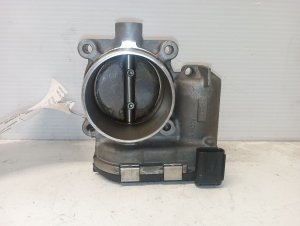
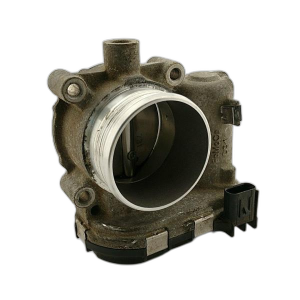
- Faulty Electronic Throttle Body (ETB) 🔴 High Probability → Shop Fuel Injection Throttle Body This is a widely documented failure point. Ford's Customer Satisfaction Program 13N03 extended the warranty to 10 years/150,000 miles due to the high failure rate of the internal electronics, which get contaminated. This is the most common cause of P2138 on these cars.
How to confirm: With a diagnostic scan tool, monitor the live data for the two Throttle Position Sensors (TPS1 and TPS2). If the voltages are erratic, do not track each other smoothly, or are stuck, the throttle body is faulty. The TPS sensors are integrated and cannot be replaced separately.
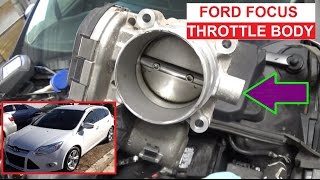
Typical fix: Replace the entire electronic throttle body assembly. The OEM Motorcraft part number is CP9Z-9E926-D. 🎬 See this step-by-step throttle body replacement walkthrough. After replacement, perform a throttle relearn procedure, which often involves disconnecting the battery for 15 minutes, then letting the car idle for 10-15 minutes.
Est. part cost: $80-$200 - Faulty Accelerator Pedal Position (APP) Sensor 🔴 High Probability → Shop Accelerator Pedal Assembly The APP sensor is an electronic component that wears out from constant use. It contains two separate sensors for redundancy, and an internal failure can cause their signals to no longer correlate, triggering the code.
How to confirm: Using a scan tool, observe the live data for the two APP sensors (APP1 and APP2). As you press the pedal, the voltage readings should be smooth and proportional. One signal should be roughly double the other at all times. If one signal drops out, is jerky, or doesn't track the other, the pedal assembly has failed.
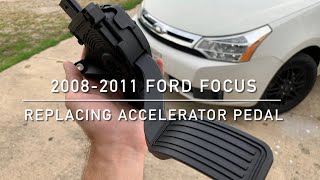
Typical fix: Replace the entire accelerator pedal assembly. The sensors are integrated and not sold separately. The OEM part number is often CV6Z-9F836-G. The replacement involves removing three nuts and one electrical connector 🎬 Watch: How to replace the accelerator pedal assembly. inside the cabin.
Est. part cost: $85-$150 - Chafed Engine Wiring Harness 🟡 Medium Probability On 2012-2014 models (built before mid-Feb 2014), Ford TSB 18-2062 identifies an issue where the engine harness can rub against the intake manifold near the throttle body, wearing through the insulation and causing shorts or open circuits in multiple sensor wires, including those for the throttle.
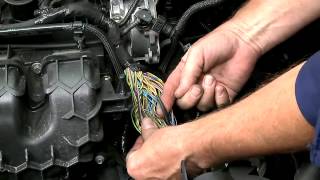
How to confirm: Visually inspect the wiring harness where it runs near and under the plastic intake manifold, close to the throttle body. Look for signs of abrasion, exposed copper wires, or electrical tape that looks out of place from a previous repair. The TSB provides specific instructions to lift the harness to inspect the area of concern.
Typical fix: Repair the damaged wires by soldering in new sections (adding ~2mm of wire to maintain length) and adding protective Coroplast electrical tape or split-loom convolute to prevent future chafing, as outlined in TSB 18-2062.
Est. part cost: $5-$20 for wire and loom - Dirty Throttle Body ⚪ Low Probability → Shop Fuel Injection Throttle Body Gasoline Direct Injection (GDI) engines can be prone to carbon buildup on the back of the throttle plate and in the throttle bore, which can cause the plate to stick slightly. While this can cause issues, it's less likely to cause a P2138 correlation fault than an outright electronic failure of the ETB itself.
How to confirm: Remove the intake air tube from the throttle body and visually inspect the throttle plate and bore for black carbon deposits. A sticky plate can cause the TPS readings to lag behind the PCM's command, potentially triggering a correlation error.
Typical fix: Clean the throttle body bore and plate with a dedicated throttle body cleaner and a soft cloth. Do not push the plate open manually. Instead, have a helper turn the key to 'ON' (engine off) and press the gas pedal to open it for cleaning.
Est. part cost: $10-$15 for cleaner
Rare But Worth Checking
- PCM Software Glitch or Failure: In some cases, the PCM's software calibration for monitoring the sensor voltages can be too sensitive. A software update from a Ford dealership can sometimes resolve the issue. A complete PCM failure is very rare and should only be considered after all other possibilities are exhausted.
- Poor Connection at PCM or Sensor Connectors: Corrosion, moisture, or backed-out pins at the accelerator pedal connector, throttle body connector, or the main PCM connector can cause intermittent signal loss and trigger this code. This is more likely if the vehicle has been in a flood or the cowl area leaks.
- Low Battery Voltage: Some sources suggest that if the battery voltage drops below 10 volts during startup or operation, the PCM can lose its throttle body calibration, potentially setting a P2138 code. Ensuring the battery and charging system are healthy is a good preliminary step.
Diagnosis Steps
- Scan for Codes: Use an OBD-II scanner to confirm P2138 is the primary code. Note any other codes that are present, especially P2111, P2112, or P2135.
- Check for TSBs & Programs: Check for Technical Service Bulletins (TSBs) and warranty extensions. For 2012-2014 models, check the build date for TSB 18-2062 applicability. Acknowledge Customer Satisfaction Program 13N03 for the throttle body, though it has likely expired.
- Analyze Live Data: Use a scan tool that can display live data. Graph the voltage signals from APP Sensor 1 and APP Sensor 2. Press the accelerator pedal slowly from fully released to fully depressed. The signals should be smooth, not jerky, and track each other. Repeat this process for TPS Sensor 1 and TPS Sensor 2 by having a helper press the pedal with the key on, engine off. Any jumps, dropouts, or flat spots indicate a failing sensor.
- Inspect Wiring (Especially 2012-2014): Visually inspect the engine wiring harness for chafing near the intake manifold, as described in TSB 18-2062. This is a critical step for these model years. Also check the connectors at the accelerator pedal and throttle body for corrosion, damage, or loose pins.
- Inspect Throttle Body: Remove the intake hose and inspect the throttle plate for heavy carbon buildup that could cause it to stick. While less common, it's an easy check.
- Test Circuits: If a sensor appears faulty and the wiring looks good, you can perform continuity and voltage checks on the signal, reference (typically 5V), and ground wires between the sensor and the PCM to rule out a wiring issue.
Parts You'll Likely Need
- Accelerator Pedal Assembly — This is a high-probability cause. The integrated sensors fail, causing a correlation error. The entire pedal assembly must be replaced.
Trusted brands: Motorcraft, Standard Motor Products, Dorman
OEM price range: $120-$180
Aftermarket price range: $85-$150 - Electronic Throttle Body
(OEM #TB-15)— This is another high-probability cause due to a known defect on this platform. The internal Throttle Position Sensors (TPS) fail, requiring replacement of the whole unit.
Trusted brands: Motorcraft, Bosch, Cardone
OEM price range: $150-$250
Aftermarket price range: $80-$180
Related Codes That Often Appear With This One
- P2135 — This code is for 'Throttle/Pedal Position Sensor/Switch A/B Voltage Correlation' and is very similar to P2138. It is listed in TSB 18-2062 as a possible code caused by the wiring harness issue.
- P2111 or P2112 — These codes indicate the throttle actuator is stuck open or closed. They often appear alongside P2138 if the root cause is a failing electronic throttle body assembly or a wiring harness short.
- P0122, P0222, P2127 — These codes indicate a low voltage input for a specific TPS or APP sensor circuit. They can accompany P2138 if a wire is shorted to ground or a sensor has completely failed, and are all mentioned in TSB 18-2062.
Technical Service Bulletins (TSBs) & Recalls
- 18-2062: Engine harness may chafe against the intake manifold on 2012-2014 models, causing shorts in throttle control circuits.
- 13N03 (Customer Satisfaction Program): Not a formal TSB, but a warranty extension program for failing electronic throttle bodies on 2012-2018 models.
- SSM 53375: Notes that vehicles may exhibit an illuminated wrench indicator with DTC P2138 stored in the PCM.
- SSM 46829: Describes how the APP sensor 14A005 harness being improperly routed behind the brake booster to the brake pedal can trigger P2138 and other warning indicators like ABS or Advanced Trac.
- SSM 46880: Similar to other manufacturer bulletins, this notes that improper routing of the APP sensor harness behind the brake booster can cause P2138 and multiple warning lights.
Platform-Specific Known Issues
- Owner Repair Story: Throttle Body Solves Limp Mode: → Shop Fuel Injection Throttle Body A common owner experience found on forums like FocusFanatics involves a 2014 Focus suddenly losing power on the highway with the wrench light illuminated. The owner scans the car and finds P2138 and P2111. After reading about the common failures, they purchase a Motorcraft throttle body (Part No. CP9Z-9E926-D or TB-15) for around $120. The replacement takes under an hour with basic tools. After the new part is installed and the battery is disconnected for 15 minutes to reset the PCM, the car runs perfectly with no more limp mode or error codes.
- DIY Tip: Wiring Harness Inspection is Crucial for 2012-2014 Models: An experienced DIYer on a forum noted that before ordering any parts for a 2013 Focus with P2138, they first followed the guidance of TSB 18-2062. They removed the air cleaner assembly and carefully inspected the engine harness where it runs over the engine and near the intake manifold. They found a spot where the plastic loom had worn through and two wires were starting to chafe. Repairing the wires with solder and wrapping the area with Coroplast electrical tape permanently fixed the code without needing to replace the throttle body or pedal.
Mechanic-Grade Diagnostic Values
- TPS Reference Voltage (VREF) at sensor connector — expected: 4.8V - 5.2V with key on, engine off.. Failure: Voltage below 4.8V or above 5.2V points to a PCM or wiring issue, not the sensor itself.
- TPS1 / TPS2 Signal Voltages at Idle — expected: The two signals are inverse. One should be ~0.5V-1.0V and the other ~4.5V. Their sum should be approximately 5V.. Failure: Voltages are jumpy, do not change smoothly, or their sum deviates significantly from 5V.
- TPS1 / TPS2 Signal Voltages at Wide Open Throttle (WOT) — expected: The sensor that read low at idle should now read ~4.5V, and the one that read high should now read ~0.5V.. Failure: Failure to reach the expected voltage or any spikes/dropouts during the throttle sweep.
- APP Sensor D & E Signal Voltages — expected: Both voltages should rise smoothly and proportionally from ~0.5V (released) to ~4.5V (fully depressed).. Failure: A divergence between the two signals greater than 0.5V will typically trigger the fault. Any jumps, dropouts, or non-proportional movement indicates a faulty pedal assembly.
- Sensor Ground Circuit Voltage Drop — expected: Less than 0.1V when testing between the ground pin at the sensor connector and a known good chassis ground.. Failure: Voltage higher than 0.1V indicates a poor ground connection, which can cause incorrect sensor readings.
Scan Tool Commands That Help
- FORScan or other professional scan tool: Reset the KAM (Keep Alive Memory) — This procedure should be performed after replacing the throttle body or disconnecting the battery to clear learned adaptive values. It forces the PCM to start a fresh learning cycle.
- Scan Tool with Live Data (e.g., FORScan, Autel, Snap-on): Monitor 'Throttle Angle Trim' or 'ETC_TRIM_DEG' PID — During the idle relearn procedure, monitoring this value confirms the PCM is actively learning the new closed-throttle position. The value should start higher and gradually decrease and stabilize as the engine idles.
Wiring & Ground Locations
- Main Engine Bay Ground (G1) — Underneath the air cleaner box, on the chassis frame rail.. This is a primary ground point for the engine bay. A poor connection here can cause a voltage drop and introduce electrical noise, affecting the PCM and its sensor readings, including the throttle and pedal sensors.
- PCM Ground — All Fords with an engine bay PCM have a ground point located very close to the PCM itself. On the Focus, this is typically under the air box.. The PCM relies on a clean, solid ground reference to accurately interpret the low-voltage signals from the APP and TPS sensors. A faulty PCM ground can directly cause correlation errors.
- Interior Ground Point — Behind the passenger side kick panel or inside the dash structure above the glove box (requires removing the glove box).. The Accelerator Pedal Position (APP) sensor is located inside the cabin. Its circuits may rely on an interior ground point. A corroded or loose ground here could affect the APP sensor signals specifically.
Real Owner Repair Stories
- Reddit user StuckDog151384 (Ford Focus (year/engine not specified, but within this generation)) — Rough idle after major service (transmission repair).
❌ Tried (didn't work) Replacing the throttle body with a known-good unit., Performing the throttle relearn procedure.
✅ What actually fixed it A hose was found to have been left disconnected during the initial repair. Reconnecting the hose resolved the rough idle, which presented symptoms similar to a faulty throttle body. - NHTSA ODI #10860309 — An owner reported a check engine light with P2138 (APP sensor correlation error). The service center followed TSB 13-11-15 to bypass specific circuits (LE136, LE137, and RE137) at connector C210.
- NHTSA ODI #11435669 — A report describes a vehicle stopping in traffic without warning. The diagnostic showed codes P2610 and P2138, requiring a wire repair bypass from connector C210 to the PCM and a software update per TSB 13-11-15.
"I Checked Everything" — The Actual Cause
- For this electronic fault, the equivalent scenario is replacing the most common parts (throttle body, accelerator pedal) without a fix. In many cases, particularly on 2012-2014 models, the actual cause is the chafed wiring harness as described in TSB 18-2062. Technicians may replace the throttle body first due to its high failure rate, but if the wiring is the true cause, the P2138 code will return.
- Another common scenario is the code appearing after a battery replacement or if the battery is old and has low voltage. The PCM can lose its throttle calibration data. Technicians might mistakenly diagnose a faulty sensor, when the actual fix is to perform a KAM reset and idle relearn procedure.
Model Year Variations Within This Range
- 2015-2018: The Ford Focus received a significant facelift (becoming the 'Mk3.5') for the 2015 model year. While this changed the exterior styling and interior layout, the 2.0L GDI engine and its electronic throttle control system remained fundamentally the same. The causes and diagnostic procedures for P2138 are consistent across the 2011-2018 range, with the exception of the wiring TSB which primarily affects pre-facelift 2012-2014 models.
Diagnostic Flowchart
Other Known Issues on This Vehicle
Issues unrelated to this code that are worth knowing about as an owner of this generation:
- DPS6 PowerShift Dual-Clutch Transmission Failure 🔴 High — Extremely common on 2012-2016 models. Symptoms include shuddering, jerking, hesitation, and complete loss of drive. (Ref: Multiple class-action lawsuits and warranty extensions (e.g., 14M01, 14M02) were issued, but the fundamental design flaw persists.)
- Passenger-Side Engine Mount Collapse 🟠 Medium — Common across all years. The liquid-filled mount degrades, causing it to collapse and transmit severe vibration and roughness into the cabin, especially at idle.
- Canister Purge Valve Failure 🟡 Low — A frequent issue where the valve sticks open, causing rough idle, difficulty starting after refueling, and codes like P1450. (Ref: Recall 18S32 was issued to reprogram the PCM to prevent fuel tank deformation that could result from a stuck-open purge valve.)
Used vs. New Parts: Buying Guide for This Vehicle
When a used part is the smart pick: A used accelerator pedal assembly from a reputable salvage yard is a reasonable choice, as it is located inside the cabin and protected from weather and engine heat. A used engine wiring harness is also a viable option if a section is needed for repair.
Donor-vehicle mileage cap: roughly under 80000 miles for the part to have meaningful remaining life.
What to inspect on the donor part:
- For a throttle body, check for a clean connector with no bent or corroded pins and minimal carbon buildup on the throttle plate.
- For a pedal assembly, ensure the connector is clean and the pedal moves smoothly without binding.
- Check the donor vehicle's VIN to ensure it does not fall under the 2012-2014 range for the chafing wiring harness TSB if you are sourcing a harness.
OEM-only on this vehicle (don't cheap out):
- Electronic Throttle Body (ETB)
Aftermarket brands forum-validated for this vehicle:
- Hitachi (often an OE supplier)
- Standard Motor Products (SMP)
- Cardone
Brands owners have reported issues with on this vehicle:
- Unbranded, low-cost units from online marketplaces are frequently cited on forums as having poor quality control and a high rate of premature failure or calibration problems.
Real Owner Stories
Aggregated from forums and TSBs cited above. Mileages and costs reflect what owners reported in those sources.
2014 Ford Focus 2.0L GDI
Symptoms: Sudden loss of power on the highway with the wrench light illuminated; scans showed P2138 and P2111.
What fixed it: Replacement of the throttle body with Motorcraft part CP9Z-9E926-D and a 15-minute battery disconnect to reset the PCM.
Cost: $120-$120
Source hint: focusfanatics.com thread mentioned in 'Owner Repair Story: Throttle Body Solves Limp Mode'
2013 Ford Focus 2.0L GDI
Symptoms: P2138 code present; owner inspected the engine harness near the intake manifold.
What fixed it: Repaired two chafed wires by soldering and wrapping the area with Coroplast electrical tape as per TSB 18-2062.
Source hint: DIY Tip: Wiring Harness Inspection is Crucial for 2012-2014 Models
2012-2018 Ford Focus
Symptoms: The 'dreaded P2138 throttle problem' where replacing both the throttle body and accelerator pedal did not resolve the issue.
What fixed it: The source points toward a more complex wiring or PCM problem in rare cases where standard part replacement fails.
Source hint: fordownersclub.com thread titled 'The dreaded P2138 throttle problem'
Related OBD-II Codes
Frequently Asked Questions
Does Ford Customer Satisfaction Program 13N03 apply to my 2011-2018 Focus?
My 2013 Focus has a P2138 code; should I check the wiring before buying a throttle body?
What is the specific Motorcraft part number for the replacement throttle body on a 2.0L GDI Focus?
Can I just replace the TPS sensor on the throttle body to save money?
Is there a specific part number for the accelerator pedal assembly if the APP sensor fails?
How do I perform the throttle relearn procedure after replacing the ETB?
Helpful Videos
We Have This Part in Stock

The information in this article is provided for general reference and educational purposes only. Vehicle specifications, procedures, and part compatibility can vary by production date, trim level, and region. Always consult your vehicle's factory service manual and verify part numbers before purchasing or performing repairs. Safety-critical components such as airbags, seat belts, and braking systems should be installed by a qualified professional.
- Ford Focus:
- 🧭 Diagnostic Flowchart
- 🎬 Helpful Videos
- 🛍️ Shop This Part
- What's Unique About the 2011-2018 Ford Focus
- Symptoms You May Notice
- Most Likely Causes
- Rare But Worth Checking
- Diagnosis Steps
- Parts You'll Likely Need
- Related Codes That Often Appear With This One
- Technical Service Bulletins (TSBs) & Recalls
- Platform-Specific Known Issues
- Mechanic-Grade Diagnostic Values
- Scan Tool Commands That Help
- Wiring & Ground Locations
- Real Owner Repair Stories
- "I Checked Everything" — The Actual Cause
- Model Year Variations Within This Range
- Other Known Issues on This Vehicle
- Used vs. New Parts: Buying Guide for This Vehicle
- Real Owner Stories
- 2014 Ford Focus 2.0L GDI
- 2013 Ford Focus 2.0L GDI
- 2012-2018 Ford Focus
- Related OBD-II Codes
- Frequently Asked Questions
- 🎟️ Get 5% Off