

P2138 on 2015-2023 Ford Mustang: Causes and Fixes for Limp Mode
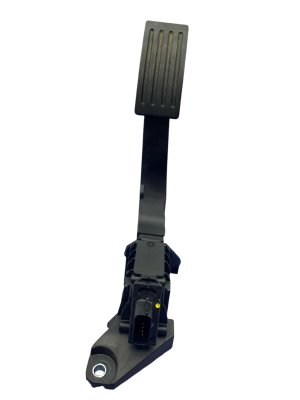
On a 2015-2023 Mustang, code P2138 is almost always caused by a failing accelerator pedal position (APP) sensor. This triggers a wrench light and 'limp mode.' The fix is to replace the entire accelerator pedal assembly, which costs about $50-$100 for an OEM part and is a very easy DIY job. Before replacement, check for a crumbled brake pedal stop pad, which can cause identical symptoms.
- P2138 on a 2015-2023 Mustang almost always means you need a new accelerator pedal assembly.
- Before buying a new pedal, check your driver's side floor mat for broken plastic pieces from the brake pedal stop pad, as this can cause identical symptoms.
- The repair is very simple and can be done by a DIYer in under 30 minutes with basic tools.
- Always verify the correct OEM part number for your specific Mustang's year, trim, and transmission.
What's Unique About the 2015-2023 Ford Mustang
For the S550 generation Mustang (2015-2023), the P2138 code is overwhelmingly linked to the accelerator pedal assembly itself, rather than the throttle body. While other vehicles might see this code for throttle body issues, Mustang owners almost exclusively report fixing it with a new pedal. Before replacing the pedal, however, it's crucial to check for a less common but known issue: a crumbled plastic brake pedal stop pad, which can cause identical symptoms and is a much cheaper fix.
Generation note: The 2015-2023 Ford Mustang is all part of the S550 generation, but it received a significant facelift in 2018. While the P2138 code and its primary cause (the accelerator pedal) are common to the entire generation, there are different pedal designs and part numbers (e.g., all-black vs. metallic finish, manual vs. automatic). Always verify the correct part number for your specific year, trim, and transmission before ordering.
Symptoms You May Notice
- Sudden loss of engine power (Limp Mode)
- Wrench icon illuminated on the dashboard
- Check Engine Light is on
- Hesitation or jerky acceleration
- Unresponsive or delayed throttle response
- Sticking throttle at any RPM
- Replacing the throttle body. While P2138 can be related to the throttle body on other cars, on the 2015-2023 Mustang, the issue is almost always the accelerator pedal assembly.
Most Likely Causes
- Defective Accelerator Pedal Position (APP) Sensor 🔴 High Probability → Shop Accelerator Pedal Assembly The dual sensors integrated into the pedal assembly can fail electronically over time, causing their voltage signals to no longer correlate. This is a well-documented common failure point on the S550 Mustang platform.
How to confirm: Scan the vehicle for code P2138. A mechanic can use a scan tool to monitor the live data from both APP sensor circuits (APP1 and APP2) while pressing the pedal. The two voltage signals should move in a smooth, inverse relationship. A jumpy, erratic, or non-responsive signal from one sensor confirms a bad pedal assembly.
Typical fix: Replace the entire accelerator pedal assembly. The sensor is not sold separately from the pedal. This is a simple DIY job requiring only a 10mm socket and a small screwdriver. 🎬 Watch this step-by-step walkthrough for replacing your Mustang's accelerator pedal.
Est. part cost: $50-$100
Rare But Worth Checking
- Crumbled Brake Pedal Stop Pad: On S550 Mustangs, a small plastic pad on the brake pedal arm can disintegrate. This can cause the brake light switch to remain engaged, confusing the computer (which won't allow acceleration if it thinks the brake is being pressed) and leading to acceleration issues that mimic a bad APP sensor. Always check for small plastic bits on your driver-side floor mat 🎬 See how a broken brake stop pad causes these symptoms. before ordering a new pedal.
- Wiring or Connector Issue: A damaged wire or corroded pins in the connector at the accelerator pedal can cause an intermittent signal and trigger P2138. A Ford TSB also mentions that water intrusion into an instrument panel body harness connector (C2280B) can cause corrosion and trigger this code. Visually inspect the wiring and connectors for any signs of damage, corrosion, or looseness before replacing parts. Manufacturer service bulletins for other Ford models, such as Bulletin #SSM 46829 and Bulletin #SSM 46880, note that P2138 can be caused by the APP sensor harness being improperly routed behind the brake booster to the brake pedal.
- Faulty Throttle Body: → Shop Fuel Injection Throttle Body While much less common for this code on a Mustang, a problem with the Throttle Position Sensors (TPS) located on the throttle body could theoretically cause a correlation fault. This is more likely if other throttle-related codes (like P2135) are present. Cleaning a dirty throttle body is a good first step if this is suspected.
- Powertrain Control Module (PCM) Fault: → Shop Engine Control Module (ECM) In very rare cases, the PCM itself may be the source of the problem, due to either a software glitch or hardware failure. This should only be considered after all other possibilities, including sensors and wiring, have been thoroughly ruled out. Sometimes a PCM software update from the dealer can resolve the issue. Bulletin #SSM 53375 notes that some Ford vehicles may exhibit an illuminated powertrain malfunction (wrench) indicator with DTC P2138 stored in the PCM.
Diagnosis Steps
- Use an OBD-II scanner to confirm that P2138 is the primary code stored.
- Inspect the driver-side floor mat for small, broken pieces of blue or white plastic, which would indicate a failed brake pedal stop pad.
- Visually inspect the accelerator pedal's electrical connector (C278) and wiring harness for any signs of damage, corrosion, or loose connections. The connector has a red safety tab that must be pulled 🎬 Watch a mechanic demonstrate how to swap out the pedal assembly. up before it can be unplugged.
- If possible, use a scan tool with live data capability to monitor the voltage of the two APP sensor signals (often labeled APP1 and APP2 or similar). As you press the pedal, the voltages should change smoothly and in correlation (e.g., one rises from ~0.5V to 4.5V while the other falls). A jumpy or non-responsive signal from one sensor confirms a bad pedal assembly.
- If the pedal and its connector appear fine, inspect the instrument panel to body harness connector (often connector C2280B, located near the driver's kick panel) for signs of water intrusion or corrosion.
- If the throttle body is suspected, inspect it for excessive carbon buildup and clean if necessary.
- If all sensors and wiring check out, the issue may be a rare fault within the PCM, which requires professional diagnosis.
Parts You'll Likely Need
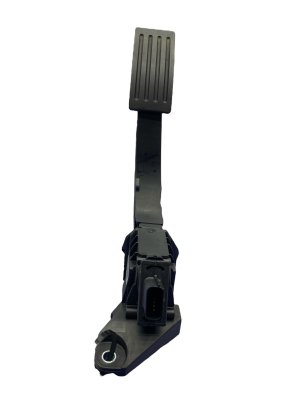
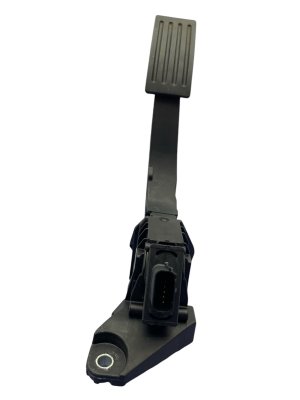
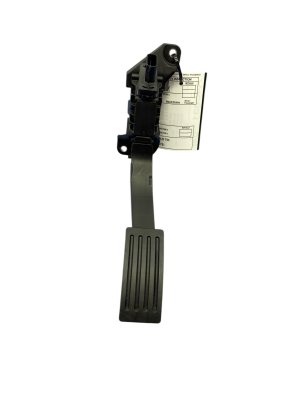
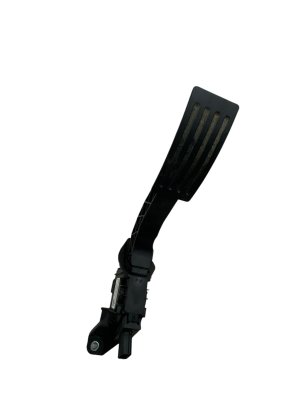
- Accelerator Pedal Assembly
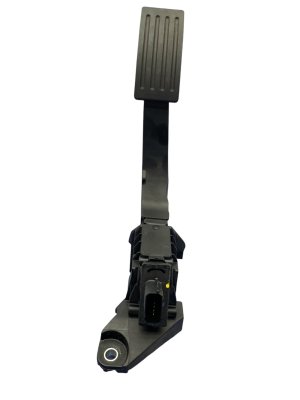
(OEM #FR3Z-9F836-D (common, but verify by VIN))— This is the most common cause of P2138 on this platform. The assembly includes the integrated Accelerator Pedal Position (APP) sensors that fail. Part numbers vary by year and trim (e.g., metal vs. plastic pedal face).
Trusted brands: Motorcraft (OEM)
OEM price range: $50-$120
Aftermarket price range: $40-$80
Related Codes That Often Appear With This One
- P2135 — This code also indicates a voltage correlation issue, but typically points to the Throttle Position Sensors ('A'/'B' correlation) on the throttle body itself. Seeing both could indicate a more complex wiring or PCM issue.
Technical Service Bulletins (TSBs) & Recalls
- While a specific Ford TSB number for P2138 on the Mustang was not found, the issue of water intrusion into body harness connectors (like C2280B) causing various electrical faults is a known pattern. TSB 16-0047, though for a different issue on Explorers, demonstrates Ford's procedure for addressing module and software-related drivability problems.
- Cross-manufacturer service bulletins such as Bulletin #SSM 46829 and Bulletin #SSM 46880 highlight that P2138 can be triggered by improper routing of the APP sensor harness behind the brake booster.
- Bulletin #SSM 53375 confirms that P2138 is a recognized code for illuminated powertrain malfunction (wrench) indicators across several Ford platforms.
Platform-Specific Known Issues
- A known issue on the S550 Mustang is the disintegration of the brake pedal stop pad, which can cause symptoms identical to a P2138 code without actually triggering it. It's a crucial first check.
- A Technical Service Bulletin (TSB) has been noted for potential water leaks into a body harness connector near the driver's kick panel, which can cause corrosion and lead to this code.
Mechanic-Grade Diagnostic Values
- APP Sensor D and E Live Voltage (Scan Tool) — expected: Both signals should rise and fall proportionally and smoothly as the pedal is pressed and released. For example, one may sweep from ~0.5V to ~4.5V while the other sweeps from ~4.5V to ~0.5V, or they may have a set offset (e.g., one is always half the voltage of the other). A divergence greater than 0.5V between the expected correlation typically triggers the fault.. Failure: A jumpy, erratic, stuck (at 0V or 5V), or non-responsive voltage reading from either sensor during a slow pedal sweep.
- APP Sensor Circuit Wire Resistance — expected: Less than 20 Ω on continuity checks between the pedal connector pins and the corresponding PCM connector pins.. Failure: Resistance greater than 20 Ω indicates excessive resistance, and infinite resistance (OL) indicates an open circuit in the wiring harness.
Scan Tool Commands That Help
- Ford IDS / FORScan: KAM (Keep Alive Memory) Reset — After replacing the accelerator pedal assembly or cleaning the throttle body, performing a KAM reset will clear the learned adaptive values, forcing the PCM to relearn the new component's idle and range-of-motion values. This can help resolve lingering drivability issues after a repair.
- N/A - Manual Procedure: Throttle Body Relearn / Pedal Calibration — After disconnecting the battery or replacing the pedal/throttle body, a manual relearn can be attempted. Turn the ignition to 'ON' (engine off). Slowly press the accelerator pedal to the floor and release it slowly three times. Then turn the key off, wait a moment, and start the engine. This helps the PCM recognize the full travel range of the new components.
Wiring & Ground Locations
- C278 — The 6-pin electrical connector that plugs directly into the top of the accelerator pedal assembly.. This is the primary connection point for the two APP sensors. It should be inspected for pushed-out pins, corrosion, or wiring damage right at the connector, as foot movement can sometimes stress these wires.
- C2280B — An instrument panel-to-body harness connector located in the driver's side kick panel area, near the Body Control Module (BCM).. This connector is a known weak point for water intrusion from clogged sunroof drains, A-pillar leaks, or windshield seal leaks. Corrosion on the pins within C2280B can disrupt the APP sensor signals traveling to the PCM, causing a P2138 code even if the pedal itself is good. The APP sensor circuits pass through this connector.
Real Owner Repair Stories
- Just Commodores Forum (Holden Calais (GM vehicle, but demonstrates a P2138 diagnostic path)) — Intermittent low power mode, P2138 code stored.
❌ Tried (didn't work) Swapping the entire accelerator pedal assembly with a known-good one from another car. The problem remained with the original car, ruling out the pedal sensor.
✅ What actually fixed it The issue was traced to a faulty wiring loom in the driver's side front corner of the engine bay. Moving or securing the wiring loom would cause the problem to manifest in different electrical systems (speakers, headlights). The underlying cause was a production flaw in the wiring harness itself, causing intermittent shorts or open circuits. - NHTSA ODI #10860309 — An owner reported a check engine light with P2138 (APP sensor correlation error). Following TSB 13-11-15, the service center bypassed specific circuits at connector C210 to resolve the issue.
- NHTSA ODI #11435669 — An owner reported their car stopped in the middle of traffic with no warning. The repair invoice cited codes P2610 and P2138, requiring a wire repair bypass from connector C210 to the PCM and a software reprogram.
When the Usual Fixes Don't Work
- While the accelerator pedal assembly is the fix in over 90% of cases for P2138 on this platform, there are documented instances where the code persisted after replacement. In these situations, the root cause was often found in the wiring harness. One owner on a GM forum (with the same code) swapped a known-good pedal, and the fault did not follow the part, proving the issue was in the car's wiring. Another common culprit is corrosion in the C2280B body harness connector in the driver's kick panel due to water leaks, which interrupts the signals from a perfectly good pedal. Therefore, if a new pedal does not fix the issue, a thorough inspection of the wiring harness from the pedal (C278) to the PCM, paying close attention to the C2280B connector, is the critical next step.
OEM Part Supersession History
FR3Z-9F836-C→FR3Z-9F836-D (and others)— Standard part revision and update by Ford.
Heads up: Part numbers for the S550 Mustang accelerator pedal are highly specific to year range (2015-2017 vs 2018+), transmission (manual vs automatic), and trim level (base plastic pedal vs. premium metal-faced pedal). For example, FR3Z-9F836-D is common but may not fit all models. Always verify the correct part number with a VIN before purchasing.
Model Year Variations Within This Range
- 2015-2017 vs 2018-2023: The 2018 model year marked a significant facelift for the S550 Mustang, which included changes to the interior and powertrain. The accelerator pedal assemblies, while functionally similar, have different designs (especially the pedal cover/face) and corresponding part numbers. A pedal for a 2015-2017 may not be the correct fit or have the correct appearance for a 2018+ model.
- All (Manual vs. Automatic): Historically, Ford has used different pedal shapes and sizes for manual and automatic transmission vehicles to optimize for heel-toe driving and general ergonomics. While the electronic sensor function is the same, the physical pedal assembly part number may differ between a manual and an automatic S550 Mustang.
Diagnostic Flowchart
Other Known Issues on This Vehicle
Issues unrelated to this code that are worth knowing about as an owner of this generation:
- A/C Evaporator Core Failure 🔴 High — Common, especially on 2015-2018 models, but can occur at any mileage. Repair is very labor-intensive as it requires full dashboard removal. (Ref: TSB 18-2166 and 18-2256 were issued for 2015-2017 models.)
- Coyote V8 "BBQ Tick" 🟡 Low — A common, intermittent ticking noise from the 5.0L Coyote engine at delete, often compared to a BBQ igniter. Ford has generally stated this is a normal characteristic of the engine and does not affect longevity, though it is an annoyance for many owners.
- 10R80 Automatic Transmission Issues 🟠 Medium — Owners of 2018+ models with the 10-speed automatic report issues like harsh/jerky shifting, delayed engagement, and in some cases, premature failure requiring rebuilds or replacement. (Ref: Multiple lawsuits have been filed, and various software updates have been released by Ford to improve shift quality.)
- Hood Paint Corrosion/Bubbling 🟠 Medium — Corrosion and bubbling can appear on the leading edge of the aluminum hood, often due to contamination during manufacturing. This has been a recurring issue on Mustangs for several generations.
- MT82 Manual Transmission Issues 🟠 Medium — Some owners report notchy shifting, high-RPM lockout, and premature wear with the Getrag MT82 6-speed manual transmission. The experience varies widely, with some units being trouble-free and others requiring repairs.
- Interior Rattles and Build Quality 🟡 Low — A common complaint is inconsistent panel gaps and various interior rattles from the dashboard, door panels, and center console area.
Used vs. New Parts: Buying Guide for This Vehicle
When a used part is the smart pick: For this specific repair, buying a used accelerator pedal assembly is generally not recommended. The APP sensor is a known common failure item due to electronic wear, not physical damage. A used part from a salvage yard carries a high risk of having the same internal fault or a short remaining lifespan.
Donor-vehicle mileage cap: roughly under 30000 miles for the part to have meaningful remaining life.
What to inspect on the donor part:
- Verify the part number exactly matches your vehicle's required part number (check by VIN).
- Inspect the electrical connector pins for any signs of corrosion, damage, or being bent.
- Ensure the wiring pigtail has not been cut or damaged.
- Ask for the donor vehicle's mileage; a lower mileage part is a slightly lesser gamble.
OEM-only on this vehicle (don't cheap out):
- Accelerator Pedal Assembly
Aftermarket brands forum-validated for this vehicle:
- Motorcraft (OEM)
Brands owners have reported issues with on this vehicle:
- Unbranded or generic "white-box" parts from online marketplaces. Forum users across various platforms frequently report that cheap aftermarket electronic sensors fail quickly, sometimes within days or months, making the small initial savings not worth the repeated labor and risk of being stranded.
Real Owner Stories
Aggregated from forums and TSBs cited above. Mileages and costs reflect what owners reported in those sources.
2018 Mustang GT
Symptoms: throwing a code and going into limp mode on acceleration, and I've also noted that my air to fuel ratio is very unstable. If I turn the car off and back on after a few minutes, it clears the code and drives normal again
What fixed it: No resolution reported by the original poster.
Source hint: reddit.com r/Mustang - Ideas and help with diagnosis
S650 Mustang (2024+)
Symptoms: P2138 code, likely limp mode and CEL.
What fixed it: Repairing frayed wiring from the factory above the clutch pedal that was causing a short.
Source hint: mustang7g.com - P2138 code anyone?
Related OBD-II Codes
Frequently Asked Questions
Can a broken piece of plastic under my dash cause a P2138 code on my S550 Mustang?
Is there a TSB for water leaks causing electrical codes like P2138 in the Mustang?
Can I just replace the sensor on my 2015-2023 Mustang accelerator pedal?
What tools do I need to fix the P2138 code myself on my Mustang?
Could my Mustang's 10-speed transmission be causing these limp mode symptoms?
Are there other engine components that cause similar hesitation on the 5.0L Coyote?
Helpful Videos
We Have This Part in Stock

The information in this article is provided for general reference and educational purposes only. Vehicle specifications, procedures, and part compatibility can vary by production date, trim level, and region. Always consult your vehicle's factory service manual and verify part numbers before purchasing or performing repairs. Safety-critical components such as airbags, seat belts, and braking systems should be installed by a qualified professional.
- Ford Mustang:
- 🧭 Diagnostic Flowchart
- 🎬 Helpful Videos
- 🛍️ Shop This Part
- What's Unique About the 2015-2023 Ford Mustang
- Symptoms You May Notice
- Most Likely Causes
- Rare But Worth Checking
- Diagnosis Steps
- Parts You'll Likely Need
- Related Codes That Often Appear With This One
- Technical Service Bulletins (TSBs) & Recalls
- Platform-Specific Known Issues
- Mechanic-Grade Diagnostic Values
- Scan Tool Commands That Help
- Wiring & Ground Locations
- Real Owner Repair Stories
- When the Usual Fixes Don't Work
- OEM Part Supersession History
- Model Year Variations Within This Range
- Other Known Issues on This Vehicle
- Used vs. New Parts: Buying Guide for This Vehicle
- Real Owner Stories
- 2018 Mustang GT
- S650 Mustang (2024+)
- Related OBD-II Codes
- Frequently Asked Questions
- 🎟️ Get 5% Off