

P2138 on 2008-2019 Ford Taurus 3.5L V6: Causes and Fixes for Pedal/Throttle Sensor Faults
On a 2008-2019 Ford Taurus, code P2138 is most often caused by a failing electronic throttle body. This triggers a wrench light and puts the car in 'limp mode'. Replacing the entire throttle body assembly is the most common fix, costing around $150-$250 for the part. A throttle relearn procedure is required after replacement.
- P2138 on a 3.5L V6 Taurus is a serious code that will put the car in a dangerous, low-power 'limp mode'.
- The most likely cause is a faulty electronic throttle body assembly, a known weak point on Fords from this era.
- The second most likely cause is a failed accelerator pedal assembly.
- Cleaning the throttle body will not fix the internal electronic fault that causes this code; replacement is necessary.
- After replacing either part, a throttle 'relearn' procedure is required to restore normal operation.
What's Unique About the 2008-2019 Ford Taurus
The 2008-2019 Ford Taurus, particularly the 2010-2013 models, belongs to an era where Ford experienced widespread electronic throttle body (ETB) failures across many vehicle lines using the 3.5L V6 engine. The root cause was often contamination on the ETB's internal electronic contacts, leading to intermittent electrical connectivity. While P2138 can point to the accelerator pedal, the ETB is a much more common failure point on this platform. Ford issued Technical Service Bulletin (TSB) 10-21-6 for the 2010-2011 Taurus for related throttle body codes (P2111, P2112), recommending replacement. Ford also created Customer Satisfaction Program 13N03, which extended the ETB warranty to 10 years/150,000 miles for other models like the Fusion and Escape, highlighting a known design or manufacturing issue with the throttle body's internal electronics. Although this specific program didn't explicitly cover the Taurus, it demonstrates the widespread nature of the problem with this component family during this period.
Generation note: This guide covers the fifth generation (2008-2009) and sixth generation (2010-2019) Ford Taurus. While the P2138 code applies to both, the electronic throttle body is a particularly well-documented failure point on the early sixth-generation models (approx. 2010-2013). Part numbers for the throttle body and accelerator pedal differ between these generations.
Symptoms You May Notice
- Check Engine Light and/or Wrench Light are on
- Vehicle enters 'limp mode' (Reduced Engine Power message)
- Sudden loss of acceleration while driving
- Hesitation, stumbling, or 'flat spots' when pressing the gas pedal
- Unresponsive or delayed throttle response (dead pedal)
- Engine may stall at low speeds or when coming to a stop
- Jerky or erratic throttle response
- Replacing only the throttle position sensor (TPS), which is not possible as it is integrated into the throttle body assembly on this vehicle.
- Cleaning a throttle body that has an internal electronic fault. While cleaning can solve idle issues caused by carbon buildup, it will not fix the correlation error caused by worn internal contacts.
- Replacing the wrong sensor. It's crucial to use a scan tool to determine if the voltage mismatch is at the pedal (APP sensors) or the throttle body (TPS sensors) before buying parts.
Most Likely Causes
- Faulty Electronic Throttle Body (ETB) 🔴 High Probability → Shop Fuel Injection Throttle Body These models are known for premature ETB failure due to contamination or wear on the internal electronic contacts, a pattern acknowledged by Ford through TSBs and warranty extensions on similar vehicles. The throttle position sensors (TPS) are integrated into the ETB and are not serviced separately. Carbon buildup can also restrict plate movement, causing erratic sensor readings.
How to confirm: After confirming no wiring issues, this is the most likely component failure. A scan tool may show erratic TPS voltage readings. Codes P2111 (Stuck Open) or P2112 (Stuck Closed) are often present alongside P2138 and strongly point to the ETB, as noted in TSB 10-21-6.
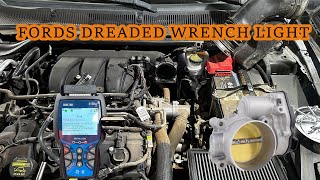
Typical fix: Replace the entire electronic throttle body assembly. 🎬 Watch: This video shows how to diagnose and replace the throttle body. Cleaning the throttle body is sometimes suggested as a first step but is not an effective long-term fix for this internal electronic fault. A throttle relearn procedure is required after replacement.
Est. part cost: $150-$300 - Faulty Accelerator Pedal Position (APP) Sensor 🟡 Medium Probability → Shop Accelerator Pedal Assembly The APP sensor is a high-use electronic part that can wear out over time, causing its two internal potentiometers to send conflicting signals to the PCM. Manufacturer bulletin #SSM 53375 notes that vehicles may exhibit an illuminated wrench indicator with DTC P2138 stored in the PCM due to these sensor faults.
How to confirm: Use a scan tool with live data capability to monitor the two APP sensor voltage signals (APP1 and APP2). As you press the pedal, the voltages should change smoothly and in a predictable, correlated manner (e.g., one rises from 0.5V to 4.5V while the other rises from 0.25V to 2.25V). Jumps, dropouts, or a non-linear response indicate a faulty sensor.
Typical fix: Replace the entire accelerator pedal assembly, as the sensor is integrated into it. This is typically a straightforward repair involving a few bolts and an electrical connector.
Est. part cost: $70-$150 - Wiring or Connector Issue ⚪ Low Probability Wiring harnesses can be susceptible to damage from chafing against other components, heat, or moisture intrusion into connectors. Manufacturer bulletin #SSM 46880 and #SSM 46829 indicate that P2138 can be caused by the APP sensor harness being improperly routed behind the brake booster to the brake pedal, potentially affecting various warning indicators.
How to confirm: Visually inspect the wiring harnesses and connectors for the throttle body and accelerator pedal. Look for corrosion, pushed-out pins, or damaged wires. With the key on and engine off, wiggle the harness while monitoring sensor data on a scan tool to see if the fault can be induced.
Typical fix: Repair the damaged section of the harness or clean/replace the affected connector. Ensure a secure connection.
Est. part cost: $10-$50
Rare But Worth Checking
- Failing Powertrain Control Module (PCM): → Shop Engine Control Module (ECM) This is very rare. The PCM should only be considered after definitively ruling out the throttle body, pedal sensor, and all related wiring. A PCM software update may also be a potential fix in some cases.
- Low Battery Voltage: A weak or failing battery can cause voltage to drop below the threshold required by various modules. If battery voltage drops below 10 volts, the throttle body's learned settings can be lost, potentially triggering correlation codes.
Diagnosis Steps
- Scan the vehicle for all stored trouble codes. Note any codes that accompany P2138, such as P2111 or P2112, as they strongly suggest a throttle body fault.
- Using a scan tool with live data, observe the voltage readings for both Accelerator Pedal Position sensors (APP1, APP2) and both Throttle Position sensors (TPS1, TPS2).
- With the key on and engine off, slowly press and release the accelerator pedal. The APP sensor voltages should sweep smoothly without any glitches or dropouts. They should have a consistent correlation (e.g., one is always half the other).
- If APP sensor readings are erratic, inspect the pedal's wiring connector before condemning the pedal assembly.
- If APP sensor readings are smooth and correct, focus on the throttle body. Inspect the wiring and connector at the throttle body for any damage or corrosion.
- If wiring is good, the throttle body is the most likely culprit, especially if codes P2111 or P2112 are also present.
- After replacing a part, clear all codes and perform the throttle relearn procedure. A common procedure involves disconnecting the battery to clear the PCM's memory, then letting the engine idle for several minutes to reach operating temperature, followed by idling with the A/C on, and then driving the vehicle for 10+ miles. 🎬 Watch: A helpful guide on the electronic throttle body calibration procedure.
Parts You'll Likely Need
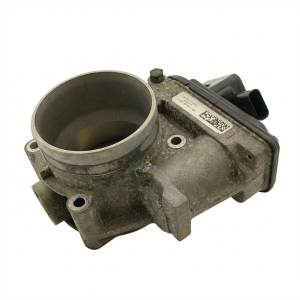
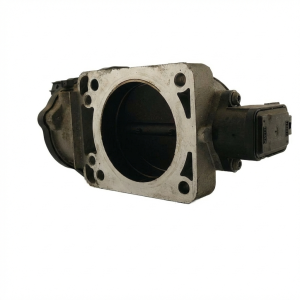
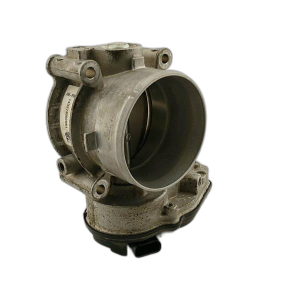
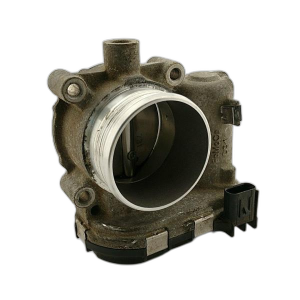
- Electronic Throttle Body Assembly
(OEM #Motorcraft 8S4Z-9E926-B (2010-2011 3.5L Non-Turbo, per TSB 10-21-6); 7T4Z-9E926-FA (2008-2009 3.5L))— This is the most common failure point for code P2138 on this platform due to a known issue with internal electronics. The TPS sensors are integrated into this assembly.
Trusted brands: Motorcraft, Hitachi, Standard Motor Products, Cardone
OEM price range: $200-$300
Aftermarket price range: $150-$220 - Accelerator Pedal Assembly
(OEM #Motorcraft DB5Z-9F836-B (2010-2019); Motorcraft 8G1Z-9F836-C (2008-2009))— The second most likely cause if the throttle body and wiring are confirmed to be good. The APP sensor is integrated into the pedal assembly.
Trusted brands: Motorcraft, Dorman
OEM price range: $100-$180
Aftermarket price range: $70-$120
Related Codes That Often Appear With This One
- P2111 — Indicates 'Throttle Actuator Control System - Stuck Open'. This code, along with P2112, is specifically mentioned in TSB 10-21-6 and directly points to a mechanical or electrical failure within the throttle body assembly.
- P2112 — Indicates 'Throttle Actuator Control System - Stuck Closed'. This is a strong indicator that the throttle body itself has failed and is a common companion code.
- P2104 — Indicates 'Throttle Actuator Control System - Forced Idle'. This is a companion code showing the PCM has initiated limp mode due to a critical throttle system fault.
Technical Service Bulletins (TSBs) & Recalls
- TSB 10-21-6: Issued October 21, 2010, this TSB addresses DTCs P2111, P2112, and idle fluctuation on 2010-2011 Ford Taurus (3.5L non-turbo) by replacing the throttle body. This corroborates the throttle body as a known weak point for this generation.
- Bulletin #SSM 53375: Notes that vehicles may exhibit an illuminated powertrain malfunction (wrench) indicator with diagnostic trouble codes including P2138 stored in the powertrain control module (PCM).
- Bulletin #SSM 46880 / #SSM 46829: These bulletins describe how P2138 and other pedal codes can be caused by the Accelerator Pedal Position (APP) sensor 14A005 harness being improperly routed behind the brake booster to the brake pedal.
Platform-Specific Known Issues
- Widespread electronic throttle body failures on 2010-2013 Ford models with the 3.5L V6 engine, leading to limp mode and codes like P2111, P2112, and P2138.
Mechanic-Grade Diagnostic Values
- APP Sensor 1 & 2 Voltage Sweep — expected: Each sensor should sweep smoothly from ~0.5V (pedal released) to ~4.5V (pedal fully depressed), with one sensor's voltage typically being half of the other's throughout the range.. Failure: A voltage divergence greater than 0.5V between the two sensors, or any sudden jumps, spikes, or dropouts during the sweep.
- APP Sensor Circuit Resistance — expected: Less than 5 ohms on signal and ground circuits.. Failure: Resistance greater than 20 Ω indicates a wiring problem.
- APP Sensor 5V Reference (VREF) — expected: 4.8V - 5.2V at the appropriate pin on the APP sensor connector with the key on, engine off.. Failure: Voltage below 4.8V or above 5.2V indicates a problem with the PCM or a short on the 5V reference circuit.
Scan Tool Commands That Help
- Ford IDS (or FORScan): Service Function: Throttle Body Relearn / Reset KAM (Keep Alive Memory) — This is a mandatory step after replacing or cleaning the throttle body. It resets the PCM's learned values for idle and throttle limits, allowing it to learn the positions of the new or cleaned part.
- Ford IDS (or FORScan): Live Data Graphing: APP1/APP2 vs. TPS1/TPS2 — Use this to visually monitor all four sensor inputs simultaneously. Graphing makes it easy to spot glitches, dropouts, or a lack of correlation that might be missed when looking at just numbers.
Wiring & Ground Locations
- Accelerator Pedal Position (APP) Sensor Connector — At the top of the accelerator pedal assembly inside the cabin.. This 6-pin connector is the primary interface for testing the APP sensor. A poor connection or damaged wire here is a common cause of P2138. Based on diagrams for similar 3.5L Fords, key pins are APPVREF1 (Voltage Ref 1), APPVREF2 (Voltage Ref 2), APP1 (Signal 1), APP2 (Signal 2), and two return/ground wires.
- Electronic Throttle Body (ETB) Connector (C134) — On the electronic throttle body assembly, at the end of the air intake tube.. A fault here can cause TPS correlation codes. This 6-pin connector contains two 5V reference, two signal return, and two throttle motor control circuits. Wiggling this connector while monitoring live data can help identify a poor connection.
- G102 / G105 — G102 is at the right rear of the engine compartment. G105 is at the rear of the engine compartment.. These are primary ground points for the engine control system. A corroded or loose ground at these locations can introduce electrical noise and cause erratic voltage readings for multiple sensors, including the APP and TPS, leading to correlation codes.
Real Owner Repair Stories
- YouTube channel 'Fix It Angelo' (2013 Ford Taurus 3.5L V6 with 100,000 miles) — Wrench light came on the dash, car went into 'limp mode' with sudden loss of power.
❌ Tried (didn't work) The owner immediately suspected the throttle body based on common knowledge of this issue.
✅ What actually fixed it Replacing the entire electronic throttle body assembly with a new part from a local auto parts store resolved the issue. A test drive after the replacement confirmed the fix. - Ford F150 Forum (2012 Ford F-150 3.7L V6 with 180,900 miles (engine family related to the 3.5L)) — Vehicle stalled and threw code P2111 (Throttle Actuator Stuck Open), a common companion to P2138.
❌ Tried (didn't work) The owner did not replace any parts initially.
✅ What actually fixed it The owner removed the throttle body and found a 1/16-inch thick layer of carbon gunk built up on the intake side. A thorough cleaning with throttle body cleaner resolved the code and associated symptoms like transmission clunking and poor MPG. This highlights that cleaning can sometimes be a viable first step if the failure isn't purely electronic. - NHTSA ODI #10860309 — An owner reported a check engine light with P2138 (APP sensor correlation error). The service center performed a bypass of circuits LE136, LE137, and RE137 at connector C210 per TSB 13-11-15.
- NHTSA ODI #11435669 — An owner reported their car stopped in the middle of traffic with no warning. The diagnostic codes were P2610 and P2138, which required a wire repair bypassing connector C210 to the PCM and a software reprogram per TSB 13-11-15.
OEM Part Supersession History
8S4Z-9E926-A→8S4Z-9E926-B— Standard part revision, likely for improved reliability or manufacturing process change.
Model Year Variations Within This Range
- 2010-2013: These model years are most notorious for the electronic throttle body failure. While the issue can occur on other years, the concentration of failures and Ford's related customer satisfaction programs on similar vehicles were focused on this era.
- 2008-2009 vs 2010-2019: The OEM part numbers for both the throttle body and the accelerator pedal assembly are different between the fifth (2008-2009) and sixth (2010-2019) generations. Ensure you are purchasing the correct part for your specific model year.
Diagnostic Flowchart
Other Known Issues on This Vehicle
Issues unrelated to this code that are worth knowing about as an owner of this generation:
- Internal Water Pump Failure 🔴 High — Common on 3.5L V6 engines, often occurring between 60,000 and 120,000 miles. Failure can cause coolant to mix with engine oil, leading to catastrophic engine failure. (Ref: No specific recall, but it is a widely documented issue and the subject of class-action lawsuits.)
- Power Transfer Unit (PTU) Failure (AWD Models) 🔴 High — The PTU (transfer case) fluid can overheat and break down, leading to seal failure, leaks, and eventual gear failure. Often neglected due to its 'lifetime fluid' designation.
- Transmission Failure (6F50/6F55) 🟠 Medium — Some models, particularly around 2015-2016, may experience loss of certain gears (like Reverse, 3rd, 5th) due to internal component failure requiring a rebuild or replacement.
- Cracked Strut Mount Bearings 🟡 Low — Bearings in the front strut mounts can wear prematurely, causing a clunking or banging noise when turning the steering wheel at low speeds.
Used vs. New Parts: Buying Guide for This Vehicle
When a used part is the smart pick: For the accelerator pedal assembly, a used part from a low-mileage donor vehicle is a reasonable choice as it is not the primary high-failure component. However, for the electronic throttle body, a used part is NOT recommended. The failure is due to an internal design flaw, and a used part is likely to have the same defect and fail prematurely.
Donor-vehicle mileage cap: roughly under 75000 miles for the part to have meaningful remaining life.
What to inspect on the donor part:
- For a used accelerator pedal, check for smooth pedal travel with no binding or grittiness.
- Verify the electrical connector and pins are clean, straight, and free of corrosion.
- Ask for the donor vehicle's VIN to confirm mileage and check for accident history.
OEM-only on this vehicle (don't cheap out):
- While not strictly 'OEM-only', the electronic throttle body should be replaced with either a new OEM (Motorcraft) part or a high-quality aftermarket part that specifically addresses the original failure mode.
Aftermarket brands forum-validated for this vehicle:
- Dorman OE FIX: This brand is specifically noted for re-engineering the part with a more durable non-contact Hall Effect sensor to prevent the common internal electronic failure.
- Hitachi: Often an OEM supplier, known for high-quality parts that meet or exceed original specifications.
- Standard Motor Products (SMP): A long-trusted brand among professional mechanics for reliable engine management components.
Brands owners have reported issues with on this vehicle:
- Cardone (Remanufactured): While cost-effective, the quality of remanufactured throttle bodies can be inconsistent. A new part from a reputable brand is a safer investment to avoid repeat failures.
- Unbranded/White-Box Parts: Avoid generic, no-name parts from online marketplaces, as their quality control and component sourcing are unknown.
Real Owner Stories
Aggregated from forums and TSBs cited above. Mileages and costs reflect what owners reported in those sources.
2013 Ford Taurus 3.5L
Symptoms: Experienced P2138 and limp mode; attempted to clean the throttle body but it provided no relief.
What fixed it: Replacing the throttle body assembly.
Source hint: TaurusClub.com thread titled 'P2138 and limp mode saga'
2009-2012 Ford (3.5L V6 Platform)
Symptoms: Sudden engine cutout while driving.
What fixed it: Replacement of the Electronic Throttle Body (ETB) under Customer Satisfaction Program 13N03.
Source hint: Ford Truck Enthusiasts discussion regarding Customer Satisfaction Program 13N03
Related OBD-II Codes
Frequently Asked Questions
Does TSB 10-21-6 apply to my 2010 Ford Taurus with the 3.5L engine?
Can I just clean the throttle body on my Taurus to fix the P2138 code?
Is there a warranty extension for the throttle body on my 2008-2019 Taurus?
Why does my Taurus say 'Reduced Engine Power' and lose acceleration?
Do I need to do anything special after replacing the throttle body on my 3.5L V6?
Can I replace just the sensor on the throttle body of my 2013 Taurus?
Helpful Videos

Used OEM Parts in Stock
New Aftermarket Parts Available

The information in this article is provided for general reference and educational purposes only. Vehicle specifications, procedures, and part compatibility can vary by production date, trim level, and region. Always consult your vehicle's factory service manual and verify part numbers before purchasing or performing repairs. Safety-critical components such as airbags, seat belts, and braking systems should be installed by a qualified professional.
- Ford Taurus:
- 🧭 Diagnostic Flowchart
- 🎬 Helpful Videos
- 🛍️ Shop This Part
- What's Unique About the 2008-2019 Ford Taurus
- Symptoms You May Notice
- Most Likely Causes
- Rare But Worth Checking
- Diagnosis Steps
- Parts You'll Likely Need
- Related Codes That Often Appear With This One
- Technical Service Bulletins (TSBs) & Recalls
- Platform-Specific Known Issues
- Mechanic-Grade Diagnostic Values
- Scan Tool Commands That Help
- Wiring & Ground Locations
- Real Owner Repair Stories
- OEM Part Supersession History
- Model Year Variations Within This Range
- Other Known Issues on This Vehicle
- Used vs. New Parts: Buying Guide for This Vehicle
- Real Owner Stories
- 2013 Ford Taurus 3.5L
- 2009-2012 Ford (3.5L V6 Platform)
- Related OBD-II Codes
- Frequently Asked Questions
- 🎟️ Get 5% Off