

P2138 on 2011-2015 Kia Sorento: Causes and Fixes for Limp Mode and Power Loss
On a 2011-2015 Kia Sorento, code P2138 is almost always caused by a faulty accelerator pedal position (APP) sensor. This triggers a dangerous 'limp mode' with severely reduced power. Replacing the entire accelerator pedal assembly is the most common fix, costing around $150-$250 for an OEM part, and is a simple DIY job.
- P2138 on a 2011-2015 Sorento almost always points to a faulty accelerator pedal assembly.
- Do not drive the vehicle with this code; the sudden loss of power ('limp mode') is a serious safety hazard.
- The most reliable way to diagnose the issue is to use a scan tool to watch the live voltage data from the two pedal sensors.
- The fix is typically replacing the entire accelerator pedal assembly, which is a DIY-friendly job that takes less than an hour.
- Do not replace the more expensive throttle body unless you have confirmed with data that the accelerator pedal sensor is working correctly.
What's Unique About the 2011-2015 Kia Sorento
While P2138 is a generic code that can point to either the pedal or the throttle body, on this generation of Kia Sorento and its platform mates (like the Hyundai Santa Fe and Kia Optima), the fault overwhelmingly lies with the accelerator pedal assembly itself. The internal sensors are a well-documented high-failure item across the Hyundai/Kia lineup of this era. While a formal recall for this specific issue doesn't exist for these years, the sheer volume of owner reports confirms the pedal assembly is the primary suspect. A different code, P2135, would more directly point to the throttle body's sensors.
Symptoms You May Notice
- Sudden loss of power and entering 'limp mode' (severely limited acceleration)
- Check Engine Light is on
- Electronic Stability Control (ESC) light is on
- Hesitation or stumbling when accelerating
- Rough or high idle (may idle around 1200 RPM)
- Poor or delayed throttle response
- Inability to accelerate at all
- Replacing the throttle body when the accelerator pedal sensor is the actual cause. Always diagnose using live data to confirm which sensor is failing before purchasing parts. 🎬 Watch: Understanding P2138 causes and how to fix them
Most Likely Causes
- Faulty Accelerator Pedal Position (APP) Sensor 🔴 High Probability → Shop Accelerator Pedal Assembly The APP sensor is integrated into the accelerator pedal assembly and is a well-documented high-failure part on this and related Kia/Hyundai platforms of the era. It is considered a 'problem child' component by many technicians.
How to confirm: Use a scan tool with live data to monitor the voltage of 'APP Sensor 1' and 'APP Sensor 2' while pressing the pedal. The signals should be smooth and correlate. 🎬 Watch: How to diagnose Hyundai/Kia pedal sensor codes On Hyundai/Kia systems, Sensor 2 voltage should be exactly half of Sensor 1 (e.g., APP1 at 2.0V, APP2 should be 1.0V). If the signals are erratic, jumpy, or the 2:1 ratio is broken, the assembly is bad.
Typical fix: Replace the entire accelerator pedal assembly. The sensor is not sold separately. This is a simple DIY job, typically held in by two or three bolts and a single electrical connector. 🎬 See this step-by-step accelerator pedal replacement walkthrough
Est. part cost: $150-$250 - Faulty Throttle Position Sensor (TPS) ⚪ Low Probability → Shop Fuel Injection Throttle Body The TPS is a less likely cause. A failure here would typically trigger code P2135, not P2138. However, a dirty or sticking throttle body can sometimes cause erratic readings that the PCM misinterprets.
How to confirm: If the APP sensor signals are confirmed to be good via live data, the next step is to inspect the throttle body. Check for heavy carbon buildup that could cause the throttle plate to stick. With the scan tool, monitor TPS signals for erratic voltage as the throttle plate moves.
Typical fix: First, try cleaning the throttle body thoroughly. If the problem persists, replace the entire throttle body assembly. The TPS is integrated and not available as a separate part on these models.
Est. part cost: $170-$350 - Wiring Harness or Connector Issue ⚪ Low Probability While less common, damage or corrosion in the wiring between the APP sensor and the ECM can cause the voltage mismatch. The connector at the pedal can be kicked or damaged, and floor mats can sometimes interfere with the wiring.
How to confirm: Visually inspect the wiring harness from the accelerator pedal and throttle body. Check the connector at the pedal for bent pins, corrosion, or looseness. A Reddit user reported a rare case of high resistance within the main wiring harness itself after replacing the pedal and PCM didn't solve the issue.
Typical fix: Repair the damaged section of the wiring harness or clean/replace the corroded connector.
Est. part cost: $10-$100
Rare But Worth Checking
- Faulty Powertrain Control Module (PCM): → Shop Engine Control Module (ECM) This is extremely rare. The PCM should only be considered after all other possibilities, including sensors and wiring, have been definitively ruled out by a professional.
- Low System Voltage: If the vehicle's battery is failing or was recently disconnected, the PCM can lose its learned 'basic settings' for the throttle body, potentially triggering this code. Ensure the battery and charging system are healthy before diagnosing other components.
Diagnosis Steps
- Connect an OBD-II scanner and confirm that P2138 is the primary code. Check for other related codes like P2122 or P2127.
- Access the live data stream on the scanner. Monitor the voltage readings for 'APP Sensor 1' and 'APP Sensor 2'.
- With the vehicle in 'key on, engine off', slowly press and release the accelerator pedal. Watch the voltage readings. They should increase and decrease smoothly, without any spikes or dropouts.
- Verify the correlation. On many Kia models, the voltage of APP Sensor 2 should be exactly half of APP Sensor 1 at all times (e.g., 0.7V/0.35V at idle, 4.0V/2.0V at wide-open throttle). If this correlation is broken or the signals are erratic, the accelerator pedal assembly is faulty.
- If the APP sensor signals are perfect, visually inspect the wiring harness and connector at the pedal. Ensure it's not being kicked, stressed, or interfered with by floor mats.
- If wiring is good, inspect the throttle body for heavy carbon buildup. Clean it if necessary.
- If the issue persists, repeat the live data test for the Throttle Position Sensor (TPS) signals to check for similar faults there, though this is less likely for P2138.
- As a final, rare check, ensure the battery and charging system are providing stable voltage above 10V.
Parts You'll Likely Need
- Accelerator Pedal Assembly
(OEM #32700-1U100 (for 2011-2013) / 32700-4Z000 (for 2014-2015))— This is the most common failure by a wide margin for code P2138 on this vehicle. The integrated electronic sensors wear out, causing the voltage correlation error that triggers limp mode. Note the part number change for the 2014 model year refresh.
Trusted brands: Kia (OEM), Standard Motor Products, Dorman
OEM price range: $190-$280
Aftermarket price range: $100-$180 - Throttle Body Assembly
(OEM #35100-2G700)— This is the second most likely cause if the accelerator pedal has been ruled out. The integrated Throttle Position Sensor (TPS) fails, requiring replacement of the entire assembly.
Trusted brands: Kia (OEM), Bosch, Cardone
OEM price range: $250-$400
Aftermarket price range: $170-$300
Related Codes That Often Appear With This One
- P2127 — This code means 'Pedal Position Sensor 'E' Circuit Low', pointing directly to a fault in one of the two sensors inside the pedal assembly. A hard failure in one sensor will cause the signals to mismatch, triggering P2138.
- P2122 — This is the companion to P2127, indicating 'Pedal Position Sensor 'D' Circuit Low'. It points to the other sensor in the pedal assembly and often appears with P2138.
- P2135 — This code is for 'Throttle/Pedal Position Sensor/Switch 'A'/'B' Voltage Correlation' and typically points to a fault with the Throttle Position Sensor (TPS) at the throttle body, helping to distinguish it from a P2138 pedal sensor fault.
Technical Service Bulletins (TSBs) & Recalls
- While no specific Kia TSB for P2138 on this model was found, a recall for 2016 Sorento models (SC115) addressed accelerator assembly failures, indicating a known history of issues with this component family.
- General Motors TSB 07-06-04-019B for P2138 highlights water intrusion into an instrument panel-to-body harness connector as a potential cause, which is a useful secondary check.
- Kia TSB KT2009083101 advises that before performing in-depth diagnostics for any powertrain DTC, technicians should first verify the main powertrain ground connection is secure, as a poor ground can cause numerous, hard-to-trace electronic issues under load.
Platform-Specific Known Issues
- It is very common for the 'ESC OFF' light to illuminate at the same time as the Check Engine Light when P2138 is triggered, as the stability control system relies on accurate throttle data to function.
- This issue is shared with other Hyundai/Kia vehicles from the same era that use the same electronic throttle components, including the Kia Optima, Hyundai Santa Fe, and Hyundai Sonata.
Mechanic-Grade Diagnostic Values
- APP Sensor 1 (APP1) Voltage (Key On, Engine Off, Pedal Released) — expected: 0.63 - 0.88 V. Failure: Voltage is outside this range, or is not approximately double the APP2 voltage.
- APP Sensor 2 (APP2) Voltage (Key On, Engine Off, Pedal Released) — expected: 0.25 - 0.52 V. Failure: Voltage is outside this range, or is not approximately half the APP1 voltage.
- Calculated Voltage Correlation Fault Threshold — expected: |(APP1 voltage / 2) – APP2 voltage| < 4.5%. Failure: A calculated difference greater than 4.5% for approximately 0.24 seconds will trigger the P2138 fault in the PCM.
- APP Sensor Internal Resistance — expected: 0.7 to 1.3 kOhms. Failure: Resistance is significantly higher than this range, indicating a bad sensor.
Scan Tool Commands That Help
- Kia GDS (Global Diagnostic System) or equivalent professional scanner: Resetting Adaptive Values / ETC Relearn — This function should be used after replacing the accelerator pedal assembly or throttle body. It erases the old learned values from the PCM, ensuring the computer correctly calibrates to the new part's electronic range and prevents the code from returning post-repair.
- No Tool (Manual Procedure): Throttle Position Relearn / Reset — Can be attempted after part replacement or battery disconnect if a scan tool is unavailable. A common procedure is: Key ON (engine off), slowly press pedal to floor, slowly release, key OFF. Repeat several times.
Wiring & Ground Locations
- PCM Connector C144-a — At the Powertrain Control Module (PCM).. For advanced diagnosis of a suspected wiring harness issue, measure resistance between terminals 55 (Red/Orange wire) and 59 (Green/Black wire) on this connector. High resistance here points to a fault within the main harness itself, a rare but confirmed cause of P2138 after the pedal and PCM have been ruled out.
- Main Powertrain Ground — The main ground strap connecting the engine/transmission assembly to the vehicle's chassis/body.. Per Kia TSB KT2009083101, a poor powertrain ground can cause intermittent and difficult-to-diagnose electronic faults, including sensor correlation codes like P2138. This connection should be inspected for corrosion and tightness before replacing expensive components.
- Interior Ground Bolt — Typically a 10mm or 12mm bolt located near the interior fuse panel (driver's side kick panel area), where multiple ground wires are secured to the chassis.. The APP sensor circuit requires a clean ground reference. While less common, a loose or corroded interior ground point can affect sensor readings. This is a potential check point if a wiring issue is suspected.
Real Owner Repair Stories
- Reddit r/MechanicAdvice (2007 Kia Sorento 3.8L (similar electronic system)) — Persistent P2138 code. Scan tool showed APP Sensor 1 reading a static 3.8V at closed throttle.
❌ Tried (didn't work) Replacing the accelerator pedal assembly, Replacing the wiring harness pigtail connector, Temporarily swapping the PCM
✅ What actually fixed it The root cause was high resistance found deep within the main wiring harness itself, not at the connectors or in the components. Repairing the harness resolved the issue. This highlights a rare but critical diagnostic step when new parts don't fix the code.
Documented NHTSA Reports
- An owner reported in NHTSA ODI #11011400 that after their vehicle was towed, a scan returned P2138 for throttle/pedal position sensor voltage correlation along with P2106 for the throttle actuator control system.
- According to NHTSA ODI #10545514, a vehicle's acceleration became sluggish and unresponsive, with active and stored codes including P2138 and P2127 (accelerator) and P2106 (limp mode).
- NHTSA ODI #10471955 describes a situation where a vehicle could not maintain speed above 40 MPH on hills; a check of the OBD-II codes revealed P2138, P2127, and P2106, all reflecting a malfunction in the accelerator control system.
OEM Part Supersession History
32700-1U100→32700-1U100 (no common supersession found)— This part number is specific to the 2011-2013 Sorento models before the major refresh.
Heads up: This part is not compatible with 2014-2015 models.32700-4Z000 (example for 2014+)→32700-4Z000 (no common supersession found)— This part number is for the 2014-2015 Sorento models after the major refresh, which used a different pedal assembly.
Heads up: This part is not compatible with 2011-2013 models.
Model Year Variations Within This Range
- 2011-2013 vs 2014-2015: The 2014 model year marked a significant refresh for the Sorento, including a new chassis and electronics. The accelerator pedal assembly is different between these two periods. The 2011-2013 models use part number 32700-1U100, while 2014-2015 models use a different part (e.g., OEM cross-reference 32700-4Z000). It is critical to order the correct part for the specific model year.
Diagnostic Flowchart
Other Known Issues on This Vehicle
Issues unrelated to this code that are worth knowing about as an owner of this generation:
- Theta II Engine Failure 🔴 High — Widespread across 2.0L and 2.4L GDI engines, often occurring before 100,000 miles. Caused by manufacturing debris restricting oil flow to rod bearings. (Ref: Kia Safety Recall SC147; Class-action lawsuit settlement extending warranty to 15 years/unlimited miles for this specific failure.)
- Faulty Exterior Door Latches 🟠 Medium — Very common on the 2011 model year, where doors fail to open from the outside handle. (Ref: Customer Satisfaction Program CS1603 / Warranty Extension WTY005 extended the warranty for rear door latches to 10 years/unlimited mileage and provided a fix for front latches.)
- Steering Column 'Clicking' Noise 🟡 Low — Common issue where a clicking or clunking noise is heard when turning the steering wheel. (Ref: TSB CHA044 / Customer Satisfaction Program CS1604 addresses the failure of the flexible rubber coupling in the Motor Driven Power Steering (MDPS) column, extending the warranty.)
- Peeling 'Snow White Pearl' Paint 🟠 Medium — Affects vehicles with the 'Snow White Pearl' paint option, where the paint can delaminate and peel in large sheets, often after the warranty period. (Ref: No recall, but numerous owner complaints and a class-action lawsuit have been filed regarding this issue.)
- Engine Compartment Fire Risk 🔴 High — Affects multiple model years and engines, linked to potential fuel/oil leaks or electrical issues with the HECU (Hydraulic Electronic Control Unit). (Ref: Multiple recalls have been issued, including NHTSA 23V652000 and 20V519000, related to fire risks from different components.)
Used vs. New Parts: Buying Guide for This Vehicle
When a used part is the smart pick: For a purely mechanical component, a used part can be a good value. However, for this specific P2138 issue, which is caused by the failure of internal electronic sensors, buying a used accelerator pedal assembly is risky. You are buying a part with an unknown history that is a known high-failure item. A used part may fail soon after installation, negating any cost savings.
Donor-vehicle mileage cap: roughly under 50000 miles for the part to have meaningful remaining life.
What to inspect on the donor part:
- Verify the part number from the donor vehicle matches your required part number exactly, paying close attention to the 2013/2014 model year split.
- Inspect the electrical connector for any signs of corrosion, bent pins, or cracks in the plastic.
- Check the pedal's physical movement; it should be smooth with no binding or grittiness.
- If possible, ask for a warranty from the salvage yard.
OEM-only on this vehicle (don't cheap out):
- While not strictly 'OEM-only', using a genuine Kia accelerator pedal assembly is the safest bet for resolving this issue without comebacks. The reliability of electronic components can vary significantly with aftermarket brands.
Aftermarket brands forum-validated for this vehicle:
- Standard Motor Products (SMP) is generally regarded as a reliable OEM-quality alternative in professional circles.
Brands owners have reported issues with on this vehicle:
- While Dorman offers a replacement, some professional technicians and forum users express a preference for OEM or used OEM parts over Dorman for critical electronic sensors due to historical quality control concerns.
Real Owner Stories
Aggregated from forums and TSBs cited above. Mileages and costs reflect what owners reported in those sources.
2007 Kia Sorento 3.8L
Symptoms: The vehicle experienced a sudden loss of power and entered limp mode. Standard diagnostics were difficult as the typical fixes didn't immediately resolve the issue.
What fixed it: After ruling out the accelerator pedal and the PCM, the technician identified high resistance within the main wiring harness itself.
Source hint: Reddit r/MechanicAdvice thread titled '07 Kia Sorento 3.8 engine p2138 code'
2011-2015 Kia Sorento
Symptoms: Owners describe a sudden limp mode where the car has almost no acceleration, often accompanied by the Check Engine Light and the ESC light.
What fixed it: Replacing the accelerator pedal assembly. Many owners found this to be a simple DIY job involving two or three bolts and one electrical connector.
Source hint: kia-forums.com threads regarding P2138 on the Sorento
NHTSA Reported Incident
Symptoms: As reported in NHTSA ODI #10471955, the vehicle could not maintain speed above 40 MPH on hills. Diagnostics revealed codes P2138, P2127, and P2106, indicating a malfunction in the accelerator control system.
What fixed it: While awaiting repairs, the owner noted the vehicle continued to have problems even after restarting, confirming a persistent electronic fault in the pedal circuit.
Source hint: NHTSA ODI #10471955
Related OBD-II Codes
Frequently Asked Questions
Why is my 'ESC OFF' light on at the same time as the Check Engine Light for code P2138?
Can I just replace the sensor on my 2011-2015 Sorento accelerator pedal?
Is there a recall for the accelerator pedal on my 2011-2015 Kia Sorento?
Could a bad ground cause these erratic throttle symptoms?
My Sorento is idling at 1200 RPM and won't accelerate; is this 'limp mode'?
How can I tell if the problem is the pedal or the throttle body?
Helpful Videos
Used OEM Parts in Stock
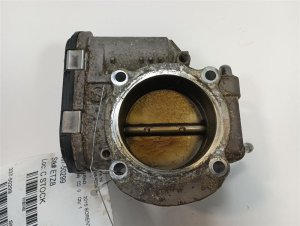
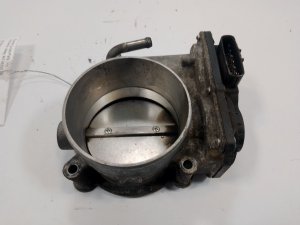
New Aftermarket Parts Available


The information in this article is provided for general reference and educational purposes only. Vehicle specifications, procedures, and part compatibility can vary by production date, trim level, and region. Always consult your vehicle's factory service manual and verify part numbers before purchasing or performing repairs. Safety-critical components such as airbags, seat belts, and braking systems should be installed by a qualified professional.
- Kia Sorento:
- 🧭 Diagnostic Flowchart
- 🎬 Helpful Videos
- 🛍️ Shop This Part
- What's Unique About the 2011-2015 Kia Sorento
- Symptoms You May Notice
- Most Likely Causes
- Rare But Worth Checking
- Diagnosis Steps
- Parts You'll Likely Need
- Related Codes That Often Appear With This One
- Technical Service Bulletins (TSBs) & Recalls
- Platform-Specific Known Issues
- Mechanic-Grade Diagnostic Values
- Scan Tool Commands That Help
- Wiring & Ground Locations
- Real Owner Repair Stories
- Documented NHTSA Reports
- OEM Part Supersession History
- Model Year Variations Within This Range
- Other Known Issues on This Vehicle
- Used vs. New Parts: Buying Guide for This Vehicle
- Real Owner Stories
- 2007 Kia Sorento 3.8L
- 2011-2015 Kia Sorento
- NHTSA Reported Incident
- Related OBD-II Codes
- Frequently Asked Questions
- 🎟️ Get 5% Off