

OBD-II Code P2140: Gas Pedal and Throttle Position Disagreement
What P2140 means, why it triggers, and how to fix it
- Code P2140 indicates an electrical mismatch between sensor circuits 'E' and 'F' in the drive-by-wire system, requiring a multimeter or scanner to diagnose, not a mechanical throttle cleaning.
- Stop driving immediately when P2140 triggers, as the vehicle will force a 20 mph 'Limp Mode' or stall completely in active traffic.
- Inspect the wiring harness and pigtail connectors for corrosion or frayed wires before spending $150 to $600 on a replacement accelerator pedal or throttle body.
- Perform a live data 'wiggle test' on the wiring harness to locate intermittent shorts, which account for over 50% of misdiagnosed P2140 part replacements.
What Does P2140 Mean?
P2140 means your car's Powertrain Control Module (PCM) is getting conflicting information from the gas pedal and throttle sensors. In a 'drive-by-wire' system, pedal sensors tell the computer how much to accelerate, and the computer commands the throttle body motor. This code triggers when voltage signals from redundant sensor circuits 'E' and 'F' drift apart beyond a pre-set tolerance.
Technical definition: Throttle/Pedal Position Sensor/Switch E/F Voltage Correlation. The PCM detects that voltage signals from the 'E' and 'F' circuits of the throttle or pedal position sensor do not match within a pre-set tolerance.
Can I Drive With P2140?
No — Do Not Drive. Do not drive the vehicle. This fault causes the engine to stall or suddenly lose all ability to accelerate, creating a significant safety risk in traffic. The vehicle enters a 'Limp Home Mode,' limiting speed to under 20 mph to protect the engine.
🎬 Learn more about why your car enters limp modeCommon Causes
- Damaged Wiring, Shorts, or Corroded Connectors (Very Common) — Wires connecting the accelerator pedal assembly or throttle body fray, short to ground, or suffer pin corrosion from moisture. An intermittent short inside the main harness—often triggered by engine vibration or turning—causes divergent voltage readings.
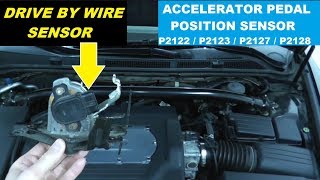
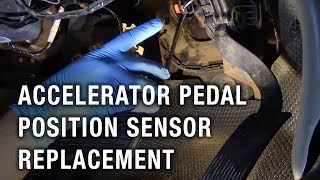
- Faulty Accelerator Pedal Position (APP) Sensor (Common) — The gas pedal assembly contains multiple internal sensors for redundancy. If one sensor fails or its resistive elements wear out, it sends a mismatched signal. 🎬 Watch: How to test and replace the accelerator pedal sensor
- Faulty Throttle Body Assembly (Common) — Electronic throttle bodies contain internal position sensors. If one fails, the entire throttle body assembly requires replacement, as internal sensors are rarely sold separately.
- Low System Voltage / Weak Battery (Less Common) — A failing battery or alternator dropping system voltage below 11V confuses the PCM's voltage scaling, leading to false correlation codes.
- Outdated Powertrain Control Module (PCM) Software (Less Common) — Certain models (especially Ford) have overly sensitive voltage correlation thresholds. A dealer software update (reflash) adjusts the acceptable voltage range to fix this.
- Aftermarket Component Incompatibility (Rare) — Non-OEM throttle bodies or pedal sensors sometimes lack the exact resistance or voltage characteristics the PCM expects, triggering an immediate mismatch.
- Failed Powertrain Control Module (PCM) (Rare) — The PCM's internal signal processing circuits fail, generating a false code. Consider this only after exhaustively eliminating wiring and sensor faults.
Symptoms
- Check Engine Light is On — The Malfunction Indicator Lamp (MIL) illuminates immediately.
- Reduced Power or 'Limp Mode' — The vehicle intentionally limits engine power and restricts speed to 20-30 mph to prevent runaway acceleration.
- Poor, Delayed, or No Acceleration — The car feels sluggish, hesitates, or ignores gas pedal input entirely. Throttle response feels erratic.
- Engine Stalls or Won't Start — The engine stalls unexpectedly when stopping. In severe cases, the PCM prevents the engine from starting.
- Erratic or Surging Idle — Engine idle surges up and down without driver input.
- Engine RPMs Climb Without Speed Increase — The engine revs higher, but vehicle speed does not increase, indicating a disconnect between pedal request and throttle action.
- Black Smoke from Exhaust — Incorrect sensor readings force the PCM to command a rich fuel mixture, producing black tailpipe smoke.
- Erroneous Sensor Voltage Readings (scan-tool only — no driver-felt sign) — Live OBD-II data shows voltage from sensor circuits 'E' and 'F' failing to track each other smoothly.
Diagnostic Flowchart
Tap your situation to follow the diagnostic path that matches what you're seeing on this code.
Common Fixes & Costs
- Repairing Damaged Wiring or Connectors — Parts: $10-$50, Labor: $150-$450, ~2 hr book time (Professional)
- Replacing the Accelerator Pedal Position Sensor Assembly — Parts: $100-$250, Labor: $100-$150, ~1 hr book time (DIY)
- Replacing the Electronic Throttle Body Assembly — Parts: $200-$600, Labor: $100-$200, ~1.5 hr book time (Intermediate)
- Reprogramming (Flashing) the PCM — Parts: $0, Labor: $150-$250, ~1 hr book time (Professional)
- Replacing the Powertrain Control Module (PCM) — Parts: $600-$900, Labor: $200-$300, ~1.5 hr book time (Professional)
Used vs. New Parts: Buying Guide
When a used part is worth it: Buying used electronic parts is risky. It only makes sense if the vehicle is over 150k miles, the budget is extremely tight, and you accept a limited lifespan. Source from a low-mileage, accident-damaged vehicle.
Donor-vehicle mileage cap: roughly under 60000 miles for the part to have meaningful remaining life.
Donor quality checklist:
- Verify the donor vehicle was not scrapped due to engine or electrical failure.
- Match the part number exactly; electronic variations are not interchangeable.
- Inspect connectors for corrosion, bent pins, or harness damage.
Decision logic:
- If The part is an electronic sensor assembly and the vehicle has under 100k miles. → Buy new (OEM or high-quality aftermarket). Used electronic parts fail too frequently.
- If The vehicle is over 150k miles and a new part is a significant portion of the vehicle's value. → A used part from a reputable salvage yard with a warranty is a reasonable gamble.
- If The failure is the sensor's internal resistive track wearing out. → Buy new. A used part has a similar wear pattern and will fail soon.
Warranty tradeoff: Salvage yard parts include a 30-90 day warranty covering only the part. New aftermarket parts offer 1-3 year warranties. New OEM parts carry a 1-year warranty.
Worst-case if a used part fails: $300-$800 if a used electronic part fails, requiring a second replacement and duplicate labor costs.
What Happens If You Wait — Timeline
- 0-1 month: Intermittent Check Engine Light and occasional hesitation. The vehicle briefly enters 'Limp Mode' but recovers after restarting. (MPG impact: 0-5%% · Added cost: $0-$25 in wasted fuel.)
- 1-3 months: Check Engine Light stays on. 'Limp Mode' becomes frequent, requiring multiple restarts. Throttle response is noticeably delayed. (MPG impact: 5-10%% · Added cost: $100-$300 for a towing bill when the vehicle becomes undriveable.)
- 3-6 months: Vehicle is consistently in 'Limp Mode' or stalls frequently. Incorrect air/fuel mixtures stress the catalytic converter. (MPG impact: 10-15%% · Added cost: $200-$500 in fuel waste and spark plug damage.)
- 6+ months: Sustained incorrect air/fuel ratios overheat and destroy the catalytic converter. The original wiring fault worsens, potentially damaging the PCM. (MPG impact: 15-25%% · Added cost: $1200-$3000+ for catalytic converter and PCM replacement.)
Cost of Not Fixing It
- Immediate: Sudden loss of acceleration or stalling in traffic. Vehicle stuck in 'Limp Mode', limiting speed to 20 mph. (Added cost: Towing costs ($100-$300))
- 0-1 month: Consistently poor drivability, unpredictable throttle response, and a 5-10% decrease in fuel economy. (Added cost: $20-$50 per month in extra fuel costs.)
- 1-6 months: Incorrect air/fuel mixtures overheat the catalytic converter, melting its internal structure. (Added cost: $1200-$2800 for catalytic converter replacement.)
- 6+ months: Increased stress on the transmission and engine mounts due to erratic acceleration and stalling. (Added cost: $500-$2000+ for transmission or engine mount repairs.)
Diagnosis Steps
- Scan for All Trouble Codes
Connect an OBD-II scanner to confirm P2140. Look for related codes (P2135-P2139) to pinpoint shared circuits. Record freeze frame data.
Tools: OBD-II Scanner (Beginner) - Check for Technical Service Bulletins (TSBs)
Search manufacturer TSBs for your specific vehicle. Known software issues or faulty components addressed in bulletins save hours of diagnostic time.
Tools: Google Search or Professional Database Access (Beginner) - Visually Inspect Wiring and Connectors
Inspect the wiring harness and pigtail connectors at the accelerator pedal and throttle body. Look for chafing, melting, corrosion, loose pins, or water intrusion.
Tools: Flashlight, Inspection Mirror (Beginner) - Check Live Sensor Data
Use a scan tool to watch voltage readings for circuits E and F. Slowly press the gas pedal. Voltages must increase smoothly from ~0.5V to 4.5V and track each other within 0.2V without spikes.
Tools: Advanced OBD-II Scanner (Intermediate) - Perform a 'Wiggle Test'
While graphing live sensor voltages on the scanner, gently wiggle the wiring harness at the pedal, throttle body, and PCM. A voltage spike or dropout pinpoints the exact location of a wiring fault.
Tools: Advanced OBD-II Scanner (Intermediate) - Test Sensor Voltage and Ground
Disconnect the sensor. With the key on (engine off), back-probe the connector to verify a 5-volt reference signal (4.5V-5.5V) and a solid ground (near 0V). Out-of-spec readings indicate a wiring or PCM issue.
Tools: Digital Multimeter (Intermediate) - Perform a Circuit Integrity Test
With the key off, disconnect the sensor and PCM connectors. Check continuity on each wire to rule out breaks. Test continuity between each signal wire and ground to find shorts. Resistance must be under 1 Ohm.
Tools: Digital Multimeter (Advanced) - Test Sensor Resistance
With the sensor disconnected, measure resistance (Ohms) between internal pins while operating the pedal. Resistance must change smoothly. A sudden jump to infinite resistance (OL) confirms a faulty sensor.
Tools: Digital Multimeter, Service Manual (Advanced) - Analyze Sensor Waveform
Use an oscilloscope to graph the sensor's voltage signal. A bad sensor shows sharp spikes or a 'noisy' pattern that a multimeter is too slow to catch.
Tools: Oscilloscope (Advanced)
When This Code Triggers (Freeze-Frame Conditions)
- Engine Coolant Temp: 180-200°F (The engine is fully warmed up to normal operating temperature.)
- RPM: 1500-2500 (Occurs during steady-state cruising or light acceleration, rarely at idle or full throttle.)
- Engine Load: 30-60% (Occurs under moderate engine load, consistent with highway cruising or climbing a slight grade.)
- Vehicle Speed: 35-55 mph (Triggered during city or highway driving speeds requiring small, steady pedal adjustments.)
Related Codes
- P2135 — Indicates a voltage correlation error between sensor circuits 'A' and 'B'. Diagnostically identical to P2140, but focuses on 'A' and 'B' circuits instead of 'E' and 'F'.
- P2138 — Indicates a voltage correlation error between circuits 'D' and 'E'. If present with P2140, it strongly points to a fault in the shared 'E' circuit.
- P0121 — A general code for 'Throttle/Pedal Position Sensor A Circuit Range/Performance.' Sets when a single sensor's output is irrational, often causing a correlation fault.
- P0220-P0229 Series — General circuit range, low voltage, or high voltage faults in the 'B' and 'C' circuits. Helps narrow down which specific circuit is failing.
Climate & Environmental Factors
- High Humidity: Promotes corrosion on APP sensor and throttle body pins. Moisture seeps into unprotected connectors, increasing resistance and degrading voltage signals.
- Cold Weather: Condensation inside the throttle body freezes, causing the throttle plate to stick. Cold makes aging plastic wiring brittle and prone to cracking.
- Road Salt (Winter Climates): Salt spray accelerates the degradation of exposed wiring harnesses and connectors, increasing the likelihood of shorts.
How to Talk to a Mechanic About This Code
Say this: "I have a P2140 code with the car going into limp mode. Please start by checking the wiring, connectors, and ground circuits for the accelerator pedal and throttle body before quoting a replacement part. Also, check for any relevant Technical Service Bulletins."
Directs the technician to diagnose the most common and cheapest-to-fix causes first (wiring/connections), rather than immediately assuming an expensive component failed.
Avoid saying:
- 'Just fix whatever's wrong'
- 'My check engine light is on, can you look at it?'
- 'Whatever you recommend'
Questions to ask before authorizing the repair:
- What specific test confirmed that this part failed? Did you see a voltage drop, a failed wiggle test, or out-of-spec resistance?
- Can you confirm the 5V reference and ground signals to the sensor are good?
- Will you provide a printout of the freeze-frame data and the final cleared codes?
- If the throttle body is replaced, does the quoted labor include the mandatory throttle relearn procedure?
- What is the warranty on this specific repair, including both parts and labor?
Where to Take It: Dealer vs Independent vs Chain
- Dealer:
A strong, but expensive, choice. Necessary if the fix is a known issue covered by a TSB requiring a dealer-only software update.
Best for: Vehicles still under a powertrain or extended warranty., Repairs requiring a manufacturer-specific PCM software flash., Complex, intermittent electrical issues on newer vehicles.
Downsides: Highest labor rates., May prefer replacing a whole assembly or wiring harness rather than performing a detailed wiring repair. (Typical cost: +50% vs. baseline) - Independent Shop:
Best fit for most cases, provided the shop has a reputation for strong electrical diagnostics. Ask if they are comfortable diagnosing intermittent wiring issues.
Best for: Out-of-warranty vehicles where cost is a factor., Diagnosing and repairing common wiring faults., Owners wanting a long-term relationship with a trusted mechanic.
Downsides: Diagnostic capabilities vary; a shop without strong electrical skills will struggle with this code., May lack access to the latest manufacturer software for reflashing. (Typical cost: +0% vs. baseline) - Chain Shop:
Use with caution. Acceptable for a simple, pre-diagnosed pedal swap, but AVOID for initial diagnosis of a P2140 code.
Best for: Simple, straightforward part replacements like an accelerator pedal sensor if you have already diagnosed it yourself.
Downsides: Technician skill varies dramatically., Incentivized to replace parts rather than perform in-depth diagnosis., Less likely to effectively diagnose a wiring harness issue. (Typical cost: -10% vs. baseline)
When to Walk Away From the Repair
If the estimated repair cost exceeds 40-50% of the car's Kelley Blue Book (KBB) private-party value, pause and consider alternatives.
- Car worth $4000, fix is $1800: Walk away. The repair cost is a huge percentage of the car's value, and other age-related issues are likely.
- Car worth $12000, fix is $1200: Fix it. This repair cost is well below the threshold and is a worthwhile investment.
- Car worth $2500, fix is $900: Borderline. Get a second opinion before authorizing. If the car is otherwise in great shape, it might be worth it.
What Scan Tool You Need for This Code
Minimum: A scanner that reads and graphs live data for the throttle and pedal position sensor PIDs.
A basic $20 code reader only tells you the P2140 code exists. It cannot show live voltage signals, which is essential to see if they are dropping out or not tracking each other. Without live data, you will waste money replacing good parts.
Budget: BlueDriver Bluetooth Pro (~$100) — Connects to your smartphone and provides excellent live data graphing for pedal and throttle sensor voltages. Record data during a drive or while performing a 'wiggle test' to pinpoint intermittent faults.
Mid-range: XTOOL D7 (~$350) — Offers full bidirectional control to command the throttle body motor and performs the electronic throttle relearn procedure required after repairs.
Professional: Autel MaxiCOM MK808S / Launch X431 Series (~$450-900) — Provides dealer-level diagnostics. Offers fast live data, full bidirectional control, and advanced service functions like throttle relearn and ECU coding.
Rent vs buy: For a one-time diagnosis, auto parts stores offer Loan-A-Tool programs where you borrow a scanner for a refundable deposit. Buy a scanner if you perform your own car repairs more than once a year.
How to Clear the Code After You Fix It
- Reconnect battery if disconnected.
- Use an OBD-II scan tool to clear P2140 and related codes.
- Perform the manufacturer-specific throttle relearn procedure.
- Complete a full OBD-II drive cycle to set readiness monitors.
Drive cycle (~30 minutes): 1. Cold start (engine off 8+ hours). 2. Idle 3 minutes with A/C and defroster on. 3. Drive steady at 55 mph for 5 minutes. 4. Perform mixed city driving. 5. Coast down from highway speeds without braking.
Readiness monitors affected: Catalyst Monitor, Evaporative System (EVAP) Monitor, Oxygen (O2) Sensor Monitor
Before emissions retest: drive at least 100 miles to fully set monitors.
Watch out for:
- Disconnecting the battery clears the code but resets all readiness monitors, causing an automatic emissions failure.
- The code returns immediately if the electrical fault was not repaired.
- Skipping the mandatory throttle relearn procedure causes severe idling and drivability problems.
Will This Fail Emissions / State Inspection?
Yes — this code typically fails an OBD-II emissions inspection.
- California: An illuminated Check Engine Light is an automatic failure. After repairs, a full drive cycle must set all readiness monitors before retesting.
- New York: An active P2140 code causes an automatic failure. Depending on the model year, only one or two readiness monitors can be 'Not Ready'.
- Texas: An illuminated Check Engine Light is an automatic failure. Drive 50-100 miles after clearing the code to reset readiness monitors before inspection.
Most Commonly Affected Vehicles
- Ford F-250/F-350 Super Duty (6.0L Diesel) (2005-2007) — Often caused by a faulty accelerator pedal assembly or outdated PCM software. TSB 06-22-9 recommends a PCM reprogram to correct false P2138, P2139, and P2140 codes.
- Hyundai/Kia Santa Fe, Optima, Sonata (2001-2020) — Known for throttle position sensor (TPS) and electronic throttle body failures. TPS part numbers vary by engine size (2.4L, 2.7L, 3.5L).
- Chevrolet Silverado, Suburban, Malibu (2007-2018) — Throttle body failures trigger correlation codes and 'Reduced Engine Power' mode. GM issued Special Coverage Adjustment N182188250 extending the accelerator pedal sensor warranty to 10 years/150,000 miles.
- Nissan Versa, Altima, Sentra (2007-2012) — The electronic throttle body is a frequent failure point. A strict, multi-step manual 'relearn' procedure is required after replacement.
- Volkswagen Jetta, Golf, Passat (with TDI Engines) (2009-2014) — On TDI models, this code sometimes points to a failure within the Bosch EDC17 Engine Control Unit (ECU) itself.
- Subaru Outback, Forester, Impreza (2010-2021) — Issues with electronic throttle body calibration lead to correlation faults. A throttle relearn is required after service or battery disconnect.
- Chrysler/Dodge Town & Country, Grand Caravan (2008-2016) — Wiring issues and electronic throttle body failures are common causes.
- MG MG6 (2012) — Often points to a wiring fault between the pedal sensor and the ECU after the pedal assembly has been replaced.
Manufacturer-Specific Notes
- Ford: The accelerator pedal position sensor is integrated into the pedal assembly, requiring full unit replacement. A relearn procedure involves idling the engine for up to 15 minutes.
- General Motors (GM): GM issued Special Coverage Adjustments extending warranties for throttle position sensors (10 years/120k miles) and accelerator pedals (10 years/150k miles) on specific models.
- Nissan: Requires a highly specific, manual sequence of turning the key and pressing the accelerator pedal to perform the throttle relearn procedure. Timing must be exact.
- Hyundai/Kia: Multiple service campaigns require a KSDS software update. Failure to perform this update can result in denial of related engine warranty claims.
Real Owner Stories
2013 Ferrari California 30 at 13K miles
Car entered limp mode 150 miles into a trip. Code P2140 returned instantly after clearing.
What they tried:
- Inspected throttle body and pedal connectors.
- Checked live data; pedal voltages tracked correctly.
- Performed an ECU relearn.
Outcome: P2140 cleared, but a MAF sensor failure occurred shortly after. Replacing the MAF sensor resolved all issues. The owner noted a similar Maserati case caused by a faulty MAF.
Lesson: Ancillary sensor failures (like a MAF sensor) sometimes trigger misleading throttle codes. Investigate related sensors before replacing expensive throttle components.
2005 Chevy Silverado Duramax LLY at 200K miles
Intermittent loss of accelerator pedal at idle with 'Reduced Power' message. Codes P2139 and P2140 appeared annually.
What they tried:
- Replaced accelerator pedal assembly twice.
- Swapped ECMs.
- Replaced ECM connector pins for the APP sensor circuits.
Outcome: The problem persisted. Wiggling harnesses could not replicate the fault, indicating a deeply hidden intermittent wiring issue.
Lesson: Deeply intermittent electrical faults are notoriously difficult to diagnose. If replacing common components fails, the root cause is a wiring issue manifesting under specific, hard-to-replicate conditions.
Ford 6.0L Powerstroke with Adjustable Pedals
Truck refused to downshift, produced heavy smoke, and threw codes P2139 and P2140.
What they tried:
- Priced an OEM adjustable pedal assembly at over $500.
- Attempted a Dorman aftermarket stationary pedal, which failed immediately.
- Installed a BWD brand non-adjustable pedal.
Outcome: The BWD non-adjustable pedal worked perfectly. The owner sacrificed the adjustment feature to save over $450.
Lesson: Optional features like adjustable pedals dramatically increase replacement costs. A base model OEM-quality part is often a viable, affordable downgrade.
2012 MG6 1.8L Petrol
Car experienced high revving and jerking on startup with an active P2140.
What they tried:
- Replaced the accelerator pedal assembly.
Outcome: The code and symptoms remained. Diagnostics shifted to checking the ECU connector for corrosion and testing harness continuity.
Lesson: If a code returns immediately after replacing a part, the root cause is the wiring or connectors associated with that part.
How to Prevent This Code From Triggering
- Clean Throttle Body Connectors and Apply Dielectric Grease (Every 30,000 miles) — Prevents moisture and road salt from causing pin corrosion, a primary cause of intermittent voltage faults.
- Inspect Wiring Harnesses for Secure Mounting and Chafing (During every oil change) — Ensures wiring is not rubbing against sharp metal edges or being pinched, preventing short circuits.
- Maintain a Healthy Battery and Charging System (Ongoing) — Low system voltage (below 11V) causes the PCM to misinterpret sensor readings, leading to false correlation codes.
- Avoid Harsh Driving Habits (Daily habit) — Sudden, jerky acceleration puts unnecessary mechanical wear on the accelerator pedal sensor assembly.
Frequently Asked Questions
What are the most common mistakes when diagnosing P2140?
The most common mistake is replacing the accelerator pedal or throttle body without testing the wiring harness. Intermittent shorts or corrosion are frequent causes. Always address a throttle correlation fault before diagnosing secondary misfire or fuel trim codes.
I replaced the pedal sensor, but the code came back. Why?
This means the sensor was not the root cause. The problem is likely an intermittent short in the wiring harness between the sensor and the computer. Wiring faults often only appear under specific conditions like engine vibration or turning.
What is a throttle relearn procedure?
After replacing an electronic throttle body, the car's computer must learn the closed, open, and idle positions of the new throttle plate. This calibration is required for the engine to idle and run correctly. The procedure varies by manufacturer but often involves a specific sequence of key turns and pedal presses.
How do I perform a throttle relearn procedure?
Procedures vary, but a general manual method involves turning the ignition ON (engine off) for 3 minutes to let the throttle plate cycle. Next, turn the ignition OFF for 60 seconds, then start the engine and let it idle to warm up. Always consult your specific vehicle's service manual for exact steps.
Can a weak battery cause a P2140 code?
Yes, a weak or failing battery causes low system voltage (below 11V), which confuses the PCM's ability to accurately read sensor inputs. This leads to false correlation codes. Ensure your battery and charging system are healthy before starting complex diagnostics.
Can I just clean the throttle body to fix P2140?
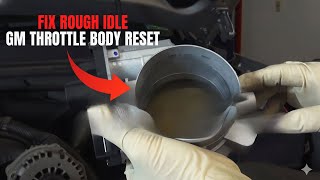
Cleaning a dirty throttle body solves some idling issues, but it will not fix a P2140 code. This code indicates an electrical circuit fault, not a mechanical issue like carbon buildup. However, a relearn procedure is often required after cleaning.
What's the difference between P2140 and P2135?
Both are voltage correlation codes for the throttle/pedal position sensors, differing only in which redundant circuits the PCM compares. P2140 flags a mismatch between circuits 'E' and 'F', while P2135 flags a mismatch between 'A' and 'B'. The diagnostic process is identical, but you test different specific circuits.
Is it safe to clear the code and keep driving?
No, clearing the code does not fix the underlying electrical fault. The problem will return and causes a sudden loss of acceleration at dangerous times, such as merging into traffic. It is not a safe or permanent solution.
Key Takeaways
- Code P2140 indicates an electrical mismatch between sensor circuits 'E' and 'F' in the drive-by-wire system, requiring a multimeter or scanner to diagnose, not a mechanical throttle cleaning.
- Stop driving immediately when P2140 triggers, as the vehicle will force a 20 mph 'Limp Mode' or stall completely in active traffic.
- Inspect the wiring harness and pigtail connectors for corrosion or frayed wires before spending $150 to $600 on a replacement accelerator pedal or throttle body.
- Perform a live data 'wiggle test' on the wiring harness to locate intermittent shorts, which account for over 50% of misdiagnosed P2140 part replacements.
Helpful Videos
Shop the Parts Behind P2140
Below are the parts most often responsible for code P2140, ranked by how frequently each one is the actual culprit (per the diagnosis above). Tap any to see what we have for your vehicle.



The information in this article is provided for general reference and educational purposes only. Vehicle specifications, procedures, and part compatibility can vary by production date, trim level, and region. Always consult your vehicle's factory service manual and verify part numbers before purchasing or performing repairs. Safety-critical components such as airbags, seat belts, and braking systems should be installed by a qualified professional.
- 🧭 Diagnostic Flowchart
- 🎬 Helpful Videos
- 🛍️ Shop This Part
- What Does P2140 Mean?
- Can I Drive With P2140?
- Common Causes
- Symptoms
- Common Fixes & Costs
- Used vs. New Parts: Buying Guide
- What Happens If You Wait — Timeline
- Cost of Not Fixing It
- Diagnosis Steps
- When This Code Triggers (Freeze-Frame Conditions)
- Related Codes
- Climate & Environmental Factors
- How to Talk to a Mechanic About This Code
- Where to Take It: Dealer vs Independent vs Chain
- When to Walk Away From the Repair
- What Scan Tool You Need for This Code
- How to Clear the Code After You Fix It
- Will This Fail Emissions / State Inspection?
- Most Commonly Affected Vehicles
- Manufacturer-Specific Notes
- Real Owner Stories
- 2013 Ferrari California 30 at 13K miles
- 2005 Chevy Silverado Duramax LLY at 200K miles
- Ford 6.0L Powerstroke with Adjustable Pedals
- 2012 MG6 1.8L Petrol
- How to Prevent This Code From Triggering
- Frequently Asked Questions
- What are the most common mistakes when diagnosing P2140?
- I replaced the pedal sensor, but the code came back. Why?
- What is a throttle relearn procedure?
- How do I perform a throttle relearn procedure?
- Can a weak battery cause a P2140 code?
- Can I just clean the throttle body to fix P2140?
- What's the difference between P2140 and P2135?
- Is it safe to clear the code and keep driving?
- Key Takeaways
- 🎟️ Get 5% Off