

P2146 on 2009-2014 Buick LaCrosse: Fuel Injector Circuit Fault Causes and Fixes
On a 2009-2014 Buick LaCrosse, code P2146 almost always points to a damaged fuel injector wiring harness that has rubbed through or broken. A visual inspection of the harness where it runs over the engine is the first step. Repairing the wiring is a common fix.
- P2146 on a 2009-2014 LaCrosse indicates a power supply failure to one bank of fuel injectors.
- Do not immediately replace fuel injectors. The most likely cause is a damaged wiring harness, as confirmed by a manufacturer TSB.
- A thorough visual and electrical test of the injector wiring harness is the first and most critical diagnostic step.
- The vehicle is not safe to drive with this code, as it will run poorly and could cause further damage.
What's Unique About the 2009-2014 Buick LACROSSE
For this generation of Buick LaCrosse and many related GM vehicles with the 3.0L and 3.6L V6 engines, the primary cause of a P2146 code is well-documented. A General Motors Technical Service Bulletin (TSB #PIP4924D) points directly to the fuel injector wiring harness being prone to damage. The harness can rub against specific engine components like the intake plenum, valve cover bolts, or fuel lines, causing an open circuit that triggers the code. This makes a thorough harness inspection more critical on this platform than immediately suspecting faulty injectors or the ECM.
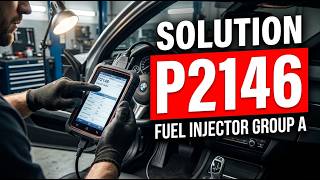
🎬 Watch: A helpful walkthrough on fixing the P2146 open circuit code.Diagnostic Flowchart
Tap your situation to follow the diagnostic path that matches what you're seeing on this vehicle.
Generation note: The 2009-2014 range covers the end of the first-generation LaCrosse (2009) and the majority of the second generation (2010-2016). The provided TSB specifically includes the 2009-2014 LaCrosse and other GM models with the 3.0L (LF1, LFW) and 3.6L (LLT, LFX) V6 engines. The wiring harness chafing issue is a known problem across this entire year span and on many other GM vehicles that use these engines.
Symptoms You May Notice
- Check Engine Light is on
- Engine runs very rough or misfires heavily
- Engine may stall or be hard to start
- Significant loss of engine power
- Engine may not stay running after starting
- Possible white or black smoke from the exhaust due to incomplete combustion
- Replacing one or all of the fuel injectors in Group A without first thoroughly inspecting the wiring harness. The TSB and common experience strongly point to a wiring fault as the primary cause.
Most Likely Causes
- Damaged Fuel Injector Wiring Harness 🔴 High Probability → Shop Engine Wiring Harness A manufacturer TSB (#PIP4924D) explicitly calls out inspecting the fuel injector wiring harness for 'rub through or internal wire opens' on these vehicles. The constant engine vibration and heat cycles cause the harness loom to wear against sharp edges.
How to confirm: Visually inspect the entire fuel injector harness. TSB #PIP4924D highlights common chafe points: against the intake plenum, at valve cover bolts, against the fuel line, and on the side of the cylinder head under the plenum. The most common failure point is where the harness wraps around the driver's side cylinder head. Look for chafed insulation, melted plastic loom, or pinched wires. Perform a continuity test on the power supply wires for Group A injectors from the ECM connector to the injector connectors using a multimeter to find the break.
Typical fix: Repair the broken or shorted section of wire using solder and heat-shrink tubing for a durable seal. In cases of extensive damage or multiple breaks, the entire fuel injector harness may need to be replaced. Ensure the repaired harness is re-routed or shielded to prevent future rubbing.
Est. part cost: $5-$20 for wire repair materials, $70-$250 for a new harness section. - Loose or Corroded Electrical Connector 🟡 Medium Probability Connectors on top of the engine are exposed to heat, vibration, and potential fluid leaks (oil, coolant, water) which can cause them to loosen or corrode over time.
How to confirm: Disconnect and inspect the main harness connector for the fuel injectors (often a large multi-pin connector near the back of the intake) and the connector at the ECM. Look for green or white corrosion, bent/broken pins, or signs of moisture/oil intrusion.
Typical fix: Clean the connector pins with an electrical contact cleaner and a small brush. Ensure a secure, clicking connection. If pins are badly corroded or broken, the connector pigtail may need to be replaced, which involves splicing it into the existing harness.
Est. part cost: $10-$40 for contact cleaner or a new pigtail connector. - Failed Engine Control Module (ECM) ⚪ Low Probability → Shop Engine Control Module (ECM)
How to confirm: This should be the last resort after confirming the wiring harness and connectors are in perfect condition. Diagnosis requires advanced tools to verify that the injector driver circuit inside the ECM has failed. A technician would confirm power and ground to the ECM, then verify that the command signal is not being sent from the specific pins for Group A injectors. A forum post on a similar 2011 LaCrosse issue confirmed the ECM was the culprit after extensive wiring checks.
Typical fix: Replace the ECM. This requires programming the new module to the vehicle's VIN and security system using specialized tools.
Est. part cost: $200-$600 for a remanufactured or new ECM, plus programming fees.
Rare But Worth Checking
- Shorted Fuel Injector: → Shop Fuel Injector While less common than a wiring issue for a group fault, a single fuel injector can short internally and pull down the voltage for the entire group circuit. This would typically be accompanied by a specific injector code (e.g., P0201, P0203, etc.) and can be diagnosed by checking the resistance of each injector.
Diagnosis Steps
- Scan the ECM for all stored trouble codes. Note any specific injector codes (P0201-P0206) that accompany P2146, as this confirms which bank is Group A.
- Perform a detailed visual inspection of the fuel injector wiring harness. Per TSB #PIP4924D, pay close attention to where it might rub against the intake plenum, valve cover bolts, fuel lines, and the side of the cylinder head.
- Check for any visible signs of damage, such as chafing, melting, exposed copper wire, or pinching.
- Disconnect and inspect the main electrical connectors for the injector harness and at the ECM for corrosion, damage, or loose pins.
- If no visual damage is found, use a multimeter to check for battery voltage at the power supply wire (typically Pink/Black) for the Group A injectors with the key on, engine off.
- If voltage is missing, perform a continuity test on the power supply wire between the ECM and the injector harness to find the open circuit. An infinite resistance reading indicates a break in the wire.
- If wiring and connectors are confirmed to be good through continuity and voltage tests, the fault likely lies within the ECM's injector driver circuit.
Parts You'll Likely Need
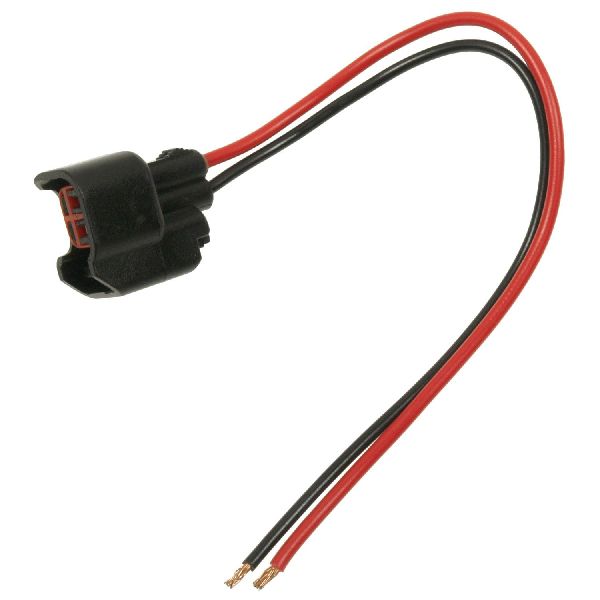
- Fuel Injector Wiring Harness Repair Kit — This is the most probable fix, as the wiring harness is a known failure point according to a manufacturer TSB. Often only a small section of wire or a pigtail connector is needed.
Trusted brands: ACDelco, Dorman
OEM price range: $70-$250
Aftermarket price range: $50-$150
Related Codes That Often Appear With This One
- P0201-P0206 — These codes indicate a fault in the circuit for a specific injector (e.g., P0201 for cylinder 1). If P2146 is present, you will likely see codes for all injectors in Group A (e.g., P0201, P0203, P0205), as the entire bank is affected.
- P2149 — This is the corresponding code for Fuel Injector Group 'B' (the other bank of cylinders). Seeing both codes together could indicate a more widespread wiring issue, a problem with a shared power or ground source, or a major failure within the ECM.
Technical Service Bulletins (TSBs) & Recalls
- PIP4924D: Mentions that codes including P2146 can be caused by the fuel injector wiring harness rubbing through or having internal wire opens. It lists specific locations to check and applies to a wide range of GM vehicles with 3.0L and 3.6L engines.
Platform-Specific Known Issues
- A known issue, documented in TSB #PIP4924D, involves the fuel injector wiring harness chafing or developing an internal open circuit, which directly causes code P2146 and related injector codes. Specific chafe points to inspect are against the intake plenum, at valve cover bolts, against the fuel line, and on the side of the head under the plenum.
Mechanic-Grade Diagnostic Values
- Fuel Injector Resistance (2009-2011 3.6L LLT Engine) — expected: 11.8 - 12.6 Ohms. Failure: A reading of OL (open), near zero (short), or significantly outside this range indicates a failed high-impedance injector.
- Fuel Injector Resistance (2012-2014 3.6L LFX Engine) — expected: 1.2 - 1.8 Ohms. Failure: A reading outside this narrow range indicates a failed low-impedance injector.
- Injector Power Supply Wire Voltage (Key On, Engine Off) — expected: ~12 Volts (Battery Voltage). Failure: Voltage below 9V or no voltage at the pink/black wire on an injector connector points to an open in the supply circuit.
- Injector Control Voltage (Oscilloscope) — expected: A ~65V boost pulse to open the injector, then held open with ~12V.. Failure: Absence of this complex waveform indicates a failure in the ECM's internal injector driver circuit.
Scan Tool Commands That Help
- GM GDS2 / Tech2Win: Injector Balance Test / Active Fuel Injector Test (AFIT) — Use this after confirming wiring integrity. The tool commands each injector to fire and measures the fuel rail pressure drop. If injectors in Group 'A' fail to cause a pressure drop, it isolates the fault to the injectors themselves or the final driver circuit, ruling out an intermittent wiring issue under load.
Wiring & Ground Locations
- Injector Bank 'A' Power Supply — Typically a Pink/Black wire running from the ECM to the injectors for cylinders 1, 3, and 5.. This is the specific circuit referenced by code P2146. An open or break anywhere along this wire will trigger the code and disable the entire bank.
- G102 / G104 — Bolted to the rear of the cylinder heads.. These are primary engine-to-chassis grounds. A loose or corroded connection here can cause unstable voltage for the ECM and its injector driver circuits, leading to various electrical faults.
- G113 — Located on the left side of the engine, at an engine-to-transmission stud.. This is another critical engine block ground. A fault here can cause unpredictable electrical issues for the ECM and its outputs, including the fuel injector circuits.
- ECM Connector X1 — The larger of the two main connectors on the Engine Control Module, located in the engine bay.. The control and supply voltage wires for the injectors originate here. Probing for voltage and continuity at the specific pins on this connector is the most effective way to test the entire circuit from the source.
Real Owner Repair Stories
- YouTube video (Vehicle with similar GM V6 engine) — Check engine light with codes P0271 & P2146 after performing other engine work.
❌ Tried (didn't work) Initial visual inspection did not reveal the problem.
✅ What actually fixed it The fuel injector wiring harness was found to be pinched underneath one of the intake manifold mounting tubes from reinstallation. The pressure crushed the wires, causing an open/short circuit. The fix was to cut out the damaged section of wire and splice in a new piece using butt connectors and heat shrink.
When the Usual Fixes Don't Work
- While the vast majority of P2146 codes on this platform are caused by the known wiring harness chafing issue, there are documented cases where the wiring and connectors test perfectly fine. In one such case involving a 2011 LaCrosse, extensive testing confirmed good continuity and no shorts in the harness, yet the code persisted. The ultimate cause was a failed injector driver circuit inside the Engine Control Module (ECM). This highlights the importance of not automatically condemning the harness if rigorous electrical testing proves it is intact, and considering the ECM as the final, albeit rare, possibility.
OEM Part Supersession History
12638530→12669384— Standard part lifecycle update for the newer LFX engine.
Heads up: CRITICAL: These parts are NOT interchangeable. Part #12638530 is a high-impedance injector for the 2009-2011 LLT engine (~12 Ohms). Part #12669384 is a low-impedance injector for the 2012-2014 LFX engine (~1.5 Ohms). Installing the wrong type will cause immediate circuit codes and potential ECM driver damage.12614941→12621095— Part update for the engine wiring harness.
Heads up: This is a full engine harness assembly for the 2010-2011 LaCrosse with the 3.6L engine.
Model Year Variations Within This Range
- 2009-2011: These models primarily use the 3.6L LLT V6 engine, which has a Bosch ECM and high-impedance fuel injectors with a resistance of ~11.8-12.6 Ohms.
- 2012-2014: These models use the updated 3.6L LFX V6 engine, which has a Delphi ECM and low-impedance fuel injectors with a resistance of ~1.2-1.8 Ohms. The injectors and ECMs are not interchangeable between LLT and LFX engines.
Helpful Videos
We Have This Part in Stock


The information in this article is provided for general reference and educational purposes only. Vehicle specifications, procedures, and part compatibility can vary by production date, trim level, and region. Always consult your vehicle's factory service manual and verify part numbers before purchasing or performing repairs. Safety-critical components such as airbags, seat belts, and braking systems should be installed by a qualified professional.
- Buick LACROSSE:
- 🧭 Diagnostic Flowchart
- 🎬 Helpful Videos
- 🛍️ Shop This Part
- What's Unique About the 2009-2014 Buick LACROSSE
- Symptoms You May Notice
- Most Likely Causes
- Rare But Worth Checking
- Diagnosis Steps
- Parts You'll Likely Need
- Related Codes That Often Appear With This One
- Technical Service Bulletins (TSBs) & Recalls
- Platform-Specific Known Issues
- Mechanic-Grade Diagnostic Values
- Scan Tool Commands That Help
- Wiring & Ground Locations
- Real Owner Repair Stories
- When the Usual Fixes Don't Work
- OEM Part Supersession History
- Model Year Variations Within This Range
- 🎟️ Get 5% Off